


Description
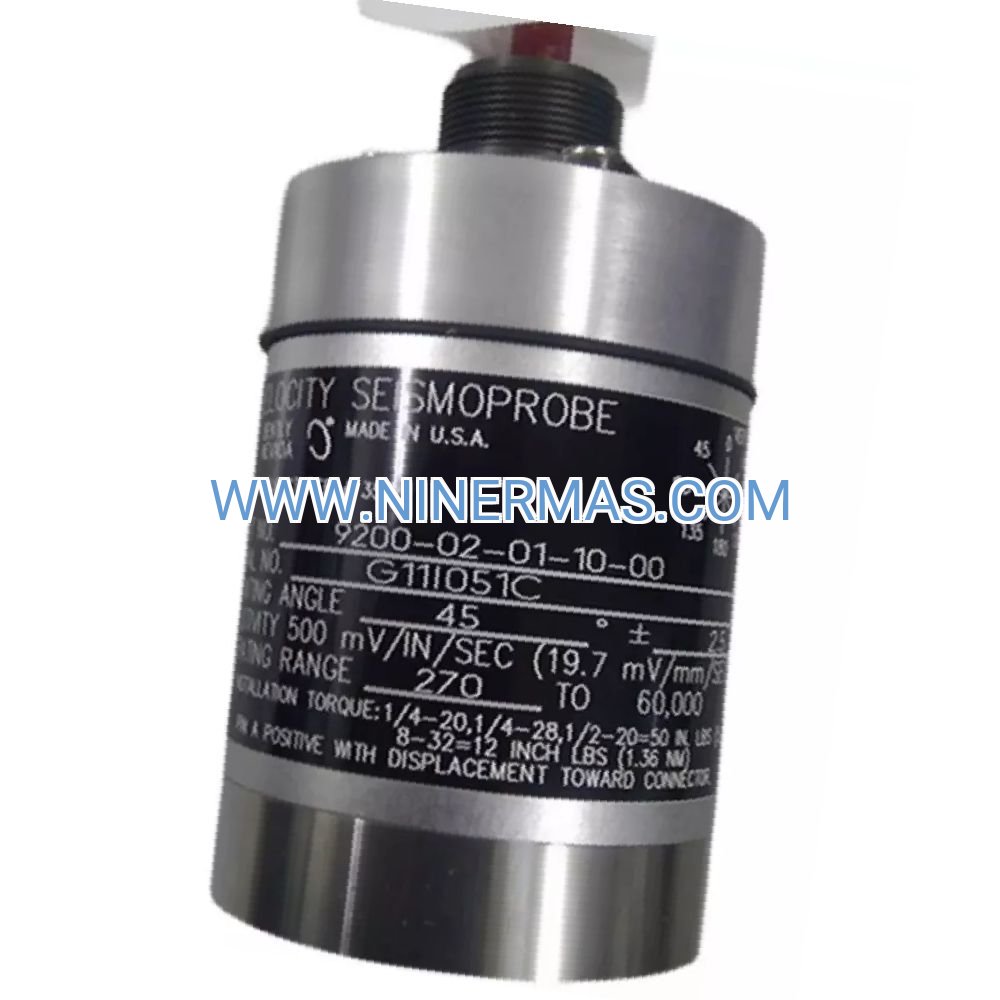
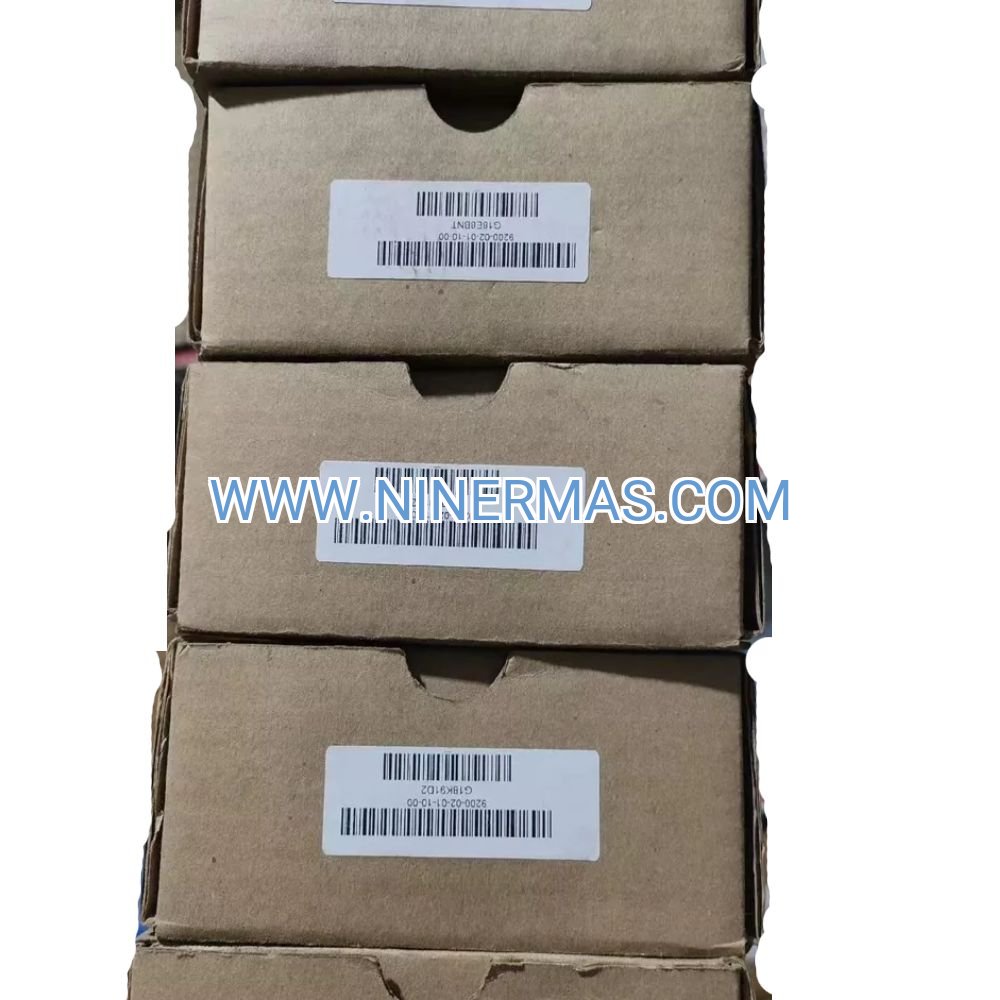
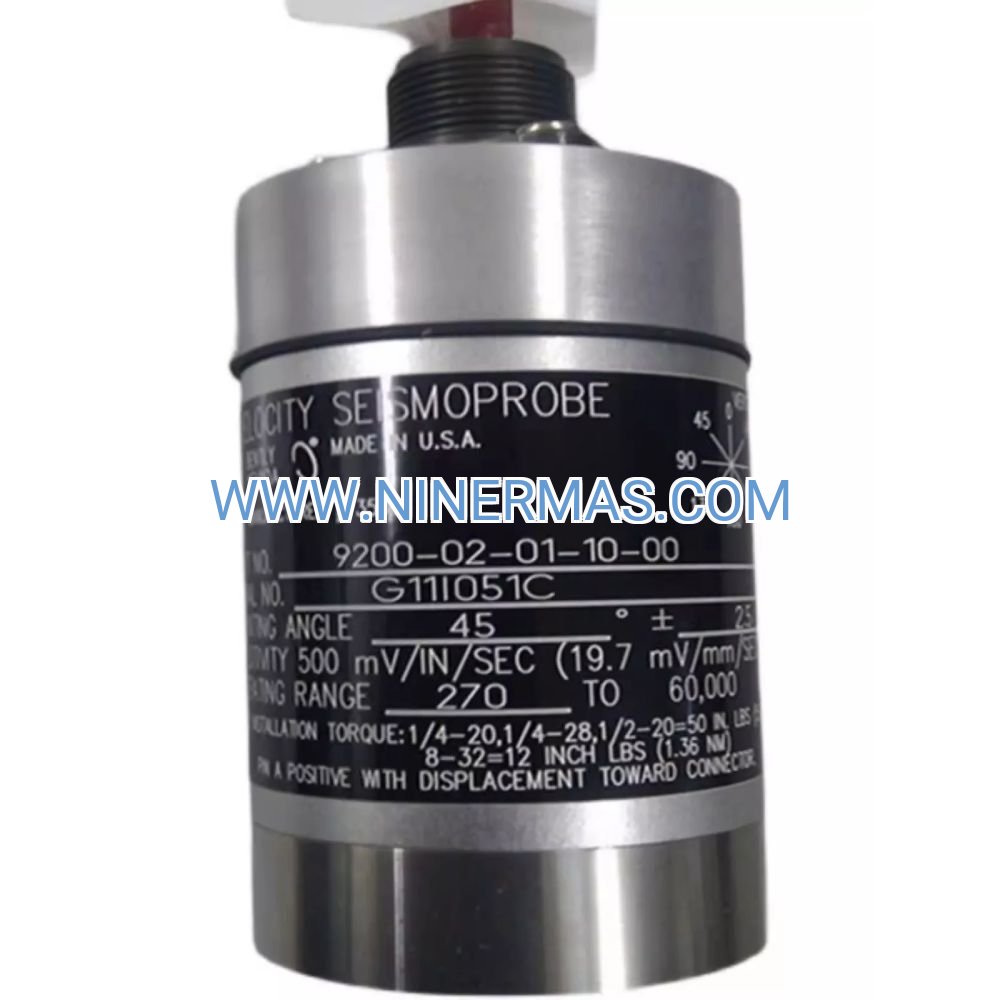
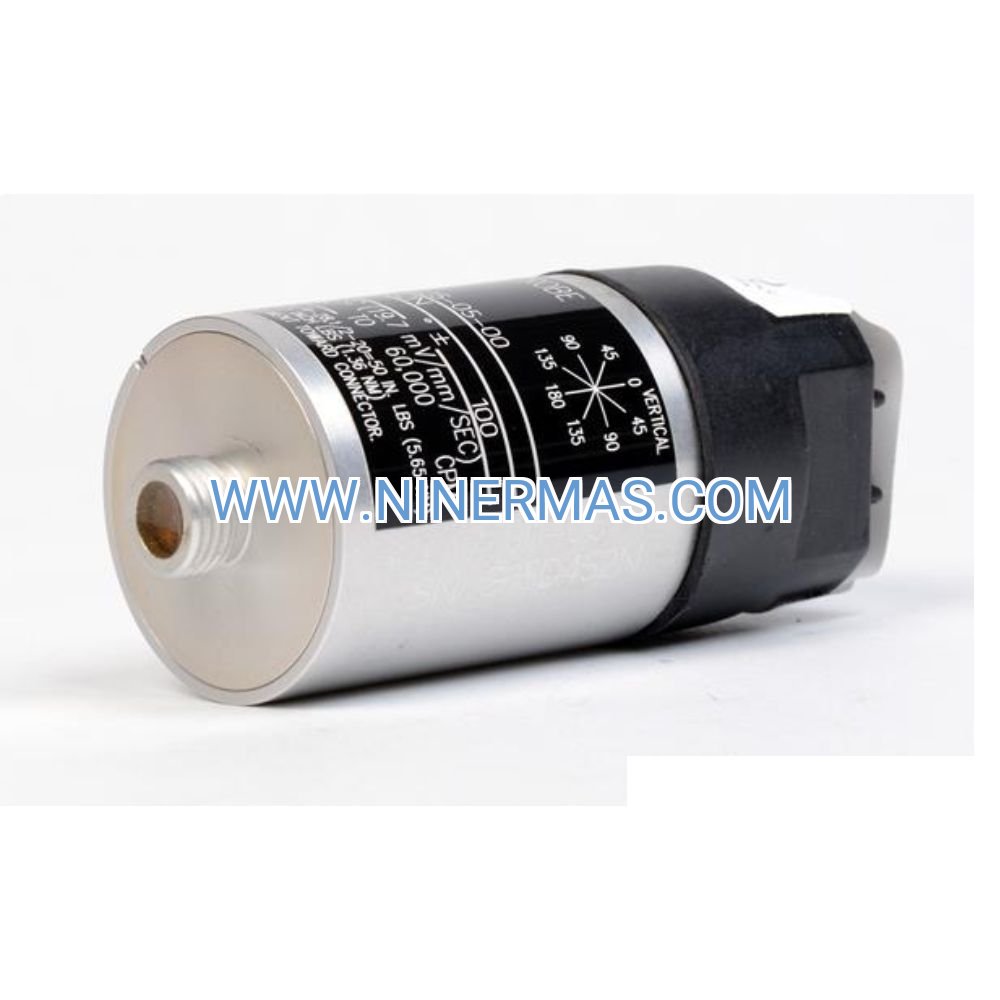
9200-02-01-10-00 Seismoprobe Transducer (Industrial-Grade Velocity Sensor)
The 9200-02-01-10-00 represents a field-proven velocity sensing solution engineered for demanding industrial machinery monitoring applications. As a self-generating seismic transducer, this two-wire sensor delivers reliable vibration velocity measurements across rotating equipment installations without dependency on external power infrastructure. Built on moving-coil technology, it transforms mechanical motion into proportional electrical output—enabling real-time machinery health assessment in process-critical environments.
Designed for continuous operation in extreme conditions, this hermetically sealed unit serves as the frontline defense against unexpected equipment failures. Plant engineers and reliability teams deploy these sensors to capture early warning signatures of bearing degradation, shaft misalignment, and dynamic imbalance—conditions that account for over 60% of unplanned machinery downtime. The passive sensing architecture eliminates electronic failure modes while maintaining measurement accuracy across temperature extremes from -51°C to +121°C.
With factory-calibrated sensitivity of 100 mV/mm/s and frequency coverage spanning 10 to 1000 Hz, the 9200-02-01-10-00 captures the complete vibration spectrum of low-to-medium speed rotating machinery. Stainless steel 316L construction ensures chemical resistance in corrosive atmospheres, while IP67 environmental sealing protects internal components from moisture, dust, and process fluids. This combination of rugged design and measurement precision makes it the preferred choice for predictive maintenance programs targeting 99%+ equipment availability.
Key Performance Features & Business Value
→ Zero External Power Requirement
Moving-coil generator produces signal directly from vibration energy. Eliminates power supply costs, reduces wiring complexity by 40%, and qualifies for intrinsically safe installations in hazardous classified areas (Zone 1/Division 1 with approved barriers).
→ Direct Velocity Measurement
Outputs true RMS velocity without mathematical integration or signal processing. Provides immediate fault severity indication—critical for emergency shutdown systems and alarm setpoints in API 670 compliant installations.
→ Extended Mean Time Between Failures
Passive transduction element contains no active electronics or batteries. Field data demonstrates MTBF exceeding 200,000 operating hours with zero calibration drift, reducing lifecycle ownership costs by 35% versus accelerometer-based systems.
✓ Hermetic Environmental Protection
Welded stainless steel housing with glass-to-metal electrical feedthrough. Leak-tested to 1×10⁻⁸ cc/sec helium standard—proven in offshore platforms, chemical processing units, and washdown environments where moisture ingress causes 80% of sensor failures.
✓ Wide Operating Temperature Range
Qualified from -51°C to +121°C without performance degradation. Maintains ±3 dB frequency response accuracy across thermal cycling—essential for steam turbine pedestals, kiln bearings, and arctic climate installations.
✓ Universal System Compatibility
Two-wire output interfaces directly with Bently Nevada 3500/3300 monitoring racks, portable analyzers, PLC analog inputs, and 4-20mA transmitters. Supports both continuous online monitoring and route-based data collection strategies.
Proven Application Scenarios
Centrifugal Pump Monitoring in Chemical Processing
Challenge: Process pumps handling corrosive fluids experience bearing failures every 18-24 months, causing unplanned shutdowns costing $50,000+ per incident.
Solution: Velocity sensors detect bearing defect frequencies 6-8 weeks before failure, enabling planned replacement during scheduled turnarounds.
Result: 65% reduction in emergency maintenance calls, extended bearing life to 36+ months through optimized lubrication intervals.
Electric Motor Surveillance in Water Treatment Facilities
Challenge: 500-1800 RPM induction motors driving aerators and clarifiers show intermittent trips due to undetected mechanical faults.
Solution: Continuous velocity monitoring identifies rotor bar cracks, soft foot conditions, and coupling wear through spectral analysis.
Result: Motor availability increased from 92% to 98.5%, avoiding regulatory violations for treatment capacity.
Cooling Tower Fan Vibration Control
Challenge: Large HVAC fans in power generation facilities experience blade imbalance from ice buildup and erosion, risking structural damage.
Solution: Seismoprobe sensors trigger automated shutdown when vibration exceeds 12 mm/s velocity threshold.
Result: Zero catastrophic fan failures over 5-year monitoring period, preventing estimated $2M in tower reconstruction costs.
Gearbox Condition Monitoring in Mining Conveyors
Challenge: Planetary gearboxes in 24/7 conveyor systems develop tooth wear patterns invisible to periodic inspections.
Solution: Velocity transducers capture gear mesh frequencies and sideband modulation indicating lubrication breakdown.
Result: Predictive oil changes reduced gearbox failures by 70%, extending overhaul intervals from 3 to 5 years.
Paper Machine Roll Monitoring
Challenge: Dryer can bearings in tissue production lines cause web breaks when vibration exceeds quality thresholds.
Solution: Multi-point velocity monitoring system correlates bearing condition with product defect rates.
Result: 15% improvement in first-pass yield through early bearing replacement before quality impact.
Technical Specifications & Selection Guide
| Parameter | Specification | Selection Criteria |
|---|---|---|
| Model Designation | 9200-02-01-10-00 | Standard industrial configuration |
| Nominal Sensitivity | 100 mV/mm/s @ 80 Hz | Optimized for 600-3600 RPM machinery |
| Frequency Range | 10 - 1000 Hz (±3 dB) | Covers 1X-20X harmonics for typical faults |
| Transducer Type | Moving coil velocity sensor | Self-generating, no external power |
| Electrical Output | Two-wire passive | Simplified wiring vs. 4-wire accelerometers |
| Coil Resistance | 500 - 700 Ω @ 25°C | Verify during installation checkout |
| Mounting Thread | 1/4-28 UNF-2A | Standard US thread, requires 5-7 ft-lbs torque |
| Temperature Range | -51°C to +121°C | Suitable for most industrial environments |
| Environmental Rating | IP67 hermetic seal | Submersible to 1 meter for 30 minutes |
| Housing Material | 316L stainless steel | Corrosion resistant in chemical plants |
| Unit Weight | 297 grams | Minimal mass loading on bearing housings |
| Shock Resistance | 500 g peak, 11 ms duration | Survives impact wrench installation errors |
Selection Guidelines: Choose this model for machinery operating between 600-3600 RPM where bearing defect frequencies fall within the 10-1000 Hz bandwidth. For higher speed applications (>4000 RPM), consider accelerometer-based solutions. For lower frequencies (<10 Hz), displacement probes provide better resolution. Verify that monitoring system input impedance exceeds 100 kΩ to prevent signal loading errors.
Advanced Integration Capabilities
Bently Nevada 3500 Rack Systems
Connect directly to 3500/50 Tachometer modules configured for velocity input mode. Supports dual-channel redundancy for critical machinery protection. Integrates with 3500/22M Transient Data Interface for waveform capture during trip events.
Wireless Condition Monitoring Networks
Pair with WiMon wireless transmitters for retrofit installations where cabling is cost-prohibitive. Achieves 5-year battery life with hourly data transmission in low-power mode.
IIoT Edge Analytics Platforms
Stream velocity data to cloud-based machine learning algorithms for anomaly detection. Enables fleet-wide benchmarking across multiple plant sites—identifying systemic issues affecting entire equipment classes.
Portable Analyzer Compatibility
Works with CSI 2140, SKF Microlog, and Emerson AMS 2140 handheld analyzers for route-based programs. Allows correlation between online monitoring trends and detailed diagnostic measurements.
Delivery Timeline & Service Commitment
Standard Lead Time: 3-5 business days for stock items | 2-3 weeks for factory-fresh units with serialized calibration certificates
Warranty Coverage: 24-month manufacturer's warranty covering material defects and workmanship | Extended 5-year protection plans available
Technical Support: Lifetime application engineering assistance | Installation guidance | Troubleshooting diagnostics | Mounting hardware recommendations
Documentation Package: NIST-traceable calibration certificate | Dimensional drawings | Wiring diagrams | Frequency response plots | Material certifications
Frequently Asked Questions
Q: How does this velocity sensor interface with PLC analog input cards?
A: The sensor's AC voltage output (typically 10-500 mV RMS) requires a signal conditioner or 4-20 mA transmitter for PLC integration. We recommend the Bently Nevada 3500/50 module or equivalent velocity-to-current converter with adjustable scaling and alarm outputs. Direct connection to AC-coupled PLC inputs is possible but limits trending capability.
Q: What mounting surface preparation is required for accurate measurements?
A: Machine a flat surface with maximum 63 microinch (1.6 micron) finish directly on the bearing housing or structural steel. Remove all paint, rust, and scale within a 1-inch diameter area. Surface flatness should not deviate more than 0.002 inches. Use a thin layer of thermal grease to improve mechanical coupling—this can increase signal amplitude by 15-20%.
Q: Can this sensor detect bearing faults in variable speed drive applications?
A: Yes, but with considerations. The 10-1000 Hz bandwidth captures bearing defect frequencies across most VFD speed ranges (300-3600 RPM). However, VFD-induced electrical noise may require shielded cable and proper grounding. For inverter-duty motors, verify that bearing defect frequencies remain within sensor bandwidth at minimum operating speed.
Q: What is the expected sensor lifespan in continuous operation?
A: Field experience shows 15-20 year service life in typical industrial environments when properly installed. The passive moving-coil design has no wear mechanisms under normal vibration levels (<25 mm/s). Primary failure modes are cable damage from flexing or environmental seal degradation in extreme chemical exposure—both preventable through proper installation practices.
Q: How do I verify sensor functionality after installation?
A: Perform a three-step checkout: (1) Measure coil resistance—should read 500-700 ohms between signal wires, (2) Tap sensor gently with plastic mallet while monitoring output on oscilloscope—should produce clean AC waveform, (3) Compare readings to baseline or identical machine—velocity should correlate within ±20% for similar operating conditions.
Q: Is this sensor suitable for hazardous area installations?
A: The sensor itself is passive and generates no sparks, but requires intrinsically safe barriers (Zener diode type) for Class I Division 1 or Zone 1 certification. Consult factory for entity parameters (Voc, Isc, Ca, La) needed for barrier selection. Common barriers include Pepperl+Fuchs KFD2-SR2 or MTL 7728+ models configured for velocity sensor applications.
Start Protecting Your Critical Assets Today
Implement predictive maintenance strategies that reduce unplanned downtime by 55-70% while extending equipment life by 30-50%. Our application engineers are ready to assist with sensor selection, mounting location recommendations, and system integration planning.
Request a quote now or contact our technical team for application-specific guidance. Volume discounts available for multi-point monitoring systems.
© 2026 NINERMAS COMPANY LIMITED. All rights reserved.
Original Source: https://ninermas.com
Contact: sale@ninermas.com | +0086 187 5021 5667
PDF Specification
Download PDF file here:
Click to Download PDF

Contact Info
-
Address:22 / F, South Wo Hang building, 148 Wing Lok Street, Sheung Wan, Western District, Hong Kong
-
Phone:+8618750215667
-
Email:
