Original Industrial Spare Part
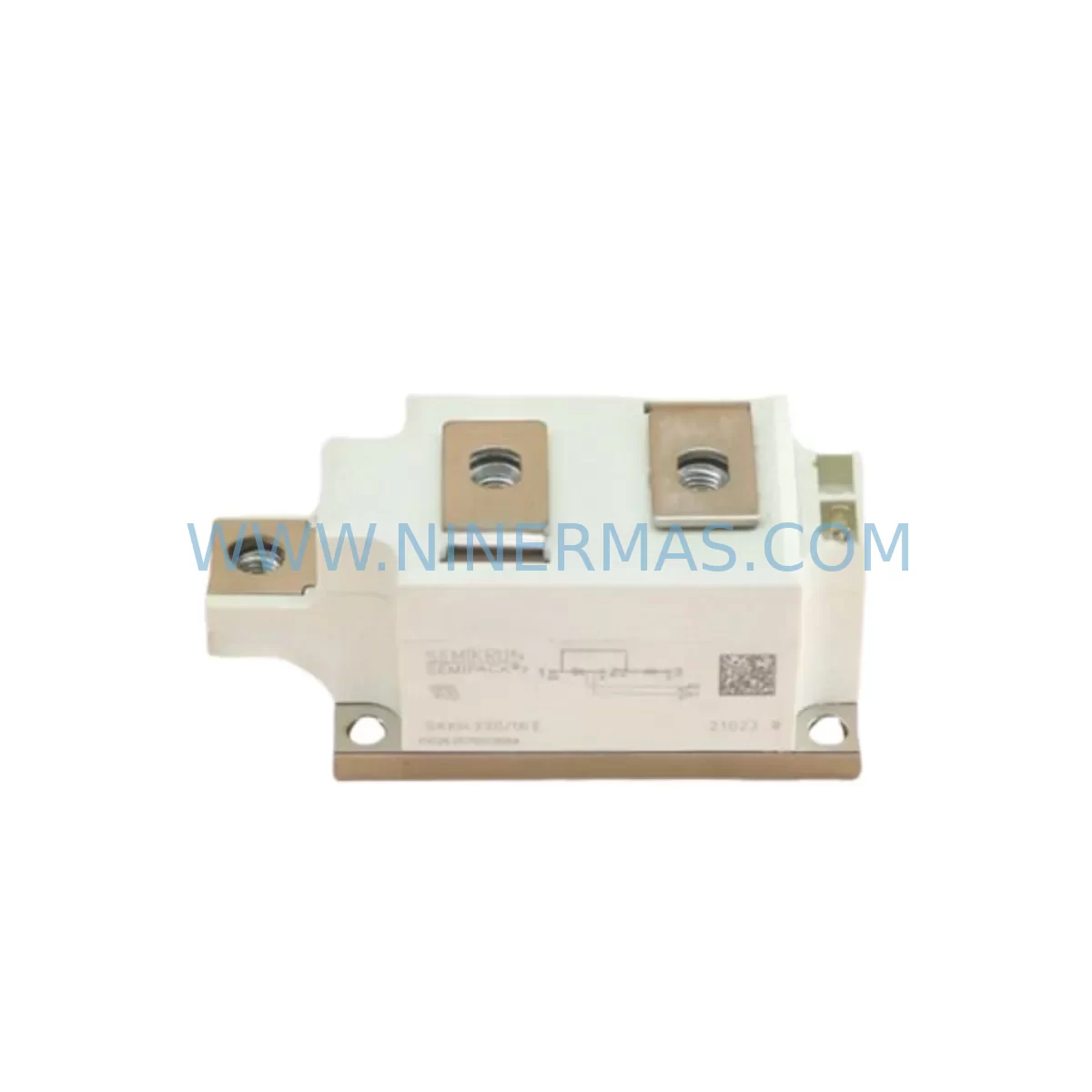
Semikron SKKH330/16E Retrofit-Compatible Thyristor for Legacy Systems
Verify the part, confirm the platform family, and move straight into quotation with the right commercial details.
RFQ Ready
- SKUSKKH330/16
- CategoryPLC & Industrial Automation Modules
- BrandSemikron
- SupportAvailability, lead time, condition, and shipping coordination
How Buyers Usually Use This Page
- Confirm the exact part number and platform family before sending the quote request.
- Use direct email when quantity, condition, and destination are already defined internally.
- Switch to the broader brand or category archive when you need alternates nearby.
Series Navigation
Move through the most common platform families behind this part.
Product RFQ
Send this part directly for quotation.
Include quantity, required condition, destination country, and target delivery timing. Current reference: Semikron SKKH330/16E Retrofit-Compatible Thyristor for Legacy Systems with SKU SKKH330/16.
Semikron SKKH330/16E Retrofit-Compatible Thyristor for Legacy Systems
The Semikron SKKH330/16E is a high-current thyristor module widely deployed in legacy DC drive systems, rectifier bridges, soft-starter assemblies, and industrial power conversion equipment. As original equipment manufacturers phase out support for aging SKKH-series components, plant engineers and maintenance teams face increasing pressure to source verified replacement modules that maintain electrical compatibility without requiring full drive cabinet redesigns. The SKKH330/16E — rated at 330 A average on-state current and 1600 V repetitive peak off-state voltage — remains one of the most sought-after retrofit solutions for systems originally built around Semikron’s SKKH platform.
Whether you are restoring a failed rectifier stack in a steel mill, replacing a degraded thyristor in a crane drive, or upgrading a legacy DC motor controller in a paper machine, the SKKH330/16E provides a direct mechanical and electrical fit for the original mounting footprint. The module uses a standard isolated base package with dual stud mounting, making it compatible with existing heatsink assemblies, bus bar connections, and gate drive circuits without modification in most retrofit scenarios.
Upgrade Compatibility Table
| Parameter | SKKH330/16E (This Unit) | Retrofit Notes |
|---|---|---|
| Average On-State Current (IT(AV)) | 330 A | Verify heatsink thermal resistance; derate if ambient >40°C |
| Repetitive Peak Off-State Voltage (VDRM) | 1600 V | Confirm line voltage and surge margin of existing snubber circuit |
| Package / Mounting | Isolated base, dual stud | Direct fit for standard SKKH footprint heatsinks; check torque spec |
| Gate Trigger Current (IGT) | ≤150 mA (typ.) | Verify existing gate drive board output; no pulse transformer change typically required |
| Communication / Control Interface | Analog gate pulse (no digital bus) | Compatible with legacy firing boards; no protocol migration needed |
| Cooling Interface | Flat base, thermal grease required | Clean heatsink surface; apply fresh thermal compound before installation |
| Common Replacement Targets | SKKH330/14E, SKKH330/12E, SKKH310/16E | Confirm voltage class matches application; current rating is identical |
| Warranty | 12-Month Warranty — covers manufacturing defects under normal operating conditions | |
Retrofit Planning for Existing Automation Systems
A successful SKKH330/16E retrofit begins well before the module arrives on site. The first step is a thorough audit of the existing power stack. In a typical six-pulse rectifier bridge — common in DC drive cabinets from manufacturers such as Siemens, ABB, and Eurotherm — six thyristor modules are arranged in a three-phase bridge configuration. If one SKKH330/16E has failed, it is strongly recommended to replace all six modules simultaneously to ensure matched forward voltage drop characteristics and balanced current sharing. Mismatched modules in a bridge can cause uneven thermal loading and premature failure of the newly installed unit.
Before ordering, engineers should document the existing wiring layout, including anode and cathode bus bar positions, gate and cathode lead routing, and the location of any RC snubber networks connected across each module. The SKKH330/16E uses the same terminal arrangement as earlier SKKH-series modules, but terminal torque values must be verified against the datasheet — over-torquing the stud connections is a common cause of cracked ceramic bases in high-current thyristor modules.
In systems where the original firing board is a legacy analog pulse generator — such as those found in older Siemens SIMOREG DC Master or Eurotherm 590 drive platforms — the gate drive output is typically compatible with the SKKH330/16E without modification. However, if the retrofit is part of a broader drive modernization that includes migrating from an analog firing board to a digital control platform, engineers will need to verify that the new firing card’s gate pulse width, amplitude, and repetition rate fall within the SKKH330/16E’s gate specifications. In some cases, a pulse transformer or gate resistor adjustment may be required.
For systems that also require I/O expansion or communication upgrades as part of the same modernization project, it is common to simultaneously address related components in the control cabinet. This may include replacing aging DC bus capacitor banks, upgrading the control power supply module feeding the firing board, and verifying the integrity of current feedback transducers used for closed-loop current regulation. Signal isolators between the thyristor stack and the control electronics should also be inspected, as degraded isolation can cause nuisance trips and erratic firing behavior after a module replacement.
Where the retrofit involves a PLC-based supervisory system — for example, a Siemens S7-300 or S7-400 controlling the drive enable and speed reference signals — the program logic should be reviewed to confirm that any interlocks referencing drive fault codes or thyristor over-temperature signals remain valid after the hardware change. If the HMI screen displays drive status derived from analog feedback, the engineering team should verify that the new module’s on-state voltage drop does not shift the displayed current readings outside calibrated limits.
In applications involving multiple drive cabinets on a shared DC bus — such as regenerative drive systems used in winding and unwinding lines — the replacement of a single thyristor module in one cabinet may require a coordinated shutdown of the entire line section. Planning this sequence in advance, including pre-staging the replacement SKKH330/16E module, thermal compound, torque tools, and a spare gate drive test harness, is essential to minimizing total downtime.
Downtime Control During System Migration
Unplanned downtime during a thyristor replacement is one of the most costly risks in industrial retrofit projects. A structured approach to the SKKH330/16E swap-out can reduce total outage time to under four hours in most single-drive applications. The recommended sequence is as follows:
First, with the drive de-energized and the DC bus fully discharged — confirmed by a calibrated voltage meter across the bus bars — remove the failed module and photograph the existing wiring before disconnecting any leads. Label each gate and cathode connection with its phase and position reference. This documentation protects the original program logic and wiring topology and allows the new module to be installed in exactly the same configuration.
Second, inspect the heatsink contact surface for corrosion, scoring, or residual thermal compound from the previous module. A clean, flat heatsink surface is critical for achieving the rated thermal resistance between the module base and the cooling fin. Apply a thin, even layer of thermal interface material before seating the new SKKH330/16E.
Third, after mechanical installation and torquing of the bus bar connections, perform a gate-cathode resistance check and a forward/reverse blocking voltage test before re-energizing the drive. This pre-power-up verification step catches wiring errors and confirms the module is not damaged in transit. All SKKH330/16E units supplied by NINERMAS undergo outgoing inspection including gate trigger verification and high-potential testing before shipment.
Fourth, during initial re-energization, bring the drive up at reduced load and monitor the module’s heatsink temperature, gate firing symmetry across all six positions, and DC output ripple. Any asymmetry in the output waveform at this stage typically indicates a gate wiring error or a mismatched snubber value rather than a module defect. Once the drive is confirmed stable at full load, the retrofit is complete and the 12-month warranty period begins from the date of shipment.
For systems where continuous production cannot tolerate even a planned outage, a pre-built spare rectifier assembly — with SKKH330/16E modules already mounted, torqued, and tested on a spare heatsink — can be prepared in advance and swapped as a complete unit, reducing in-cabinet work time to under 30 minutes.
Retrofit Support FAQ
Q1: Is the SKKH330/16E a direct drop-in replacement for the SKKH330/14E and SKKH330/12E?
The SKKH330/16E shares the same mechanical package, current rating, and terminal layout as the SKKH330/14E and SKKH330/12E. The difference is the voltage class: /16E = 1600 V, /14E = 1400 V, /12E = 1200 V. Upgrading to the /16E in a system originally fitted with /14E or /12E modules provides additional voltage margin and is generally acceptable, provided the gate drive and snubber circuit parameters are within the /16E specification. Always confirm with your drive OEM documentation before substituting a higher voltage class module.
Q2: What pre-shipment testing is performed on each SKKH330/16E unit?
Every SKKH330/16E supplied by NINERMAS is subject to outgoing quality inspection including gate trigger current verification, forward and reverse blocking voltage test, and visual inspection of the module base and terminals. Units that do not meet Semikron datasheet parameters are rejected before shipment. A 12-month warranty covering manufacturing defects under normal operating conditions is included with each unit.
Q3: How do I confirm compatibility with my existing firing board and gate drive circuit?
The SKKH330/16E requires a minimum gate trigger current of 150 mA and a gate trigger voltage of approximately 3 V under standard conditions. Most legacy analog firing boards used in DC drive applications — including those found in older Siemens, ABB, and Eurotherm platforms — are designed to drive SKKH-series thyristors and will be compatible without modification. If you are unsure, provide your firing board model number and we can advise on compatibility before you place your order.
Q4: What is the typical lead time and do you hold stock?
NINERMAS maintains inventory of the SKKH330/16E to support urgent retrofit and breakdown replacement requirements. Standard orders are processed and shipped within 1–3 business days. For large-quantity orders or scheduled maintenance programs requiring multiple units, please contact our sales team to confirm availability and arrange priority allocation. Emergency breakdown supply with expedited shipping is available upon request.
| Product Series | Legacy |
|---|
Catalog Continuation
More Semikron modules in the catalog.
Use the brand lane to compare nearby part numbers, platform-adjacent modules, and other inquiry-ready listings before sending your final RFQ.
SKU: SEMIX353GB126V1
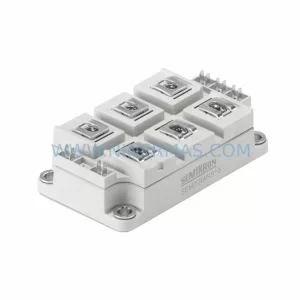
SEMIKRON SEMIX353GB126V1 Retrofit-Compatible IGBT Module
SKU: SKKR300/0.2-BVR
Semikron SKKR300/0.2-BVR Retrofit SCR Module for Legacy Systems
Catalog Continuation
Alternative parts within PLC & Industrial Automation Modules.
Stay inside the same system family when you need substitutes, adjacent modules, or a broader shortlist for procurement review.
SKU: PFXPP170CA66K00N00
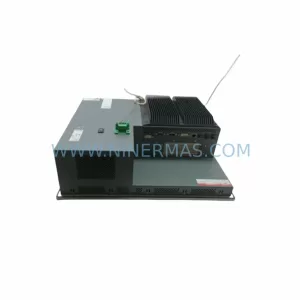
Pro-face PFXPP170CA66K00N00 Service-Ready Spare Part
SKU: 6SL3224-0BE32-2UA0
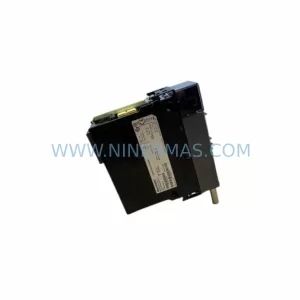
Siemens 6SL3224-0BE32-2UA0 Retrofit PM240 Power Module