Description
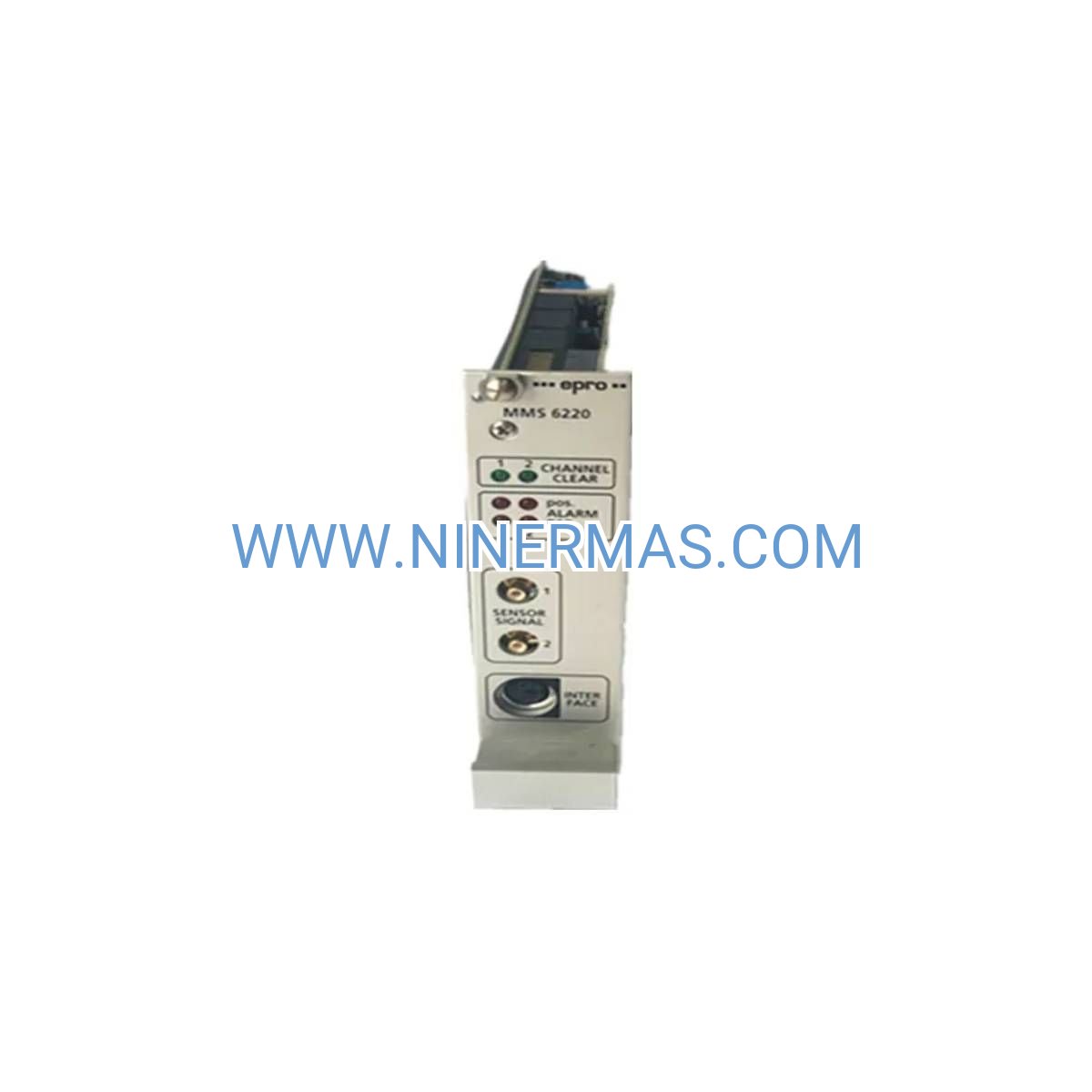
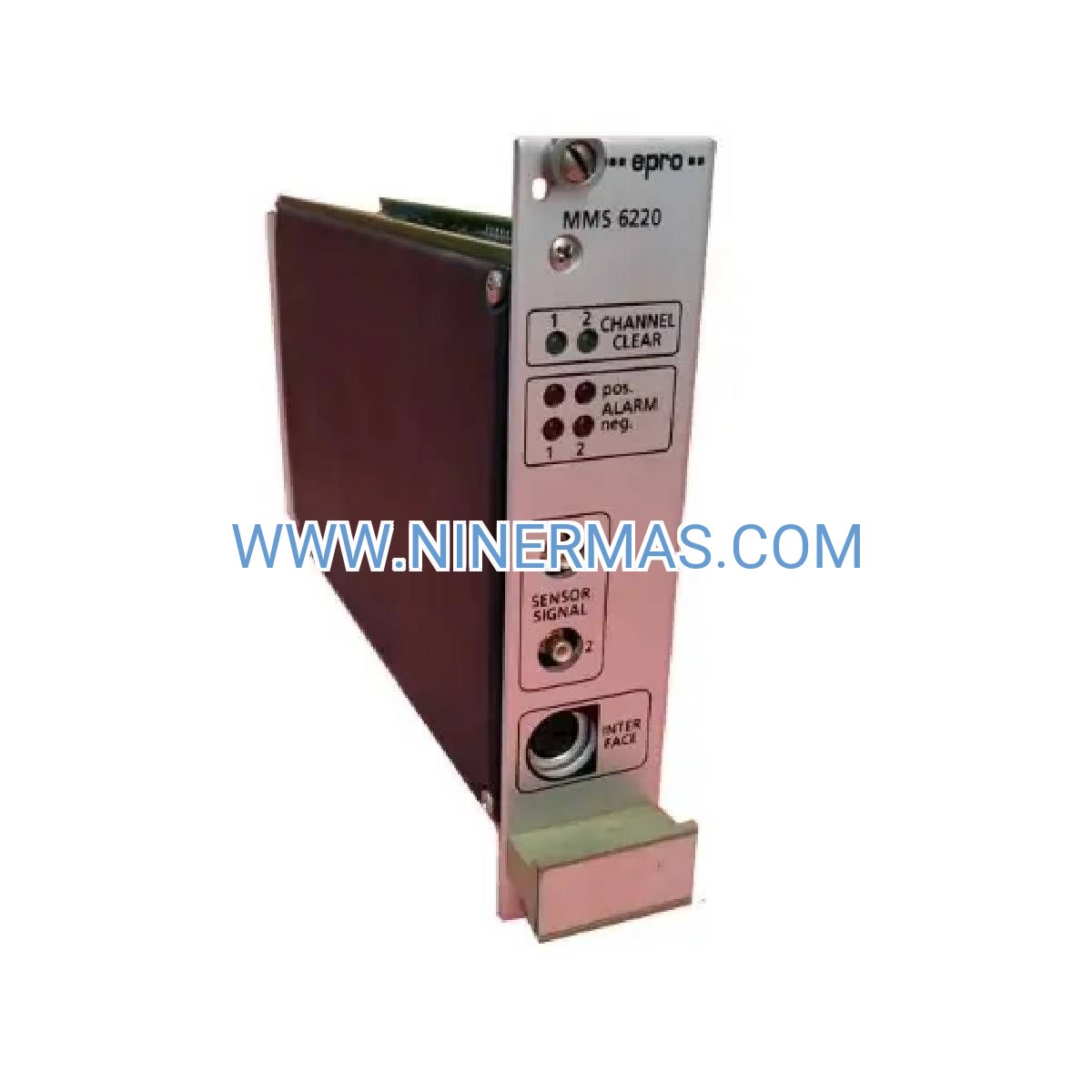
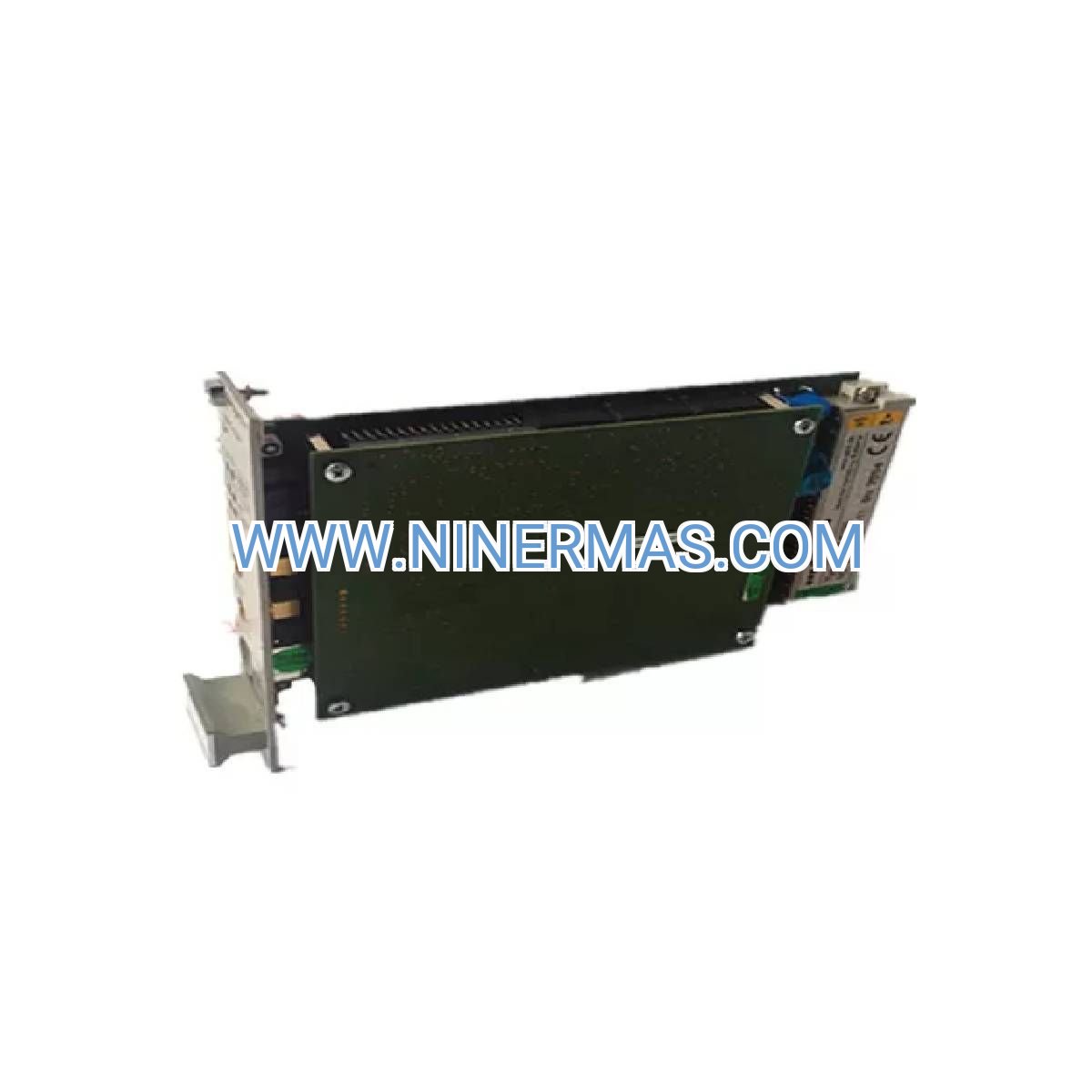
MMS6220 Dual-Channel Eccentricity Monitor (Industrial-Grade Vibration Analysis)
The MMS6220 is a precision-engineered eccentricity monitoring system designed for continuous shaft position tracking in mission-critical rotating equipment. Built on EPRO's proven vibration analysis platform, this dual-channel monitor delivers real-time eccentricity data with ±1% full-scale accuracy across a 0.017 Hz to 70 Hz frequency spectrum.
Industrial facilities operating steam turbines, centrifugal compressors, and large-scale pumps face constant risk of unplanned shutdowns due to bearing degradation and shaft misalignment. The MMS6220 addresses these challenges by providing early-warning detection of mechanical anomalies before they escalate into catastrophic failures. Designed for integration with DCS and SCADA architectures, it serves maintenance engineers, reliability teams, and plant operators who demand API 670-compliant machinery protection.
Key differentiators include differential proximity probe inputs for superior noise rejection, configurable 0-2000 μm measurement ranges, and dual 4-20mA analog outputs for seamless PLC interfacing. The system operates reliably in -20°C to +65°C environments, making it suitable for both indoor control rooms and harsh field installations.
Core Features & Benefits
✓ Dual Independent Channels
Simultaneous X-Y axis monitoring enables comprehensive shaft trajectory visualization and orbit analysis, critical for diagnosing rotor dynamic issues such as oil whirl and thermal bow.
✓ Wide Frequency Response (0.017-70 Hz)
Captures both slow-roll eccentricity during startup sequences and operational vibration up to 4200 RPM, providing complete machine lifecycle visibility from coast-down to full-speed operation.
✓ Differential Input Architecture
Proximity probe differential inputs eliminate common-mode electrical noise and ground loop interference, ensuring measurement integrity in electrically noisy industrial environments with VFDs and high-voltage switchgear.
✓ Configurable Alarm Thresholds
User-programmable alert and danger setpoints trigger automated shutdown sequences via 4-20mA outputs, protecting assets valued at millions of dollars from bearing seizure and rotor-to-stator contact.
✓ API 670 Compliance
Meets American Petroleum Institute standards for machinery protection systems, satisfying insurance requirements and regulatory mandates for petrochemical and power generation facilities.
✓ Compact DIN-Rail Mounting
Space-efficient IP20-rated enclosure fits standard control panel layouts, reducing installation footprint by 40% compared to legacy rack-mount systems while maintaining full diagnostic capability.
Application Scenarios
→ Power Generation Turbines
Monitor steam and gas turbine shaft eccentricity during thermal transients and load changes. Detects rotor bow conditions that develop during hot restarts, preventing blade tip rubs that cause $500K+ repair costs and 6-week outages.
→ Petrochemical Compressor Trains
Track centrifugal compressor shaft position in real-time to identify bearing wear patterns. Early detection of 50 μm eccentricity increases enables planned maintenance scheduling, avoiding emergency shutdowns that cost $100K/hour in lost production.
→ Hydroelectric Generator Sets
Continuous monitoring of vertical shaft runout in Francis and Kaplan turbines. Identifies guide bearing clearance issues and wicket gate imbalance, extending bearing life from 3 to 5+ years through optimized lubrication and alignment.
→ Pulp & Paper Mill Dryers
Precision tracking of high-speed dryer roll eccentricity at 1200-1800 RPM. Prevents sheet breaks and quality defects by maintaining ±25 μm shaft position tolerance, improving first-pass yield by 8-12%.
→ LNG Liquefaction Trains
Cryogenic compressor shaft monitoring in -160°C service environments. Remote eccentricity data transmission to control rooms eliminates hazardous area personnel exposure while ensuring 99.7% uptime for $2B+ facilities.
Technical Parameters & Selection Guide
| Parameter | Specification |
|---|---|
| Monitoring Channels | 2 independent differential inputs |
| Frequency Range | 0.017 Hz to 70 Hz (1-4200 RPM) |
| Measurement Span | 0-2000 μm (field-configurable) |
| System Accuracy | ±1% of full scale |
| Output Signal | 4-20mA per channel (loop-powered compatible) |
| Input Impedance | 10 kΩ differential |
| Power Requirement | 24 VDC ±10%, 5W max consumption |
| Operating Range | -20°C to +65°C ambient |
| Enclosure Rating | IP20 (panel mount), optional IP65 field housing |
| Response Time | <200 ms (10-90% step change) |
| Compliance Standards | API 670, IEC 61508 SIL-2 capable |
Selection Criteria: Choose the MMS6220 when your application requires dual-axis eccentricity monitoring with analog output integration. For applications needing digital communication protocols (Modbus RTU/TCP), consider the MMS6312 variant. Pair with PR6423 or PR9268 series proximity probes based on shaft material (ferrous vs. non-ferrous) and operating temperature. Extension cable length should not exceed 9 meters to maintain signal integrity; use PR9376 signal conditioners for longer runs.
Extended Functions
Predictive Analytics Integration: The MMS6220 interfaces with Emerson AMS Machinery Manager for cloud-based trend analysis and machine learning-driven failure prediction. Historical eccentricity data feeds algorithms that forecast bearing replacement intervals with 85% accuracy, optimizing spare parts inventory.
Wireless Retrofit Capability: When combined with Emerson Wireless 1410 gateways, the system transmits eccentricity data via WirelessHART to existing DCS infrastructure without costly hardwiring. Ideal for brownfield installations where conduit runs are prohibitively expensive.
Customization Options: Factory configuration services available for non-standard measurement ranges (e.g., 0-500 μm for precision spindles), alternative output signals (0-10 VDC, relay contacts), and hazardous area certifications (ATEX Zone 2, Class I Div 2).
Delivery & Service Assurance
Lead Time: Standard units ship within 5-7 business days from our regional distribution centers. Custom-configured systems require 3-4 weeks for factory programming and testing. Expedited 48-hour delivery available for critical outage situations at 25% premium.
Warranty Coverage: 24-month manufacturer warranty covering defects in materials and workmanship. Extended 5-year protection plans available, including annual calibration verification and priority technical support.
Technical Support: Access to EPRO-certified application engineers for system commissioning assistance, troubleshooting, and integration guidance. Remote diagnostic services via secure VPN connections to minimize on-site visits.
Documentation Package: Each unit includes installation manual, wiring diagrams, calibration certificate traceable to NIST standards, and configuration software (Windows-based). Online training modules cover setup, operation, and maintenance procedures.
Frequently Asked Questions
Q: What proximity probe compatibility does the MMS6220 support?
A: The monitor accepts standard 8mm and 11mm eddy-current proximity probes with -1 to -9 VDC output ranges. Compatible probe series include EPRO PR6423, PR9268, and Bently Nevada 3300 XL 8mm/11mm transducers. Probe sensitivity must be factory-calibrated and entered during system configuration.
Q: Can the system monitor vertical shaft applications?
A: Yes, the MMS6220 handles both horizontal and vertical shaft orientations. For vertical machines, mount probes at 90° intervals (X-Y configuration) at the thrust bearing location. Gravity-induced static eccentricity can be zeroed during commissioning to display dynamic runout only.
Q: How does eccentricity monitoring improve energy efficiency?
A: Excessive shaft eccentricity increases bearing friction and parasitic power losses. Maintaining eccentricity within ±50 μm reduces bearing drag by 15-20%, translating to 2-3% energy savings on a 5 MW compressor—approximately $50K annually at $0.12/kWh industrial rates.
Q: What installation clearances are required?
A: Allow 100mm above and below the DIN-rail mounted unit for ventilation and cable routing. Proximity probe installation requires 3-5mm radial clearance from shaft surface, with probe tip positioned perpendicular to shaft axis within ±5° angular tolerance.
Q: Does the monitor support remote condition monitoring platforms?
A: The 4-20mA outputs integrate directly with SCADA/DCS systems for local alarming. For cloud-based remote monitoring, pair with Emerson Wireless 1410 gateways or third-party IoT edge devices supporting analog input modules (e.g., Moxa ioLogik E1200 series).
Q: How often does the system require recalibration?
A: Annual calibration verification is recommended for critical machinery protection applications. The monitor's solid-state electronics exhibit <0.5% drift per year. Recalibration involves adjusting zero and span settings using precision calibration fixtures or by comparison to reference displacement transducers.
Request Your Technical Consultation
Contact our machinery protection specialists to discuss your specific eccentricity monitoring requirements. We provide application engineering support, system sizing calculations, and integration planning for turnkey installations. Request a detailed quotation with probe recommendations, cable specifications, and mounting hardware tailored to your equipment.
© 2026 NINERMAS COMPANY LIMITED. All rights reserved.
Original Source: https://ninermas.com
Contact: sale@ninermas.com | +0086 187 5021 5667
PDF Specification
Download PDF file here:
Click to Download PDF

Contact Info
-
Address:22 / F, South Wo Hang building, 148 Wing Lok Street, Sheung Wan, Western District, Hong Kong
-
Phone:+8618750215667
-
Email: