Description
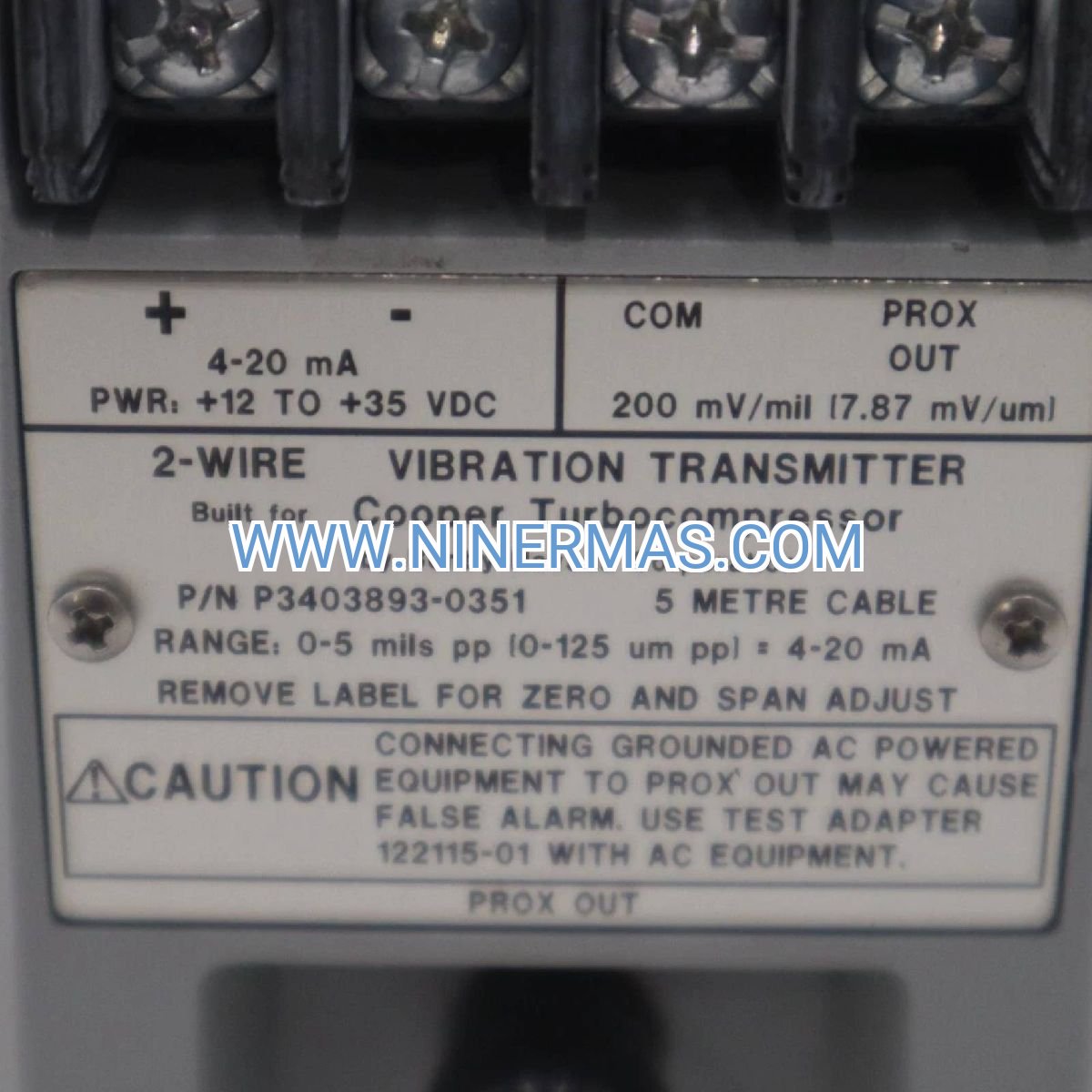
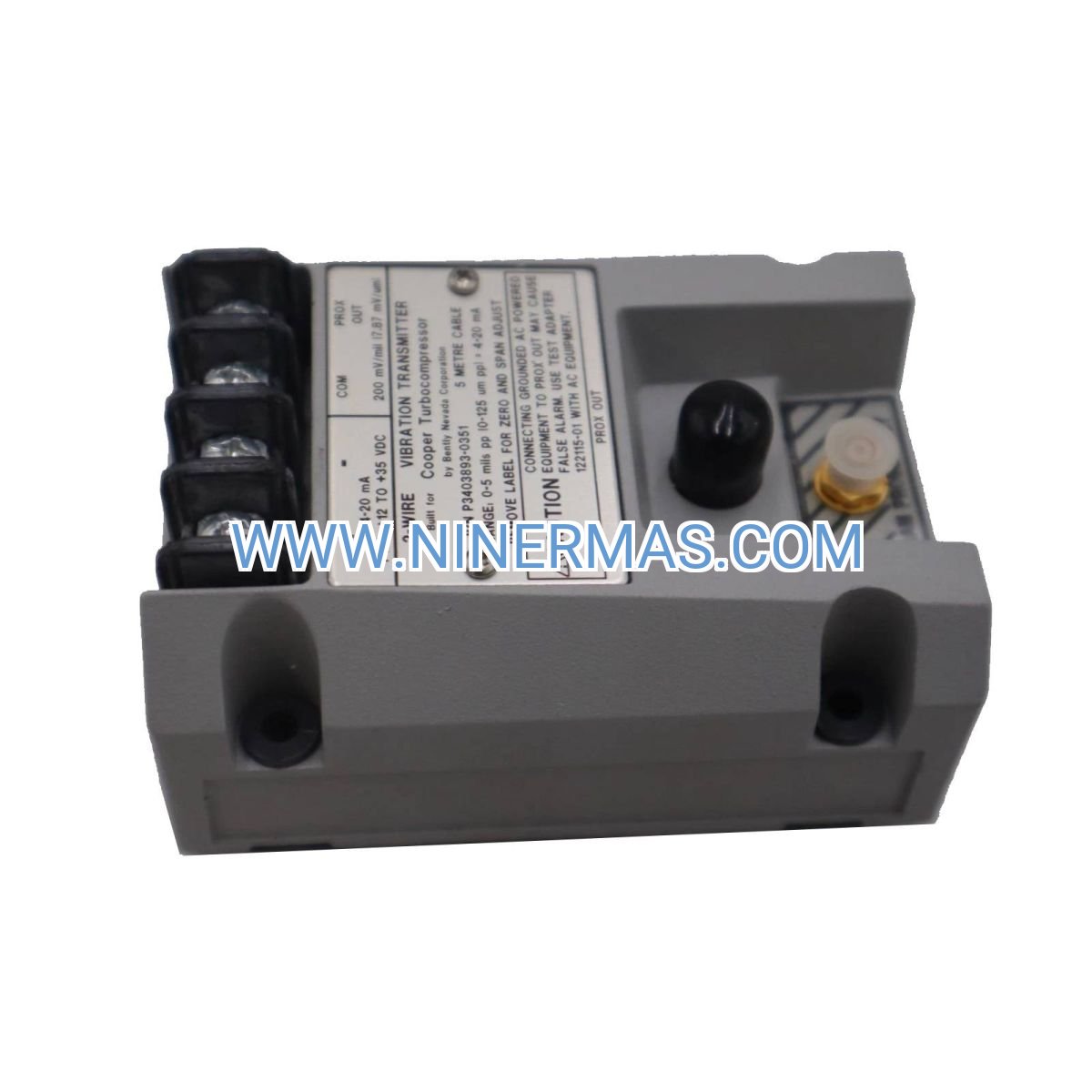
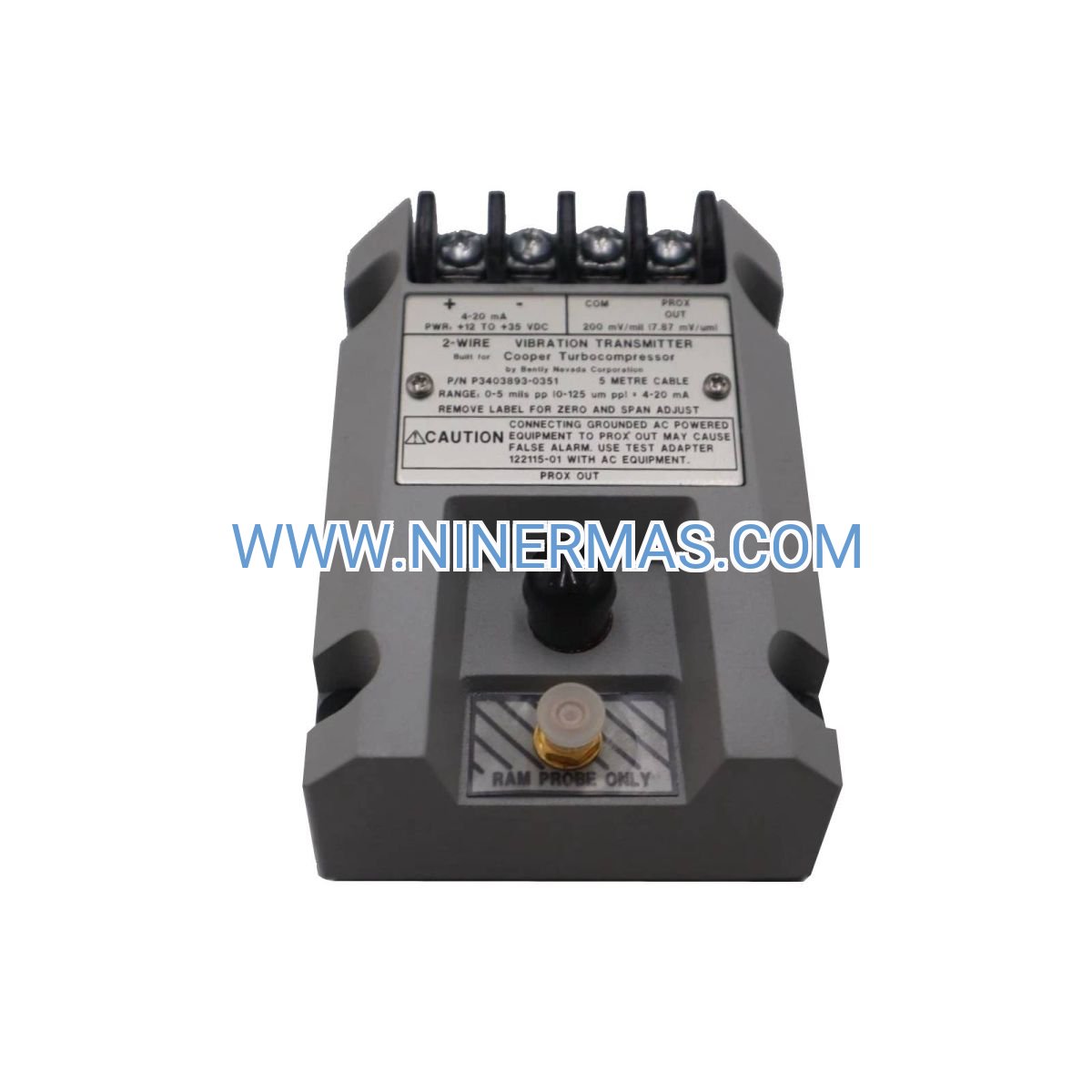
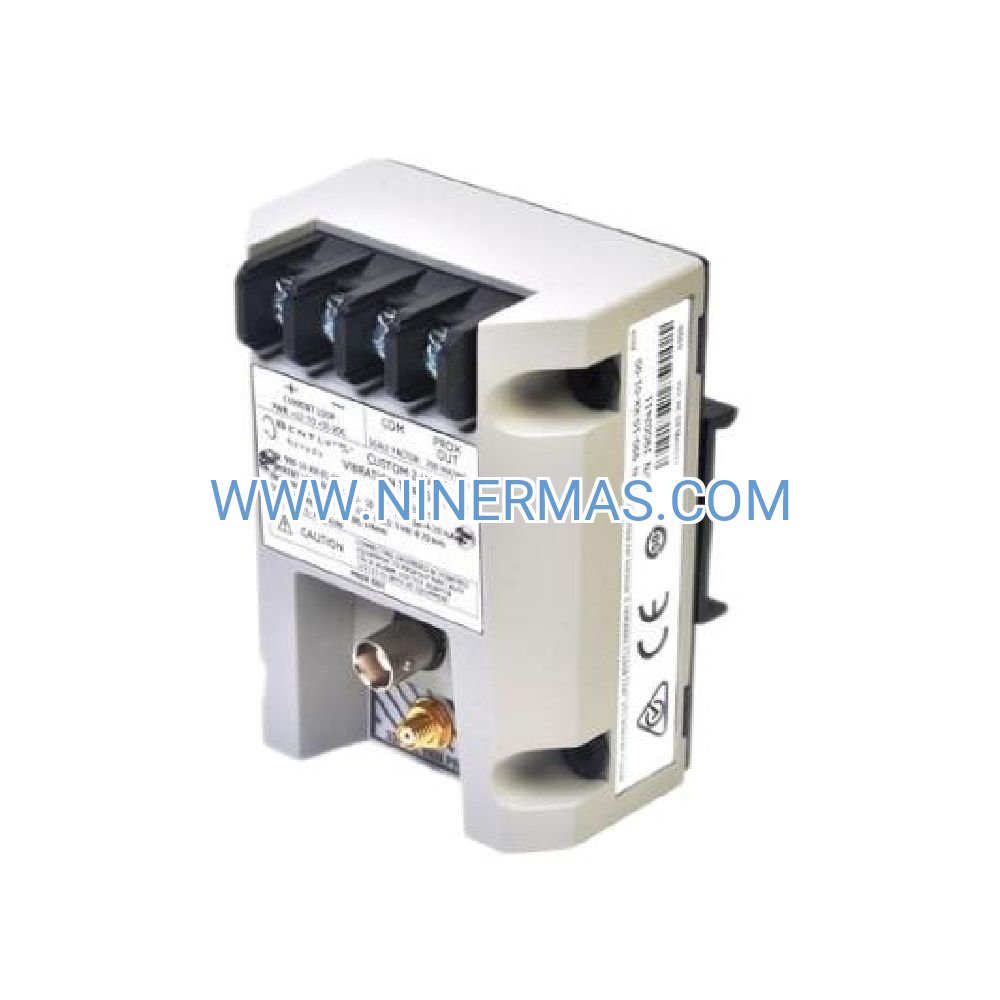
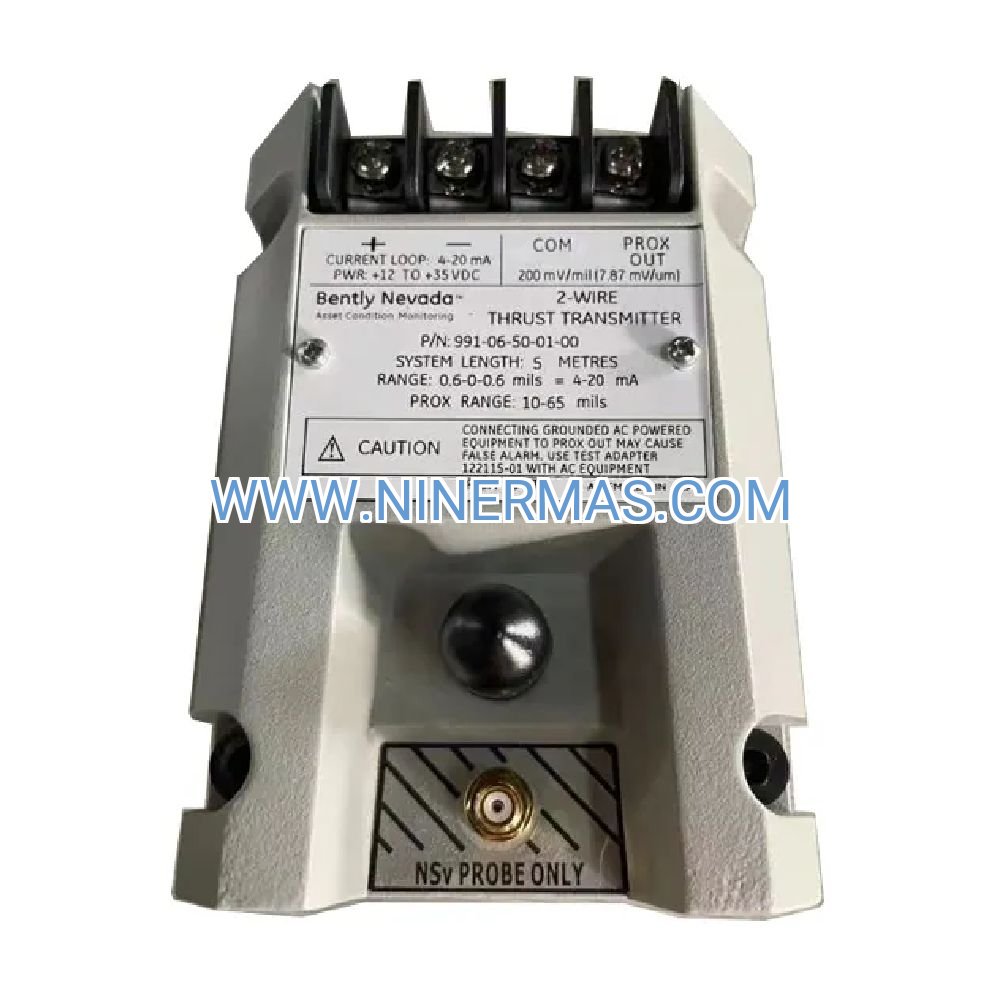
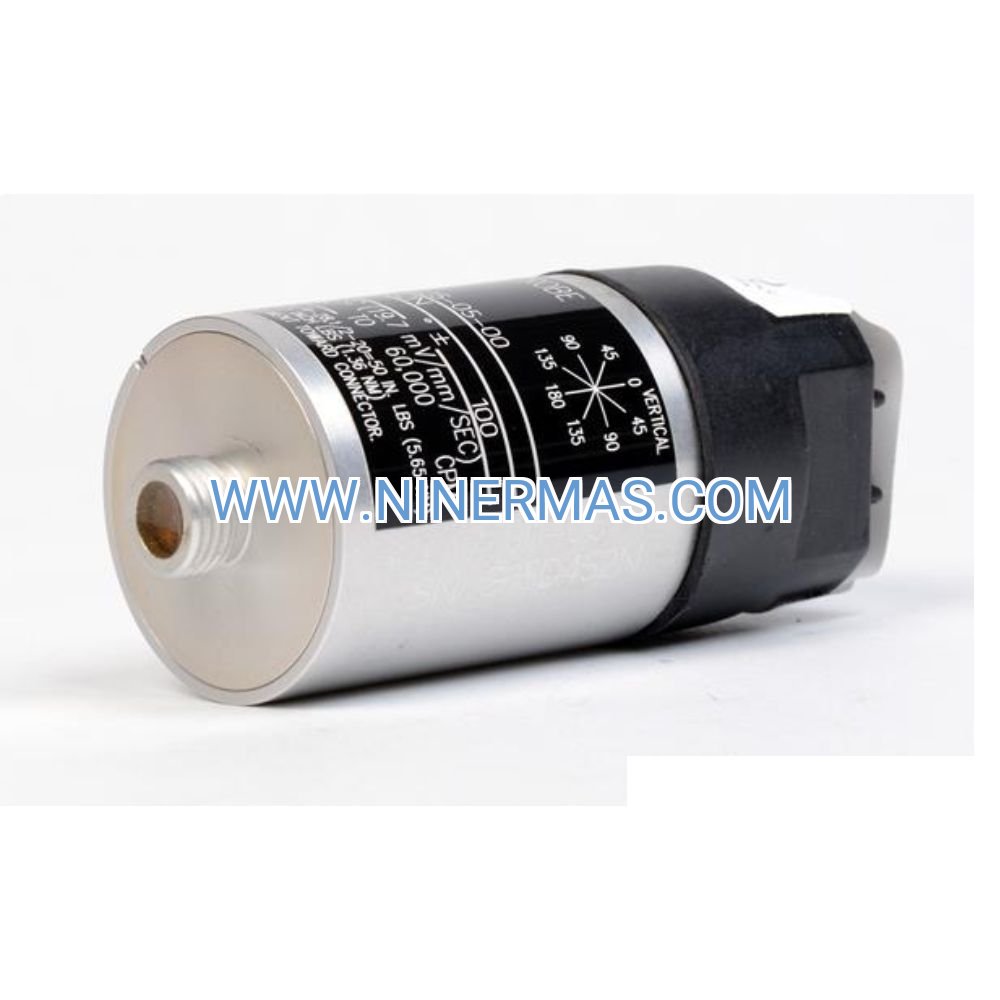
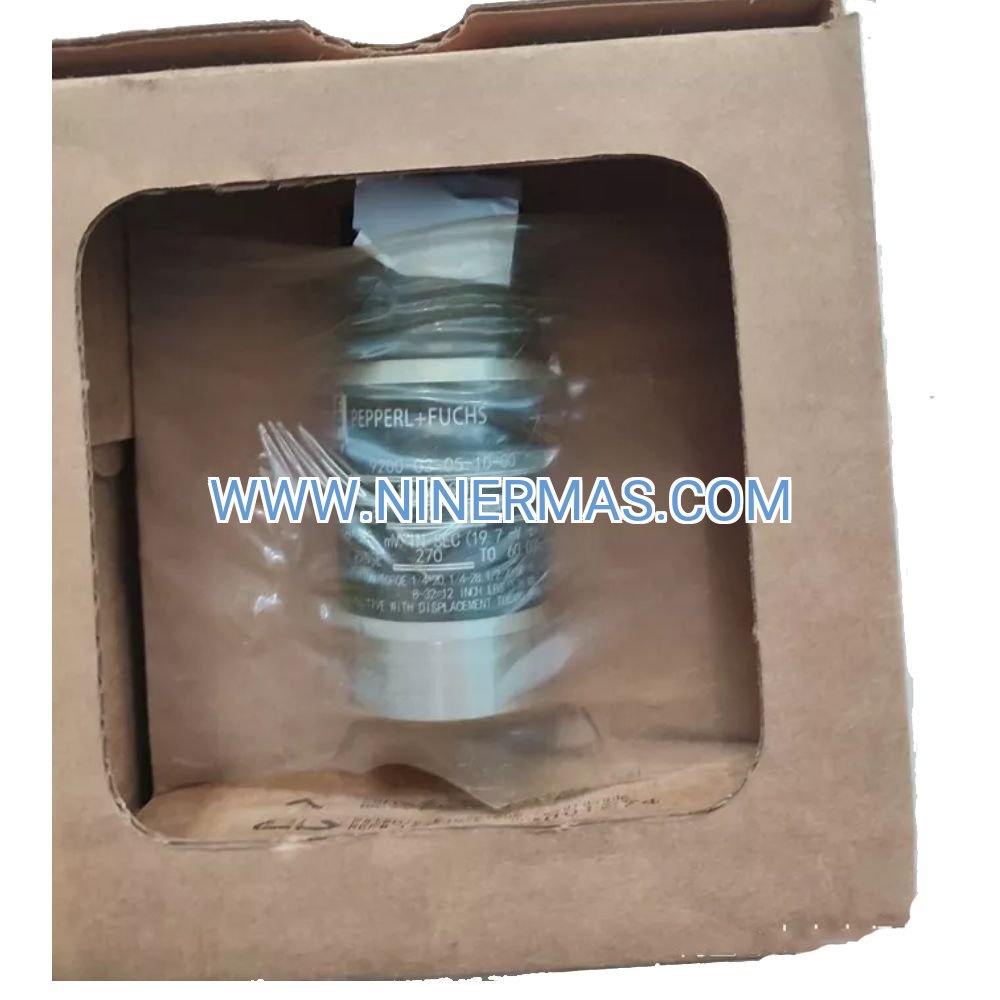
Industrial Vibration Transmitter P3403893-0351 (Precision Machinery Health Monitoring Solution)
The P3403893-0351 Vibration Transmitter is an industrial-grade condition monitoring device engineered for continuous vibration measurement in critical rotating machinery. Through precision piezoelectric sensing and integrated signal conditioning, it delivers real-time vibration velocity data via industry-standard 4-20mA current loop, enabling seamless integration with DCS, PLC, and SCADA platforms for proactive asset protection.
Designed for harsh industrial environments including oil & gas facilities, power generation plants, chemical processing units, and heavy manufacturing operations, this transmitter addresses common challenges such as unexpected equipment downtime, bearing failures, shaft misalignment, and unbalanced rotating components. It provides early fault detection capabilities that help maintenance teams transition from reactive to predictive maintenance strategies.
Featuring factory calibration, IP67 environmental protection, and compliance with API 670 and ISO 20816 international standards, the P3403893-0351 offers reliable performance with minimal installation complexity. Ideal for design engineers, plant maintenance managers, system integrators, and OEM equipment manufacturers seeking proven vibration monitoring technology. Contact our application engineers for customized selection guidance and technical specifications tailored to your specific machinery configuration.
Core Features & Technical Advantages
Precision Vibration Measurement
Utilizes high-sensitivity piezoelectric accelerometer with integrated velocity conversion, delivering accurate RMS velocity measurements from 10 Hz to 1000 Hz frequency range. Provides reliable trending data for bearing condition assessment and dynamic balance verification.
Universal System Compatibility
Standardized 4-20mA current loop output ensures plug-and-play integration with existing control infrastructure, eliminating costly system upgrades. Loop-powered design (18-30 VDC) simplifies wiring and reduces installation costs compared to externally powered alternatives.
Industrial-Grade Environmental Protection
IP67-rated enclosure provides complete dust ingress protection and temporary immersion resistance, suitable for outdoor installations and washdown environments. Extended operating temperature range (-40°C to +85°C) accommodates extreme climate conditions and high-temperature machinery surfaces.
Rapid Fault Detection Response
Fast signal processing with <100ms response time captures transient vibration events and sudden machinery condition changes, enabling immediate alarm activation and emergency shutdown sequences when integrated with protection systems.
Flexible Mounting Solutions
Supports both permanent stud mounting and temporary magnetic base installation, allowing versatile deployment across diverse machine geometries. Compact form factor facilitates installation in space-constrained locations and retrofit applications.
Compliance & Quality Assurance
Manufactured to API 670 machinery protection system standards and ISO 20816 vibration severity guidelines. Each unit ships with NIST-traceable calibration certificate and comprehensive technical documentation for quality verification and regulatory compliance.
Typical Application Scenarios
This vibration transmitter is engineered for applications demanding continuous machinery health visibility, uninterrupted production uptime, and early fault warning capabilities, particularly in:
Turbomachinery & Rotating Equipment
Monitors gas turbines, steam turbines, centrifugal compressors, and turboexpanders in power generation and petrochemical facilities. Detects rotor unbalance, bearing degradation, and aerodynamic instabilities before catastrophic failure occurs, protecting multi-million dollar assets.
Pumping Systems & Fluid Handling
Provides continuous surveillance of centrifugal pumps, positive displacement pumps, and booster pump stations in water treatment plants, oil refineries, and chemical processing units. Identifies cavitation, impeller damage, and seal wear through characteristic vibration signature analysis.
Industrial Drive Systems
Monitors electric motors, gearboxes, coupling assemblies, and fan systems in manufacturing plants, HVAC installations, and material handling operations. Enables condition-based maintenance scheduling and extends equipment service life through early intervention.
Process Industry Critical Equipment
Supports reliability programs in pulp & paper mills, mining operations, cement plants, and steel production facilities where equipment availability directly impacts production throughput and operational profitability.
Technical Specifications & Selection Parameters
To facilitate engineering design and equipment selection, we provide comprehensive technical parameters for the P3403893-0351 transmitter. Custom configurations are available to match specific application requirements.
| Parameter | Specification |
|---|---|
| Model Number | P3403893-0351 |
| Output Signal Type | 4-20mA current loop (2-wire) |
| Measurement Parameter | Vibration velocity (RMS) |
| Measurement Range | 0-25 mm/s RMS (0-1.0 in/s) |
| Frequency Response | 10 Hz to 1000 Hz (±3dB) |
| Power Supply | 18-30 VDC loop-powered |
| Operating Temperature | -40°C to +85°C (-40°F to +185°F) |
| Environmental Protection | IP67 (IEC 60529) |
| Hazardous Area Rating | Intrinsically safe (with approved barriers) |
| Mounting Options | Stud mount (M10 or 1/4-28 UNF) / Magnetic base |
| Response Time | <100 milliseconds |
| Compliance Standards | API 670, ISO 20816, IEC 61508 |
| Housing Material | Stainless steel 316L |
| Cable Connection | M12 connector or integral cable |
| Weight | Approximately 200g (0.44 lbs) |
Selection Guidance
When specifying vibration transmitters, consider the following application parameters: maximum expected vibration levels, machinery operating speed range, ambient temperature extremes, mounting surface accessibility, control system input requirements (voltage compliance, loop resistance), and hazardous area classification. For complex installations involving multiple monitoring points, multi-channel systems, or wireless connectivity requirements, our application engineering team can provide detailed system architecture recommendations and bill-of-materials optimization.
Advanced Integration Capabilities
Multi-Channel Monitoring Systems
Seamlessly integrates into comprehensive machinery protection architectures alongside proximity probes, temperature sensors, and pressure transmitters. Supports centralized monitoring through distributed I/O modules, remote terminal units (RTUs), and cloud-based condition monitoring platforms.
Alarm & Shutdown Logic
Configurable alert thresholds enable two-stage alarm implementation (Alert/Danger) based on ISO 10816 vibration severity zones. Compatible with safety instrumented systems (SIS) for automated emergency shutdown sequences in critical machinery applications.
Data Logging & Trending
Continuous 4-20mA output facilitates long-term vibration trend analysis through SCADA historians and asset performance management (APM) software. Enables predictive analytics, remaining useful life (RUL) estimation, and maintenance optimization strategies.
Protocol Compatibility
When interfaced with appropriate I/O modules, supports industrial communication protocols including Modbus RTU/TCP, HART, Profibus, Foundation Fieldbus, and OPC UA for enterprise-level system integration.
Delivery, Service & Quality Assurance
Lead Time & Availability
Standard P3403893-0351 units typically ship within 3-5 business days from stock. Custom cable lengths, special mounting configurations, or hazardous area certifications may require 2-3 weeks for factory preparation. Expedited shipping options available for urgent replacement requirements.
Warranty Coverage
Each transmitter includes a comprehensive 12-month manufacturer warranty covering material defects and workmanship failures under normal operating conditions. Extended warranty programs and preventive maintenance contracts available for critical asset applications.
Technical Support Services
Complimentary pre-sales application engineering consultation, installation guidance documentation, and post-installation commissioning support. Remote troubleshooting assistance and on-site calibration verification services available (subject to location and service agreement terms).
Documentation Package
Complete technical documentation suite includes: product datasheet with dimensional drawings, electrical wiring diagrams, mounting installation procedures, calibration certificate with NIST traceability, operation and maintenance manual, and compliance declarations (CE, RoHS, ATEX where applicable).
Frequently Asked Questions (FAQ)
Q: How does the P3403893-0351 vibration transmitter integrate with existing PLC or DCS systems?
A: The transmitter outputs a standard 4-20mA current signal that connects directly to analog input modules on most PLC and DCS platforms (Allen-Bradley, Siemens, Schneider Electric, Honeywell, Emerson DeltaV, etc.). Simply wire the two-wire loop to your analog input card, configure the input scaling (0-25 mm/s = 4-20mA), and the vibration data becomes immediately available for monitoring, alarming, and trending. No special interface hardware or proprietary software required.
Q: What is the maximum number of transmitters that can be monitored on a single machinery train?
A: There is no theoretical limit - the quantity depends on your monitoring strategy and available I/O capacity. Typical configurations include 2-4 transmitters per machine (horizontal/vertical/axial orientations on drive-end and non-drive-end bearings). Large turbomachinery installations may deploy 8-12 transmitters across multiple bearing housings, gearbox stages, and driven equipment. Each transmitter requires one dedicated analog input channel.
Q: Can this transmitter detect specific fault types like bearing defects or misalignment?
A: The P3403893-0351 measures overall vibration velocity (broadband RMS), which increases when faults develop. While it provides excellent trending for general machinery health and alarm generation, it does not perform frequency analysis to identify specific fault signatures. For detailed diagnostics (bearing defect frequencies, gear mesh analysis), consider pairing with FFT-capable vibration analyzers or multi-channel data collectors during periodic surveys.
Q: Is the transmitter suitable for hazardous area installations in oil & gas facilities?
A: Yes, when properly installed with certified intrinsically safe barriers (Zener barriers or galvanic isolators), the P3403893-0351 can be deployed in Zone 1, Zone 2, Division 1, and Division 2 classified locations. The transmitter itself is designed for intrinsically safe circuits. Ensure your barrier selection matches the area classification, gas group, and temperature class requirements. Consult local electrical codes and certification requirements for your specific jurisdiction.
Q: What maintenance is required after installation?
A: The transmitter is designed for maintenance-free operation under normal conditions. Recommended practices include: periodic visual inspection of cable connections and housing integrity (quarterly), verification of output signal stability through control system trending (continuous), and recalibration verification every 2-3 years or per plant calibration procedures. If the transmitter is subjected to mechanical impact or extreme environmental exposure, perform functional testing to confirm continued accuracy.
Q: How do I select the appropriate mounting location on my machinery?
A: Optimal mounting locations are typically on bearing housings as close as possible to the bearing centerline, in the horizontal and vertical planes perpendicular to the shaft axis. Avoid mounting on thin sheet metal, non-structural covers, or locations with high-frequency resonances. The mounting surface should be flat, clean, and rigid. For critical machinery, follow API 670 or ISO 20816 guidelines which specify standard measurement points. Our application engineers can review your machinery drawings and recommend optimal sensor placement for your specific equipment configuration.
Request Technical Consultation & Quotation
To receive detailed application engineering support, customized selection recommendations, or formal quotations for the P3403893-0351 vibration transmitter, please provide the following project information to our technical team:
- Project name and application industry (power generation, oil & gas, chemical processing, etc.)
- Equipment type and operating parameters (pump, motor, turbine, compressor; speed range, power rating)
- Number of monitoring points required and preferred mounting orientations
- Control system platform and analog input specifications (voltage compliance, loop resistance)
- Environmental conditions (temperature range, hazardous area classification, outdoor/indoor)
- Required delivery timeline and installation schedule
Our application engineers will respond within 24 hours with tailored recommendations, technical specifications, and competitive pricing for your machinery protection project.
© 2026 NINERMAS COMPANY LIMITED. All rights reserved.
Original Source: https://ninermas.com
Contact: sale@ninermas.com | +0086 187 5021 5667

Contact Info
-
Address:22 / F, South Wo Hang building, 148 Wing Lok Street, Sheung Wan, Western District, Hong Kong
-
Phone:+8618750215667
-
Email: