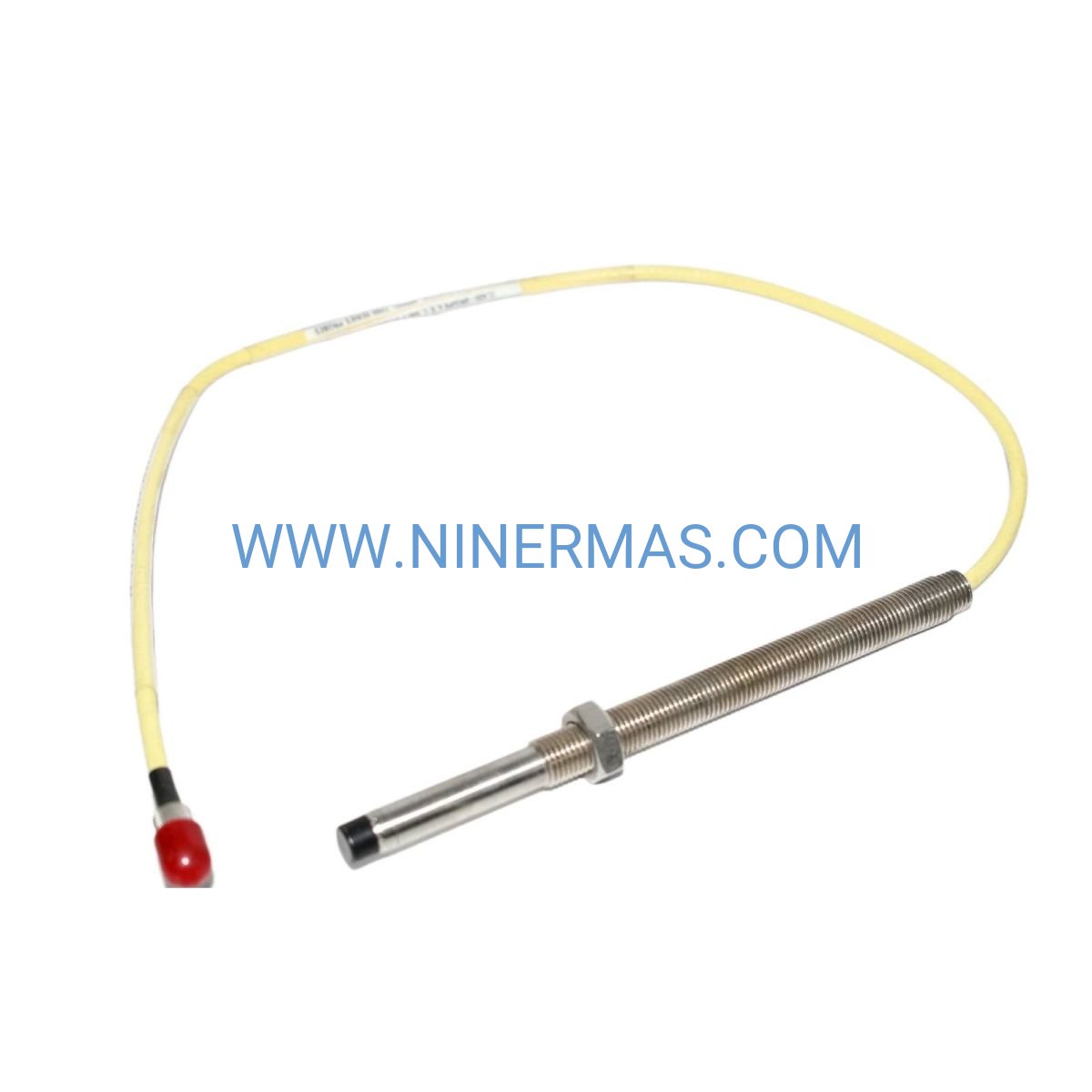
Bently Nevada CA21504-00-16-10-02 Armored Proximity Cable 16m | Industrial Vibration Monitoring
Description
Bently Nevada CA21504-00-16-10-02 Armored Proximity Cable (Industrial-Grade Vibration Monitoring Solution)
The Bently Nevada CA21504-00-16-10-02 is a premium 16-meter armored proximity cable engineered specifically for critical vibration monitoring applications within the Bently Nevada 3300 XL ecosystem. Through advanced PTFE insulation technology and stainless steel armor construction, this cable delivers reliable signal transmission in the most demanding industrial environments, ensuring continuous machinery health monitoring and early fault detection.
Designed for power generation facilities, petrochemical plants, heavy manufacturing operations, and rotating machinery installations, this cable addresses common challenges including electromagnetic interference, mechanical damage risks, extreme temperature fluctuations, and chemical exposure. It maintains signal integrity in environments where standard cables fail, protecting your critical monitoring infrastructure.
With standardized 50Ω impedance matching and field-proven durability, the CA21504-00-16-10-02 offers exceptional electromagnetic shielding, temperature stability from -40°C to +150°C, superior mechanical protection, and long-term reliability. Ideal for design engineers, maintenance teams, system integrators, and plant operators requiring dependable connectivity between proximity probes and monitoring systems. Contact our application engineers for cable routing recommendations and technical specifications.
Core Features & Technical Advantages
- Military-Grade Stainless Steel Armor
Interlocked stainless steel armor provides exceptional resistance to crushing, abrasion, and impact damage, protecting the signal conductor in high-vibration environments and areas with heavy equipment traffic or maintenance activity. - High-Performance PTFE Insulation
Premium polytetrafluoroethylene (PTFE) dielectric insulation ensures stable electrical properties across extreme temperature ranges, superior chemical resistance, and minimal signal attenuation even after years of continuous operation. - Precision 50Ω Impedance Matching
Factory-calibrated 50Ω characteristic impedance eliminates signal reflections and maintains measurement accuracy, critical for detecting early-stage bearing faults, shaft misalignment, and rotor imbalance conditions. - Extended Temperature Performance
Rated for continuous operation from -40°C to +150°C, suitable for arctic installations, steam turbine applications, compressor monitoring, and other extreme thermal environments without performance degradation. - Comprehensive Environmental Protection
Built-in shielding against electromagnetic interference (EMI), radio frequency interference (RFI), moisture ingress, oil contamination, and chemical exposure, ensuring reliable operation in refineries, offshore platforms, and chemical processing facilities. - Plug-and-Play 3300 XL Integration
Factory-terminated connectors ensure seamless compatibility with Bently Nevada 3300 XL proximity systems, eliminating field termination errors and reducing installation time by up to 60% compared to bulk cable solutions.
Typical Application Scenarios
This armored proximity cable is engineered for installations demanding maximum reliability and signal integrity, particularly in:
- Steam & Gas Turbine Monitoring
Connects proximity probes to monitoring systems on turbine bearing housings, thrust position sensors, and rotor eccentricity measurements where temperatures exceed 120°C and vibration levels are severe. - Compressor & Pump Vibration Analysis
Provides dependable signal transmission for centrifugal compressors, reciprocating compressors, and critical process pumps in oil & gas, chemical processing, and power generation facilities requiring API 670 compliance. - Motor & Generator Bearing Protection
Monitors large induction motors, synchronous generators, and high-speed rotating equipment where early detection of bearing wear, rotor rubs, or shaft cracks prevents catastrophic failures and unplanned downtime. - Offshore & Marine Installations
Withstands salt spray, humidity, and mechanical stress on FPSO vessels, drilling platforms, and marine propulsion systems where cable replacement is costly and operationally disruptive. - Steel Mills & Heavy Manufacturing
Survives harsh conditions in rolling mills, crushers, conveyors, and material handling systems exposed to metal debris, coolant spray, and extreme mechanical abuse.
Technical Specifications & Selection Guide
To ensure optimal performance and compatibility with your vibration monitoring system, please review the following specifications:
| Parameter | Specification |
| Part Number | CA21504-00-16-10-02 |
| Cable Length | 16 meters (52.5 feet) |
| Characteristic Impedance | 50Ω ± 2Ω |
| Conductor Material | Tinned copper, stranded |
| Insulation Type | PTFE (Polytetrafluoroethylene) |
| Armor Construction | Interlocked stainless steel (Type 304) |
| Shield Coverage | ≥95% braided shield |
| Operating Temperature | -40°C to +150°C (-40°F to +302°F) |
| Voltage Rating | 300V RMS maximum |
| Minimum Bend Radius | 10× cable diameter (dynamic), 6× (static) |
| Connector Type | Bently Nevada standard bayonet (both ends) |
| System Compatibility | 3300 XL, 3300 NSv proximity systems |
| Environmental Rating | IP67 (when properly terminated) |
| Compliance Standards | API 670, ISO 20816, IEC 61508 |
Selection Considerations: When specifying proximity cables, evaluate the physical routing distance including vertical runs and service loops, ambient temperature extremes and thermal cycling patterns, exposure to chemicals, oils, or corrosive atmospheres, mechanical hazards such as foot traffic or moving equipment, and electromagnetic noise sources. For custom lengths, alternative armor materials, or special terminations, provide installation drawings and environmental conditions to our engineering team for tailored recommendations.
Extended Capabilities & System Integration
- Multi-Channel Installations: Available in matched sets for multi-probe configurations, ensuring consistent phase response and amplitude matching across all measurement channels for accurate orbit analysis and modal testing.
- Retrofit Compatibility: Direct replacement for legacy Bently Nevada cable assemblies including 02-series and 05-series cables, enabling system upgrades without proximity system modifications or recalibration.
- Hazardous Area Certification: Suitable for use in Class I Division 2 (Zone 2) locations when installed per NEC/IEC guidelines, supporting installations in refineries, chemical plants, and gas processing facilities.
- Diagnostic Support: Cable construction supports TDR (Time Domain Reflectometry) testing for fault location and insulation resistance verification, facilitating predictive maintenance and troubleshooting.
Delivery, Service & Quality Assurance
Lead Time: Standard 16m length typically ships within 3-5 business days from regional distribution centers. Custom lengths and special configurations require 10-15 business days for factory assembly and testing.
Warranty Coverage: Backed by a comprehensive 12-month warranty covering materials and workmanship defects. Extended warranty programs available for critical applications requiring long-term performance guarantees.
Technical Support: Our application engineers provide cable routing consultation, installation best practices, and troubleshooting assistance via phone, email, or remote video support. On-site commissioning services available for major projects (location-dependent).
Documentation Package: Each cable ships with factory test certificate, dimensional drawings, installation guidelines, connector torque specifications, and material traceability documentation for quality management system compliance.
Frequently Asked Questions (FAQ)
Q: How do I connect the CA21504-00-16-10-02 armored proximity cable to my existing 3300 XL monitoring system?
A: The cable features factory-installed Bently Nevada bayonet connectors on both ends. Simply align the connector key with the receptacle slot on your proximity probe and proximitor housing, insert fully, and rotate clockwise until the bayonet locks engage (typically 1/4 turn). Verify connection security by gently pulling the cable—properly seated connectors will not disengage. Torque specifications and detailed installation procedures are included in the supplied documentation.
Q: What is the maximum cable length supported for proximity probe applications?
A: For standard 3300 XL 8mm proximity systems, total cable length (extension cable + probe cable) should not exceed 9 meters (30 feet) to maintain system accuracy within ±2% of full scale. The 16m CA21504 cable is designed for applications where the proximitor is mounted remotely from the probe, with the proximitor providing signal conditioning before long-distance transmission to the monitoring system. Consult system documentation or contact our engineers to verify your specific configuration requirements.
Q: Can this armored cable withstand continuous exposure to hydraulic oil, cutting fluids, or chemical solvents?
A: Yes. The PTFE insulation and stainless steel armor provide excellent resistance to petroleum-based oils, synthetic lubricants, water-based coolants, and most industrial chemicals. However, prolonged exposure to strong oxidizing acids (concentrated sulfuric, nitric) or molten alkali metals may degrade armor integrity. For installations involving exotic chemicals or extreme pH environments, provide specific chemical exposure data for compatibility verification.
Q: What energy savings or efficiency improvements can I expect from using armored cables?
A: While the cable itself does not directly reduce energy consumption, reliable vibration monitoring enabled by high-integrity cabling prevents unplanned equipment failures that can result in 15-30% efficiency losses due to misalignment, bearing wear, or rotor imbalance. Early fault detection allows condition-based maintenance scheduling, optimizing equipment performance and avoiding energy-wasting degraded operating conditions.
Q: Does the stainless steel armor require electrical grounding, and how should it be terminated?
A: The armor should be grounded at one end only (typically at the proximitor/monitoring system end) to prevent ground loops that can introduce noise. The factory-installed connectors include proper armor termination and grounding provisions. Never ground both ends, as circulating currents through the armor can create measurement errors and accelerate corrosion in the presence of moisture.
Q: Is remote monitoring or predictive analytics integration supported with this cable?
A: The cable provides transparent signal transmission compatible with all Bently Nevada 3300 XL system outputs, including 4-20mA, -10 to +10V buffered outputs, and Modbus/OPC connectivity options available on modern proximitor modules. This enables seamless integration with SCADA systems, cloud-based condition monitoring platforms (Azure IoT, AWS IoT), and predictive analytics software for advanced machine learning-based fault prediction.
Request Technical Support & Custom Solutions
For detailed application engineering support, custom cable assemblies, or project-specific quotations, please provide the following information to our technical team:
- Project name and application description (equipment type, operating conditions)
- Required cable length and quantity
- Proximity probe model and proximitor system configuration
- Environmental conditions: temperature range, chemical exposure, mechanical hazards
- Installation constraints: routing path, bend radius limitations, connector orientation
- Delivery timeline and any special certifications required (ATEX, IECEx, SIL rating)
Our application engineers will provide one-on-one consultation, cable routing recommendations, and system integration guidance to ensure optimal performance for your critical machinery protection application.
© 2026 NINERMAS COMPANY LIMITED. All rights reserved. Original Source: https://ninermas.com Contact: sale@ninermas.com | +0086 187 5021 5667

Contact Info
-
Address:22 / F, South Wo Hang building, 148 Wing Lok Street, Sheung Wan, Western District, Hong Kong
-
Phone:+8618750215667
-
Email: