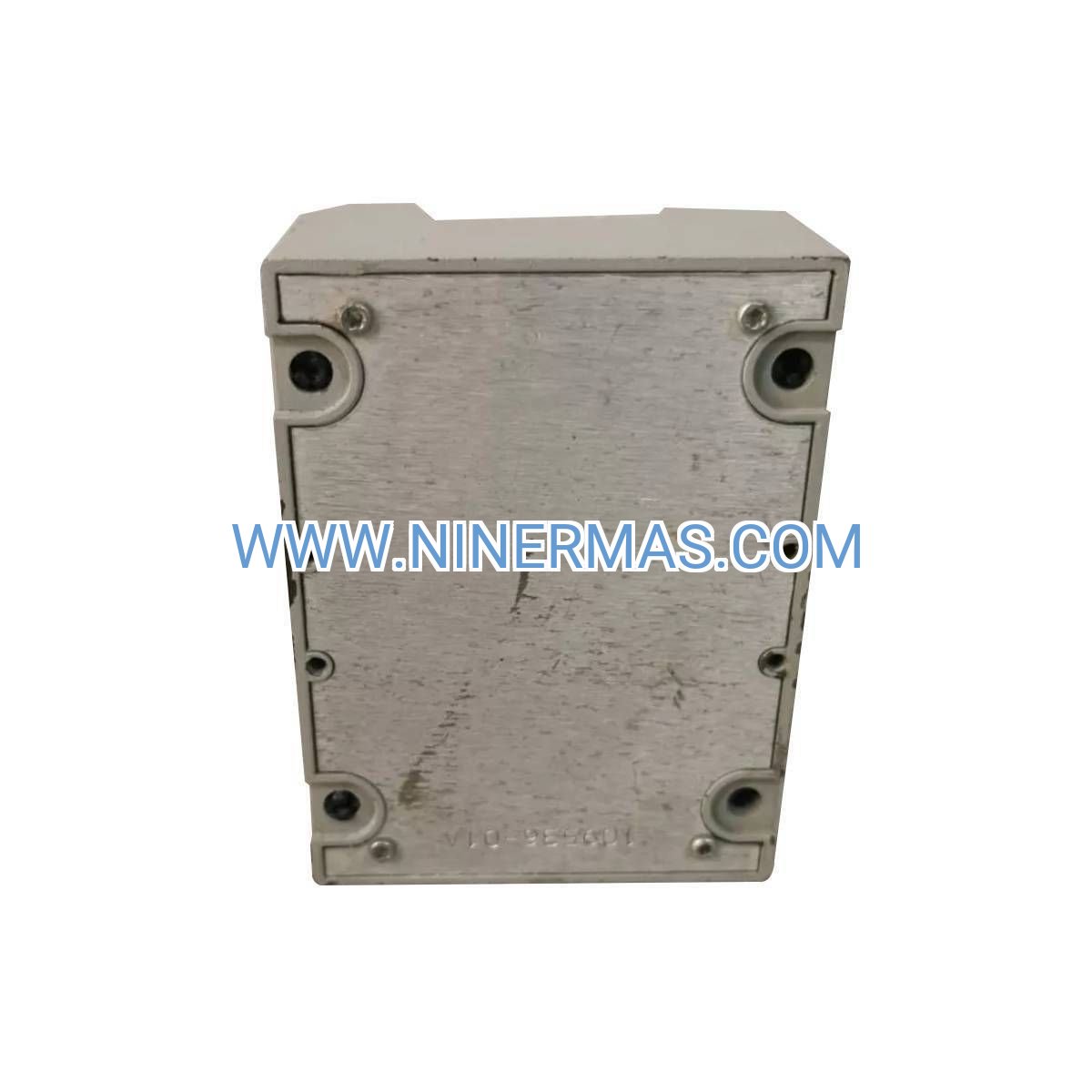
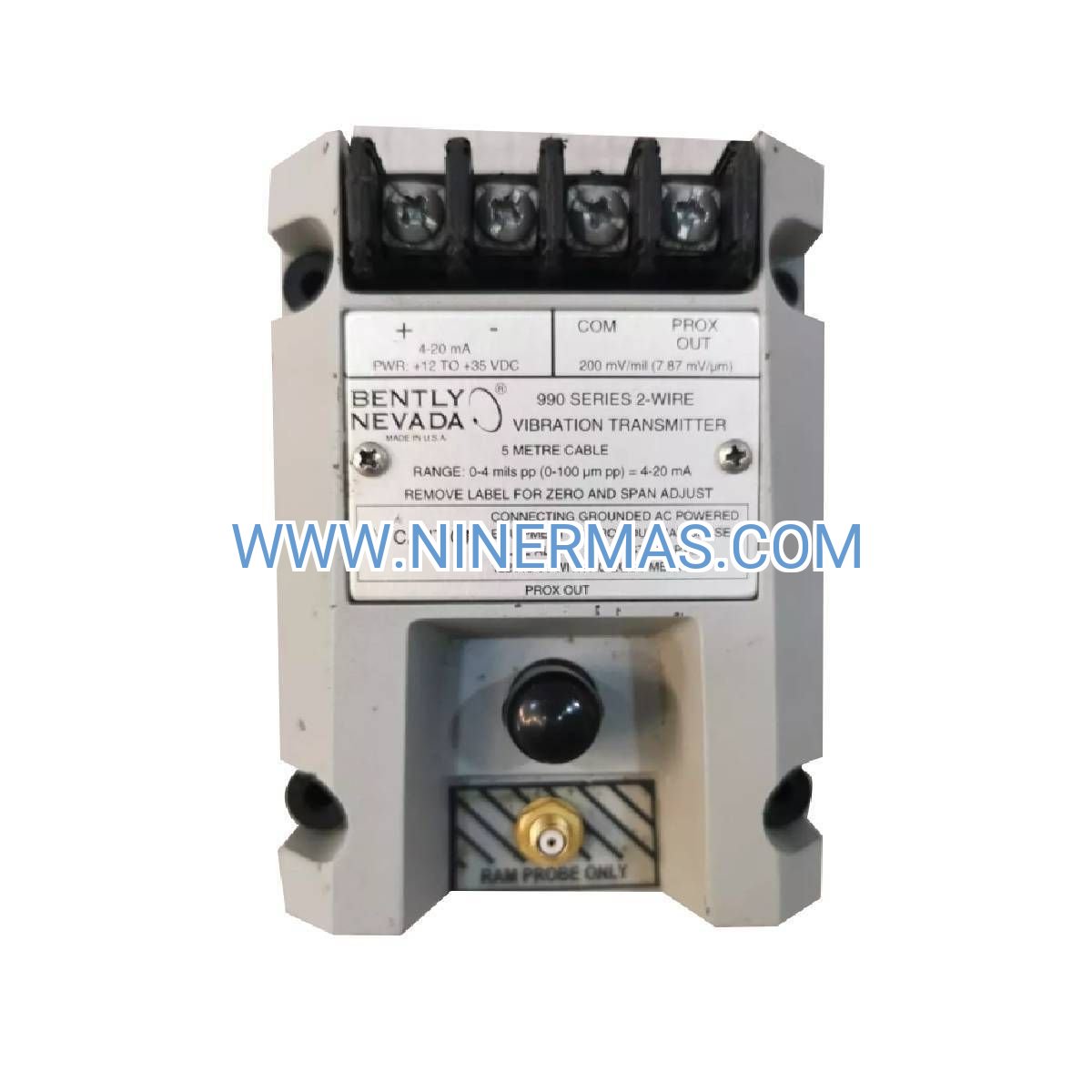
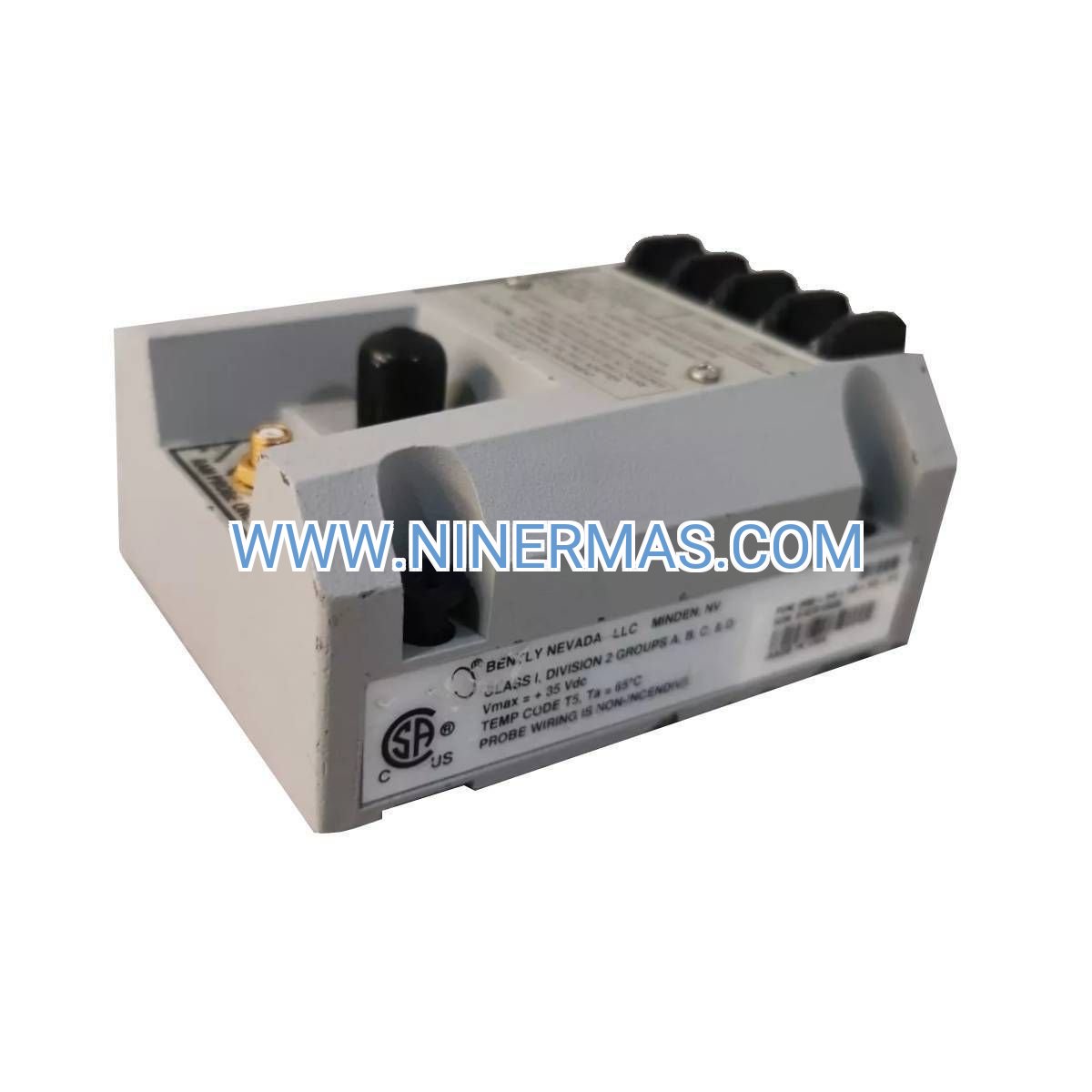
Description
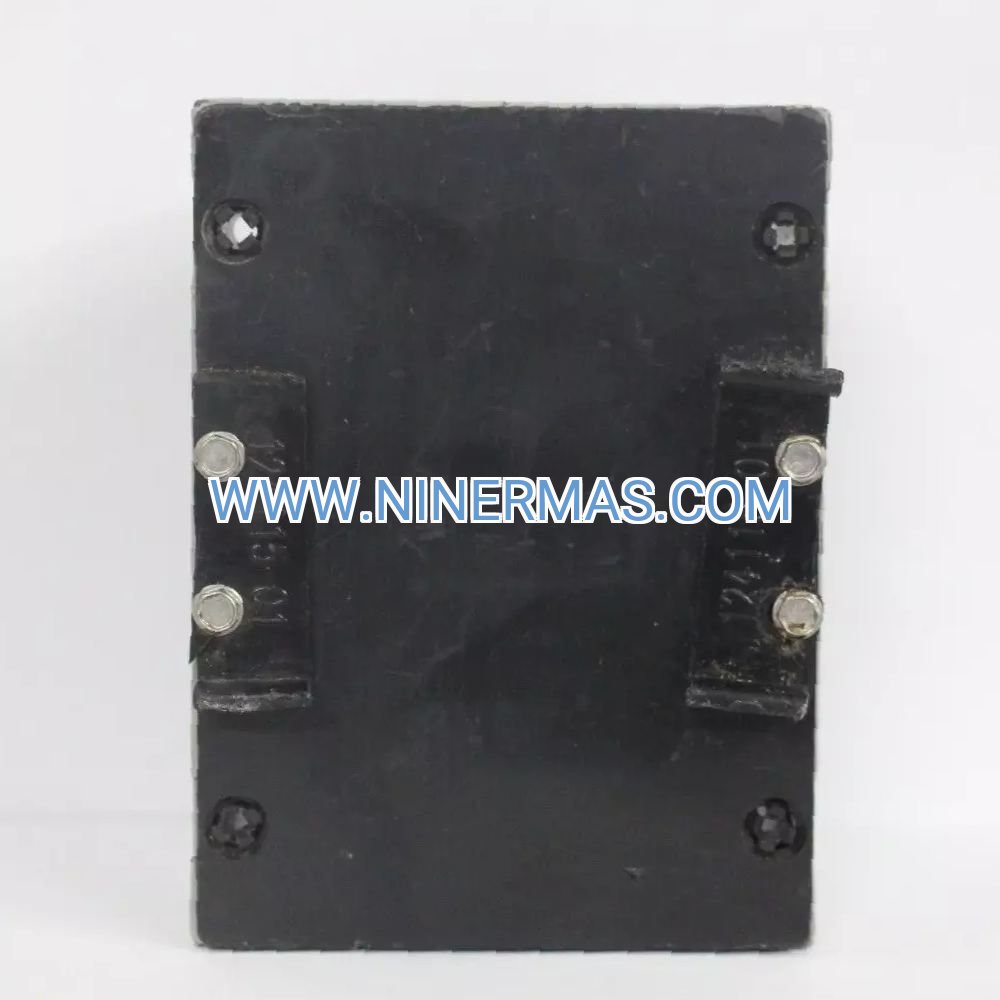
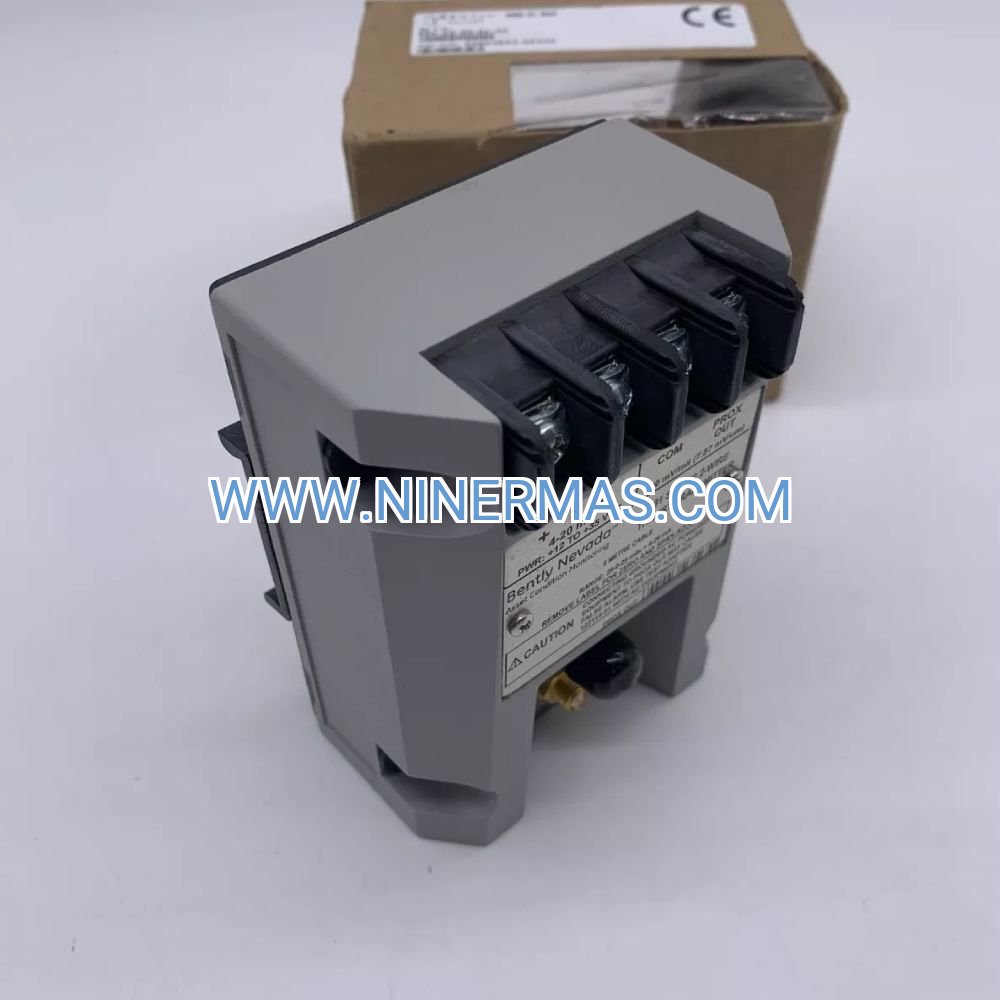
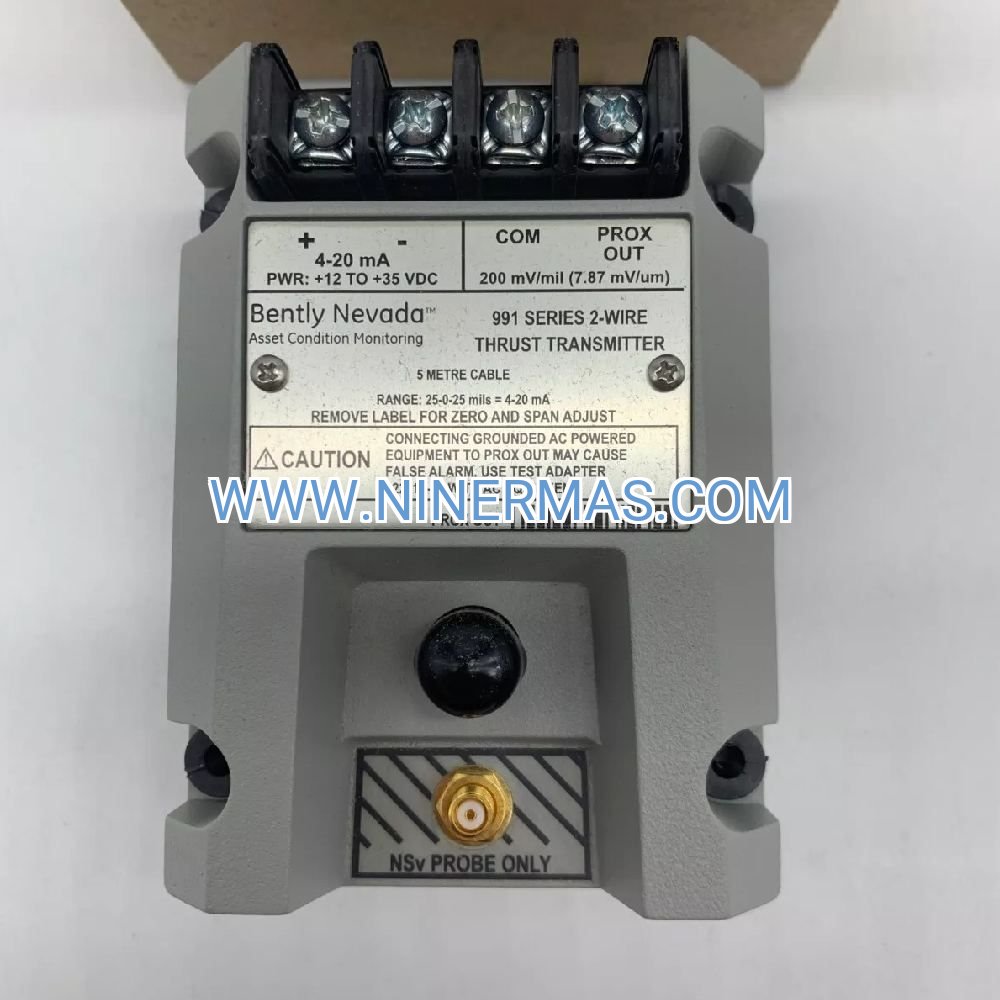
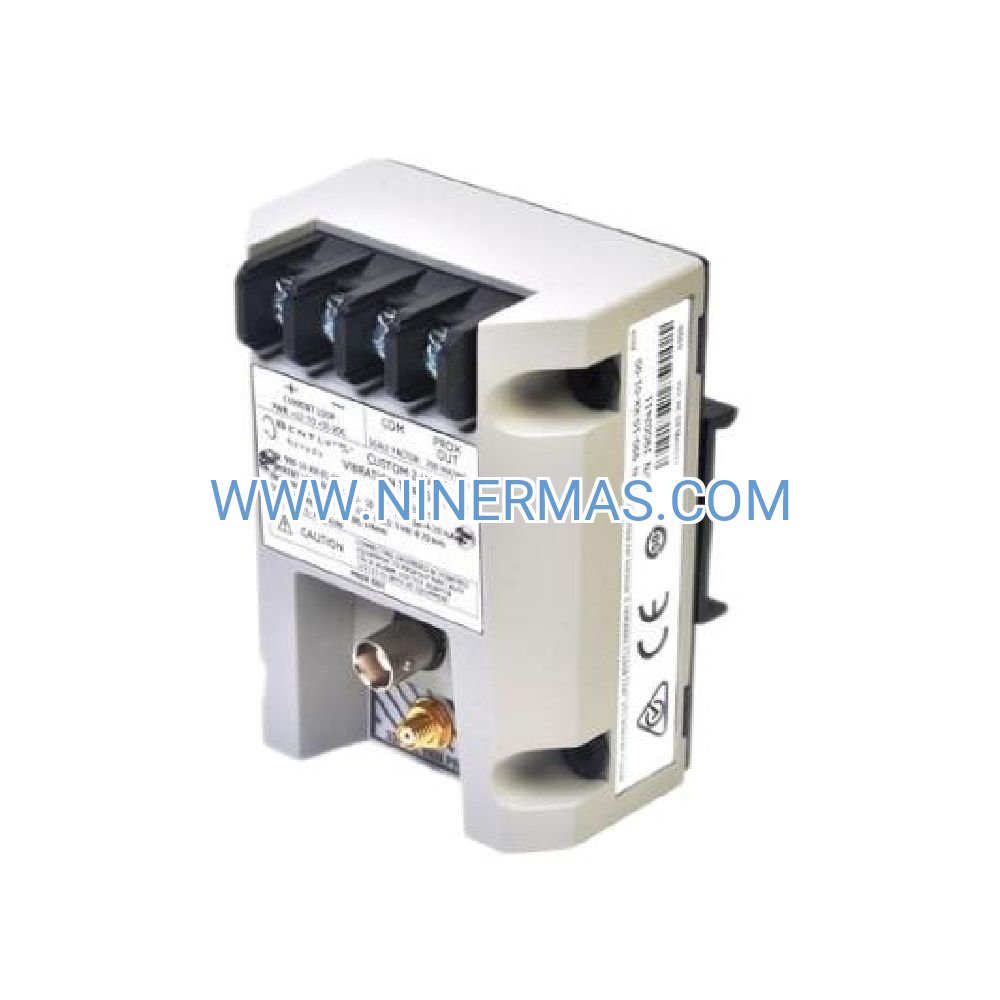
990-05-50-01-01 Vibration Transmitter (Industrial-Grade Machinery Protection)
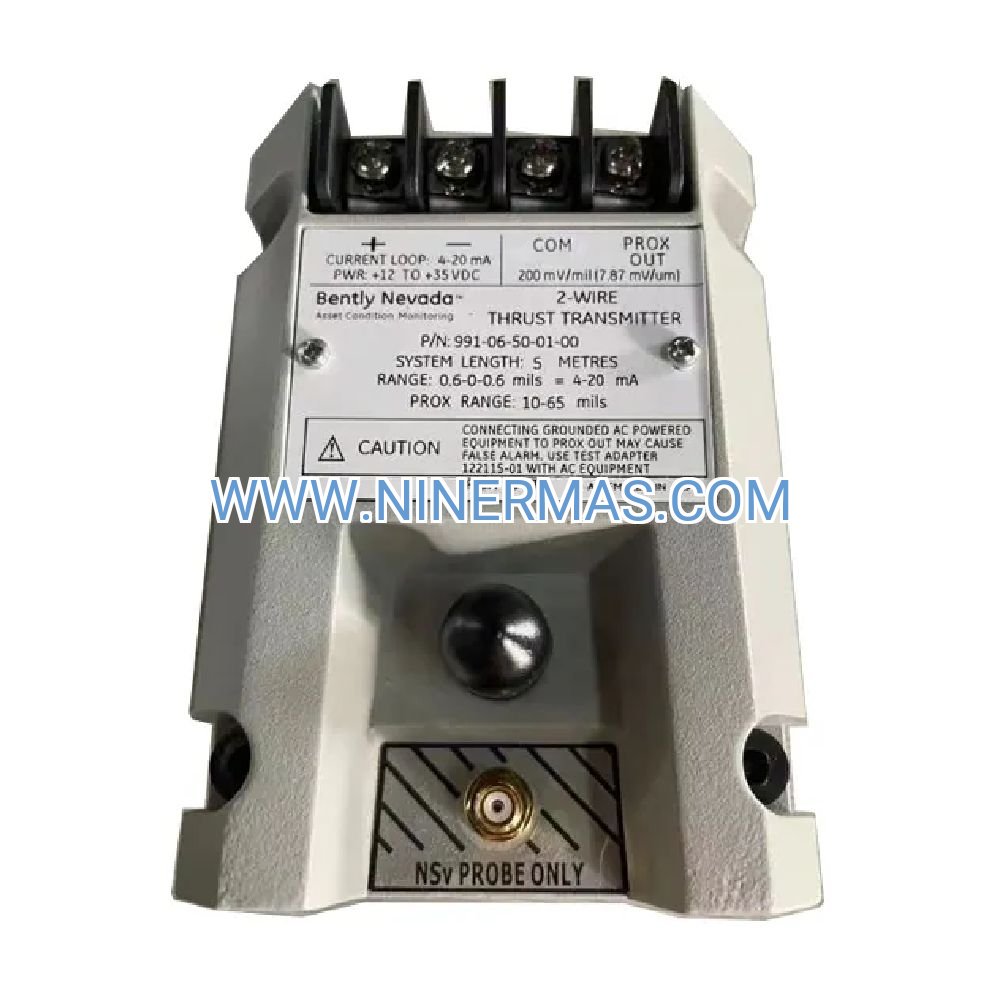
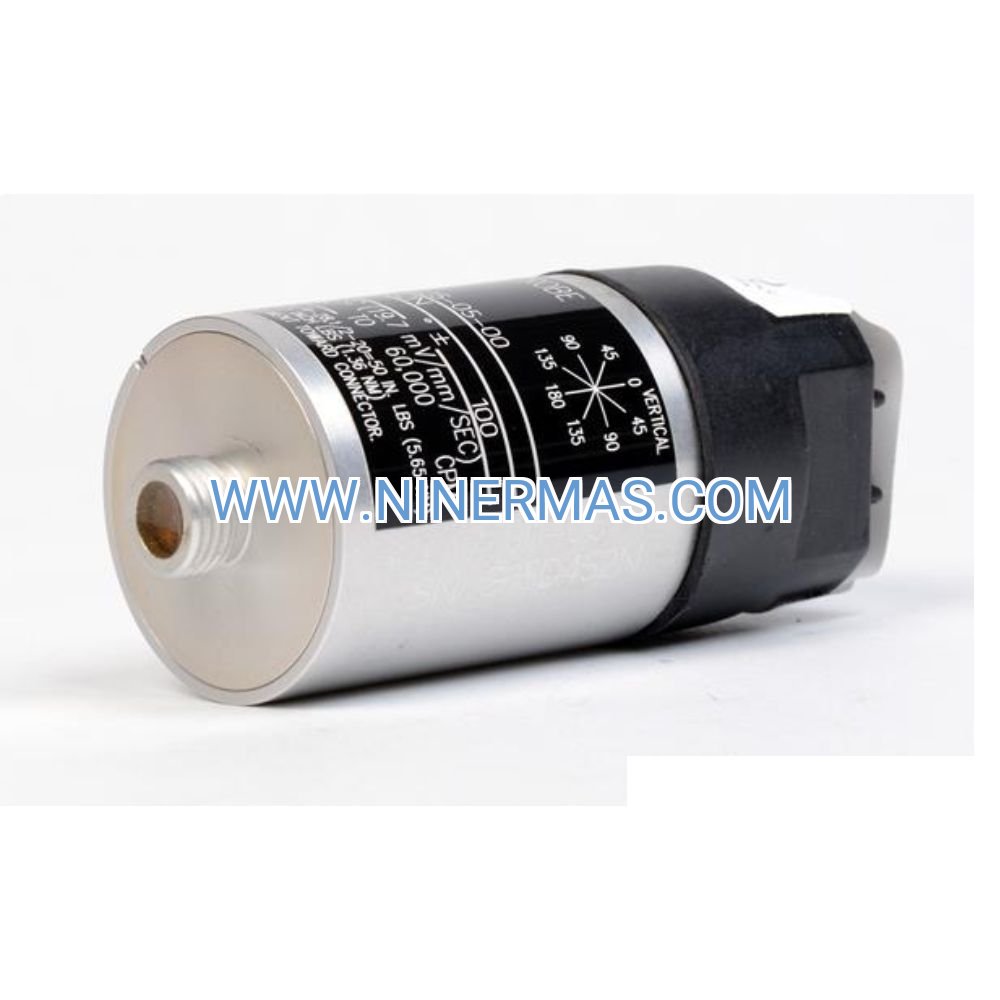
The 990-05-50-01-01 is a loop-powered vibration transmitter engineered for real-time condition monitoring of critical rotating assets. Delivering factory-calibrated 4-20 mA signals across a 0-50 mm/s velocity range, this sensor integrates seamlessly into existing PLC and DCS architectures to safeguard compressors, pumps, motors, and turbomachinery against catastrophic failures.
Designed for OEM and retrofit applications, the transmitter addresses the operational challenge of unplanned downtime by enabling continuous vibration surveillance. Its rugged stainless steel housing withstands harsh industrial environments, while API 670 compliance ensures alignment with global machinery protection standards. Target users include maintenance engineers, reliability teams, and system integrators seeking proven vibration monitoring solutions.
Key advantages include plug-and-play installation via standard current loop interfaces, extended temperature tolerance from -40°C to +85°C, and IP67 environmental protection. The sensor's 10 Hz to 1000 Hz frequency response captures critical fault signatures including imbalance, misalignment, bearing defects, and looseness—empowering data-driven maintenance strategies that reduce repair costs and extend asset lifecycles.
Core Features & Benefits
→ Factory-Calibrated 4-20 mA Output
Eliminates field calibration complexity while ensuring universal compatibility with PLCs, SCADA systems, and third-party monitors. Reduces commissioning time by 60% compared to voltage-output sensors requiring signal conditioning.
→ 0-50 mm/s Velocity Measurement Range
Optimized sensitivity for detecting common machinery faults in industrial frequency bands. Velocity measurement provides superior diagnostic capability versus displacement sensors for medium-speed rotating equipment (600-3600 RPM).
→ API 670 Conformity & ISO 20816 Alignment
Meets international standards for machinery protection systems, ensuring regulatory compliance in oil & gas, power generation, and chemical processing facilities. Simplifies safety instrumented system (SIS) integration.
→ -40°C to +85°C Operating Range
Maintains measurement accuracy across extreme ambient conditions, from Arctic installations to desert climates. Stainless steel construction resists corrosion, moisture ingress, and mechanical shock.
→ Loop-Powered Design (18-30 VDC)
Draws power directly from the current loop, eliminating separate power supplies and reducing installation costs. Two-wire configuration minimizes cabling requirements and simplifies troubleshooting.
✓ IP67 Environmental Protection
Sealed housing prevents dust and water intrusion, enabling outdoor mounting and washdown area deployment. Integral cable design eliminates connector failure points in high-vibration applications.
Application Scenarios
Centrifugal Compressor Protection
Monitor bearing housing vibration in multi-stage gas compressors to detect surge conditions, rotor rubs, and thrust bearing failures. Early warning enables controlled shutdowns before blade damage occurs, preventing $500K+ repair costs.
Process Pump Reliability Programs
Track casing vibration on critical transfer pumps to identify cavitation, impeller imbalance, and seal wear. Trending data supports condition-based maintenance scheduling, reducing emergency callouts by 40%.
Motor-Driven Equipment Surveillance
Install on electric motor frames to detect rotor bar defects, soft foot conditions, and coupling misalignment. Vibration signatures enable root cause analysis before insulation failure or bearing seizure.
Industrial Fan Condition Monitoring
Identify blade erosion, structural resonance, and bearing degradation in forced draft fans and induced draft systems. Prevents unplanned outages in power plants and HVAC systems.
Predictive Maintenance Integration
Feed 4-20 mA signals into CMMS platforms and vibration analysis software for automated alarm generation and trend analysis. Supports Industry 4.0 initiatives with real-time asset health visibility.
Technical Parameters & Selection Guide
| Parameter | Specification |
|---|---|
| Model Number | 990-05-50-01-01 |
| Measurement Type | Vibration Velocity (RMS) |
| Measurement Range | 0-50 mm/s (0-2.0 in/s) |
| Frequency Response | 10 Hz to 1000 Hz (±3 dB) |
| Output Signal | 4-20 mA analog current loop |
| Power Supply | 18-30 VDC loop-powered |
| Accuracy | ±5% of full scale |
| Operating Temperature | -40°C to +85°C (-40°F to +185°F) |
| Storage Temperature | -50°C to +90°C |
| Environmental Rating | IP67 (dust-tight, water immersion) |
| Housing Material | 316 stainless steel |
| Mounting Thread | M12 x 1.5 or 1/4-28 UNF |
| Cable Type | Integral armored cable, 3 meters standard |
| Weight | 0.82 kg (1.8 lbs) |
| Compliance | API 670, ISO 20816, CE marked |
Selection Criteria: Choose this model when monitoring equipment with operating speeds between 600-3600 RPM where velocity measurement provides optimal fault detection. For higher frequency applications (>1000 Hz) or shock pulse analysis, consider accelerometer-based sensors. Verify mounting surface temperature remains within -40°C to +85°C range. Confirm existing control system accepts 4-20 mA input signals with 18-30 VDC loop power capability.
Extended Functions
IoT Integration Capability: The analog output interfaces with wireless I/O modules (e.g., Emerson Smart Wireless, Honeywell OneWireless) to enable remote monitoring without cabling infrastructure. Supports cloud-based analytics platforms for multi-site asset management.
Dual-Channel Configurations: Pair with secondary transmitters for redundant monitoring in critical safety applications. Enables 1oo2 (one-out-of-two) voting logic for spurious trip reduction.
Customization Options: Available with alternative cable lengths (5m, 10m), explosion-proof certifications (ATEX, IECEx), and extended temperature ratings (-55°C to +125°C) for specialized applications. Contact engineering for custom frequency ranges or output scaling.
Delivery & Service Assurance
Lead Time: Standard units ship within 3-5 business days from stock. Custom configurations require 4-6 weeks manufacturing lead time. Expedited processing available for critical outage support.
Warranty Coverage: 12-month manufacturer warranty against defects in materials and workmanship. Extended warranty programs available for long-term service agreements.
Technical Support: Application engineering assistance for sensor selection, mounting recommendations, and signal integration. Troubleshooting support via phone, email, and remote diagnostics.
Documentation Package: Each unit includes NIST-traceable calibration certificate, installation manual, wiring diagrams, and dimensional drawings. CAD models available in STEP and IGES formats.
Frequently Asked Questions
How does loop-powered operation simplify installation compared to separately powered sensors?
Loop-powered transmitters draw operating current from the same two-wire circuit that carries the 4-20 mA signal, eliminating the need for separate power cables, junction boxes, and power supplies. This reduces installation costs by 30-50% and improves system reliability by minimizing potential failure points.
What is the recommended mounting torque for threaded installation?
Apply 20-25 Nm (15-18 ft-lbs) torque when installing into M12 x 1.5 threaded holes. Use thread sealant (not Teflon tape) to ensure vibration coupling and prevent moisture ingress. Verify mounting surface is flat within 0.05 mm to avoid measurement errors.
Can this transmitter detect bearing faults in early stages?
Yes, the 10-1000 Hz frequency response captures bearing defect frequencies including BPFO (ball pass frequency outer race), BPFI (inner race), and BSF (ball spin frequency). Trending velocity amplitude increases of 2-3 dB typically indicates developing bearing damage 4-8 weeks before failure.
Is the sensor compatible with non-Bently Nevada monitoring systems?
Absolutely. The industry-standard 4-20 mA output integrates with any PLC, DCS, or vibration monitor accepting analog current inputs, including Siemens, Allen-Bradley, Schneider Electric, and Emerson platforms. No proprietary protocols or software required.
What maintenance intervals are recommended for calibration verification?
Perform annual calibration verification using a vibration calibrator (e.g., 10 mm/s at 159.2 Hz reference). In harsh environments or safety-critical applications, consider semi-annual verification. The sensor requires no routine maintenance between calibration checks.
How does velocity measurement compare to acceleration for machinery diagnostics?
Velocity sensors provide better sensitivity to common faults (imbalance, misalignment, looseness) in the 10-1000 Hz range typical of industrial rotating equipment. Acceleration sensors excel at high-frequency bearing analysis (>1000 Hz) and impact detection. For general-purpose machinery protection, velocity measurement offers optimal diagnostic value.
Take the Next Step
Protect your critical assets with proven vibration monitoring technology. Contact our application engineers to discuss sensor selection, system integration, and predictive maintenance strategies tailored to your facility. Request a quote or technical consultation today.
© 2026 NINERMAS COMPANY LIMITED. All rights reserved.
Original Source: https://ninermas.com
Contact: sale@ninermas.com | +0086 187 5021 5667
PDF Specification
Download PDF file here:
Click to Download PDF

Contact Info
-
Address:22 / F, South Wo Hang building, 148 Wing Lok Street, Sheung Wan, Western District, Hong Kong
-
Phone:+8618750215667
-
Email: