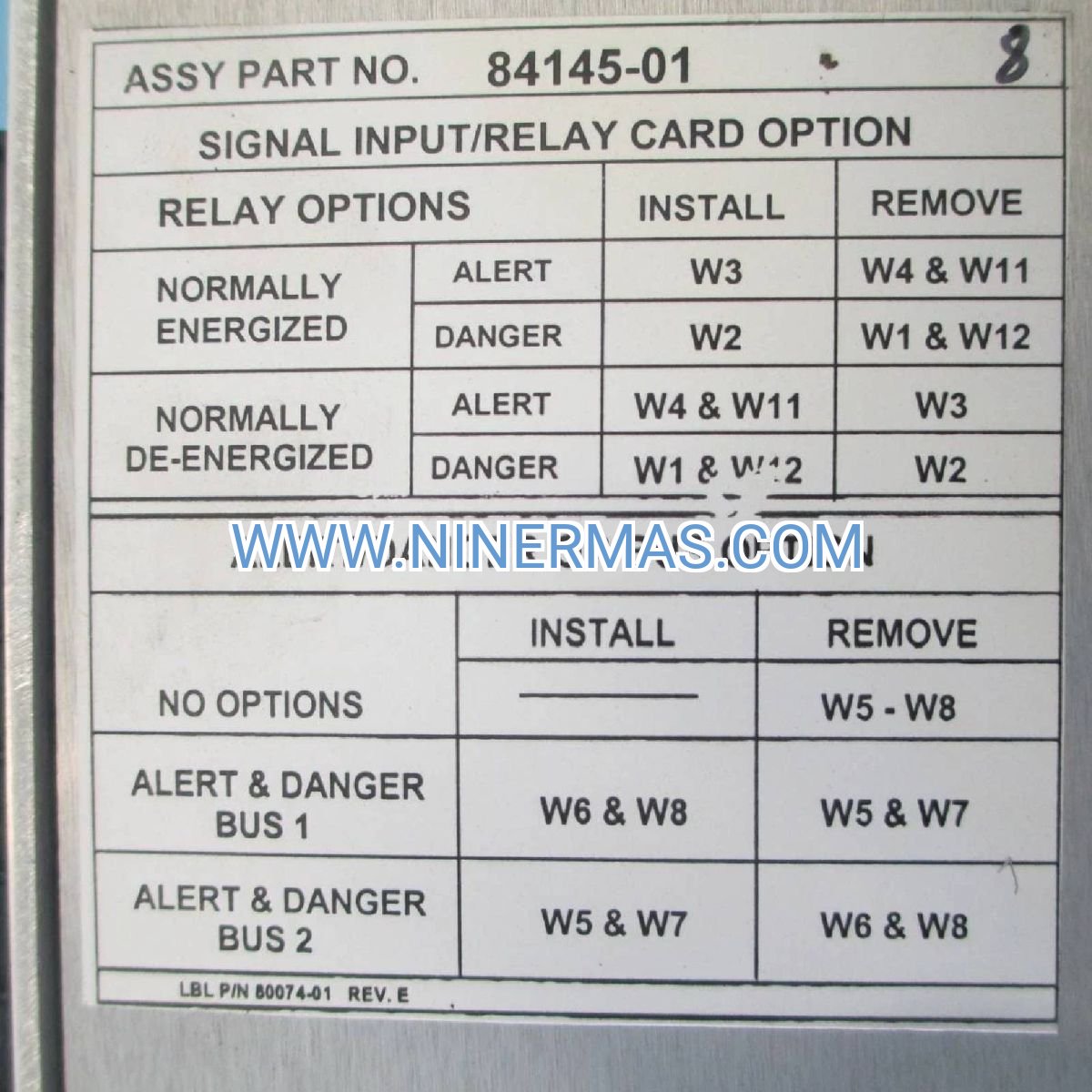
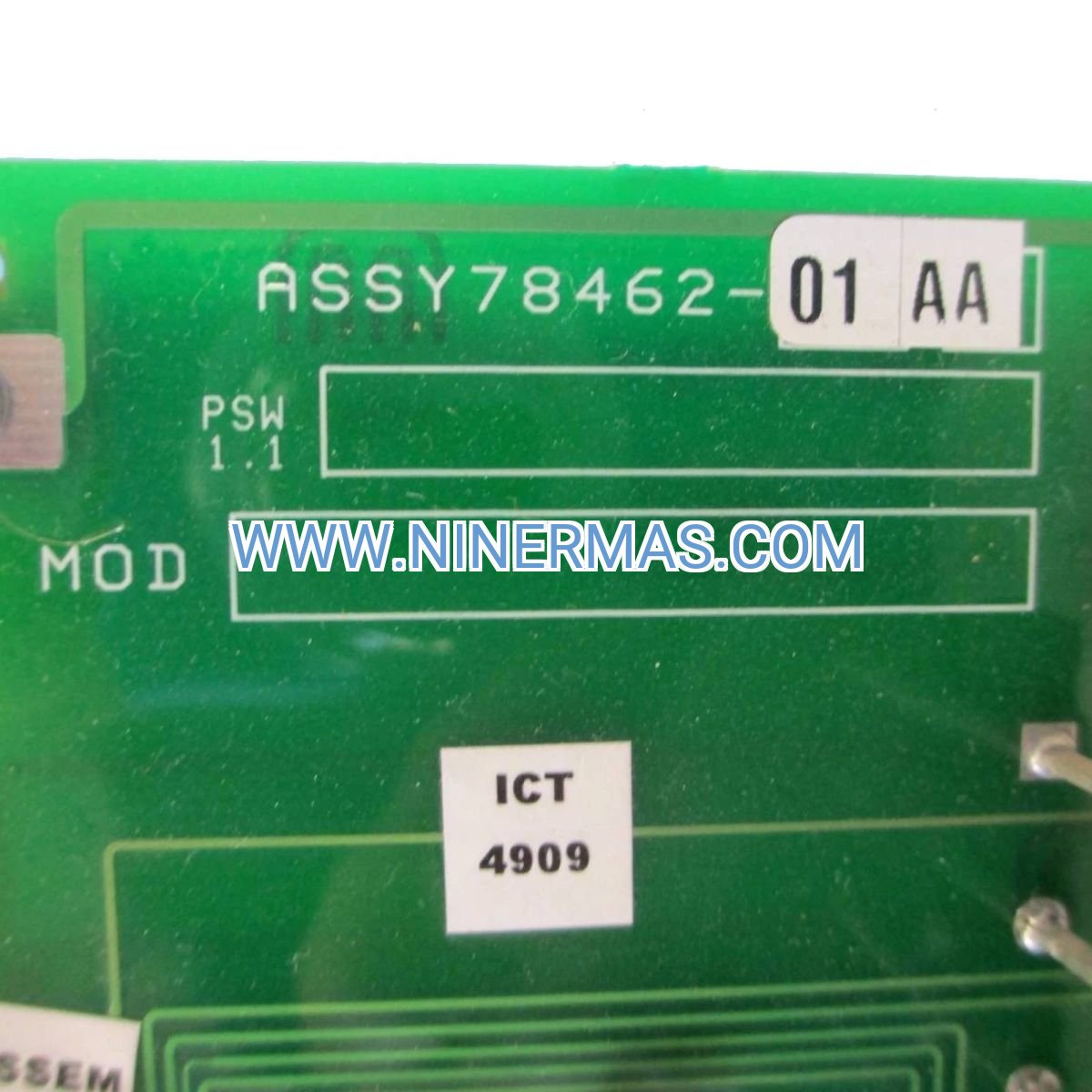
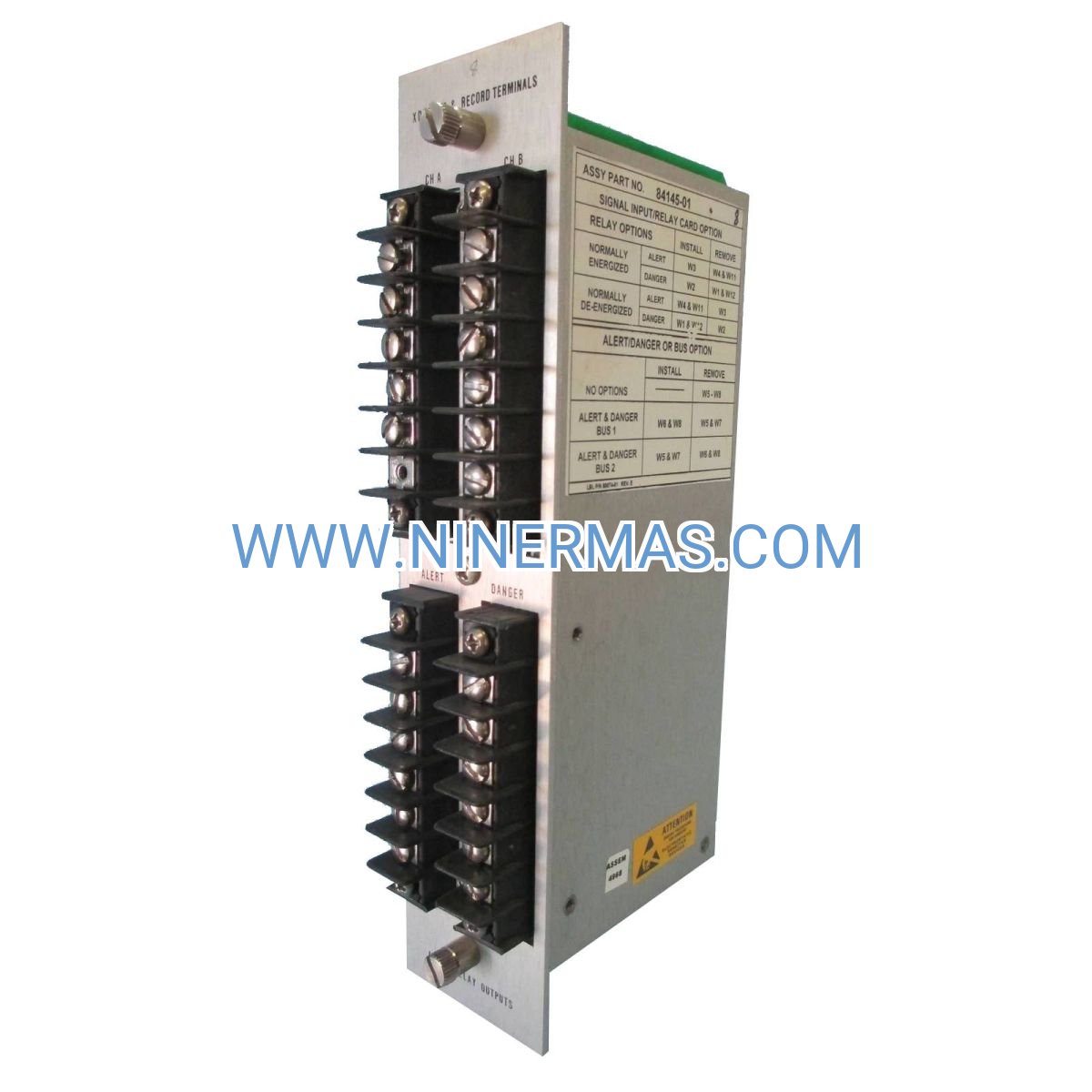
Bently Nevada 84145-01 Seismic Dual Relay Module | 3300 Series Vibration Monitor | NINERMAS
Description
Industrial-Grade Seismic Velocity Transducer for Critical Machinery Protection
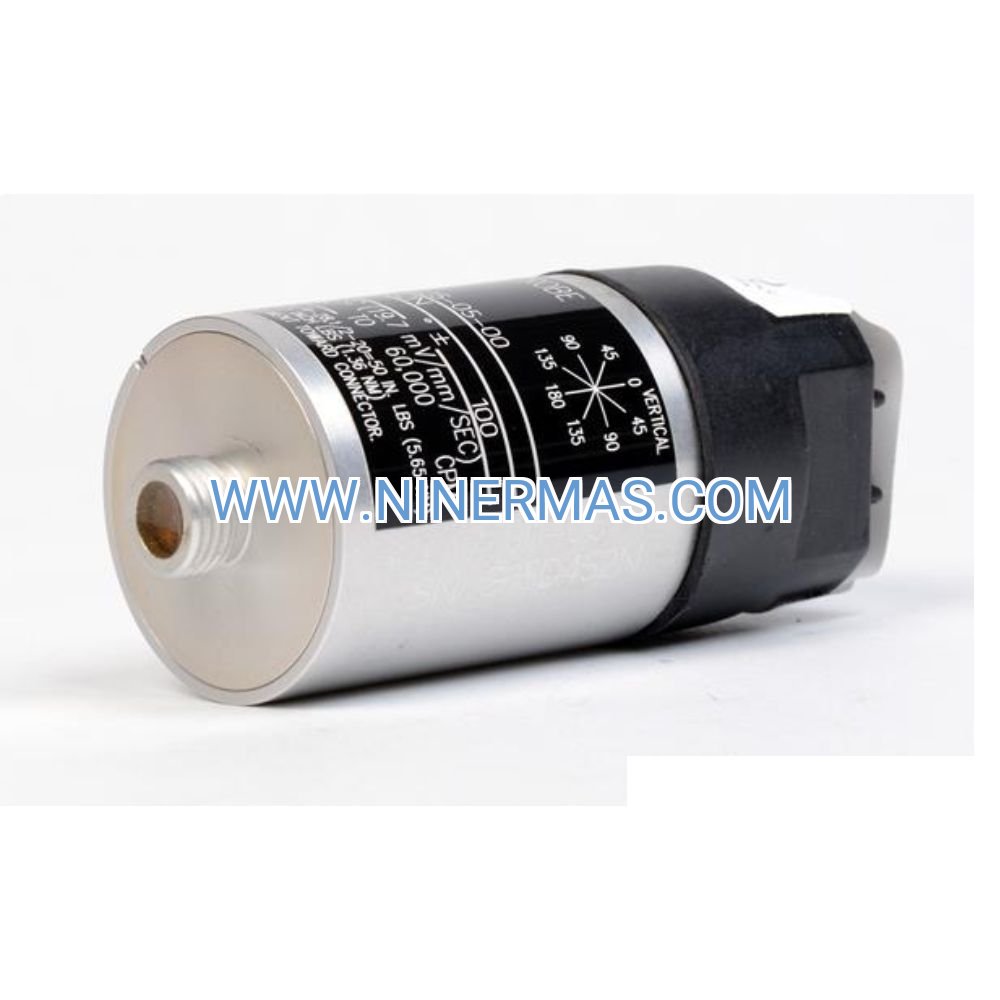
The Bently Nevada 90199-22-02-06-02-02-03-03-04 represents a proven solution for continuous vibration surveillance in high-stakes industrial environments. Engineered with hermetic sealing and stainless steel construction, this velocity transducer delivers consistent performance across extreme temperature ranges while maintaining factory-calibrated accuracy for motors, compressors, turbines, and process equipment.
Designed for reliability engineers and maintenance teams managing rotating assets, this sensor addresses the critical challenge of early fault detection before catastrophic failures occur. Its 10-1000 Hz frequency response captures the vibration signatures that matter most—imbalance, misalignment, bearing wear, and mechanical looseness—enabling data-driven maintenance decisions that reduce unplanned downtime by up to 70%.
With stud-mount installation and velocity-proportional output, the 90199 integrates seamlessly into Bently Nevada 2300, 3300, and 3500 series monitoring platforms, providing the foundation for comprehensive machinery health programs in power generation, oil & gas, chemical processing, and heavy manufacturing sectors.
Core Features & Benefits
→ Hermetic Sealing Technology
Complete environmental isolation protects internal components from moisture, dust, and corrosive atmospheres, ensuring 10+ year service life in harsh industrial settings while eliminating sensor drift and calibration degradation.
→ Extended Temperature Performance
Operates reliably from -40°C to +121°C without sensitivity loss, making it suitable for arctic installations, steam turbine casings, and high-temperature process equipment where standard sensors fail.
→ Optimized Frequency Response (10-1000 Hz)
Captures critical machinery fault frequencies including running speed harmonics, gear mesh patterns, and rolling element bearing defects, providing complete diagnostic coverage for 99% of industrial rotating equipment.
✓ Factory Calibration Certification
Each sensor ships with traceable calibration data, eliminating field calibration requirements and ensuring measurement accuracy that meets API 670 and ISO 20816 vibration monitoring standards.
✓ Stainless Steel Rugged Housing
Military-grade construction withstands shock loads up to 500g, chemical exposure, and mechanical abuse common in industrial environments, reducing replacement costs and maintenance interventions.
✓ Integral Cable Design
Factory-terminated connection eliminates field wiring errors and maintains signal integrity over extended cable runs, reducing installation time by 40% compared to connector-based alternatives.
Typical Application Scenarios
Power Generation Turbomachinery
Steam turbines, gas turbines, and generator sets in utility and cogeneration plants require continuous vibration monitoring to prevent forced outages. The 90199 sensor detects rotor imbalance, blade fouling, and bearing degradation weeks before critical thresholds, enabling scheduled maintenance during planned outages rather than emergency shutdowns that cost $500K-$2M per event.
Petrochemical Process Pumps & Compressors
Centrifugal pumps, reciprocating compressors, and screw compressors handling flammable or toxic fluids demand fail-safe protection systems. When integrated with trip-rated monitors, this velocity sensor provides the first line of defense against catastrophic seal failures, impeller damage, and bearing seizures that could trigger plant-wide safety incidents.
Manufacturing Drive Systems
Electric motors, gearboxes, and coupling assemblies in paper mills, steel plants, and automotive facilities experience gradual degradation from misalignment and wear. The 90199's mid-frequency sensitivity identifies these developing faults during their P-F interval, allowing maintenance teams to schedule repairs during production breaks rather than suffering unexpected line stoppages.
Marine Propulsion & Auxiliary Systems
Shipboard diesel engines, reduction gears, and shaft line bearings operate in high-vibration, corrosive environments where sensor reliability is paramount. The hermetic seal and temperature range of the 90199 ensure continuous monitoring throughout ocean transits, preventing costly at-sea failures and port delays.
HVAC & Building Systems
Large chillers, cooling tower fans, and air handling units in commercial facilities benefit from predictive maintenance programs. This sensor enables facility managers to transition from reactive repairs to condition-based servicing, reducing energy consumption by 15-25% through early detection of fan imbalance and bearing wear.
Technical Parameters & Selection Guide
| Specification | Value | Engineering Notes |
|---|---|---|
| Model Designation | 90199-22-02-06-02-02-03-03-04 | Configuration code defines mounting, cable, sensitivity |
| Sensor Technology | Moving Coil Velocity Transducer | Self-generating, no external power required |
| Frequency Range | 10 Hz to 1000 Hz (±3 dB) | Covers 1X to 60X running speed for most machinery |
| Mounting Method | Stud Mount (Threaded) | Requires machined flat surface, 10-15 ft-lb torque |
| Environmental Rating | Hermetically Sealed | IP68 equivalent, submersible to 10 meters |
| Operating Temperature | -40°C to +121°C | Continuous operation, no derating required |
| Sensitivity | Factory Calibrated (Certified) | Typical 100-500 mV/in/sec, varies by model |
| Output Signal | Velocity Proportional (AC) | Direct to monitor input, no signal conditioning needed |
| Case Material | 316 Stainless Steel | Corrosion resistant, suitable for marine/chemical service |
| Cable Connection | Integral 2-Conductor Shielded | Standard lengths 5m, 10m, custom available |
| Weight | Approximately 200 grams | Minimal mass loading on measurement surface |
| Compliance | API 670, ISO 20816 | Meets machinery protection system standards |
Selection Criteria: Choose seismic velocity sensors for machinery with running speeds between 600-36,000 RPM where casing vibration monitoring is specified. For shaft relative motion, consider proximity probe systems. For high-frequency bearing diagnostics above 1000 Hz, specify piezoelectric accelerometers. Consult application engineers for multi-sensor strategies combining velocity, displacement, and acceleration measurements.
Extended Functions
IoT Integration Capabilities: When paired with modern vibration monitors featuring Ethernet connectivity, the 90199 sensor data streams to cloud-based condition monitoring platforms, enabling remote diagnostics, automated alarm notifications, and machine learning-based anomaly detection across distributed facilities.
Wireless Retrofit Options: For existing installations where cabling is cost-prohibitive, the sensor output can interface with wireless vibration transmitters that convert velocity signals to digital packets for transmission to central monitoring systems, reducing installation costs by 60-80% compared to hardwired solutions.
Customization Available: Special cable lengths, sensitivity ranges, frequency responses, and mounting configurations can be factory-specified for unique applications. Consult with application engineers for explosion-proof certifications (ATEX, IECEx), extended temperature variants, or nuclear-qualified versions.
Delivery & Service Assurance
Lead Time: Stock items ship within 2-3 business days. Custom configurations require 4-6 weeks factory lead time. Expedited processing available for emergency replacements and critical path projects.
Warranty Coverage: Comprehensive 12-month warranty covers manufacturing defects, calibration accuracy, and environmental seal integrity. Extended warranty programs available for fleet purchases and long-term service agreements.
Technical Support: Application engineering assistance includes sensor selection, mounting recommendations, cable routing guidance, and system integration support. Post-installation troubleshooting and signal analysis services available through dedicated support channels.
Documentation Package: Each sensor includes calibration certificate with traceability to NIST standards, dimensional drawings, installation instructions, wiring diagrams, and recommended monitor settings for optimal performance.
Frequently Asked Questions
How do I determine the correct mounting location for seismic velocity sensors on my equipment?
Mount sensors on rigid, non-resonant surfaces as close as possible to bearing housings or structural supports. Avoid thin sheet metal, piping, or flexible panels that amplify non-machinery vibration. Typical locations include motor end bells, pump bearing caps, gearbox casings, and compressor cylinder heads. Ensure mounting surfaces are flat, clean, and perpendicular to the primary vibration direction.
What cable length limitations exist for velocity sensor installations?
Standard integral cables support runs up to 100 meters (330 feet) without signal degradation when properly shielded and grounded. For longer distances, use low-capacitance extension cables or install signal conditioning modules near the sensor to convert to 4-20mA current loop transmission. Avoid routing sensor cables parallel to high-voltage power conductors to prevent electromagnetic interference.
Can this sensor detect energy efficiency degradation in rotating equipment?
Indirectly, yes. Increased vibration levels often correlate with mechanical inefficiencies such as misalignment (causing 10-15% energy waste), imbalance (5-10% losses), and bearing wear (3-8% losses). By trending velocity measurements over time, maintenance teams can identify degrading conditions that increase power consumption before they cause failures.
What monitoring system compatibility should I verify before purchasing?
Confirm your vibration monitor accepts velocity transducer inputs (typically high-impedance AC voltage inputs). Bently Nevada 2300, 3300, and 3500 series monitors are directly compatible. Third-party systems from SKF, Emerson, Rockwell, and others may require signal conditioning modules. Verify input impedance exceeds 10kΩ and frequency response matches sensor specifications.
How does hermetic sealing improve reliability compared to standard industrial sensors?
Hermetic sealing eliminates moisture ingress, the primary failure mode in industrial sensors. Standard sensors with O-ring or potted seals eventually allow humidity penetration, causing coil corrosion, insulation breakdown, and calibration drift. Hermetically sealed units maintain original performance for 10-15 years in harsh environments, reducing lifecycle costs by 40-60% through extended replacement intervals.
What installation torque specifications prevent sensor damage or measurement errors?
Apply 10-15 ft-lb (13.5-20 N⋅m) torque to stud-mounted sensors using a calibrated torque wrench. Under-torquing creates mechanical looseness that attenuates high-frequency signals and allows sensor movement. Over-torquing can crack the sensor base or strip mounting threads. Always use a thin layer of anti-seize compound on threads to prevent galling and ensure consistent clamping force.
Ready to Enhance Your Machinery Protection Program?
Contact our vibration monitoring specialists to discuss your specific application requirements, receive sensor selection guidance, and obtain project quotations. We provide complete system solutions including sensors, monitors, cables, and integration support to ensure successful deployments.
Request Technical Consultation: Email detailed equipment specifications and monitoring objectives to receive customized recommendations within 24 hours.
© 2026 NINERMAS COMPANY LIMITED. All rights reserved.
Original Source: https://ninermas.com
Contact: sale@ninermas.com | +0086 187 5021 5667

Contact Info
-
Address:22 / F, South Wo Hang building, 148 Wing Lok Street, Sheung Wan, Western District, Hong Kong
-
Phone:+8618750215667
-
Email: