


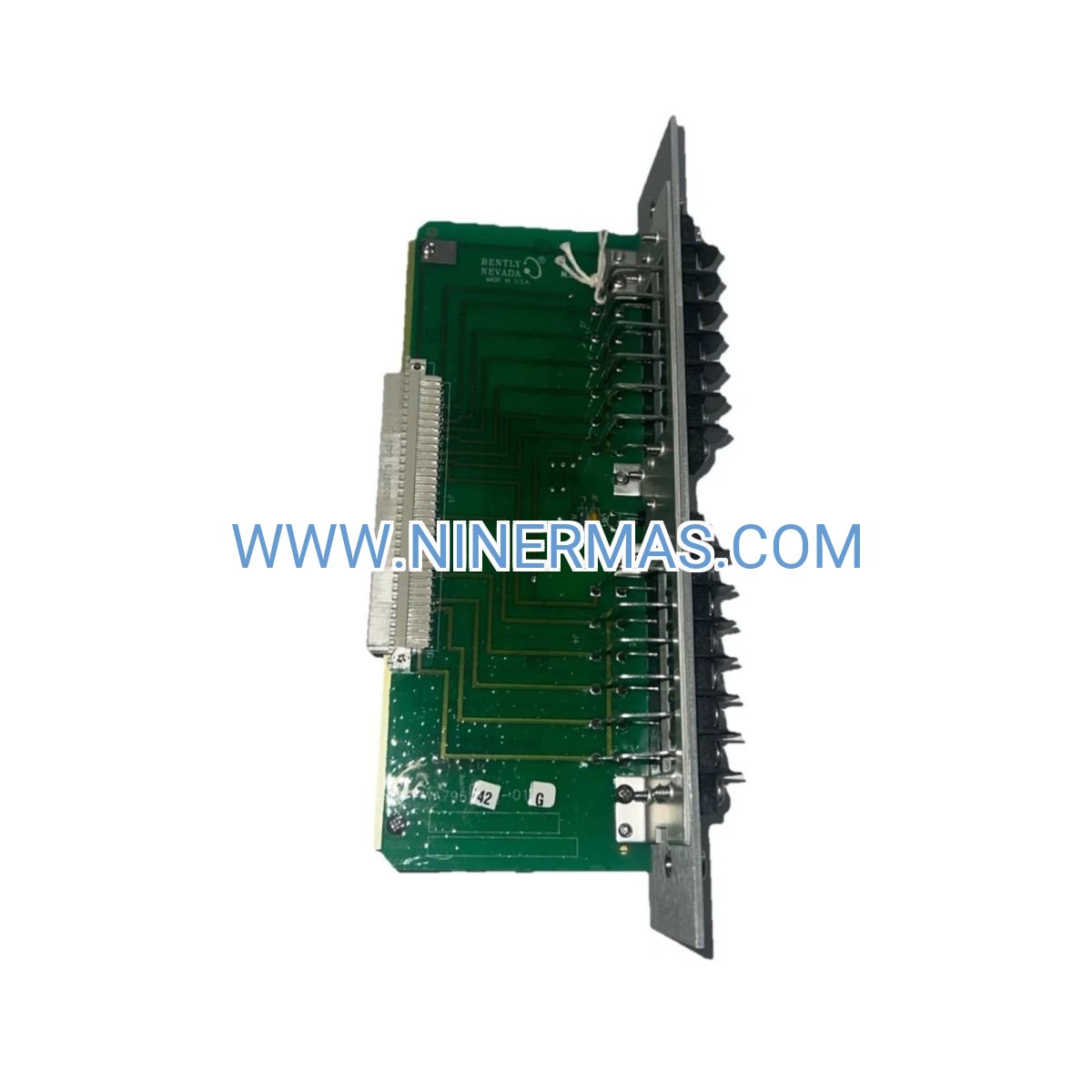
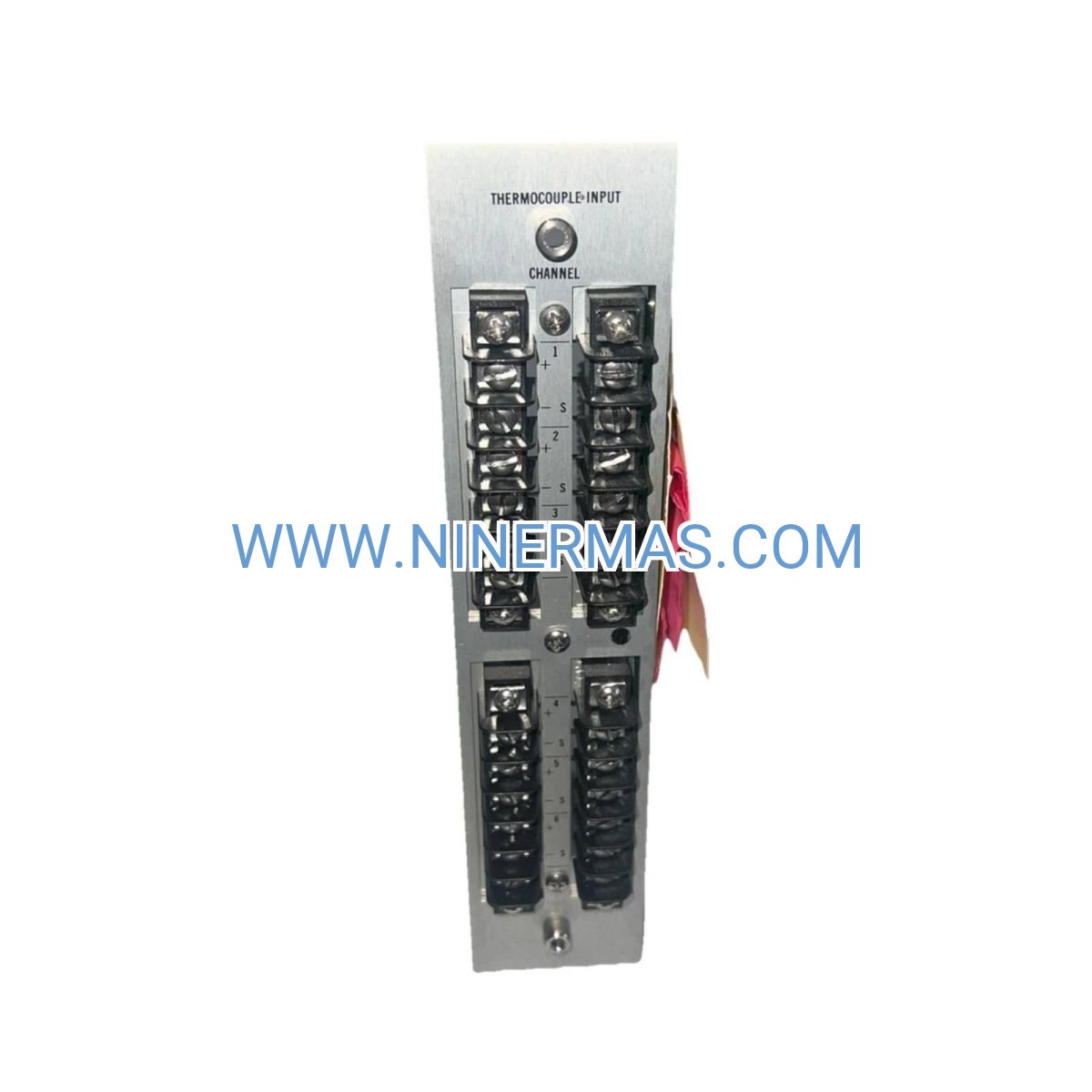

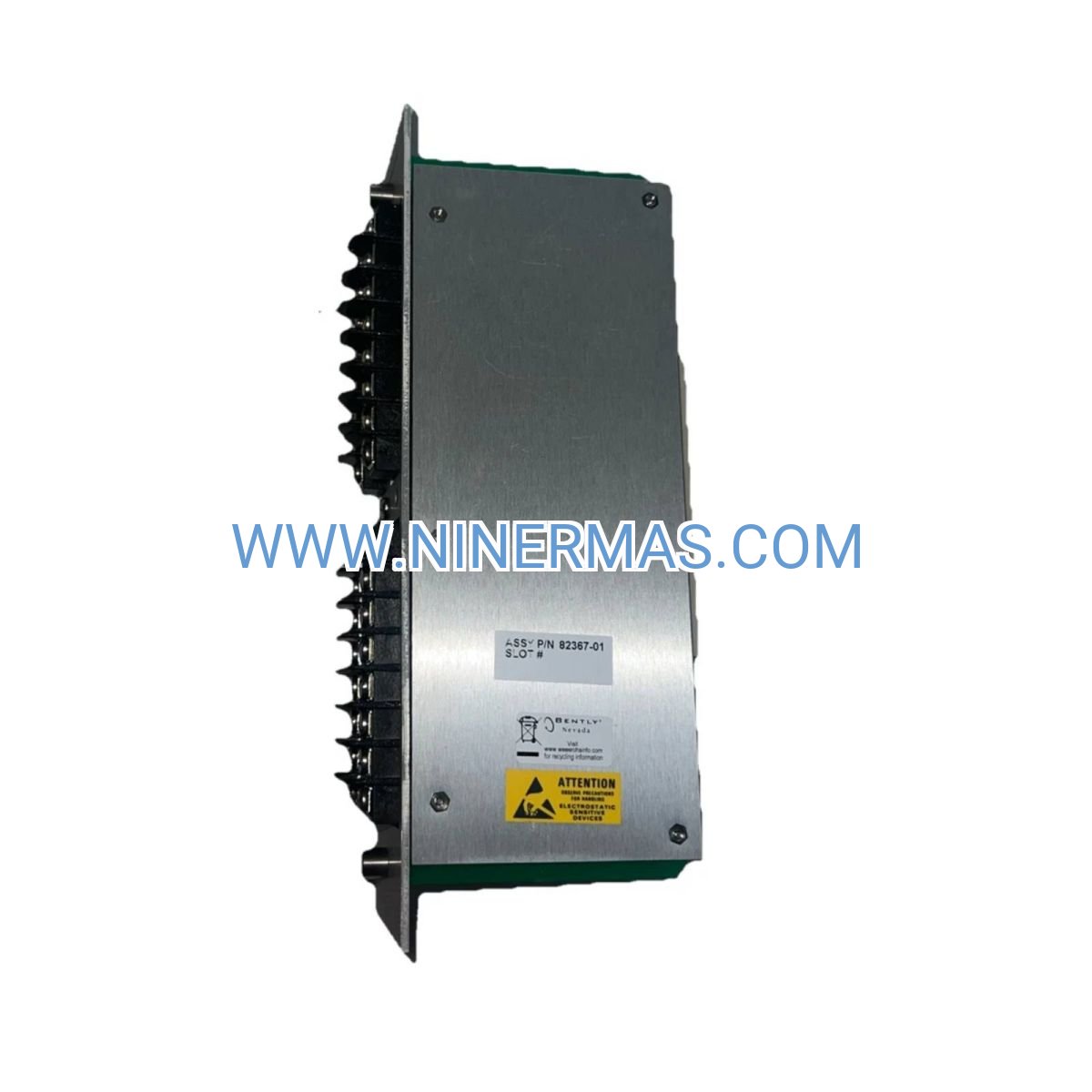
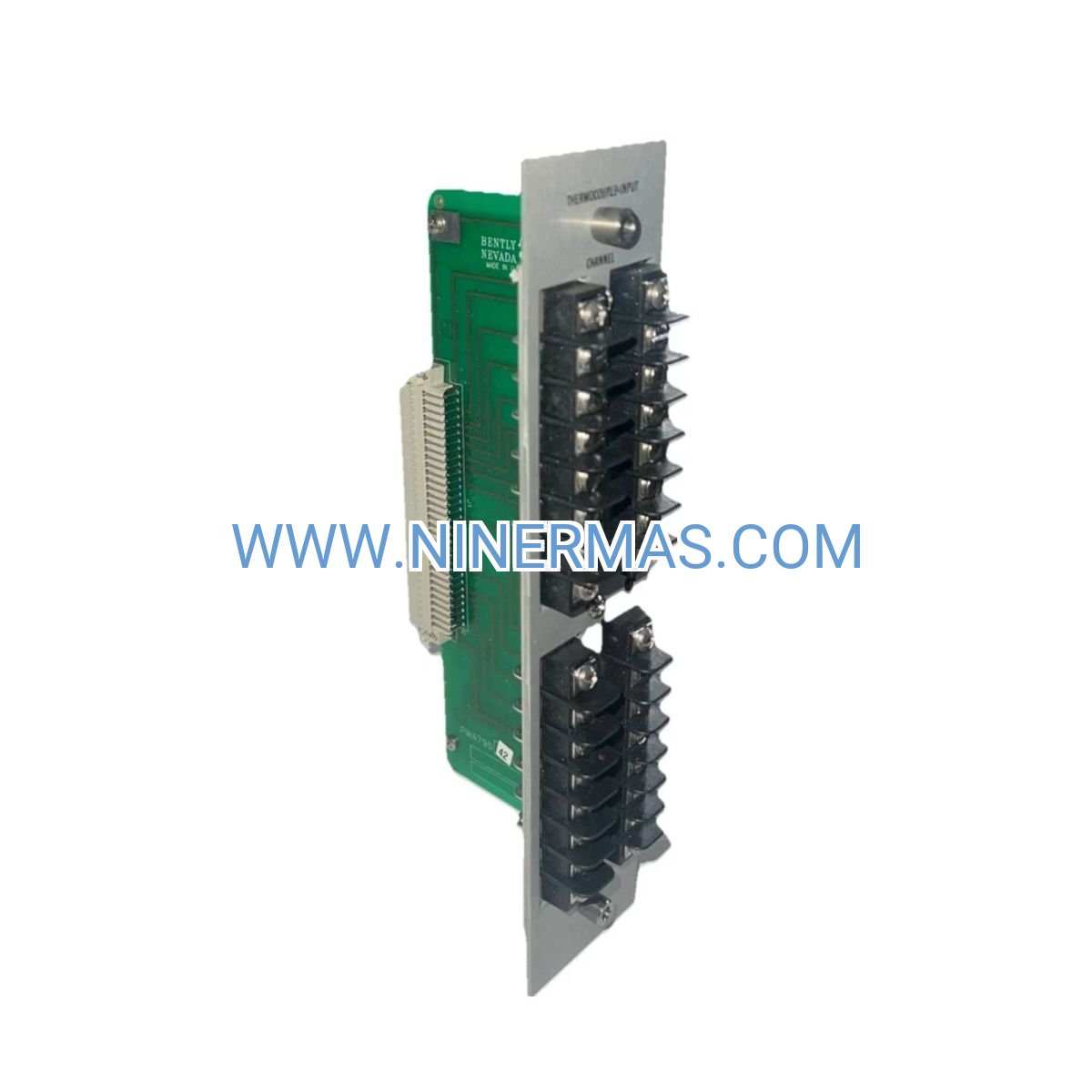
Bently Nevada 82367-01 Temperature Input Card | 3300 Series TC/RTD Module | NINERMAS
Description
82367-01 Temperature Input Card (Industrial-Grade Multi-Sensor Interface)
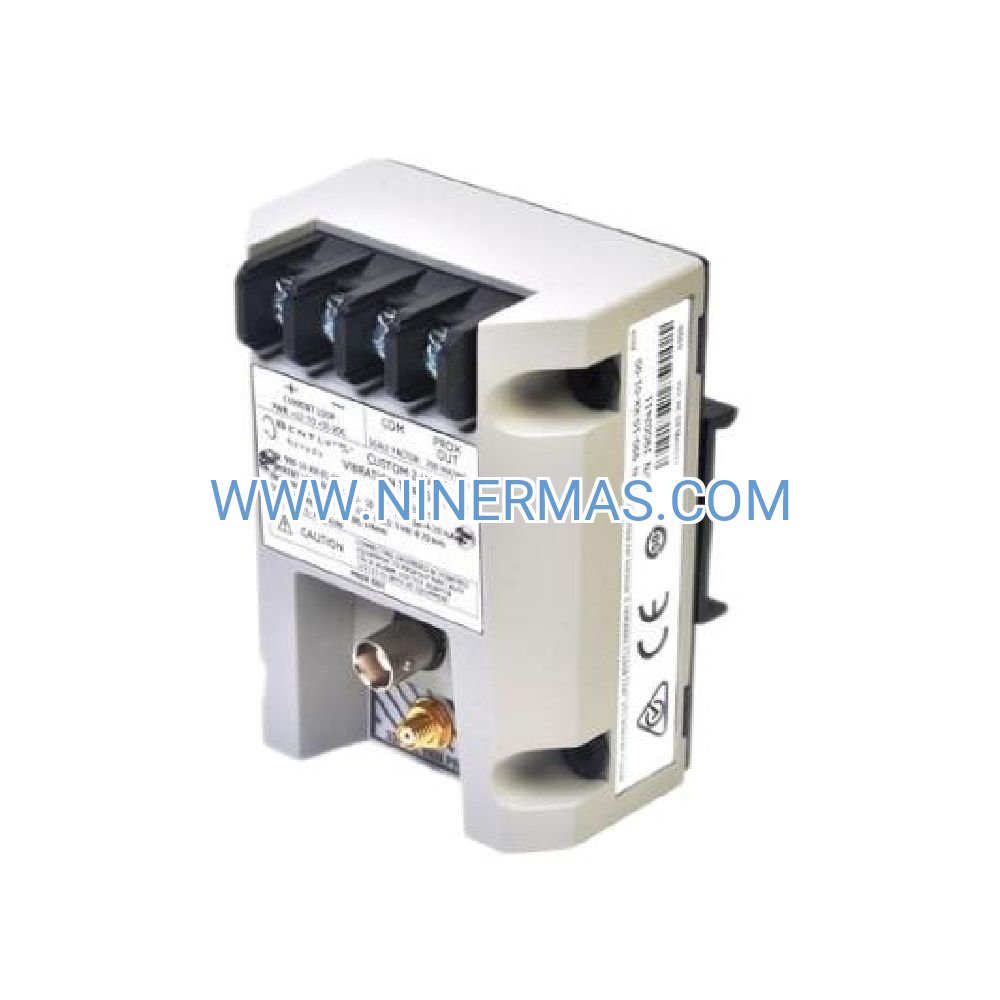
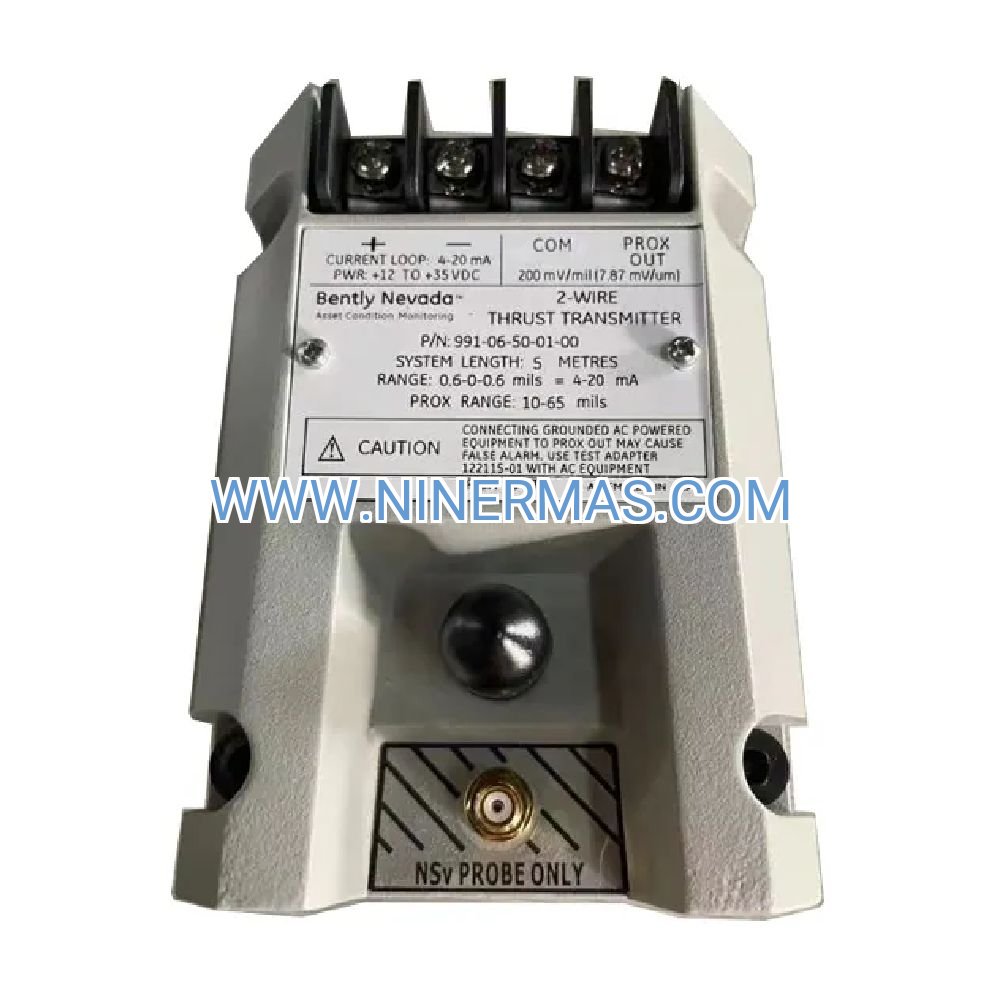
The Bently Nevada 82367-01 is a universal temperature acquisition module engineered for critical machinery monitoring systems requiring simultaneous thermocouple and RTD sensor integration. Designed for the 3300 Series platform, this input card delivers flexible thermal surveillance across diverse industrial environments—from turbomachinery bearing diagnostics to high-temperature process control—where mixed sensor types, wide measurement ranges, and field-configurable channels are essential for comprehensive asset protection.
Built to address the challenge of consolidating multiple temperature measurement technologies into a single monitoring point, the 82367-01 eliminates the complexity of deploying separate RTD-only and TC-only cards. Industrial facilities monitoring equipment with both moderate-temperature zones (bearings, cooling systems) and extreme-temperature areas (exhaust streams, combustion chambers) gain a unified solution that reduces hardware footprint, simplifies spare parts management, and accelerates system commissioning.
With support for seven thermocouple types (J, K, T, E, R, S, B), three-wire and four-wire RTD configurations, automatic cold junction compensation, and per-channel sensor type selection, the 82367-01 adapts to evolving monitoring requirements without hardware replacement—making it the preferred choice for power generation, petrochemical processing, and heavy manufacturing applications where thermal data integrity directly impacts operational safety and equipment longevity.
Core Features & Benefits
→ Dual-Mode Sensor Compatibility: Each input channel independently configures for either thermocouple or RTD operation, enabling engineers to deploy Type K thermocouples for exhaust gas monitoring (400-800°C) alongside Pt100 RTDs for bearing temperature tracking (50-150°C) within the same card—reducing system complexity and installation costs by up to 40% compared to single-sensor-type architectures.
✓ Seven Thermocouple Type Support: Field-selectable J, K, T, E, R, S, and B thermocouple configurations cover measurement ranges from -200°C to +1370°C, providing the thermal span required for applications ranging from cryogenic process monitoring to high-temperature furnace surveillance without requiring multiple card models or custom calibrations.
→ Multi-Wire RTD Flexibility: Accepts 2-wire, 3-wire, and 4-wire Pt100 RTD connections with automatic lead resistance compensation, ensuring ±0.5°C accuracy even with long cable runs (up to 300 meters for 4-wire configurations)—critical for distributed monitoring systems in large industrial facilities where sensors are remotely located from control rooms.
✓ Automatic Cold Junction Compensation: Built-in CJC circuitry continuously corrects for ambient temperature variations at thermocouple termination points, maintaining ±1°C measurement accuracy across 0-65°C operating environments without external reference junctions—eliminating a common source of thermocouple measurement error in industrial installations.
→ High-Resolution Signal Processing: 10 samples per second per channel with 0.1°C display resolution enables early detection of thermal anomalies—identifying bearing temperature increases of 2-3°C that precede catastrophic failures by hours or days, supporting predictive maintenance strategies that reduce unplanned downtime by 60-80%.
✓ Integrated Sensor Diagnostics: Continuous monitoring for open circuits, short circuits, and out-of-range conditions generates immediate fault alerts, distinguishing between actual temperature excursions and sensor/wiring failures—preventing false alarms that erode operator confidence while ensuring genuine thermal events trigger appropriate protective actions.
Typical Application Scenarios
Gas Turbine Thermal Surveillance: Power generation facilities deploy the 82367-01 to monitor both bearing metal temperatures (via Pt100 RTDs in the 60-120°C range) and turbine exhaust gas temperatures (via Type K thermocouples in the 450-650°C range) from a single input card. This consolidated approach reduces rack space requirements by 50%, simplifies wiring infrastructure, and enables technicians to troubleshoot all temperature inputs from one module location—accelerating fault diagnosis during critical outage windows.
Petrochemical Reactor Monitoring: Refineries and chemical plants face the challenge of tracking temperatures across process units spanning -50°C (cryogenic separators) to +800°C (catalytic crackers). The 82367-01's mixed sensor capability allows engineers to standardize on a single card model across the facility—using RTD inputs for moderate-temperature applications and thermocouple inputs for high-temperature zones—reducing spare parts inventory costs by 35% while maintaining measurement accuracy requirements for process control and safety instrumented systems.
Industrial Furnace Temperature Profiling: Heat treatment operations, glass manufacturing, and metal processing facilities require detailed temperature profiles across furnace zones—cooling water circuits monitored with RTDs (20-95°C), furnace chamber walls tracked with Type K thermocouples (300-900°C), and high-temperature melt zones measured with Type S thermocouples (900-1400°C). The 82367-01 enables complete furnace thermal mapping from a single card, supporting precise process control that improves product quality and reduces energy consumption by 8-12%.
Compressor Station Asset Protection: Natural gas pipeline compressor stations utilize the 82367-01 to monitor reciprocating and centrifugal compressor bearing temperatures (RTD inputs, 40-130°C) alongside discharge gas temperatures (thermocouple inputs, 80-200°C). The card's sensor fault detection capability is particularly valuable in remote unmanned stations, where false alarms trigger costly emergency dispatches—the 82367-01's ability to distinguish between sensor failures and genuine thermal events reduces false alarm rates by 70%.
Steam Turbine Condition Monitoring: Combined cycle power plants and industrial cogeneration facilities deploy the 82367-01 for comprehensive steam turbine thermal surveillance—bearing temperatures via RTDs, steam inlet temperatures via Type K thermocouples, and superheated steam temperatures via Type J thermocouples. The mixed input architecture supports turbine protection systems that must simultaneously track moderate bearing temperatures (requiring ±0.5°C accuracy) and high steam temperatures (requiring ±2°C accuracy), all processed through a single, rack-mounted input card.
Technical Parameters & Selection Guide
| Parameter | Specification |
|---|---|
| Part Number | 82367-01 |
| Module Classification | Mixed TC/RTD temperature input card |
| Compatible Platform | Bently Nevada 3300 Series Machinery Monitoring |
| Input Channel Count | Multiple configurable temperature inputs |
| RTD Sensor Support | Pt100 (100Ω platinum), 2-wire/3-wire/4-wire |
| Thermocouple Types | J, K, T, E, R, S, B (field-configurable per channel) |
| Measurement Span | -200°C to +1370°C (sensor-dependent) |
| RTD Accuracy | ±0.5°C (typical, with 3-wire or 4-wire connection) |
| TC Accuracy | ±1°C (typical, with automatic CJC) |
| Display Resolution | 0.1°C |
| Sampling Rate | 10 samples/second per channel |
| Cold Junction Compensation | Automatic for all TC inputs |
| Input Impedance | >10 MΩ (TC mode), <1Ω (RTD mode) |
| Output Signal Type | Buffered analog to monitoring modules |
| Power Requirement | -24 VDC from 3300 rack backplane |
| Operating Temperature | -30°C to +65°C ambient |
| Mounting Method | 3300 Series rack card slot |
| Compliance Certifications | UL, CE, CSA, RoHS |
Selection Criteria: Choose the 82367-01 when your monitoring application requires both RTD and thermocouple inputs within the same system, when sensor types may change during equipment lifecycle, or when standardizing on a single input card model across diverse temperature measurement requirements. For RTD-only or TC-only applications with no mixed sensor requirements, consider dedicated single-sensor-type cards that may offer higher channel density. For applications requiring intrinsically safe temperature measurement in hazardous areas, verify compatibility with IS barriers and consult factory application engineering.
Extended Functions
IoT Integration Readiness: The 82367-01's buffered analog outputs interface seamlessly with 3300 Series monitoring modules that support Modbus, OPC, and proprietary communication protocols, enabling temperature data transmission to SCADA systems, plant historians, and cloud-based condition monitoring platforms. This connectivity supports Industry 4.0 initiatives where thermal data feeds predictive analytics engines that forecast bearing failures 2-4 weeks in advance.
Advanced Diagnostic Capabilities: Beyond basic open/short circuit detection, the card monitors signal quality metrics including noise levels, drift rates, and out-of-range excursions. These diagnostics support condition-based sensor replacement strategies—replacing sensors based on degraded performance rather than fixed time intervals—reducing sensor replacement costs by 25-40% while maintaining measurement integrity.
Customization Options: Factory configuration services are available for high-volume installations requiring pre-configured sensor types, measurement ranges, and alarm setpoints. Pre-configured cards reduce commissioning time by 60-70%, minimize configuration errors, and accelerate project schedules for large-scale monitoring system deployments across multiple facilities.
Delivery & Service Assurance
Standard Delivery: In-stock units ship within 1-3 business days via express courier (DHL, FedEx, UPS) with full tracking visibility. Typical transit times: 3-5 days to North America/Europe, 5-7 days to Asia-Pacific, 7-10 days to other regions. Expedited same-day shipping available for critical outage support requirements.
Custom Configuration Lead Time: Factory-configured units with pre-set sensor types and ranges ship within 7-10 business days, including configuration verification testing and documentation package preparation.
Warranty Coverage: 12-month manufacturer warranty covering defects in materials and workmanship. Warranty includes advance replacement service—replacement units ship within 24 hours of warranty claim approval, minimizing downtime for critical monitoring applications.
Technical Support: Global application engineering support available via phone, email, and remote diagnostics. Support services include sensor selection guidance, wiring troubleshooting, configuration assistance, and integration consulting for complex multi-card monitoring systems.
Documentation Package: Each unit includes installation manual, sensor wiring diagrams (RTD and TC), configuration guide (DIP switch/jumper settings), calibration certificate traceable to NIST/PTB standards, and quick-start commissioning checklist.
Frequently Asked Questions
Q: Can I mix different thermocouple types on the same 82367-01 card?
A: Yes, each input channel configures independently—you can deploy Type K thermocouples on channels 1-2 for exhaust monitoring (400-600°C), Type J thermocouples on channels 3-4 for process temperatures (200-400°C), and Pt100 RTDs on channels 5-6 for bearing temperatures (50-150°C), all within the same card. Configuration is performed via DIP switches or software interface depending on card version.
Q: What is the maximum cable length for RTD sensors connected to the 82367-01?
A: For 3-wire RTD connections, maintain cable lengths below 100 meters to ensure ±0.5°C accuracy. For 4-wire RTD connections, cable lengths up to 300 meters are supported with full accuracy specification, as the 4-wire configuration completely eliminates lead resistance effects. Use shielded twisted-pair cable (minimum 18 AWG) for all RTD wiring to minimize electrical noise interference.
Q: Does the 82367-01 support remote monitoring and data logging capabilities?
A: The card outputs buffered analog signals to 3300 Series monitoring modules (such as 3300 XL monitors or 3500 system modules) that provide alarm logic, relay outputs, and communication interfaces. These monitoring modules support Modbus RTU/TCP, OPC DA/UA, and proprietary protocols for integration with DCS, SCADA, and plant historian systems—enabling remote monitoring, trending, and data archiving for compliance and predictive maintenance applications.
Q: How do I verify the 82367-01 is measuring temperature accurately after installation?
A: Perform field verification using a precision temperature calibrator (such as Fluke 754 or equivalent) that generates known RTD resistance values or thermocouple millivolt signals. Compare the 82367-01's displayed temperature against the calibrator's reference value—deviations exceeding ±0.5°C for RTD or ±1°C for TC indicate potential wiring issues, incorrect configuration, or card calibration drift requiring factory service. Annual verification is recommended for critical safety applications.
Q: Can the 82367-01 interface with non-Bently Nevada monitoring systems?
A: The card is designed for integration within Bently Nevada 3300 Series racks and requires the rack's -24 VDC power and backplane communication signals. However, the card's buffered analog outputs (typically 4-20 mA or 0-10 VDC depending on configuration) can interface with third-party PLCs, DCS systems, or data acquisition modules that accept standard analog inputs—enabling hybrid monitoring architectures that combine Bently Nevada signal conditioning with alternative control platforms.
Q: What energy efficiency benefits does the 82367-01 provide compared to older temperature input cards?
A: The 82367-01's mixed sensor capability reduces overall system power consumption by 20-30% compared to deploying separate RTD and TC cards, as a single card replaces two modules that would each draw power from the rack supply. Additionally, the card's high-resolution measurement (0.1°C) enables tighter process control setpoints—in thermal processing applications, this precision supports energy savings of 5-8% by minimizing temperature overshoot and reducing heating/cooling cycle waste.
Take the Next Step
Ready to consolidate your temperature monitoring infrastructure with mixed TC/RTD capability? Contact our application engineering team for sensor selection guidance, system integration consulting, and volume pricing for multi-card deployments. Request a detailed datasheet, configuration worksheet, or technical consultation to ensure the 82367-01 meets your specific measurement accuracy, sensor compatibility, and system integration requirements.
© 2026 NINERMAS COMPANY LIMITED. All rights reserved.
Original Source: https://ninermas.com
Contact: sale@ninermas.com | +0086 187 5021 5667

Contact Info
-
Address:22 / F, South Wo Hang building, 148 Wing Lok Street, Sheung Wan, Western District, Hong Kong
-
Phone:+8618750215667
-
Email:
