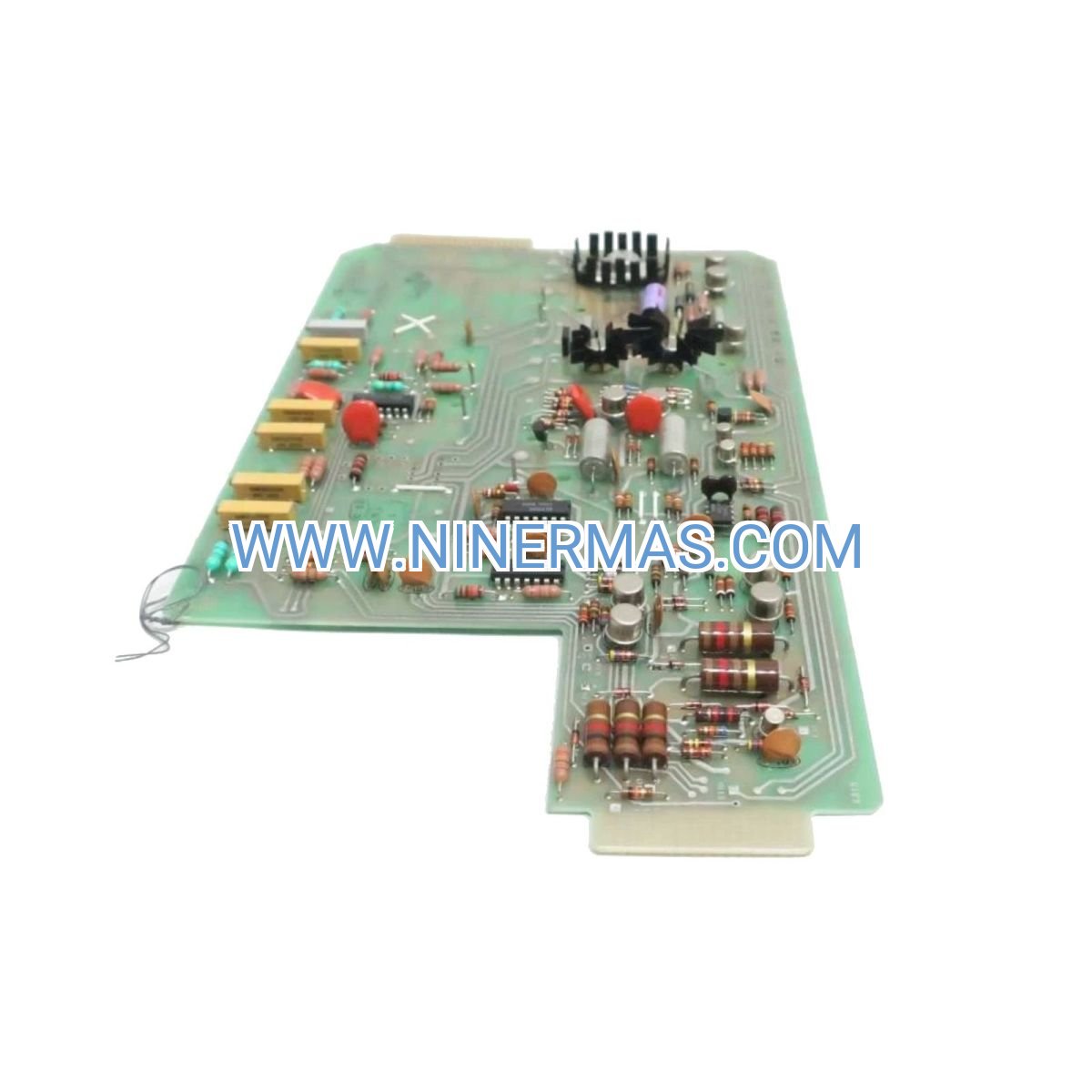

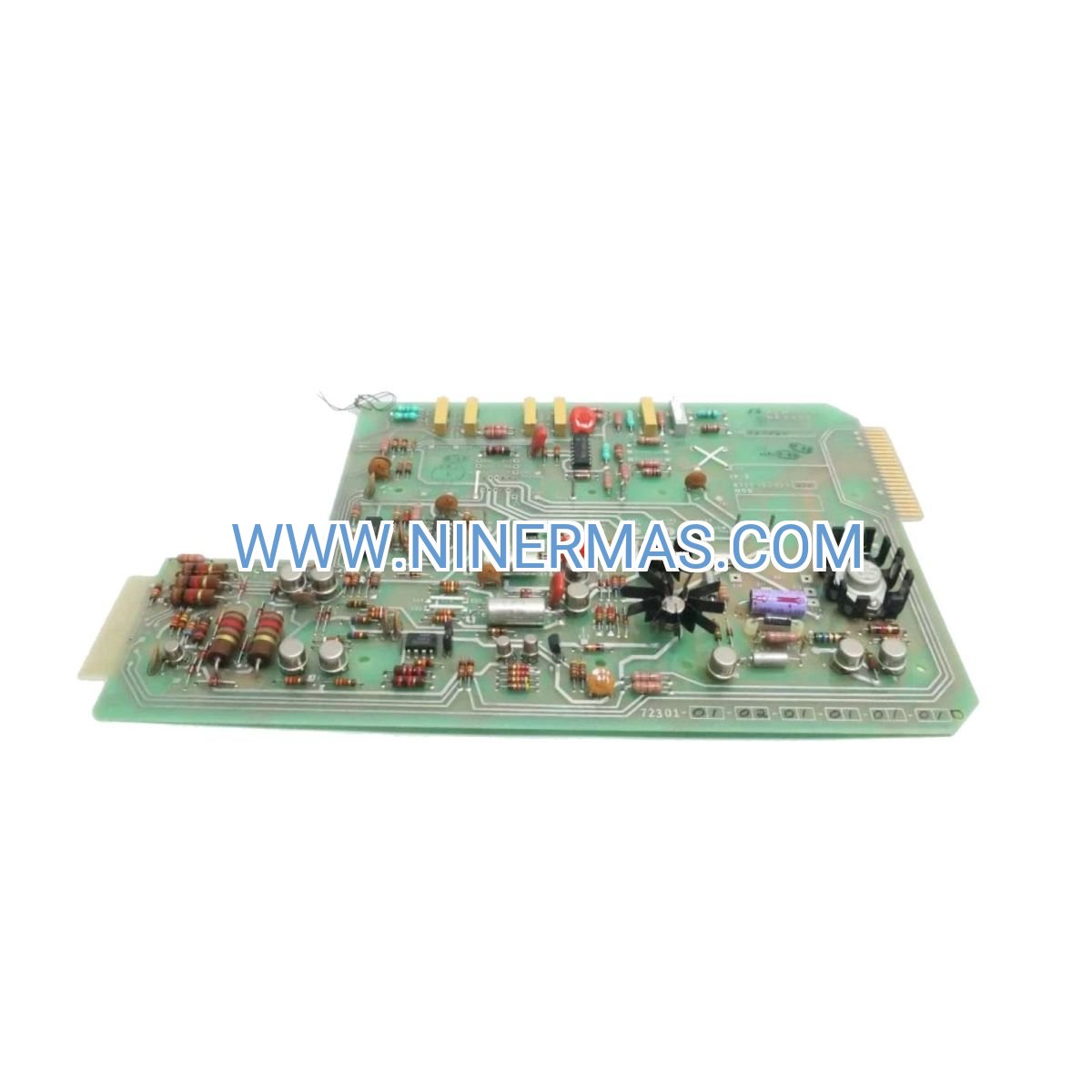
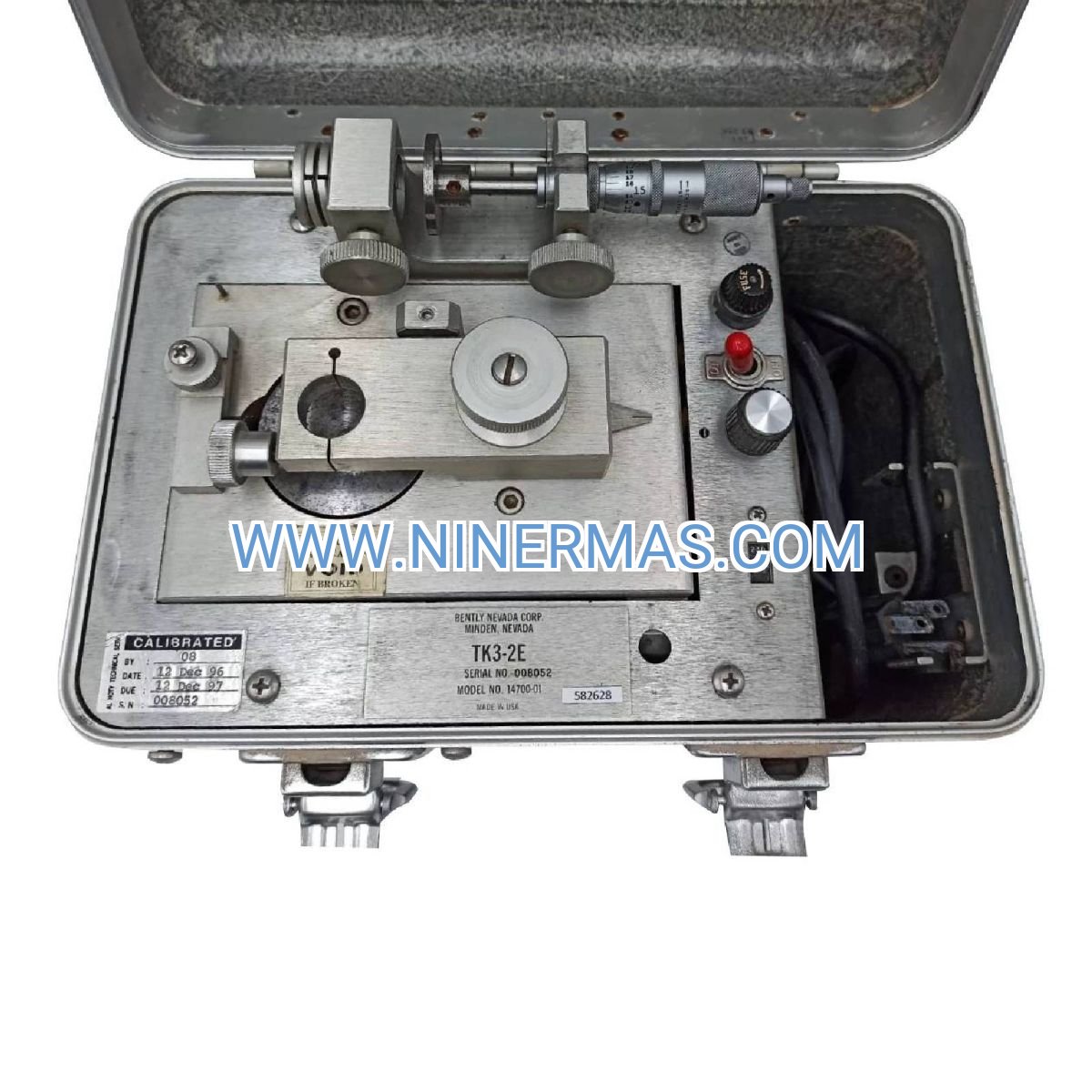
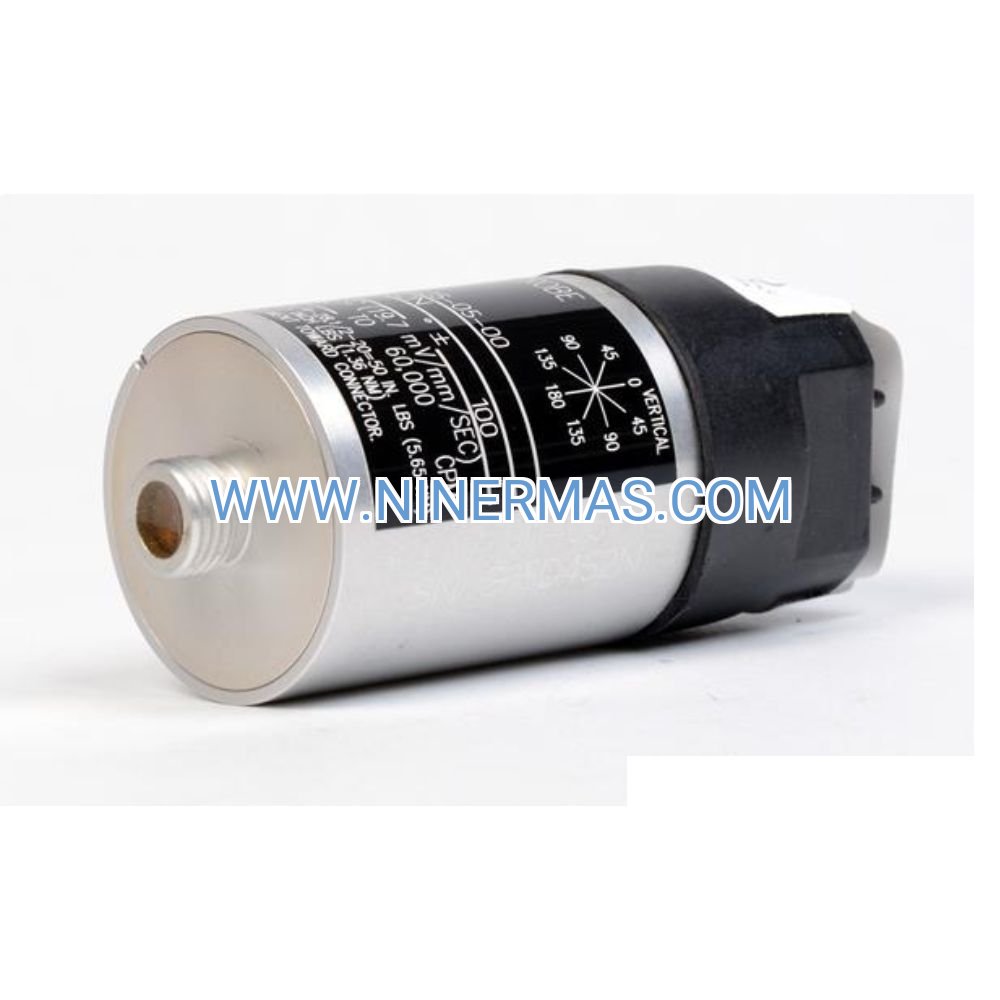
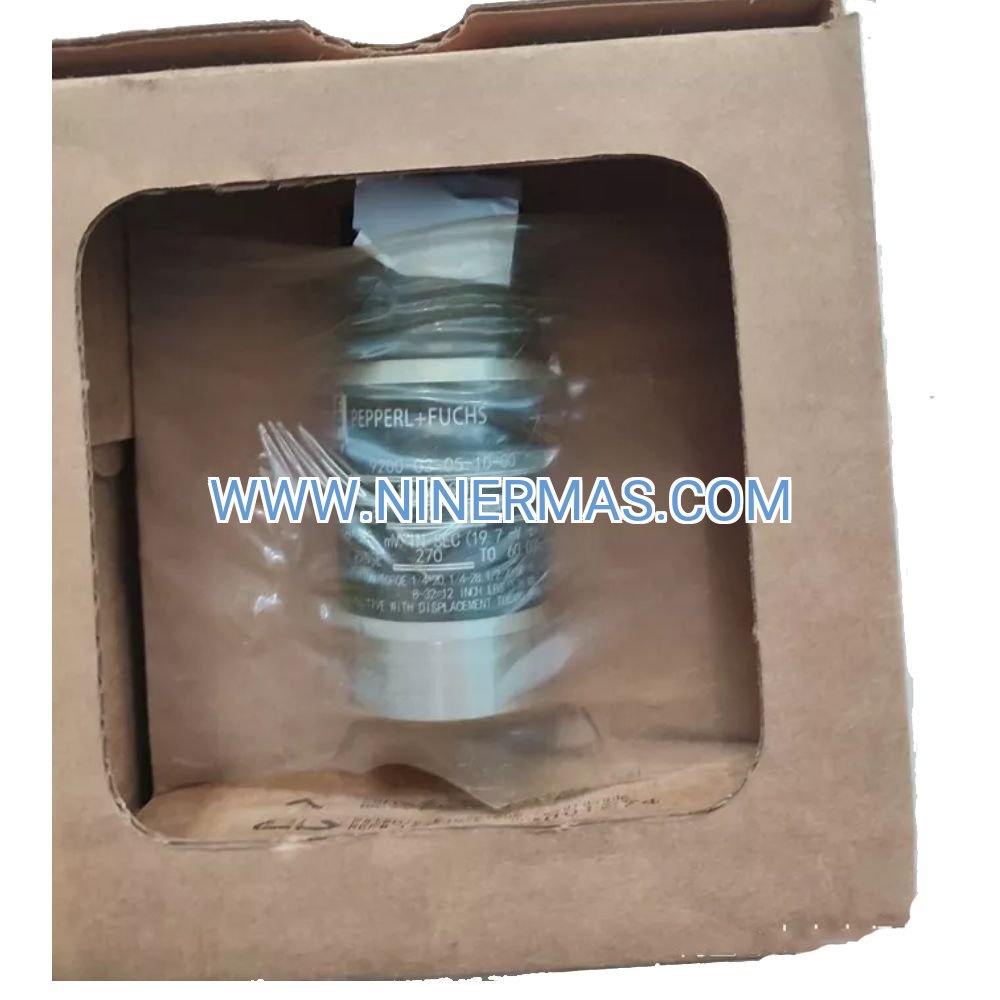
Bently Nevada 72301 Vibration Monitor | Multi-Stage Alarm System | API 670 Certified
Description
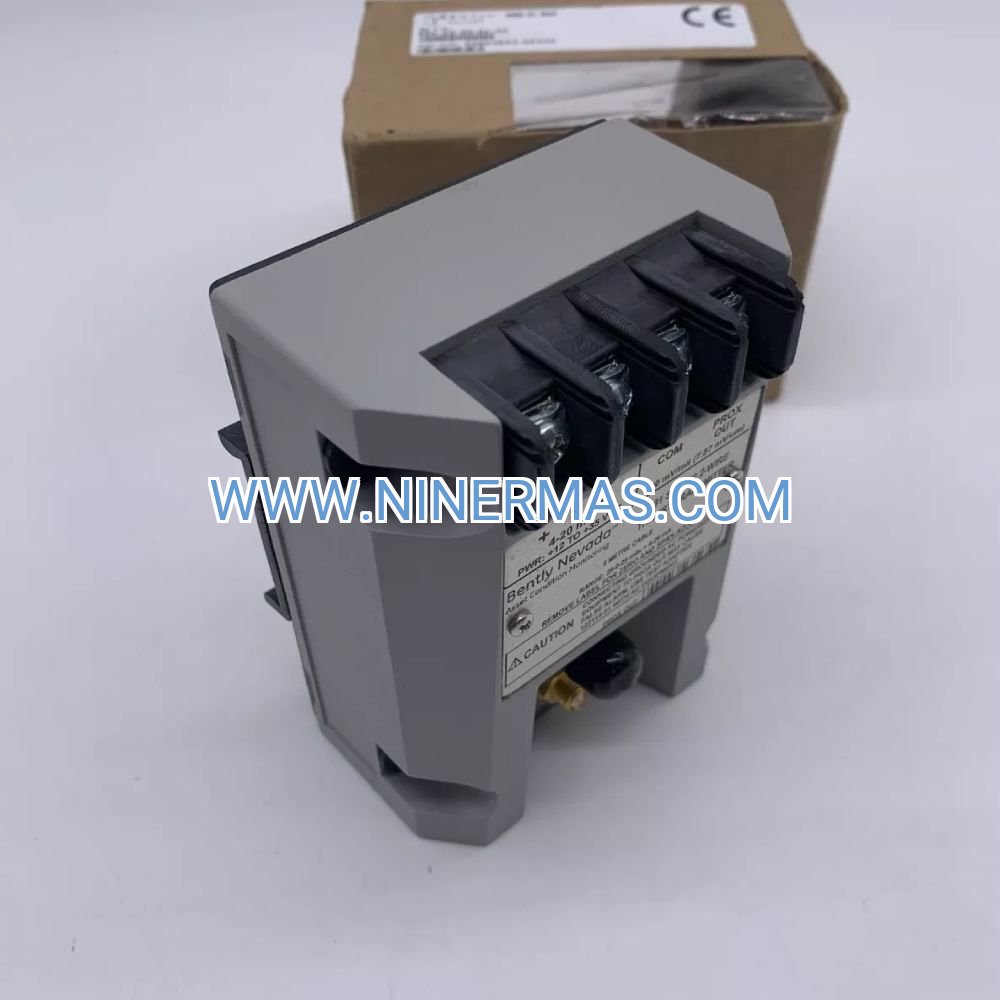
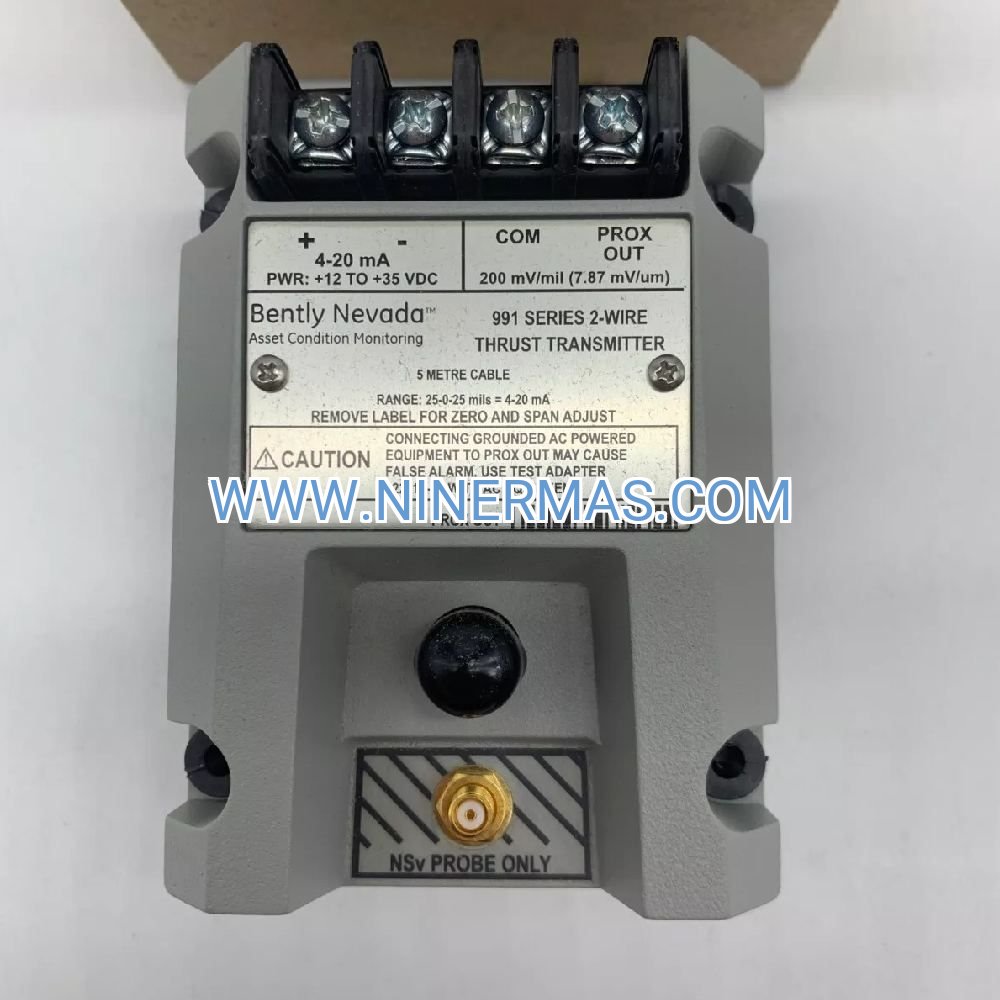
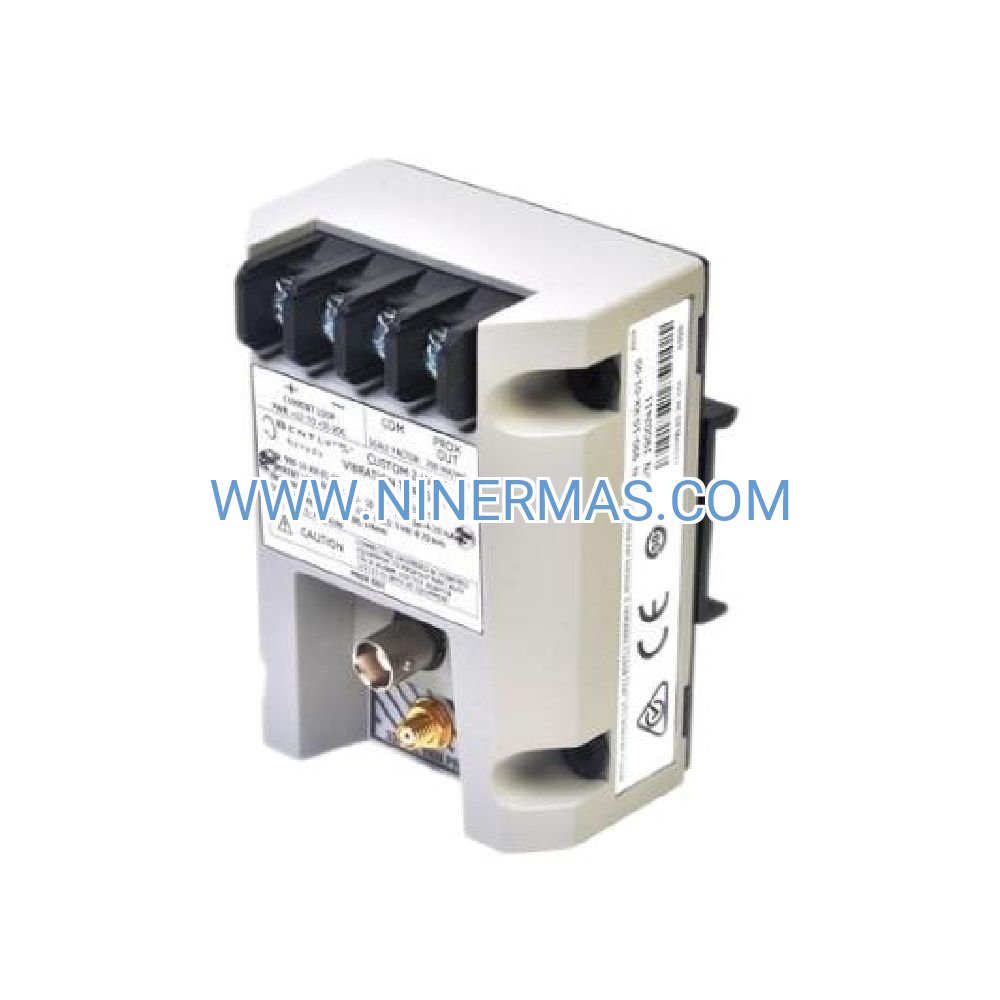
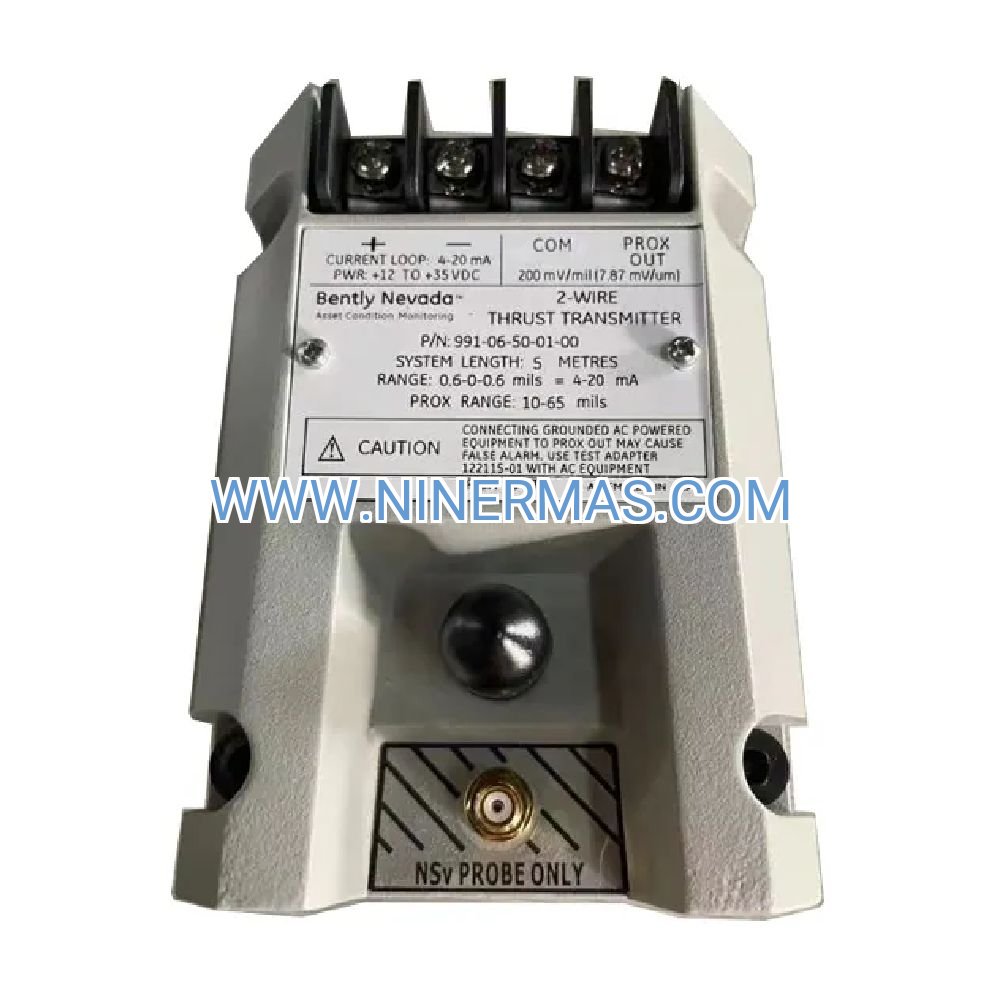
Bently Nevada 72301 Vibration Monitor (Industrial Multi-Stage Alarm & Protection System)
The Bently Nevada 72301-01-04-01-01-01-01 Vibration Monitor is a precision industrial monitoring device designed for critical rotating machinery protection. Through advanced vibration sensing technology and multi-stage alarm architecture, it delivers real-time machinery health monitoring, predictive maintenance alerts, and automated shutdown protection for high-value assets.
Ideal for power generation plants, petrochemical facilities, oil & gas refineries, and heavy industrial manufacturing environments, this monitor addresses critical challenges including unexpected equipment failure, costly unplanned downtime, bearing degradation, rotor imbalance, and insufficient early-warning systems for catastrophic machinery damage.
Featuring API 670 certification, standardized design with customizable alarm setpoints, and seamless integration capabilities, the 72301 series offers superior reliability, industrial-grade durability, comprehensive diagnostic capabilities, and multi-protocol connectivity (Modbus RTU/TCP, Ethernet/IP). Suitable for plant engineers, maintenance teams, OEM integrators, and facility managers seeking proven vibration monitoring solutions. Contact our application engineers for system configuration and technical specifications.
Core Features & Advantages
- Multi-Stage Alarm Architecture
Configurable alert, danger, and critical shutdown thresholds with independent relay outputs enable progressive response strategies, reducing false trips while ensuring machinery protection during abnormal vibration events. - API 670 Compliance & Certification
Meets stringent API 670 5th Edition requirements for vibration, axial position, and bearing temperature monitoring in petroleum, chemical, and gas industry services, ensuring regulatory compliance and insurance acceptance. - Universal Sensor Compatibility
Accepts proximity probes, accelerometers, and velocity transducers with field-selectable scaling, supporting legacy sensor infrastructure while enabling technology upgrades without complete system replacement. - Industrial Communication Protocols
Native Modbus RTU/TCP and Ethernet/IP support enables seamless integration with DCS, SCADA, and plant-wide asset management systems, providing centralized monitoring and historical trend analysis. - 4-20mA Analog Output
Proportional current loop output delivers real-time vibration amplitude to PLCs, recorders, and legacy control systems, ensuring compatibility with existing plant infrastructure and enabling hybrid monitoring architectures. - Robust Environmental Protection
IP65-rated enclosure with conformal-coated electronics withstands harsh industrial environments including temperature extremes (-40°C to +85°C), humidity, dust, and electromagnetic interference common in heavy industry. - Intuitive Local Interface
Backlit LCD display with membrane keypad provides on-site configuration, real-time readings, alarm status, and diagnostic information without requiring external tools or computer connectivity.
Typical Application Scenarios
The Bently Nevada 72301 vibration monitor is engineered for applications demanding continuous machinery health surveillance, particularly in:
- Power Generation & Turbomachinery
Steam turbines, gas turbines, generators, and turbine-driven compressors in combined-cycle plants, nuclear facilities, and cogeneration systems where unplanned outages result in megawatt-hour revenue losses and grid stability impacts. - Petrochemical & Refining Operations
Centrifugal compressors, process pumps, cracking unit machinery, and catalytic reformer equipment where vibration-induced failures can trigger process upsets, safety incidents, and environmental releases requiring regulatory reporting. - Oil & Gas Production Facilities
Offshore platform rotating equipment, pipeline compressor stations, LNG liquefaction trains, and gas processing units operating in remote locations where maintenance access is limited and equipment reliability directly impacts production economics. - Heavy Industrial Manufacturing
Paper mill dryer sections, steel rolling mill drives, mining conveyor systems, and cement kiln support machinery where continuous operation is essential for production throughput and equipment replacement costs are substantial. - Critical Infrastructure & Utilities
Water treatment plant pumps, HVAC chiller systems, wastewater aeration blowers, and municipal utility equipment where service interruptions affect public health, safety, and regulatory compliance obligations.
Technical Parameters & Selection Guide
To facilitate engineering design and equipment specification, we provide standardized configuration options with customization available for project-specific requirements:
| Parameter | Specification |
|---|---|
| Input Channels | Single-channel vibration monitoring |
| Sensor Types | Proximity probes (5-24 VDC), accelerometers (IEPE), velocity sensors |
| Measurement Range | 0-500 mils pk-pk (proximity), 0-50 g pk (acceleration), 0-2.0 in/sec pk (velocity) |
| Alarm Stages | Alert, Danger, Critical (independent setpoints & relay outputs) |
| Relay Outputs | 4× SPDT relays, 5A @ 250VAC/30VDC resistive load |
| Analog Output | 4-20mA isolated current loop, proportional to vibration amplitude |
| Communication | Modbus RTU (RS-485), Modbus TCP, Ethernet/IP (optional) |
| Power Supply | 24 VDC ±20% or 100-240 VAC 50/60 Hz (specify at order) |
| Operating Temperature | -40°C to +85°C (-40°F to +185°F) |
| Enclosure Rating | IP65 (NEMA 4X equivalent) for panel mounting |
| Certifications | API 670, CE, UL/cUL, ATEX/IECEx (Zone 2) available |
| Dimensions | 144mm × 144mm × 120mm (panel cutout: 138mm × 138mm) |
Selection Considerations: When specifying the 72301 monitor, engineers should evaluate: maximum expected vibration levels and sensor output characteristics, required alarm response times and shutdown logic integration, existing sensor infrastructure and replacement feasibility, control system communication protocol requirements, hazardous area classification and certification needs, panel space constraints and mounting orientation. For application-specific guidance, provide machinery type, operating speed range, sensor specifications, and control system architecture—our engineers will recommend optimal configuration and integration approach.
Extended Functionality & Integration Options
- Redundant Monitoring Configurations
Dual-monitor voting logic for critical machinery applications requiring 1oo2 or 2oo3 shutdown architectures per IEC 61508 functional safety requirements. - Wireless Connectivity Modules
Optional 4G/LTE or LoRaWAN adapters enable remote monitoring for geographically distributed assets without hardwired network infrastructure investment. - Predictive Analytics Integration
Data export compatibility with condition monitoring platforms (SKF @ptitude, Emerson AMS, GE Bently Nevada System 1) for advanced diagnostics including FFT analysis, orbit plots, and machine learning anomaly detection. - Hazardous Area Variants
ATEX Zone 1, IECEx, and North American Class I Division 1 certified models available for installation in explosive atmosphere locations per project safety requirements.
Delivery, Service & Quality Assurance
Lead Time: Standard configurations ship within 3-5 business days from stock; custom-configured units with specific I/O, communication, or certification requirements typically deliver within 10-15 business days subject to current production schedule.
Warranty Coverage: All units include 24-month manufacturer warranty covering defects in materials and workmanship under normal industrial operating conditions, with extended warranty programs available for critical applications.
Technical Support: Comprehensive application engineering assistance including sensor selection guidance, wiring diagrams, Modbus register mapping, alarm logic programming, and DCS/SCADA integration support via phone, email, and remote desktop sessions.
Documentation Package: Each monitor ships with complete technical documentation including installation manual, quick-start guide, detailed wiring diagrams, Modbus communication protocol specification, calibration certificates (when applicable), and dimensional drawings in AutoCAD DXF format for panel design integration.
Factory Testing: All units undergo 100% functional testing including power-on self-test, alarm relay verification, analog output calibration, and communication protocol validation prior to shipment, with test reports available upon request.
Frequently Asked Questions (FAQ)
Q: How does the Bently Nevada 72301 vibration monitor integrate with existing PLC or DCS control systems?
A: The 72301 offers multiple integration pathways: hardwired relay outputs for direct shutdown logic, 4-20mA analog signals for continuous trending in legacy systems, and digital protocols (Modbus RTU/TCP, Ethernet/IP) for modern networked architectures. Most installations use a hybrid approach with relays for critical alarms and Modbus for data acquisition. We provide pre-configured Modbus register maps and sample PLC code for common platforms (Allen-Bradley, Siemens, Schneider).
Q: What is the maximum number of alarm stages supported, and can setpoints be adjusted in the field?
A: The 72301 supports three independent alarm stages (Alert, Danger, Critical) with fully field-adjustable setpoints via front-panel keypad or Modbus commands. Each stage has dedicated relay outputs with configurable time delays (0-60 seconds) to prevent nuisance trips from transient events. Setpoint changes can be password-protected to prevent unauthorized modifications in production environments.
Q: What level of energy savings or reliability improvement can be expected with vibration monitoring?
A: While energy savings are indirect, continuous vibration monitoring typically reduces unplanned downtime by 30-50% through early fault detection, extends bearing life by 20-40% via optimized maintenance intervals, and prevents catastrophic failures that can result in 5-10× repair costs compared to planned interventions. ROI is typically achieved within 6-18 months for critical machinery applications based on avoided downtime and maintenance optimization.
Q: What are the environmental and installation requirements for the 72301 monitor?
A: The monitor requires panel mounting in a location with ambient temperature between -40°C and +85°C, though sustained operation above 70°C may reduce relay life expectancy. The IP65-rated front bezel allows installation in dusty or humid environments, but the rear terminals should be protected from direct water spray. Sensor cable runs should be separated from high-voltage power cables and use shielded twisted-pair wiring with proper grounding to minimize electrical noise interference.
Q: Does the monitor support remote monitoring and data logging capabilities?
A: Yes, via Modbus TCP or Ethernet/IP protocols, the 72301 can stream real-time vibration data, alarm status, and diagnostic information to SCADA systems, cloud-based IoT platforms, or dedicated condition monitoring software at polling rates up to 10 Hz. For standalone data logging, the monitor can interface with industrial data recorders or edge computing gateways. Optional wireless modules enable cellular or LoRaWAN connectivity for remote sites without existing network infrastructure.
Q: Can the 72301 monitor be used with sensors from other manufacturers, or is it locked to Bently Nevada sensors?
A: The 72301 is designed for universal sensor compatibility and works with proximity probes (any brand providing 5-24 VDC output), IEPE accelerometers (2-20 mA constant current excitation), and passive velocity sensors meeting standard industrial specifications. Field-selectable scaling and sensor type configuration allow integration with existing sensor infrastructure from manufacturers including SKF, Wilcoxon, PCB Piezotronics, and others, eliminating vendor lock-in concerns.
Request Technical Support & Custom Configuration
For detailed application engineering, custom configuration quotations, or technical specifications tailored to your project requirements, please provide the following information: project name and application description, machinery type and operating parameters (speed range, bearing types), current sensor specifications or planned sensor selection, required alarm logic and shutdown integration approach, communication protocol and control system details, environmental conditions and hazardous area classification. Our application engineers will respond within 24 hours with personalized recommendations and budget pricing.
© 2026 NINERMAS COMPANY LIMITED. All rights reserved. Original Source: https://ninermas.com | Contact: sale@ninermas.com | +0086 187 5021 5667

Contact Info
-
Address:22 / F, South Wo Hang building, 148 Wing Lok Street, Sheung Wan, Western District, Hong Kong
-
Phone:+8618750215667
-
Email: