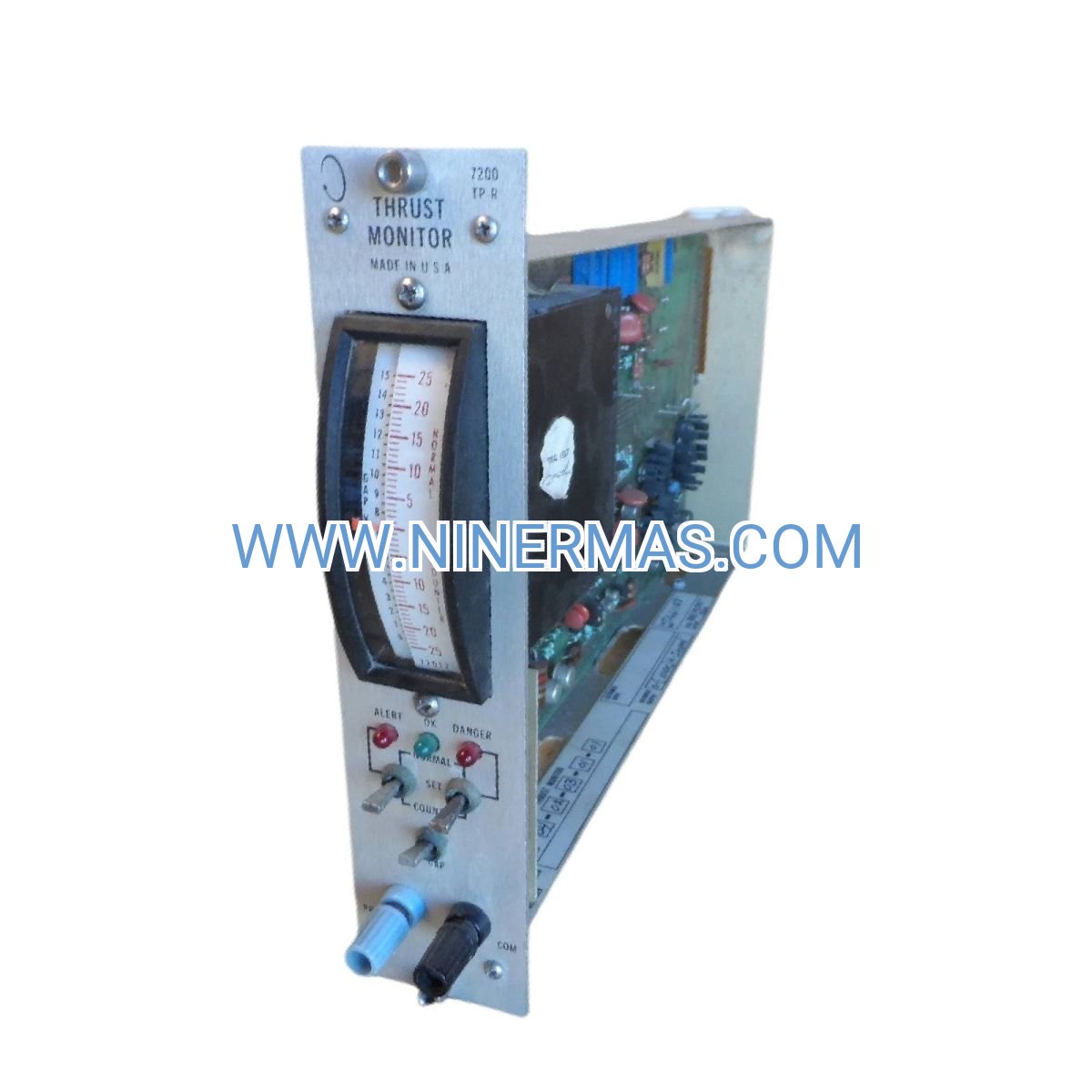
Bently Nevada 72300 Dual Vibration Monitor | API 670 Certified | Industrial Turbomachinery Protection
Description
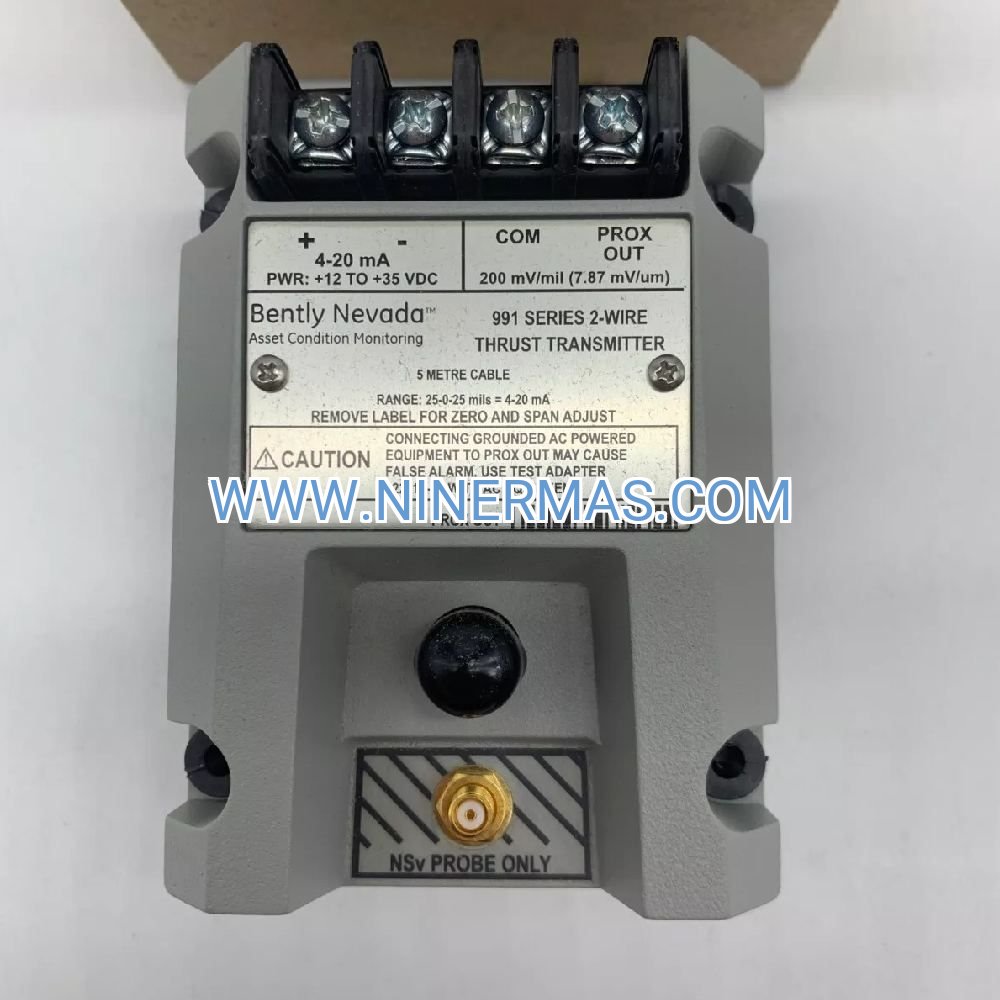
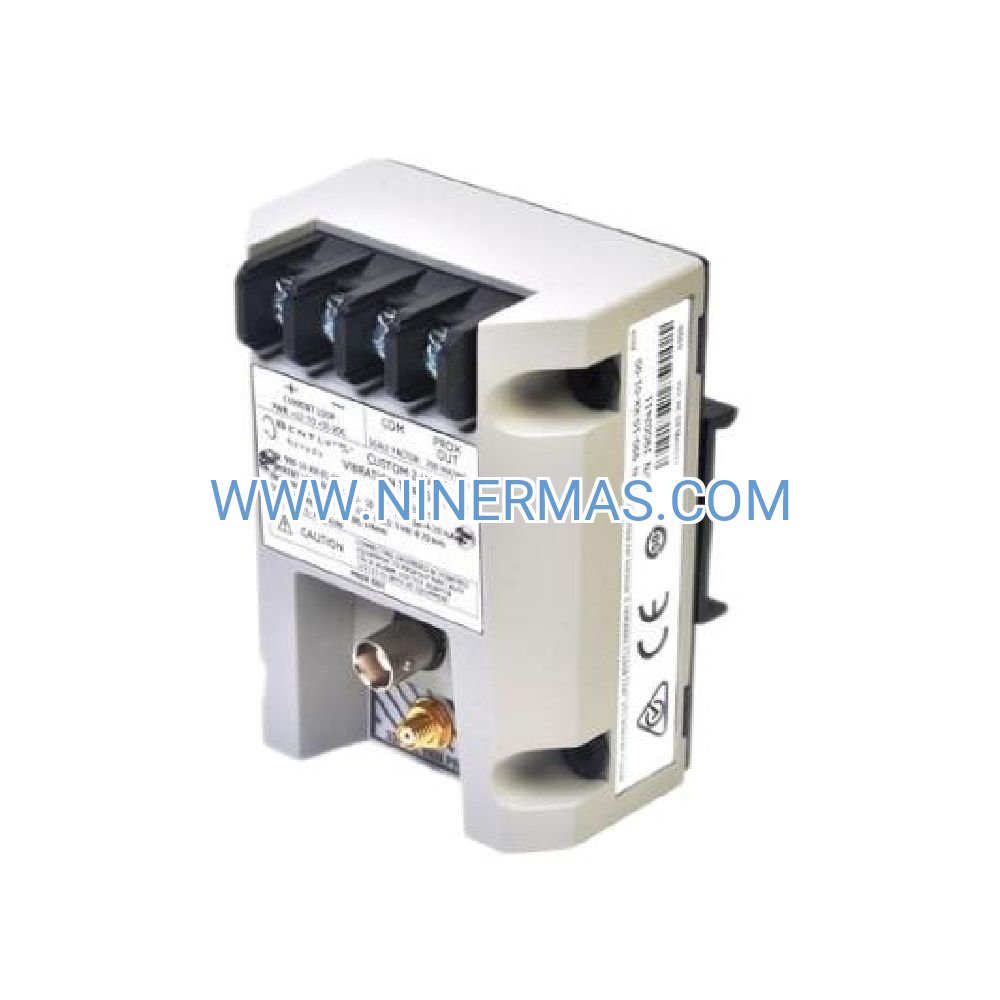
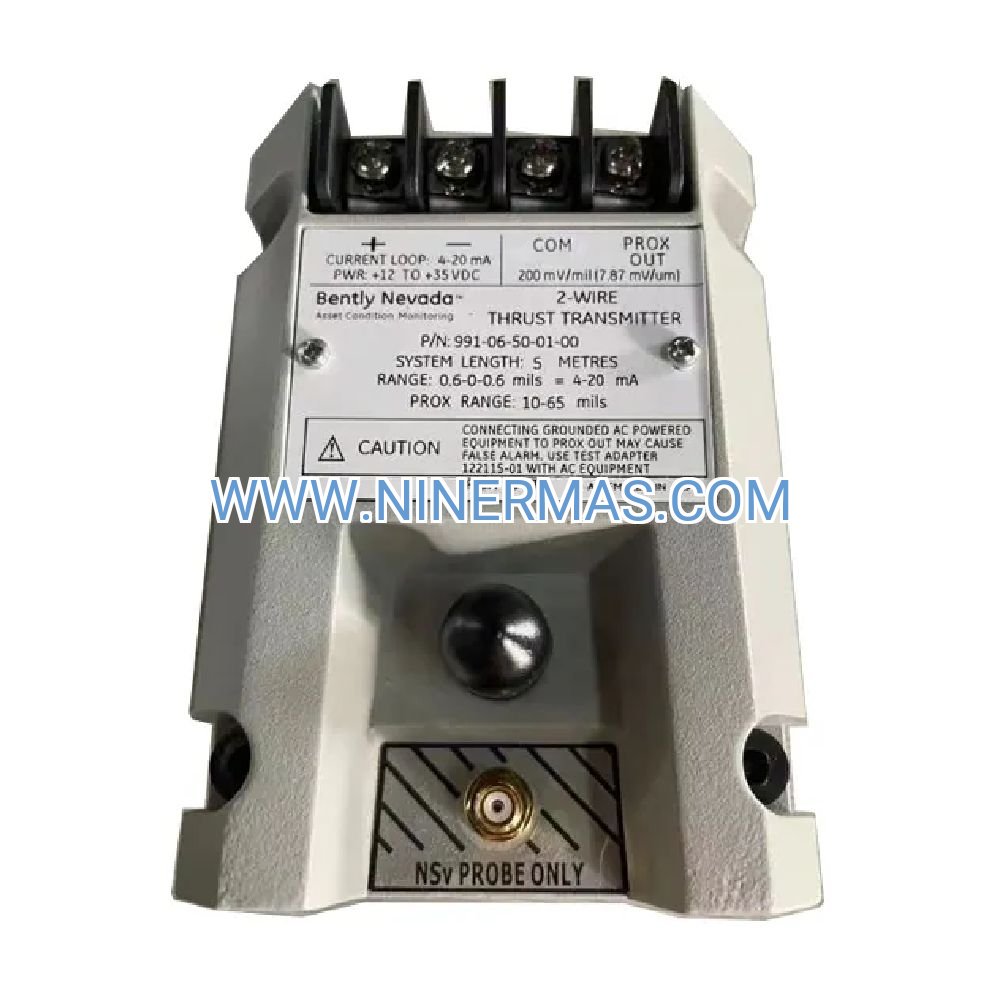
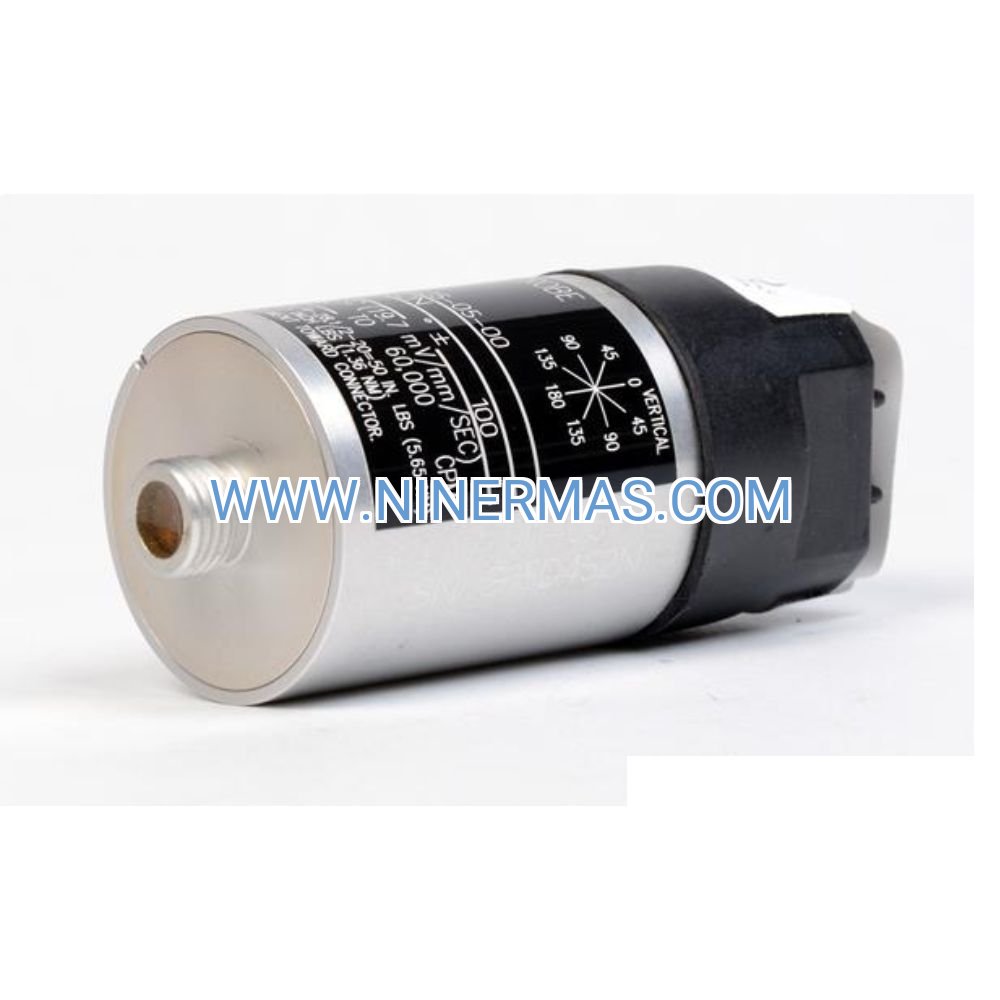
Bently Nevada 72300 Dual Vibration Monitor (API 670 Certified Industrial Protection System)
The Bently Nevada 72300-03-04-02-01-01-15 is a precision dual-plane vibration monitoring system engineered for critical rotating machinery protection. Through advanced signal processing and real-time orbit analysis, it delivers continuous shaft vibration measurement, enabling early fault detection and preventing catastrophic failures in turbines, compressors, and high-speed rotating equipment.
Designed for demanding industrial environments including power generation, oil & gas processing, petrochemical plants, and heavy manufacturing facilities, this monitor addresses critical challenges such as unplanned downtime, bearing failures, rotor imbalance, and misalignment issues that can lead to equipment damage and production losses.
With API 670 certification, dual-channel architecture, and comprehensive communication protocols (Modbus TCP/IP, Ethernet/IP, 4-20mA analog), the 72300 series provides reliable machinery health monitoring for design engineers, maintenance teams, reliability engineers, and plant operators. Contact our application engineers for customized configuration and integration support tailored to your specific machinery protection requirements.
Core Features & Technical Advantages
- Dual-Plane Vibration Measurement
Simultaneous X-Y orbit monitoring with independent channel processing captures comprehensive shaft motion dynamics, enabling precise diagnosis of rotor behavior, unbalance conditions, and bearing wear patterns in real-time. - API 670 Fifth Edition Compliance
Meets stringent petroleum and natural gas industry standards for machinery protection systems, ensuring reliability, voting logic, and fail-safe operation required for critical turbomachinery applications. - Advanced Orbit Display & Diagnostics
Real-time Lissajous pattern visualization reveals shaft centerline trajectory, facilitating immediate identification of rubs, looseness, misalignment, and resonance conditions without external analysis tools. - Multi-Protocol Industrial Connectivity
Integrated Modbus TCP/IP and Ethernet/IP interfaces enable seamless integration with DCS, SCADA, and plant-wide asset management systems, while 4-20mA outputs provide universal compatibility with legacy control systems. - Comprehensive Alarm & Protection Logic
Configurable alert and danger setpoints with voting architecture, time delays, and hysteresis settings minimize nuisance trips while ensuring rapid response to genuine machinery faults, reducing false shutdowns by up to 40%. - Robust Industrial-Grade Construction
Designed for harsh environments with wide operating temperature range (-30°C to +65°C), EMI/RFI immunity, and conformal coating protection, ensuring reliable operation in high-vibration, high-temperature, and electrically noisy industrial settings. - Intuitive Configuration & Maintenance
Front-panel LED indicators and optional LCD display provide at-a-glance status monitoring, while PC-based configuration software streamlines setup, calibration, and historical trend analysis for maintenance planning.
Typical Application Scenarios
The Bently Nevada 72300 dual vibration monitor is specifically engineered for applications demanding continuous machinery health surveillance and automated protection, particularly in:
- Steam & Gas Turbine Protection
Monitors journal bearing vibration in power generation turbines (50-500 MW), detecting rotor bow, blade loss, and bearing degradation before catastrophic failure, ensuring grid stability and preventing multi-million dollar outages. - Centrifugal & Axial Compressor Monitoring
Safeguards critical compression equipment in LNG plants, refineries, and chemical processing facilities by tracking surge conditions, aerodynamic instability, and mechanical seal failures in real-time. - Large Motor & Generator Sets
Provides continuous surveillance of high-horsepower induction motors (>500 HP) and synchronous generators, identifying rotor bar cracks, eccentricity, and foundation issues that compromise operational reliability. - Pumps & Blowers in Process Industries
Ensures uptime for mission-critical pumping systems in water treatment, pulp & paper, and mining operations by detecting cavitation, impeller damage, and coupling misalignment early in the failure progression curve. - Gearbox & Drivetrain Systems
Monitors complex gear mesh frequencies and bearing tones in wind turbines, marine propulsion systems, and industrial gearboxes, enabling predictive maintenance strategies that extend component life by 25-35%.
Technical Specifications & Selection Guide
To ensure optimal performance and compatibility with your machinery protection architecture, the Bently Nevada 72300 series offers flexible configuration options:
| Parameter | Specification |
|---|---|
| Input Channels | 2 independent channels (X & Y planes) |
| Sensor Compatibility | Proximity probes (3300 XL, 3300 NSv), accelerometers (seismic transducers) |
| Measurement Range | 0-500 µm pk-pk (0-20 mils pk-pk), configurable scaling |
| Frequency Response | 0-10 kHz (-3dB), suitable for machinery speeds 60-60,000 RPM |
| Alarm Outputs | 4 configurable relay contacts (Alert/Danger per channel), 5A @ 250VAC |
| Analog Outputs | 4-20mA isolated (proportional to vibration amplitude), 500Ω max load |
| Digital Communication | Modbus TCP/IP, Ethernet/IP (10/100 Mbps), RS-485 optional |
| Power Supply | 24VDC ±20% (18-30VDC), <15W typical consumption |
| Operating Environment | -30°C to +65°C, 5-95% RH non-condensing, IP54 front panel |
| Mounting | DIN rail or panel mount, 1/4 DIN cutout (96×96mm) |
| Certifications | API 670, CE, UL/cUL, ATEX/IECEx (optional for hazardous areas) |
Selection Considerations: When specifying the 72300 monitor, evaluate maximum machinery speed (determines required frequency response), sensor type and cable length (affects signal conditioning requirements), integration protocol preferences (Modbus vs. Ethernet/IP), and environmental conditions (temperature extremes, hazardous area classification). For complex multi-train installations or retrofit projects, provide machinery drawings, existing sensor specifications, and control system architecture details to our engineering team for validated configuration recommendations.
Advanced Configuration Options
- Hazardous Area Certification: ATEX Zone 2 and IECEx compliance available for installation in classified locations (oil & gas upstream/downstream facilities)
- Redundant Architecture: 2oo3 voting logic support for SIL-rated safety instrumented systems per IEC 61508
- Extended Temperature Range: -40°C to +70°C variant for extreme climate installations (Arctic, desert environments)
- Fiber Optic Isolation: Galvanic isolation option for electrically noisy environments or long-distance sensor runs (>300m)
- Integrated Data Historian: Onboard trend storage (up to 90 days) with automatic event capture during alarm conditions
- Wireless Gateway Integration: Optional WirelessHART or ISA100 adapter for remote monitoring in inaccessible locations
Delivery, Service & Quality Assurance
Lead Time: Standard configuration units ship within 3-5 business days from stock; custom-configured systems (specific alarm setpoints, communication protocols, or certifications) require 10-15 business days for factory programming and testing.
Warranty & Support: All units include a comprehensive 24-month manufacturer warranty covering defects in materials and workmanship. Extended warranty programs (up to 5 years) available for critical applications. Technical support includes remote diagnostics assistance, configuration file backup/restore services, and firmware update guidance.
Installation & Commissioning: Field installation support and startup services available through our certified service network (subject to location and project scope). Standard delivery includes detailed installation manual, wiring diagrams, Modbus register map, and sample configuration files for common machinery types.
Documentation Package: Each monitor ships with complete technical documentation including electrical schematics, dimensional drawings, calibration certificates (traceable to NIST/PTB standards), API 670 compliance declaration, and quick-start commissioning guide in English with optional translations.
Frequently Asked Questions (FAQ)
Q: How does the Bently Nevada 72300 dual vibration monitor integrate with existing DCS or PLC systems?
A: The 72300 offers multiple integration pathways: Modbus TCP/IP and Ethernet/IP provide direct digital communication to modern control systems (Allen-Bradley, Siemens, Schneider, Honeywell), while 4-20mA analog outputs ensure compatibility with legacy systems. Configuration requires mapping Modbus registers (holding registers 40001-40100 for vibration data) or configuring Ethernet/IP assembly objects; detailed register maps and sample ladder logic are provided in the technical manual.
Q: What is the maximum number of machines one 72300 monitor can protect?
A: Each 72300 unit monitors one machine with dual-plane (X-Y) vibration measurement from a single bearing location. For multi-bearing machines (e.g., a turbine with 4 bearings), you would typically deploy 2-4 monitors depending on the protection philosophy. For comprehensive train monitoring (driver + driven equipment), a distributed architecture using multiple 72300 units networked via Modbus is recommended.
Q: What level of energy savings or efficiency improvement can be expected with vibration monitoring?
A: While the monitor itself doesn't directly reduce energy consumption, it enables condition-based maintenance strategies that prevent efficiency-degrading faults. Studies show early detection of misalignment can restore 3-8% lost efficiency, while preventing bearing failures avoids emergency shutdowns that cost $50,000-$500,000 per incident in lost production. Typical ROI is achieved within 6-18 months through avoided downtime and optimized maintenance intervals.
Q: What are the environmental and installation requirements for the 72300 monitor?
A: The standard unit operates reliably in -30°C to +65°C ambient temperature with 5-95% relative humidity (non-condensing). Front panel meets IP54 protection (dust and splash resistant); for outdoor or washdown environments, specify NEMA 4X enclosure option. Mounting requires 1/4 DIN panel cutout (96×96mm) or standard 35mm DIN rail. Ensure adequate ventilation (minimum 50mm clearance on sides) and avoid direct sunlight or radiant heat sources.
Q: Can the 72300 support remote monitoring and wireless data transmission?
A: Yes, through multiple approaches: (1) Direct Ethernet connection to plant network enables access via web browser or SCADA for remote visualization; (2) Optional WirelessHART or ISA100.11a gateway modules provide wireless connectivity to centralized monitoring systems; (3) Integration with IIoT platforms (Azure IoT, AWS IoT, or Bently Nevada System 1) enables cloud-based analytics and mobile app access. Modbus TCP/IP protocol supports secure VPN connections for off-site monitoring by reliability engineers or OEM service teams.
Q: Is the 72300 compatible with non-Bently Nevada proximity probes and sensors?
A: The 72300 is optimized for Bently Nevada 3300 XL and 3300 NSv proximity probe systems but can accept signals from other manufacturers' eddy-current probes with -24VDC proximitor outputs (200 mV/mil or 8 mV/µm sensitivity). For accelerometer inputs, the monitor accepts standard 4-20mA or ±5VDC seismic transducer outputs. Sensor compatibility verification and scaling configuration assistance is available from our application engineering team—provide sensor datasheets and cable specifications for validation.
Request Technical Support & Custom Configuration
To receive a detailed application-specific configuration proposal, technical drawings, or pricing quotation, please provide the following project information to our engineering team:
- Project name and application type (turbine, compressor, motor, pump, etc.)
- Machinery specifications: rated speed (RPM), bearing type, shaft diameter
- Existing sensor details: probe type, cable length, proximitor model (if retrofit)
- Required alarm setpoints: Alert and Danger levels (in mils pk-pk or µm pk-pk)
- Communication protocol preference: Modbus TCP/IP, Ethernet/IP, or 4-20mA analog
- Power supply available: 24VDC, 120VAC, or 240VAC
- Environmental conditions: ambient temperature range, hazardous area classification (if applicable)
- Integration requirements: DCS/PLC manufacturer and model, network architecture
Our certified vibration specialists will provide one-on-one application consultation, configuration file templates, and integration support to ensure seamless deployment and optimal machinery protection performance.
© 2026 NINERMAS COMPANY LIMITED. All rights reserved. Original Source: https://ninermas.com Contact: sale@ninermas.com | +0086 187 5021 5667

Contact Info
-
Address:22 / F, South Wo Hang building, 148 Wing Lok Street, Sheung Wan, Western District, Hong Kong
-
Phone:+8618750215667
-
Email: