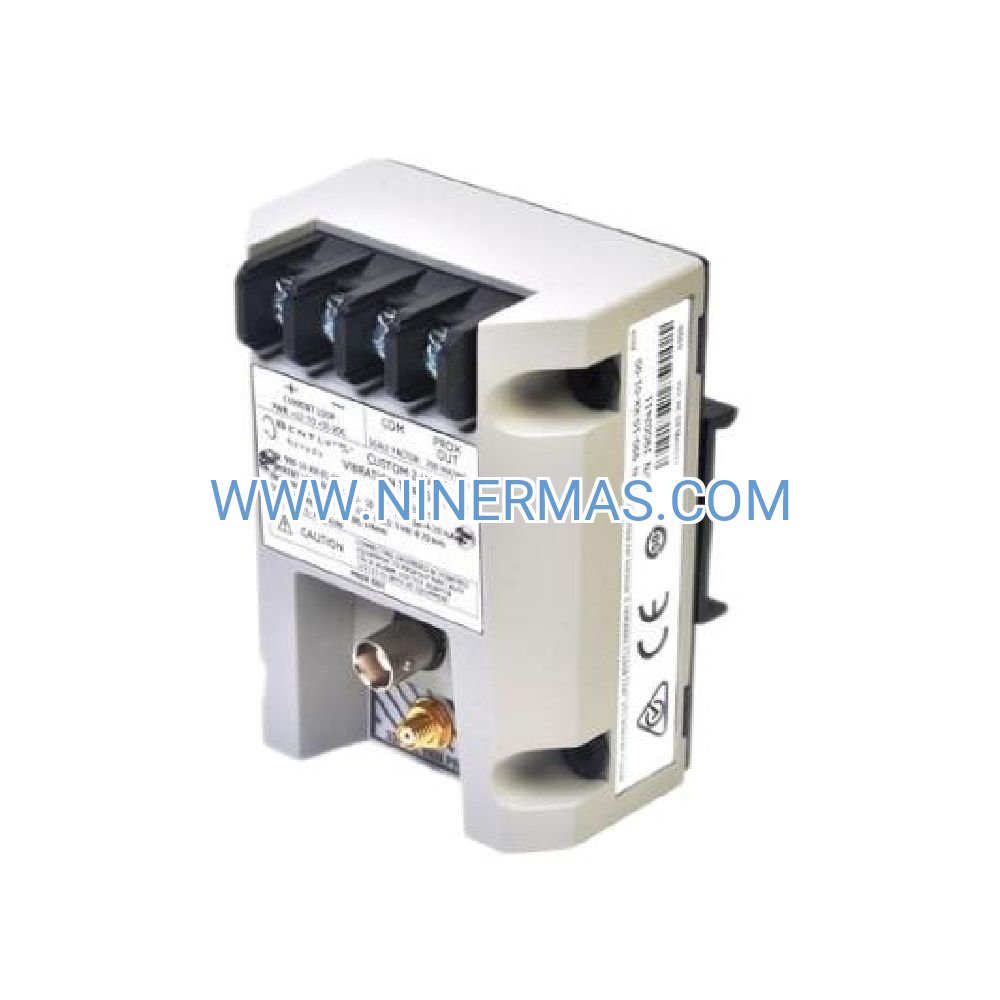
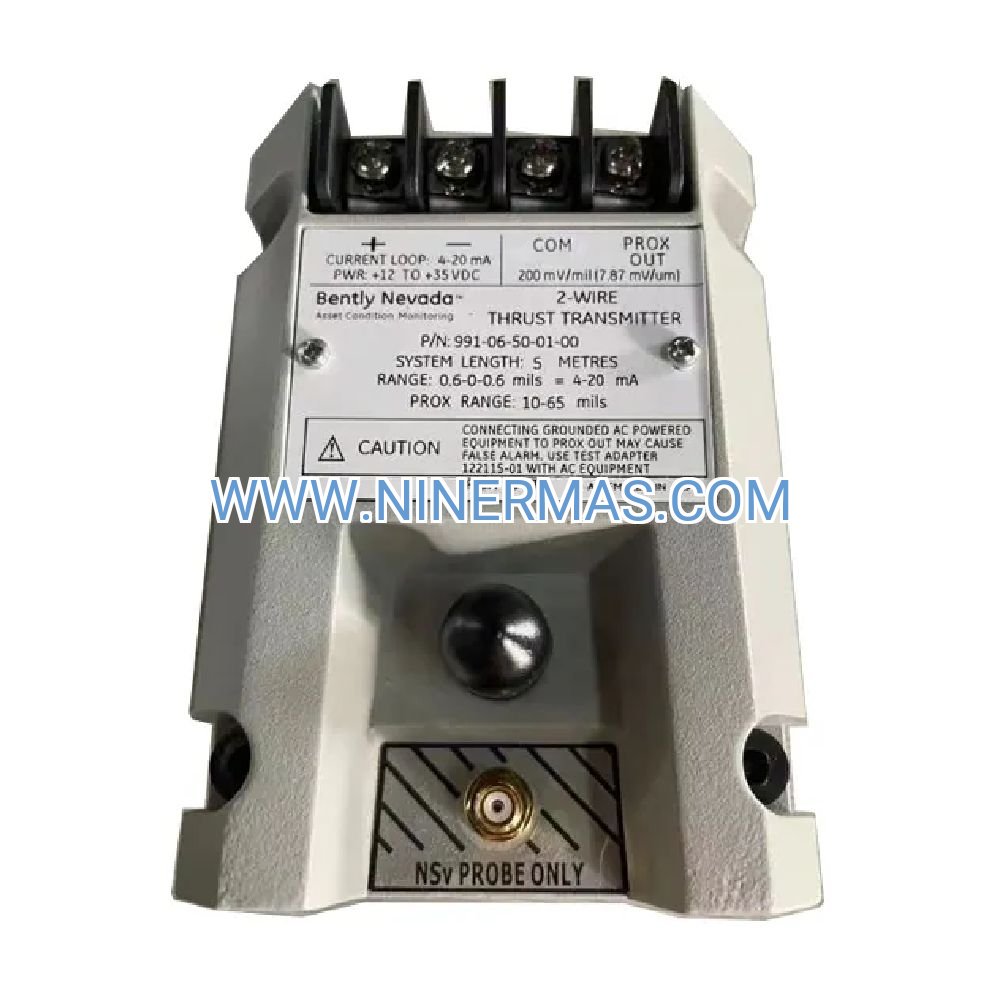
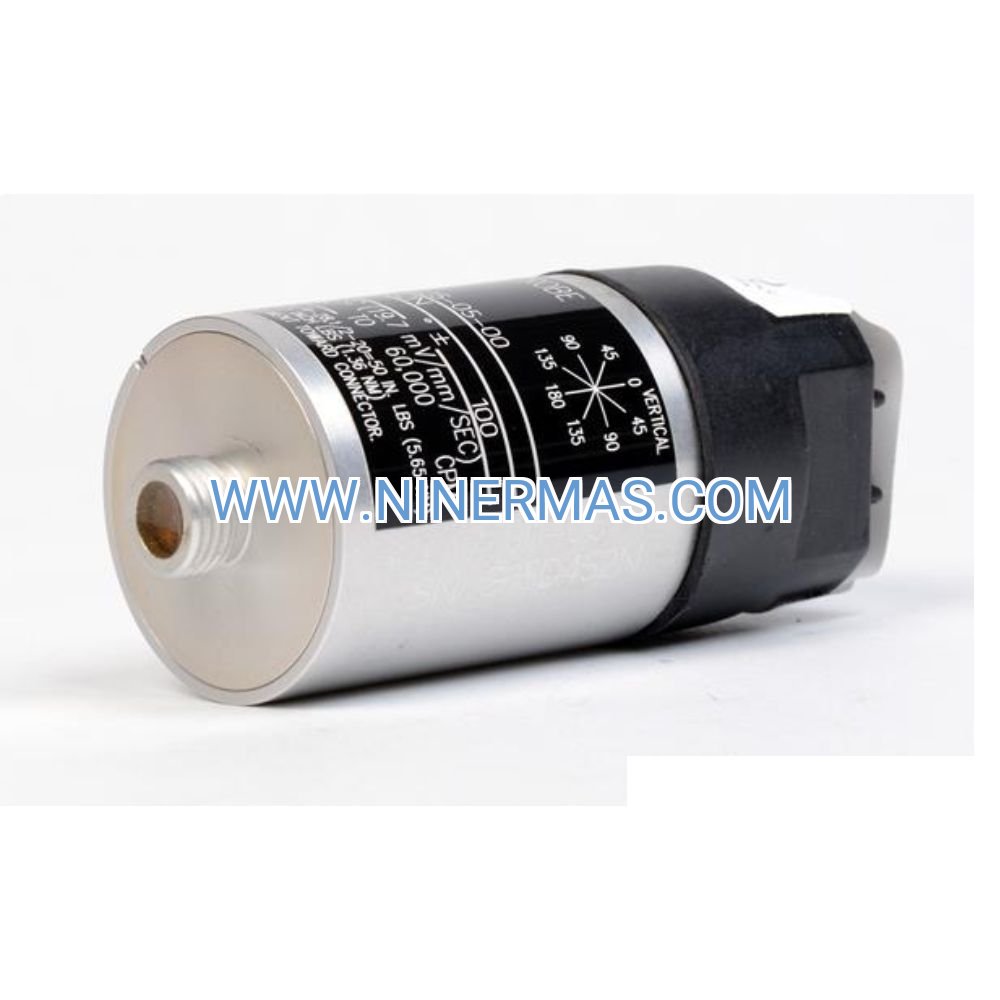
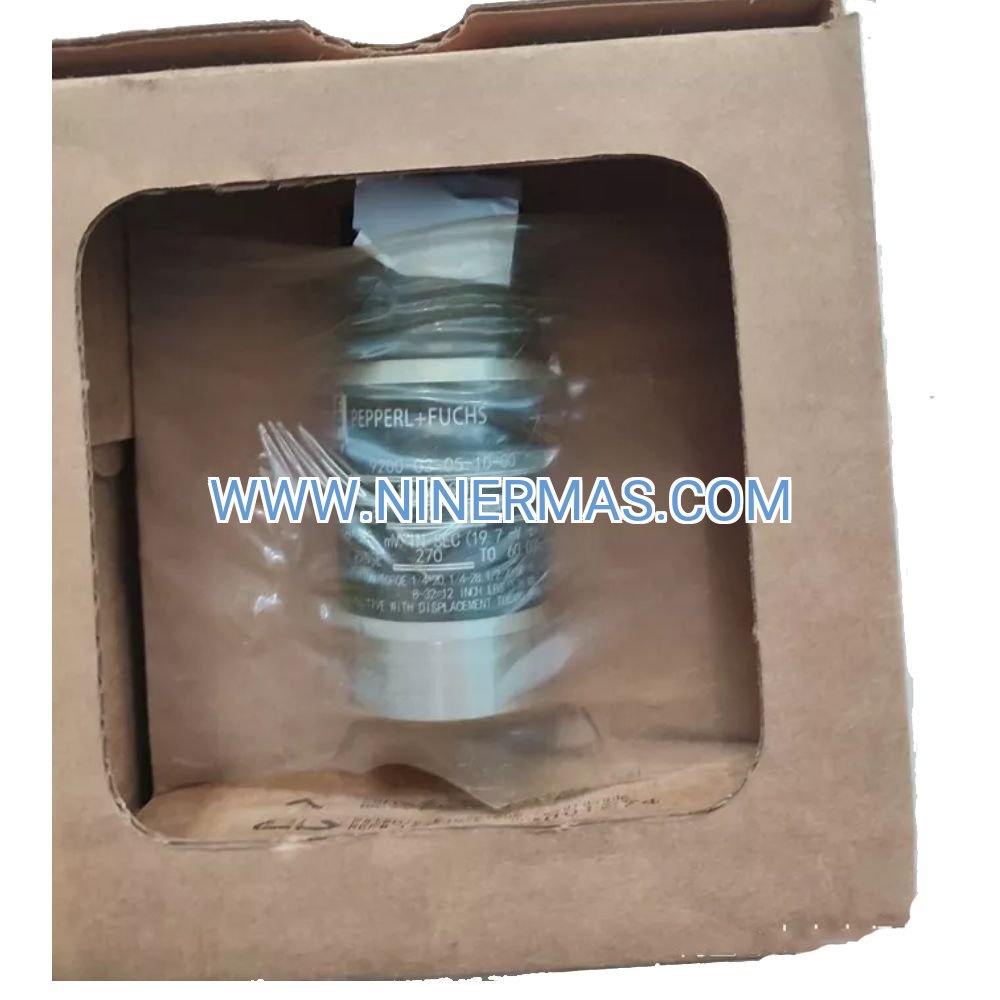
Bently Nevada 72254-02 Interface Card | 3300/10 Dual-Channel Monitoring Module for API 670
Description
Bently Nevada 72254-02 Interface Card Module (Industrial-Grade Dual-Channel Monitoring System)
The Bently Nevada 72254-02 is a high-performance interface card module designed for the 3300/10 machinery protection system. Through advanced dual-channel signal processing and relay output technology, it delivers real-time vibration monitoring, temperature surveillance, and critical alarm management for rotating equipment. This module ensures continuous operational safety and maximizes uptime in demanding industrial environments.
Engineered for power generation plants, petrochemical facilities, oil & gas processing units, steel mills, and heavy manufacturing operations, the 72254-02 addresses critical challenges including equipment failure prediction, unplanned downtime prevention, vibration anomaly detection, and delayed fault response. It provides comprehensive machinery health insights for turbines, compressors, pumps, motors, and gearboxes.
Built with standardized design and flexible configuration options, this interface card module offers API 670 compliance, hot-swappable installation, multi-parameter monitoring capability, and seamless DCS/PLC integration. Ideal for instrumentation engineers, plant maintenance teams, OEM system integrators, and reliability-focused operations. Contact our application engineers for customized configuration guidance and technical quotations.
Core Features & Technical Advantages
- Dual-Channel Monitoring Architecture
Simultaneous processing of two independent sensor inputs with isolated signal paths, enabling redundant monitoring and enhanced fault detection accuracy for critical machinery assets. - API 670 Compliance & Industry Standards
Fully compliant with API 670 5th Edition requirements for vibration, axial position, and temperature monitoring in rotating machinery, ensuring regulatory adherence and insurance qualification. - Hot-Swappable Design for Zero Downtime
Field-replaceable module with live insertion/removal capability, allowing maintenance activities without system shutdown or process interruption, reducing MTTR by up to 75%. - Programmable Relay Outputs & Alarm Logic
Configurable relay contacts (Alert/Danger) with adjustable setpoints, time delays, and voting logic, providing flexible integration with plant shutdown systems and annunciator panels. - Wide Sensor Compatibility
Supports proximity probes, accelerometers, velocity sensors, RTDs, and thermocouples with automatic sensor type recognition and built-in excitation power supply (±24 VDC). - Comprehensive Protection Functions
Integrated diagnostics for sensor open/short circuit, cable fault detection, power supply monitoring, and self-test routines, minimizing false alarms and enhancing system reliability. - Intuitive Status Indication
Front-panel LED indicators for OK/Alert/Danger status, channel activity, relay state, and fault conditions, enabling rapid visual assessment during plant rounds and troubleshooting.
Typical Application Scenarios
This interface card module is specifically designed for applications requiring high reliability, continuous monitoring, and compliance with international machinery protection standards, including:
- Steam & Gas Turbine Protection
Monitors bearing vibration, thrust position, and casing expansion in power generation turbines, preventing catastrophic failures and ensuring grid stability compliance. - Centrifugal Compressor Monitoring
Tracks radial vibration, axial shift, and differential expansion in API 617 compressors used in LNG plants, refineries, and chemical processing facilities. - Critical Pump & Motor Surveillance
Provides continuous condition monitoring for high-value pumps (API 610/682) and large induction motors in water treatment, mining, and pulp & paper industries. - Gearbox & Drivetrain Analysis
Detects gear mesh faults, bearing defects, and misalignment issues in industrial gearboxes, wind turbine drivetrains, and marine propulsion systems. - Hydroelectric Generator Protection
Monitors guide bearing vibration, thrust bearing temperature, and shaft runout in hydro turbines, meeting USBR and IEC standards for dam safety.
Technical Specifications & Selection Guide
To facilitate engineering design and procurement, we provide standardized electrical, mechanical, and environmental specifications. Custom configurations are available based on project-specific requirements.
| Parameter | Specification |
|---|---|
| Input Channels | 2 independent channels (isolated) |
| Sensor Types | Proximity probes, accelerometers, velocity sensors, RTDs, TCs |
| Input Voltage Range | ±10 VDC (proximity), 100 mV to 10 V (dynamic) |
| Frequency Response | 0.1 Hz to 10 kHz (-3 dB) |
| Relay Outputs | 4 SPDT relays (2 per channel: Alert/Danger) |
| Relay Rating | 5 A @ 250 VAC / 30 VDC resistive load |
| Power Supply | 18-30 VDC, 15 W typical |
| Operating Temperature | -30°C to +65°C (-22°F to +149°F) |
| Enclosure Rating | IP20 (rack-mount), IP54 (optional field housing) |
| Communication Protocol | Modbus RTU, 4-20 mA output (optional) |
| Compliance Standards | API 670, ISO 20816, IEC 61508 SIL 2 |
| Module Dimensions | Single-width Eurocard (100 mm × 220 mm) |
Selection Recommendations: When specifying this module, consider maximum vibration amplitude, sensor sensitivity (mV/mil or mV/g), required alarm setpoints, plant power supply voltage, environmental conditions (temperature/humidity), and DCS integration requirements. For application-specific guidance, please provide machinery type, operating speed range, bearing configuration, and existing monitoring infrastructure details. Our engineers will recommend optimal sensor pairing and configuration settings.
Extended Capabilities & System Integration
- Modbus RTU Communication: Enables real-time data streaming to SCADA/DCS platforms with configurable baud rates (9600-115200 bps) and slave addressing for multi-drop networks.
- 4-20 mA Analog Outputs: Proportional current loop outputs for legacy chart recorders, PLCs, and distributed control systems without digital communication capability.
- External Alarm Annunciation: Dry contact relay outputs compatible with plant annunciator panels, emergency shutdown systems (ESD), and fire & gas detection networks.
- Rack-Mount & Standalone Options: Available in 19-inch rack chassis (up to 16 modules) or NEMA 4X/IP65 standalone enclosures for field installation near machinery.
- Redundant Power Input: Optional dual power supply configuration with automatic failover for SIL-rated applications and critical process units.
Delivery, Service & Quality Assurance
Lead Time: Standard catalog items ship within 3-5 business days; custom-configured modules require 10-15 business days for factory programming and testing.
Warranty Coverage: All modules include a 24-month manufacturer warranty covering defects in materials and workmanship, with optional extended service agreements available.
Technical Support: Comprehensive support includes remote configuration assistance, on-site commissioning services (region-dependent), and 24/7 emergency hotline for critical applications.
Documentation Package: Each module ships with complete electrical schematics, terminal wiring diagrams, Modbus register maps, calibration certificates, and quick-start installation guides in PDF format.
Quality Certifications: Manufactured under ISO 9001:2015 quality management system with full traceability, factory acceptance testing (FAT) reports, and compliance declarations for CE, UL, and ATEX (where applicable).
Frequently Asked Questions (FAQ)
Q: How does the Bently Nevada 72254-02 interface card integrate with existing DCS or PLC systems?
A: The module supports Modbus RTU serial communication (RS-485) and optional 4-20 mA analog outputs. Integration requires configuring the Modbus slave address (1-247), baud rate, and register mapping in your DCS/PLC. We provide pre-configured Modbus register tables and sample ladder logic for common PLC brands (Allen-Bradley, Siemens, Schneider).
Q: What is the maximum number of interface cards that can be installed in a single monitoring rack?
A: The standard 3300/10 rack accommodates up to 16 single-width modules. For larger installations, multiple racks can be networked via Modbus multi-drop or dedicated monitoring software platforms.
Q: What energy savings or efficiency improvements can be expected with this monitoring system?
A: While the module itself is a monitoring device, early fault detection prevents catastrophic failures that typically result in 15-30% efficiency loss during emergency repairs. Predictive maintenance enabled by continuous monitoring reduces unplanned downtime by 40-60% and extends bearing life by 25-35%.
Q: What are the environmental requirements for installation? What is the IP protection rating?
A: Rack-mount modules are rated IP20 for indoor control room installation (-30°C to +65°C, 5-95% RH non-condensing). Field-mounted versions with IP54/NEMA 4 enclosures are available for harsh environments. Avoid direct exposure to corrosive gases, conductive dust, or vibration exceeding 0.5 g RMS.
Q: Can the system support remote monitoring and data acquisition? Which protocols are supported?
A: Yes, the module supports Modbus RTU over RS-485 for remote data access. When paired with Bently Nevada System 1 software or third-party SCADA platforms, it enables cloud-based condition monitoring, trend analysis, and mobile alert notifications. OPC UA and MQTT gateways are available for IIoT integration.
Q: Is hot-swapping truly safe during operation, or are there specific procedures required?
A: Hot-swapping is fully supported with proper procedures: (1) Verify redundant monitoring is active, (2) Acknowledge alarms in DCS, (3) Remove module using extraction handles, (4) Insert replacement module until seated, (5) Verify LED status and clear alarms. No power-down or process interruption is required, but follow site-specific lockout/tagout policies.
Request Technical Consultation & Custom Configuration
To receive detailed application engineering support, pricing quotations, or customized system design, please provide the following information: Project name, machinery type & model, operating speed range (RPM), number of monitoring points, sensor types & quantities, power supply specifications, communication protocol requirements, and environmental conditions. Our certified application engineers will deliver tailored recommendations within 24-48 hours.
© 2026 NINERMAS COMPANY LIMITED. All rights reserved.
Original Source: https://ninermas.com
Contact: sale@ninermas.com | +0086 187 5021 5667

Contact Info
-
Address:22 / F, South Wo Hang building, 148 Wing Lok Street, Sheung Wan, Western District, Hong Kong
-
Phone:+8618750215667
-
Email: