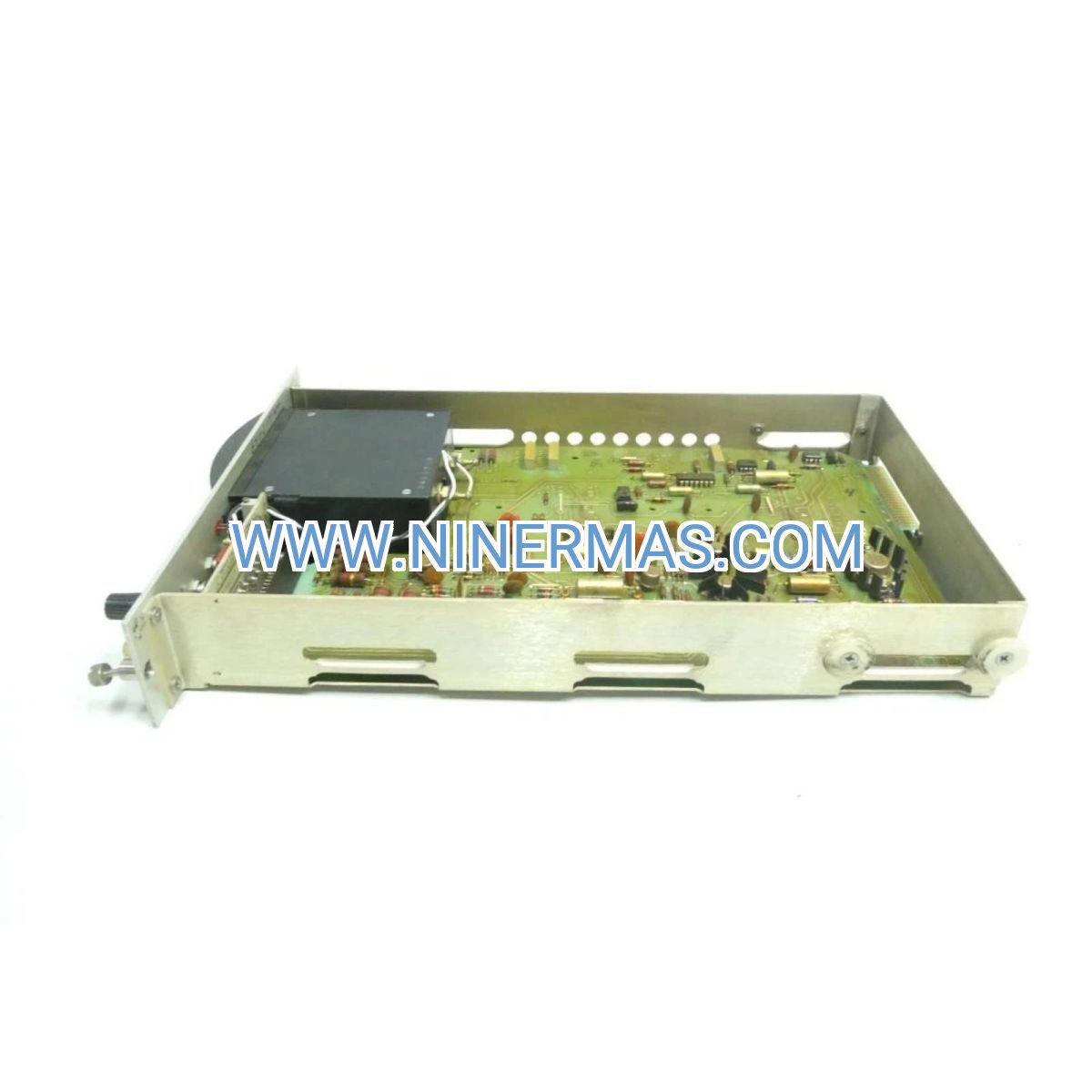
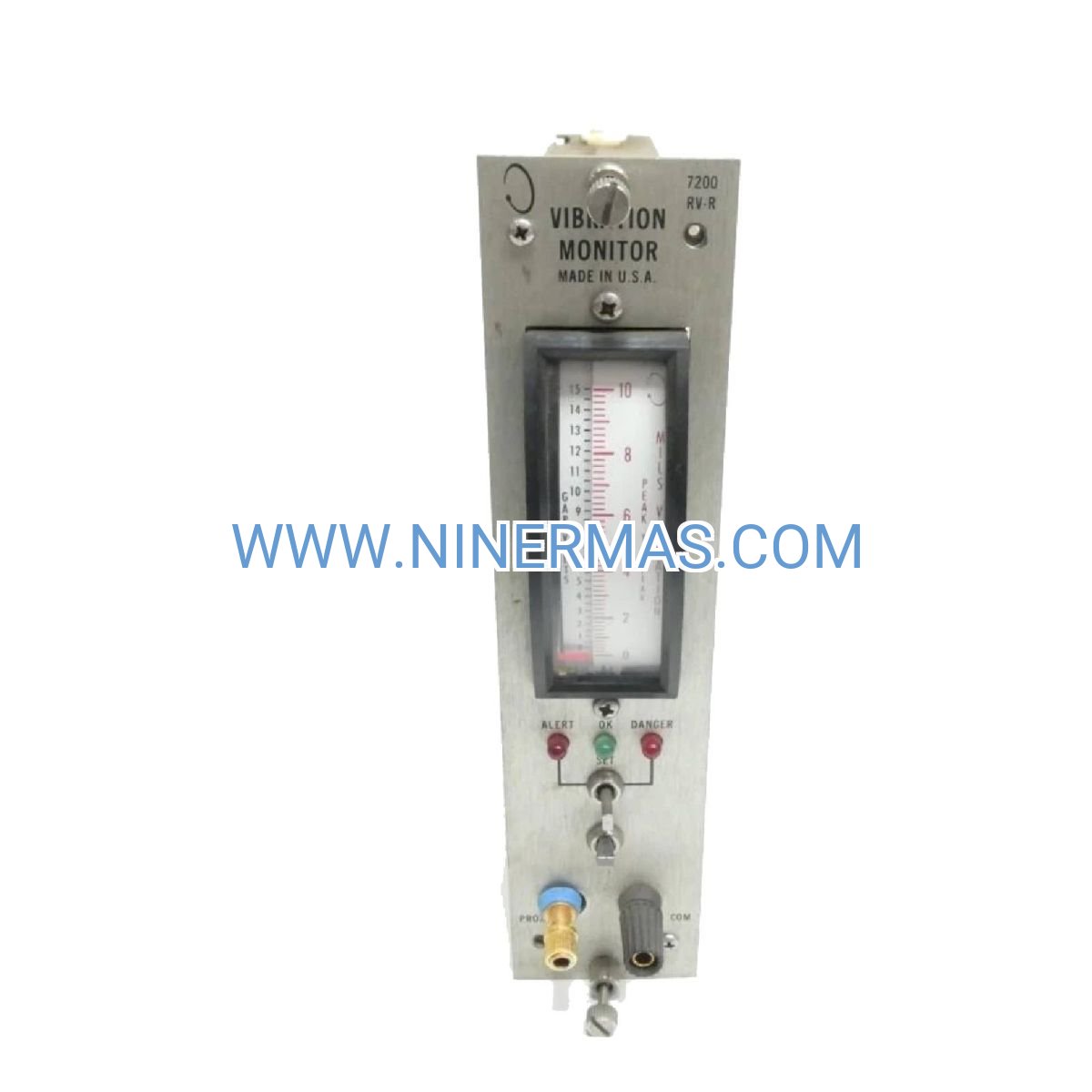
Bently Nevada 72201 Relay Module | Industrial Machinery Protection & Alarm Output | SIL 2 Certified
Description
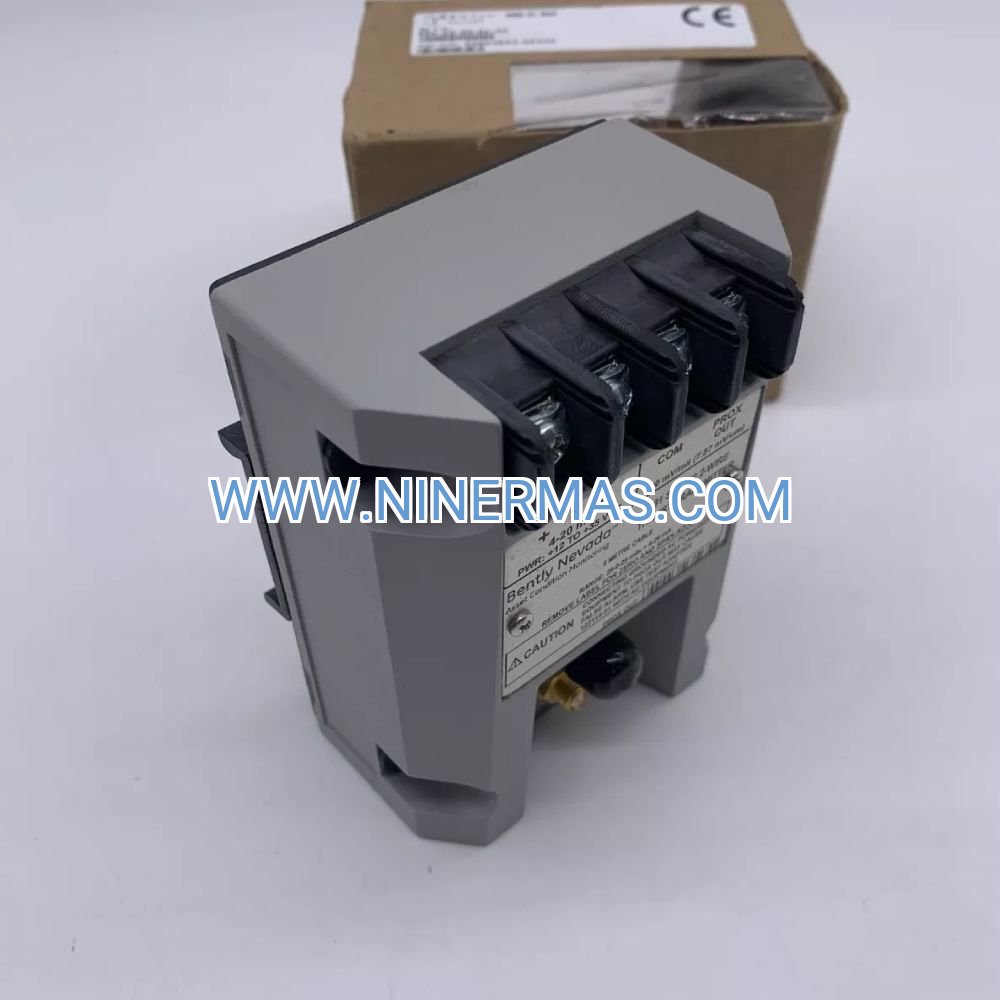
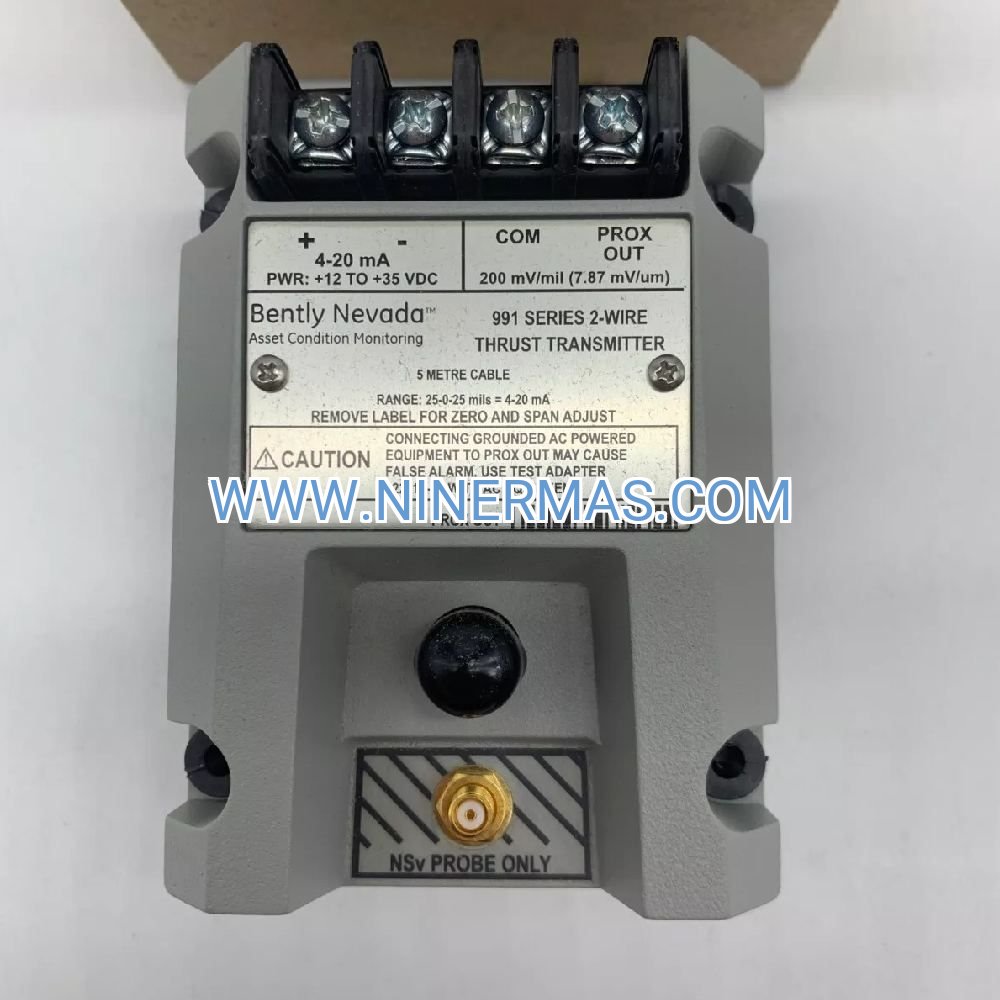
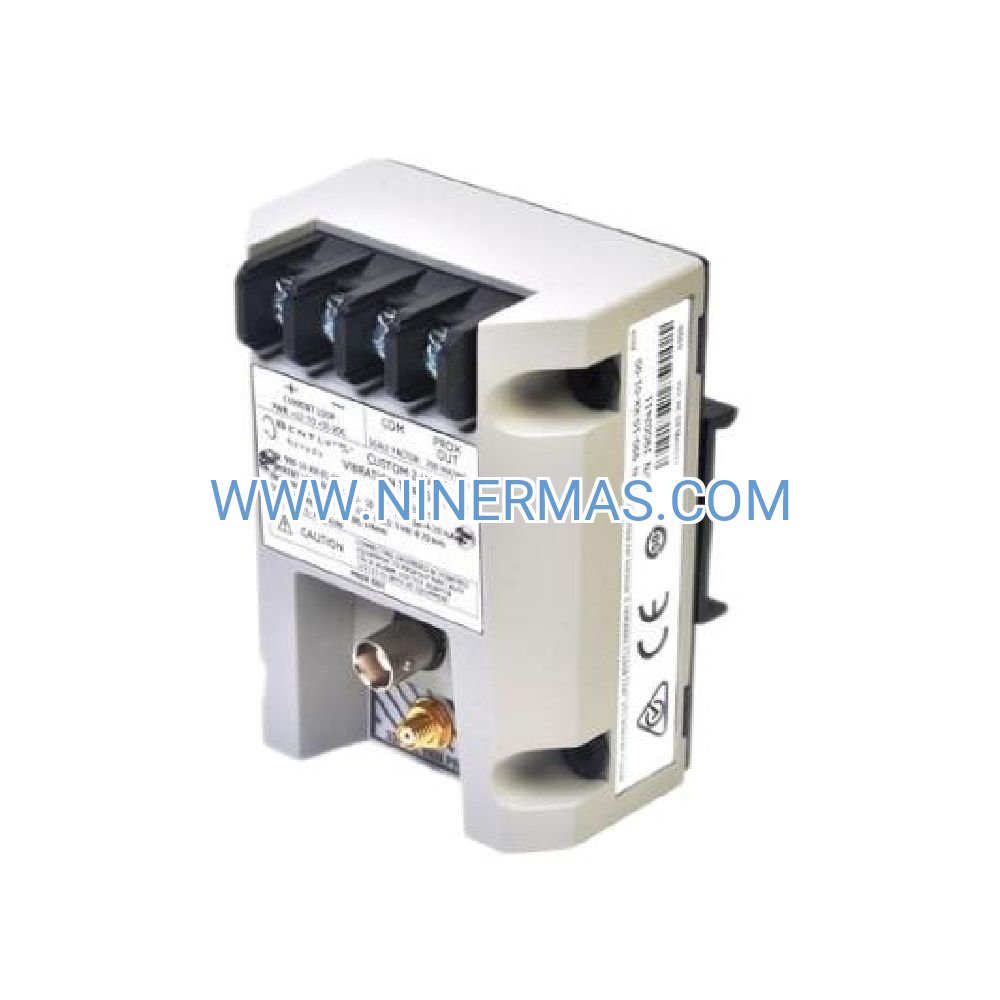
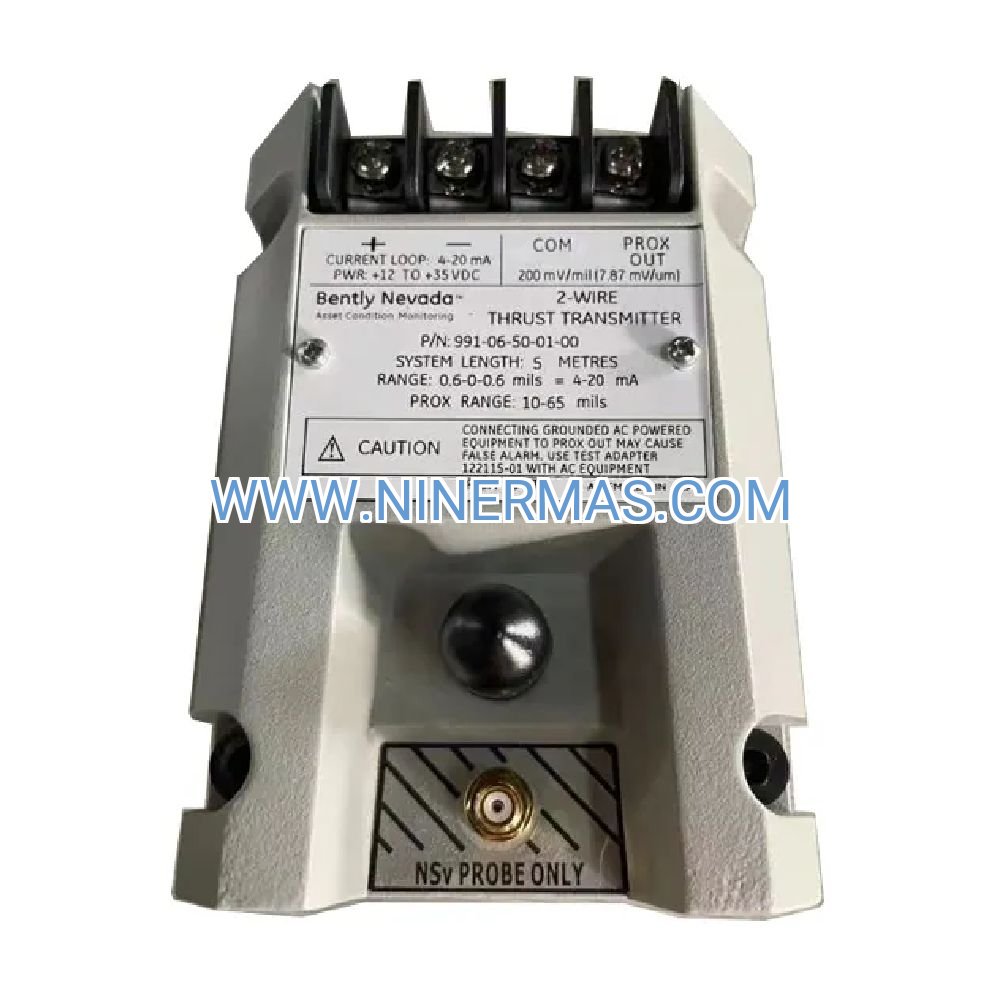
Bently Nevada 72201 Relay Module (Industrial-Grade Machinery Protection System)
The Bently Nevada 72201 relay/alarm module is a field-proven industrial control device designed for critical machinery protection and condition monitoring applications. Through high-speed relay switching and galvanic isolation technology, it delivers reliable alarm output and interlock control for rotating equipment protection systems, turbomachinery monitoring, and process safety instrumentation.
Engineered for power generation plants, oil & gas facilities, petrochemical refineries, steel mills, and heavy industrial manufacturing environments, this module addresses common challenges including false trip prevention, electrical noise interference, slow response times, and integration complexity with legacy DCS/PLC systems. It provides deterministic alarm response with <15ms actuation time and 2500VAC isolation to ensure personnel safety and equipment integrity.
With SIL 2 certification, field-configurable logic, and proven compatibility with Bently Nevada 3500 and 3300 monitoring systems, the 72201 module serves design engineers, instrumentation contractors, maintenance teams, and plant reliability managers. Contact our application engineers for system integration guidance, wiring diagrams, and project-specific configuration support.
Core Features & Technical Advantages
- High-Speed Fault Response
Relay actuation time under 15 milliseconds ensures immediate machinery shutdown during critical fault conditions, minimizing secondary damage to bearings, seals, and rotating components in turbines, compressors, and pumps. - Industrial-Grade Electrical Isolation
2500VAC isolation between input signal and relay contacts prevents ground loops, eliminates electrical noise coupling, and protects sensitive monitoring circuits from high-voltage transients in harsh industrial environments. - Flexible Contact Configuration
5-ampere SPDT (Form C) relay contacts support both normally-open and normally-closed logic, compatible with emergency shutdown systems, annunciator panels, and programmable logic controllers across multiple voltage ratings. - Field-Configurable Alarm Logic
On-site adjustable setpoints, time delays, and voting logic enable customization without factory returns, reducing commissioning time and allowing adaptive protection strategies for varying operating conditions. - SIL 2 Safety Integrity
Certified for Safety Integrity Level 2 applications per IEC 61508 standards, suitable for safety instrumented systems (SIS) in process industries requiring documented failure rates and systematic capability. - Proven System Compatibility
Direct integration with Bently Nevada 3500 rack systems, 3300 XL proximity probes, and third-party vibration transmitters through standardized 4-20mA and voltage signal interfaces, simplifying retrofit projects.
Typical Application Scenarios
This relay module is engineered for environments demanding high reliability, fast response, and regulatory compliance:
- Steam & Gas Turbine Protection
Provides emergency trip functions for excessive vibration, bearing temperature, thrust position, and eccentricity monitoring in power generation turbines, preventing catastrophic failures and unplanned outages. - Rotating Compressor Monitoring
Monitors critical parameters in centrifugal and reciprocating compressors used in natural gas processing, air separation, and refrigeration systems, triggering alarms before damage thresholds are exceeded. - Pump & Motor Protection Systems
Integrates with vibration, temperature, and flow monitoring to protect high-value pumps in water treatment, chemical processing, and oil refining applications, reducing maintenance costs and extending equipment life. - Industrial Fan & Blower Safety
Safeguards large induced draft fans, forced draft blowers, and ventilation systems in cement plants, steel mills, and power stations against bearing failures and imbalance conditions. - Process Safety Instrumented Systems
Serves as final element in SIL-rated safety loops for emergency shutdown valves, fire & gas detection interlocks, and critical process parameter monitoring in petrochemical and pharmaceutical facilities.
Technical Specifications & Selection Guide
To ensure optimal performance and compatibility, the 72201 module offers the following standard specifications, with custom configurations available for specialized applications:
| Parameter | Specification |
|---|---|
| Relay Contact Rating | 5A @ 250VAC / 30VDC resistive load |
| Contact Configuration | SPDT (Form C) - 1 NO + 1 NC |
| Isolation Voltage | 2500VAC input-to-output, 1 minute test |
| Response Time | <15ms typical (pickup + dropout) |
| Input Signal Types | 4-20mA, 0-10VDC, discrete logic (field-selectable) |
| Operating Temperature | -30°C to +65°C (-22°F to +149°F) |
| Enclosure Rating | IP20 (rack-mount), IP54 available for standalone |
| Power Supply | 24VDC ±10% (18-30VDC range), <3W consumption |
| Safety Certification | SIL 2 per IEC 61508, CE, UL/cUL pending |
| Mounting | Standard 19" rack or DIN rail adapter |
| Dimensions (H×W×D) | 133mm × 24mm × 241mm (module only) |
| Environmental | Conformal coated PCB, vibration per IEC 60068-2-6 |
Selection Considerations: When specifying the 72201 module, confirm the following project parameters: input signal type and range, required contact voltage/current, alarm logic (latching vs. non-latching), environmental conditions (temperature, humidity, vibration), mounting method (rack vs. panel), and integration protocol (hardwired vs. Modbus). For complex multi-channel systems or SIL 3 applications, consult our engineering team for architecture review and redundancy design.
Extended Capabilities & Integration Options
- Modbus RTU Communication: Optional digital interface for remote alarm status monitoring and setpoint adjustment via SCADA/DCS systems
- Redundant Power Input: Dual 24VDC supply terminals with automatic failover for critical applications
- LED Status Indicators: Front-panel diagnostics for power, alarm state, and relay status without external test equipment
- Adjustable Time Delays: Configurable pickup and dropout delays (0.1s to 60s) to prevent nuisance trips from transient signals
- Test/Bypass Function: Manual override switch for maintenance testing and commissioning without system shutdown
Delivery, Support & Quality Assurance
Standard catalog items ship within 3-5 business days; custom-configured modules require 10-15 days for factory programming and testing. All units include a minimum 24-month warranty covering materials and workmanship, with extended service agreements available for critical applications.
Technical support includes remote commissioning assistance, AutoCAD wiring diagrams, loop calibration procedures, and troubleshooting guides. On-site startup services and training are available for multi-module installations (subject to location and project scope). Each module ships with complete documentation: installation manual, terminal wiring diagrams, configuration worksheets, and factory test certificates.
Frequently Asked Questions (FAQ)
Q: How does the Bently Nevada 72201 relay module integrate with existing vibration monitoring systems?
A: The 72201 accepts standard 4-20mA or 0-10VDC signals from proximity probes, accelerometers, or transmitters. It connects via screw terminals and requires only 24VDC power. Wiring diagrams are provided for common Bently Nevada 3500, 3300 XL, and third-party monitor configurations.
Q: What is the maximum number of relay modules supported in a single protection system?
A: A standard 19" rack can accommodate up to 16 modules (depending on rack model). For larger systems, multiple racks can be networked. Each module operates independently, allowing flexible voting logic (1oo2, 2oo3, etc.) for SIL-rated applications.
Q: What energy savings or efficiency improvements can be expected with this relay module?
A: While the module itself is a protection device (not an energy-saving component), it prevents costly unplanned shutdowns and catastrophic equipment failures. By enabling predictive maintenance and early fault detection, users typically reduce emergency repair costs by 40-60% and extend machinery mean time between failures (MTBF) by 25-35%.
Q: What are the environmental and installation requirements for the 72201 module?
A: Operating temperature range is -30°C to +65°C with <95% non-condensing humidity. Standard IP20 enclosure is suitable for control room rack mounting; IP54 versions are available for harsh field environments. Avoid direct exposure to corrosive gases, excessive vibration (>2g), or strong electromagnetic fields without proper shielding.
Q: Does the module support remote monitoring and data logging via industrial protocols?
A: The base model provides hardwired relay outputs. Optional Modbus RTU interface (specify at order) enables integration with SCADA, DCS, or historian systems for alarm logging, remote acknowledgment, and setpoint adjustment. Modbus register maps and sample PLC code are provided in the technical manual.
Q: Can the relay module be used in SIL 3 safety instrumented systems?
A: The 72201 is certified for SIL 2 applications. For SIL 3 requirements, redundant module configurations (1oo2 or 2oo3 voting) must be implemented with appropriate diagnostic coverage and proof test intervals. Our safety engineering team can provide SIL 3 architecture designs and FMEDA documentation upon request.
Request Technical Support & Custom Configuration
To receive detailed application guidance, CAD drawings, or project-specific pricing, please provide the following information: project name and industry, monitoring application (vibration/temperature/pressure), number of channels required, input signal types, contact load specifications, environmental conditions, and required certifications (ATEX, IECEx, FM, etc.). Our instrumentation engineers will respond within 24 hours with tailored recommendations and budget quotations.
© 2026 NINERMAS COMPANY LIMITED. All rights reserved.
Original Source: https://ninermas.com
Contact: sale@ninermas.com | +0086 187 5021 5667

Contact Info
-
Address:22 / F, South Wo Hang building, 148 Wing Lok Street, Sheung Wan, Western District, Hong Kong
-
Phone:+8618750215667
-
Email: