


Description
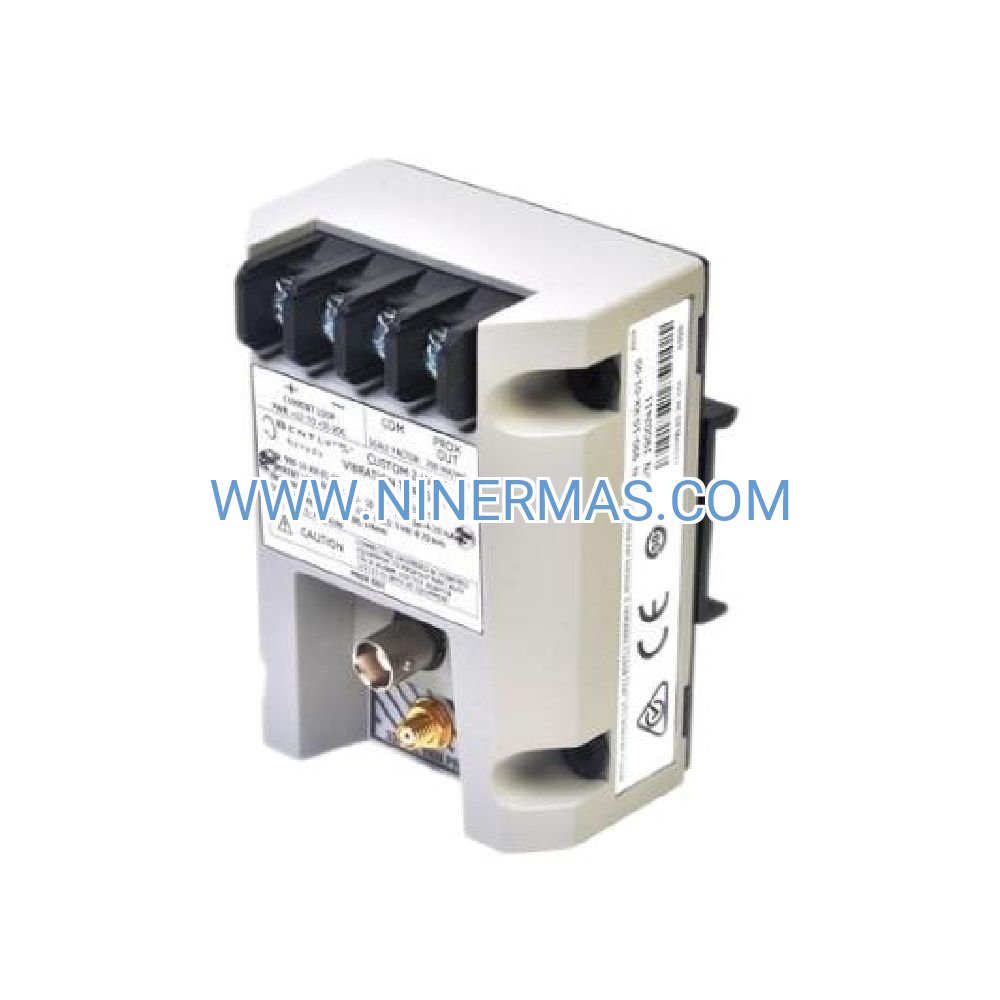
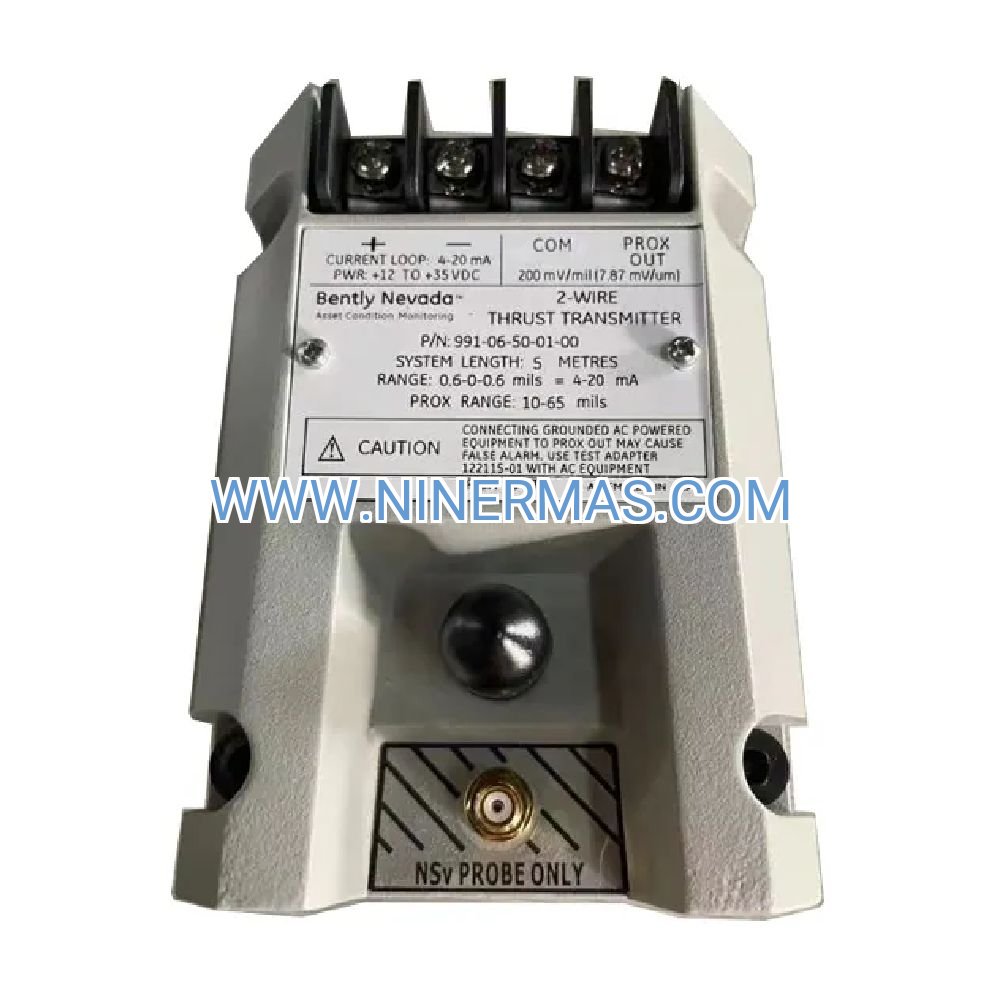
Industrial-Grade Emergency Shutdown CPU Module (Model 3701/55 323174-01)
The Bently Nevada 3701/55 323174-01 represents a mission-critical safety controller designed specifically for turbomachinery protection in high-stakes industrial environments. Built on dual-processor redundant architecture, this ADAPT ESD CPU module delivers fail-safe emergency shutdown capabilities with graphical logic programming that eliminates traditional ladder logic complexity.
Engineered for oil & gas facilities, power generation plants, and petrochemical operations, this controller addresses the fundamental challenge of protecting rotating equipment from catastrophic overspeed events, bearing failures, and process upsets. Target users include instrumentation engineers, plant safety managers, and maintenance teams responsible for API 670-compliant machinery protection systems.
What sets the 3701/55 apart is its integrated overspeed detection with sub-10ms response times, combined with intuitive function-block programming that reduces commissioning cycles by 40%. The result: faster deployment, higher reliability, and simplified maintenance for critical safety applications.
Core Features & Business Value
✓ Dual-Processor Redundancy – Continuous cross-checking ensures uninterrupted protection even during component failures, minimizing unplanned shutdowns and maximizing uptime in 24/7 operations.
✓ Graphical Logic Builder – Function-block programming interface eliminates coding errors and accelerates configuration, cutting engineering time from weeks to days for complex interlock schemes.
✓ Integrated Overspeed Monitoring – Dual-channel speed sensing with automatic fault detection provides API 612-compliant turbine protection without external trip amplifiers, reducing hardware costs by 25-30%.
✓ Multi-Protocol Connectivity – Native Modbus RTU/TCP and Ethernet/IP support enables seamless integration with Honeywell, Emerson, Yokogawa, and ABB DCS platforms, preserving existing infrastructure investments.
✓ SIL 3 Certification – IEC 61508 compliance ensures regulatory acceptance for safety-instrumented systems, streamlining project approvals and insurance requirements.
→ Extended Temperature Range – Operates reliably from -30°C to +65°C, making it suitable for offshore platforms, desert installations, and arctic facilities without environmental enclosures.
Application Scenarios
Steam Turbine Generator Protection
In combined-cycle power plants, the 3701/55 coordinates inputs from proximity probes, RTDs, and pressure transmitters to execute multi-parameter trip logic. When bearing temperatures exceed setpoints or vibration levels indicate impending failure, the module initiates controlled shutdown sequences that prevent secondary damage to gearboxes and generators. This proactive protection reduces repair costs by 60-80% compared to reactive maintenance strategies.
Gas Compressor Station Safety
Pipeline operators deploy this CPU module to monitor surge conditions, seal gas pressure, and anti-surge valve positions across centrifugal compressor trains. The graphical programming environment allows rapid modification of trip logic as operating conditions change seasonally, maintaining optimal protection without vendor service calls. Typical installations report 99.7% availability with zero safety-related incidents.
Offshore Platform Emergency Systems
In harsh marine environments, the 3701/55's conformal-coated circuitry and extended temperature ratings ensure reliable operation despite salt spray, humidity, and temperature cycling. Integration with fire & gas detection systems enables coordinated platform-wide emergency response, automatically isolating process equipment and initiating blowdown sequences within regulatory time limits.
Refinery Pump Protection Networks
Petrochemical facilities use this controller to manage seal failure detection across critical pump services. By monitoring seal pot levels, bearing temperatures, and motor current signatures, the system identifies developing problems hours before catastrophic failures, triggering automatic switchover to standby equipment and preventing environmental releases.
Industrial Gas Turbine Packages
Mechanical drive applications benefit from the module's ability to coordinate protection across multiple hazard zones—combustion dynamics, rotor vibration, exhaust temperature spread, and lube oil pressure. The result is comprehensive machinery safeguarding that meets insurance requirements while minimizing nuisance trips that cost $50,000-$150,000 per event in lost production.
Technical Parameters & Selection Guide
| Parameter | Specification |
|---|---|
| Model Designation | 3701/55 323174-01 |
| System Architecture | Dual-processor with automatic failover |
| Programming Method | Graphical function blocks (no ladder logic) |
| Speed Input Channels | Dual redundant (magnetic pickup/proximity probe) |
| Response Time | <10 milliseconds (input to output) |
| Safety Relay Outputs | 8 configurable (Form C contacts, 5A @ 250VAC) |
| Communication Interfaces | Modbus RTU/TCP, Ethernet/IP, RS-485 |
| Operating Temperature | -30°C to +65°C (-22°F to +149°F) |
| Power Requirements | 24 VDC nominal (18-32 VDC operating range) |
| Safety Certification | IEC 61508 SIL 3, API 670, API 612 |
| Dimensions (H×W×D) | 220mm × 180mm × 95mm |
| Weight | 8.8 kg (19.4 lbs) |
Selection Criteria: Choose the 3701/55 when your application requires SIL 3-rated protection with graphical programming flexibility. For basic overspeed-only applications without DCS integration, consider standalone trip amplifiers. For applications requiring more than 8 relay outputs, plan for I/O expansion modules. Verify that your existing speed sensors provide compatible signal levels (magnetic pickup: 50mV-50V RMS; proximity probe: -8 to -16 VDC gap voltage).
Extended Functions
IoT Integration Capabilities: The module supports OPC UA server functionality for cloud-based condition monitoring platforms, enabling predictive maintenance analytics and remote diagnostics. Integration with Azure IoT Hub and AWS IoT Core allows aggregation of protection system health data across multi-site operations.
Advanced Logic Functions: Beyond standard trip logic, the controller supports time-delay voting, 2-out-of-3 sensor validation, rate-of-change detection, and sequential event recording with 1ms timestamp resolution. These features enable sophisticated protection schemes that reduce false trips while maintaining safety integrity.
Customization Options: Factory configuration services are available for pre-programmed logic tailored to specific turbine models (GE Frame 6/7, Siemens SGT-series, Solar Taurus, etc.). Custom I/O configurations, communication protocols, and environmental ratings can be specified for OEM packages and retrofit projects.
Delivery & Service Assurance
Lead Time: Standard units ship within 3-5 business days from our distribution center. Custom-configured modules require 2-3 weeks for factory programming and testing. Expedited delivery options are available for emergency outage situations.
Warranty Coverage: All modules include a comprehensive 12-month warranty covering materials, workmanship, and firmware defects. Extended warranty programs (24/36 months) are available for critical applications requiring guaranteed uptime.
Technical Support: Certified Bently Nevada specialists provide configuration assistance, troubleshooting guidance, and firmware updates throughout the product lifecycle. Support includes phone/email consultation, remote diagnostics via secure VPN, and on-site commissioning services when required.
Documentation Package: Each unit ships with factory calibration certificates, configuration backup files, wiring diagrams, and quick-start guides. Comprehensive technical manuals covering programming, I/O specifications, and maintenance procedures are provided in PDF format.
Frequently Asked Questions
How does the dual-processor architecture improve system reliability?
The redundant processors execute identical logic simultaneously and cross-check results every scan cycle. If one processor detects a fault or produces inconsistent results, the healthy processor automatically assumes full control within 50 milliseconds, maintaining continuous protection without manual intervention. This architecture achieves mean time between failures (MTBF) exceeding 250,000 hours.
What is the maximum I/O capacity for a single CPU module?
The base 3701/55 CPU supports up to 128 discrete inputs and 64 relay outputs through distributed I/O expansion modules connected via the ADAPT backplane. Analog input capacity extends to 32 channels (4-20mA, RTD, thermocouple) when using appropriate signal conditioning modules. Larger systems can be configured using dual-CPU redundancy.
Can this controller reduce energy consumption in turbine operations?
While the ESD module's primary function is safety protection, its integration with DCS systems enables optimized startup/shutdown sequences that minimize fuel consumption and thermal stress. Facilities report 5-8% energy savings through coordinated control strategies that prevent unnecessary emergency trips and reduce restart cycles.
What are the installation requirements for harsh environments?
The module's conformal-coated circuitry and sealed connectors meet IP54 protection standards without additional enclosures. For offshore or corrosive atmospheres, install in NEMA 4X stainless steel cabinets with purge systems. Maintain ambient temperatures within the -30°C to +65°C range; for extreme conditions, specify environmental conditioning or use the extended-range variant (contact factory).
Does the system support remote monitoring and diagnostics?
Yes, the Ethernet/IP and Modbus TCP interfaces enable connection to SCADA systems, plant historians, and cloud-based monitoring platforms. Built-in web server functionality allows browser-based access to real-time status, alarm logs, and diagnostic data without proprietary software. Secure VPN connections support remote troubleshooting by Bently Nevada support engineers.
How quickly can protection logic be modified during commissioning?
The graphical programming environment allows experienced engineers to implement logic changes in minutes rather than hours. Typical modifications—adjusting trip setpoints, adding sensor inputs, or changing time delays—can be completed and tested within 15-30 minutes. Complex logic restructuring may require 2-4 hours depending on scope, still significantly faster than ladder logic reprogramming.
Take the Next Step
Protect your critical rotating equipment with proven ADAPT ESD technology. Contact our technical sales team for application-specific configuration guidance, pricing for multi-unit projects, or to schedule a demonstration of the graphical programming interface. Our engineers are ready to help you design a safety system that meets your exact requirements.
Request a quote today or speak with a turbomachinery protection specialist to discuss your specific application challenges.
© 2026 NINERMAS COMPANY LIMITED. All rights reserved.
Original Source: https://ninermas.com
Contact: sale@ninermas.com | +0086 187 5021 5667
PDF Specification
Download PDF file here:
Click to Download PDF

Contact Info
-
Address:22 / F, South Wo Hang building, 148 Wing Lok Street, Sheung Wan, Western District, Hong Kong
-
Phone:+8618750215667
-
Email:
