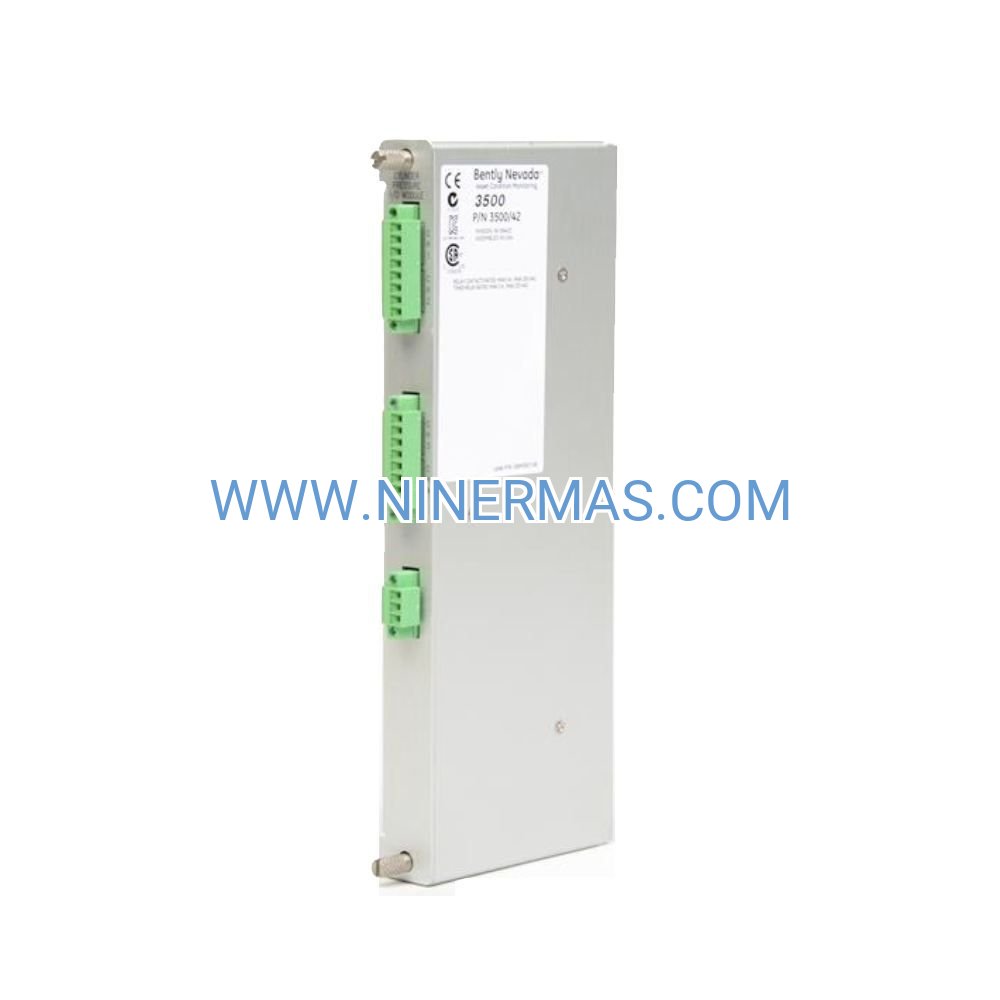
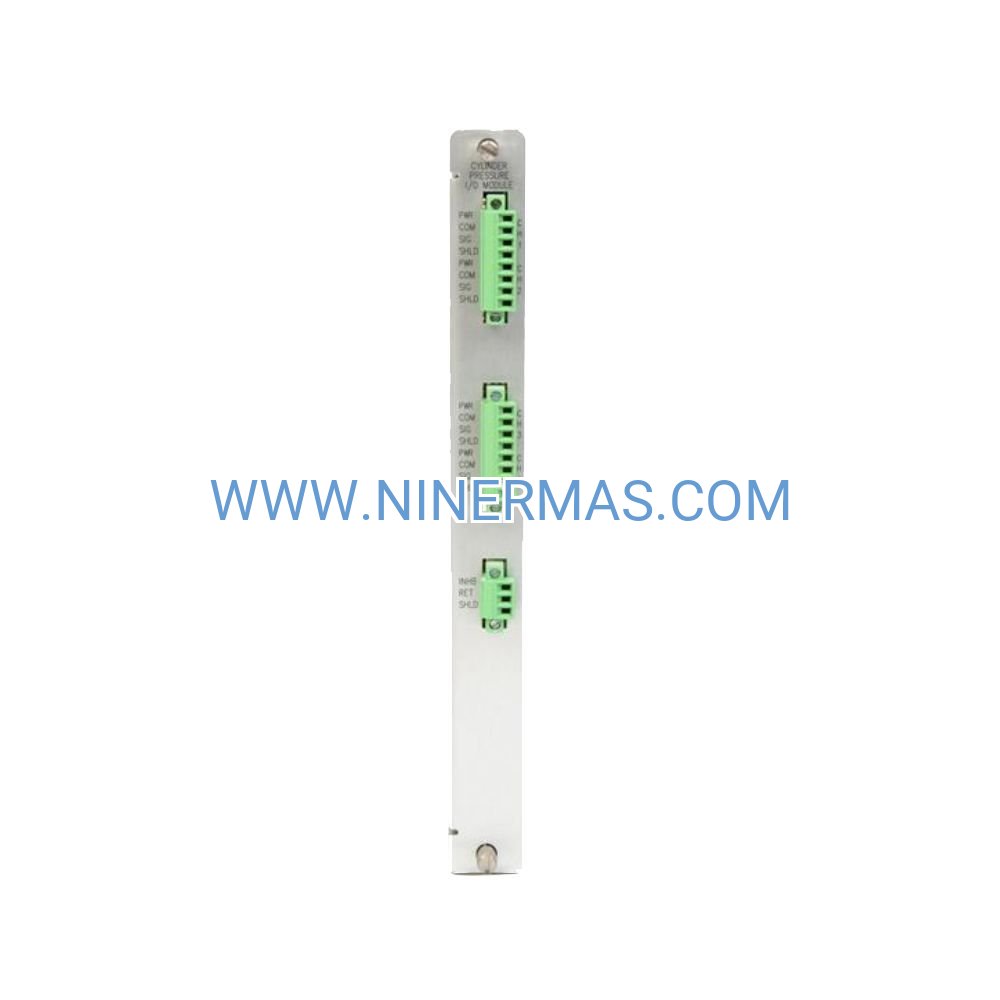
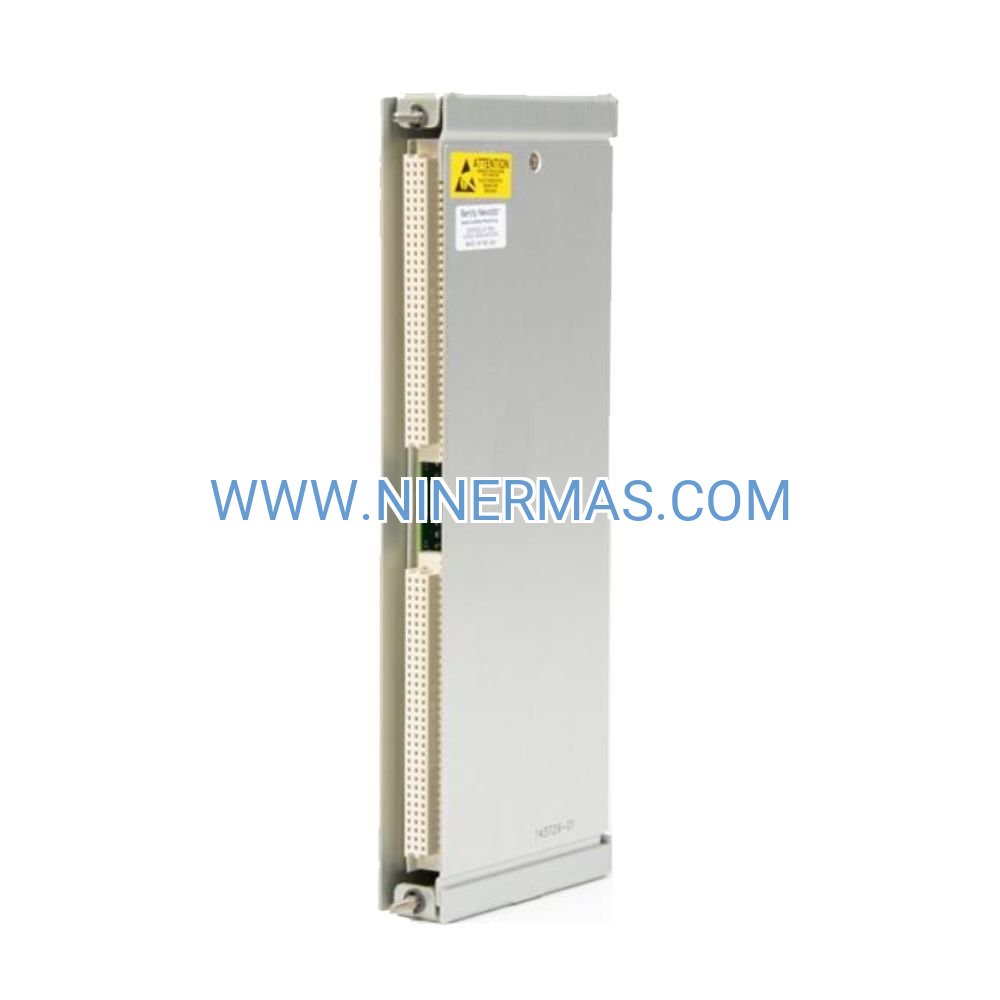
Description
143729-01 Bently Nevada 3500/77M – Industrial-Grade Cylinder Pressure Monitoring System
The Bently Nevada 3500/77M (143729-01) delivers precision cylinder pressure monitoring for mission-critical reciprocating compressors across gas transmission, petrochemical processing, and offshore production facilities. This 4-channel intelligent I/O module transforms raw pressure data into actionable diagnostics, enabling operators to detect valve failures, piston ring degradation, and combustion anomalies weeks before conventional monitoring methods.
Engineered for harsh industrial environments, the 3500/77M integrates seamlessly with existing 3500 series machinery protection systems to provide comprehensive compressor health surveillance. Whether protecting high-value LNG compression trains or optimizing pipeline booster stations, this module reduces unplanned downtime by up to 60% through early fault detection and condition-based maintenance strategies.
Designed for reliability engineers and maintenance teams managing reciprocating equipment portfolios, the 3500/77M combines proven hardware architecture with advanced signal processing algorithms to deliver the critical intelligence needed for maximizing asset availability and operational efficiency.
Core Capabilities & Technical Advantages
✓ Multi-Channel Pressure Acquisition
Simultaneous monitoring of 4 independent cylinder pressure inputs at 51.2 kHz sampling rate ensures capture of rapid pressure transients during compression cycles. Compatible with both piezoelectric and piezoresistive transducers for flexible sensor selection.
✓ Real-Time P-V Diagram Analysis
Automated pressure-volume diagram generation identifies valve timing errors, leaking discharge valves, and worn piston rings through thermodynamic signature analysis. Calculates indicated horsepower and volumetric efficiency for performance optimization.
✓ Programmable Multi-Level Alarming
Independent Alert and Danger setpoints per channel with configurable operating modes for startup, normal operation, and high-load conditions. Alarm outputs integrate directly with DCS and emergency shutdown systems.
→ Hazardous Area Certification
ATEX Zone 2, IECEx, and Class I Division 2 approvals enable installation in explosive atmospheres common to gas processing and petrochemical facilities. Meets stringent EMC and safety standards for global deployment.
→ Extended Operating Range
-30°C to +65°C temperature rating with 80 dB dynamic range supports applications from Arctic gas fields to Middle East desert installations. Proven MTBF exceeding 250,000 hours in continuous service.
→ Modular System Architecture
Hot-swappable design allows module replacement without system shutdown. Communicates via proprietary high-speed protocol to rack interface modules for centralized data management and remote diagnostics.
Industrial Deployment Scenarios
Gas Pipeline Transmission Stations
Protect large-frame reciprocating compressors at critical pipeline nodes where downtime costs exceed $75,000 per hour. The 3500/77M detects suction valve flutter and discharge valve leakage before efficiency losses trigger emergency shutdowns, maintaining pipeline throughput during peak demand periods.
LNG Liquefaction Facilities
Monitor boil-off gas compressors and mixed refrigerant units operating at cryogenic temperatures and extreme pressures. Early detection of valve degradation prevents costly process upsets and maintains liquefaction train availability above 98% in baseload facilities.
Petrochemical Olefin Production
Safeguard ethylene and propylene cracker compressors handling corrosive process gases at pressures exceeding 3000 psig. Continuous cylinder pressure surveillance combined with vibration monitoring reduces unplanned maintenance events by 45% compared to time-based strategies.
Offshore Platform Gas Injection
Provide reliable diagnostics for subsea gas lift compressors in harsh marine environments with limited accessibility. Remote monitoring capabilities via Modbus TCP/IP enable condition assessment from onshore control centers, optimizing maintenance crew deployment.
Refinery Hydrogen Compression
Monitor high-pressure hydrogen recycle compressors in hydrotreating and hydrocracking units. The 3500/77M's ability to detect piston ring wear through blow-by analysis prevents hydrogen contamination of lube oil systems and extends seal life.
Technical Specifications & Selection Guide
| Specification | Value | Application Notes |
|---|---|---|
| Part Number | 143729-01 | Standard configuration |
| Input Channels | 4 dynamic pressure | One per cylinder or stage |
| Sensor Types | Piezoelectric, piezoresistive | 165855 series recommended |
| Frequency Response | 0.5 Hz – 10 kHz | Captures valve events |
| Sample Rate | 51.2 kHz/channel | Simultaneous acquisition |
| Dynamic Range | ≥80 dB | Low to high pressure |
| Cable Length | Up to 300m | Low-noise coaxial |
| Operating Temp | -30°C to +65°C | Extended industrial range |
| Power Draw | 7.5W typical | From rack backplane |
| Certifications | ATEX, IECEx, cNRTLus, CE | Global hazardous area |
| MTBF | >250,000 hours | MIL-HDBK-217F |
Selection Criteria: Choose the 3500/77M when reciprocating compressor applications require cylinder-by-cylinder pressure diagnostics beyond basic vibration monitoring. For multi-stage units with 8+ cylinders, deploy multiple modules in a single rack. Pair with 3500/72M rod position monitors for complete reciprocating machinery protection.
System Integration & Connectivity
The 3500/77M installs in standard 3500/05 system racks alongside complementary monitoring modules. Communication to plant control systems occurs through 3500/20 rack interface modules supporting Modbus TCP/IP, Ethernet/IP, and proprietary protocols. For advanced waveform capture and root cause analysis, integrate with 3500/22M transient data interface modules.
Configuration and diagnostics are performed through System 1 Condition Monitoring software, providing centralized management of distributed compressor monitoring systems. Local HMI access is available via 3500/93 display interface modules for field technician troubleshooting.
The module accepts inputs from 165855 series cylinder pressure transducers with sensitivity ranges from 5 mV/psi to 100 mV/psi, accommodating pressure ranges from 500 psi to 5000 psi. Transducer power is supplied directly from the module, simplifying field wiring and reducing installation costs.
Advanced Diagnostic Features
Pressure-Volume Diagram Analysis: Automated P-V loop generation compares actual compression cycles against theoretical ideal gas behavior to identify thermodynamic inefficiencies. Deviations indicate valve timing errors, inadequate clearance volume, or inter-stage leakage.
Indicated Horsepower Calculation: Real-time IHP computation enables load balancing across multi-cylinder units and validates compressor performance against design specifications. Trending IHP over time reveals gradual efficiency degradation requiring maintenance intervention.
Valve Event Detection: High-speed sampling captures valve opening and closing transients, detecting delayed valve action, valve flutter, and impact events that accelerate wear. Alarm thresholds adapt to compressor speed and load conditions.
Piston Ring Wear Monitoring: Analysis of compression and expansion curve shapes identifies blow-by conditions caused by worn or broken piston rings. Early detection prevents cylinder scoring and catastrophic piston failure.
Frequently Asked Questions
How does cylinder pressure monitoring differ from vibration analysis for reciprocating compressors?
Cylinder pressure monitoring provides direct thermodynamic diagnostics of internal compressor conditions (valves, rings, clearances) that vibration sensors cannot detect. Pressure analysis typically identifies valve problems 30-90 days earlier than vibration-based methods, as valve degradation affects gas dynamics before generating significant mechanical vibration.
Can the 3500/77M monitor compressors with variable speed drives?
Yes, the module automatically adapts to varying compressor speeds from 200 to 1800 RPM when synchronized with a 3500/25 keyphasor module. P-V diagram analysis remains accurate across the full speed range, making it ideal for VFD-controlled compressors optimizing throughput.
What transducer mounting locations provide the best diagnostic information?
Install pressure transducers in cylinder head dead-end pockets or valve cover ports for direct measurement of compression chamber pressure. Avoid suction or discharge manifold locations, as piping resonances and pulsation dampers distort the pressure signal and reduce diagnostic accuracy.
How many 3500/77M modules fit in a single monitoring rack?
A standard 3500/05 rack accommodates up to 10 full-height modules after accounting for required power supplies and interface modules. This supports monitoring of 40 cylinders in a single rack, sufficient for most multi-unit compressor stations.
Does the 3500/77M require periodic calibration?
The module electronics are factory-calibrated and do not require field calibration. However, cylinder pressure transducers should be verified annually using deadweight testers or transfer standards to maintain measurement accuracy within ±1% of reading.
Can existing 3500 series racks be upgraded with the 3500/77M?
Yes, the 3500/77M is backward compatible with legacy 3500 series racks manufactured since 1995. Firmware updates may be required for older rack interface modules to support advanced diagnostic features. Consult factory documentation for specific compatibility requirements.
Delivery, Warranty & Technical Support
Lead Time: Standard configuration modules ship within 3-5 business days from factory-certified inventory. Custom configurations with specialized firmware or extended temperature ratings require 4-6 weeks manufacturing lead time.
Warranty Coverage: All 3500/77M modules include a comprehensive 12-month warranty covering manufacturing defects, component failures, and workmanship issues. Extended warranty programs available for critical applications requiring guaranteed uptime.
Technical Support: Our certified Bently Nevada specialists provide installation planning, commissioning assistance, and troubleshooting support throughout the product lifecycle. Remote diagnostics capabilities enable rapid issue resolution without site visits.
Documentation Package: Each module ships with installation manual, configuration guide, transducer wiring diagrams, and System 1 software integration instructions. Online knowledge base provides application notes, case studies, and firmware updates.
Request Technical Consultation
Optimize your reciprocating compressor protection strategy with expert guidance from our machinery monitoring specialists. We provide application engineering support including sensor selection, alarm setpoint optimization, and integration with existing control systems. Contact our team to discuss your specific compressor monitoring requirements and receive customized system recommendations.
© 2026 NINERMAS COMPANY LIMITED. All rights reserved.
Original Source: https://ninermas.com
Contact: sale@ninermas.com | +0086 187 5021 5667
PDF Specification
Download PDF file here:
Click to Download PDF

Contact Info
-
Address:22 / F, South Wo Hang building, 148 Wing Lok Street, Sheung Wan, Western District, Hong Kong
-
Phone:+8618750215667
-
Email: