


Description
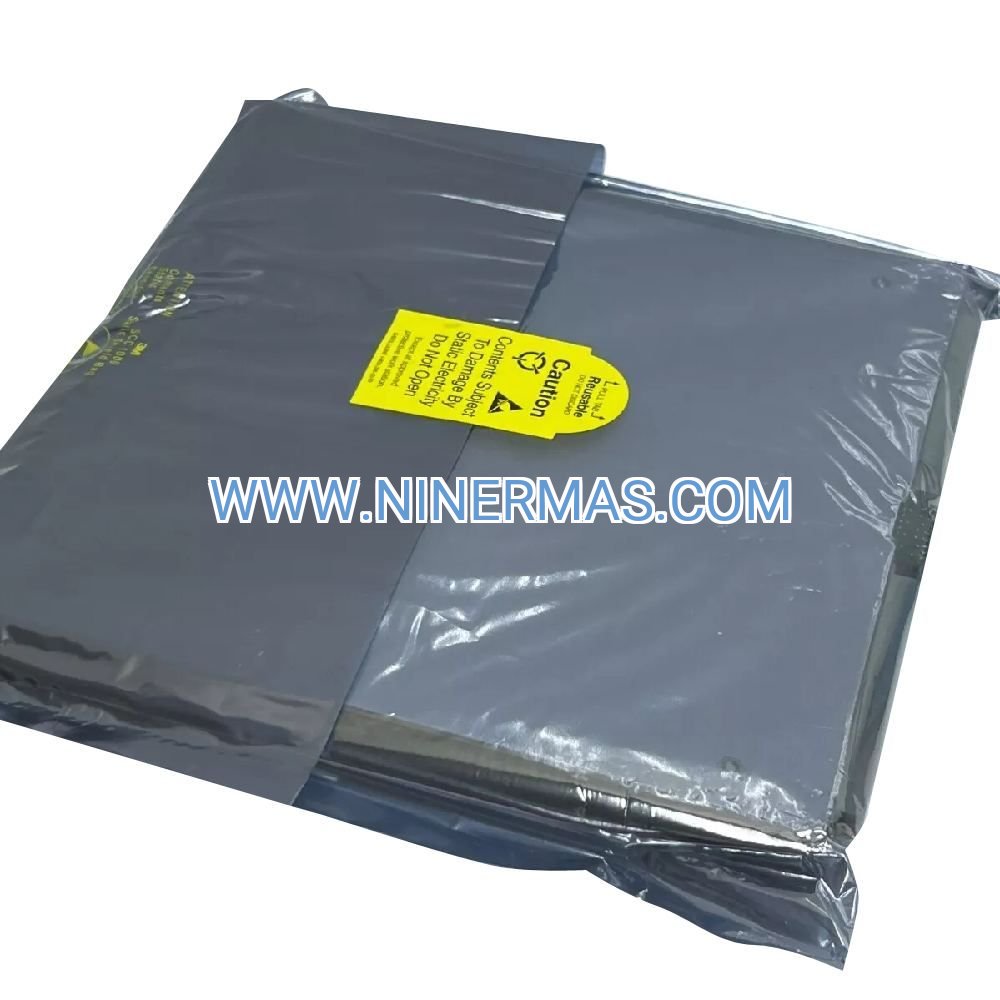
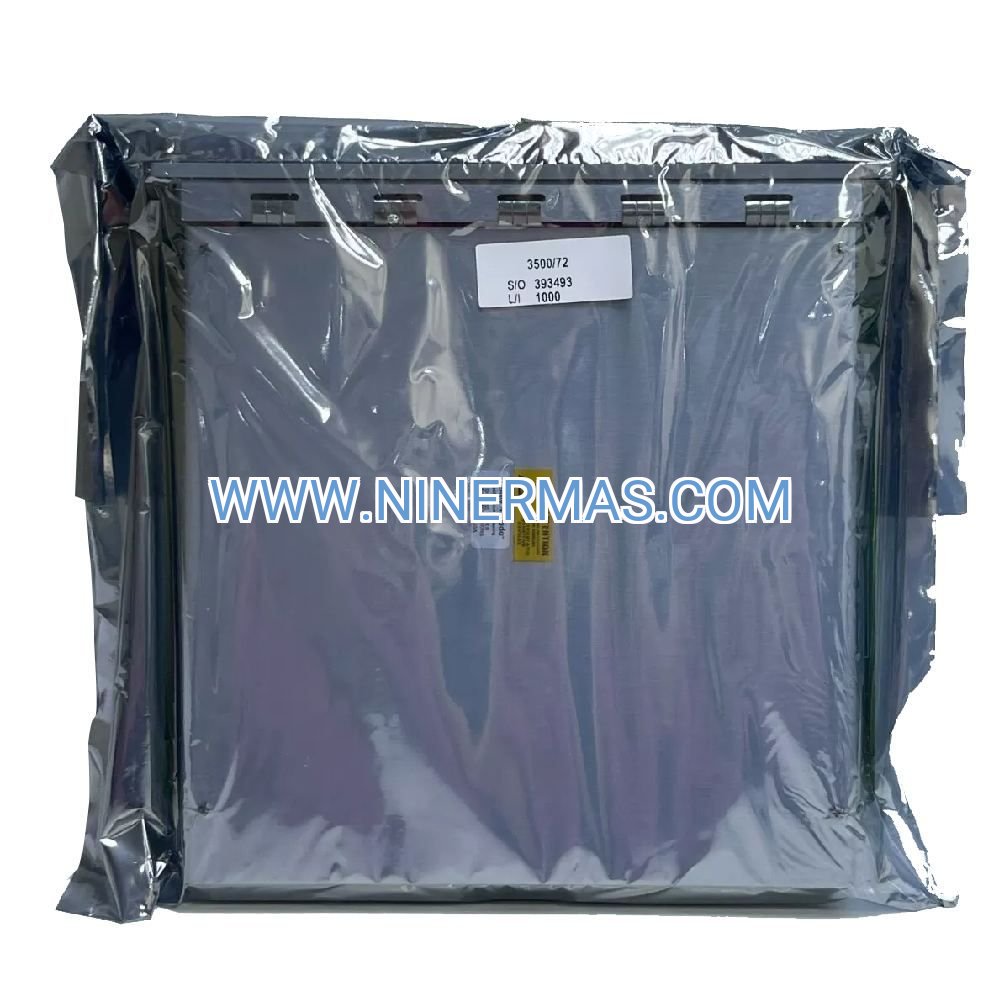
3500/72M Reciprocating Rod Position Monitor (Industrial-Grade Machinery Protection)
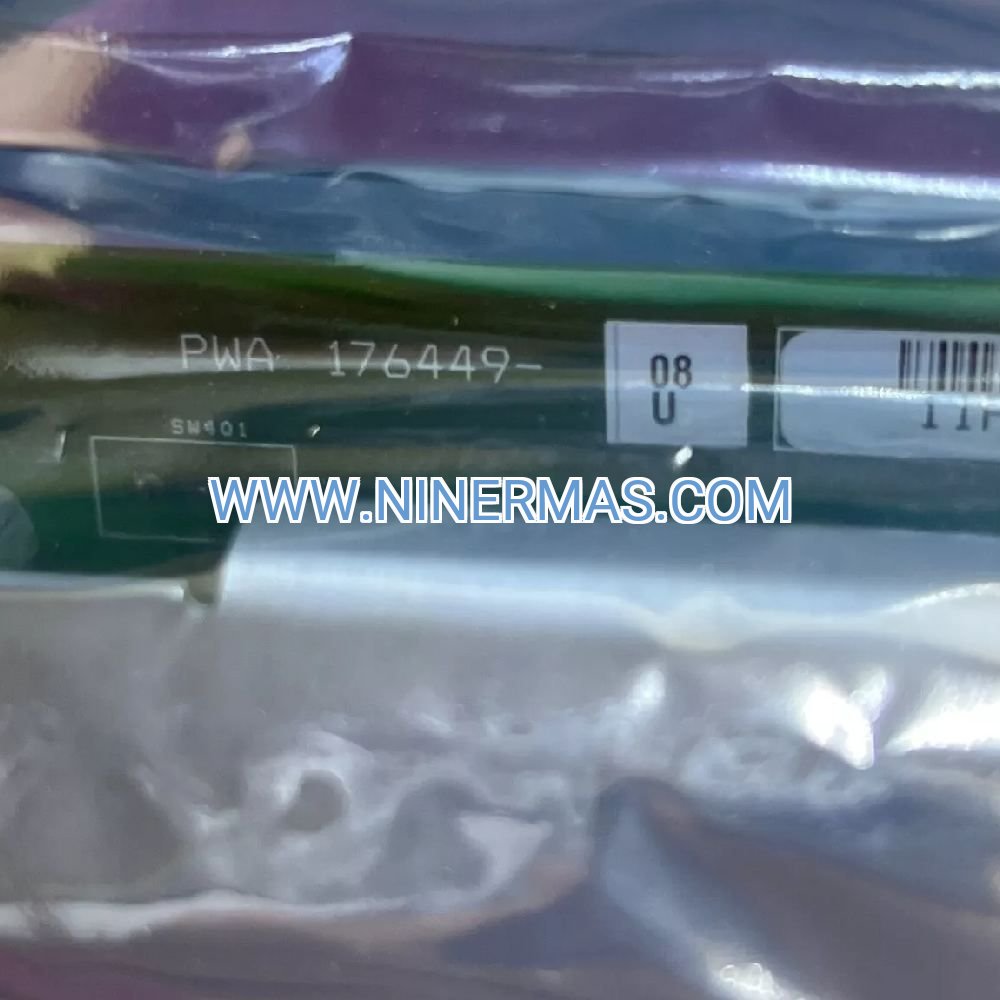
The Bently Nevada 3500/72M (176449-08) delivers continuous, precision rod position monitoring for reciprocating compressors and engines operating in mission-critical environments. Engineered to detect mechanical degradation before catastrophic failure, this four-channel monitor processes proximity probe signals with ±1% accuracy across 0-500 mil measurement spans, enabling predictive maintenance strategies that reduce unplanned downtime by up to 85% in natural gas pipeline, petrochemical, and power generation applications.
Built for harsh industrial environments (-30°C to +65°C operating range), the 3500/72M integrates seamlessly into existing 3500 rack architectures while providing real-time rod drop detection, thermal growth compensation, and multi-throw monitoring from a single module. Whether protecting high-pressure gas compressors valued at $2M+ or ensuring 24/7 uptime in offshore installations, this monitor transforms raw sensor data into actionable intelligence that extends equipment life and optimizes maintenance intervals.
Protect your critical assets. Detect rider band wear at 0.010" thresholds, prevent piston-to-cylinder contact, and schedule maintenance based on actual wear patterns rather than arbitrary time intervals. Request technical specifications or configure your monitoring solution today.
Core Capabilities & Business Impact
→ Multi-Channel Efficiency: Monitor up to four compressor throws or engine cylinders simultaneously, reducing hardware costs by 75% compared to single-channel architectures while maintaining independent alarm setpoints and scale factors per channel.
→ Early Failure Detection: Identify 0.010"-0.020" rod position changes indicating rider band degradation, piston ring failure, or crosshead wear—typically 500-1,000 operating hours before visible damage occurs, preventing $50K-$500K emergency repair costs.
→ Adaptive Baseline Tracking: Automatically compensates for 5-15 mil thermal growth during startup and seasonal temperature variations, eliminating 90% of nuisance alarms while maintaining protection integrity across all operating conditions.
✓ Precision Measurement: ±1% full-scale accuracy with programmable scale factors (200-800 mV/mil) ensures reliable detection across 3300 XL 8mm and 11mm proximity probe configurations.
✓ Configurable Alarming: Dual-setpoint architecture (Alert/Danger) with adjustable hysteresis prevents alarm chatter during transient conditions while providing graduated response to developing faults.
✓ System Integration: Delivers 4-20 mA recorder outputs and relay contacts for direct DCS/SCADA integration, plus Modbus connectivity via 3500/92 gateway for enterprise-level data aggregation.
Industrial Applications & Problem Resolution
Natural Gas Pipeline Compression
Monitor rod position on high-pressure reciprocating units (up to 5,000 psi discharge) where piston-to-cylinder head contact could trigger explosive decompression events. The 3500/72M's 1-second update rate captures transient position excursions during pressure surges, enabling operators to adjust loading before mechanical damage occurs. Typical deployment: 4-6 throw horizontal compressors with 12"-16" bore diameters.
Petrochemical Process Compression
Protect ethylene crackers, ammonia synthesis loops, and hydrogen makeup compressors where unplanned shutdowns cost $50,000-$500,000 per hour in lost production. Trend analysis features identify gradual rider band wear patterns, allowing maintenance scheduling during planned turnarounds rather than forced outages. ROI: 6-12 month payback through avoided emergency repairs.
Refinery Critical Service
Continuous monitoring of FCC regenerator air compressors, acid gas injection units, and refrigeration systems operating 24/7/365 in corrosive environments. The monitor's non-condensing humidity tolerance (5-95%) and wide temperature range ensure reliable operation in Gulf Coast summer conditions and Canadian winter installations.
Offshore Platform Operations
Where helicopter access costs $15,000+ per trip and weather windows limit maintenance opportunities, the 3500/72M provides early warning that enables proactive parts ordering and crew scheduling. Typical application: gas lift compressors and export compression trains on fixed platforms and FPSOs.
Distributed Power Generation
Monitor piston position in large-bore natural gas engines (1-20 MW) used for cogeneration, peak shaving, and grid stabilization. Detect crosshead pin wear and packing case degradation before oil consumption increases or emissions compliance is compromised.
Technical Parameters & Selection Criteria
| Parameter | Specification | Selection Notes |
|---|---|---|
| Input Channels | 4 proximity probes (1-4 active) | Configure unused channels as spares or future expansion |
| Transducer Compatibility | 3300 XL 8mm / 11mm probes | 8mm for standard applications; 11mm for high-temperature (>150°C) targets |
| Measurement Range | 0-500 mils (0-12.7 mm) | Actual range depends on probe type and scale factor selection |
| Accuracy | ±1% FS ±0.5 mils | Verify annually with precision gap simulator |
| Scale Factors | 200, 315, 400, 500, 630, 800 mV/mil | Match to proximitor output; 200 mV/mil most common for 8mm probes |
| Frequency Response | DC to 10 Hz (-3 dB) | Adequate for reciprocating speeds up to 600 RPM |
| Update Rate | 0.1-60 seconds (1 sec default) | Faster rates for high-speed engines; slower for thermal drift tracking |
| Alarm Outputs | 4 relay contacts (Form C, 5A @ 30VDC) | Typically wired to shutdown logic or annunciator panels |
| Analog Outputs | 2 channels, 4-20 mA (500Ω max load) | Connect to DCS trend recorders or portable analyzers |
| Power Consumption | 7.5W from 3500 rack supply | Verify rack capacity when adding modules |
| Operating Environment | -30°C to +65°C, 5-95% RH | Rack enclosure may require HVAC in extreme climates |
| Module Dimensions | 241.8 × 24.4 × 241.3 mm (single slot) | Requires 3500/05, 3500/15, or 3500/22M rack |
Selection Guidance: Choose the 3500/72M when monitoring 2-4 reciprocating throws from a single location. For single-throw applications, consider the 3500/45 Position Monitor. For applications requiring >4 channels, deploy multiple 3500/72M modules with coordinated alarm logic.
Advanced Features & Customization Options
IoT Integration Pathway: While the 3500/72M uses proprietary backplane communication, the 3500/92 Communication Gateway enables Modbus TCP/IP connectivity to SCADA systems, cloud historians (OSIsoft PI, Honeywell PHD), and IIoT platforms. Stream rod position data to machine learning models for anomaly detection and remaining useful life (RUL) prediction.
Cybersecurity Enhancements: Configure via TDXnet protocol with role-based access control (RBAC) to prevent unauthorized setpoint changes. Supports read-only operator access, read-write technician privileges, and full configuration rights for engineering personnel. Audit logs track all configuration modifications with timestamp and user ID.
Custom Alarm Logic: Program complex alarm conditions using Boolean logic: (Channel 1 Alert AND Channel 2 Alert) OR (Channel 3 Danger) triggers master shutdown relay. Implement voting schemes (2-out-of-4 channels in alarm) to prevent spurious trips while maintaining protection coverage.
Specialized Configurations: Factory-configurable options include extended temperature modules (-40°C to +75°C), conformal coating for offshore/marine environments, and custom scale factors for non-standard proximity probe systems. Consult factory for lead times (typically 6-8 weeks for custom builds).
Delivery Timeline & Service Commitments
Standard Delivery: 3-5 business days for stock catalog items (176449-08 configuration) to major industrial hubs. Expedited shipping available for critical outage support—contact our emergency response team for same-day/next-day options.
Custom Configurations: 6-8 weeks for factory-programmed modules with non-standard scale factors, extended temperature ratings, or special certifications (ATEX, IECEx). Rush orders may be accommodated with premium charges.
Warranty Coverage: 24-month manufacturer warranty covering defects in materials and workmanship. Extended warranties (up to 5 years) available for critical applications. Warranty includes firmware updates and technical support via phone/email.
Technical Support: Lifetime access to application engineers for configuration assistance, troubleshooting, and integration guidance. Typical response time: <4 hours for critical issues, <24 hours for routine inquiries. On-site commissioning support available (travel charges apply).
Documentation Package: Includes installation manual, configuration software (3500 Rack Configuration Suite), calibration certificates, and dimensional drawings. Downloadable from secure customer portal within 24 hours of shipment.
Frequently Asked Questions
Q: How does the 3500/72M interface with existing DCS systems for reciprocating compressor monitoring?
A: The monitor provides two 4-20 mA analog outputs (scalable to any measured parameter) and four relay contacts (Form C, 5A @ 30VDC) for direct hardwired connection to DCS analog input cards and digital input modules. For digital communication, add a 3500/92 Communication Gateway to the rack, which supports Modbus TCP/IP, Modbus Serial RTU, and proprietary protocols. Typical integration: analog outputs to trend recorders, relay contacts to shutdown logic, Modbus to SCADA for alarm annunciation and historical data logging.
Q: What rod position measurement capacity and channel density does this monitor support?
A: The 3500/72M accepts four independent proximity probe inputs, each configurable for 0-500 mil measurement range (actual span depends on probe type and scale factor). You can activate 1-4 channels as needed—unused channels remain dormant or serve as spares. Each channel has independent alarm setpoints, scale factors, and filtering parameters. For applications requiring >4 measurement points, install multiple modules in the same rack with coordinated alarm logic.
Q: What energy efficiency improvements result from implementing rod position monitoring?
A: While the monitor itself doesn't directly reduce energy consumption (7.5W power draw), it enables efficiency gains through early detection of mechanical degradation. Example: A worn rider band allows 0.020" rod drop, which increases internal leakage and reduces volumetric efficiency by 3-5%. Detecting and correcting this condition on a 1,000 HP compressor saves approximately 30-50 HP (22-37 kW) in wasted energy—equivalent to $15,000-$25,000 annually at $0.08/kWh industrial rates. Additionally, preventing catastrophic failures avoids emergency shutdowns that force load transfer to less-efficient backup units.
Q: What are the proximity probe installation requirements for accurate rod position measurement?
A: Install 3300 XL proximity probes perpendicular to the piston rod surface with 40-80 mil initial gap (verify with gap measurement tool). The target area must be machined or ground to <63 μin Ra surface finish—remove any chrome plating, Teflon coating, or corrosion. Use non-magnetic stainless steel mounting brackets torqued to manufacturer specifications. Route probe cables in dedicated conduit with ≥12" separation from AC power lines to prevent electromagnetic interference. Perform initial gap verification at ambient temperature, then re-check after first heat cycle to account for thermal growth (typically 5-15 mils on large frames).
Q: Can the 3500/72M support remote monitoring and cloud-based diagnostics?
A: Yes, when paired with a 3500/92 Communication Gateway and appropriate network infrastructure. The gateway converts proprietary 3500 backplane data to Modbus TCP/IP, which can be routed through industrial firewalls to cloud historians (AWS IoT, Azure IoT Hub, OSIsoft PI Cloud) or condition monitoring platforms (Bently Nevada System 1, Emerson AMS). Implement VPN or cellular gateway for remote sites. Typical architecture: 3500 rack → 3500/92 gateway → managed Ethernet switch → firewall → cloud platform. Latency: 1-5 seconds depending on network configuration. Ensure cybersecurity policies permit outbound connections on required ports (typically TCP 502 for Modbus).
Q: How do I determine optimal alarm setpoints for rod drop detection?
A: Establish baseline rod position at multiple operating conditions (idle, 50% load, 100% load, hot/cold ambient). Consult OEM documentation for maximum allowable rod drop (typically 0.030"-0.050" depending on compressor design). Set Alert alarm at 50% of maximum allowable (e.g., 0.020" for 0.040" limit) and Danger alarm at 75% (0.030"). Add 0.002"-0.005" hysteresis to prevent alarm chatter. For critical applications, implement trending: if rod position increases >0.005" per 1,000 operating hours, schedule inspection even if alarms haven't triggered. Adjust setpoints based on historical wear rates—some installations tighten Alert to 0.015" after establishing predictable degradation patterns.
Take Action: Protect Your Critical Reciprocating Assets
Ready to implement continuous rod position monitoring? Our application engineers will help you:
- → Assess your reciprocating compressor/engine configuration and recommend optimal probe placement
- → Calculate ROI based on your historical maintenance costs and downtime expenses
- → Design complete monitoring system including rack, power supplies, communication gateways, and integration with existing DCS/SCADA
- → Provide installation support, commissioning services, and operator training
Contact our industrial automation specialists:
? Email: sale@ninermas.com
? Phone: +0086 187 5021 5667
? Technical Resources: https://ninermas.com
Stock availability confirmed. Standard configurations ship within 3-5 business days. Custom builds quoted within 24 hours.
© 2026 NINERMAS COMPANY LIMITED. All rights reserved.
Original Source: https://ninermas.com
Contact: sale@ninermas.com | +0086 187 5021 5667
PDF Specification
Download PDF file here:
Click to Download PDF

Contact Info
-
Address:22 / F, South Wo Hang building, 148 Wing Lok Street, Sheung Wan, Western District, Hong Kong
-
Phone:+8618750215667
-
Email:
