Description
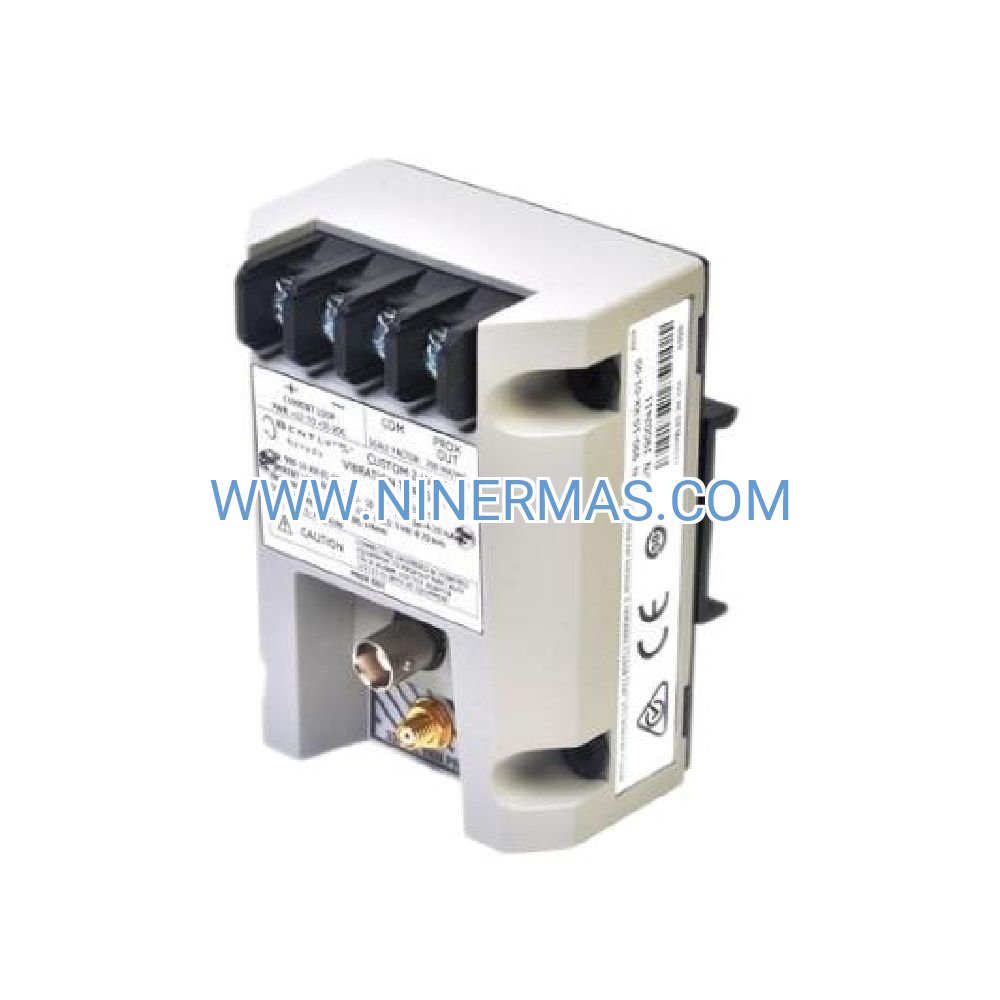
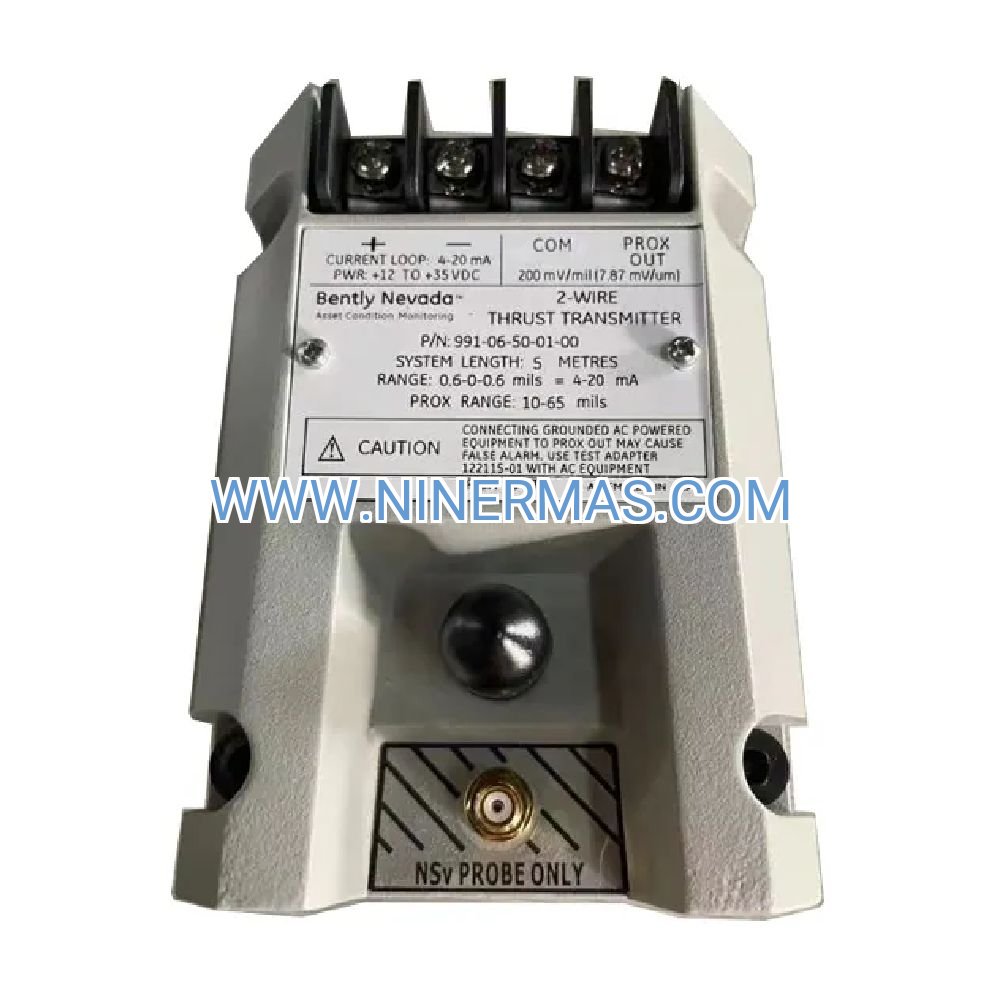
Industrial-Grade 6-Channel RTD/Thermocouple Monitor (Bently Nevada 3500/60-133811-01)
The Bently Nevada 3500/60 Temperature Monitor (Model 133811-01) represents a critical thermal surveillance solution engineered for high-stakes industrial environments. This versatile 6-channel monitoring platform accepts both Resistance Temperature Detector (RTD) and thermocouple (TC) sensor inputs, delivering real-time thermal intelligence for turbomachinery, rotating equipment, and mission-critical process systems where temperature excursions can trigger catastrophic failures or unplanned shutdowns.
Designed for power generation facilities, petrochemical plants, oil & gas operations, and heavy manufacturing installations, this module provides the thermal protection layer essential for safeguarding multi-million-dollar assets. Each independent channel features programmable dual-setpoint alarm logic, continuous sensor health diagnostics, and 250Vdc galvanic isolation to ensure measurement integrity in electrically noisy industrial environments.
Whether you're protecting steam turbine bearings operating at 150°C, monitoring compressor discharge temperatures exceeding 400°C, or tracking generator winding temperatures, the 3500/60 delivers the accuracy, reliability, and configurability demanded by API 670 machinery protection standards. Its hot-swappable architecture enables maintenance without process interruption, while comprehensive self-diagnostics minimize false trips and maximize uptime.
Core Capabilities & Technical Advantages
→ Universal Sensor Compatibility: Each of the six channels independently accepts 2-wire, 3-wire, or 4-wire RTD configurations (Pt100, Pt1000, Cu10, Ni120) plus eight thermocouple types (J, K, E, T, N, R, S, B), eliminating the need for multiple specialized modules and reducing spare parts complexity.
→ Precision Measurement Architecture: Achieves ±0.5°C accuracy for RTD inputs and ±1.0°C for thermocouples across a -200°C to +850°C operating envelope, with automatic cold junction compensation for TC measurements and lead resistance compensation for RTD circuits.
→ Robust Electrical Isolation: 250Vdc channel-to-channel and channel-to-ground isolation breaks ground loops, rejects common-mode noise, and protects against voltage transients—critical for installations with long sensor cable runs or high electromagnetic interference.
✓ Intelligent Alarm Management: Dual-threshold Alert and Danger setpoints per channel with user-configurable hysteresis bands and time delays prevent nuisance trips while ensuring rapid response to genuine thermal anomalies. Alarm states propagate via backplane to relay modules for hardwired shutdown logic.
✓ Continuous Diagnostic Monitoring: Real-time detection of sensor open circuits, short circuits, out-of-range conditions, and configuration errors with front-panel LED status indicators and detailed fault codes accessible via configuration software.
✓ Hot-Swap Serviceability: Field-replaceable design allows module extraction and insertion under power without disrupting adjacent channels or requiring system shutdown—minimizing mean time to repair (MTTR) during critical maintenance windows.
Industrial Application Scenarios
Steam & Gas Turbine Thermal Protection
In combined-cycle power plants and cogeneration facilities, the 3500/60 monitors bearing metal temperatures (typically 80-120°C), thrust bearing temperatures, and turbine exhaust gas temperatures (300-550°C). Early detection of bearing temperature rise—often the first indicator of lubrication failure or misalignment—prevents bearing seizure, rotor damage, and forced outages costing $50,000-$500,000 per day in lost generation capacity. Integration with vibration monitoring via the 3500/40M Proximitor creates a multi-parameter protection matrix.
Reciprocating & Centrifugal Compressor Monitoring
Natural gas pipeline compressor stations and petrochemical process compressors demand continuous surveillance of discharge temperatures (150-400°C), interstage temperatures, and bearing temperatures. The 3500/60's rapid 1-second update rate detects thermal transients during surge events, valve failures, or cooling system malfunctions. Pairing with the 3500/42M Seismic Monitor enables correlation between mechanical vibration and thermal signatures for root cause analysis.
Large Generator Bearing & Winding Surveillance
Hydroelectric, nuclear, and fossil-fuel generators utilize the 3500/60 to track bearing pad temperatures (60-90°C) and stator winding hot spots (up to 155°C for Class F insulation). Temperature trending identifies developing insulation degradation, cooling system blockages, or bearing wear before catastrophic failure. Phase-referenced analysis is achieved by integrating with the 3500/25 Enhanced Keyphasor Module.
Process Equipment & Heat Exchanger Monitoring
Chemical reactors, distillation columns, and shell-and-tube heat exchangers require multi-point temperature profiling to optimize efficiency and prevent fouling. The 3500/60's six-channel capacity monitors inlet/outlet temperatures, tube bundle temperatures, and critical process points. For installations requiring more than six points, the 3500/65 16-Channel Temperature Monitor provides expanded coverage while maintaining system architecture consistency.
Technical Specifications & Selection Criteria
| Specification | Value |
|---|---|
| Part Number | 3500/60-133811-01 |
| Input Channels | 6 independent, individually configurable |
| RTD Support | 2-wire, 3-wire, 4-wire | Pt100, Pt1000, Cu10, Ni120 |
| Thermocouple Support | J, K, E, T, N, R, S, B types with CJC |
| Measurement Range | -200°C to +850°C (-328°F to +1562°F) |
| Accuracy | ±0.5°C (RTD) | ±1.0°C (TC) |
| Channel Isolation | 250 Vdc channel-to-channel & channel-to-ground |
| Update Rate | 1 second per channel |
| Alarm Outputs | Dual setpoint (Alert/Danger) per channel |
| Power Consumption | 7.5W typical (supplied via 3500 rack backplane) |
| Operating Environment | -30°C to +65°C | 10-95% RH non-condensing |
| Compliance | API 670, CE, UL 508, CSA C22.2 |
| MTBF | >100,000 hours (MIL-HDBK-217F) |
Selection Guidance: Choose 3-wire or 4-wire RTD configurations for cable runs exceeding 30 meters to minimize lead resistance errors. For high-temperature applications above 600°C, select Type R, S, or B thermocouples. Ensure sensor grounding strategy aligns with the module's isolated input architecture to prevent ground loop interference.
Advanced Integration & Connectivity Options
The 3500/60 Temperature Monitor integrates seamlessly into the Bently Nevada 3500 Machinery Protection System ecosystem. Installation requires a 3500 System Rack (5-slot, 11-slot, or 14-slot configurations) with backplane communication and power distribution. The 3500/15 AC/DC Power Supply provides primary power, with optional redundant supply for critical applications requiring N+1 availability.
Data from all six temperature channels is accessible via the rack backplane to the 3500/92 Communication Gateway, which supports Modbus RTU/TCP, Ethernet/IP, and proprietary protocols for integration with DCS (Distributed Control Systems), SCADA platforms, and plant historians. Real-time temperature trends, alarm status, and diagnostic information can be visualized locally using the 3500/94 VGA Display Monitor or remotely via System 1 condition monitoring software.
For applications requiring hardwired shutdown logic independent of digital communication, alarm outputs from the 3500/60 can drive relay modules such as the 330525-01, providing fail-safe trip signals to emergency shutdown systems (ESD) or turbine control panels.
Configuration Workflow & Programming
Initial setup and ongoing configuration changes are performed using Bently Nevada 3500 Rack Configuration Software (Windows-based application). The intuitive interface guides engineers through:
1. Channel Assignment: Designate each of the six channels as RTD or thermocouple, selecting specific sensor type (e.g., 3-wire Pt100 or Type K TC).
2. Alarm Threshold Definition: Establish Alert and Danger setpoints in engineering units (°C, °F, or K) with independent hysteresis values to prevent alarm chatter near threshold boundaries.
3. Time Delay Configuration: Set pickup and dropout delays (0-60 seconds) to filter transient temperature spikes caused by process upsets or sensor noise.
4. Sensor Fault Handling: Enable automatic bypass modes for channels undergoing maintenance, configure fault notification priorities, and define fallback actions for sensor failures.
5. Communication Parameters: Map temperature data and alarm states to Modbus registers or Ethernet/IP tags for DCS integration, configure data refresh rates, and establish communication redundancy paths.
Configuration files can be saved, versioned, and replicated across multiple racks for standardized deployments. Online configuration changes are supported without interrupting active monitoring on other channels.
Installation Best Practices & Field Wiring
The 3500/60 features removable screw-terminal blocks on the front panel, simplifying field wiring and enabling pre-wiring of replacement modules for rapid swap-out. RTD sensors should be connected using shielded, twisted-pair cables with shield grounded at the module end only to prevent ground loops. For 3-wire RTD configurations, ensure all three conductors have identical resistance to maintain lead compensation accuracy.
Thermocouple installations require thermocouple-grade extension wire matched to the sensor type (e.g., Type K extension wire for Type K thermocouples). Avoid running thermocouple cables in the same conduit as AC power wiring to minimize electromagnetic interference. The module's automatic cold junction compensation references the terminal block temperature, so ensure adequate ventilation around the rack to maintain stable ambient conditions.
Maximum recommended cable lengths: 300 meters (1000 feet) for 3-wire and 4-wire RTD configurations, 100 meters (330 feet) for thermocouples, and 30 meters (100 feet) for 2-wire RTD installations. For longer runs, consider field-mounted temperature transmitters with 4-20mA outputs.
Frequently Asked Questions
Can I monitor both RTD and thermocouple sensors simultaneously on one module?
Absolutely. The 3500/60's six channels are independently configurable, allowing any combination of RTD and thermocouple inputs. For example, you might use channels 1-4 for bearing RTDs and channels 5-6 for exhaust gas thermocouples on the same turbine.
What is the maximum sensor cable length before accuracy degrades?
For 3-wire and 4-wire RTD configurations, cable runs up to 300 meters maintain specified accuracy due to lead resistance compensation. 2-wire RTD installations should be limited to 30 meters. Thermocouple circuits can extend to 100 meters with proper extension wire and shielding practices.
Does this module support redundant monitoring configurations?
Yes. When installed in a redundant 3500 rack with dual power supplies, dual communication gateways, and redundant I/O modules, the 3500/60 participates in the system-level redundancy architecture. Sensor inputs can be paralleled to redundant modules for critical measurements.
How do I verify temperature measurement accuracy in the field?
The 3500/60 is factory-calibrated and does not require field calibration. To verify system accuracy, use a certified RTD or thermocouple simulator to inject known temperature values at the module terminals and compare displayed readings. Sensor accuracy should be validated separately using NIST-traceable reference standards.
Can alarm outputs trigger emergency shutdown systems directly?
Alarm status from the 3500/60 is available via the backplane to relay output modules such as the Bently Nevada 330525-01. These relay modules provide dry contact closures suitable for interfacing with emergency shutdown (ESD) logic, turbine trip circuits, or annunciator panels, ensuring fail-safe operation independent of digital communication networks.
What diagnostic capabilities help reduce false alarms?
The module continuously monitors sensor health, detecting open circuits (broken wires), short circuits, and out-of-range conditions. Front-panel LEDs indicate module status, channel status, and alarm conditions. Detailed diagnostic codes accessible via configuration software identify specific fault types, enabling rapid troubleshooting and minimizing nuisance trips.
Maintenance Protocols & Lifecycle Support
Routine maintenance for the 3500/60 Temperature Monitor involves quarterly inspection of terminal block connections for corrosion or loosening, annual verification of alarm setpoint accuracy using simulated inputs, and periodic review of diagnostic logs for intermittent sensor faults. The module's self-diagnostic capabilities provide early warning of degrading sensor connections or environmental stress.
The hot-swap design enables module replacement during scheduled maintenance windows without process shutdown. Replacement modules can be pre-configured offline and swapped in under five minutes, minimizing mean time to repair. LED status indicators on the front panel provide immediate visual confirmation of module health, channel status, and active alarms.
Firmware updates, when available, are deployed via the 3500 Rack Configuration Software and can be applied to individual modules without affecting adjacent channels. Comprehensive event logging captures alarm history, configuration changes, and diagnostic events for compliance documentation and root cause analysis.
Delivery Timeline & Service Commitment
Standard Lead Time: 3-5 business days for in-stock units | 4-6 weeks for factory-direct orders
Warranty Coverage: 12-month manufacturer warranty against defects in materials and workmanship
Technical Support: Application engineering assistance, configuration guidance, and troubleshooting support via phone and email
Documentation Package: Installation manual, configuration software, wiring diagrams, and compliance certificates included
Extended warranty programs, calibration services, and on-site commissioning support are available through authorized Bently Nevada service partners. Spare module programs ensure rapid replacement availability for critical installations.
Common Questions About Implementation
What rack configuration is required for installation?
The 3500/60 installs in any Bently Nevada 3500 System Rack (5-slot, 11-slot, or 14-slot chassis) and occupies one full slot. A 3500/15 Power Supply and 3500/92 Communication Gateway are required for complete system operation. Rack selection depends on total module count and redundancy requirements.
How do I integrate temperature data with my existing DCS?
The 3500/92 Communication Gateway provides Modbus RTU/TCP, Ethernet/IP, and proprietary protocol support for DCS integration. Temperature values, alarm states, and diagnostic status are mapped to communication registers accessible by your DCS or SCADA system. Configuration software includes protocol mapping tools for simplified setup.
Can I use this module for safety-instrumented system (SIS) applications?
While the 3500/60 meets API 670 machinery protection standards, it is not SIL-certified for safety instrumented functions. For SIL 2/3 applications, consult Bently Nevada's safety-certified product portfolio or implement the 3500/60 as part of a defense-in-depth strategy with independent SIS layers.
What is the typical power consumption for a fully loaded rack?
Each 3500/60 module consumes approximately 7.5W. A fully populated 14-slot rack with mixed monitoring modules typically draws 80-120W, well within the capacity of a single 3500/15 Power Supply (125W). Redundant power supply configurations are recommended for critical applications.
Request Technical Consultation
Our application engineering team is available to assist with system architecture design, sensor selection, alarm logic development, and integration planning. Contact us for project-specific guidance, custom configuration templates, or on-site commissioning support.
Ready to enhance your thermal protection strategy? Submit a technical inquiry with your application details, and our specialists will provide tailored recommendations within 24 hours.
© 2026 NINERMAS COMPANY LIMITED. All rights reserved.
Original Source: https://ninermas.com
Contact: sale@ninermas.com | +0086 187 5021 5667
PDF Specification
Download PDF file here:
Click to Download PDF

Contact Info
-
Address:22 / F, South Wo Hang building, 148 Wing Lok Street, Sheung Wan, Western District, Hong Kong
-
Phone:+8618750215667
-
Email: