
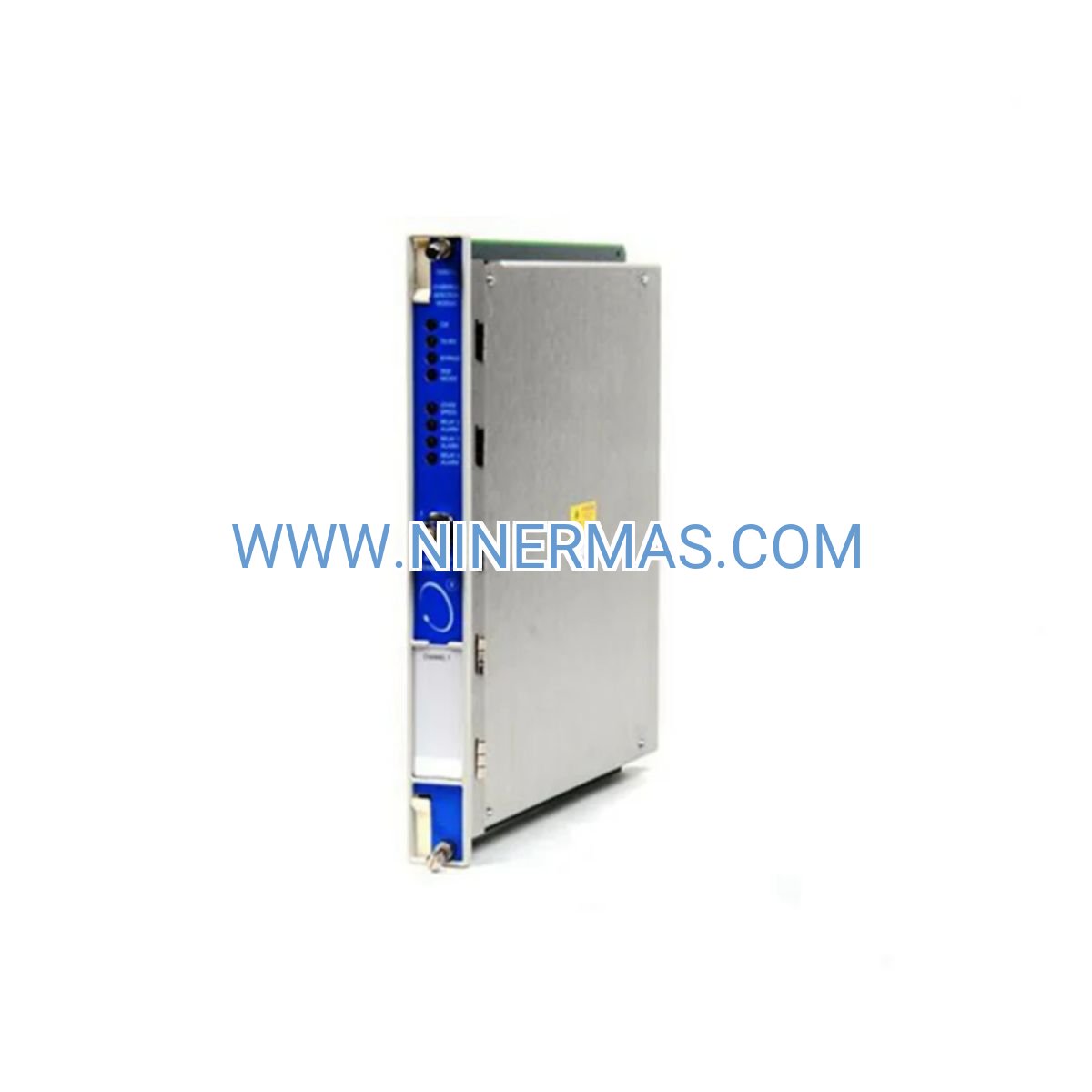
Description
140734-03 Aeroderivative Gas Turbine Vibration Monitor (Industrial-Grade Protection)
The Bently Nevada 3500/44M model 140734-03 represents a purpose-built vibration surveillance solution for aeroderivative gas turbine environments. Engineered to address the unique operational challenges of high-speed, lightweight turbomachinery, this four-channel monitoring platform delivers continuous asset protection across power generation, offshore production, and marine propulsion sectors. By detecting early-stage mechanical anomalies—imbalance, misalignment, bearing wear, and rotor rubs—the system enables predictive maintenance strategies that minimize unplanned downtime and extend equipment service life.
Aeroderivative turbines, adapted from aviation jet engine designs, demand monitoring solutions capable of tracking rapid transient events and multi-regime operating profiles. The 140734-03 fulfills this requirement through specialized firmware algorithms, wide-bandwidth signal processing (10 Hz to 10 kHz), and dual-threshold alarm architecture. Target users include reliability engineers, turbine OEMs, plant maintenance teams, and condition monitoring specialists responsible for safeguarding critical rotating assets in demanding industrial environments.
Key differentiators include turbine-specific transient capture, compatibility with multiple sensor types (proximity probes, accelerometers, velocity transducers), and seamless integration within the proven 3500 Series rack ecosystem. The result: actionable vibration intelligence that transforms raw sensor data into operational decisions, reducing catastrophic failure risk while optimizing maintenance intervals.
Core Features & Business Value
→ Four Independent Monitoring Channels
Simultaneous tracking of radial vibration (X-Y axes), axial position, and casing acceleration across multiple bearing locations. Business impact: Comprehensive machine health visibility without additional hardware investment.
✓ Aeroderivative-Optimized Algorithms
Specialized firmware accounts for rapid acceleration profiles, lightweight rotor dynamics, and variable-speed operation typical of aero-engine derivatives. Business impact: Reduced false alarms and improved detection accuracy compared to generic vibration monitors.
→ Dual-Level Alarm Architecture
Configurable Alert and Danger setpoints per channel enable staged response protocols—early warning notifications followed by automatic shutdown triggers. Business impact: Balanced protection strategy that prevents both nuisance trips and equipment damage.
✓ Wide Frequency Response (10 Hz – 10 kHz)
Captures low-frequency rotor imbalance, mid-range bearing defects, and high-frequency gear mesh anomalies within a single monitoring platform. Business impact: Eliminates need for multiple specialized analyzers, simplifying system architecture.
→ Multi-Sensor Compatibility
Accepts inputs from eddy-current proximity probes, piezoelectric accelerometers, and velocity transducers without external signal conditioning. Business impact: Flexibility to match sensor selection to specific measurement requirements and existing infrastructure.
✓ Rack-Based Integration
Installs into standard 3500 Series chassis alongside complementary modules (tachometers, temperature monitors, communication gateways), sharing common power and data infrastructure. Business impact: Scalable monitoring architecture that grows with asset portfolio expansion.
Typical Application Scenarios
Peaking Power Plants – LM2500/LM6000 Turbine Protection
Scenario: Rapid-start aeroderivative units cycling multiple times daily to meet grid demand fluctuations.
Pain Point: Frequent thermal cycling and acceleration stress accelerate bearing degradation and rotor imbalance development.
Value Delivered: Continuous vibration trending identifies emerging issues during startup transients, enabling condition-based maintenance that prevents forced outages during peak demand periods.
Offshore Oil & Gas Platforms – Compressor Drive Turbines
Scenario: Unmanned platforms operating Trent or RB211 turbines in corrosive marine atmospheres with limited maintenance access.
Pain Point: Undetected mechanical failures trigger emergency shutdowns, halting production and requiring costly helicopter-based technician deployment.
Value Delivered: Remote vibration monitoring via SCADA integration provides early fault detection, allowing planned maintenance during scheduled crew visits and avoiding production losses.
Natural Gas Pipeline Compression – Turbine-Driven Compressor Trains
Scenario: Cross-country transmission systems relying on aeroderivative turbines to maintain pipeline pressure across varying throughput demands.
Pain Point: Coupling misalignment and compressor surge events induce vibration spikes that can progress to catastrophic mechanical failure.
Value Delivered: Real-time alarm outputs trigger automated load reduction sequences, protecting equipment while maintaining system operability during transient upset conditions.
Marine Propulsion – Naval Vessel Gas Turbine Engines
Scenario: High-speed naval craft utilizing aeroderivative propulsion turbines subjected to shock loads from sea states and combat maneuvers.
Pain Point: Mechanical shock can dislodge bearing components or induce rotor rubs that conventional monitoring systems fail to detect amid background vibration.
Value Delivered: Enhanced transient capture mode records vibration signatures during shock events, enabling post-event analysis and damage assessment without disassembly.
Combined-Cycle Cogeneration – Multi-Turbine Installations
Scenario: Industrial facilities operating multiple aeroderivative units for simultaneous power and steam generation.
Pain Point: Managing vibration data from fleet of turbines requires centralized monitoring infrastructure with standardized alarm protocols.
Value Delivered: Rack-based architecture supports multiple 3500/44M modules within unified monitoring system, streamlining operator interface and maintenance procedures across turbine fleet.
Technical Parameters & Selection Guide
| Parameter | Specification |
|---|---|
| Part Number | 140734-03 |
| Module Designation | 3500/44M (Aeroderivative Variant) |
| Input Channels | 4 (independently configurable) |
| Sensor Types Supported | Proximity probes (eddy-current), accelerometers (piezo/MEMS), velocity sensors |
| Frequency Bandwidth | 10 Hz to 10,000 Hz |
| Input Voltage Range | -24 Vdc to +10 Vdc (dynamic) |
| Alarm Outputs | Dual setpoint (Alert + Danger) per channel |
| Data Communication | Proprietary protocol via 3500 rack backplane |
| Operating Temperature | -30°C to +65°C (-22°F to +149°F) |
| Power Draw | 7.5W typical (supplied via rack backplane) |
| Physical Dimensions | Single-slot 3500 rack module |
| Weight | 0.91 kg (2.0 lbs) |
| Rack Compatibility | 3500 Series chassis (requires power supply module and rack interface) |
| Configuration Method | 3500 Rack Configuration Software (Windows-based) |
Selection Criteria:
Choose the 3500/44M (140734-03) when your application involves aeroderivative gas turbines requiring specialized monitoring algorithms for rapid transient events and multi-regime operation. For heavy-duty industrial turbines with slower acceleration profiles, the standard 3500/42 or 3500/44 may provide adequate protection at lower cost.
Verify that your existing or planned 3500 rack includes compatible power supply modules (typically 3500/15 or 3500/22M) and communication interfaces (3500/20, 3500/25, or 3500/92) to support data integration with supervisory control systems. Consult factory documentation to confirm firmware revision compatibility with legacy rack components.
For hazardous area installations (Class I Division 2 or ATEX Zone 2), ensure proximity probe systems incorporate approved intrinsic safety barriers, as the 3500/44M module itself does not carry intrinsic safety certification for sensor-side circuits.
Extended Functions
IoT Integration & Cloud Connectivity: When paired with 3500/92 Communication Gateway modules, vibration data streams to cloud-based analytics platforms via OPC-UA, MQTT, or REST APIs. This enables remote diagnostics, fleet-wide benchmarking, and machine learning-based anomaly detection across geographically distributed assets.
Advanced Diagnostic Capabilities: Beyond basic overall vibration monitoring, the 3500/44M supports spectral band alarming (user-defined frequency ranges), vector trending for rotor position analysis, and transient data capture triggered by alarm events or external inputs. These features facilitate root-cause analysis of complex mechanical faults.
Customization Options: Factory configuration services available for application-specific alarm logic, custom scaling factors for non-standard sensors, and pre-programmed startup/shutdown profiles matching specific turbine models. Consult application engineering team for feasibility assessment and lead time implications.
Delivery & Service Assurance
Standard Lead Time: In-stock units ship within 3-5 business days via express courier (DHL/FedEx). Custom-configured modules require 2-3 weeks for factory programming and testing.
Warranty Coverage: 12-month manufacturer warranty against defects in materials and workmanship, commencing from shipment date. Warranty includes replacement module provision and return shipping costs for verified defects.
Technical Support: Lifetime access to application engineering support for configuration assistance, troubleshooting guidance, and firmware update advisories. Support channels include email, phone, and remote desktop sessions for complex diagnostic scenarios.
Documentation Package: Each unit ships with installation manual, configuration quick-start guide, sensor wiring diagrams, and digital access to full technical reference documentation including alarm logic programming examples.
Frequently Asked Questions
Can the 140734-03 monitor both radial and axial vibration simultaneously on a single turbine?
Yes. A typical configuration dedicates two channels to radial vibration measurement (X-Y proximity probes at the turbine bearing) and one channel to axial position monitoring (thrust bearing proximity probe). The fourth channel remains available for casing vibration or a second bearing location.
What differentiates the 3500/44M from the standard 3500/44 module?
The "M" suffix denotes aeroderivative-specific firmware incorporating enhanced transient event capture, turbine startup/shutdown profile tracking, and alarm algorithms optimized for high-speed, lightweight rotor dynamics. Standard 3500/44 modules target general industrial machinery applications.
Does this system require dedicated vibration analysis software for operation?
Basic monitoring and alarm functions operate autonomously once configured via 3500 Rack Configuration Software. For advanced diagnostics—spectral analysis, orbit plots, waterfall displays—integration with Bently Nevada System 1 software or third-party vibration analysis platforms is recommended but not mandatory.
How many turbines can a single 3500 rack monitor with multiple 44M modules?
Rack capacity depends on chassis size (typically 7 or 14 slots) and module allocation. A 14-slot rack can accommodate up to 10 monitoring modules after reserving slots for power supply, rack interface, and communication gateway—sufficient for 5-10 turbines depending on channel requirements per machine.
Are firmware updates field-installable or do modules require factory return?
Firmware updates deploy via 3500 Rack Configuration Software over the rack backplane connection. No module removal or factory return required. Consult release notes for compatibility verification with existing rack infrastructure before applying updates.
What sensor cable lengths are supported without signal degradation?
Proximity probe systems typically support 5-9 meters (16-30 feet) depending on probe type and proximitor specifications. Accelerometer cable runs up to 100 meters are feasible with low-noise shielded cable. Consult sensor manufacturer datasheets for application-specific guidance.
Ready to Protect Your Critical Turbomachinery?
Contact our application engineering team to discuss your aeroderivative turbine monitoring requirements. We'll help you configure the optimal 3500 Series solution—sensor selection, rack architecture, and integration with existing control systems—to deliver reliable asset protection and operational intelligence.
Request a technical consultation: sale@ninermas.com | +0086 187 5021 5667
© 2026 NINERMAS COMPANY LIMITED. All rights reserved.
Original Source: https://ninermas.com
Contact: sale@ninermas.com | +0086 187 5021 5667
PDF Specification
Download PDF file here:
Click to Download PDF

Contact Info
-
Address:22 / F, South Wo Hang building, 148 Wing Lok Street, Sheung Wan, Western District, Hong Kong
-
Phone:+8618750215667
-
Email: