


Description
3500/42 Four-Channel Vibration Monitor (Industrial-Grade Machinery Protection)
The Bently Nevada 3500/42 delivers comprehensive rotating equipment surveillance through simultaneous proximitor and seismic sensor integration. Engineered for turbomachinery applications demanding sub-100-millisecond fault response, this four-channel monitor combines shaft displacement measurement with casing vibration analysis in a single-slot rack module.
Critical rotating assets in power generation, petrochemical processing, and gas compression facilities require continuous condition monitoring to prevent catastrophic failures. The 3500/42 addresses this need by processing both eddy-current proximity probe signals and piezoelectric accelerometer inputs, providing complete frequency spectrum coverage from 0.1 Hz thermal growth phenomena to 10 kHz bearing defect signatures.
Operators gain immediate visibility into machinery health through configurable alarm thresholds targeting overall vibration levels, specific frequency bands, or individual spectral components. This multi-parameter approach enables early detection of developing faults—imbalance, misalignment, bearing wear, fluid-induced instabilities—before equipment damage occurs, protecting assets valued in millions while maintaining production continuity.
Core Capabilities & Technical Advantages
→ Dual-Sensor Architecture: Processes proximity probe gap voltage (0-24 Vdc) and accelerometer signals (±5g to ±50g ranges) through independent conditioning circuits. Proximity channels measure absolute shaft position and low-frequency displacement; seismic channels capture high-frequency casing dynamics. This combination eliminates blind spots in vibration spectrum analysis.
✓ Real-Time FFT Processing: Dedicated DSP cores execute 1600-line Fast Fourier Transforms at 1-second intervals, decomposing complex waveforms into constituent frequencies. Tracks synchronous components (1X), harmonics (2X-8X), sub-synchronous instabilities, and bearing defect frequencies with 0.1 Hz resolution. Spectral alarm bands isolate specific fault signatures for precise diagnostics.
✓ Vector Vibration Analysis: X-Y probe pair configurations enable calculation of vibration magnitude and phase angle relative to keyphasor reference. Provides orbit plots, Bode diagrams, and polar plots essential for balancing operations and rotor dynamic analysis. Phase information distinguishes between imbalance, misalignment, and looseness conditions exhibiting similar amplitude characteristics.
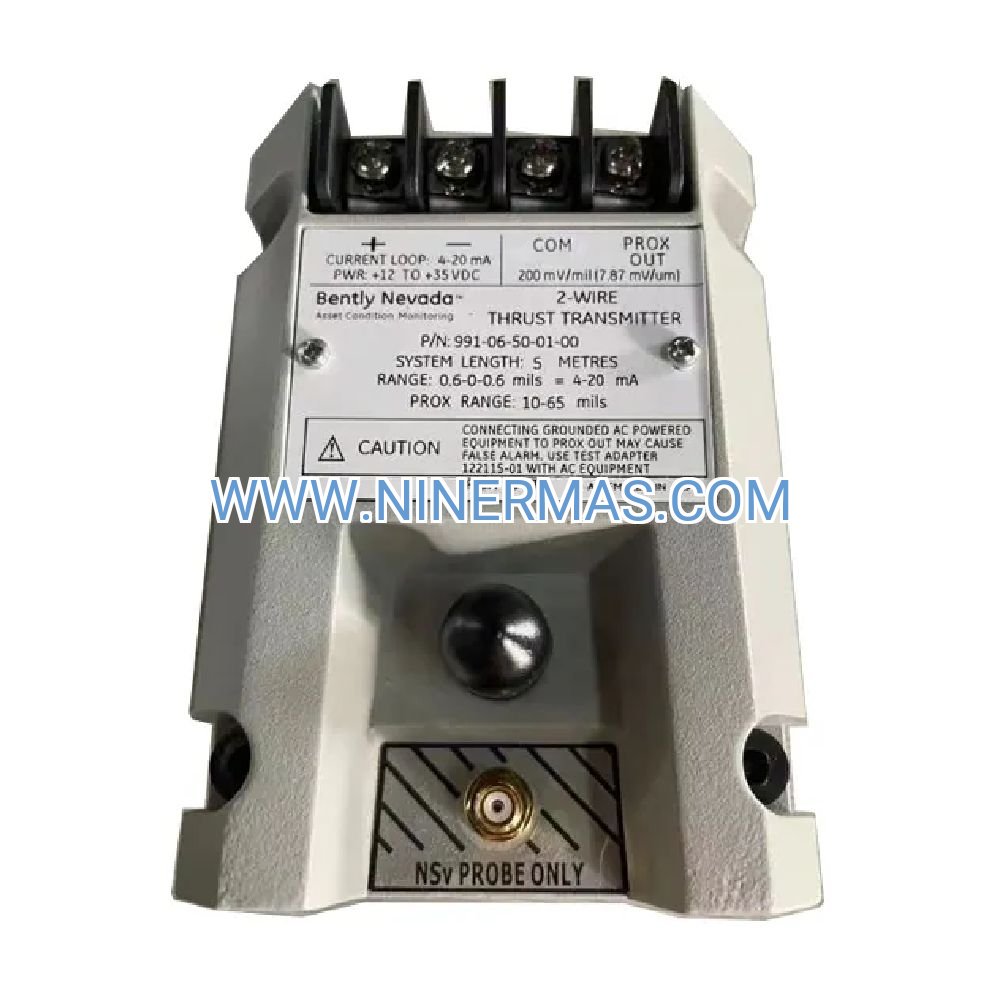
✓ Axial Position Monitoring: Single-probe thrust measurement detects bearing wear through axial float tracking. Configurable differential expansion measurement between rotating and stationary components prevents thermal rubs during startup/shutdown transients. Critical for compressor thrust bearing protection and turbine rotor positioning.
✓ Transducer Health Verification: Continuous sensor diagnostics detect open circuits, short circuits, and out-of-range signals. Generates distinct alarms for transducer failures versus machinery faults, ensuring protection system integrity. Essential for unmanned facilities where sensor degradation might otherwise compromise monitoring capability.
✓ Sub-100ms Alarm Response: From fault detection to relay output actuation in under 100 milliseconds. Provides the rapid shutdown capability required for high-speed turbomachinery where bearing failures propagate to catastrophic damage within seconds. Configurable voting logic prevents nuisance trips while maintaining protection reliability.
Industrial Application Scenarios
Power Generation Turbine Protection: Utility and independent power producers deploy the 3500/42 across steam turbine generator sets from 50 MW to 1000+ MW capacity. Proximity probes at each journal bearing location (typically 4-5 bearings per turbine-generator train) monitor radial vibration, while seismic sensors on bearing pedestals detect structural resonances and foundation issues. This dual-layer monitoring prevented an estimated $12M in turbine damage at a 600 MW combined-cycle plant when early detection of bearing wear enabled controlled shutdown before journal seizure occurred.
Petrochemical Compressor Surveillance: Ethylene crackers and LNG facilities protect critical centrifugal compressors handling explosive gases through continuous 3500/42 monitoring. The system tracks shaft vibration via proximity probes while seismic channels detect surge conditions manifesting as high-frequency casing vibration (typically 80-200 Hz). Early surge detection triggers anti-surge valve actuation, preventing aerodynamic instabilities that damage impellers and thrust bearings. One Gulf Coast facility reported 99.7% compressor uptime over 36 months using this monitoring strategy.
Refinery Pump Train Monitoring: Crude distillation units and catalytic crackers utilize 3500/42 seismic monitoring on critical pump services where unplanned shutdowns cascade into unit-wide production losses. Accelerometers detect cavitation (broadband energy 500 Hz-2 kHz), impeller imbalance (1X running speed), and mechanical seal degradation (high-frequency impacts). Bearing defect frequency analysis (BPFO, BPFI, BSF, FTF) enables predictive maintenance scheduling, reducing emergency repairs by 60% at a major West Coast refinery.
Gas Pipeline Compressor Stations: Natural gas transmission operators monitor reciprocating and centrifugal compressors at remote stations using 3500/42 modules networked to central control rooms. The system's Modbus communication capability streams vibration data for long-term trending, revealing gradual degradation invisible during quarterly site inspections. One pipeline operator extended compressor overhaul intervals from 8,000 to 12,000 operating hours through condition-based maintenance enabled by continuous monitoring.
Industrial Fan and Blower Applications: Cement plants, steel mills, and mining operations protect large induced-draft fans and forced-draft blowers critical to process continuity. The 3500/42's seismic monitoring detects blade imbalance, bearing wear, and structural looseness before catastrophic failures occur. One cement plant avoided a 14-day kiln outage when vibration trending identified fan bearing degradation three weeks before predicted failure, enabling planned replacement during a scheduled maintenance window.
Technical Specifications & Selection Criteria
| Parameter | Specification | Selection Guidance |
|---|---|---|
| Input Channels | 4 configurable (proximitor or seismic) | Allocate channels based on critical measurement points; typical turbine uses 2 radial + 1 axial |
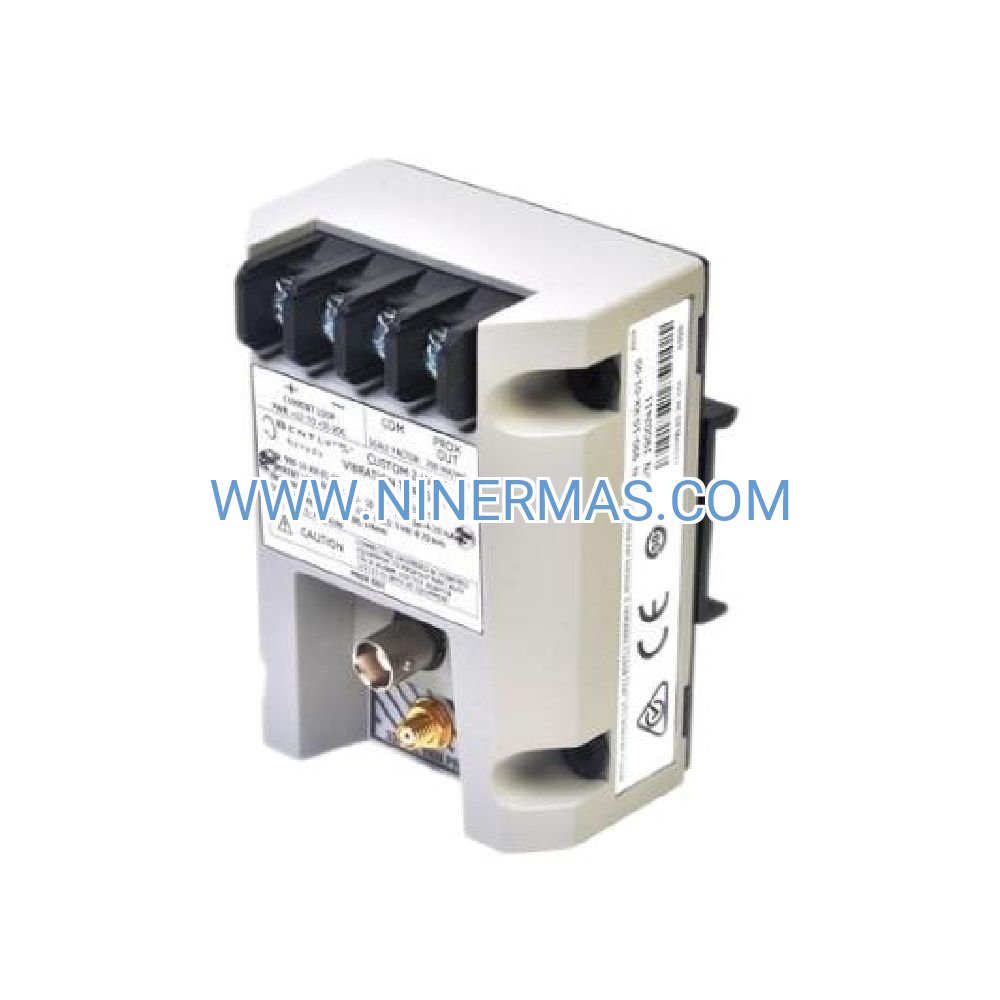
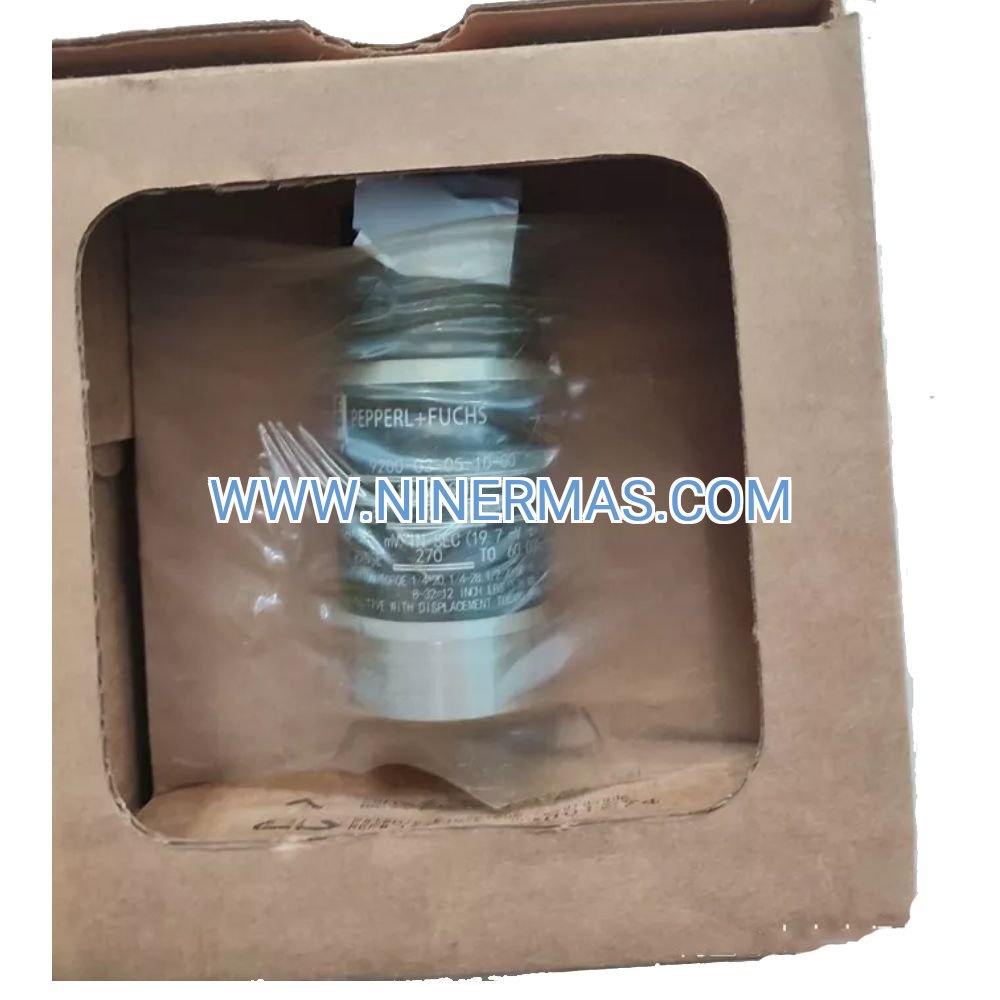
| Proximity Probe Range | 0-24 Vdc gap voltage, 7.87 V/mm sensitivity | Compatible with standard 3300 XL 8mm and 5mm proximity systems |
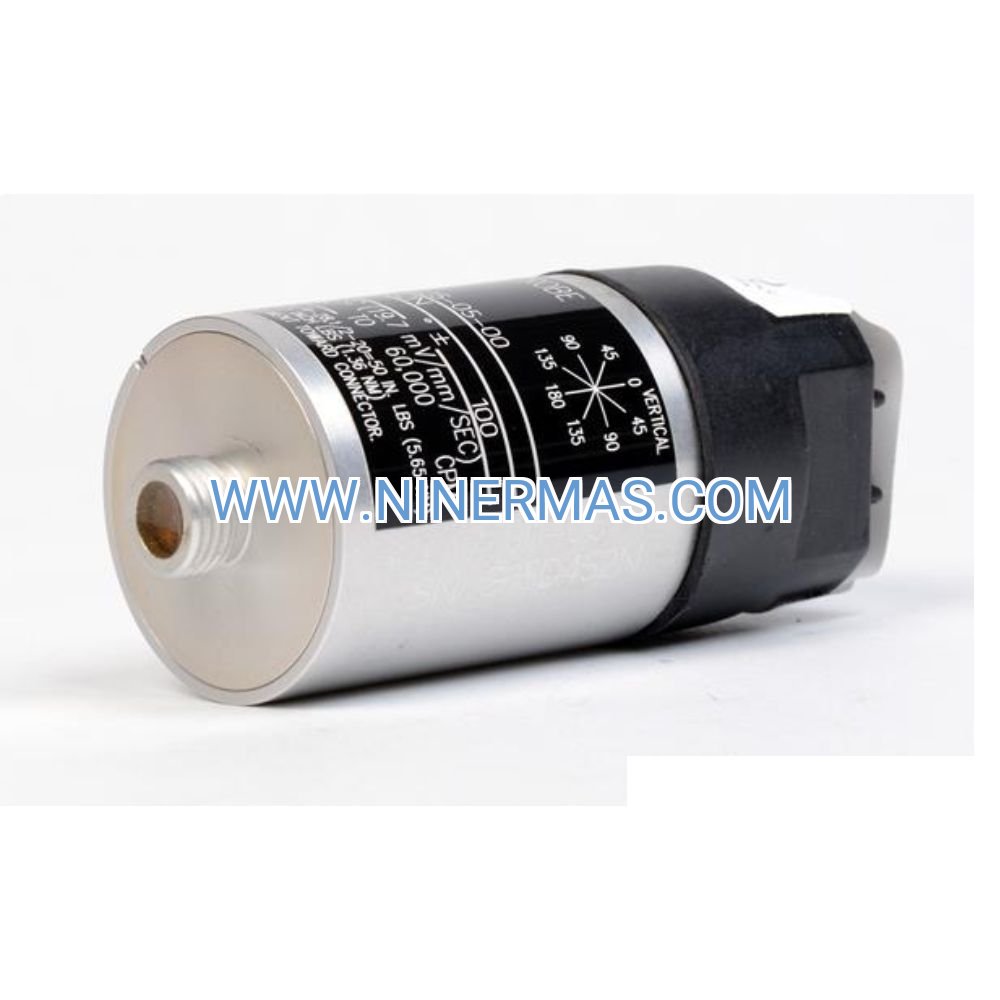
| Seismic Input Range | ±5g to ±50g accelerometer signals | Select accelerometer range based on expected vibration levels; ±10g typical for most applications |
| Frequency Response | 0.1 Hz to 10 kHz (-3dB points) | Covers sub-synchronous instabilities through bearing defect frequencies |
| FFT Resolution | 1600 lines, 0.1 Hz bin width | Sufficient resolution to separate closely-spaced spectral components |
| Alarm Response Time | <100 milliseconds typical | Critical for high-speed machinery requiring rapid shutdown |
| Operating Temperature | -30°C to +65°C | Suitable for outdoor installations and high-ambient environments |
| Power Consumption | 8.5 watts typical | Standard 3500 rack power budget allocation |
| Communication Protocol | Proprietary backplane + Modbus TCP/RTU | Requires 3500 communication gateway for DCS/SCADA integration |
Selection Criteria: Choose the 3500/42 when applications require simultaneous proximitor and seismic monitoring within a single module. For installations needing only proximity probe inputs, consider the dedicated 3500/40 Proximitor Monitor. Applications demanding advanced features like waveform recording or transient capture benefit from the 3500/42E enhanced variant. Verify rack slot availability and power budget before specifying additional modules.
Extended Integration & Customization Options
SCADA/DCS Connectivity: The 3500/42 integrates with plant control systems through 3500/92 Communication Gateway modules supporting Modbus TCP/RTU protocols. Real-time vibration data, alarm status, and diagnostic parameters stream to operator workstations for centralized monitoring. OPC UA support enables integration with modern IIoT platforms and cloud-based analytics services.
Relay Logic Configuration: Pair with 3500/32 or 3500/33 relay modules to implement customized shutdown logic. Configure voting schemes requiring multiple channels to exceed alarm thresholds before trip actuation, reducing nuisance shutdowns while maintaining protection integrity. Separate alert and danger setpoints enable staged alarm response.
Data Acquisition Systems: Connect to 3500/94M VGA Display or 3500/95 Integra Series software for advanced diagnostics. Capture startup/shutdown transient data, perform order tracking analysis, and generate comprehensive machinery health reports. Historical trending identifies gradual degradation patterns supporting predictive maintenance programs.
Redundant Monitoring Architectures: Deploy dual 3500/42 modules monitoring identical measurement points for critical machinery requiring 2oo3 (two-out-of-three) voting protection. Redundant configurations eliminate single-point failures in protection systems safeguarding assets where unplanned shutdowns result in multi-million dollar losses.
Delivery Timeline & Service Commitments
Standard Lead Time: 3-5 business days for in-stock units; expedited same-day shipping available for emergency replacements. All modules ship with factory calibration certificates and configuration documentation.
Custom Configuration Services: Pre-configured modules with customer-specific alarm setpoints, channel assignments, and relay logic ship within 7-10 business days. Configuration files provided for customer records and spare module programming.
Warranty Coverage: 12-month manufacturer warranty covering defects in materials and workmanship. Extended warranty programs available for critical applications requiring guaranteed replacement within 24 hours.
Technical Support: Application engineering assistance for system design, sensor selection, and alarm setpoint optimization. Post-installation support includes configuration verification, baseline vibration analysis, and operator training.
Documentation Package: Each module ships with installation manual, configuration software, and quick-start guide. Comprehensive technical manuals covering theory of operation, troubleshooting procedures, and maintenance schedules available for download.
Frequently Asked Questions
Q: Can the 3500/42 monitor both proximity probes and accelerometers simultaneously on the same machine?
A: Yes, the module's four channels can be independently configured as either proximitor or seismic inputs. A typical configuration uses two channels for X-Y proximity probe pairs measuring radial shaft vibration, one channel for axial position via proximity probe, and one channel for bearing housing accelerometer monitoring casing vibration. This combination provides comprehensive machinery surveillance in a single module.
Q: What is the maximum cable length between proximity probes and the 3500/42 module?
A: Standard 3300 XL proximity systems support cable lengths up to 300 meters (1000 feet) when using extension cables with proper impedance matching. The 3500/42 accepts the conditioned output from 3300 XL proximitor housings, so cable length limitations follow proximity system specifications rather than monitor input constraints. For installations exceeding 300 meters, consider intermediate junction boxes or fiber-optic signal transmission.
Q: How does the 3500/42 compare to the 3500/42E enhanced monitor in terms of functionality?
A: The 3500/42E adds waveform capture, transient data recording, and enhanced diagnostic capabilities beyond the standard 3500/42's real-time monitoring and alarm functions. Choose the 3500/42E when applications require detailed fault analysis, startup/shutdown transient recording, or advanced rotor dynamic studies. The standard 3500/42 provides comprehensive protection and trending for most turbomachinery applications at lower cost.
Q: What alarm setpoint values should I configure for typical steam turbine applications?
A: ISO 20816 and API 670 standards provide vibration severity guidelines based on machine type and operating speed. For large steam turbines (above 300 kW), typical alert setpoints range from 45-70 μm (1.8-2.8 mils) shaft displacement, with danger setpoints at 90-125 μm (3.5-5.0 mils). However, optimal setpoints depend on machine-specific baseline vibration, operating speed, bearing clearances, and historical performance. Consult machinery OEM recommendations and conduct baseline vibration surveys during commissioning to establish appropriate alarm levels.
Q: Does the 3500/42 support remote configuration changes, or must I access the rack locally?
A: Configuration changes require connection to the 3500 rack via the TDI (Transient Data Interface) port using 3500 Rack Configuration Software. While the software can run on a laptop connected locally, many installations use permanently-installed configuration PCs networked to the rack, enabling remote configuration from control rooms. However, Bently Nevada recommends implementing configuration change management procedures requiring authorized personnel and documentation, as improper setpoint changes can compromise machinery protection.
Q: Can I replace a failed 3500/42 module without shutting down the entire rack and losing protection on other machines?
A: Yes, the 3500/42 supports hot-swappable replacement without rack power-down. The module's edge connector design allows removal and installation while the rack remains energized, preserving protection for other monitored equipment. Configuration data stored in the rack controller automatically downloads to the replacement module upon installation, minimizing downtime. However, the specific machine monitored by the replaced module loses protection during the swap interval (typically 2-5 minutes), so schedule replacements during planned maintenance windows when possible.
Secure Your Machinery Protection System Today
Protect critical rotating assets from catastrophic failures with proven Bently Nevada monitoring technology. Our technical team provides application-specific guidance for sensor selection, system architecture, and alarm strategy development. Contact us for detailed specifications, configuration assistance, or emergency replacement support.
© 2026 NINERMAS COMPANY LIMITED. All rights reserved.
Original Source: https://ninermas.com
Contact: sale@ninermas.com | +0086 187 5021 5667
PDF Specification
Download PDF file here:
Click to Download PDF

Contact Info
-
Address:22 / F, South Wo Hang building, 148 Wing Lok Street, Sheung Wan, Western District, Hong Kong
-
Phone:+8618750215667
-
Email:
