Description
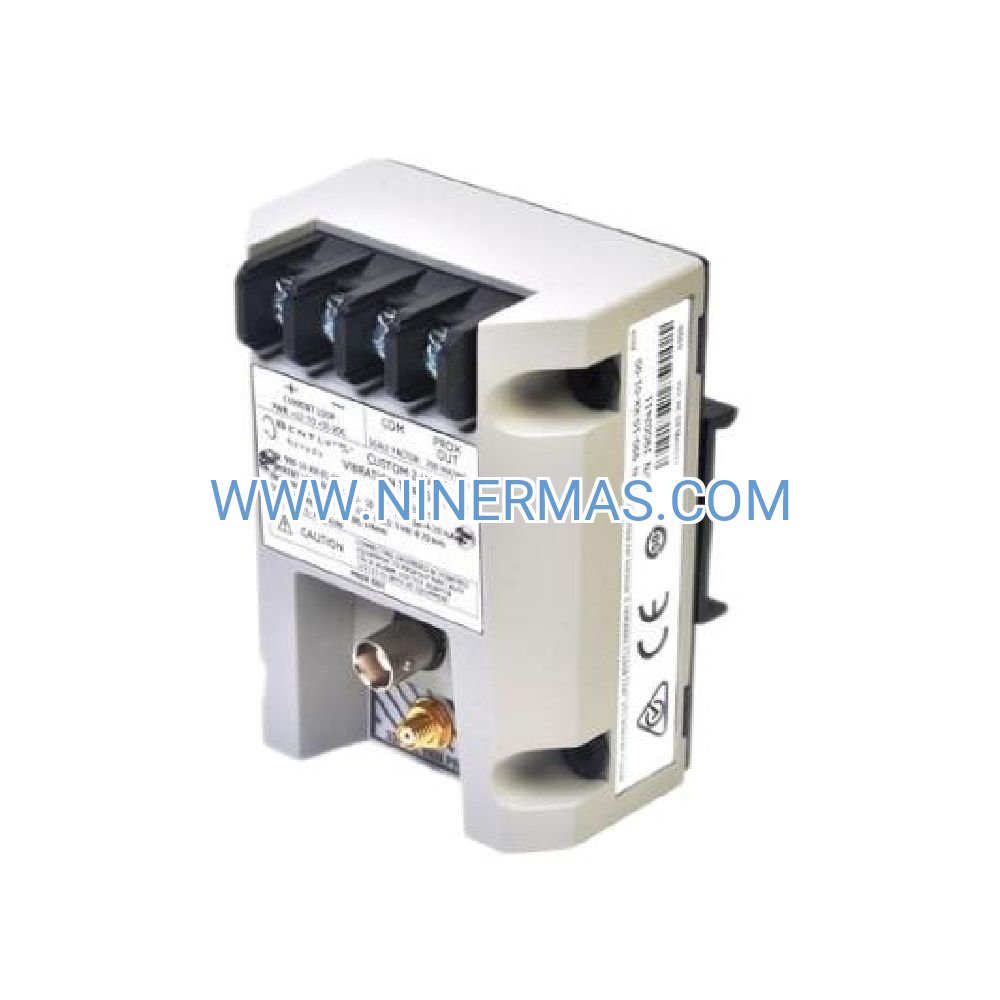
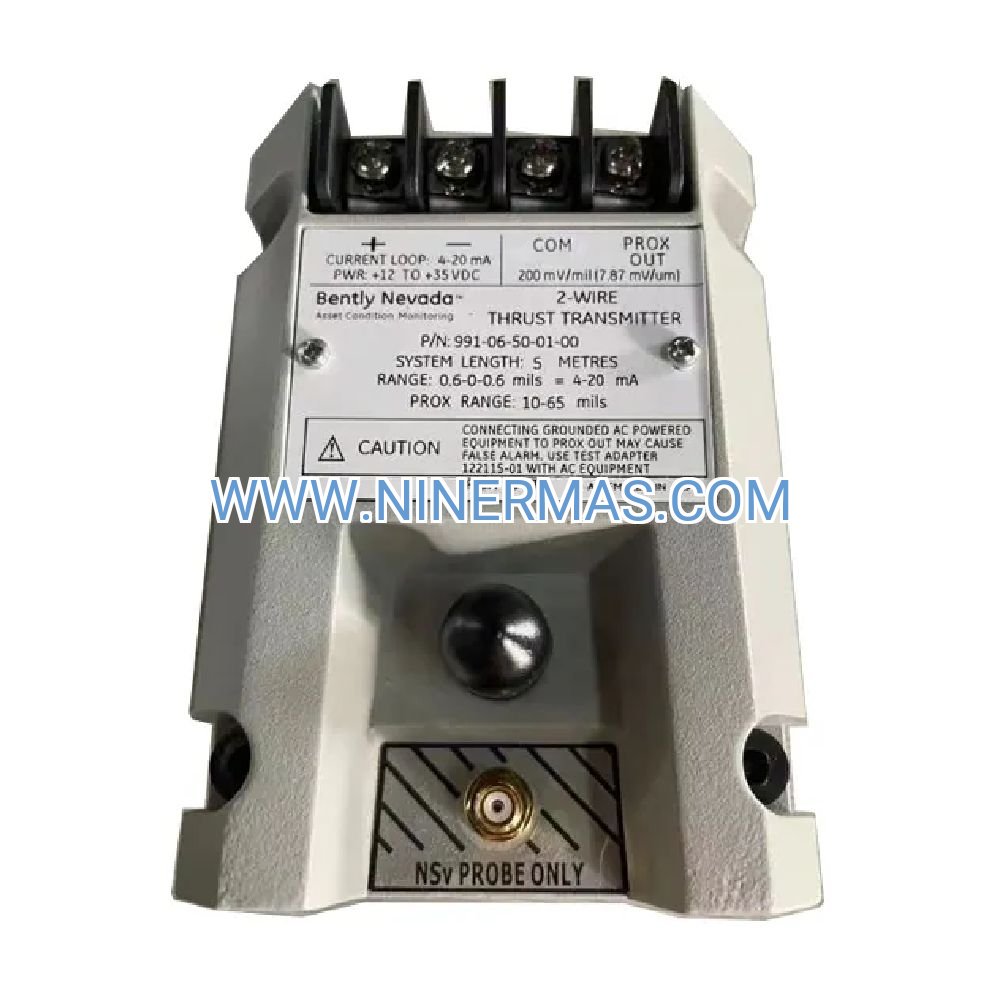
Industrial 16-Channel Relay Module (Bently Nevada 3500/33-01-00)
The Bently Nevada 3500/33-01-00 represents a mission-critical relay interface solution engineered for industrial machinery protection ecosystems. This high-density output module transforms digital alarm signals from vibration monitors into hardwired relay contacts, bridging the gap between condition monitoring intelligence and plant-wide control infrastructure including DCS platforms, emergency shutdown logic, and legacy annunciator systems.
Designed for process industries where equipment uptime directly impacts production revenue, the 3500/33 module addresses a fundamental challenge: translating real-time machinery health data into actionable control signals that can initiate protective responses across diverse automation architectures. Whether interfacing with modern safety instrumented systems or decades-old relay logic panels, this module provides the universal language of contact closure that every control system understands.
With 16 independent Form C relay channels packed into a single rack slot, the 3500/33 maximizes I/O density while maintaining the electrical isolation and contact ratings demanded by industrial environments. Each relay channel operates as a programmable logic processor, capable of combining multiple alarm inputs through AND/OR/voting algorithms to eliminate nuisance trips while preserving safety integrity—a critical balance in high-consequence facilities.
Core Capabilities & Technical Advantages
✓ High-Density Contact Multiplication
16 Form C (SPDT) relay outputs in a single module slot deliver 48 individual contact points (common, NO, NC per channel). This 16:1 consolidation ratio reduces panel space requirements by 75% compared to discrete relay installations while simplifying wiring documentation and maintenance access.
✓ Industrial-Grade Contact Performance
5A @ 250V AC resistive rating handles demanding loads including motor starter coils, solenoid valves, and annunciator lamps. Silver alloy contacts maintain <100 mΩ resistance through 100,000 electrical operations, ensuring reliable signal integrity for low-voltage PLC inputs and high-current actuator circuits alike.
✓ Programmable Multi-Input Logic Engine
Each relay processes up to 8 alarm sources simultaneously using configurable AND, OR, NOT, and voting logic (2oo3, 2oo4). This embedded intelligence eliminates external logic solvers for common scenarios like redundant sensor voting, permissive interlocks, and graduated alarm escalation—reducing system complexity and failure points.
✓ Fail-Safe Architecture with Watchdog Protection
Relays de-energize within 100 ms upon detecting module failure, power loss, or processor lockup. This normally-energized design philosophy ensures machinery trips to a safe state during any fault condition, meeting IEC 61508 SIL 2 requirements when configured with appropriate redundancy.
✓ Hot-Swap Serviceability
Replace modules during operation without disrupting adjacent rack functions or requiring system shutdown. Removable terminal blocks with captive screws enable pre-wiring of replacement modules, reducing mean time to repair (MTTR) from hours to minutes during critical outages.
✓ Universal System Compatibility
Form C contacts interface with any control system regardless of manufacturer, voltage standard, or communication protocol. Whether connecting to Honeywell TDC, Emerson DeltaV, ABB 800xA, or 1970s-era relay logic, the 3500/33 provides the hardwired interoperability that software protocols cannot guarantee.
Industrial Application Scenarios
→ Refinery Turbine Protection Systems
In a hydrocracker unit, the 3500/33 monitors vibration on a 15 MW steam turbine driving a critical compressor. When bearing temperature and vibration alarms activate simultaneously (AND logic), Relay 1 trips the turbine emergency stop valve while Relay 2 signals the DCS to initiate controlled process shutdown. Voting logic on three radial vibration probes (2oo3 configuration) prevents single-sensor failures from causing false trips that would cost $500K in lost production per event.
→ Offshore Platform Gas Compression
On a North Sea production platform, four 3500/33 modules manage alarm outputs for six reciprocating compressors. Each compressor's vibration, temperature, and pressure monitors feed relay logic that discriminates between advisory alerts (logged to SCADA) and critical trips (hardwired to ESD system per IEC 61511). The modules' 1500V isolation rating protects monitoring circuits from electrical faults in the 480V motor control centers they interface with.
→ Power Generation Turbine-Generator Sets
A 250 MW combined-cycle plant uses 3500/33 modules to coordinate vibration protection across gas turbines, steam turbines, and generators. Relay outputs drive both the turbine control system (for controlled shutdowns) and the plant DCS (for operator alarming). Programmable time delays (5-second pickup, 2-second dropout) filter transient vibration spikes during load changes while ensuring genuine faults trigger within regulatory response times.
→ Chemical Plant Centrifugal Pumps
A sulfuric acid production facility protects 40 process pumps using centralized 3500 racks. Each pump's vibration monitor connects to a dedicated 3500/33 relay channel configured with latching logic—once a bearing failure alarm activates, the relay remains tripped until manually reset, preserving forensic evidence of the failure sequence even if vibration levels return to normal after the pump coasts down.
→ Pipeline Compressor Stations
Unmanned natural gas compressor stations across a 500-mile pipeline network use 3500/33 modules to interface vibration alarms with remote terminal units (RTUs). When communication to the SCADA master fails, the relay outputs provide local hardwired shutdown capability, ensuring machinery protection continues independently of the supervisory network—a critical safety layer in remote locations.
Technical Specifications & Selection Criteria
| Relay Channels | 16 independent outputs |
| Contact Configuration | Form C (SPDT): Common, NO, NC per channel |
| Resistive Load Rating | 5A @ 250V AC / 3A @ 30V DC |
| Inductive Load Rating | 2A @ 250V AC / 1A @ 30V DC (L/R = 7ms) |
| Switching Voltage Range | 5-250V AC, 5-125V DC |
| Minimum Load (Dry Circuit) | 10 mA @ 5V DC |
| Contact Resistance | <100 mΩ initial, <200 mΩ end-of-life |
| Operate/Release Time | <10 ms operate, <5 ms release |
| Mechanical Life | 10 million operations minimum |
| Electrical Life | 100,000 operations @ rated load |
| Channel Isolation | 1500V AC coil-to-contact, 250V AC channel-to-channel |
| Logic Inputs per Relay | Up to 8 alarm sources, configurable logic |
| Power Consumption | 12W from rack backplane |
| Operating Temperature | -30°C to +65°C (-22°F to +149°F) |
| Humidity Tolerance | 5-95% RH non-condensing |
| Dimensions (W×H×D) | 24.4 × 241.8 × 241.3 mm (0.96" × 9.52" × 9.50") |
| Weight | 0.91 kg (2.0 lbs) |
| Rack Compatibility | Any slot in 3500 rack except Slot 1 |
Selection Guidelines: Choose the 3500/33 (16-channel) over the 3500/32 (4-channel) when rack slot availability is limited or when managing alarms from multiple machines in a centralized configuration. For applications requiring contact supervision or higher contact ratings (10A), consider external safety relays driven by 3500/33 outputs. Verify that connected loads do not exceed inductive derating curves—consult factory for motor starter coil compatibility.
Advanced Configuration Capabilities
Voting Logic for Redundant Sensors
Implement 2-out-of-3 (2oo3) or 2-out-of-4 (2oo4) voting to eliminate single-point sensor failures. Example: Three radial vibration probes on a turbine bearing feed a single relay configured for 2oo3 logic—the relay trips only when two or more sensors exceed alarm setpoints, achieving 99.9% availability while maintaining SIL 2 safety integrity.
Time Delay Filtering
Programmable pickup delays (0-60 seconds) prevent nuisance trips from transient vibration during startups, load changes, or process upsets. Dropout delays prevent contact chatter when vibration oscillates near alarm setpoints. Typical configuration: 5-second pickup delay for Alert alarms, 0-second pickup for Danger alarms requiring immediate response.
Latching vs. Non-Latching Modes
Latching mode preserves first-alarm evidence—once tripped, the relay remains energized until manually reset via software command, even if the alarm condition clears. Non-latching mode tracks real-time alarm status, automatically resetting when conditions normalize. Use latching for forensic analysis, non-latching for automatic restart systems.
Multi-Level Alarm Escalation
Assign Relay 1 to Alert-level alarms (warning only), Relay 2 to Danger-level alarms (initiate shutdown), and Relay 3 to combined Alert OR Danger (master alarm annunciation). This graduated response enables operators to address developing problems before automatic shutdowns occur, reducing unplanned downtime.
Permissive Interlock Logic
Combine vibration alarms with auxiliary inputs (machine running status, process pressure, operator permissives) using AND logic. Example: Vibration alarm AND machine-running signal = trip relay; this prevents false alarms during coastdown when vibration naturally increases but the machine is already stopping.
Installation Best Practices & Wiring Standards
Terminal Block Specifications: Removable screw terminals accept 14-22 AWG (0.5-2.5 mm²) stranded or solid wire. Torque screws to 0.5-0.6 N⋅m (4.4-5.3 lb⋅in) using calibrated screwdriver—over-torquing damages terminal threads, under-torquing causes high-resistance connections and potential arcing.
Wire Routing Discipline: Maintain 300 mm (12") minimum separation between relay wiring and AC power cables, VFD output conductors, or welding return paths. For cable runs exceeding 100 meters, use shielded twisted-pair with shield grounded at one end only (typically at the 3500 rack) to prevent ground loops.
Inductive Load Suppression: Install RC snubbers (0.1 µF capacitor + 100Ω resistor in series) directly across relay contacts when switching AC inductive loads (contactor coils, solenoid valves). For DC inductive loads, install flyback diodes (1N4007 or equivalent) across the load with cathode to positive terminal—this suppresses inductive kickback that can weld contacts.
Contact Current Derating: Reduce maximum contact current by 50% when switching inductive loads or when ambient temperature exceeds 55°C. Example: For a 250V AC contactor coil with 2A inrush current at 60°C ambient, derate to 1.25A maximum—verify coil current does not exceed this limit.
Grounding Strategy: Connect terminal block shield drain wire to chassis ground lug on 3500 rack. Do NOT ground relay common terminals unless specifically required by connected equipment (e.g., some PLC input cards require grounded commons). Improper grounding creates ground loops that induce noise into monitoring circuits.
Field Wiring Documentation: Label every wire with relay number (1-16), contact type (C/NO/NC), and destination (e.g., "R5-NO to DCS AI Card 3 Ch 12"). Use heat-shrink labels or laminated tags that survive industrial environments—masking tape labels fail within months in refineries and chemical plants.
Delivery Timeline & Service Commitment
Standard Lead Time: 3-5 business days for in-stock units; expedited same-day shipping available for critical outages (contact sales for emergency service).
Custom Configuration: Factory pre-programmed relay logic available with 7-10 day lead time—provide alarm matrix and logic diagrams with order.
Warranty Coverage: 12-month manufacturer's warranty covering defects in materials and workmanship; extended warranties available for critical sparing applications.
Technical Support: Lifetime application engineering support including relay logic design review, contact load calculations, and troubleshooting assistance via phone/email.
Documentation Package: Every module ships with installation manual, wiring diagrams, configuration software license, and calibration certificate traceable to NIST standards.
Frequently Asked Questions
Q: Can the 3500/33 relay module interface directly with Siemens S7-1200 PLC digital inputs?
A: Yes—configure relay contacts for dry contact operation (no external voltage applied). Connect relay NO or NC contact to PLC input terminal and PLC common to relay common terminal. The PLC's internal pull-up resistor (typically 10 kΩ) provides sensing current well within the 3500/33's 10 mA minimum load specification. Verify PLC input voltage (24V DC typical) does not exceed relay's 125V DC maximum rating.
Q: What is the maximum wire run length between the 3500/33 module and a remote annunciator panel?
A: For copper wire, maximum length depends on contact current and acceptable voltage drop. At 100 mA (typical annunciator lamp), 18 AWG wire supports 500 meters with <2V drop. At 1A (contactor coil), use 14 AWG for 150-meter runs. Beyond 100 meters, use shielded cable to prevent EMI-induced false alarms. For runs exceeding 300 meters, consider intermediate safety relays to boost signal integrity.
Q: How much energy savings can I achieve by replacing electromagnetic relays with the 3500/33 module?
A: The 3500/33 consumes 12W total for 16 relays (0.75W per relay). Equivalent panel-mount electromagnetic relays typically consume 2-3W per coil—replacing 16 discrete relays saves 20-36W continuous power. Over 10 years of continuous operation, this represents 175-315 kWh energy reduction and eliminates coil heat dissipation that can elevate panel temperatures by 5-10°C.
Q: Does the 3500/33 require special installation procedures for hazardous area (Class I Div 2) applications?
A: The module is suitable for Class I Division 2 Groups A, B, C, D locations when installed per NEC Article 501. Key requirements: Install in purged/pressurized enclosure OR in general-purpose enclosure located in Division 2 area with wiring methods per 501.10(B). Do NOT install in Division 1 areas. Ensure all field wiring uses appropriate sealing fittings where conduits transition between classified and unclassified areas.
Q: Can I monitor relay contact status remotely via Modbus or OPC without opening the 3500 Rack Configuration Software?
A: Yes—if your 3500 rack includes a 3500/92 Communication Gateway or 3500/95 Integrator Module, relay status is available via Modbus TCP/RTU or Ethernet/IP. Map relay coil status to Modbus registers (consult gateway manual for register addresses). For OPC integration, use the Bently Nevada System 1 software which provides OPC DA/UA servers that expose all rack data including relay states.
Q: What is the recommended replacement interval for 3500/33 modules in continuous-duty applications?
A: With proper installation and load management, expect 15-20 year service life. Replace modules when contact resistance exceeds 200 mΩ (measured annually during outages) or after reaching mechanical life limit (10 million operations—track via configuration software if available). For critical applications, implement condition-based replacement: stock one spare per site, replace upon first relay failure rather than waiting for multiple channel failures.
Request Technical Consultation
Our application engineers provide complimentary design review services for machinery protection systems. Contact us with your alarm matrix, load specifications, and system architecture—we'll recommend optimal relay configurations, contact suppression components, and wiring strategies to maximize reliability and minimize commissioning time.
Email: sale@ninermas.com
Phone: +0086 187 5021 5667
Response Time: Technical inquiries answered within 4 business hours
© 2026 NINERMAS COMPANY LIMITED. All rights reserved.
Original Source: https://ninermas.com
Contact: sale@ninermas.com | +0086 187 5021 5667
PDF Specification
Download PDF file here:
Click to Download PDF

Contact Info
-
Address:22 / F, South Wo Hang building, 148 Wing Lok Street, Sheung Wan, Western District, Hong Kong
-
Phone:+8618750215667
-
Email: