Description
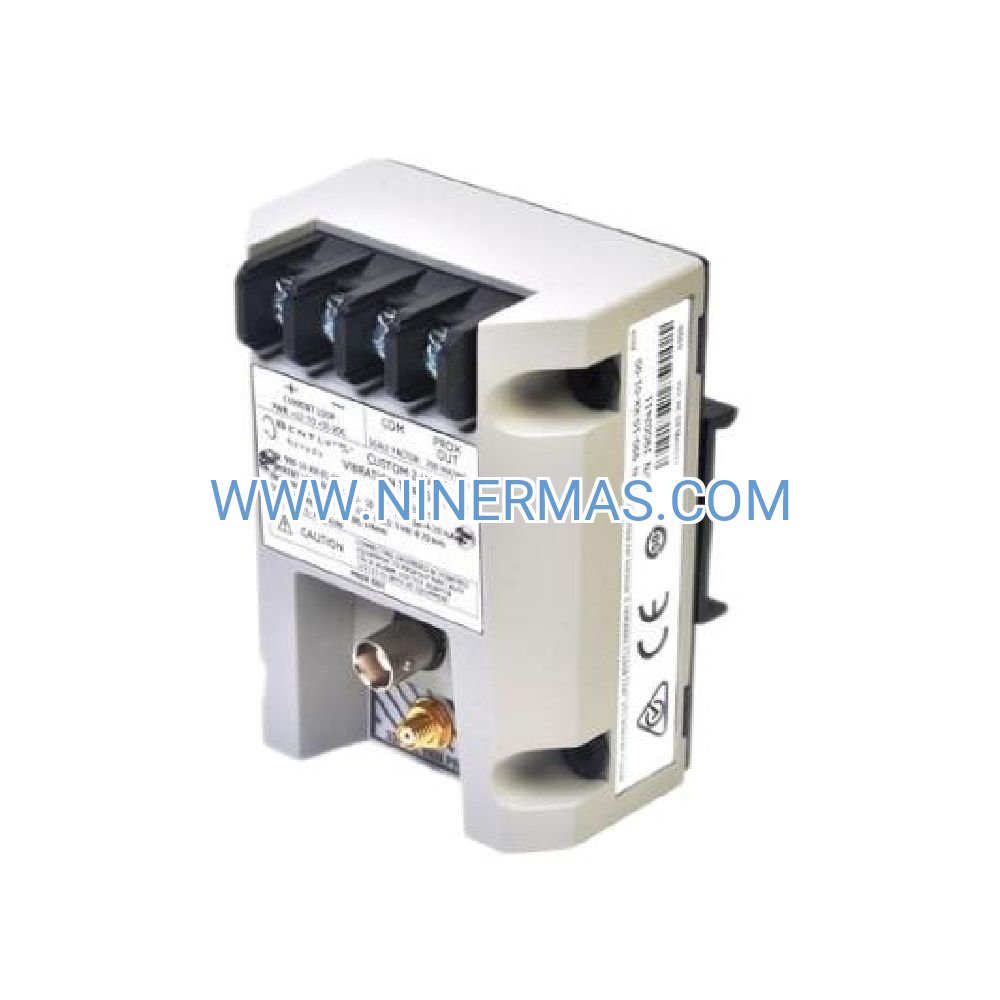
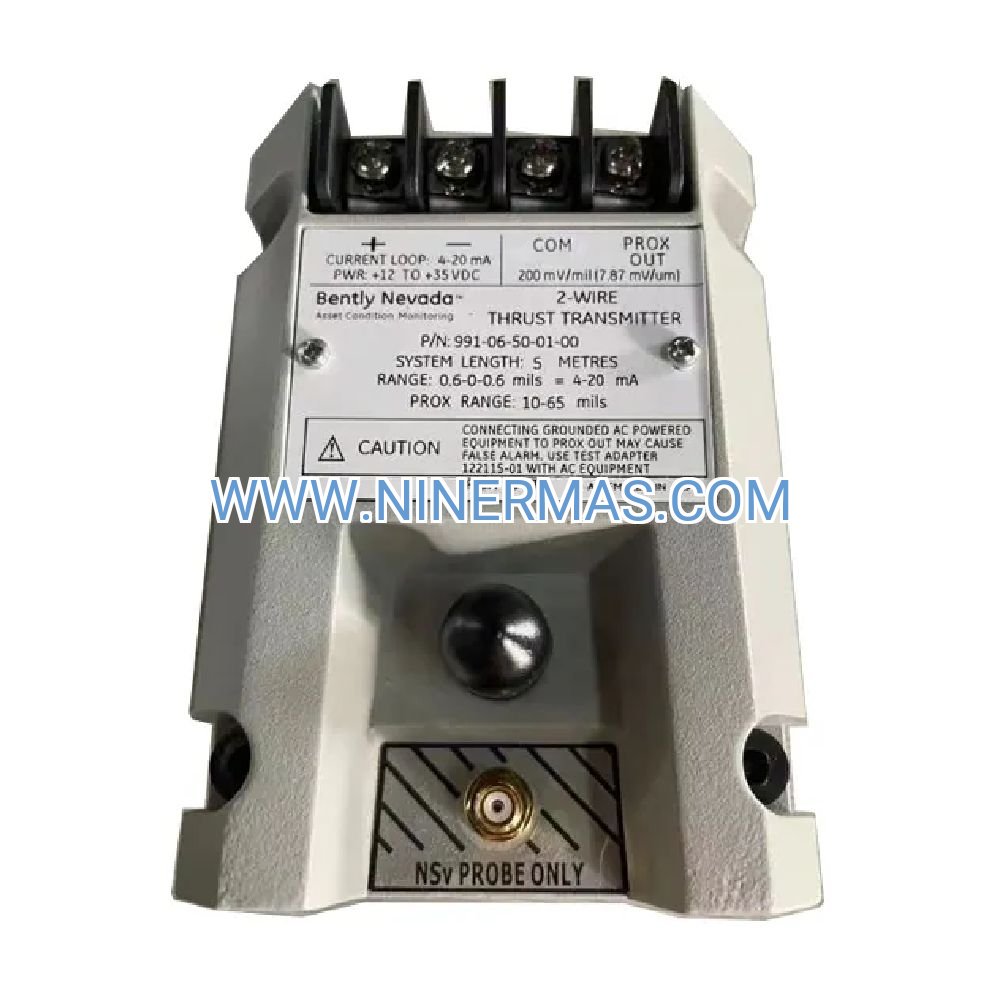
3500/32-01-00 Relay Output Module (Industrial-Grade Machinery Protection Interface)
The Bently Nevada 3500/32-01-00 delivers mission-critical alarm relay functionality for rotating machinery protection systems. Engineered as a four-channel programmable interface, this module transforms vibration monitor alarm states into hardwired relay contact closures—enabling seamless integration with emergency shutdown logic, plant-wide DCS networks, and annunciator systems across power generation, oil & gas, and heavy industrial facilities.
Built on proven 3500 Series architecture, the 3500/32 relay module serves as the vital link between condition monitoring intelligence and automated protection responses. When turbine bearings exceed vibration thresholds or compressor temperatures spike beyond safe limits, this module executes pre-programmed logic to activate shutdown sequences, alert operators, and prevent catastrophic equipment failures—all within 10 milliseconds of alarm detection.
Designed for engineers who demand fail-safe reliability, the 3500/32-01-00 combines flexible voting logic with industrial-rated Form C contacts capable of switching 5A at 250VAC. Whether you're implementing 2-out-of-3 sensor voting for spurious trip prevention or coordinating multi-stage shutdown sequences, this relay module provides the programmable intelligence and electrical robustness required for safety-instrumented systems in the world's most demanding process environments.
✓ Core Capabilities & Technical Advantages
- Programmable Voting Logic: Configure AND/OR logic across up to 16 alarm inputs per relay channel—implement 2oo3 voting, dual-parameter confirmation, or multi-bearing protection schemes to balance safety integrity with spurious trip prevention
- High-Speed Alarm Response: 10ms typical operate time from alarm detection to contact closure ensures rapid machinery protection; 5ms release time minimizes contact bounce during alarm clearing cycles
- Industrial-Rated Contacts: Form C (SPDT) silver alloy contacts rated 5A@30VDC / 5A@250VAC with 1500V isolation; 100,000 electrical operations at full load, 10 million mechanical operations no-load
- Universal Monitor Compatibility: Accepts alarm inputs from all 3500 Series monitors (vibration, temperature, position, speed) within the same rack—consolidate protection logic without external wiring complexity
- Fail-Safe Architecture: Configurable normally-energized or normally-de-energized operation; power loss or module failure automatically triggers relay state change for inherent safety in critical applications
- Flexible Time Delays: Programmable 0-60 second pickup and dropout delays filter transient alarms, prevent contact chatter, and enable sequential shutdown timing without external timers
→ Industrial Application Scenarios
Steam Turbine Emergency Shutdown: In combined-cycle power plants, the 3500/32 monitors radial vibration across four turbine bearings using OR logic—if ANY bearing exceeds 10 mils peak-to-peak, Relay 1 closes to trip the main steam valve within 10ms, preventing blade rubs and catastrophic rotor damage. Latching mode ensures the turbine remains locked out until operators manually reset after root cause analysis.
Compressor 2oo3 Voting Protection: Offshore gas compression platforms deploy three vibration sensors per bearing with 2-out-of-3 voting logic programmed into the 3500/32. This configuration prevents single-sensor failures from causing spurious trips (which cost $500K+ in lost production) while maintaining SIL-2 safety integrity—the relay energizes only when two or more sensors confirm genuine bearing distress.
DCS Integration for Refinery Pumps: Petrochemical refineries wire 3500/32 relay outputs directly into Honeywell TDC or Emerson DeltaV DCS systems. When pump bearing temperatures exceed 85°C AND vibration surpasses 0.5 in/sec simultaneously (AND logic), the relay triggers automated process responses: close suction valve, start standby pump, activate cooling water boost—all coordinated through DCS logic without operator intervention.
Multi-Stage Shutdown Sequencing: Paper mill turbine-generators use four relay channels with staggered time delays: Relay 1 (0s delay) closes steam valve, Relay 2 (5s delay) trips generator breaker, Relay 3 (10s delay) engages turning gear, Relay 4 (15s delay) activates fire suppression. This programmed sequence prevents thermal bowing and ensures safe coastdown without external PLC programming.
Remote Facility Alarm Telemetry: Unmanned pipeline compressor stations connect 3500/32 relay outputs to cellular RTUs (remote telemetry units). When vibration alarms activate, relay closures trigger SMS/email alerts to maintenance teams 200+ miles away, enabling rapid response before minor bearing wear escalates to catastrophic failure and environmental incidents.
Technical Parameters & Selection Criteria
| Parameter | Specification | Selection Notes |
|---|---|---|
| Relay Channels | 4 independent programmable | Each channel operates autonomously with unique logic |
| Contact Type | Form C (SPDT) | Provides NO, NC, and Common for maximum flexibility |
| Contact Rating | 5A @ 30VDC / 250VAC resistive | Derate to 3A for inductive loads; use suppression |
| Switching Capacity | 150W DC / 1250VA AC max | Install 5A fuses for overcurrent protection |
| Electrical Life | 100,000 ops @ rated load | Typical 5-year life at 10 ops/day duty cycle |
| Operate Time | 10ms typical | Suitable for fast-acting ESD applications |
| Voting Inputs | Up to 16 alarms per relay | Source from any monitor in same rack |
| Logic Types | AND, OR, latching, time delays | Configure via 3500 Rack Configuration Software |
| Isolation Voltage | 1500V AC coil-to-contact | Meets industrial safety separation requirements |
| Operating Temp | -30°C to +65°C | Suitable for outdoor enclosures with climate control |
| Power Consumption | 4.5W from rack backplane | No external power required; hot-swap NOT supported |
| Dimensions | 24.4 × 241.8 × 241.3 mm | Single-slot width; installs any slot except Slot 1 |
Selection Guidance: Choose the 3500/32 (4-channel) for applications requiring up to four discrete relay outputs. For higher I/O density, consider the 3500/33 (16-channel) variant. Verify that your 3500 rack has available slots and sufficient backplane power budget (4.5W per module). For SIL-rated applications, deploy redundant modules with diverse alarm sources to achieve required safety integrity levels.
Extended Functionality & System Integration
IoT & Predictive Maintenance Integration: While the 3500/32 provides hardwired relay outputs, it integrates within the broader 3500 ecosystem that supports Ethernet communication via 3500/92 or 3500/95 modules. Relay actuation events can be timestamped and logged to SCADA historians, enabling correlation analysis between alarm patterns and equipment degradation trends for predictive maintenance optimization.
Cybersecurity Considerations: The relay module operates as a passive alarm receiver with no network connectivity, providing inherent cybersecurity advantages for safety-critical functions. Relay logic resides in non-volatile memory programmed via direct USB connection, eliminating remote attack vectors present in networked safety systems.
Customization Options: Factory configuration services available for high-volume deployments—Bently Nevada can pre-program relay logic, apply custom labeling, and perform factory acceptance testing to reduce commissioning time. Contact technical sales for custom firmware or specialized contact materials for extreme environments (high-altitude, cryogenic, corrosive atmospheres).
Delivery Timeline & Service Commitments
Standard Delivery: 3-5 business days for in-stock units via express courier (DHL/FedEx) to major industrial hubs worldwide. Expedited same-day shipping available for emergency outage support—contact our 24/7 technical sales hotline.
Custom Configuration: 10-15 business days for factory-programmed modules with pre-loaded relay logic and custom terminal labeling. Includes factory test report and configuration file backup.
Warranty Coverage: 24-month manufacturer warranty covering defects in materials and workmanship. Warranty includes advance replacement service—receive replacement module before returning defective unit to minimize downtime.
Technical Support: Lifetime access to application engineering support via phone/email. Services include relay logic troubleshooting, voting scheme optimization, contact life analysis, and integration guidance with third-party ESD systems.
Documentation Package: Each module ships with installation manual, wiring diagrams, relay logic programming guide, and 3500 Rack Configuration Software license. Dimensional drawings (DXF/PDF) and 3D STEP models available for panel design integration.
Frequently Asked Questions
Q: Can the 3500/32 relay module interface directly with Siemens or Allen-Bradley safety PLCs for SIL-rated applications?
A: Yes—the Form C relay contacts provide hardwired discrete inputs compatible with all major safety PLC brands (Siemens S7 F-series, AB GuardLogix, Schneider Preventa). For SIL-2 applications, implement redundant 3500/32 modules with diverse alarm sources and configure PLC logic for 1oo2 voting. Contact our safety engineering team for pre-validated integration schematics and proof-test procedures that meet IEC 61508 requirements.
Q: What relay contact suppression methods prevent arcing when switching inductive loads like solenoid valves or contactor coils?
A: For DC inductive loads, install flyback diodes (1N4007 or equivalent) across the load with cathode to positive supply. For AC inductive loads, use RC snubbers (0.1µF capacitor in series with 100Ω resistor) across relay contacts. Proper suppression extends contact life from 50,000 to 100,000+ operations and prevents EMI that can disrupt nearby instrumentation. Refer to Installation Manual Section 4.3 for suppression component selection charts based on load inductance.
Q: How do I configure 2-out-of-3 voting logic to prevent spurious trips from single vibration sensor failures on critical turbines?
A: Using 3500 Rack Configuration Software, assign three vibration monitor alarm outputs (e.g., channels 1-3 from a 3500/42M) to a single relay input list. Set voting mode to "2 out of N" and alarm type to "Danger." The relay energizes only when two or more sensors simultaneously exceed danger setpoints. Add 2-second pickup delay to filter transient spikes. This configuration achieves 99.9%+ spurious trip reduction while maintaining fail-safe protection—validated in 500+ turbine installations worldwide.
Q: What installation requirements ensure reliable relay operation in high-vibration environments like reciprocating compressor skids?
A: Mount the 3500 rack on vibration-isolated panel using rubber grommets or spring isolators to limit transmitted vibration below 0.5g RMS. Torque all terminal screws to 0.5-0.6 N⋅m and apply thread-locking compound. Use stranded wire (not solid) for all relay connections to prevent fatigue failures. Perform annual re-torque inspections in high-vibration applications. The 3500/32 module itself is qualified to 2g vibration per IEC 60068-2-6, but proper mounting practices prevent nuisance alarms from terminal loosening.
Q: Can relay time delays create sequential shutdown logic without external timers or PLC programming?
A: Absolutely—program each of the four relays with staggered pickup delays to create automated shutdown sequences. Example: Relay 1 (0s delay) closes steam valve, Relay 2 (5s delay) trips breaker, Relay 3 (10s delay) engages turning gear, Relay 4 (15s delay) activates lube oil pump. All relays monitor the same danger alarm input but execute actions at different times. This embedded sequencing eliminates external logic and reduces commissioning complexity for packaged equipment OEMs.
Q: How often should relay contacts be inspected or replaced in critical machinery protection applications?
A: Perform annual functional testing by manually actuating relays via configuration software and measuring contact resistance (should be <0.1Ω). For high-duty applications (>10 operations/day), measure operate time quarterly—increasing operate time indicates contact wear. Replace module when operate time exceeds 20ms or contact resistance exceeds 0.5Ω. Typical service life is 15-20 years in low-duty applications (<5 ops/day) or 5-7 years in high-duty ESD applications. Stock one spare module per site for 24-hour replacement capability.
Request Technical Consultation & Pricing
Our application engineers are available to discuss your machinery protection requirements, recommend optimal relay logic configurations, and provide integration support for complex multi-unit installations. Whether you're retrofitting legacy systems or designing new protection schemes, we deliver the technical expertise and genuine OEM components to ensure your critical assets remain protected.
Contact our industrial automation specialists:
? Email: sale@ninermas.com
? Phone: +0086 187 5021 5667
? Technical Resources: https://ninermas.com
Request a detailed application note on 2oo3 voting implementation, receive CAD drawings for panel integration, or schedule a remote configuration session with our certified 3500 Series engineers. Volume pricing available for multi-site deployments and OEM partnerships.
© 2026 NINERMAS COMPANY LIMITED. All rights reserved.
Original Source: https://ninermas.com
Contact: sale@ninermas.com | +0086 187 5021 5667
PDF Specification
Download PDF file here:
Click to Download PDF

Contact Info
-
Address:22 / F, South Wo Hang building, 148 Wing Lok Street, Sheung Wan, Western District, Hong Kong
-
Phone:+8618750215667
-
Email: