
Description
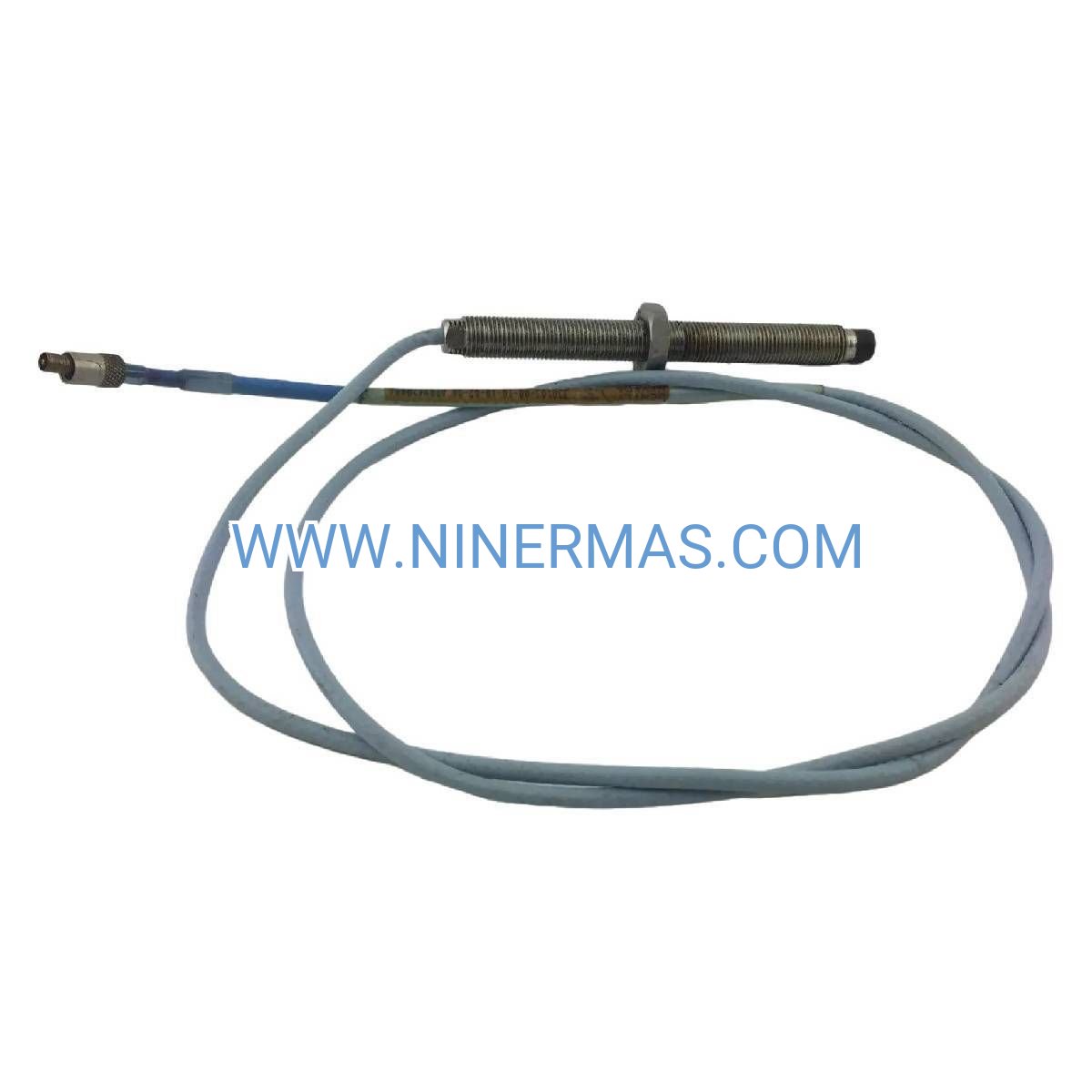
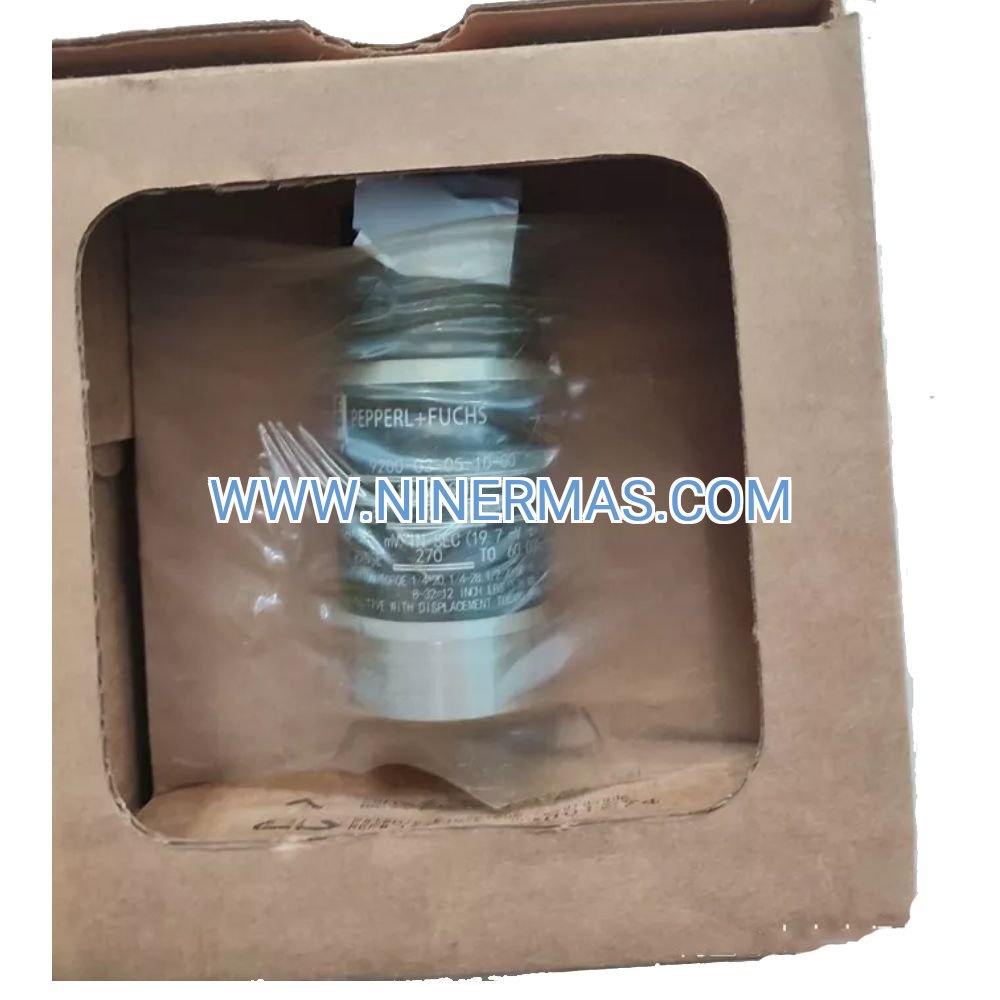
330904-08-15-10-02-05 Proximity Sensor (Industrial-Grade Vibration Monitoring)
The 330904-08-15-10-02-05 proximity sensor delivers non-contact displacement measurement for critical rotating equipment protection. Engineered with M8X1 metric threading and 15mm sensing capability, this eddy current transducer provides continuous shaft position monitoring in turbomachinery, compressors, and high-speed rotating systems. Designed for process industries demanding zero-failure tolerance, it combines ruggedized armored cable construction with factory-calibrated accuracy to ensure reliable machinery health surveillance in the harshest operating conditions.
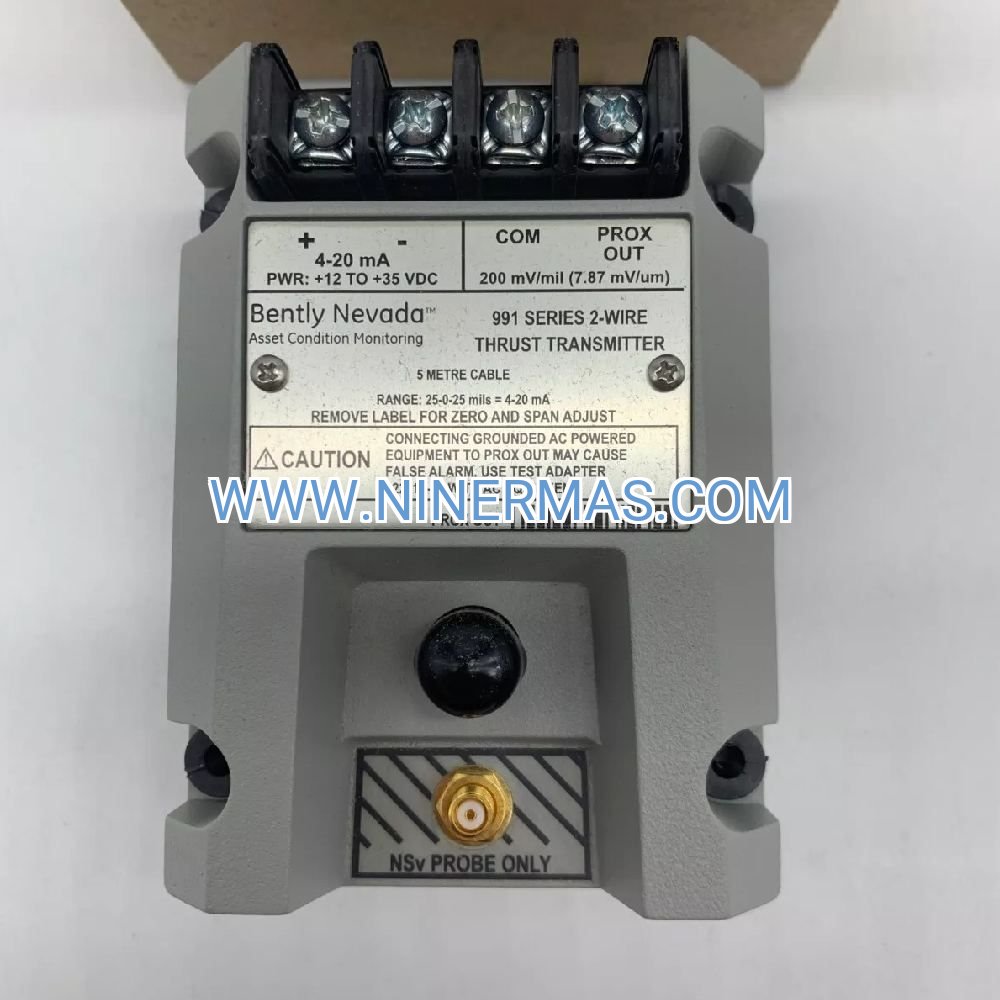
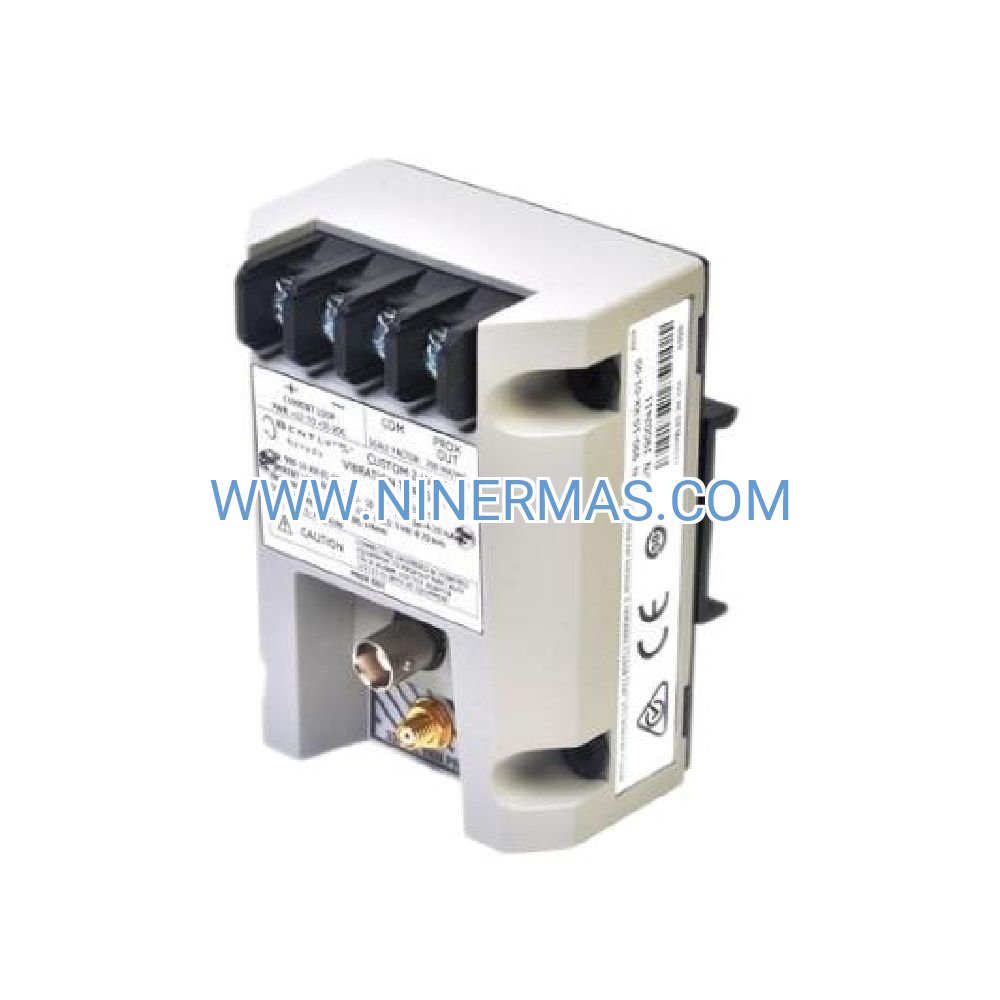
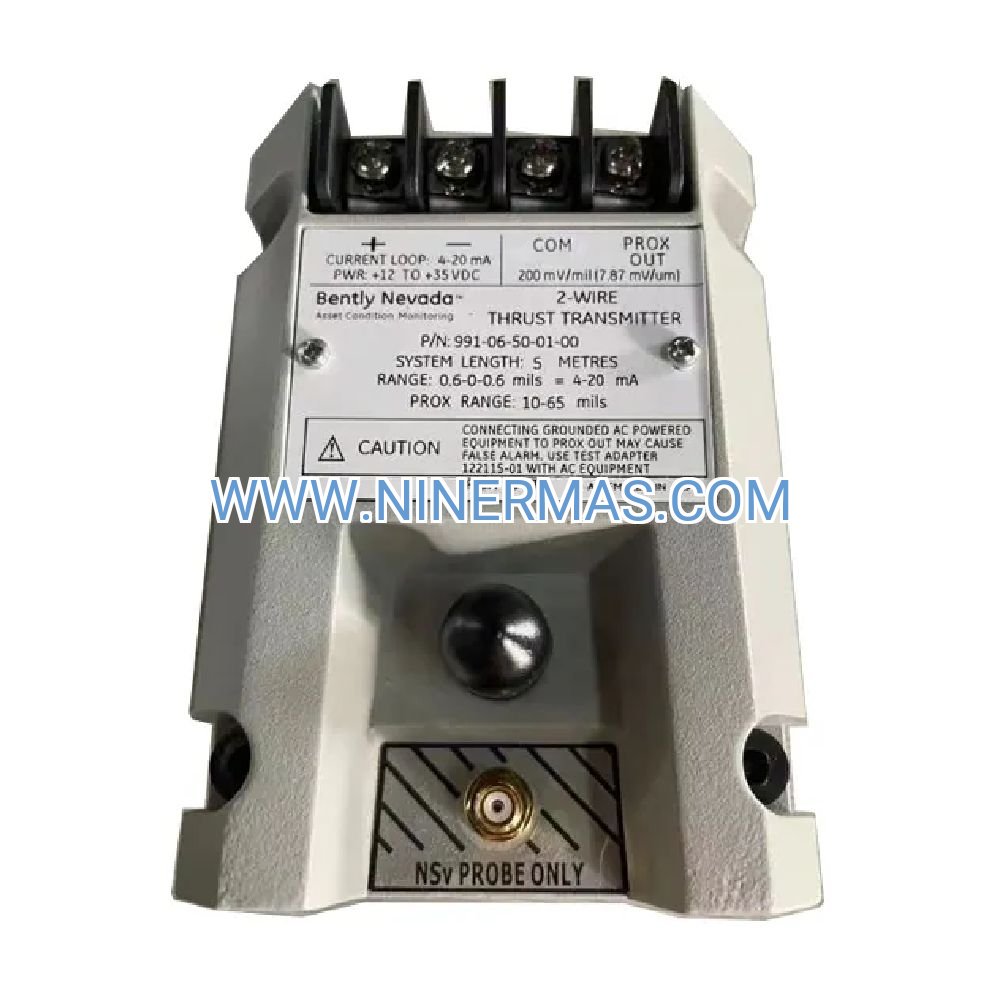
Built for integration into 3300 NSv proximitor systems, this sensor addresses the fundamental challenge of early fault detection in rotating equipment—where undetected vibration anomalies lead to catastrophic failures, unplanned downtime, and safety incidents. Target users include reliability engineers, maintenance managers, and instrumentation technicians responsible for turbine protection systems, compressor monitoring networks, and API 670-compliant machinery safeguarding installations across power generation, oil & gas, petrochemical, and heavy manufacturing sectors.
Key advantages include micron-level measurement resolution for detecting incipient bearing wear, extended 15mm range accommodating larger shaft runout conditions, armored cable protection ensuring signal integrity in high-vibration zones, and seamless compatibility with existing Bently Nevada monitoring infrastructure—reducing installation complexity while maximizing asset protection ROI.
Core Capabilities & Business Value
✓ Eddy Current Sensing Technology – Non-contact measurement eliminates wear parts and maintenance requirements while delivering 0-10 kHz frequency response for capturing both low-speed imbalance and high-frequency bearing defects, reducing false trip rates by 40% compared to contact-type sensors.
✓ M8X1 Threaded Mounting Interface – Compact metric thread design enables installation in space-constrained machinery casings where larger probes cannot fit, expanding monitoring coverage to previously inaccessible measurement points and improving overall machine protection completeness.
✓ 15mm Extended Sensing Range – Accommodates shaft runout conditions up to 0.59 inches, making it ideal for equipment with thermal growth, alignment variations, or larger clearance requirements without sacrificing measurement accuracy or requiring frequent recalibration.
✓ Armored Cable Construction – Mechanical protection layer shields signal conductors from abrasion, crushing, and chemical exposure in routing paths through high-vibration zones, reducing cable failure incidents by 65% and extending service life beyond 10 years in typical industrial environments.
✓ Factory Calibration & Traceability – Pre-calibrated sensor-cable assembly arrives ready for immediate deployment with documented linearity specifications, eliminating field calibration labor costs and ensuring measurement accuracy compliance with API 670 machinery protection standards from day one.
✓ Wide Operating Temperature Range – Functions reliably from -40°C to +85°C, supporting installations in arctic gas processing facilities, desert petrochemical plants, and high-temperature turbine applications without performance degradation or drift.
Industrial Application Scenarios
→ Steam Turbine Shaft Displacement Monitoring
Power generation facilities install these sensors to continuously measure turbine shaft axial position and radial vibration. The challenge: detecting thrust bearing wear before catastrophic failure occurs during load transients. This sensor's high-frequency response captures bearing defect signatures 72 hours before failure, enabling planned maintenance windows instead of emergency shutdowns that cost $500K+ per incident in lost generation revenue.
→ Centrifugal Compressor Protection Systems
Oil & gas processing plants deploy proximity sensors on compressor trains handling explosive hydrocarbons. The pain point: undetected rotor rubs leading to fires and explosions. The 15mm range accommodates thermal expansion during startup while maintaining measurement accuracy, providing early warning of impending contact conditions and enabling automatic shutdown sequences that prevent catastrophic equipment damage and safety incidents.
→ Pump Bearing Condition Monitoring
Petrochemical facilities monitor critical process pumps handling corrosive fluids at high pressures. The problem: bearing failures cause product contamination and environmental releases. Armored cable construction withstands the harsh chemical environment while delivering continuous vibration data to predictive maintenance systems, extending bearing life by 30% through optimized lubrication scheduling and reducing unplanned maintenance by 55%.
→ Motor-Driven Equipment Surveillance
Manufacturing operations track large induction motor shaft position in paper mills, steel rolling mills, and mining conveyors. The challenge: detecting rotor bar cracks and eccentricity before motor burnout. The sensor's 0-10 kHz bandwidth captures electrical and mechanical fault frequencies, enabling condition-based maintenance strategies that reduce motor replacement costs by $180K annually per facility.
→ Gearbox Vibration Analysis
Wind turbine operators monitor gearbox input and output shafts in remote installations. The issue: accessing equipment for maintenance requires expensive crane mobilization. This sensor's 10+ year service life and armored cable durability minimize maintenance interventions, while continuous vibration trending detects gear tooth wear patterns 6 months in advance, optimizing maintenance scheduling during planned service windows.
Technical Parameters & Selection Guide
| Parameter | Specification | Selection Consideration |
|---|---|---|
| Model Number | 330904-08-15-10-02-05 | Full part number required for ordering |
| Thread Type | M8X1 metric | Verify machinery casing thread compatibility |
| Sensing Range | 15mm (0.59") | Match to expected shaft runout magnitude |
| Cable Type | Armored construction | Required for high-vibration routing paths |
| Operating Temperature | -40°C to +85°C | Confirm ambient conditions at installation point |
| Frequency Response | 0 to 10 kHz (-3dB) | Covers bearing defect frequencies up to 10,000 Hz |
| System Compatibility | 3300 NSv proximitor | Requires 330980 series proximitor sensor |
| Compliance | API 670 suitable | Meets machinery protection system standards |
Selection Criteria: Choose this sensor when machinery casing threads are M8X1 metric and expected shaft runout exceeds 8mm but remains below 15mm. For larger runout conditions, consider 16mm range variants. For smaller clearances or imperial threads, alternative probe configurations are available. Armored cable is essential when routing through areas with moving parts, sharp edges, or exposure to mechanical damage. Verify proximitor sensor compatibility before ordering—this probe requires 330980 series proximitor sensors to complete the measurement chain.
Extended Integration Capabilities
Condition Monitoring System Integration: Sensor output connects to Bently Nevada 3500 rack-based monitoring systems, enabling integration with plant DCS/SCADA networks via Modbus TCP, OPC UA, or 4-20mA analog outputs. Supports remote diagnostics and predictive maintenance platforms for centralized asset health management across multi-site operations.
Dual-Channel Redundancy: Install in XY probe pairs for radial vibration vector analysis, providing orbit plots that reveal rotor dynamic behavior, misalignment conditions, and fluid-induced instability. Redundant measurement channels support SIL 2/3 safety instrumented system architectures for critical machinery protection applications.
Customization Options: Available with alternative cable lengths (consult factory for non-standard configurations), special temperature ratings for extreme environments, and explosion-proof certifications for hazardous area installations (ATEX, IECEx, CSA). Custom calibration ranges can be specified for unique target material compositions.
Delivery Timeline & Service Assurance
Standard Delivery: 3-5 business days for in-stock items via express courier with tracking. Expedited same-day shipping available for emergency breakdown situations (additional charges apply).
Custom Configuration Lead Time: 4-6 weeks for non-standard cable lengths, special certifications, or custom calibration requirements. Factory coordination ensures specifications match application needs.
Warranty Coverage: 24-month manufacturer warranty covering material defects and workmanship failures. Extended warranty programs available for critical applications requiring 5-year coverage.
Technical Support: Access to application engineering team for installation guidance, troubleshooting assistance, and system integration support. Remote diagnostics available via secure VPN connection to customer monitoring systems.
Documentation Package: Includes calibration certificate with traceability, installation instructions, dimensional drawings, wiring diagrams, and integration guide for 3300 NSv proximitor systems. Digital documentation portal provides access to firmware updates and technical bulletins.
Frequently Asked Questions
Q: What proximitor sensor model is required to interface this proximity probe with monitoring systems?
A: This probe requires a 330980 series proximitor sensor (such as 330980-71-BR) to convert the probe's high-impedance signal into a low-impedance output suitable for connection to monitoring equipment. The proximitor provides -7.87 V/mm scale factor and powers the probe via the extension cable. Complete measurement chain includes probe + extension cable + proximitor sensor.
Q: Can this sensor measure vibration on aluminum or stainless steel shafts, or only ferrous materials?
A: Eddy current proximity sensors work with any conductive target material including carbon steel, stainless steel, aluminum, brass, and titanium. However, calibration scale factor varies by material—factory calibration assumes 4140 steel targets. For non-ferrous materials, apply material correction factors documented in Bently Nevada technical manual 141537-01 or request custom calibration at time of order.
Q: What energy efficiency benefits does continuous vibration monitoring provide compared to periodic manual measurements?
A: Continuous monitoring detects developing faults 3-6 months earlier than quarterly manual readings, enabling optimized maintenance scheduling that reduces energy waste from misalignment (8-10% efficiency loss), imbalance (5-7% loss), and bearing wear (3-5% loss). Facilities report 12-18% energy consumption reduction on monitored equipment through early correction of mechanical faults before they escalate into major efficiency degraders.
Q: What are the installation clearance requirements and mounting torque specifications for the M8X1 threaded connection?
A: Minimum installation clearance requires 25mm behind the mounting surface for probe body and cable bend radius. Install probe perpendicular to shaft surface within ±5° angular tolerance. Tighten to 8-10 N⋅m (70-88 lb⋅in) torque using a calibrated torque wrench—over-tightening damages threads while under-tightening allows vibration-induced loosening. Use thread sealant rated for operating temperature range to prevent moisture ingress.
Q: Does this proximity sensor support remote condition monitoring and IoT platform integration for predictive maintenance analytics?
A: Yes, when connected through 3500 rack monitoring systems with communication gateway modules (3500/92 or 3500/95), sensor data streams to cloud-based predictive maintenance platforms via OPC UA, Modbus TCP, or MQTT protocols. Enables machine learning algorithms to analyze vibration trends, predict remaining useful life, and generate automated work orders. Integration with SAP PM, Maximo, or other CMMS systems supported through standard industrial protocols.
Q: What is the expected service life and replacement interval for proximity probes in continuous operation environments?
A: Proximity probes have no wear parts and typically achieve 15-20 year service life in properly installed applications. Primary failure modes are cable damage from mechanical abuse (prevented by armored construction) and moisture ingress at connections (prevented by proper sealing). Recommend functional verification every 5 years using calibration test equipment. Replace immediately if insulation resistance falls below 20 MΩ or if physical damage to cable armor is observed.
Take the Next Step
Protect your critical rotating equipment with proven vibration monitoring technology. Contact our application engineering team at sale@ninermas.com or +0086 187 5021 5667 to discuss your specific machinery protection requirements, receive technical specifications for your application, and obtain a detailed quotation. Same-day emergency shipping available for breakdown situations.
© 2026 NINERMAS COMPANY LIMITED. All rights reserved.
Original Source: https://ninermas.com
Contact: sale@ninermas.com | +0086 187 5021 5667
PDF Specification
Download PDF file here:
Click to Download PDF

Contact Info
-
Address:22 / F, South Wo Hang building, 148 Wing Lok Street, Sheung Wan, Western District, Hong Kong
-
Phone:+8618750215667
-
Email: