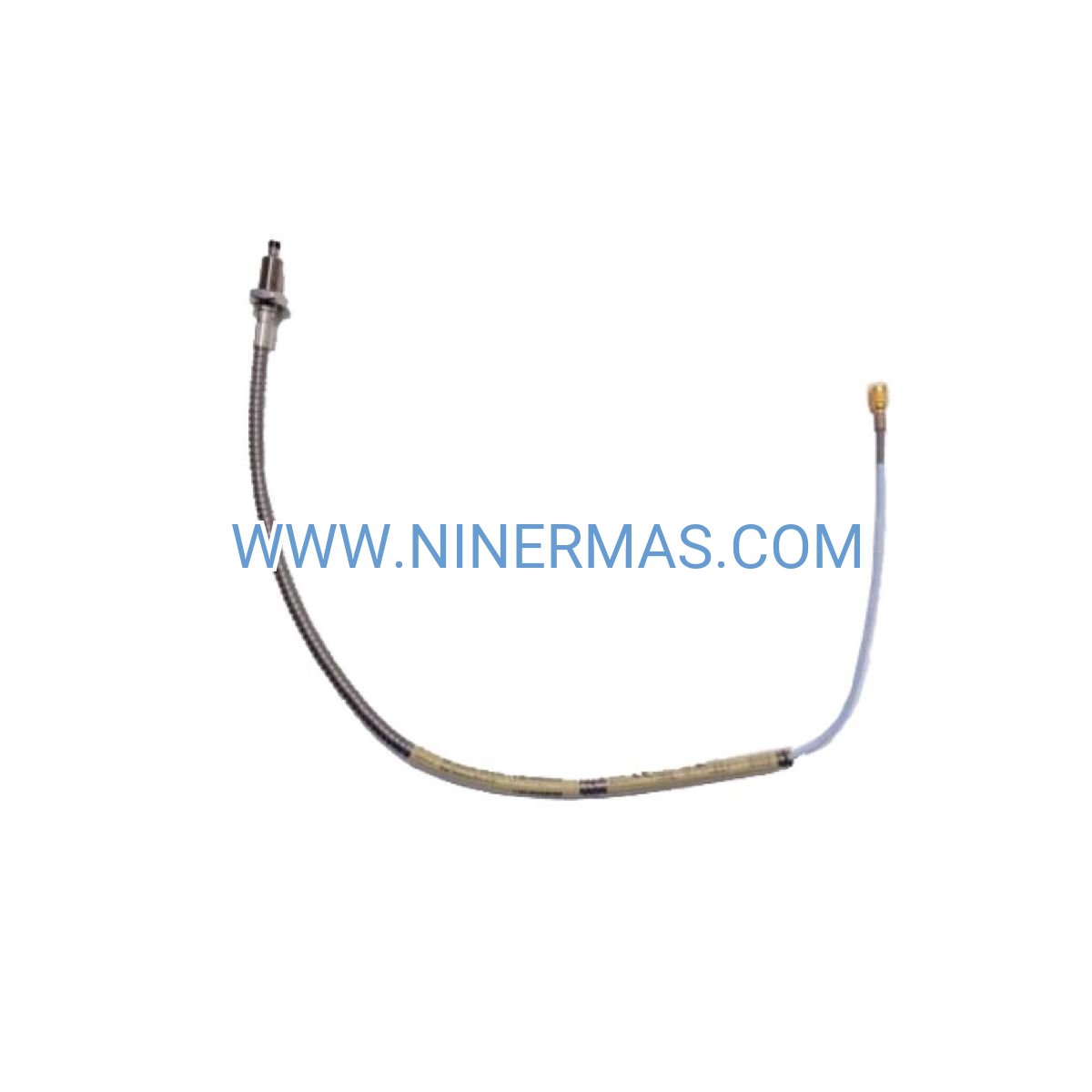
Description
Industrial Proximity Probe for Rotating Machinery Vibration Monitoring
The 330904-00-12-05-02-RU is an industrial-grade proximity probe designed for non-contact displacement and vibration measurement in critical rotating equipment. Utilizing eddy current sensing technology with M8x1 threaded mounting and armored cable protection, this sensor delivers continuous shaft position monitoring, radial vibration analysis, and axial displacement tracking in turbines, compressors, pumps, and motor-driven systems.
Engineered for power generation plants, petrochemical facilities, oil & gas processing units, and heavy manufacturing environments, this probe addresses common challenges including bearing wear detection, shaft misalignment identification, rotor imbalance diagnosis, and thrust position monitoring. It helps prevent unexpected equipment failures, reduces unplanned downtime, minimizes manual inspection requirements, and enables early fault detection before catastrophic damage occurs.
Through standardized design with customizable cable lengths and mounting configurations, this proximity probe offers reliable performance, wide temperature tolerance, electromagnetic interference immunity, and seamless integration with existing monitoring infrastructure. Ideal for design engineers, maintenance teams, system integrators, and plant operators seeking to implement condition-based maintenance strategies. Contact our application engineers for system configuration guidance and technical specifications tailored to your monitoring requirements.
Core Features & Technical Advantages
- Non-Contact Eddy Current Sensing
Utilizes electromagnetic induction principle to measure target displacement without physical contact, eliminating sensor wear and enabling maintenance-free operation over decades of continuous service in harsh industrial conditions. - Wide Frequency Response Range
Captures vibration signals from DC to 10 kHz, covering slow roll conditions, synchronous vibration, subsynchronous instabilities, and high-frequency bearing defects, providing comprehensive machinery health insight across all operating speeds. - Armored Cable Construction
Features ruggedized cable protection (RU configuration) that withstands mechanical impact, chemical exposure, abrasion, and flexing stress, ensuring signal integrity in mobile equipment, high-vibration environments, and corrosive atmospheres. - Extended Temperature Capability
Operates reliably from -40°C to +125°C, suitable for cryogenic applications, steam turbine casings, exhaust gas environments, and outdoor installations across extreme climate zones without performance degradation. - System Integration Compatibility
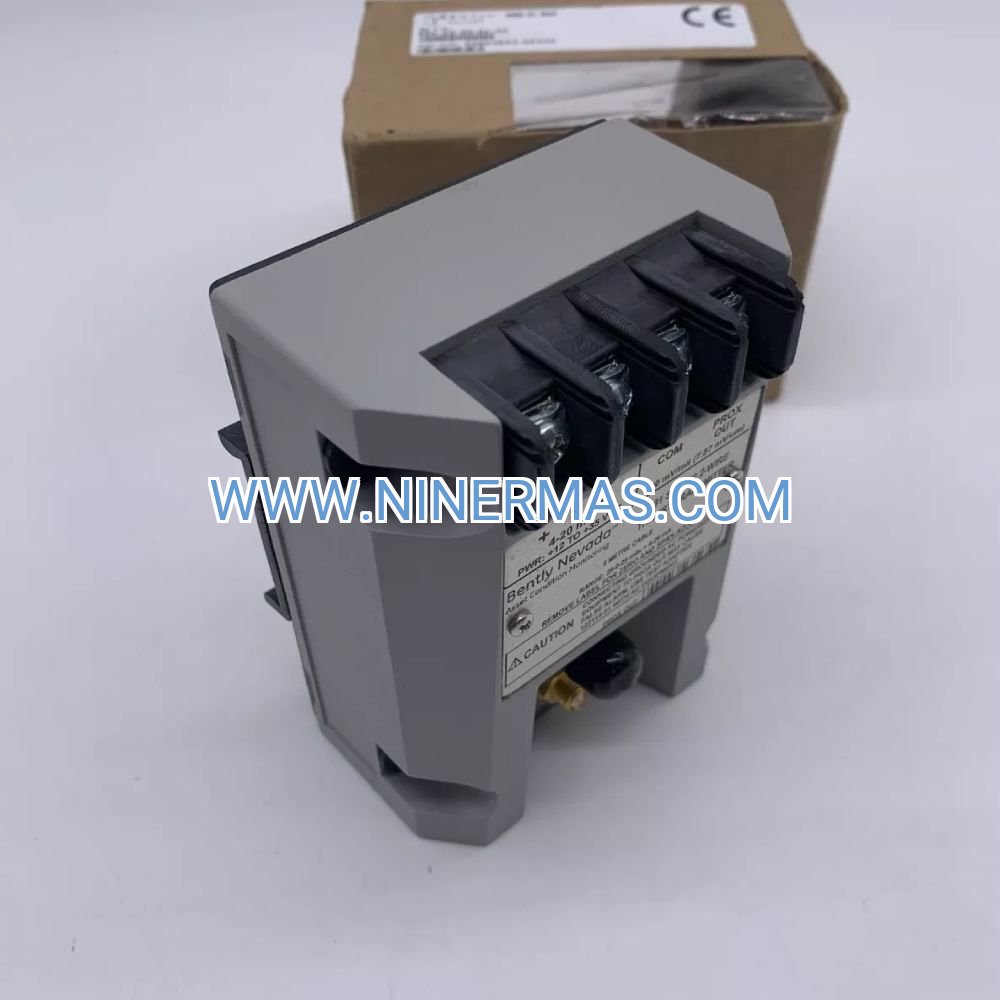
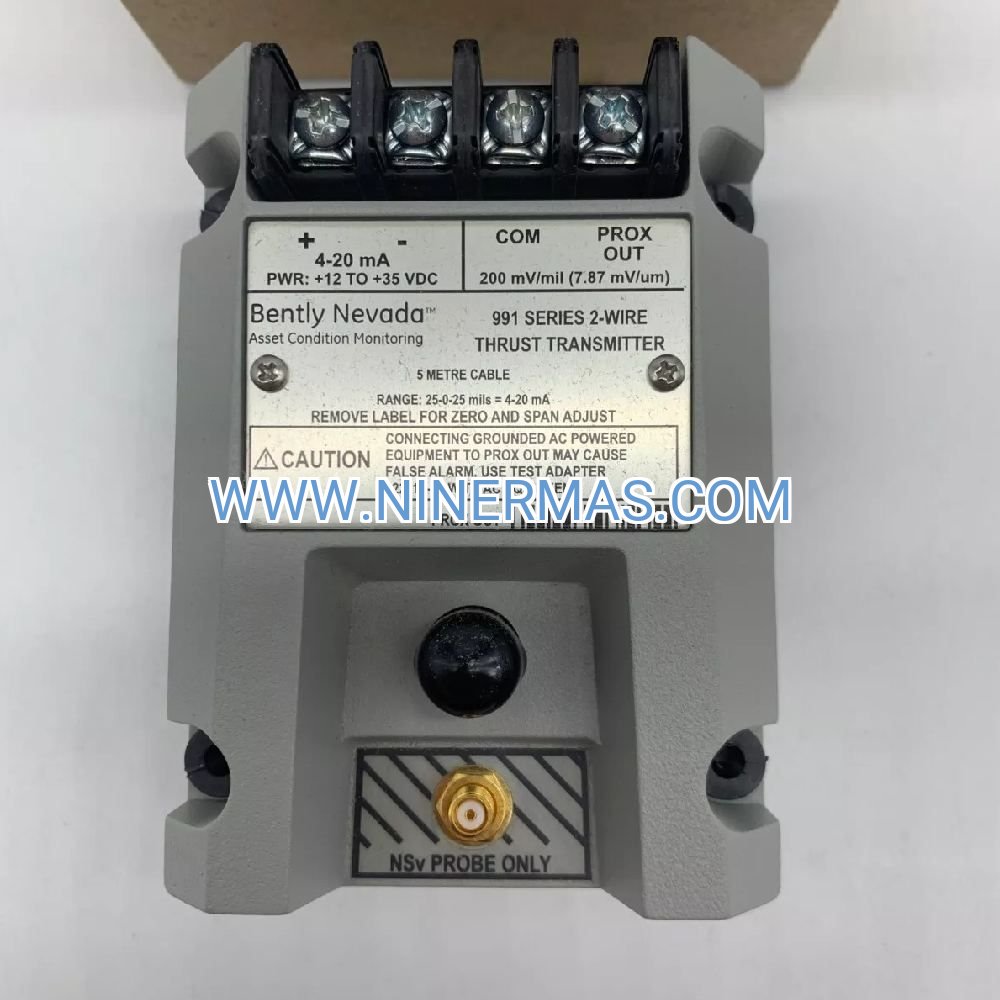
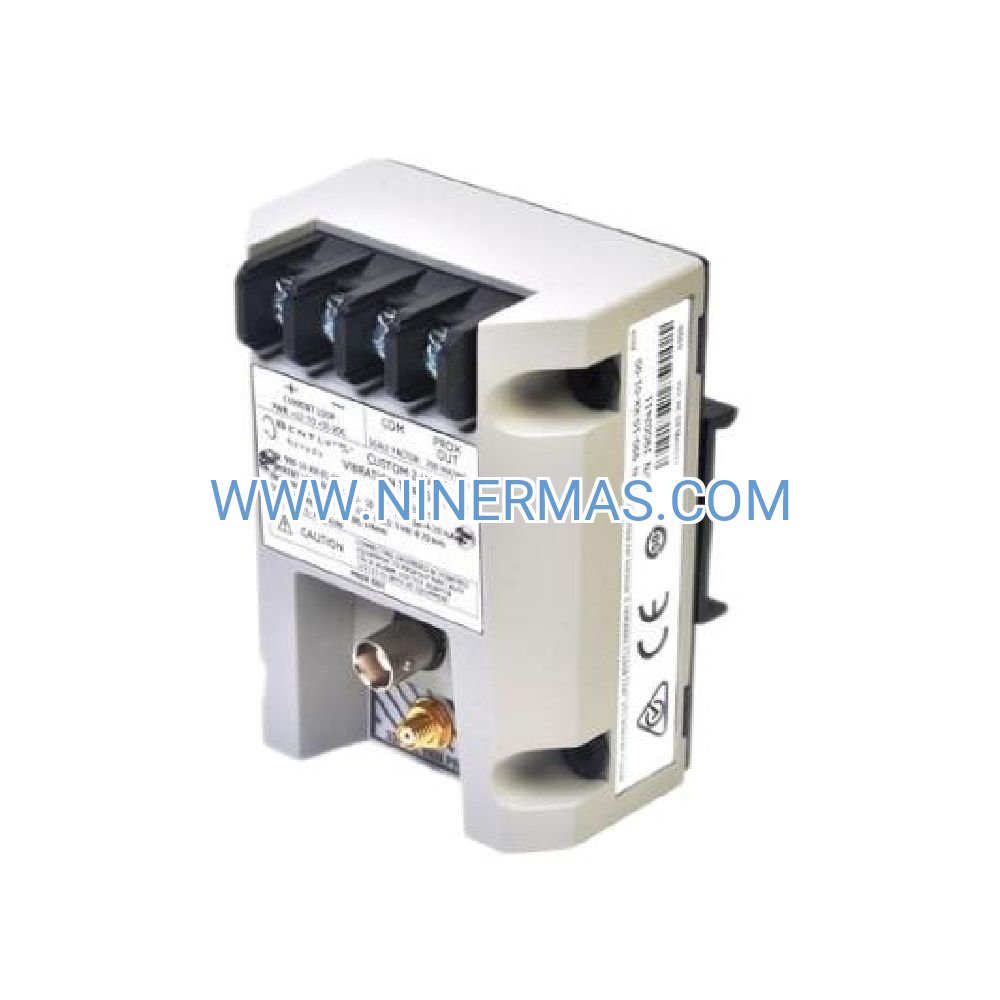
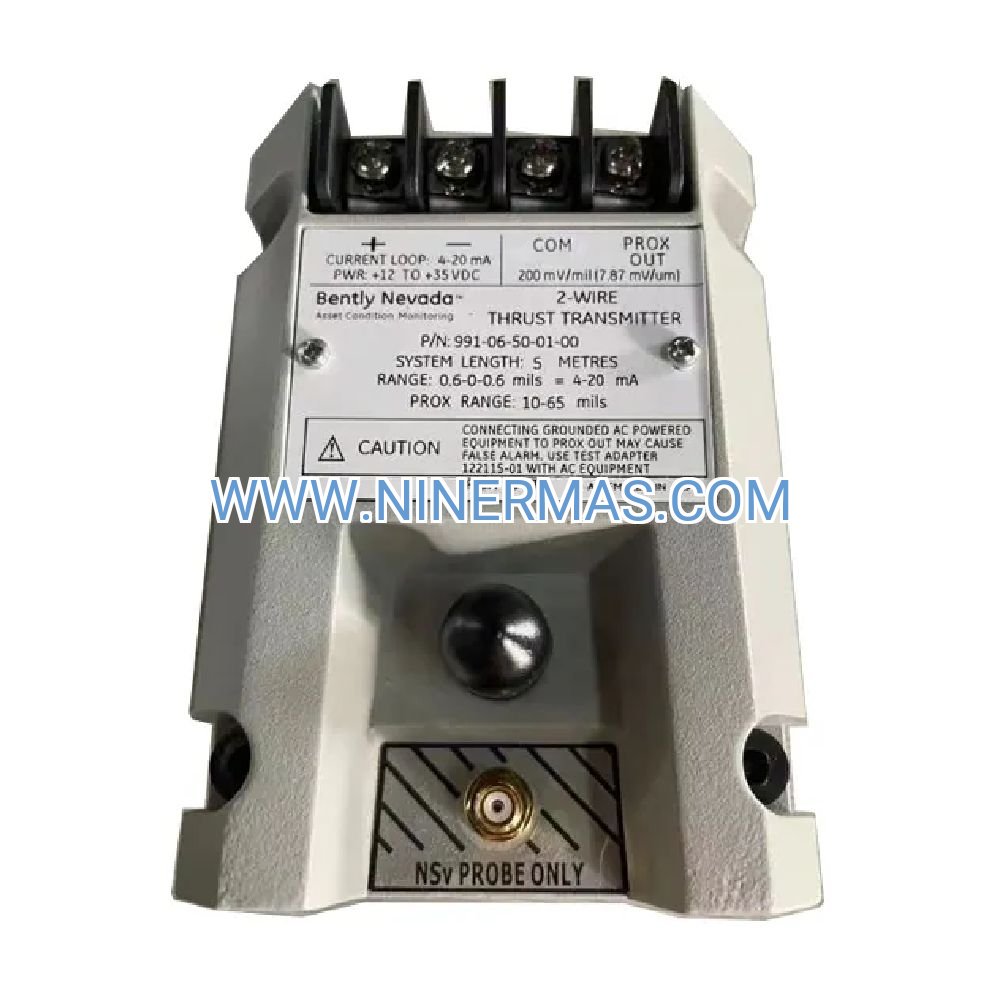
Seamlessly interfaces with 3300 XL proximitor systems, distributed control systems (DCS), programmable logic controllers (PLC), and SCADA platforms via standard 4-20mA or -10V to +10V output signals for centralized monitoring. - Compact 12mm Case Design
Space-efficient form factor enables installation in confined bearing housings, tight radial clearances, and retrofit applications where mounting space is limited, without compromising sensing performance or mechanical strength.
Typical Application Scenarios
This proximity probe is specifically designed for installations requiring precise displacement measurement, continuous vibration surveillance, and long-term reliability in demanding industrial environments, particularly in:
- Steam & Gas Turbine Monitoring
Measures journal bearing clearance, differential expansion, rotor eccentricity, and thrust position in power generation turbines, enabling early detection of rubs, thermal bows, and bearing degradation to prevent forced outages and blade damage. - Centrifugal Compressor Protection
Monitors radial shaft vibration and axial position in multi-stage compressors used in natural gas processing, air separation, and refrigeration systems, protecting against surge conditions, seal failures, and aerodynamic instabilities that lead to catastrophic failures. - Large Motor & Generator Sets
Tracks rotor position and vibration in synchronous motors, induction motors above 500 HP, and hydro/wind generators, identifying electrical faults, mechanical looseness, and foundation issues before they escalate into major repairs. - Critical Process Pumps
Provides continuous surveillance of boiler feed pumps, pipeline pumps, and refinery process pumps where unplanned shutdowns result in production losses, ensuring optimal clearances and detecting cavitation, impeller imbalance, and coupling misalignment. - Industrial Gearbox & Drive Systems
Enables condition monitoring of high-speed gearboxes in rolling mills, mining conveyors, and cement kilns, capturing gear mesh frequencies, bearing tones, and shaft deflections to schedule maintenance during planned outages rather than emergency stops.
Technical Specifications & Selection Guide
To facilitate engineering design and system specification, we provide detailed technical parameters for the 330904-00-12-05-02-RU proximity probe. Custom configurations including alternative cable lengths, connector types, and mounting accessories are available for project-specific requirements.
| Parameter | Specification |
|---|---|
| Model Number | 330904-00-12-05-02-RU |
| Thread Type | M8 × 1.0 metric fine thread |
| Case Length | 12 mm (0.47 inches) |
| Sensing Range | 0 to 80 mils (0 to 2.0 mm) typical |
| Linear Range | 20 to 60 mils (0.5 to 1.5 mm) from target |
| Frequency Response | DC to 10 kHz (-3dB) |
| Operating Temperature | -40°C to +125°C (-40°F to +257°F) |
| Cable Type | Armored extension cable (RU configuration) |
| Cable Length | Standard 5 meters (custom lengths available) |
| System Compatibility | 3300 XL NSv Proximitor System |
| Housing Material | Stainless steel (corrosion resistant) |
| Environmental Rating | IP67 when properly installed |
| Target Material | Ferrous metals (steel, iron alloys) |
| Vibration Resistance | 20g peak, 10-2000 Hz per IEC 60068-2-6 |
Selection Considerations: When specifying proximity probes for your application, consider the following factors: maximum shaft displacement during transient conditions, required measurement bandwidth based on machine speed, ambient temperature at probe mounting location, available radial clearance for probe installation, target surface material and finish quality, cable routing path and required protection level, and proximitor system voltage and output requirements. For assistance with probe selection, gap voltage calibration, or system integration, please provide your machinery specifications including shaft diameter, operating speed range, bearing type, expected vibration levels, and environmental conditions. Our application engineers will recommend the optimal sensor configuration and mounting hardware for your specific monitoring needs.
Advanced Configuration Options
Beyond standard proximity measurement, the 330904-00-12-05-02-RU supports enhanced monitoring capabilities when integrated with modern condition monitoring platforms:
- Dual-Channel Radial Vibration Analysis: Install two probes at 90° orientation (X-Y configuration) to generate orbit plots, phase angle measurements, and directional vibration vectors for comprehensive rotor dynamic analysis.
- Keyphasor Reference Integration: Combine with once-per-revolution keyphasor probes to enable synchronous vibration tracking, run-up/coast-down Bode plots, polar plots, and phase-resolved vibration analysis for precise fault diagnosis.
- Differential Expansion Monitoring: Pair axial position probes on rotor and casing to measure thermal growth differences in steam turbines, preventing rubs during startup and shutdown transients.
- Remote Monitoring & Diagnostics: Connect to wireless vibration transmitters or IIoT gateways for cloud-based analytics, automated alarm notification, trend analysis, and predictive maintenance scheduling without on-site personnel.
Delivery, Service & Quality Assurance
Lead Time: Standard configuration units ship from stock within 3-5 business days. Custom cable lengths, special connectors, or high-temperature variants require 10-15 business days for manufacturing and quality testing.
Warranty Coverage: All proximity probes include a comprehensive 18-month warranty from shipment date, covering defects in materials, workmanship, and calibration accuracy. Extended warranty programs available for critical applications.
Installation Support: Remote technical guidance provided at no charge, including gap voltage verification, cable termination procedures, and proximitor system setup. On-site commissioning and calibration services available in major industrial regions (quoted separately based on location and scope).
Documentation Package: Each probe ships with complete technical documentation including dimensional drawings, electrical connection diagrams, calibration certificates, installation instructions, gap voltage curves, and recommended mounting torque specifications. Digital copies available in PDF format for engineering archives and maintenance manuals.
Quality Certifications: Manufactured under ISO 9001:2015 quality management system with full traceability. Calibration performed using NIST-traceable standards. Material certifications and test reports available upon request for critical service applications.
Frequently Asked Questions
Q: How do I integrate this proximity probe with my existing vibration monitoring system?
A: The probe connects to a 3300 XL proximitor module which provides -24VDC excitation and converts the probe's RF signal into a calibrated DC voltage output (typically -10V to +10V or 4-20mA). This output can be wired directly to PLC analog input cards, DCS systems, or dedicated vibration monitors. Ensure your proximitor system voltage matches the probe specifications and verify cable length does not exceed maximum system capacity (typically 9 meters total for probe + extension cable).
Q: What is the optimal installation gap for accurate vibration measurement?
A: The recommended operating gap is 40 mils (1.0 mm) from the target surface, which positions the probe in the center of its linear range. This allows ±20 mils of shaft movement in each direction before approaching non-linear regions. During installation, use a feeler gauge or gap setting fixture to achieve precise positioning, then lock the probe with the appropriate torque (typically 5-7 Nm for M8 threads). Always verify gap voltage after installation using a digital voltmeter at the proximitor output.
Q: Can this probe measure vibration on non-ferrous shafts like stainless steel or titanium?
A: Eddy current proximity probes require electrically conductive targets, with optimal performance on ferrous materials (carbon steel, alloy steel). Stainless steel shafts (300-series austenitic) have lower magnetic permeability and reduced sensitivity—expect 30-50% reduction in linear range. Titanium and aluminum shafts provide minimal response and are not recommended. For non-ferrous applications, consider alternative technologies such as capacitance probes or laser displacement sensors.
Q: How many probes are needed for complete turbine vibration monitoring?
A: A typical single-bearing monitoring configuration uses two radial probes (X-Y orientation at 90°) plus one axial probe for thrust position, totaling three probes per bearing. For a two-bearing turbine, this requires six proximity probes plus one keyphasor probe for phase reference. High-value machines may add differential expansion probes, eccentricity probes, and casing vibration sensors. Consult API 670 or ISO 7919 standards for machinery-specific monitoring requirements.
Q: What maintenance is required for proximity probes during operation?
A: Proximity probes are maintenance-free sensors with no moving parts or consumables. Recommended practices include: quarterly verification of gap voltage to detect target surface corrosion or probe drift, annual cable insulation resistance testing (>100 MΩ to ground), inspection of cable armor for mechanical damage during major outages, and verification of mounting torque if vibration levels exceed design limits. Typical service life exceeds 20 years in properly designed installations.
Q: Does this probe support remote condition monitoring and predictive analytics platforms?
A: Yes, when connected to modern vibration monitoring systems with Ethernet, Modbus, or OPC-UA connectivity, the probe data can be streamed to cloud-based analytics platforms for machine learning algorithms, automated fault detection, remaining useful life prediction, and fleet-wide benchmarking. Many plants integrate proximity probe signals with wireless transmitters (WirelessHART, ISA100) to eliminate cabling costs in retrofit applications while maintaining continuous monitoring capability.
Request Technical Consultation
To receive a customized monitoring system proposal, detailed application engineering support, or pricing quotation, please provide the following information to our technical team:
- Equipment type and manufacturer (e.g., GE Frame 7 gas turbine, Siemens SST-600 steam turbine)
- Shaft diameter and material at probe mounting location
- Operating speed range (RPM) and maximum vibration amplitude expected
- Number of bearings and monitoring points required
- Ambient temperature range and environmental conditions (humidity, chemical exposure)
- Existing monitoring system brand and model (if retrofit application)
- Cable routing distance from probe to proximitor or monitoring cabinet
- Project timeline and delivery requirements
Our application engineers will provide probe selection verification, system architecture recommendations, installation drawings, calibration procedures, and comprehensive quotations within 24-48 hours for standard configurations.
© 2026 NINERMAS COMPANY LIMITED. All rights reserved.
Original Source: https://ninermas.com
Contact: sale@ninermas.com | +0086 187 5021 5667
PDF Specification
Download PDF file here:
Click to Download PDF

Contact Info
-
Address:22 / F, South Wo Hang building, 148 Wing Lok Street, Sheung Wan, Western District, Hong Kong
-
Phone:+8618750215667
-
Email: