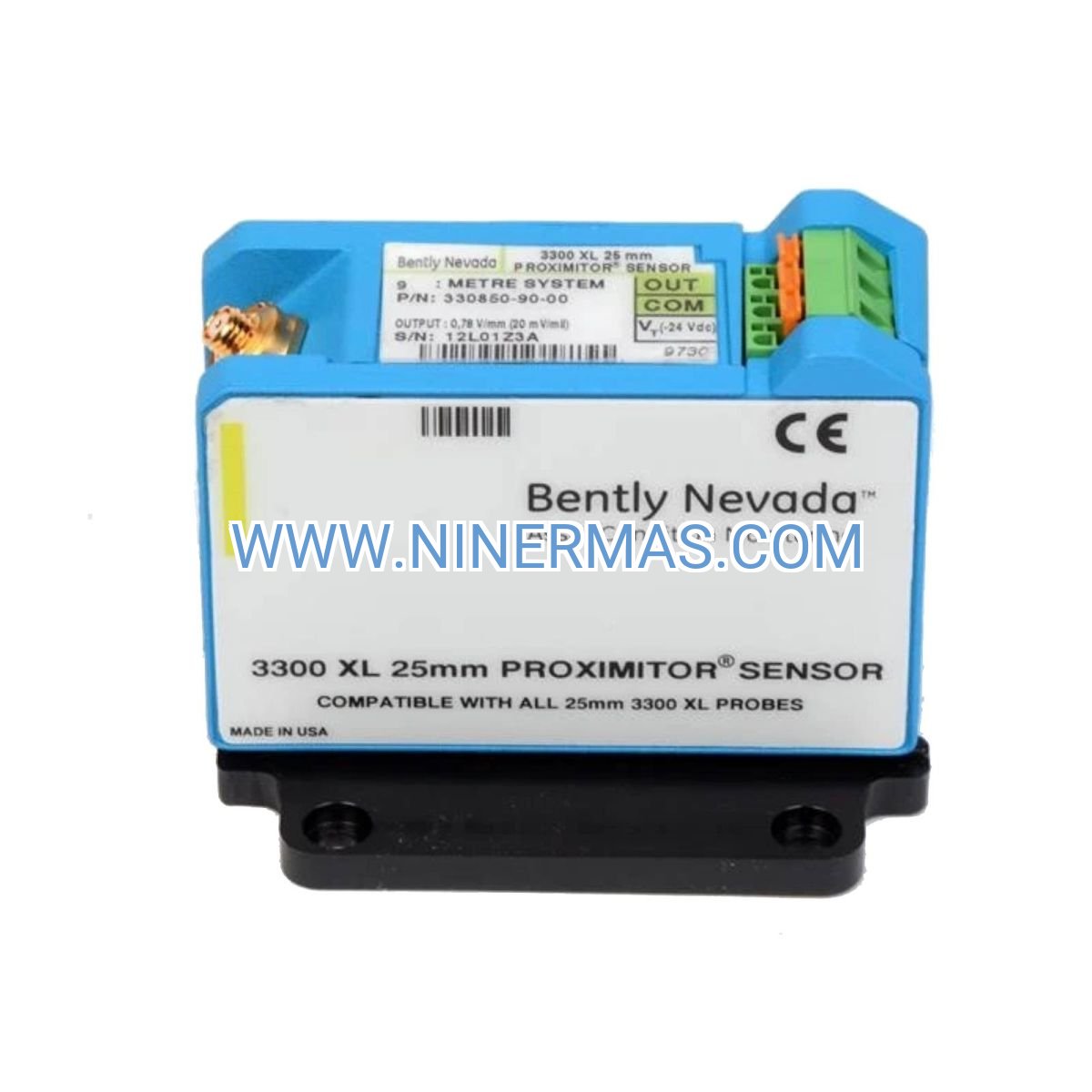

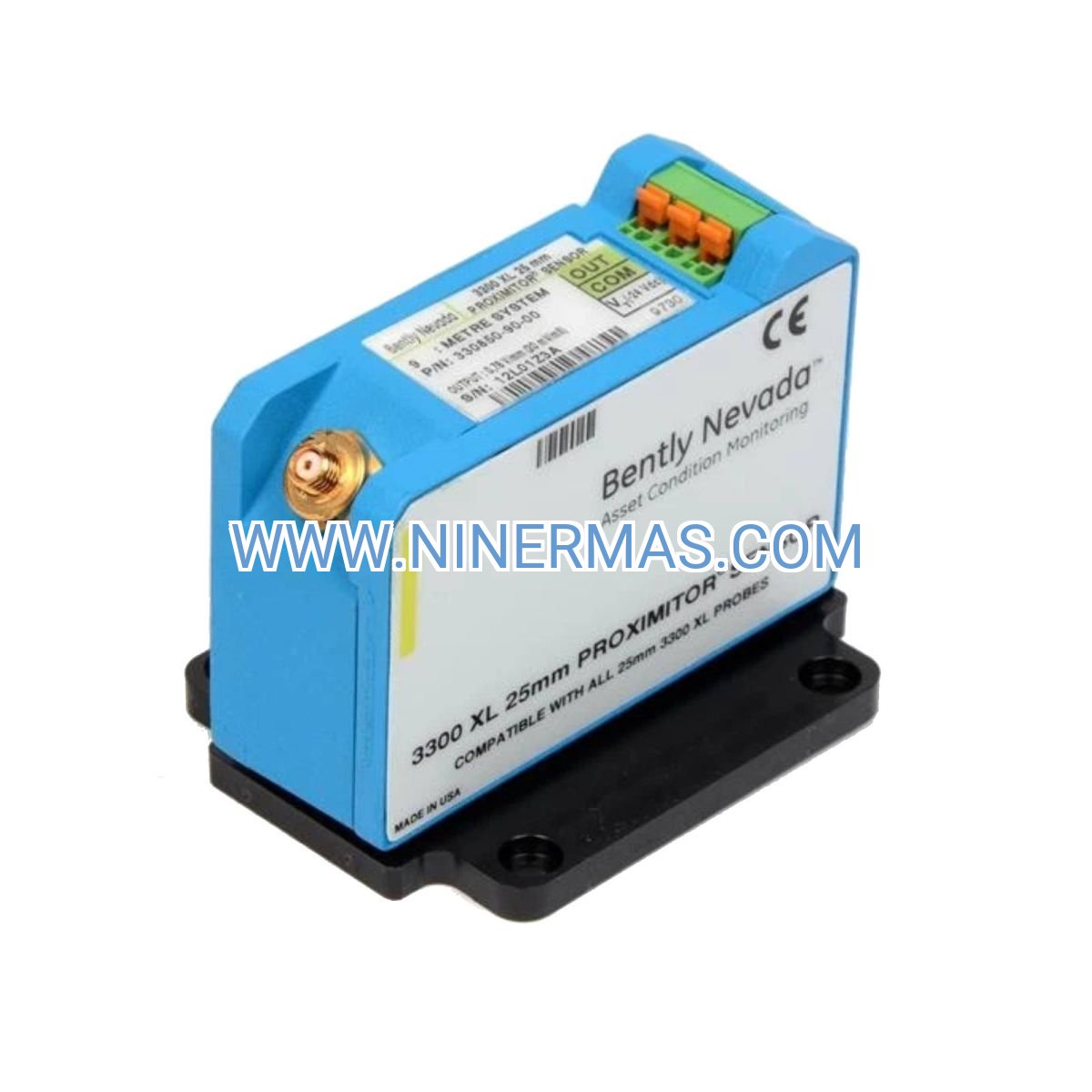
Bently Nevada 330850-90-00 NSv Proximitor Sensor | Velocity Vibration Monitoring | API 670 Certified
Description
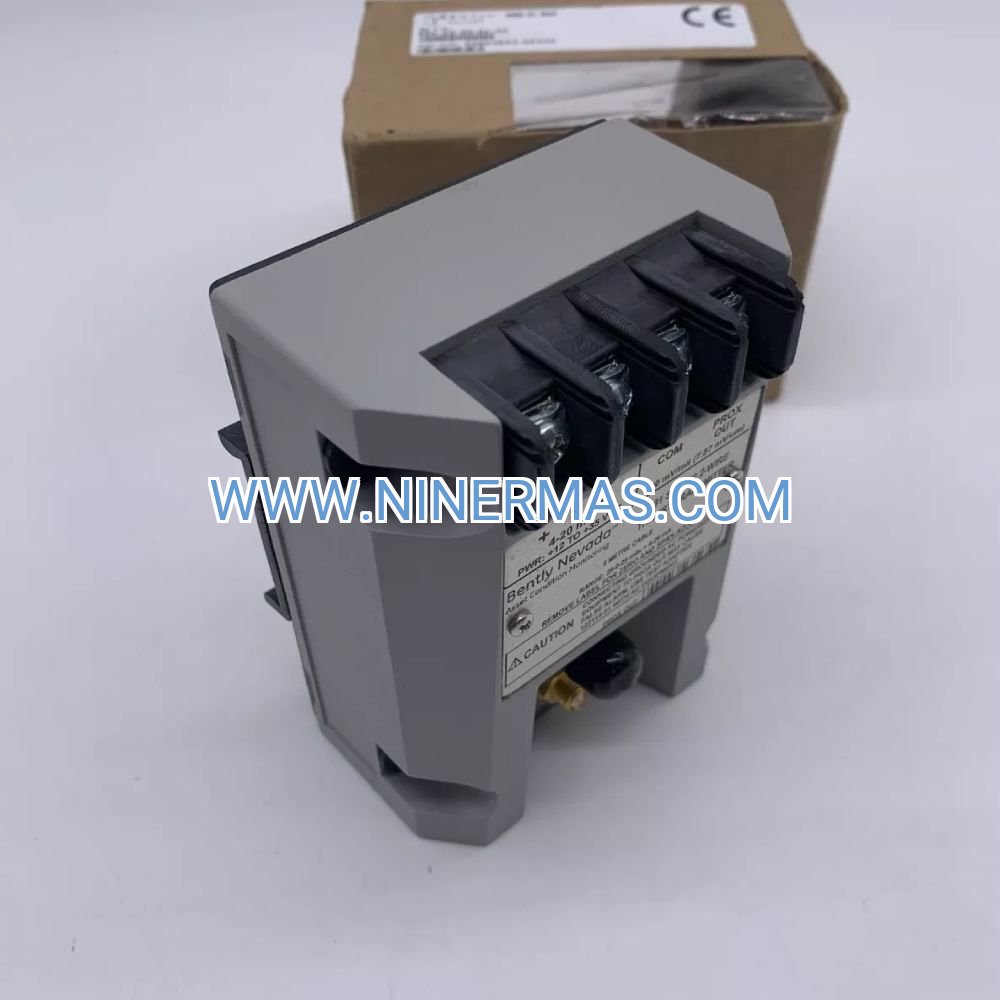
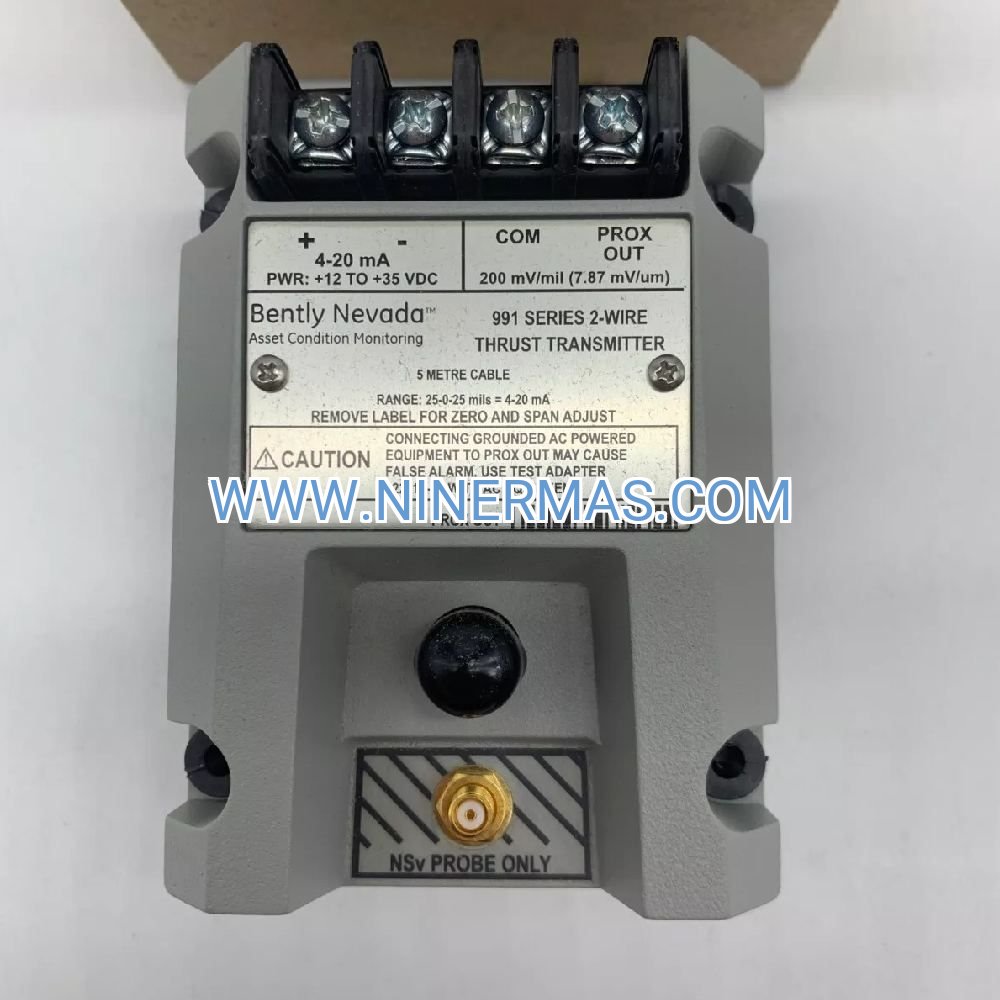
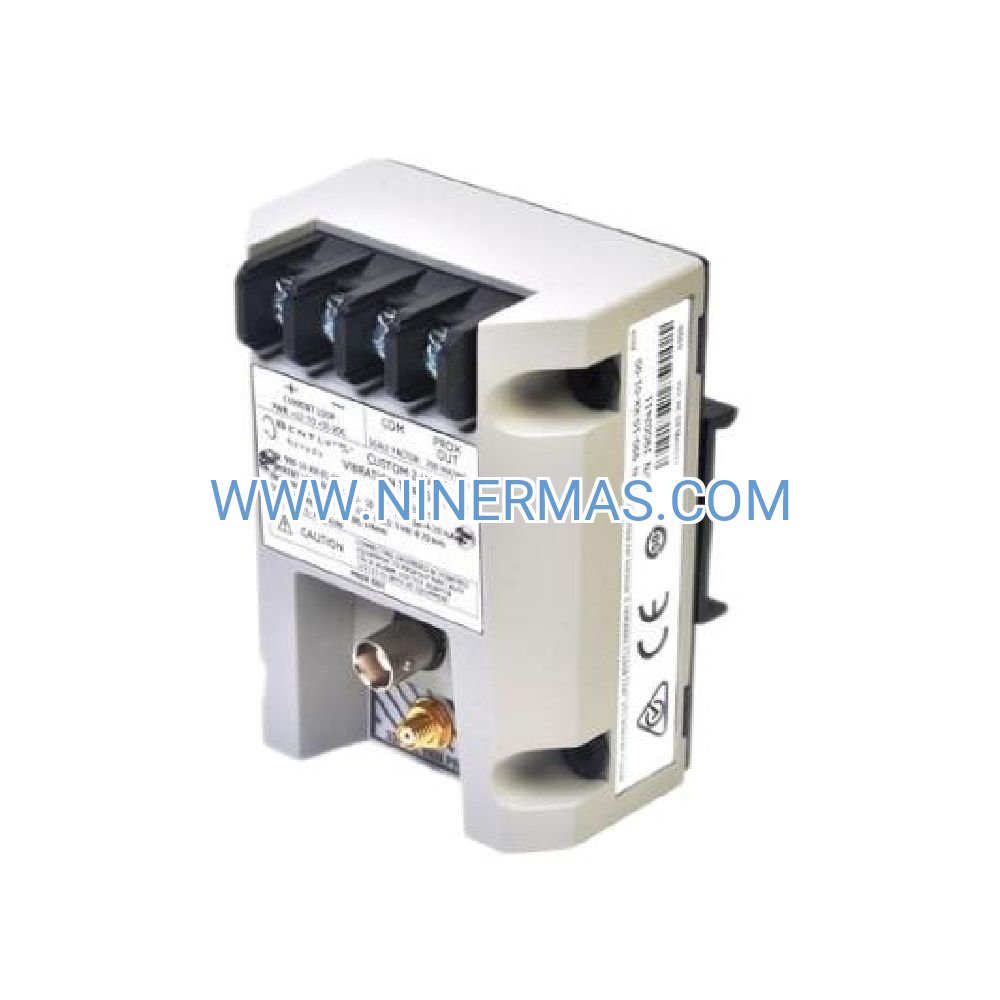
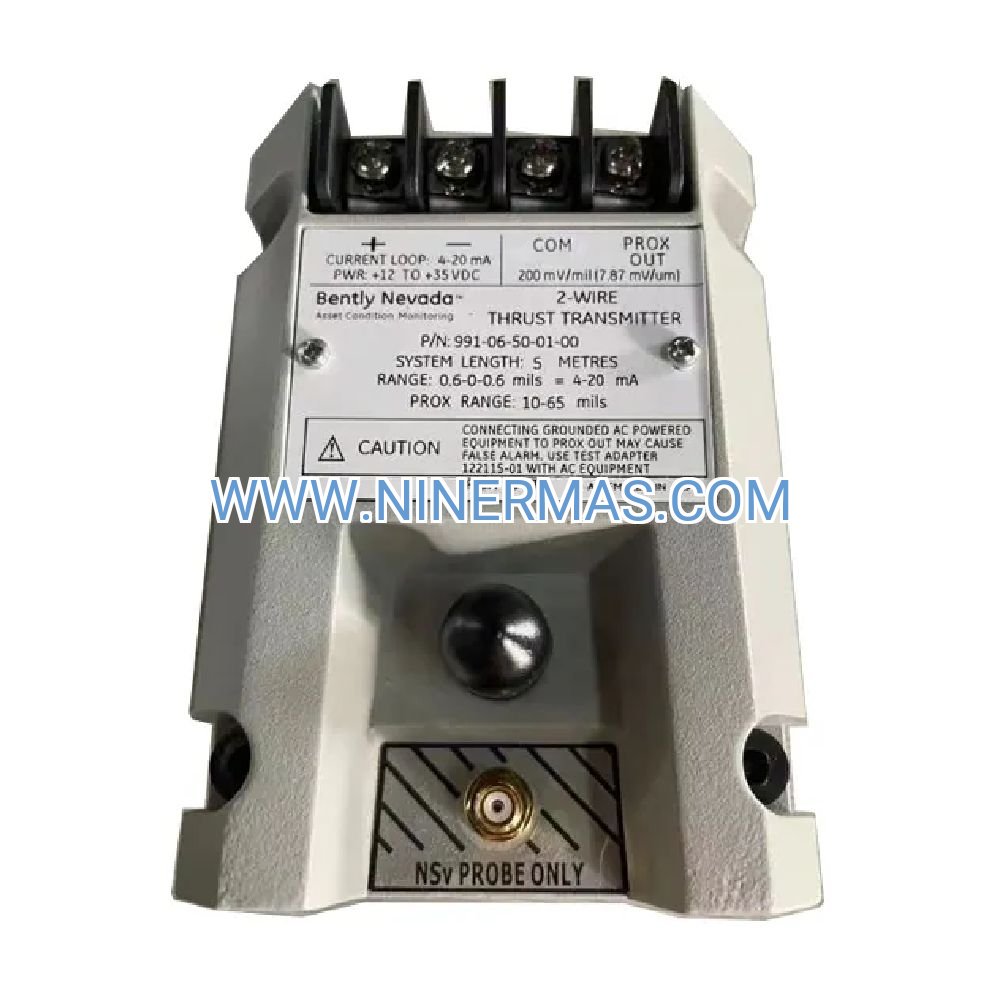
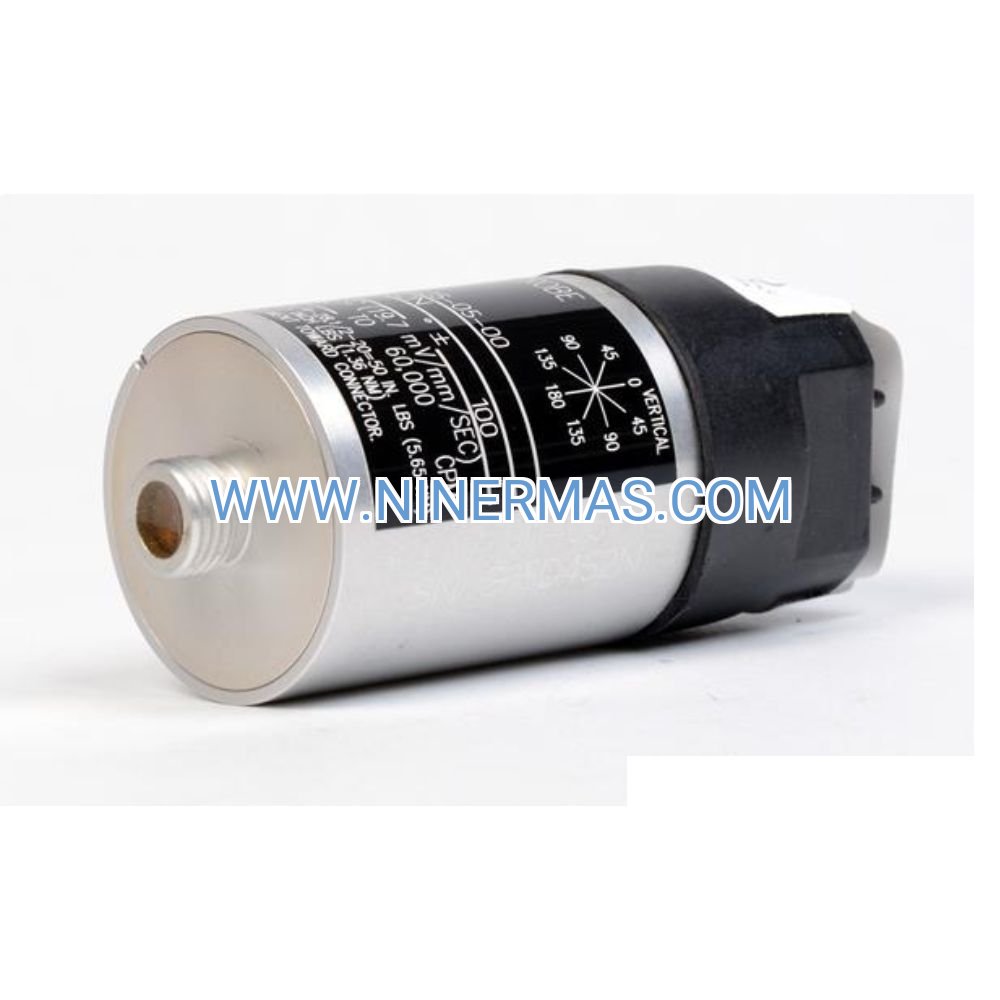
Bently Nevada 330850-90-00 NSv Proximitor Sensor (Industrial Velocity Vibration Monitoring System)
The Bently Nevada 330850-90-00 NSv Proximitor Sensor is a precision velocity transducer designed for continuous vibration monitoring of rotating machinery and critical industrial equipment. Through advanced piezoelectric sensing technology and integrated signal conditioning, this sensor delivers accurate velocity measurements (100mV/in/s sensitivity) across a frequency range of 10Hz to 1kHz, enabling early fault detection and preventing catastrophic equipment failures.
Ideal for turbines, compressors, pumps, motors, gearboxes, and fans in power generation, oil & gas, petrochemical, manufacturing, and heavy industry applications. This sensor addresses critical challenges including undetected bearing wear, imbalance conditions, misalignment issues, resonance problems, and inadequate alarm response time that can lead to unplanned downtime and safety hazards.
Featuring API 670 and ISO 10816 compliance with rugged construction for harsh environments, the 330850-90-00 offers reliable performance, simplified installation with standard mounting configurations, compatibility with Bently Nevada 3300 monitoring systems, and extended operational life in extreme temperatures (-40°C to +85°C). Suitable for plant engineers, maintenance teams, OEM integrators, and reliability professionals seeking proven vibration monitoring solutions with comprehensive technical support and application guidance available.
Core Features & Technical Advantages
- High-Precision Velocity Measurement
Delivers 100mV/in/s output sensitivity with exceptional linearity across 10Hz-1kHz frequency range, capturing both low-frequency imbalance and high-frequency bearing defects for comprehensive machinery health assessment. - API 670 & ISO 10816 Compliance
Meets stringent international standards for machinery protection systems, ensuring regulatory compliance for critical rotating equipment in refineries, power plants, and process industries. - Extended Temperature Performance
Operates reliably from -40°C to +85°C ambient conditions, suitable for outdoor installations, arctic environments, and high-temperature process areas without performance degradation. - Robust Industrial Construction
Hermetically sealed stainless steel housing with IP67 protection rating resists moisture, dust, oil contamination, and mechanical shock, reducing maintenance requirements and extending sensor lifespan. - Seamless System Integration
Direct compatibility with Bently Nevada 3300 rack monitoring systems, 3500 machinery protection platforms, and third-party DCS/SCADA systems via standard 4-20mA or voltage output interfaces. - Simplified Installation & Calibration
Factory-calibrated with standardized mounting dimensions (M10 or 3/8-24 UNF threads), includes integral cable connections and mounting studs, reducing commissioning time and eliminating field calibration errors.
Typical Application Scenarios
This NSv velocity sensor is engineered for demanding industrial environments requiring continuous machinery health monitoring and protection:
- Power Generation Facilities
Steam turbines, gas turbines, generators, and auxiliary equipment monitoring to prevent forced outages, optimize maintenance intervals, and comply with NERC reliability standards. - Oil & Gas Production & Refining
Compressor trains, centrifugal pumps, pipeline booster stations, and rotating process equipment protection in upstream, midstream, and downstream operations where unplanned shutdowns result in significant production losses. - Petrochemical & Chemical Processing
Critical pumps, agitators, centrifuges, and reactor cooling systems requiring 24/7 vibration surveillance to maintain process safety management (PSM) compliance and prevent hazardous material releases. - Manufacturing & Heavy Industry
Large motors, gearboxes, fans, blowers, and conveyor drive systems in steel mills, cement plants, mining operations, and automotive facilities where equipment reliability directly impacts production throughput. - Marine & Offshore Platforms
Propulsion systems, deck machinery, and auxiliary equipment on vessels and offshore installations exposed to harsh environmental conditions, vibration, and limited maintenance access.
Technical Specifications & Selection Guide
To ensure optimal performance and compatibility, review the following technical parameters and selection criteria:
| Parameter | Specification |
|---|---|
| Model Number | 330850-90-00 |
| Sensor Type | NSv Velocity Proximitor (Piezoelectric) |
| Sensitivity | 100 mV/in/s (3.94 mV/(mm/s)) |
| Frequency Range | 10 Hz to 1 kHz (-3dB) |
| Operating Temperature | -40°C to +85°C (-40°F to +185°F) |
| Output Signal | Velocity proportional voltage |
| Power Requirement | 18-30 VDC (via monitor system) |
| Housing Material | Stainless Steel (316/316L) |
| Protection Rating | IP67 (when properly installed) |
| Mounting Thread | M10 x 1.5 or 3/8-24 UNF |
| Cable Connection | Integral armored cable or connector |
| Compliance Standards | API 670, ISO 10816, IEC 61508 |
| Typical Applications | Turbines, compressors, pumps, motors, gearboxes |
Selection Considerations: When specifying this sensor, evaluate machinery operating speed range (ensure critical frequencies fall within 10Hz-1kHz), mounting surface availability and accessibility, environmental conditions (temperature, humidity, chemical exposure), required alarm setpoints per API 670 or ISO 10816 guidelines, and integration requirements with existing monitoring infrastructure. For custom configurations, extended cable lengths, or hazardous area certifications (ATEX/IECEx), consult with application engineers to ensure proper sensor selection and system design.
Advanced Monitoring Capabilities
Beyond basic vibration measurement, the 330850-90-00 enables sophisticated condition monitoring strategies:
- Trend Analysis & Predictive Maintenance – Continuous data logging supports long-term vibration trending, enabling transition from reactive to predictive maintenance programs and optimizing spare parts inventory.
- Multi-Point Monitoring Arrays – Deploy multiple sensors on bearing housings, gearbox casings, and structural supports to create comprehensive vibration maps and pinpoint fault locations with precision.
- Alarm & Shutdown Integration – Configurable alert and trip setpoints interface with DCS/PLC systems for automated machinery protection, reducing operator workload and response time during abnormal conditions.
- Remote Diagnostics & IIoT Connectivity – Compatible with modern condition monitoring platforms supporting wireless gateways, cloud analytics, and mobile dashboards for remote asset management across distributed facilities.
Delivery, Service & Quality Assurance
Lead Time: Standard catalog items typically ship within 3-5 business days from stock; custom configurations or bulk orders require 2-4 weeks depending on specifications and quantity.
Warranty & Support: All sensors include a minimum 24-month manufacturer warranty covering defects in materials and workmanship. Comprehensive technical documentation provided includes installation drawings, wiring diagrams, calibration certificates, and operation manuals in English. Remote technical support and on-site commissioning assistance available upon request (subject to location and project scope).
Quality Certifications: Manufactured under ISO 9001:2015 quality management systems with full traceability. Each unit undergoes factory acceptance testing (FAT) with documented test reports available for critical applications.
Frequently Asked Questions (FAQ)
Q: How does the 330850-90-00 NSv velocity sensor differ from accelerometer-based vibration sensors?
A: NSv velocity sensors provide direct velocity output optimized for 10Hz-1kHz machinery frequencies, eliminating the need for signal integration required with accelerometers. This makes them ideal for API 670 compliance and rotating equipment monitoring where velocity measurements directly correlate with ISO 10816 severity standards.
Q: Can this sensor be retrofitted to existing machinery without Bently Nevada monitoring systems?
A: Yes, the 330850-90-00 can interface with third-party monitoring systems, PLCs, or standalone vibration meters that accept velocity input signals. However, optimal performance and diagnostics are achieved when paired with Bently Nevada 3300 or 3500 series monitors designed specifically for this sensor family.
Q: What mounting orientation is required for accurate velocity measurements?
A: The sensor should be mounted perpendicular to the shaft axis in the radial direction, typically on bearing housings or structural supports. Horizontal, vertical, or axial orientations can be specified based on the critical vibration plane. Consult installation guidelines for specific machinery types and mounting torque specifications.
Q: What is the expected operational lifespan in continuous monitoring applications?
A: Under normal industrial conditions within specified temperature and environmental limits, the 330850-90-00 typically provides 10-15 years of reliable service. Lifespan may be reduced in extreme vibration environments, corrosive atmospheres, or applications exceeding temperature ratings. Regular inspection and calibration verification are recommended per plant maintenance schedules.
Q: Does this sensor support hazardous area installations (ATEX/IECEx)?
A: Standard 330850-90-00 models are suitable for general industrial use. For installations in classified hazardous locations (Zone 1/2, Division 1/2), intrinsically safe (IS) barrier configurations or explosion-proof housings may be required. Contact our engineering team to specify appropriate certifications and barrier modules for your specific hazardous area classification.
Q: What cable length options are available, and how does cable length affect signal quality?
A: Standard integral cable lengths range from 5 to 9 meters. Extended cable runs up to 150 meters are possible using low-capacitance extension cables with proper shielding and grounding practices. For distances exceeding 150 meters, consider proximity-mounted signal conditioners or 4-20mA transmitter options to maintain signal integrity and noise immunity.
Request Technical Support & Custom Solutions
For detailed application engineering, custom sensor configurations, system integration assistance, or project quotations, please provide the following information to our technical team:
- Project name and application overview
- Machinery type, operating speed range (RPM), and critical frequencies
- Number of monitoring points and sensor quantity required
- Environmental conditions (temperature range, humidity, chemical exposure)
- Existing monitoring system details (if retrofit application)
- Compliance requirements (API 670, ISO 10816, hazardous area certifications)
- Preferred delivery timeline and installation schedule
Our application engineers will provide one-on-one consultation, sensor selection recommendations, system architecture proposals, and competitive pricing tailored to your specific machinery protection requirements.
© 2026 NINERMAS COMPANY LIMITED. All rights reserved. Original Source: https://ninermas.com | Contact: sale@ninermas.com | +0086 187 5021 5667

Contact Info
-
Address:22 / F, South Wo Hang building, 148 Wing Lok Street, Sheung Wan, Western District, Hong Kong
-
Phone:+8618750215667
-
Email: