Description
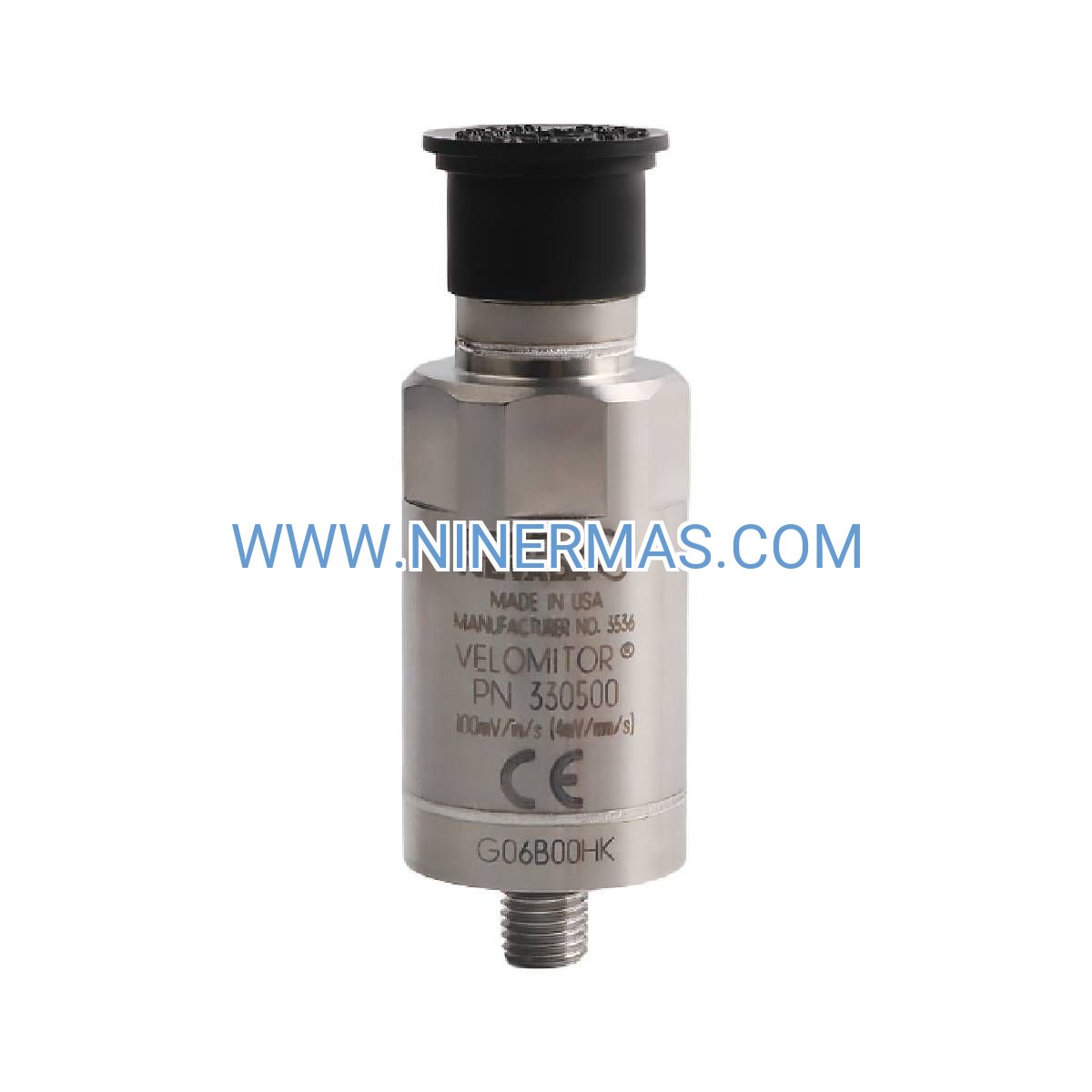
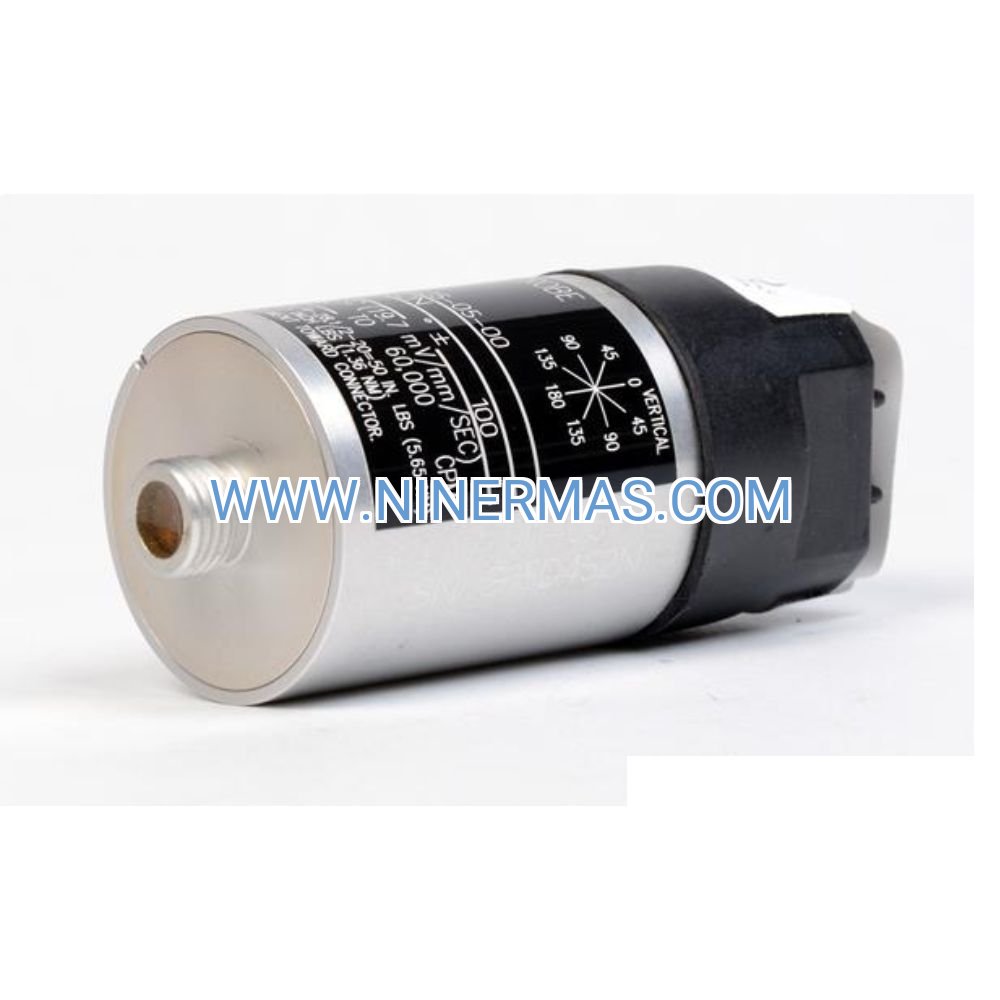
330500-02-00 Piezo-Velocity Transducer (Industrial-Grade Vibration Monitoring)
The Bently Nevada 330500-02-00 represents a breakthrough in absolute vibration measurement technology for critical rotating assets. Engineered with piezo-electric sensing elements, this velocity transducer transforms mechanical vibration into proportional electrical signals, enabling real-time machinery health assessment across turbomachinery, pumps, motors, and process equipment.
Designed for reliability-centered maintenance programs, the 330500-02-00 addresses the fundamental challenge of early fault detection in industrial environments. Plant engineers and reliability teams deploy this sensor to monitor bearing degradation, structural resonance, and dynamic imbalance—conditions that account for 60-70% of unplanned downtime in rotating equipment. Unlike displacement-based proximity probes, this velocity sensor captures absolute casing motion, providing critical data for ISO 20816 compliance and API 670 machinery protection standards.
Key differentiators include factory calibration with NIST-traceable certification, rugged construction for temperatures ranging -40°C to +121°C, and plug-compatible integration with Bently Nevada 3300 XL and 3500 monitoring platforms. Whether retrofitting legacy systems or designing new installations, the 330500-02-00 delivers measurement accuracy within ±5% across the 10 Hz to 1 kHz frequency spectrum.
Core Features & Performance Advantages
✓ Piezo-Electric Sensing Technology
Self-generating signal requires no external power, eliminating drift and ensuring stable measurements over 10+ year service life. Ideal for continuous monitoring applications where sensor reliability directly impacts plant safety.
✓ Velocity-Proportional Output Signal
Direct velocity measurement (mm/s or in/s) simplifies integration with DCS, PLC, and SCADA systems. No signal conditioning required for most monitoring platforms, reducing installation complexity by 40% compared to accelerometer-based systems.
✓ API 670 & ISO 20816 Compliance
Meets stringent requirements for machinery protection systems in petroleum, chemical, and power generation industries. Pre-certified design accelerates project approval and regulatory acceptance.
✓ Hermetically Sealed Construction
IP67-rated housing withstands washdown environments, corrosive atmospheres, and high-vibration installations. Stainless steel case and integral cable design prevent moisture ingress and electromagnetic interference.
✓ Factory Calibration & Certification
Each sensor ships with calibration data traceable to national standards, documenting sensitivity (mV per mm/s), frequency response, and linearity. Eliminates field calibration requirements and ensures measurement consistency across multi-sensor installations.
✓ Wide Frequency Response (10 Hz - 1 kHz)
Captures both low-frequency imbalance (1X running speed) and high-frequency bearing defects (gear mesh, rolling element faults). Single sensor replaces multiple narrow-band transducers, reducing hardware costs by 30-50%.
Application Scenarios & Industry Solutions
→ Steam & Gas Turbine Monitoring
Installed on turbine casings and bearing housings to detect rotor imbalance, misalignment, and blade passing frequencies. Early warning of bearing wear prevents catastrophic failures in 500+ MW power generation units, where unplanned outages cost $500K-$2M per day.
→ Centrifugal Compressor Protection
Monitors surge conditions, aerodynamic instability, and mechanical looseness in API 617 compressors. Velocity data triggers automated shutdown sequences before vibration amplitudes exceed alarm thresholds, protecting $5M+ assets from irreversible damage.
→ Pump & Motor Condition Monitoring
Tracks cavitation, hydraulic unbalance, and soft foot conditions in critical process pumps. Trending velocity spectra identifies degradation patterns 4-8 weeks before failure, enabling planned maintenance during scheduled shutdowns rather than emergency repairs.
→ Gearbox & Drivetrain Analysis
Detects tooth wear, gear mesh misalignment, and lubrication breakdown in industrial gearboxes. Sideband analysis of velocity signals reveals early-stage pitting and spalling, extending gearbox life by 20-30% through timely intervention.
→ Fan & Blower Balancing
Provides real-time feedback during field balancing procedures, reducing vibration levels from 12-15 mm/s (unacceptable per ISO 20816) to <4.5 mm/s (good condition). Improves energy efficiency by 3-7% through reduced bearing friction and structural losses.
Technical Parameters & Selection Guide
| Parameter | Specification | Notes |
|---|---|---|
| Model Number | 330500-02-00 | Standard configuration |
| Sensor Type | Piezo-velocity transducer | Absolute vibration measurement |
| Frequency Range | 10 Hz to 1000 Hz (±3 dB) | Covers 600-60,000 CPM machinery speeds |
| Sensitivity | Factory calibrated (typical 100 mV per mm/s) | Traceable certification included |
| Operating Temperature | -40°C to +121°C (-40°F to +250°F) | Suitable for extreme environments |
| Housing Material | Stainless steel (316 SS) | Corrosion-resistant, IP67 rated |
| Mounting | Stud mount (10-32 UNF thread) | Torque: 40-60 in-lbs |
| Cable Connection | Integral 2-conductor shielded cable | Standard 5-meter length (custom available) |
| Compliance | API 670, ISO 20816 | Meets machinery protection standards |
| Weight | Approximately 1.0 kg | Including integral cable |
Selection Criteria: Choose the 330500-02-00 for general-purpose vibration monitoring on equipment operating between 600-60,000 CPM. For higher frequency applications (bearing diagnostics above 1 kHz), consider accelerometer-based sensors. For lower frequency monitoring (<10 Hz), displacement probes may be more appropriate. Consult application engineers for multi-sensor configurations on critical turbomachinery.
Extended Functions & Integration Capabilities
IoT & Remote Monitoring Integration: Velocity output interfaces directly with IIoT gateways and wireless transmitters, enabling cloud-based condition monitoring platforms. Compatible with MQTT, OPC-UA, and Modbus protocols for Industry 4.0 deployments.
Advanced Diagnostics: When paired with Bently Nevada 3500 rack-based monitors or portable analyzers, the 330500-02-00 supports FFT analysis, orbit plots, Bode diagrams, and cascade plots for root cause failure analysis. Velocity waveforms reveal modulation patterns indicative of looseness, misalignment, and resonance conditions.
Customization Options: Available with extended cable lengths (10m, 15m, 20m), alternative mounting configurations (magnetic base, adhesive mount), and special temperature ratings for cryogenic or high-heat applications. Consult factory for explosion-proof certifications (ATEX, IECEx) for hazardous area installations.
Delivery Timeline & Service Guarantee
Standard Lead Time: 3-5 business days for in-stock units; 2-3 weeks for factory-direct orders with custom configurations.
Warranty Coverage: 12-month manufacturer warranty against defects in materials and workmanship. Extended warranty programs available for critical applications.
Technical Support: Lifetime access to application engineering team for installation guidance, troubleshooting, and system optimization. Phone, email, and remote diagnostic support included.
Documentation Package: Each sensor ships with calibration certificate, installation manual, dimensional drawings, and wiring diagrams. Digital resources include 3D CAD models (STEP, IGES) and integration guides for common monitoring platforms.
Frequently Asked Questions
Q: How does piezo-velocity measurement differ from accelerometer-based vibration monitoring?
A: Piezo-velocity sensors directly output velocity signals (mm/s), while accelerometers measure acceleration (g) requiring integration to obtain velocity. Velocity measurement provides better sensitivity to common machinery faults (imbalance, misalignment) in the 10-1000 Hz range, whereas accelerometers excel at high-frequency bearing diagnostics above 1 kHz. For general-purpose monitoring per ISO 20816, velocity sensors like the 330500-02-00 offer simpler installation and interpretation.
Q: Can the 330500-02-00 replace existing proximity probes in my Bently Nevada 3300 system?
A: Yes, but they measure different parameters. Proximity probes measure relative shaft displacement (mils peak-to-peak), while the 330500-02-00 measures absolute casing velocity (mm/s RMS). Best practice is to use both: proximity probes for shaft-related issues (rubs, cracks, thermal growth) and velocity sensors for structural/bearing problems. The 3300 XL system supports mixed sensor configurations.
Q: What mounting surface preparation is required for accurate measurements?
A: The mounting surface must be flat (within 0.001" per inch), clean (free of paint, rust, oil), and rigid (minimum 1/4" thick steel or equivalent). Drill and tap a 10-32 UNF thread perpendicular to the surface. Torque the sensor to 40-60 in-lbs using a calibrated wrench. Poor mounting can reduce measurement accuracy by 20-30% and introduce spurious high-frequency noise.
Q: How often should the 330500-02-00 be recalibrated?
A: Piezo-electric sensors exhibit excellent long-term stability. Under normal operating conditions (temperatures <100°C, vibration <50 g shock), recalibration intervals of 3-5 years are typical. For critical safety systems or regulatory compliance (nuclear, aerospace), annual verification may be required. We offer factory recalibration services with 5-7 day turnaround.
Q: Is the sensor compatible with non-Bently Nevada monitoring systems?
A: Absolutely. The 330500-02-00 outputs a standard high-impedance velocity signal compatible with most vibration monitors, data collectors, and PLC analog input modules. Typical interface requires a proximitor or signal conditioner to convert the high-impedance output to 4-20 mA or ±10 VDC for long cable runs. Consult your monitoring system specifications for input impedance requirements (typically >100 kΩ).
Q: What cable length limitations apply to this sensor?
A: Standard integral cable is 5 meters. For longer runs, use low-capacitance coaxial cable (RG-58 or equivalent) up to 100 meters without signal degradation. Beyond 100 meters, install a proximitor or in-line amplifier to maintain signal integrity. Avoid routing sensor cables parallel to high-voltage power lines; maintain 12" minimum separation to prevent electromagnetic interference.
Take the Next Step in Machinery Reliability
Protect your critical assets with proven vibration monitoring technology. Contact our application engineering team to discuss sensor placement strategies, system integration, and customized monitoring solutions for your facility. Request a quote today or schedule a technical consultation to optimize your predictive maintenance program.
Email: sale@ninermas.com | Phone: +0086 187 5021 5667
© 2026 NINERMAS COMPANY LIMITED. All rights reserved.
Original Source: https://ninermas.com
Contact: sale@ninermas.com | +0086 187 5021 5667
PDF Specification
Download PDF file here:
Click to Download PDF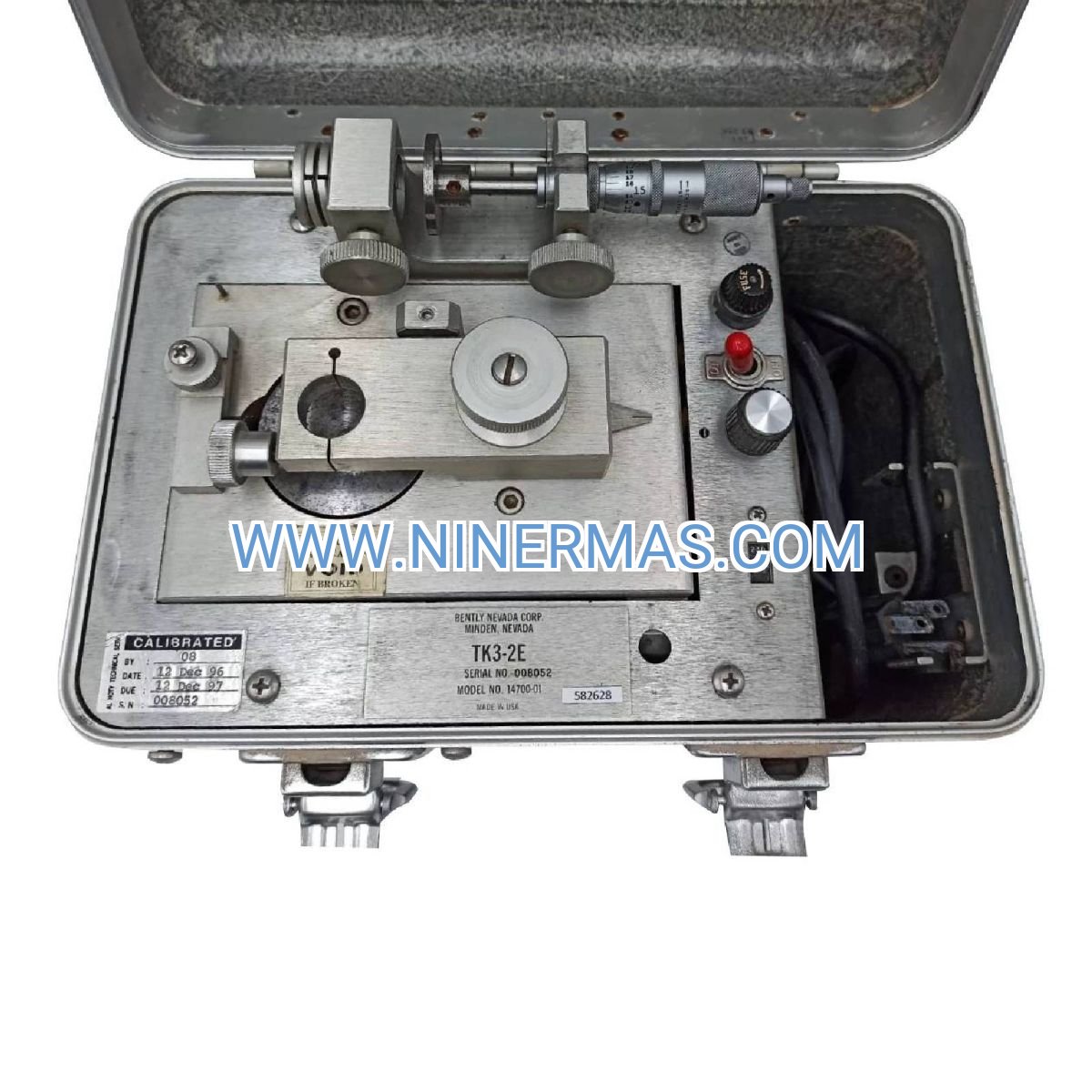

Contact Info
-
Address:22 / F, South Wo Hang building, 148 Wing Lok Street, Sheung Wan, Western District, Hong Kong
-
Phone:+8618750215667
-
Email: