Description
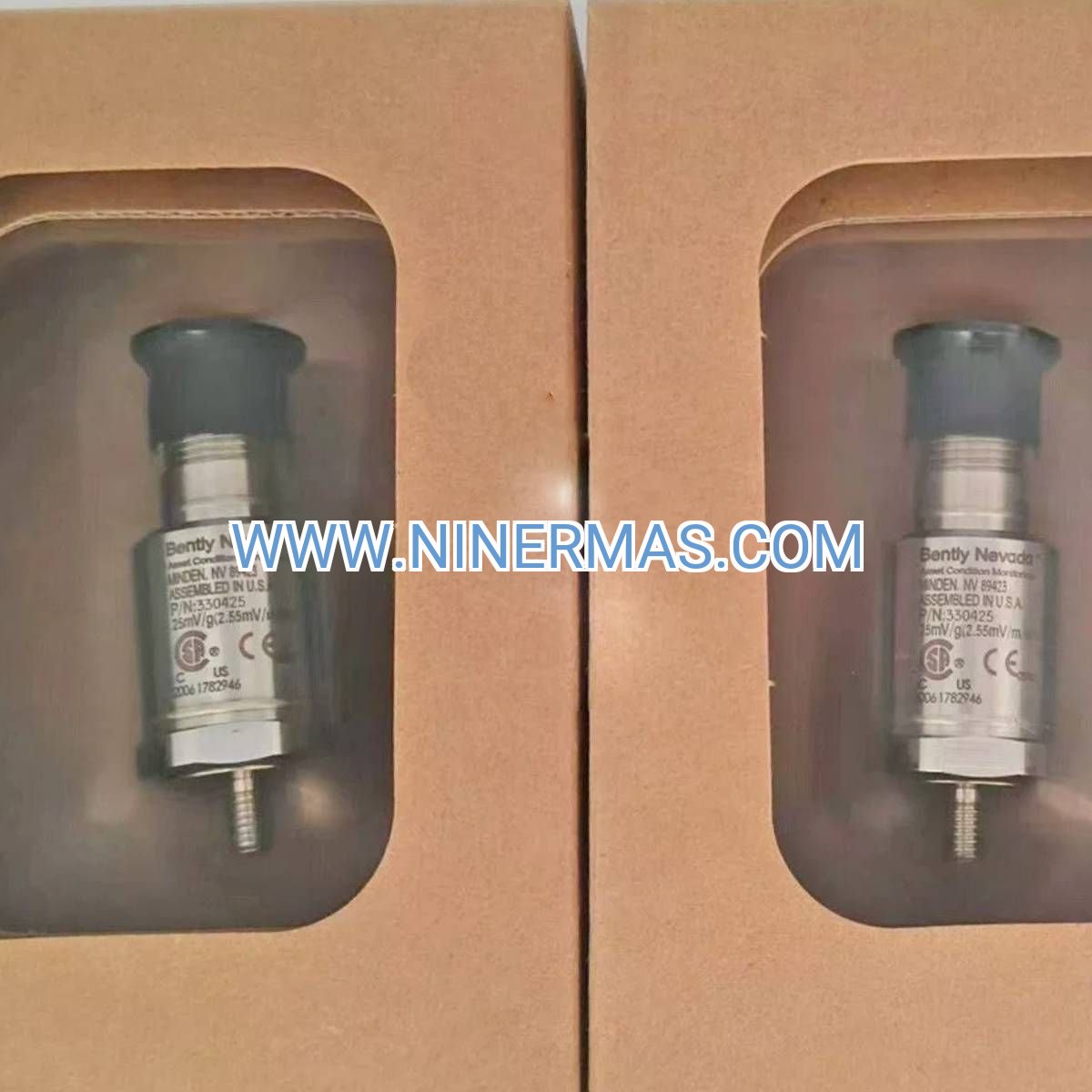
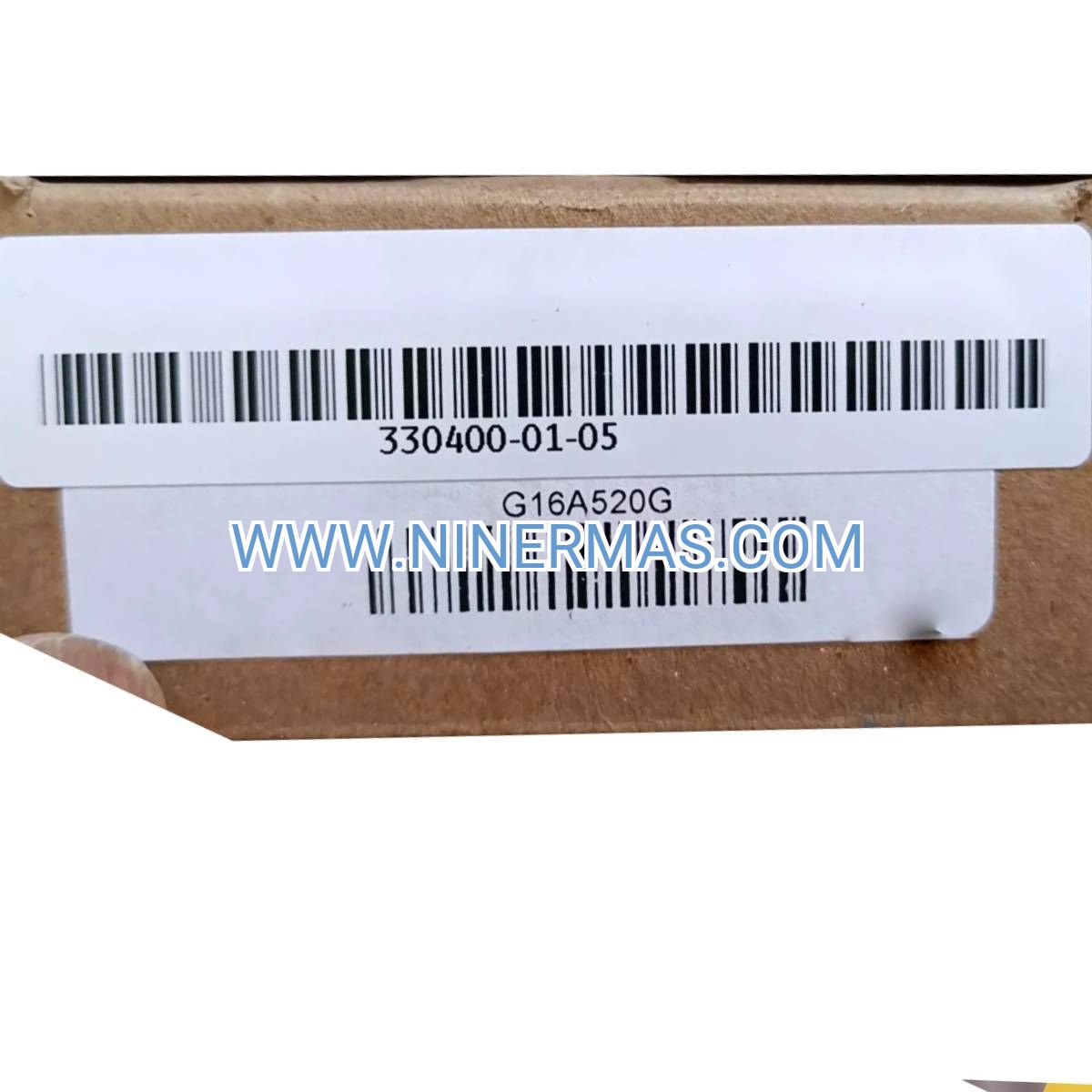
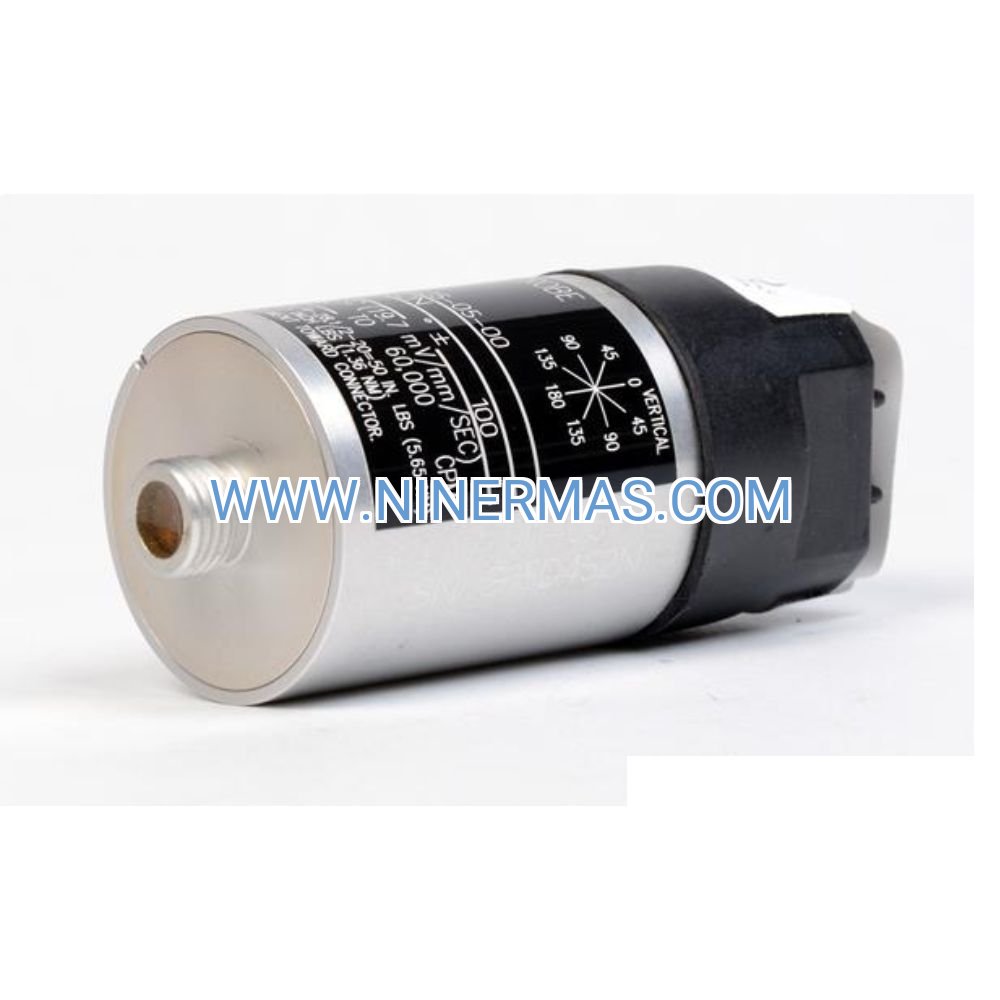
330425-01-05 Industrial-Grade Accelerometer for Rotating Machinery Health Monitoring
The 330425-01-05 represents a breakthrough in vibration sensing technology for mission-critical industrial assets. Engineered with laser-welded hermetic construction and military-grade materials, this accelerometer transforms how maintenance teams detect bearing failures, shaft misalignment, and mechanical looseness before they escalate into costly equipment damage. Designed for power plants, petrochemical facilities, and heavy manufacturing operations where sensor reliability directly impacts production uptime and personnel safety.
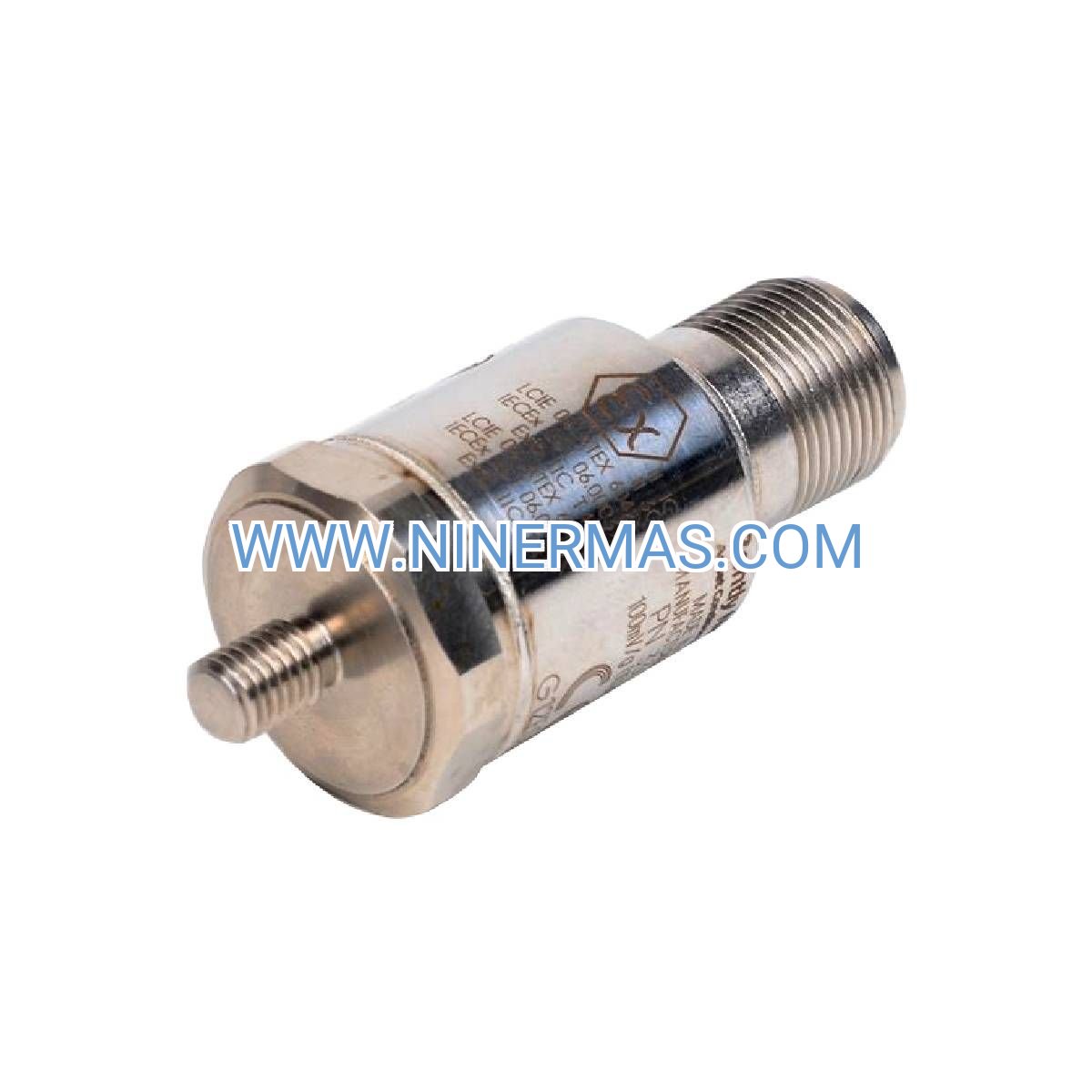
Unlike conventional epoxy-sealed sensors that deteriorate in contaminated atmospheres, this unit employs 316L stainless steel housing with permanent hermetic sealing—eliminating moisture ingress, chemical attack, and calibration drift across decades of continuous operation. Maintenance engineers gain confidence deploying these sensors in explosive gas zones, corrosive offshore platforms, and high-temperature process equipment where traditional instrumentation fails within months.
With 100 mV/g sensitivity and 2 Hz to 10 kHz frequency bandwidth, the 330425-01-05 captures both low-speed imbalance signatures and ultrasonic bearing defect patterns in a single installation point. This dual-range capability reduces sensor count by 40-60% compared to legacy monitoring architectures, cutting installation labor and ongoing calibration costs while improving diagnostic accuracy through synchronized multi-frequency analysis.
Core Features & Business Value
→ Hermetic Seal Integrity: Laser-welded 316L stainless steel construction withstands steam cleaning, chemical washdowns, and submersion events without signal degradation—extending sensor lifespan 3-5x beyond epoxy-sealed alternatives while eliminating premature replacement costs.
→ Extended Temperature Performance: Operates continuously from -54°C to +121°C without thermal compensation circuits, enabling direct mounting on bearing housings, gearbox casings, and turbine pedestals where surface temperatures exceed 100°C during normal operation.
→ Wide Dynamic Range: ±50 g peak measurement capacity handles both steady-state vibration monitoring and transient shock events during startups, load changes, and emergency shutdowns—providing complete machinery behavior visibility without sensor saturation or clipping.
✓ Ground Loop Rejection: Case-isolated electrical design prevents common-mode noise interference in grounded machinery installations, delivering clean 4-20 mA signals even in electrically hostile environments with variable frequency drives, arc welders, and high-voltage switchgear.
✓ IP67 Environmental Protection: Dust-tight and waterproof construction meets offshore platform requirements, food processing sanitation protocols, and mining industry washdown standards without requiring protective enclosures or maintenance access restrictions.
✓ API 670 Compliance: Meets petroleum industry machinery protection system standards for sensor accuracy, temperature stability, and electromagnetic immunity—ensuring compatibility with DCS integration requirements and insurance underwriter specifications.
Typical Application Scenarios
Steam Turbine Generator Sets: Monitor bearing pedestals, thrust housings, and generator frames on 50-500 MW units where undetected vibration faults trigger forced outages costing $500K-$2M per event. Early bearing wear detection enables planned maintenance during scheduled outages, avoiding emergency repairs and grid stability penalties.
Centrifugal Compressor Trains: Track vibration trends on multi-stage compressors in LNG facilities, air separation plants, and pipeline booster stations where mechanical seal failures cause process shutdowns and product contamination. Hermetic sensors survive sour gas exposure and cryogenic temperature cycling that destroys standard accelerometers within 6-12 months.
Paper Machine Dryer Sections: Install on dryer can bearings, calendar rolls, and press sections operating in 90% humidity environments with frequent steam leaks and chemical spray exposure. Sealed construction eliminates moisture-induced drift that generates false alarms and maintenance callouts in conventional monitoring systems.
Mining Conveyor Systems: Deploy on crusher drives, conveyor head pulleys, and screening equipment subjected to dust ingress, water spray, and mechanical shock loading. IP67 protection maintains measurement accuracy through seasonal temperature swings and daily washdown cycles without requiring sensor replacement or recalibration.
Offshore Platform Equipment: Protect gas compression modules, seawater lift pumps, and power generation packages from salt spray corrosion and explosive atmosphere hazards. ATEX/IECEx compatible installation methods combined with hermetic sealing ensure 5-year service intervals between sensor inspections—reducing offshore maintenance costs and personnel exposure risks.
Technical Parameters & Selection Guide
| Specification | Value | Engineering Significance |
|---|---|---|
| Model Number | 330425-01-05 | Bently Nevada OEM part designation |
| Sensitivity | 100 mV/g ±10% | Optimized for 4-20 mA monitor inputs |
| Frequency Response | 2 Hz - 10 kHz (±3 dB) | Covers imbalance through bearing faults |
| Measurement Range | ±50 g peak | Handles startup transients and shock events |
| Temperature Range | -54°C to +121°C | Direct hot surface mounting capability |
| Housing Material | 316L stainless steel | Corrosion resistance for chemical environments |
| Sealing Method | Hermetic laser weld | Permanent moisture and contaminant exclusion |
| Connector Type | 2-pin MIL-C-5015 | Military-grade vibration resistance |
| Mounting Thread | 1/4-28 UNF stud | Standard industrial accelerometer interface |
| Sensor Mass | 99 grams | Minimal mass loading on lightweight structures |
| Ingress Protection | IP67 | Submersion and dust exposure immunity |
Selection Criteria: Choose the 330425-01-05 when monitoring equipment operates in contaminated atmospheres, experiences wide temperature variations, or requires long-term calibration stability without periodic verification. For clean-room environments or laboratory applications where cost optimization outweighs environmental resilience, consider industrial-grade epoxy-sealed alternatives. When machinery vibration levels exceed 50 g peak during transient events, specify higher-range models to prevent sensor damage and measurement saturation.
Extended Functions
Wireless Integration Capability: Pair with Bently Nevada wireless vibration transmitters for retrofit installations where cable routing is impractical or cost-prohibitive. Wireless architectures reduce installation costs by 60-70% on distributed assets like cooling tower fans, remote pump stations, and mobile equipment while maintaining diagnostic-quality data transmission.
Multi-Channel Synchronization: Deploy in arrays of 4-16 sensors with synchronized sampling for operating deflection shape analysis, modal testing, and torsional vibration studies. Time-synchronized data acquisition reveals phase relationships between measurement points—enabling root cause diagnosis of complex vibration phenomena like structural resonance and coupled modes.
Customization Options: Available with extended cable assemblies (3-30 meters), right-angle connectors for confined spaces, and explosion-proof certifications (ATEX Zone 1, IECEx, CSA Class I Div 1). Custom sensitivity ranges (50 mV/g, 500 mV/g) and frequency responses optimize performance for specific machinery types—consult application engineers for non-standard configurations.
Delivery & Service Assurance
Lead Time: Stock items ship within 24-48 hours via express courier with tracking confirmation. Custom configurations require 2-3 weeks for factory assembly and calibration verification. Emergency same-day shipping available for critical equipment outages—contact our technical support team for expedited processing.
Warranty Coverage: Comprehensive 12-month warranty protects against manufacturing defects, calibration errors, and hermetic seal failures. Warranty includes free replacement sensors, return shipping labels, and technical root cause analysis. Extended 36-month warranty programs available for volume purchases and annual maintenance contracts.
Technical Support: Access to vibration analysis specialists with rotating machinery expertise for application guidance, installation troubleshooting, and signal interpretation assistance. Support includes mounting torque specifications, cable routing best practices, and monitor module compatibility verification—ensuring first-time installation success.
Documentation Package: Each sensor ships with NIST-traceable calibration certificate, dimensional drawings, electrical connection diagrams, and installation instructions. Digital documentation library provides 3D CAD models, frequency response plots, and case study references for engineering teams and quality management systems.
Frequently Asked Questions
How does hermetic sealing improve accelerometer reliability in harsh environments?
Hermetic sealing uses laser-welded metal-to-metal joints that create permanent barriers against moisture, oils, and corrosive gases. Unlike epoxy potting compounds that absorb water vapor and degrade over time, hermetic construction maintains internal vacuum or dry nitrogen atmospheres indefinitely. This prevents piezoelectric element contamination, eliminates electrical leakage paths, and stabilizes sensitivity across temperature cycles—extending sensor lifespan from 3-5 years (epoxy) to 15-20 years (hermetic) in industrial service.
What mounting torque specification ensures optimal high-frequency response?
Apply 5-7 Nm (45-62 in-lb) torque to the 1/4-28 mounting stud using a calibrated torque wrench. Under-torquing creates air gaps that attenuate frequencies above 2 kHz, while over-torquing risks thread damage and sensor base deformation. Use petroleum jelly or silicone thermal paste between sensor base and mounting surface to fill microscopic surface irregularities—improving acoustic coupling efficiency by 15-25% compared to dry installations.
Can this accelerometer monitor low-speed equipment below 100 RPM?
Yes, the 2 Hz lower frequency limit enables monitoring of equipment operating at 120 RPM (2 Hz fundamental) and above. For slower machinery like kilns, ball mills, and large fans (10-60 RPM), consider velocity sensors or displacement probes optimized for sub-1 Hz measurements. Accelerometers excel at detecting high-frequency bearing defects on low-speed equipment—providing complementary diagnostic information when paired with velocity transducers.
What cable length limitations affect measurement accuracy?
Standard coaxial cables support runs up to 300 meters without signal degradation when terminated into high-impedance monitor inputs (>100 kΩ). Beyond 300 meters, use low-noise preamplifiers or 4-20 mA transmitters to maintain signal integrity. Avoid routing sensor cables parallel to AC power conductors—maintain minimum 300 mm separation to prevent electromagnetic interference. Use shielded twisted-pair cables in electrically noisy environments with VFD drives and welding equipment.
How often should accelerometers undergo recalibration verification?
ISO 20816 and API 670 standards recommend calibration verification every 24-36 months for critical machinery protection systems. Hermetically sealed accelerometers typically exhibit <2% sensitivity drift over 5-year periods, compared to 5-10% drift for epoxy-sealed units. Implement condition-based calibration schedules using back-to-back comparison tests against reference accelerometers—extending calibration intervals to 3-5 years when drift remains within ±5% tolerance bands.
What monitor modules provide compatible signal conditioning?
The 330425-01-05 interfaces with Bently Nevada 3300 series monitors (3300/55, 3300/16), Orbit 60 data acquisition systems, and third-party 4-20 mA vibration transmitters. Ensure monitor input impedance exceeds 100 kΩ and bias voltage remains within ±24 VDC limits. For DCS integration, use isolated barrier modules in hazardous area installations to maintain intrinsic safety certifications and prevent ground loop formation.
Request Technical Consultation
Optimize your vibration monitoring architecture with expert application support. Our engineering team provides complimentary system design reviews, sensor placement recommendations, and ROI analysis for predictive maintenance programs. Contact us today to discuss your machinery protection requirements and receive customized solutions that reduce unplanned downtime by 40-60% while extending equipment service life.
© 2026 NINERMAS COMPANY LIMITED. All rights reserved.
Original Source: https://ninermas.com
Contact: sale@ninermas.com | +0086 187 5021 5667
PDF Specification
Download PDF file here:
Click to Download PDF

Contact Info
-
Address:22 / F, South Wo Hang building, 148 Wing Lok Street, Sheung Wan, Western District, Hong Kong
-
Phone:+8618750215667
-
Email: