


Description
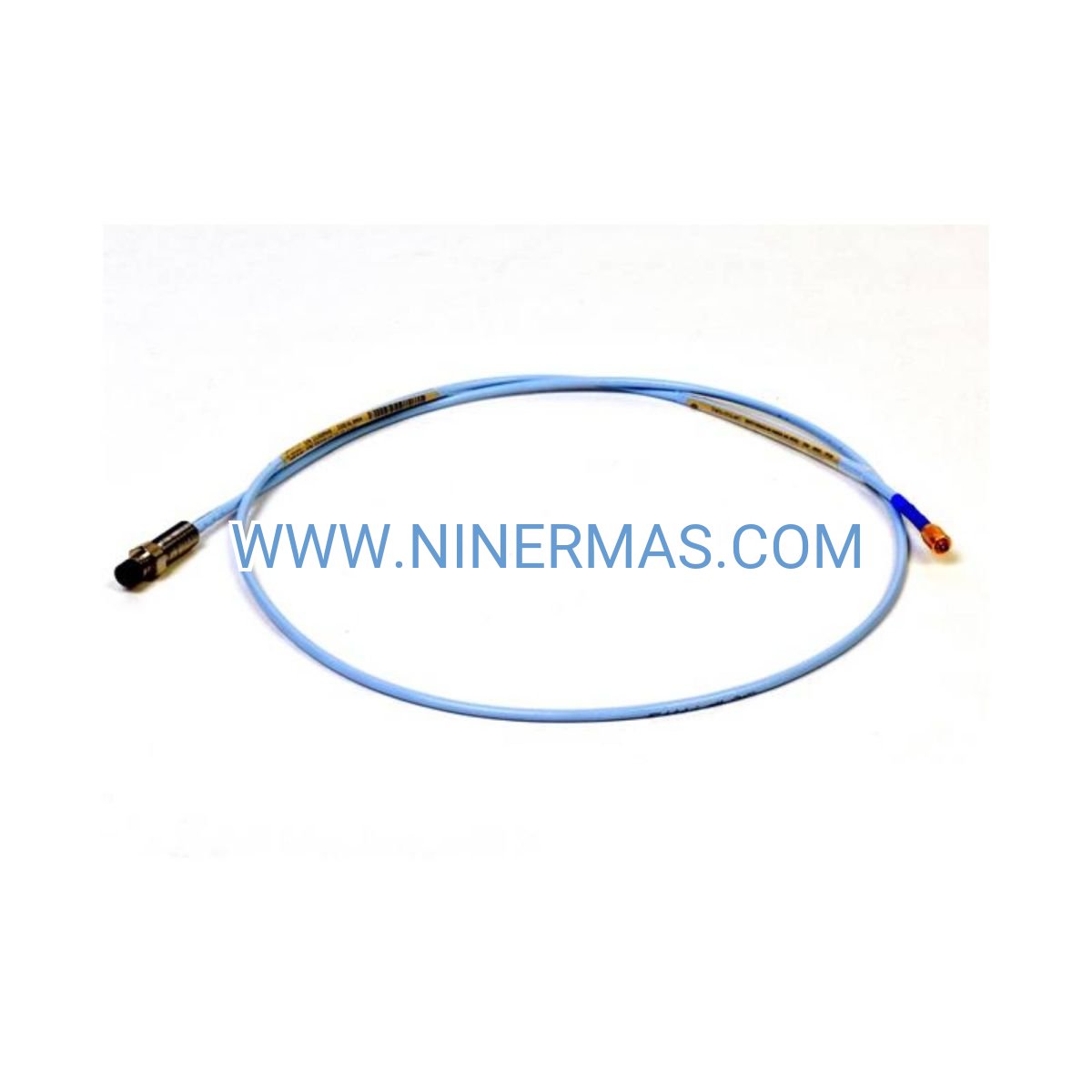
8mm Armored Proximity Probe for Industrial Vibration Monitoring (Bently Nevada 3300 XL Series)
The 330198-10-20-00 is an industrial-grade 8mm proximity transducer engineered for continuous shaft displacement and radial vibration monitoring in critical rotating machinery. Utilizing eddy current sensing technology combined with armored cable protection, this probe delivers stable, high-fidelity measurements in environments subject to mechanical stress, temperature extremes, and electromagnetic interference.
Designed for turbomachinery protection systems in power generation, oil & gas processing, and heavy industrial facilities, this probe addresses common challenges including bearing wear detection, shaft eccentricity measurement, rotor dynamic analysis, and early fault detection. It serves design engineers, maintenance teams, reliability engineers, and OEM integrators who require proven sensor technology with documented performance in mission-critical applications.
Through factory-calibrated construction and standardized mounting dimensions, the 330198-10-20-00 offers rapid installation, predictable performance across wide temperature ranges, and seamless integration with existing 3300 XL monitoring infrastructure. Field-proven reliability, comprehensive technical documentation, and global service support make this probe suitable for new installations and retrofit projects alike. Contact our application engineers for system configuration guidance, mounting recommendations, and technical specifications tailored to your machinery profile.
Core Capabilities & Technical Advantages
Armored Cable Construction for Harsh Environments
Stainless steel flexible conduit protects the integral cable from impact damage, abrasion, and crushing forces common in turbine halls, compressor stations, and process areas. This design eliminates premature cable failures and reduces unplanned maintenance interventions.
Wide Operating Temperature Range
Functional from -40°C to +85°C (-40°F to +185°F), the probe maintains calibration accuracy across seasonal variations and process upsets, suitable for outdoor installations, steam turbine casings, and refrigeration compressor applications without temperature compensation requirements.
Extended Linear Measurement Range
Provides 0.4 to 2.0mm (16 to 80 mils) linear output range, enabling accurate tracking of both steady-state shaft position and dynamic vibration amplitudes. The 1.0mm nominal gap setting offers optimal sensitivity while maintaining adequate clearance for thermal growth and transient events.
High-Frequency Response for Fault Detection
DC to 10 kHz bandwidth (-3 dB point) captures subsynchronous, synchronous, and high-order harmonic components essential for diagnosing rubs, looseness, misalignment, and blade-pass phenomena in high-speed rotating equipment.
Factory-Sealed Calibration Integrity
Each probe ships with traceable calibration data specific to its serial number. The sealed construction prevents moisture ingress and contamination, ensuring long-term measurement stability without field recalibration requirements over typical 5-10 year service intervals.
Universal Mounting Compatibility
M12 x 1.0mm threaded body fits standard ISO and API machinery mounting bosses. The compact 8mm diameter allows installation in space-constrained bearing housings and retrofit applications where larger probes cannot be accommodated.
Typical Application Scenarios
This proximity probe serves industries and equipment types where continuous condition monitoring directly impacts safety, production continuity, and asset longevity:
Steam & Gas Turbine Generator Sets
Monitors journal bearing clearances, thrust position, and differential expansion in utility-scale and industrial cogeneration turbines. Provides trip-level protection against bearing failures and rotor-to-stator contact events that can cause catastrophic damage within seconds.
Centrifugal & Axial Compressor Trains
Tracks radial shaft motion in multi-stage compressors handling natural gas, air, refrigerants, and process gases. Early detection of surge conditions, aerodynamic instabilities, and bearing degradation prevents unplanned shutdowns and extends overhaul intervals in continuous-duty applications.
Large Electric Motors & Generators
Measures rotor eccentricity and bearing wear in motors above 500 HP, synchronous generators, and variable-speed drive systems. Enables predictive maintenance strategies that reduce motor failures and optimize lubrication practices in cement plants, mining operations, and steel mills.
Pumps & Blowers in Critical Services
Provides vibration data for boiler feed pumps, pipeline pumps, and induced draft fans where equipment failure directly impacts process safety or environmental compliance. Supports API 670 machinery protection system requirements in refineries and chemical plants.
Paper Machine Dryer Sections & Calenders
Monitors high-speed rotating cylinders and press rolls in paper and pulp production lines. Detects bearing issues before web breaks occur, minimizing production losses and quality defects in continuous manufacturing processes.
Technical Specifications & Selection Parameters
To facilitate engineering design and procurement, the following parameters define the probe's operational envelope and physical characteristics. Custom cable lengths and special materials are available for project-specific requirements.
| Parameter | Specification |
|---|---|
| Model Number | 330198-10-20-00 |
| Sensing Element Diameter | 8mm (0.315 inches) |
| Thread Type | M12 x 1.0mm metric fine |
| Cable Type | Armored (stainless steel flexible conduit) |
| Standard Cable Length | 5 meters (custom lengths available) |
| Linear Range | 0.4 to 2.0mm (16 to 80 mils) |
| Recommended Gap | 1.0mm (40 mils) nominal |
| Frequency Response | 0 to 10 kHz (-3 dB) |
| Operating Temperature | -40°C to +85°C (-40°F to +185°F) |
| Target Material | Ferromagnetic (4140 steel or equivalent, ≥10% IACS conductivity) |
| System Compatibility | 3300 XL Proximitor, 3300 NSv (with extension cable) |
| Housing Material | Stainless steel (corrosion-resistant) |
| Typical Weight | 0.2 kg (varies with cable length) |
Selection Guidance for Engineers
When specifying proximity probes, consider: shaft diameter and surface finish (Ra ≤ 3.2 μm recommended), available mounting depth and radial clearance, ambient temperature profile including transients, cable routing path and required armor protection level, and proximitor sensor location relative to probe installation point. For applications involving non-standard shaft materials (aluminum, titanium, Inconel), consult factory for target sensitivity factors. Our application engineers can review machinery drawings, recommend optimal probe placement per API 670 guidelines, and provide system integration support including cable termination details and grounding practices.
System Integration & Advanced Features
Proximitor Sensor Pairing
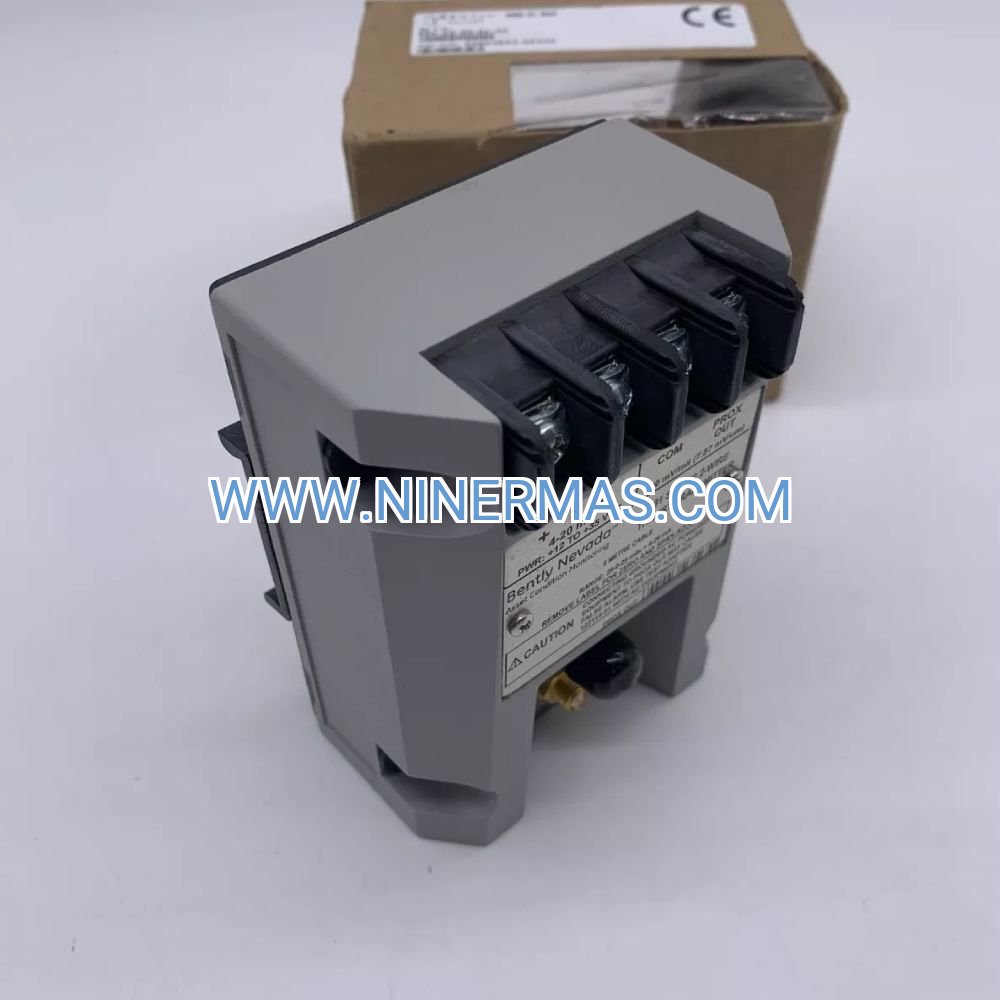
The probe requires connection to a 3300 XL proximitor sensor module (such as 330180 or 330780 series) which provides excitation voltage, signal conditioning, and buffered outputs for DCS, PLC, or vibration monitoring systems. The proximitor converts probe impedance changes into industry-standard 4-20 mA or -10 to +10 VDC signals.
Extension Cable Compatibility
For installations where probe-to-proximitor distance exceeds standard cable length, factory-approved extension cables maintain system calibration. Total system length (probe cable + extension) should not exceed manufacturer limits to preserve frequency response and noise immunity.
Dual-Probe Configurations
Many applications require orthogonal probe pairs (X-Y measurement) to fully characterize shaft orbit and vibration vectors. Probes should be installed 90° apart in the same axial plane, with consistent gap settings and matched proximitor modules for accurate phase relationships.
Hazardous Area Installations
When used with intrinsically safe proximitor barriers, the probe can be installed in Class I Division 1 and ATEX Zone 1 locations. Consult certification documentation for entity parameters and installation requirements in explosive atmospheres.
Delivery, Quality Assurance & Technical Support
Lead Time & Availability
Standard configuration units typically ship within 3-5 business days from regional distribution centers. Custom cable lengths or special materials require 2-3 weeks factory lead time. Expedited processing available for emergency replacements and critical outage support.
Warranty Coverage
Each probe includes a 12-month warranty from shipment date, covering material defects and workmanship under normal operating conditions. Warranty excludes damage from improper installation, mechanical abuse, or operation beyond published specifications.
Documentation Package
Shipments include: individual probe calibration certificate with serial number traceability, installation and mounting instructions with torque specifications, dimensional drawings in DXF and PDF formats, system wiring diagrams for common proximitor models, and material certifications upon request.
Field Service & Commissioning
Technical support available for installation supervision, gap setting verification, system checkout, and troubleshooting. Remote assistance provided via phone and video conference; on-site service available in major industrial regions (travel and labor charges apply). Training programs offered for maintenance personnel on probe installation best practices and vibration monitoring fundamentals.
Calibration & Repair Services
Factory recalibration services available for probes requiring verification after extended service or suspected damage. Typical turnaround 7-10 business days. Loaner probes available to minimize downtime during calibration cycles.
Frequently Asked Questions (FAQ)
Q: How do I determine the correct probe diameter for my application?
A: Probe diameter selection depends on shaft diameter, available mounting space, and required sensitivity. For shafts 50-200mm diameter, 8mm probes offer optimal performance. Smaller shafts (25-75mm) may benefit from 5mm probes, while large turbine shafts (>300mm) can use 11mm probes for increased output. The 8mm size provides the best balance of sensitivity and mechanical robustness for general industrial machinery.
Q: What is the difference between armored and standard cable construction?
A: Armored probes feature stainless steel flexible conduit over the integral cable, providing mechanical protection against impact, abrasion, and crushing. Standard probes use polyurethane or PVC jacketed cable suitable for benign environments. Choose armored construction for installations near rotating equipment, high-traffic areas, or where cable routing exposes it to mechanical hazards. The armor adds minimal weight and does not affect electrical performance.
Q: Can this probe measure axial (thrust) position in addition to radial vibration?
A: Yes, when mounted perpendicular to a thrust collar or shaft shoulder, the probe accurately measures axial displacement. Thrust monitoring typically requires a single probe, while radial vibration monitoring uses two probes in X-Y configuration. Ensure the target surface meets flatness and finish requirements for axial measurements.
Q: What proximitor sensor models are compatible with the 330198-10-20-00 probe?
A: The probe works with all 3300 XL proximitor sensors including 330180, 330780, and 330880 series. It is also backward-compatible with 3300 NSv proximitors (330101, 330105) when used with appropriate extension cables. Verify proximitor power supply voltage and output signal requirements match your monitoring system inputs.
Q: How often does the probe require recalibration?
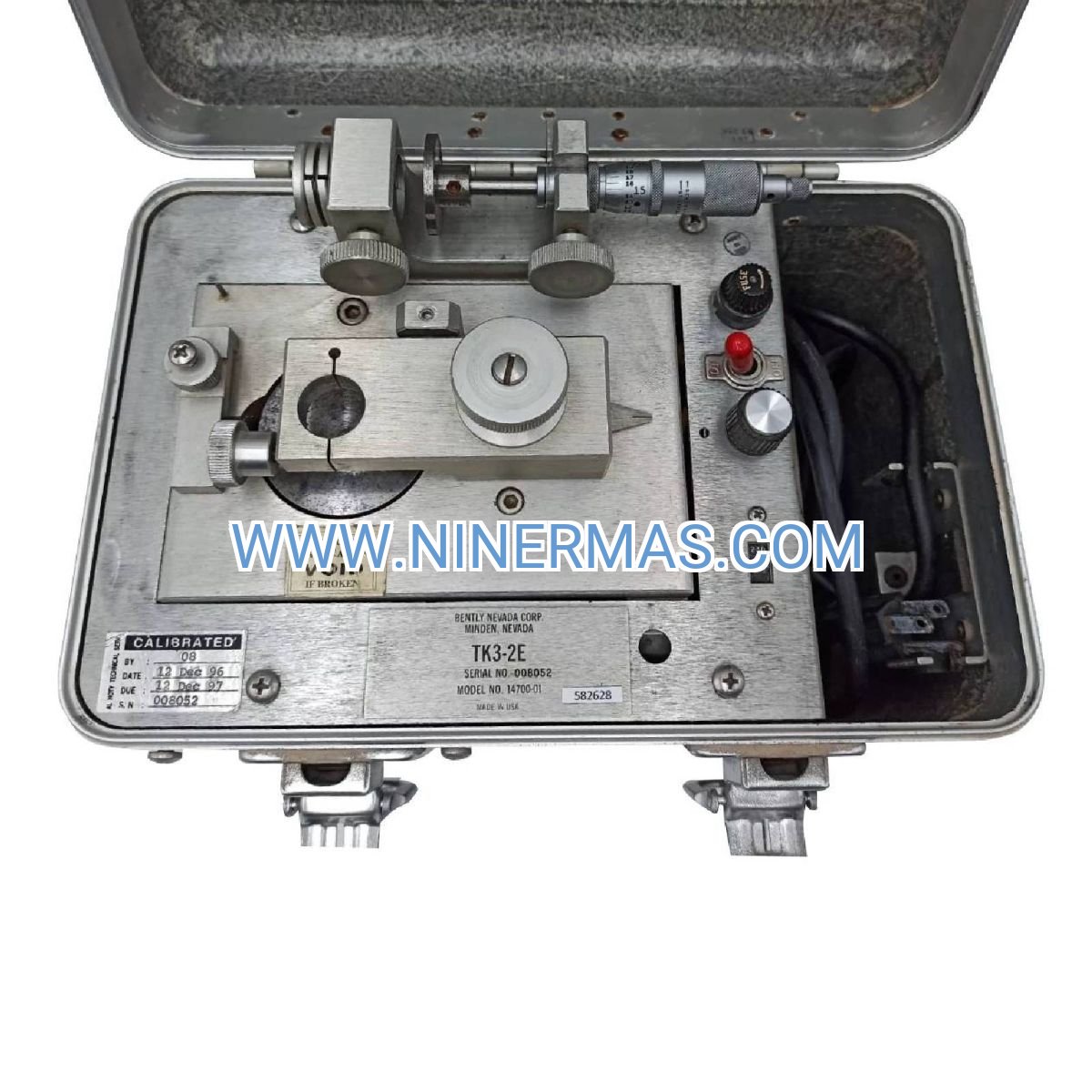
A: Under normal operating conditions, proximity probes maintain calibration accuracy for 5-10 years or longer. Recalibration is recommended if the probe experiences mechanical damage, exposure to temperatures beyond specification, or if system accuracy verification fails. Many users perform system checks during scheduled machinery outages rather than routine probe recalibration.
Q: What shaft surface finish and material are required for accurate measurements?
A: The probe requires ferromagnetic target material with minimum 10% IACS electrical conductivity. Common shaft materials include 4140 steel, 4340 steel, and 17-4 PH stainless steel. Surface finish should be Ra 3.2 μm (125 μ-inch) or better, with runout less than 25 μm (1 mil) TIR. Non-magnetic materials (aluminum, brass, titanium) require special probe models with different calibration factors.
Request Technical Consultation & Quotation
To receive detailed application guidance, system configuration recommendations, or pricing for your specific project, please provide the following information to our engineering team:
- Equipment type and model (turbine, compressor, motor, pump, etc.)
- Shaft diameter, material, and surface finish specifications
- Operating speed range (RPM) and temperature environment
- Number of measurement points and probe mounting locations
- Existing monitoring system details (if retrofit application)
- Required cable lengths and routing constraints
- Hazardous area classification (if applicable)
- Project timeline and delivery requirements
Our application engineers will provide probe selection verification, mounting recommendations per API 670 or ISO 20816 standards, proximitor pairing suggestions, and complete system pricing including cables, sensors, and installation accessories.
© 2026 NINERMAS COMPANY LIMITED. All rights reserved.
Original Source: https://ninermas.com
Contact: sale@ninermas.com | +0086 187 5021 5667

Contact Info
-
Address:22 / F, South Wo Hang building, 148 Wing Lok Street, Sheung Wan, Western District, Hong Kong
-
Phone:+8618750215667
-
Email:
