Description
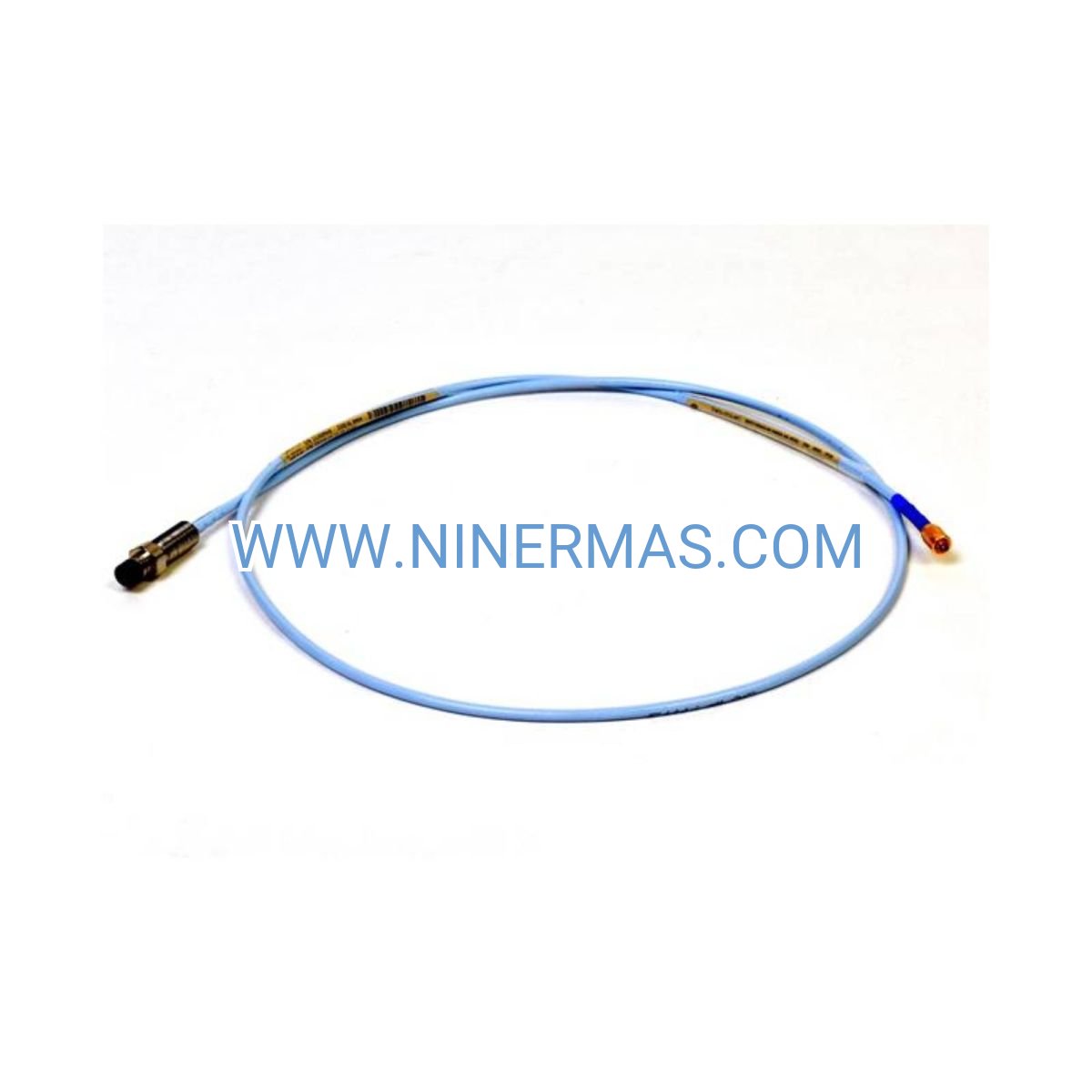
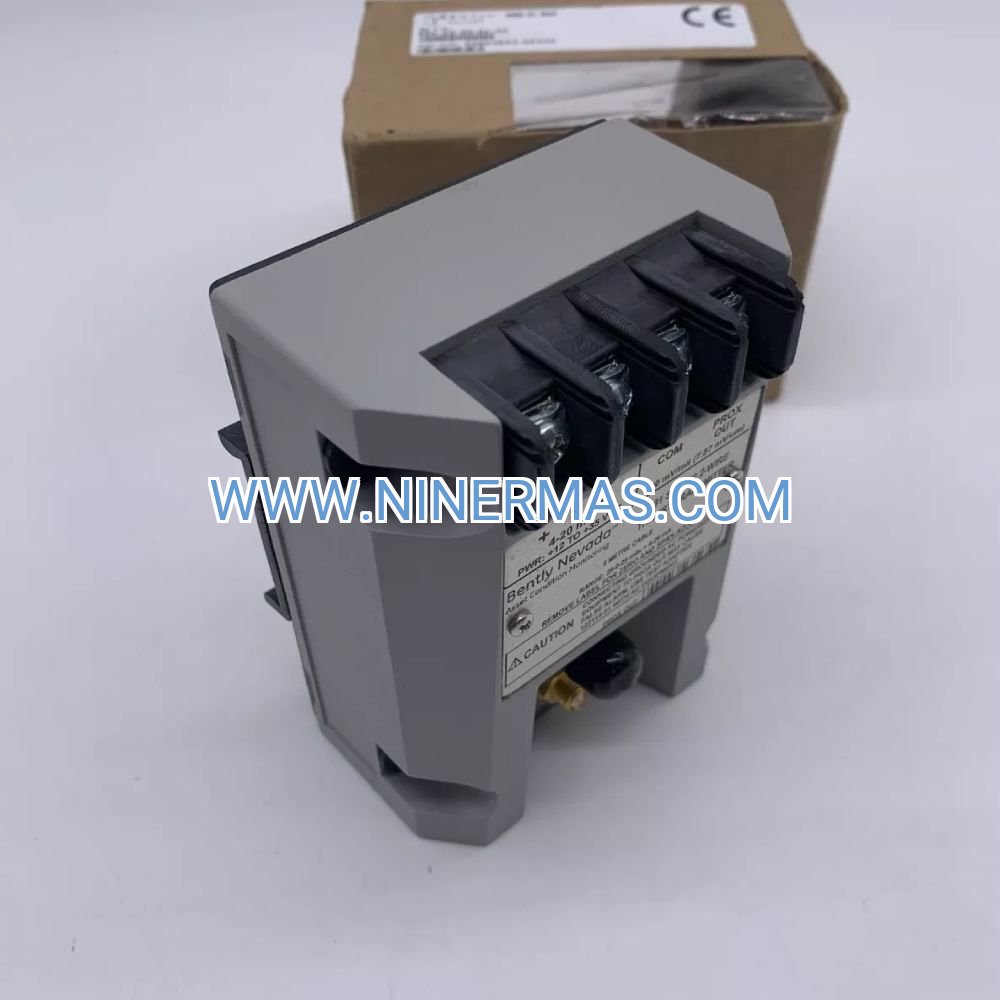
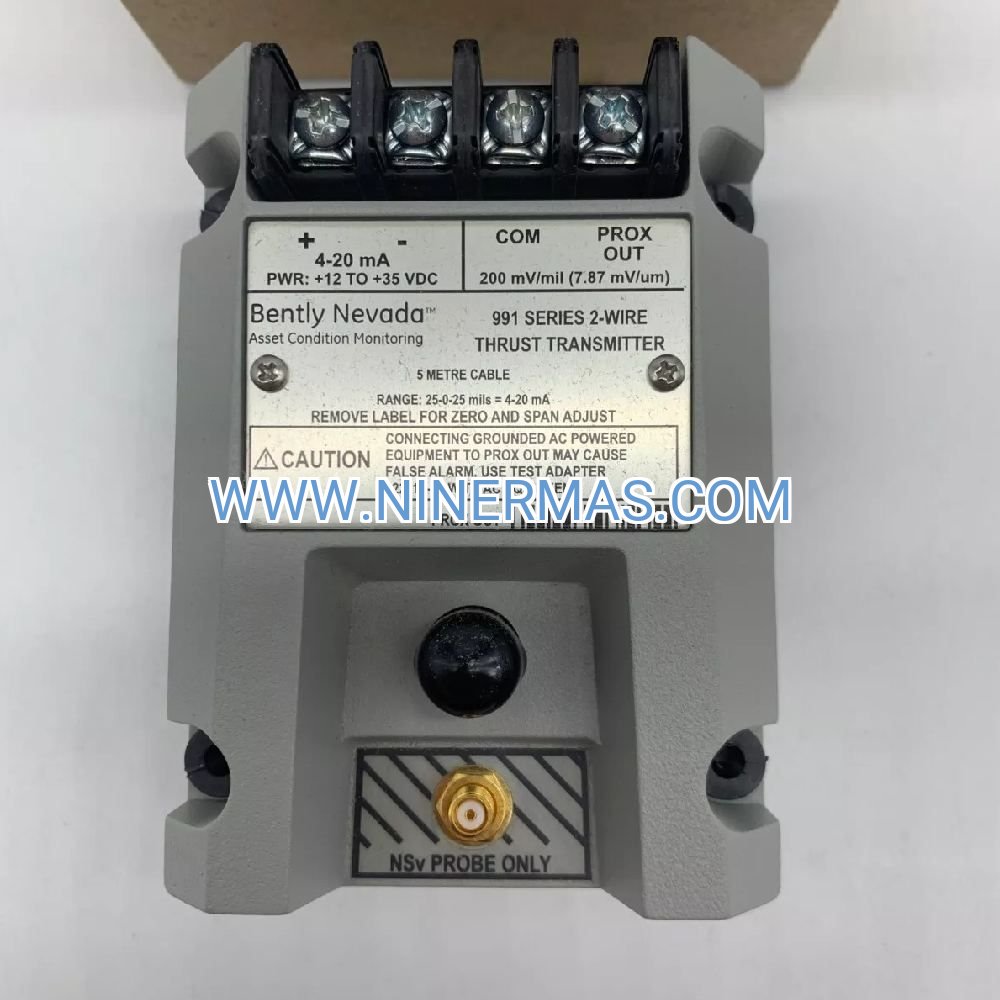
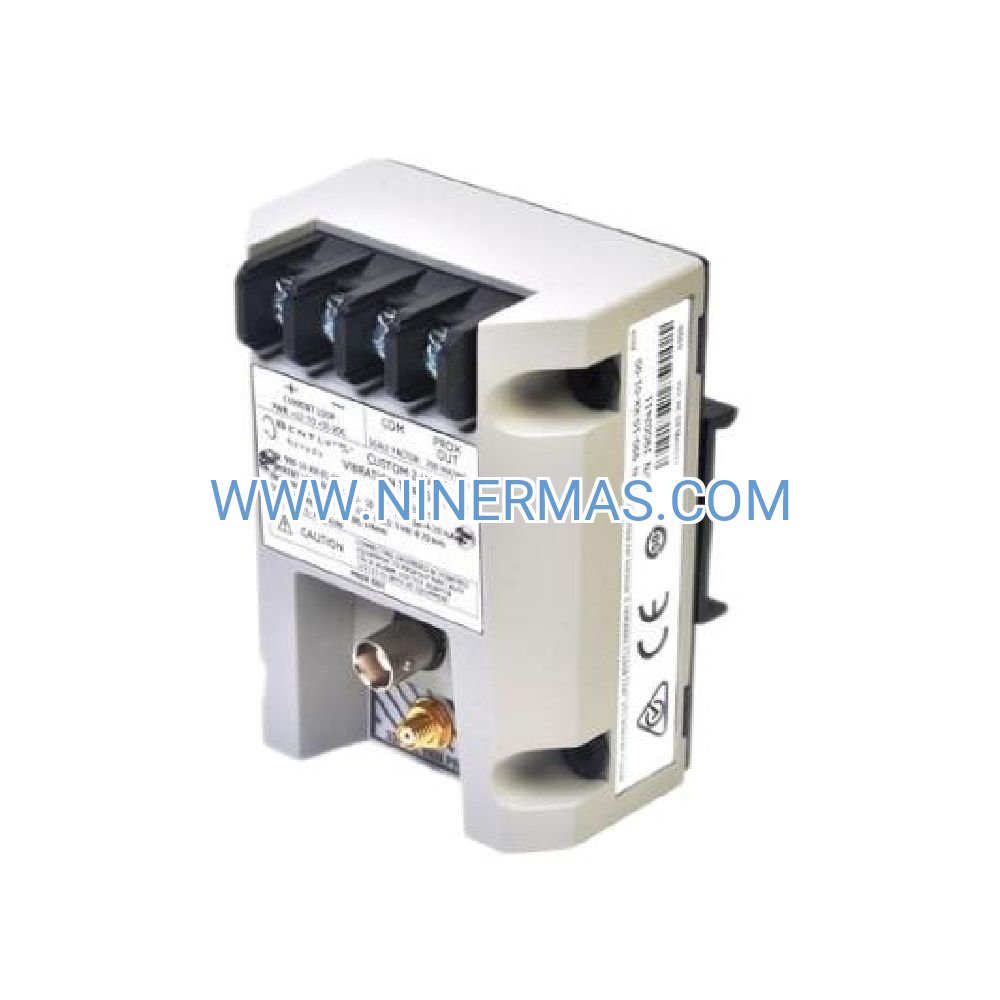
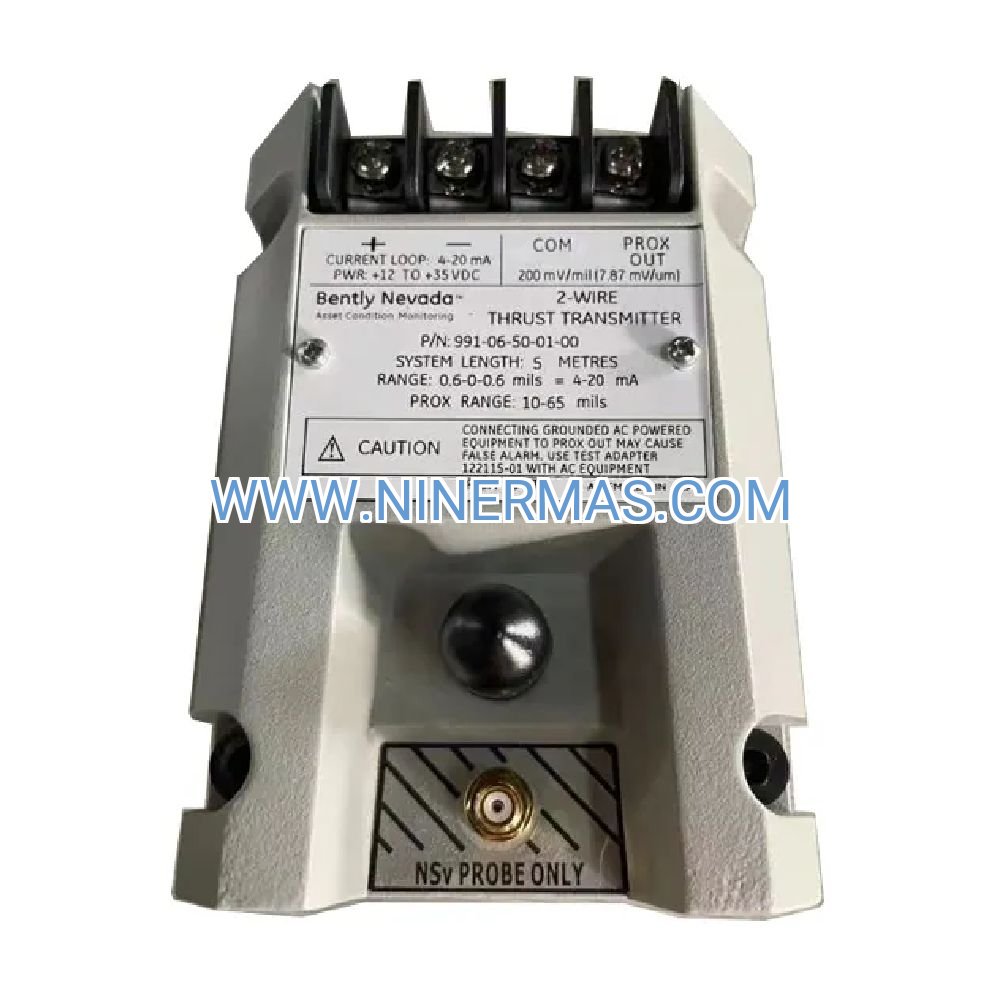
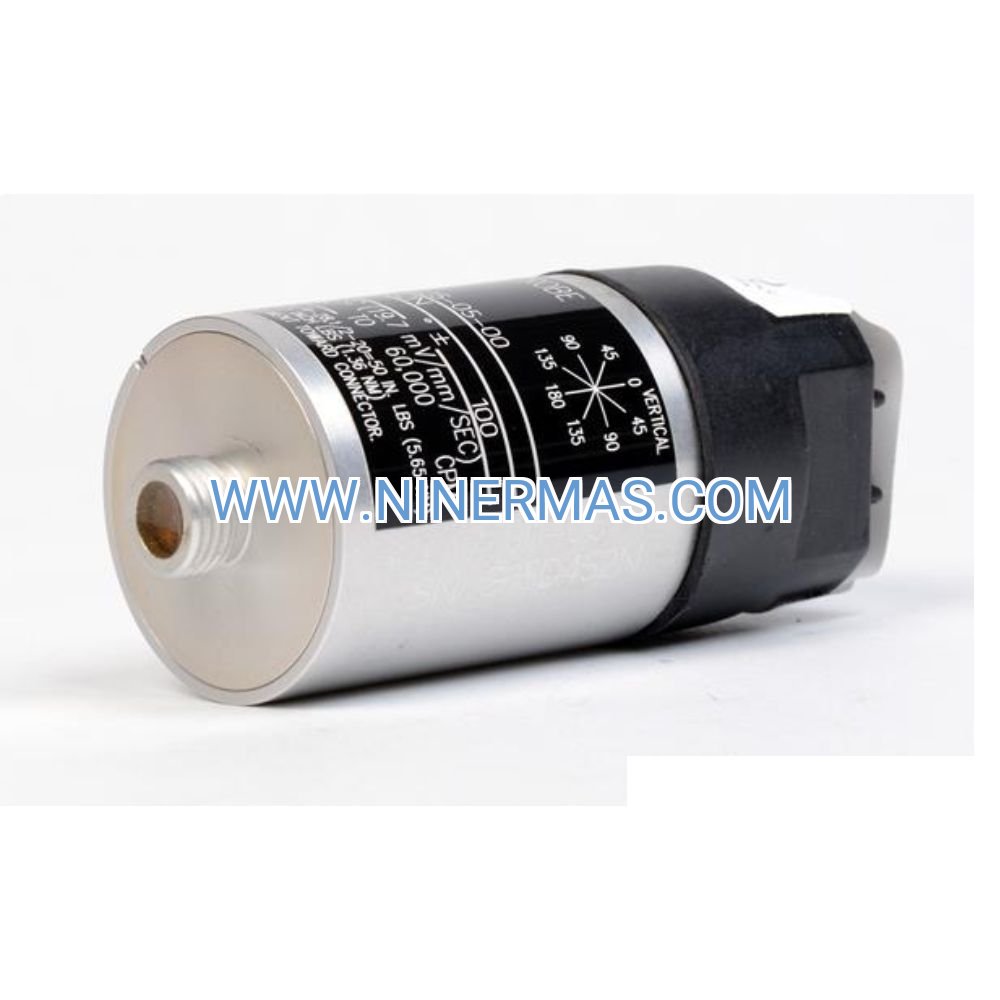
Bently Nevada 330198-10-05-00 Proximitor Sensor (Industrial-Grade Vibration Monitoring System)
The Bently Nevada 330198-10-05-00 is an industrial-grade eddy current proximitor sensor designed for critical rotating machinery monitoring. Through non-contact eddy current technology combined with precision signal conditioning, it delivers real-time shaft displacement, vibration amplitude, and axial position measurement with ±1% linearity accuracy.
Ideal for turbomachinery protection in power generation plants, oil & gas facilities, petrochemical refineries, and heavy manufacturing environments, this sensor addresses common challenges including bearing wear detection, rotor imbalance identification, shaft misalignment monitoring, and critical speed analysis—helping prevent catastrophic failures, reduce unplanned downtime, and extend equipment service life.
Engineered with rugged stainless steel construction and IP65 environmental protection, the 330198-10-05-00 features wide temperature tolerance (-40°C to +85°C), high-frequency response (0-10 kHz), and seamless integration with Bently Nevada 3300 XL monitoring systems. Suitable for design engineers, instrumentation specialists, maintenance teams, and system integrators requiring reliable condition monitoring solutions. Contact our application engineers for customized selection guidance, wiring diagrams, and technical specifications.
Core Features & Technical Advantages
Non-Contact Eddy Current Technology
Utilizes electromagnetic induction principles to measure gap distance between probe tip and ferromagnetic target surface without physical contact, eliminating mechanical wear and enabling continuous 24/7 operation in high-vibration environments with zero maintenance degradation.
High-Precision Measurement Performance
Delivers ±1% full-scale linearity across 0-100 mils (0-2.54 mm) measurement range with -2 to -18 VDC proportional output signal, ensuring accurate detection of micro-level displacement changes critical for early fault diagnosis and trend analysis in predictive maintenance programs.
Industrial-Hardened Construction
Features corrosion-resistant stainless steel housing with IP65 ingress protection rating, capable of withstanding extreme operating temperatures from -40°C to +85°C, high-vibration shock loads, and exposure to moisture, dust, and chemical contaminants common in industrial process environments.
Wide-Bandwidth Frequency Response
Provides 0 to 10 kHz (-3 dB) frequency response bandwidth, capturing both low-frequency shaft runout (1X, 2X harmonics) and high-frequency bearing defect signatures, enabling comprehensive machinery health assessment from startup transients to steady-state operation.
Seamless System Integration
Directly compatible with Bently Nevada 3300 XL proximity transducer systems, 3500 rack monitoring platforms, and third-party DCS/SCADA systems via standard 4-20 mA or voltage output interfaces, supporting Modbus RTU, HART, and OPC protocols for centralized data acquisition.
Proven Field Reliability
Backed by over 50 years of Bently Nevada engineering heritage and deployed in thousands of critical rotating equipment installations worldwide, meeting API 670 machinery protection standards and ISO 20816 vibration severity guidelines for turbomachinery applications.
Typical Application Scenarios
This proximitor sensor is engineered for demanding industrial environments requiring continuous vibration monitoring and machinery protection:
Steam & Gas Turbine Monitoring
Installed on power generation turbines (50-500 MW capacity) to monitor radial shaft vibration, thrust position, differential expansion, and eccentricity during startup, load changes, and shutdown sequences, preventing blade rubs and bearing failures that could result in multi-million dollar outages.
Centrifugal & Axial Compressor Protection
Applied in oil & gas pipeline compressor stations and petrochemical process units to detect surge conditions, rotor instability, and seal degradation through continuous X-Y vibration orbit analysis, enabling automated shutdown before catastrophic damage occurs.
High-Speed Pump & Motor Systems
Deployed on boiler feed pumps, cooling water pumps, and variable-speed drive motors (>3600 RPM) in power plants and industrial facilities to identify cavitation, hydraulic imbalance, and coupling misalignment through vibration signature analysis and phase relationship measurements.
Offshore Platform Rotating Equipment
Utilized on offshore oil & gas production platforms for gas turbine generators, crude oil transfer pumps, and seawater injection systems where harsh marine environments, limited maintenance access, and safety-critical operations demand maximum sensor reliability and corrosion resistance.
Process Industry Critical Machinery
Implemented in paper mills, steel rolling mills, cement plants, and chemical processing facilities to monitor gearboxes, fans, blowers, and conveyor drive systems, reducing unplanned maintenance costs and improving overall equipment effectiveness (OEE) through condition-based maintenance strategies.
Technical Specifications & Selection Parameters
To facilitate engineering design and equipment selection, we provide comprehensive technical parameters for the 330198-10-05-00 proximitor sensor. Custom configurations are available to meet specific project requirements.
Electrical Specifications:
- Measurement Range: 0-100 mils (0-2.54 mm) linear displacement
- Output Signal: -2 to -18 VDC (proportional to target gap distance)
- Frequency Response: DC to 10 kHz (-3 dB bandwidth)
- Linearity: ±1% of full scale (with calibrated target material)
- Sensitivity: Approximately -200 mV/mil (typical with steel target)
- Power Supply: Provided by proximitor transducer system (typically -24 VDC)
Mechanical & Environmental:
- Probe Thread Size: 5 mm or 8 mm diameter options (specify at order)
- Housing Material: 300-series stainless steel (corrosion-resistant)
- Cable Type: Low-noise coaxial extension cable (custom lengths available)
- Operating Temperature: -40°C to +85°C (-40°F to +185°F)
- Storage Temperature: -55°C to +95°C (-67°F to +203°F)
- Ingress Protection: IP65 (dust-tight, water jet resistant)
- Vibration Tolerance: 10 g RMS (10-2000 Hz per IEC 60068-2-6)
- Shock Resistance: 50 g peak (11 ms duration per IEC 60068-2-27)
Target Material Requirements:
- Preferred Materials: Low-carbon steel, 4140 alloy steel, 416 stainless steel
- Surface Finish: 32 micro-inch Ra or better (smoother surfaces improve linearity)
- Minimum Target Diameter: 3x probe diameter (e.g., 24 mm for 8 mm probe)
- Target Thickness: Minimum 3 mm for accurate eddy current penetration
Compliance & Standards:
- API 670: Machinery Protection Systems (5th Edition)
- ISO 20816: Mechanical Vibration - Measurement and Evaluation
- IEC 61508: Functional Safety (SIL-capable when integrated with certified systems)
- CE Marking: EMC Directive 2014/30/EU compliance
Selection Guidance:
When specifying the 330198-10-05-00 proximitor sensor, consider the following application parameters: shaft diameter and material composition, maximum vibration amplitude expected, operating speed range (RPM), ambient temperature extremes, mounting space constraints, and required cable length from probe to proximitor transducer. For complex installations involving multiple measurement points, thrust position monitoring, or hazardous area classifications (ATEX/IECEx), please provide detailed machinery drawings and operating conditions. Our application engineers will recommend optimal probe length, gap voltage settings, and system configuration to ensure measurement accuracy and long-term reliability.
System Integration & Extended Capabilities
Compatible Monitoring Platforms:
- Bently Nevada 3300 XL Proximity Transducer Systems (direct plug-in compatibility)
- Bently Nevada 3500 Rack Monitoring Systems (via proximitor interface modules)
- Orbit 60 Machinery Diagnostic Software (for advanced vibration analysis)
- Third-Party DCS/PLC Systems (Siemens, ABB, Emerson, Honeywell via analog I/O)
- SCADA Platforms (Wonderware, iFIX, WinCC via Modbus/OPC gateways)
Advanced Monitoring Functions:
- Real-time shaft vibration amplitude and phase tracking (Bode plots, polar plots)
- X-Y orbit generation for rotor dynamic behavior analysis
- Automated alarm and shutdown triggering based on API 670 trip multiply settings
- Historical trend data logging for predictive maintenance and failure mode analysis
- Remote diagnostics via Ethernet/IP or wireless IIoT gateways (Industry 4.0 ready)
Typical System Architecture:
A complete vibration monitoring solution typically includes: (1) 330198-10-05-00 proximitor sensors installed at bearing housings (X-Y radial positions), (2) 3300 XL proximitor transducers providing -24 VDC excitation and signal conditioning, (3) 3500 rack monitor modules performing real-time analysis and alarm logic, (4) communication gateways interfacing to plant DCS for operator HMI display, and (5) Orbit 60 diagnostic software for engineering analysis and root cause investigation. This layered architecture ensures both real-time protection and comprehensive diagnostic capabilities.
Delivery, Service & Quality Assurance
Lead Time & Inventory:
Standard 330198-10-05-00 configurations with common probe lengths (100 mm, 150 mm, 200 mm) and 5-meter extension cables are typically available from stock with 3-5 business day shipping. Custom configurations including special probe threads, extended cable lengths (up to 50 meters), or high-temperature variants require 2-4 weeks manufacturing lead time. Expedited processing is available for critical outage situations.
Warranty Coverage:
All Bently Nevada 330198-10-05-00 proximitor sensors include a comprehensive 12-month manufacturer warranty covering defects in materials, workmanship, and performance specifications. Warranty support includes free replacement of defective units, technical troubleshooting assistance, and calibration verification services.
Technical Support Services:
- Pre-Sales Application Engineering: Free consultation on sensor selection, mounting design, and system integration requirements
- Installation Guidance: Detailed procedures for gap voltage setting, probe runout compensation, and transducer calibration per Bently Nevada manual 141537-01
- Commissioning Assistance: Remote or on-site support for initial startup, baseline vibration data collection, and alarm setpoint configuration
- Troubleshooting Support: Diagnostic assistance for signal quality issues, cable integrity testing, and sensor replacement procedures
- Training Programs: Operator training on vibration fundamentals and maintenance technician certification on Bently Nevada systems
Documentation Package:
Each sensor shipment includes: (1) Product datasheet with dimensional drawings and electrical specifications, (2) Installation and maintenance manual (Bently Nevada publication 141537-01), (3) Factory calibration certificate with gap voltage curve data, (4) Material traceability documentation and compliance certificates, (5) Recommended spare parts list for long-term maintenance planning.
Quality Assurance Process:
Prior to shipment, every 330198-10-05-00 sensor undergoes rigorous factory testing including: visual inspection for mechanical defects, electrical continuity and insulation resistance verification, gap voltage linearity testing against NIST-traceable standards, frequency response characterization, and environmental stress screening (thermal cycling and vibration exposure). Test records are maintained for full product traceability.
Frequently Asked Questions (FAQ)
Q: How does the 330198-10-05-00 proximitor sensor integrate with existing Bently Nevada 3300 systems?
A: The 330198-10-05-00 is fully backward compatible with legacy 3300 and 3300 XL proximitor transducer systems. It connects via standard coaxial extension cable to the proximitor housing, which provides -24 VDC excitation and outputs a buffered -2 to -18 VDC signal proportional to gap distance. No system modifications or recalibration are required when replacing older 330180 or 330190 series probes, making it an ideal drop-in upgrade for aging installations.
Q: What is the maximum number of sensors supported in a multi-channel monitoring system?
A: A typical turbomachinery monitoring configuration uses 2 sensors per bearing (X-Y radial positions) plus optional thrust position and differential expansion sensors. A Bently Nevada 3500 rack system can accommodate up to 20 monitor modules, with each module supporting 2-4 sensor channels depending on module type (e.g., 3500/42M supports 4 proximitor channels). For large steam turbines with 5-7 bearings, systems commonly deploy 10-14 radial vibration sensors plus 2-4 position sensors, totaling 12-18 channels per machine train.
Q: Can this sensor measure vibration on non-ferromagnetic shafts such as stainless steel or titanium?
A: Eddy current proximitor sensors require electrically conductive ferromagnetic target materials (carbon steel, alloy steel, magnetic stainless steels like 410/416 series) for optimal performance. Non-magnetic materials including austenitic stainless steel (304/316), titanium, aluminum, and brass will produce significantly reduced sensitivity and non-linear response. For non-ferromagnetic shafts, alternative technologies such as capacitance probes or laser displacement sensors should be considered. Contact our application engineers for material-specific recommendations.
Q: What are the typical installation gap voltage settings and how is calibration performed?
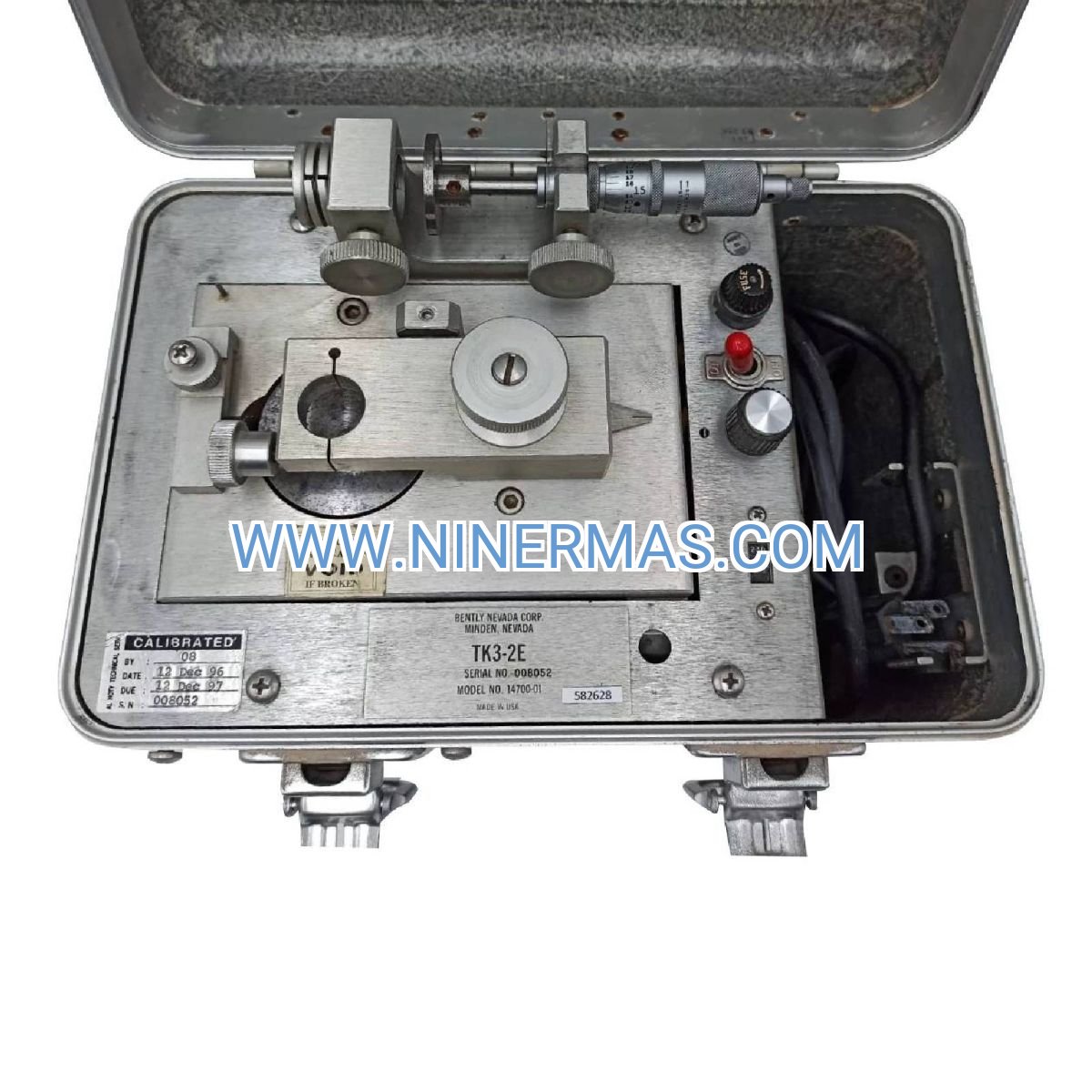
A: Standard installation practice calls for setting the probe-to-target gap to achieve -10 VDC output voltage at the proximitor transducer (corresponding to approximately 50 mils or 1.27 mm gap with steel targets). This mid-range setting provides ±50 mils of measurement headroom for vibration excursions. Calibration is performed using precision feeler gauges or micrometer-adjustable fixtures to establish the gap voltage curve, verifying linearity across the full 0-100 mil range. The Bently Nevada TK-3 test kit provides field-portable calibration verification capabilities. Detailed procedures are documented in installation manual 141537-01.
Q: Is the 330198-10-05-00 sensor certified for use in hazardous (explosive) atmospheres?
A: The standard 330198-10-05-00 configuration is NOT intrinsically safe and is intended for general industrial use in non-classified areas. For installations in Zone 1/Division 1 hazardous locations (flammable gas/vapor environments), Bently Nevada offers ATEX-certified and IECEx-certified proximitor systems with intrinsically safe (IS) barriers and blue-coded IS cable assemblies. These certified systems limit energy levels to prevent ignition sources. Please specify hazardous area classification requirements (ATEX Zone, NEC Division/Class, or IECEx) when requesting quotations for explosive atmosphere applications.
Q: How do I verify sensor functionality and diagnose common installation problems?
A: Sensor verification involves three key tests: (1) DC resistance measurement across probe connector pins (should read 5-10 ohms for typical 5mm/8mm probes), (2) gap voltage output check using the TK-3 test kit or multimeter while varying probe-to-target distance (should show linear -2 to -18 VDC change), and (3) frequency response verification by introducing known vibration stimulus. Common installation issues include: incorrect gap voltage (check mounting distance and target material), noisy or erratic signals (inspect cable shielding integrity and grounding), and non-linear response (verify target surface finish, flatness, and minimum diameter requirements). Consult troubleshooting flowcharts in manual 141537-01 for systematic diagnostic procedures.
Q: What is the expected service life and recommended replacement interval for proximitor sensors?
A: Bently Nevada proximitor sensors have no moving parts or wear mechanisms, providing essentially unlimited service life under normal operating conditions. Field experience shows sensors routinely operating 15-20+ years without performance degradation. However, recommended maintenance practices include: (1) annual gap voltage verification to detect cable degradation or connector corrosion, (2) visual inspection of probe tip for mechanical damage or contamination buildup, (3) cable insulation resistance testing every 3-5 years, and (4) replacement consideration after 20 years or following exposure to extreme events (lightning strikes, chemical spills, mechanical impact). Proactive replacement during planned outages is recommended for critical machinery protection applications.
Request Technical Selection Support
To receive customized application engineering support, detailed selection recommendations, and project-specific quotations, please provide the following information to our technical team:
- Project Overview: Plant name, equipment type (turbine/compressor/pump model), and application criticality
- Machinery Details: Shaft diameter, shaft material composition, operating speed range (RPM), and maximum expected vibration levels
- Measurement Requirements: Number of measurement points, radial/axial/thrust positions, and required measurement range
- Environmental Conditions: Ambient temperature range, humidity levels, presence of corrosive chemicals, and hazardous area classification (if applicable)
- System Integration: Existing monitoring system (Bently Nevada 3300/3500, third-party DCS/PLC), communication protocol requirements, and alarm/shutdown logic needs
- Installation Constraints: Available mounting space, cable routing distance, and accessibility for maintenance
- Project Timeline: Required delivery date, installation schedule, and commissioning support needs
Our application engineers will respond within 24 hours with sensor configuration recommendations, system architecture diagrams, budgetary pricing, and technical documentation to support your project planning and procurement processes.
© 2026 NINERMAS COMPANY LIMITED. All rights reserved.
Original Source: https://ninermas.com
Contact: sale@ninermas.com | +0086 187 5021 5667

Contact Info
-
Address:22 / F, South Wo Hang building, 148 Wing Lok Street, Sheung Wan, Western District, Hong Kong
-
Phone:+8618750215667
-
Email: