


Description
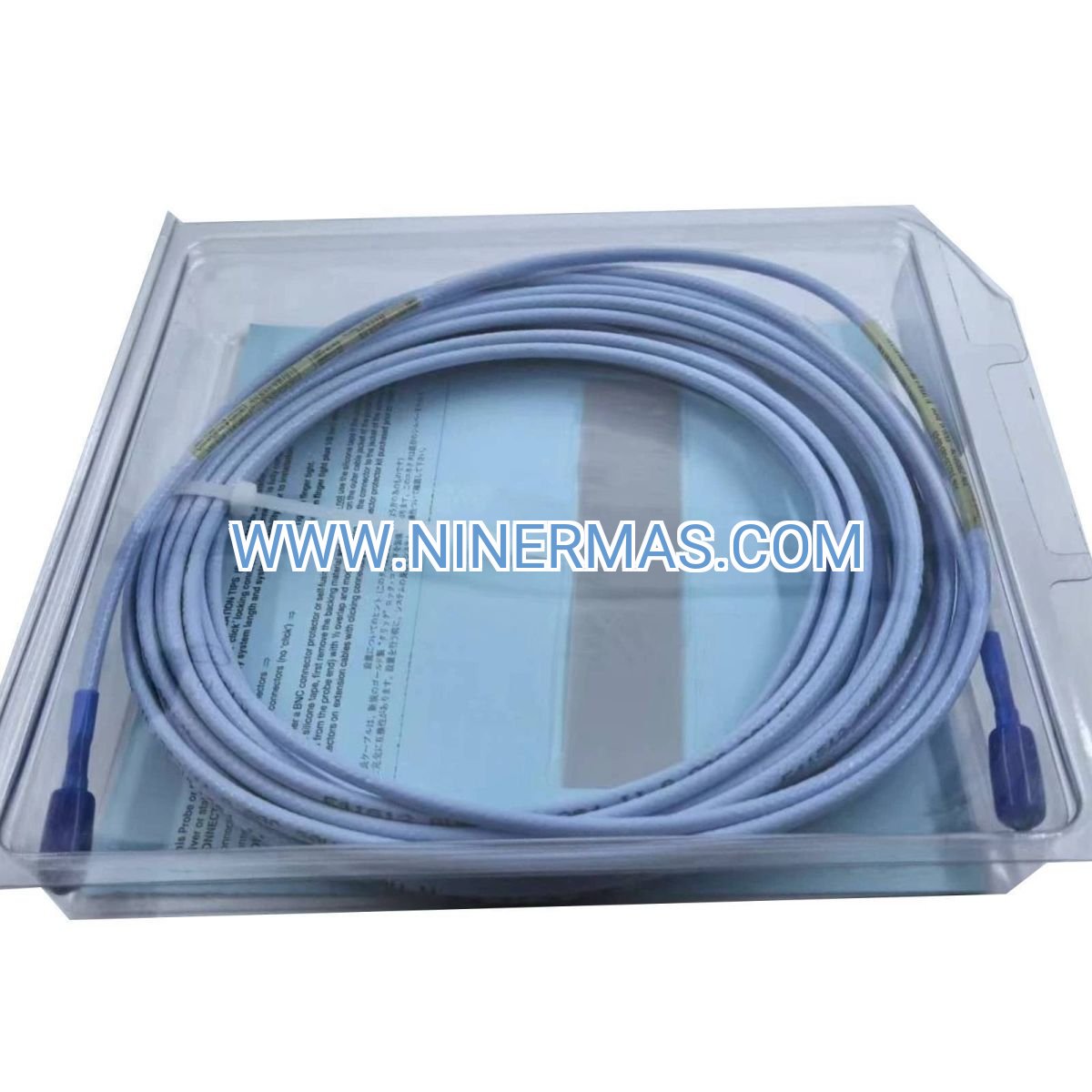
8mm Proximity Transducer Probe for Industrial Vibration Monitoring (Bently Nevada 3300 XL Series)
The Bently Nevada 330197-10-90-05 is an industrial-grade 8mm proximity transducer probe engineered for critical rotating machinery monitoring. Through eddy current sensing technology and precision non-contact measurement, it delivers real-time shaft displacement, radial vibration, and axial position data for turbomachinery protection systems.
Designed for high-reliability applications in power generation, oil & gas processing, petrochemical plants, and heavy manufacturing facilities, this probe addresses common challenges including bearing failure prediction, rotor eccentricity detection, thrust position monitoring, and unplanned equipment downtime. It integrates seamlessly with existing 3300 XL monitoring infrastructure for comprehensive machinery health surveillance.
Built with standardized 8mm diameter configuration and customizable cable lengths, the 330197-10-90-05 offers exceptional thermal stability (-40°C to +105°C), wide frequency response (DC to 10 kHz), corrosion-resistant stainless steel construction, and proven compatibility across Bently Nevada ecosystems. Ideal for design engineers, instrumentation contractors, plant maintenance teams, and OEM integrators seeking reliable condition monitoring solutions. Contact our application engineers for system configuration assistance and technical specifications.
Core Features & Technical Advantages
Precision Non-Contact Sensing
Utilizes eddy current technology with 8mm sensing tip to measure gap voltage changes, providing accurate displacement data without physical contact with rotating shafts. Eliminates wear-related drift and extends sensor operational life in continuous-duty applications.
Wide Operating Temperature Range
Functions reliably from -40°C to +105°C ambient conditions, suitable for extreme environments including steam turbine casings, compressor housings, and outdoor installations. Temperature-compensated design maintains measurement accuracy across thermal cycles.
High-Frequency Response Capability
Captures vibration events from static displacement (0 Hz) up to 10 kHz, enabling detection of both slow-roll runout and high-speed blade-pass frequencies. Critical for multi-stage turbomachinery and high-RPM rotating equipment analysis.
Rugged Industrial Construction
Stainless steel probe body withstands mechanical shock, chemical exposure, and high-vibration mounting environments. Hermetically sealed electronics protect against moisture ingress and contamination in harsh process areas.
System Integration Flexibility
Direct compatibility with Bently Nevada 3300 XL proximitor modules, extension cables, and monitoring racks. Supports both legacy 3300 systems and modern condition monitoring platforms through standardized -24 VDC power and signal interfaces.
Proven Reliability & Diagnostics
Field-proven design with MTBF exceeding 100,000 hours in typical installations. Built-in OK/Alert status indication through proximitor interface enables rapid fault isolation during commissioning and operation.
Typical Application Scenarios
This proximity transducer probe serves critical monitoring functions across industries demanding continuous machinery protection and predictive maintenance capabilities:
Steam & Gas Turbine Monitoring
Measures journal bearing clearances, thrust collar position, and differential expansion in power generation turbines. Detects bearing wear progression, rotor bow conditions, and thermal growth anomalies before catastrophic failure. Commonly deployed in 2-probe or 4-probe XY configurations per bearing.
Centrifugal Compressor Protection
Monitors radial shaft vibration and axial float in multi-stage compressors for oil & gas, chemical processing, and air separation plants. Enables early detection of surge conditions, impeller rubs, seal degradation, and coupling misalignment. Integrates with API 670 compliant machinery protection systems.
Large Motor & Generator Surveillance
Tracks rotor eccentricity and bearing clearance changes in motors above 500 HP and synchronous generators. Identifies rotor bar defects, magnetic center shifts, and foundation settling issues. Supports both radial and thrust position measurement in vertical and horizontal configurations.
Pump & Fan Condition Monitoring
Provides continuous vibration data for critical process pumps, boiler feed pumps, induced draft fans, and forced draft fans. Detects cavitation, impeller imbalance, bearing deterioration, and shaft misalignment. Reduces maintenance costs through condition-based intervention strategies.
Industrial Gearbox & Coupling Analysis
Measures shaft displacement at gearbox input/output and flexible coupling locations. Identifies gear tooth wear patterns, lubrication breakdown, and torsional vibration issues in rolling mills, extruders, and conveyor drives.
Technical Parameters & Selection Guide
To facilitate engineering design and procurement, we provide comprehensive specifications for the 330197-10-90-05 proximity transducer probe. Custom configurations available for specialized applications.
| Parameter | Specification |
|---|---|
| Model Number | 330197-10-90-05 |
| Probe Diameter | 8mm (0.315 inch) |
| Thread Size | M10 x 1.0 metric |
| Cable Length | 0.5 meters (factory-attached) |
| Extension Cable Compatibility | Up to 9 meters total system length |
| Operating Temperature | -40°C to +105°C (-40°F to +221°F) |
| Frequency Response | 0 Hz (DC) to 10 kHz (-3dB) |
| Linear Range | 0.5mm to 2.0mm (typical with 4140 steel target) |
| Sensitivity | 7.87 V/mm (200 mV/mil) nominal |
| Target Material | Ferrous metals (4140 steel reference) |
| Probe Body Material | 300-series stainless steel |
| Sealing | Hermetically sealed, IP67 rated |
| Mating Proximitor | 3300 XL 8mm system (e.g., 330180-X0-00) |
| System Power | -24 VDC (supplied via proximitor) |
| Weight | Approximately 0.2 kg |
Selection Considerations
When specifying proximity probes for your application, consider the following factors: target shaft material and surface finish (affects calibration), maximum shaft runout and vibration amplitude (determines linear range requirements), ambient temperature extremes and thermal cycling (impacts probe material selection), mounting accessibility and thread engagement depth (minimum 1.5x thread diameter recommended), total cable run from probe to proximitor (affects signal integrity), and compatibility with existing monitoring system architecture. For non-standard requirements including special cable lengths, high-temperature variants, or metric-to-imperial thread adapters, consult our application engineering team with your machinery specifications.
System Integration & Configuration Options
Complete Monitoring System Components
A functional proximity measurement system requires the 330197-10-90-05 probe, a compatible 3300 XL 8mm proximitor (such as 330180 series), extension cables if needed (330130 series), and appropriate mounting hardware. For new installations, we recommend complete system kits that include factory-matched and calibrated components.
Multi-Channel Configurations
Typical turbomachinery installations utilize 2-probe XY arrangements per bearing (radial vibration), 4-probe configurations for large machines (X, Y, and dual thrust), or 8+ probe systems for critical equipment with multiple bearing locations. We provide pre-engineered channel layouts and wiring diagrams for common machine types.
Retrofit & Upgrade Paths
The 3300 XL series maintains backward compatibility with legacy 3300 systems, enabling phased upgrades without complete system replacement. Existing extension cables and mounting fixtures can often be reused, reducing retrofit costs and installation time.
Digital Integration Capabilities
When paired with modern Bently Nevada monitoring platforms (such as System 1 or Orbit 60), proximity data can be integrated with vibration analysis software, SCADA systems via Modbus/OPC protocols, plant historians for trend analysis, and mobile condition monitoring applications for remote diagnostics.
Delivery, Service & Quality Assurance
Lead Times & Availability
Standard 330197-10-90-05 probes typically ship from stock within 3-5 business days. Custom cable length configurations or special material variants require 2-3 weeks manufacturing lead time. Expedited processing available for critical outage support and emergency replacements.
Warranty & Support Coverage
All proximity transducer probes include a comprehensive 18-month warranty from shipment date, covering manufacturing defects, calibration accuracy, and environmental performance specifications. Extended warranty programs available for long-term projects and installed base agreements.
Technical Assistance Services
Our application engineering team provides complimentary pre-sale consultation including probe selection guidance, system configuration review, installation best practices, and compatibility verification. Post-installation support includes remote troubleshooting assistance, on-site commissioning services (region-dependent), and vibration analysis training.
Documentation & Certification
Each probe ships with complete technical documentation including calibration certificates traceable to NIST standards, installation and maintenance manuals, dimensional drawings with mounting specifications, and material certifications (MTRs available upon request). Digital documentation accessible through our technical library portal.
Quality Standards Compliance
Manufactured to ISO 9001 quality management standards and designed in accordance with API 670 machinery protection system guidelines. Suitable for use in installations requiring SIL-rated safety instrumented systems when properly configured and maintained.
Frequently Asked Questions (FAQ)
Q: How do I determine the correct probe length and cable configuration for my application?
A: Probe length selection depends on your mounting boss depth and desired gap voltage operating point. Measure from the mounting surface to the shaft centerline, subtract the probe tip-to-thread distance (consult datasheet), and add 10-15mm for adjustment range. For cable length, calculate the total run from the probe mounting location to the proximitor installation point, allowing for routing flexibility. Standard factory cable is 0.5m; extension cables available in 1m, 2m, 5m, and 9m lengths. Total system length should not exceed 9 meters to maintain signal integrity.
Q: Can this 8mm probe be used to replace a 5mm or 11mm probe in an existing installation?
A: Direct replacement requires matching probe diameter, thread size, and system calibration. An 8mm probe cannot substitute for 5mm or 11mm probes without changing the mounting boss, proximitor module, and system calibration constants. However, if you're upgrading an entire measurement point, we can provide a complete matched system. Consult our cross-reference guide or contact technical support with your existing part numbers for upgrade options.
Q: What is the expected service life of the proximity probe in continuous operation?
A: Under normal operating conditions (within specified temperature range, proper installation, and appropriate target material), proximity probes typically achieve 10-15 years of maintenance-free operation. The non-contact sensing principle eliminates mechanical wear. Primary failure modes are cable damage from external factors or seal degradation in extreme chemical environments. Regular visual inspection of cable integrity and periodic gap voltage verification (annually recommended) ensure long-term reliability.
Q: How does ambient temperature affect measurement accuracy?
A: The 330197-10-90-05 incorporates temperature compensation circuitry to minimize thermal drift. Typical temperature coefficient is less than ±0.05% of reading per °C within the -40°C to +105°C operating range. For critical applications with wide temperature swings, we recommend installing the proximitor in a temperature-controlled enclosure and allowing 30-minute thermal stabilization after startup before recording baseline measurements.
Q: Is this probe compatible with non-ferrous target materials like aluminum or titanium shafts?
A: Proximity probes are optimized for ferrous (magnetic) target materials such as carbon steel or 4140 alloy steel. Non-ferrous materials (aluminum, titanium, stainless steel) exhibit significantly reduced sensitivity and altered calibration curves. For non-ferrous applications, special calibration is required, and linear range may be reduced by 40-60%. Contact our engineering team to discuss alternative sensor technologies (such as capacitance probes) if your application involves non-magnetic shafts.
Q: What installation torque and thread sealant should be used when mounting the probe?
A: Apply anti-seize compound (nickel-based recommended) to the M10 x 1.0 threads before installation. Torque to 15-20 N⋅m (11-15 lb-ft) using a calibrated torque wrench. Do not exceed 25 N⋅m to avoid thread damage. Ensure minimum thread engagement of 1.5x the thread diameter (15mm minimum). Use a jam nut or lock washer to prevent vibration-induced loosening. Avoid thread sealant tapes that may interfere with electrical grounding; the probe body must maintain electrical continuity with the machine casing for proper operation.
Q: Can I extend the cable length beyond the 9-meter maximum system specification?
A: Exceeding 9 meters total system length (probe cable + extension cable) degrades signal-to-noise ratio and may cause measurement errors or proximitor fault conditions. For installations requiring longer runs, consider relocating the proximitor closer to the probe or using a 3300 XL proximitor with extended cable capability. Alternatively, fiber optic signal transmission systems are available for distances exceeding 50 meters. Never splice or repair proximity cables, as impedance mismatches will corrupt measurements.
Request Technical Support & Custom Solutions
For detailed application engineering assistance, system configuration recommendations, or project-specific quotations, please provide the following information to our technical team:
- Project name and application type (e.g., steam turbine retrofit, new compressor installation)
- Machine specifications: equipment type, rated speed (RPM), shaft diameter, bearing configuration
- Measurement requirements: number of probes per machine, radial and/or thrust monitoring
- Environmental conditions: ambient temperature range, hazardous area classification (if applicable)
- Existing monitoring system details: proximitor model numbers, rack/module configuration
- Installation constraints: cable routing distances, mounting accessibility, delivery timeline
Our application engineers will respond within 24 hours with tailored recommendations, system drawings, and commercial proposals. For urgent outage support or emergency replacements, contact our expedited service hotline.
© 2026 NINERMAS COMPANY LIMITED. All rights reserved.
Original Source: https://ninermas.com
Contact: sale@ninermas.com | +0086 187 5021 5667

Contact Info
-
Address:22 / F, South Wo Hang building, 148 Wing Lok Street, Sheung Wan, Western District, Hong Kong
-
Phone:+8618750215667
-
Email:
