Description
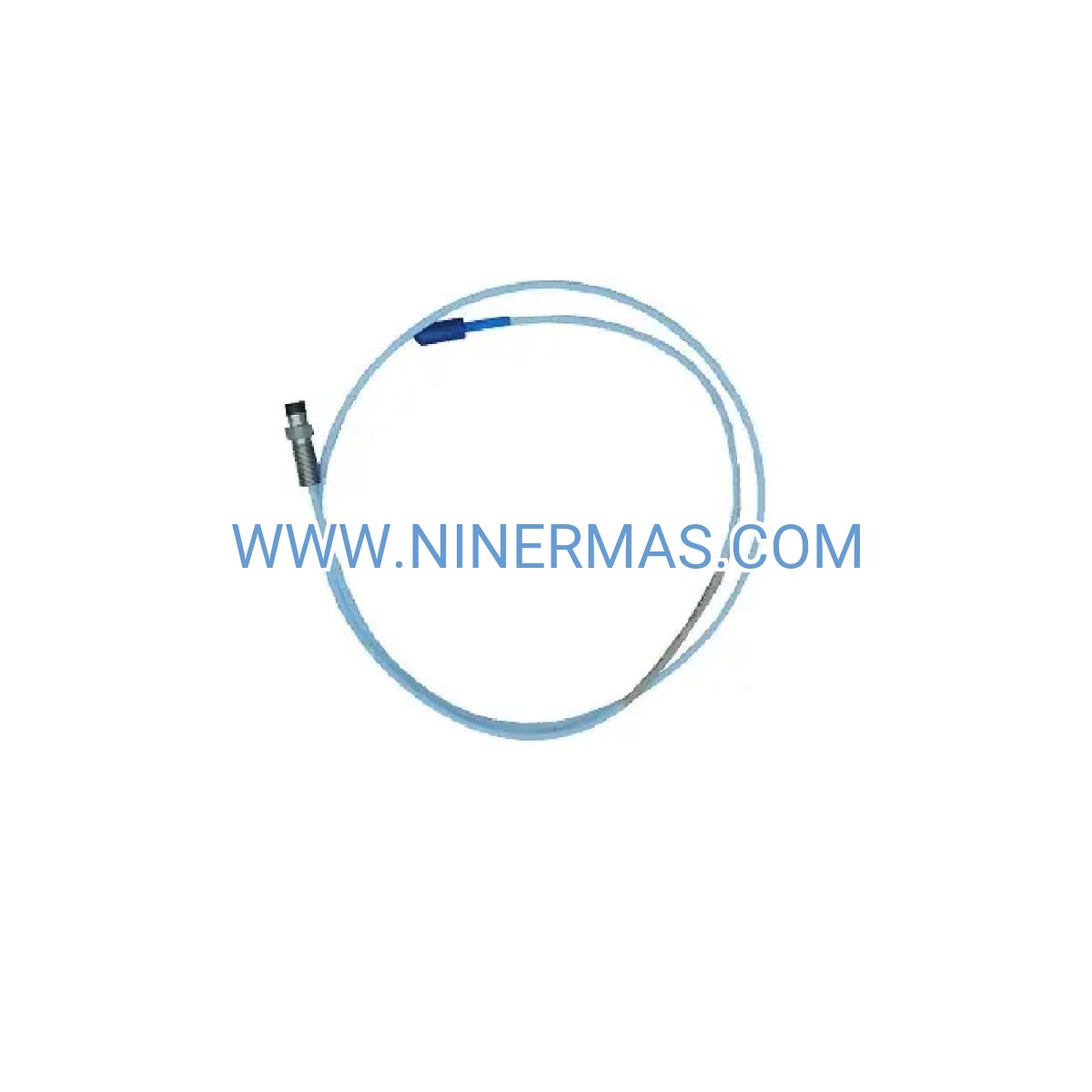
5mm Proximity Transducer System for Industrial Rotating Machinery Monitoring
The Bently Nevada 330173-00-04-20-12-05 is an industrial-grade 5mm proximity transducer system designed for continuous shaft displacement and vibration monitoring in critical rotating equipment. Through non-contact eddy current sensing technology and precision signal conditioning, this system delivers real-time gap measurement and dynamic vibration analysis for turbines, compressors, motors, and pumps.
Ideal for power generation plants, petrochemical facilities, steel mills, and heavy manufacturing operations, this transducer helps solve common challenges including unexpected bearing failures, shaft misalignment detection delays, vibration-induced equipment damage, and insufficient early warning of mechanical degradation. The system provides continuous surveillance that traditional periodic inspections cannot match.
Built on proven 3300 series architecture with factory calibration and rugged construction, the 330173-00-04-20-12-05 offers reliable performance, seamless integration with existing Bently Nevada monitoring infrastructure, and comprehensive diagnostic capabilities. Suitable for design engineers, maintenance teams, instrumentation contractors, and plant reliability managers. Contact our application engineers for system configuration assistance and technical specifications tailored to your machinery profile.
Core Capabilities & Performance Advantages
Non-Contact Eddy Current Sensing
Utilizes electromagnetic induction principles to measure shaft position without physical contact, eliminating wear-related sensor degradation and enabling continuous operation in high-speed rotating machinery applications up to 10,000 RPM.
Wide Operating Temperature Range
Engineered for -40°C to +85°C ambient conditions, maintaining measurement accuracy across extreme industrial environments from arctic outdoor installations to high-temperature turbine enclosures, with IP67 environmental protection against dust and temporary water immersion.
High-Frequency Response Capability
Captures vibration events from DC to 10 kHz bandwidth, detecting both slow shaft roll and high-frequency bearing defect signatures, providing comprehensive diagnostic information for predictive maintenance programs and condition-based monitoring strategies.
Extended Linear Measurement Range
Delivers proportional voltage output across 0.4mm to 1.6mm gap distance (16 to 63 mils), offering sufficient dynamic range for normal operation monitoring plus early detection of abnormal shaft excursions before protective clearances are compromised.
Factory-Matched System Components
Pre-calibrated probe, extension cable, and proximitor module shipped as matched set, eliminating field calibration requirements and ensuring measurement accuracy within ±1% linearity specification immediately upon installation and commissioning.
Proven Reliability in Critical Service
Backed by decades of Bently Nevada field experience in mission-critical machinery protection, with MTBF exceeding 100,000 hours in typical industrial applications, reducing maintenance burden and false trip incidents compared to alternative sensing technologies.
Target Application Scenarios
This proximity transducer system is engineered for installations requiring continuous shaft position monitoring, vibration amplitude tracking, and early fault detection, particularly in:
Steam & Gas Turbine Generator Sets
Monitors journal bearing clearances and rotor vibration in power generation units from 10MW to 1000MW+ capacity, protecting high-value assets against bearing failures, rotor rubs, and thermal growth anomalies that could lead to catastrophic damage and extended outages.
Centrifugal & Axial Compressor Trains
Tracks shaft radial displacement in multi-stage compression equipment serving refineries, LNG facilities, and chemical plants, detecting surge conditions, aerodynamic instabilities, and mechanical looseness before performance degradation or unplanned shutdowns occur.
Large Electric Motors & Generators
Provides continuous eccentricity measurement and vibration surveillance for motors above 500HP and generators in hydroelectric, thermal, and industrial cogeneration applications, identifying rotor bar defects, magnetic center shifts, and foundation issues during operation.
Critical Process Pumps & Blowers
Enables condition monitoring of high-energy pumps in water treatment, pipeline boosting, and industrial circulation systems, plus induced draft fans and forced draft blowers in power plants, where unexpected failures impact production continuity and safety.
Paper Machine Dryer Sections
Supports vibration analysis of high-speed dryer rolls and calendar stacks in pulp and paper mills, where bearing degradation detection prevents web breaks, product quality issues, and costly production interruptions in continuous manufacturing processes.
Technical Specifications & Selection Guidelines
To facilitate engineering design and procurement decisions, the following specifications define system capabilities and installation requirements. Custom configurations available for specialized applications.
| Parameter | Specification |
|---|---|
| Model Number | 330173-00-04-20-12-05 |
| Product Series | Bently Nevada 3300 |
| Probe Diameter | 5mm (0.197 inch) |
| Linear Range | 0.4 to 1.6mm (16 to 63 mils) |
| Frequency Response | DC to 10 kHz (-3dB) |
| Output Signal | -2 to -18 VDC (proportional to gap) |
| Operating Temperature | -40°C to +85°C (-40°F to +185°F) |
| Target Material | Ferromagnetic (steel, iron alloys) |
| Environmental Rating | IP67 (dust-tight, water immersion protected) |
| System Accuracy | ±1% of full scale (linearity) |
| Cable Extension Options | 1m to 9m standard; custom lengths available |
| Power Supply | -24 VDC (via proximitor module) |
Selection Considerations
When specifying this transducer system, evaluate the following application parameters: shaft diameter and surface finish quality (Ra < 1.6 μm recommended), available radial clearance for probe installation (minimum 5mm probe depth required), ambient temperature extremes and vibration exposure at mounting location, required cable run distance from probe to monitoring system, and compatibility with existing Bently Nevada or third-party data acquisition infrastructure. For assistance with system architecture design, provide machinery type, operating speed range, bearing configuration, and monitoring objectives to our application engineering team.
Advanced Integration Capabilities
Multi-Channel Monitoring System Compatibility
Seamlessly interfaces with Bently Nevada 3500 rack-based monitoring systems, 1900/65A general purpose equipment monitors, and ADAPT software platforms, enabling centralized data collection, trend analysis, alarm management, and diagnostic reporting across entire plant machinery populations.
Digital Communication Protocol Support
When paired with compatible proximitor modules and monitoring hardware, supports Modbus RTU, Modbus TCP/IP, and proprietary Bently Nevada protocols for integration with DCS, SCADA, and plant-wide asset management systems, facilitating remote monitoring and predictive maintenance workflows.
Redundant Measurement Configurations
Supports dual-probe installations at 90-degree orientations (X-Y measurement planes) for complete shaft orbit visualization, plus axial position monitoring when combined with thrust position transducers, providing comprehensive rotor dynamic analysis capabilities for critical machinery protection.
Delivery, Technical Support & Quality Assurance
Lead Time & Logistics
Factory-sealed units typically ship within 3-5 business days for standard configurations; custom cable lengths or special certifications require 10-15 business days. All shipments include full traceability documentation, calibration certificates, and installation drawings. International orders supported with DDP/DAP terms and export compliance documentation.
Warranty Coverage
Every 330173-00-04-20-12-05 transducer system is backed by a comprehensive 12-month manufacturer warranty covering material defects and workmanship failures under normal operating conditions. Warranty includes replacement parts, technical troubleshooting support, and return shipping for defective units.
Installation & Commissioning Assistance
Complimentary remote technical support available for installation guidance, gap voltage verification, and system checkout procedures. On-site commissioning services and vibration analyst training programs available through authorized service partners in major industrial regions.
Technical Documentation Package
Each system ships with complete installation manual, dimensional drawings with mounting specifications, electrical connection diagrams, calibration data sheets, and recommended spare parts list. Digital copies of all documentation available for download upon request.
Frequently Asked Questions
Q: What is the optimal installation gap for the 5mm proximity transducer?
A: The recommended installation gap is 1.0mm (40 mils) from the shaft surface, which positions the sensor in the center of its linear range and maximizes sensitivity to dynamic vibration while maintaining adequate clearance for thermal growth and shaft runout. Gap voltage should measure approximately -10 VDC at this distance when properly installed.
Q: Can this proximity transducer monitor non-ferrous shaft materials like stainless steel or aluminum?
A: No, eddy current proximity transducers require ferromagnetic target materials (carbon steel, alloy steel, cast iron) to generate sufficient signal strength. For non-ferrous shafts, consider installing a ferromagnetic sleeve or collar on the measurement surface, or specify alternative sensing technologies such as capacitance probes for specialized applications.
Q: Is the 330173-00-04-20-12-05 compatible with legacy 3300 XL monitoring systems?
A: Yes, the 3300 series maintains full backward compatibility with 3300 XL proximitor modules, extension cables, and monitoring racks. The transducer can be integrated into existing installations without system-wide upgrades, though performance optimization may benefit from newer signal conditioning electronics.
Q: What cable length options are available, and how does cable length affect measurement accuracy?
A: Standard extension cable lengths range from 1 meter to 9 meters in 1-meter increments. Custom lengths up to 15 meters available upon request. The system is factory-calibrated as a matched set (probe + cable + proximitor), so cable length changes require recalibration. Always specify required cable length at time of order to ensure proper system calibration.
Q: How do I verify proper transducer installation before commissioning the machinery?
A: After mechanical installation, measure the gap voltage with the shaft stationary and centered in the bearing. Voltage should fall within the linear range (-10 VDC ±4 VDC typical for 1.0mm gap). Slowly rotate the shaft by hand and observe voltage variation to detect runout, surface defects, or eccentricity. Voltage swing should remain within linear range throughout 360-degree rotation. Consult installation manual for detailed checkout procedures.
Q: What maintenance is required for proximity transducer systems in continuous operation?
A: Proximity transducers are non-contact sensors requiring minimal maintenance. Recommended practices include periodic visual inspection of cable connections and probe mounting security (quarterly), verification of gap voltage during planned outages (annually), and cleaning of probe tip if contamination is suspected. No routine calibration required unless physical damage or system modifications occur.
Request Technical Consultation & Quotation
For detailed system configuration recommendations, application-specific technical specifications, or project quotations, please provide the following information to our engineering team:
- Project name and facility location
- Machinery type and manufacturer (turbine, compressor, motor, pump, etc.)
- Operating speed range (RPM) and shaft diameter at measurement location
- Number of measurement points required (radial, axial, phase reference)
- Ambient temperature range and environmental conditions
- Cable run distance from probe mounting to monitoring system
- Existing monitoring infrastructure (if integration required)
- Project timeline and delivery requirements
Our application engineers will provide one-on-one consultation to ensure optimal sensor selection, system architecture design, and integration planning for your machinery monitoring objectives.
© 2026 NINERMAS COMPANY LIMITED. All rights reserved.
Original Source: https://ninermas.com
Contact: sale@ninermas.com | +0086 187 5021 5667
PDF Specification
Download PDF file here:
Click to Download PDF

Contact Info
-
Address:22 / F, South Wo Hang building, 148 Wing Lok Street, Sheung Wan, Western District, Hong Kong
-
Phone:+8618750215667
-
Email: