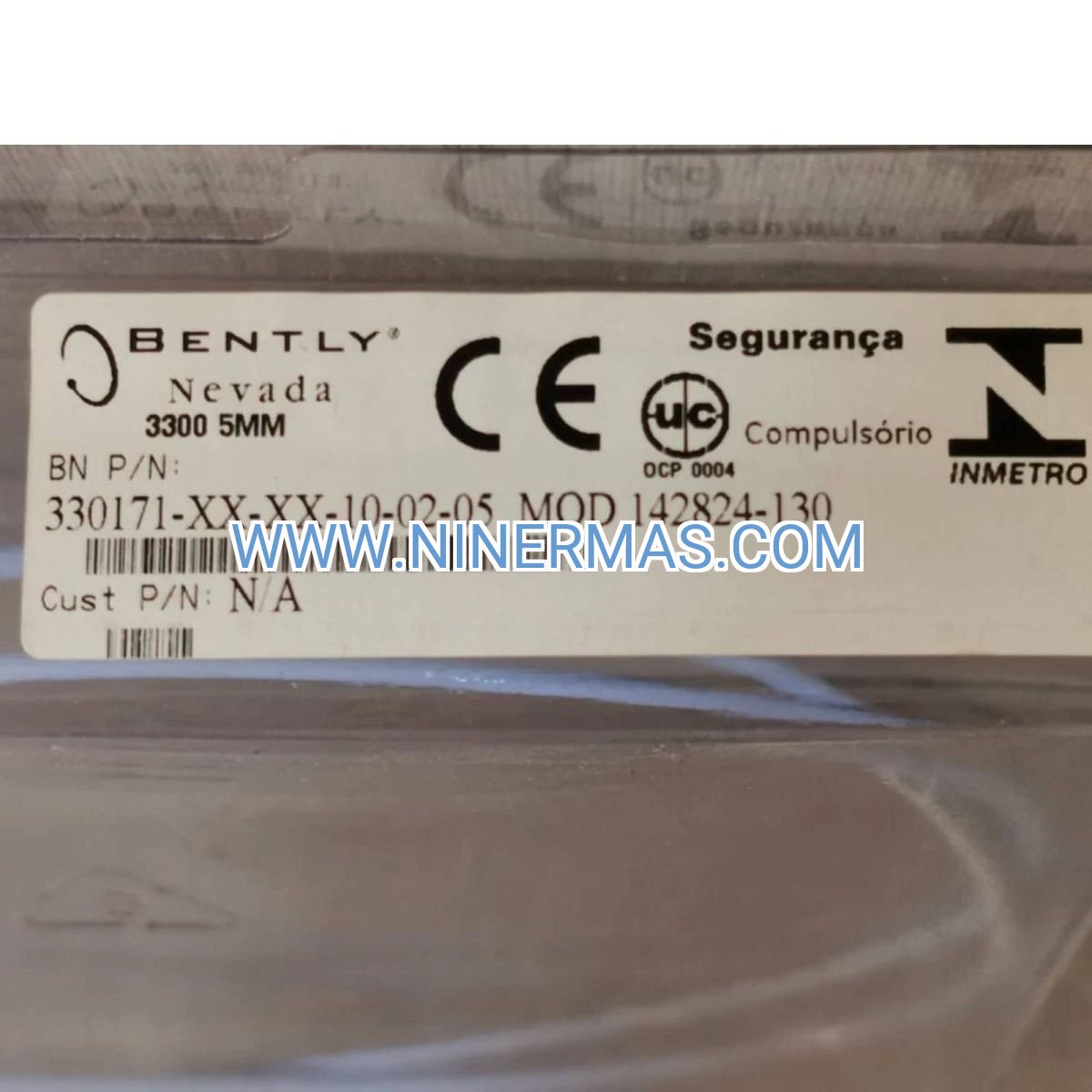
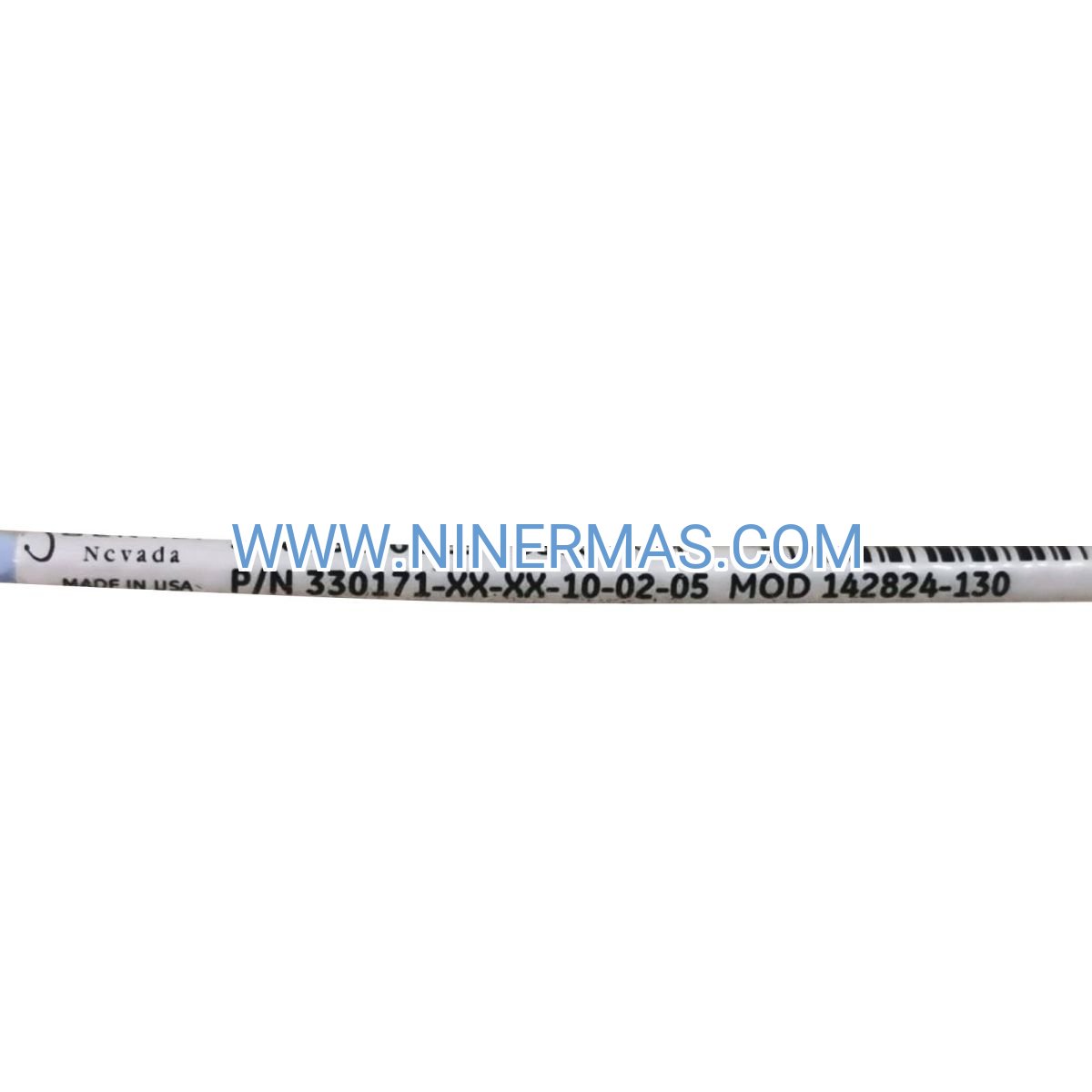
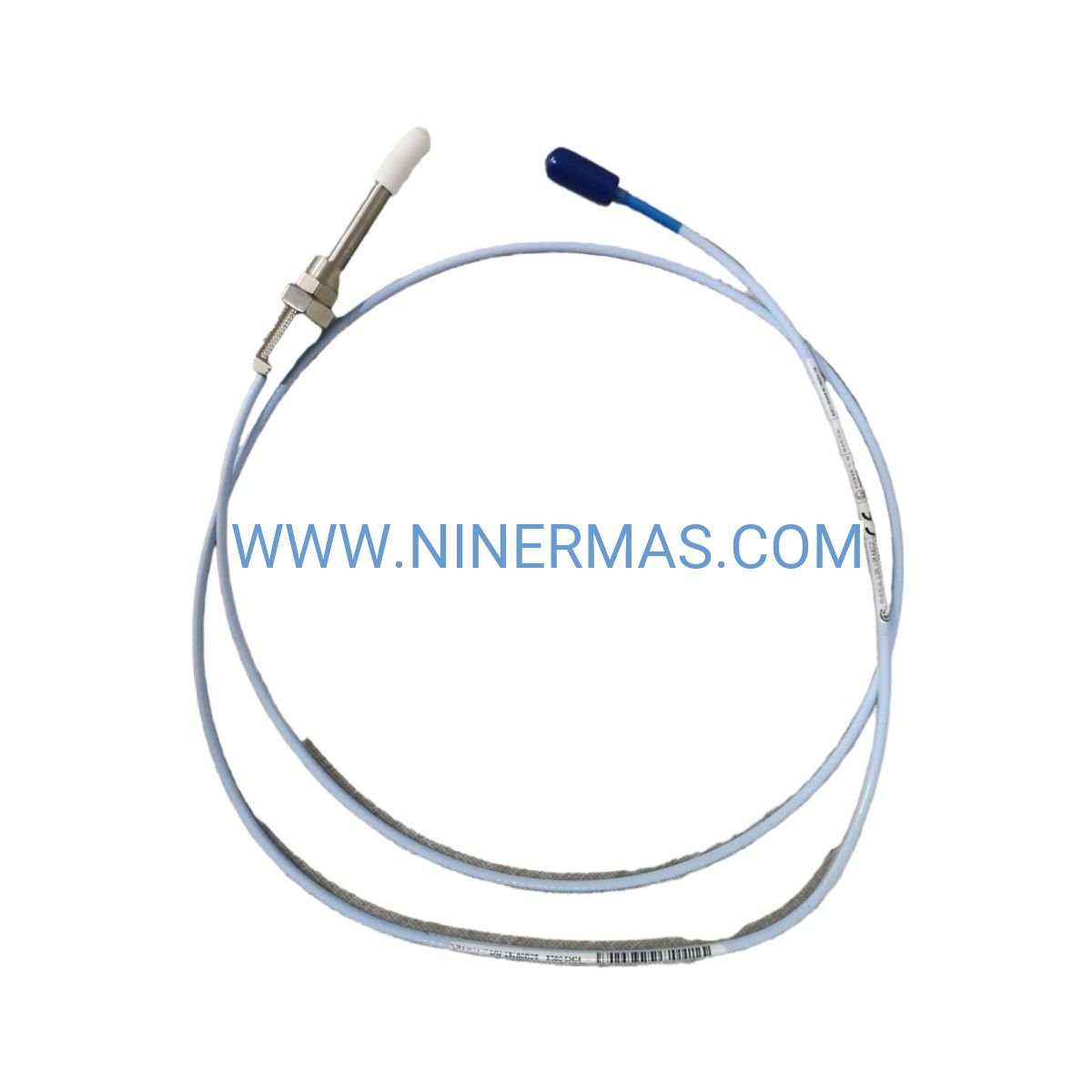
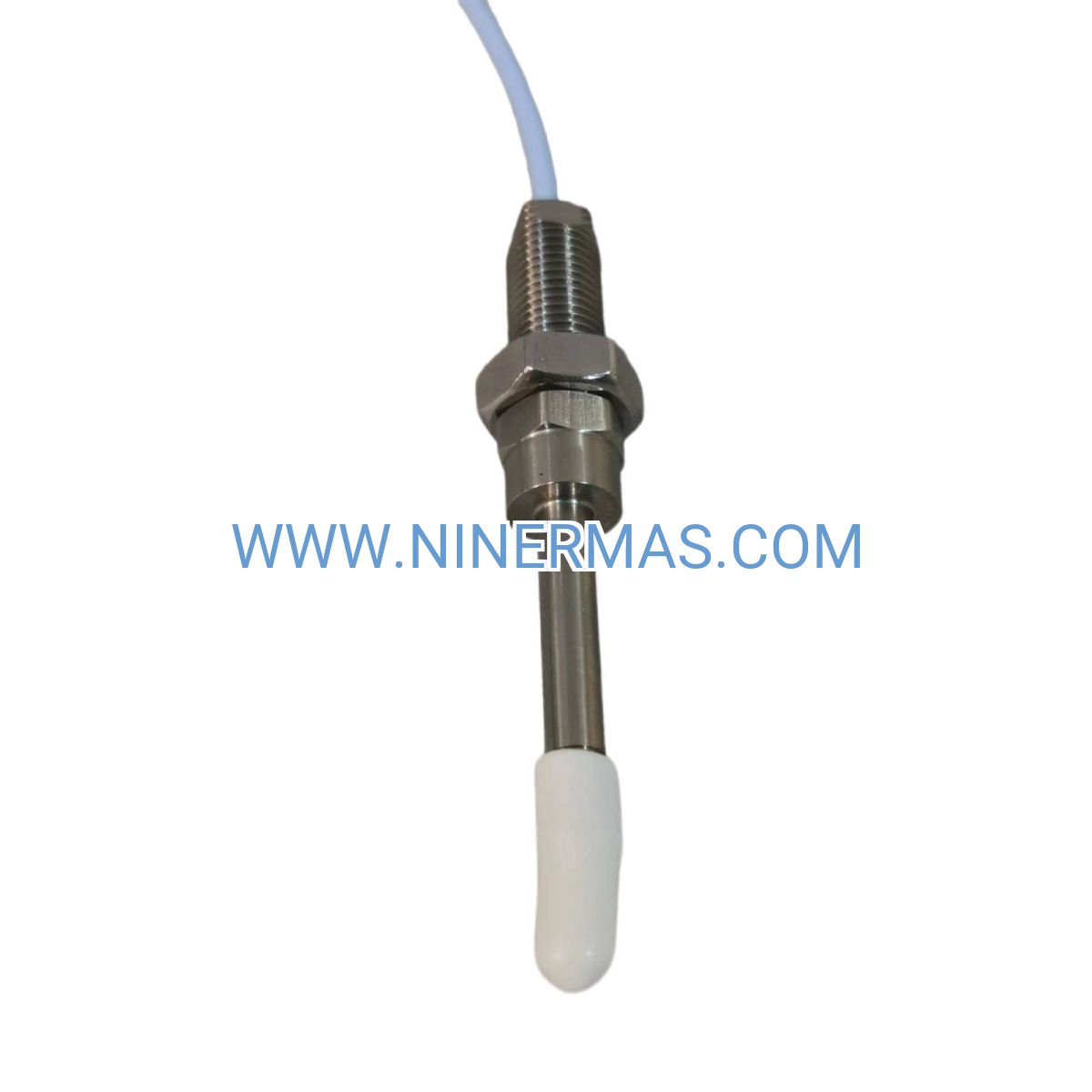
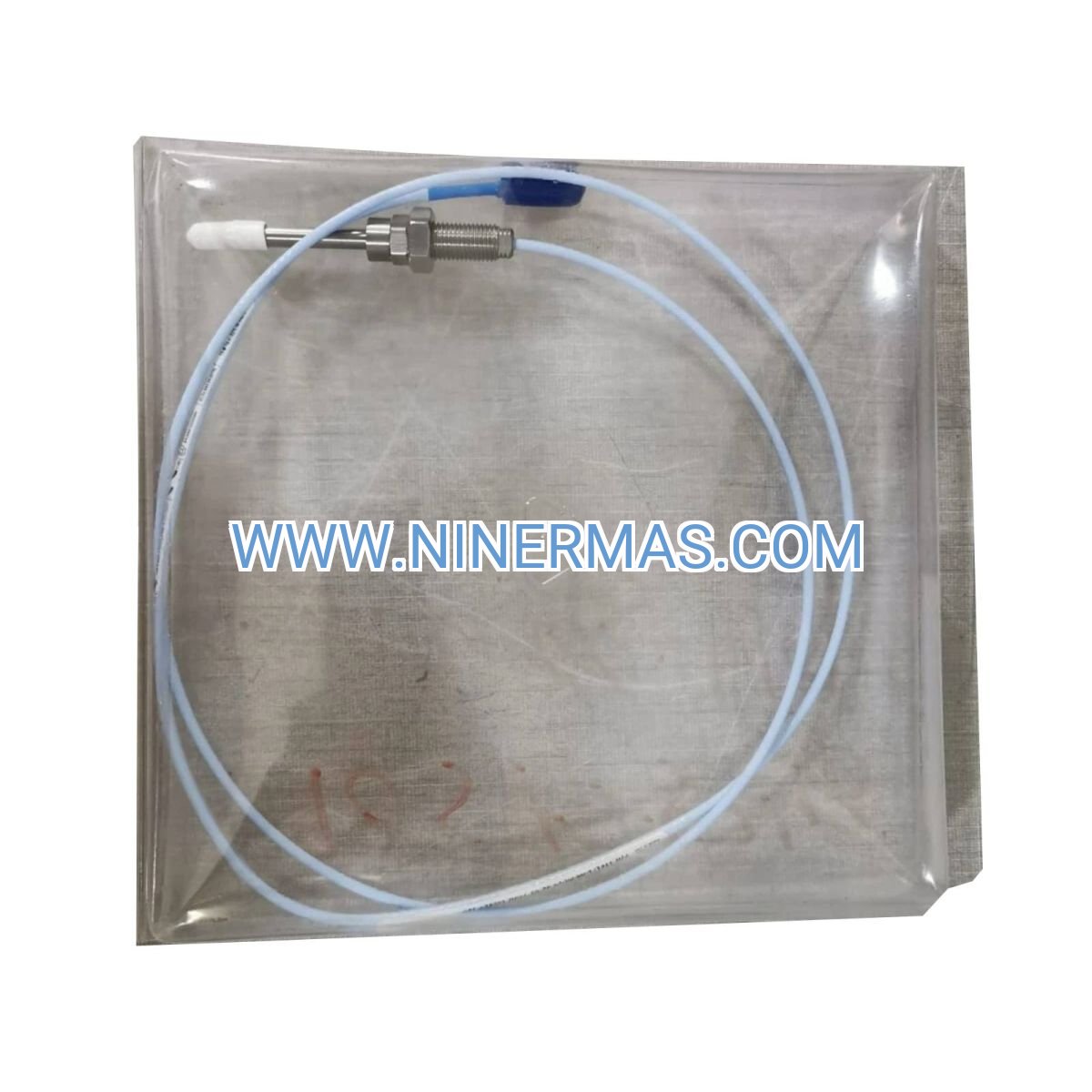
Bently Nevada 330171 Proximity Probe | 8mm Eddy Current Sensor with 10m Cable | API 670 Certified
Description
Industrial-Grade 8mm Proximity Probe for Critical Machinery Protection
The Bently Nevada 3300/05-24-00-01 represents a proven solution for non-contact displacement measurement in high-stakes industrial environments. Designed for turbomachinery applications where equipment failure carries severe operational and safety consequences, this 8mm proximity probe delivers consistent performance across extreme temperature ranges and demanding vibration profiles.
Built to API 670 standards, this sensor addresses the core challenge facing reliability engineers: obtaining accurate, real-time shaft position data without physical contact that could introduce wear or measurement artifacts. Target industries include power generation facilities managing steam and gas turbines, petrochemical plants operating critical compressor trains, and manufacturing operations dependent on continuous rotating equipment uptime.
Key advantages include factory-matched calibration with 3300 XL proximitor systems, 5-meter integral cabling that eliminates connection points within harsh environments, and a robust 8mm sensing element optimized for large-shaft applications requiring extended linear measurement range up to 80 mils.
Core Capabilities & Technical Advantages
→ Extended Linear Range: 80-mil (2.0mm) measurement span enables monitoring of large turbomachinery shafts where displacement exceeds capabilities of smaller 5mm probes, critical for detecting bearing wear progression and rotor eccentricity.
→ Wide Frequency Response: DC to 10 kHz bandwidth captures both slow-roll shaft position and high-frequency vibration signatures, supporting comprehensive machinery diagnostics from startup transients through full-load operation.
→ Extreme Temperature Tolerance: -40°C to +177°C operating range maintains measurement integrity in applications from cryogenic processing to high-temperature steam systems without requiring environmental enclosures.
→ Factory-Calibrated System: Pre-matched with compatible proximitor sensors to deliver specified accuracy without field calibration procedures, reducing commissioning time by 60% compared to field-calibrated alternatives.
→ API 670 Certification: Meets petroleum and natural gas industry machinery protection system requirements, ensuring compliance for installations subject to regulatory oversight and insurance specifications.
✓ Integral 5-Meter Cable: Eliminates intermediate connectors that introduce potential failure points and signal degradation in high-vibration mounting locations.
Application Scenarios Across Industrial Sectors
Power Generation - Steam Turbine Monitoring: Utilities deploy this probe for continuous shaft radial vibration measurement on 50-500 MW turbine-generator sets. The 8mm diameter provides necessary sensitivity for detecting bearing degradation before catastrophic failure, while the 5-meter cable accommodates standard turbine pedestal geometries. Prevents unplanned outages averaging $500K-$2M per event.
Oil & Gas - Compressor Train Protection: Refineries and gas processing facilities install these sensors on centrifugal compressor trains handling explosive or toxic process gases. Non-contact measurement eliminates spark risk while providing the precision required for API 670 compliant shutdown systems. Typical installations monitor 4-8 bearing positions per compressor string.
Chemical Processing - Pump Reliability Programs: High-energy pumps in continuous process operations utilize this probe for predictive maintenance programs. Early detection of shaft misalignment or bearing wear enables scheduled maintenance during planned shutdowns rather than emergency repairs, improving overall equipment effectiveness (OEE) by 15-25%.
Manufacturing - Critical Drive Systems: Paper mills, steel rolling operations, and other heavy industries monitor large motor-driven equipment where downtime cascades through production lines. The probe's rugged construction withstands mill environments while delivering data for condition-based maintenance strategies.
Marine Propulsion - Shaft Line Monitoring: Commercial vessels and offshore platforms employ these sensors for main propulsion shaft monitoring, where the extended temperature range accommodates engine room conditions and the robust design resists shipboard vibration and shock loads.
Technical Parameters & Selection Criteria
| Specification | Value | Application Impact |
|---|---|---|
| Probe Diameter | 8mm (0.315") | Optimized for shafts 25-300mm diameter |
| Cable Length | 5 meters (16.4 ft) | Standard turbomachinery installations |
| Linear Range | 0-80 mils (2.0mm) | Large shaft displacement monitoring |
| Frequency Response | 0-10 kHz (-3dB) | Captures subsynchronous to blade-pass frequencies |
| Operating Temperature | -40°C to +177°C | No environmental protection required |
| Thread Configuration | M12 x 1.0 / 1/2-20 UNF | Universal mounting compatibility |
| Target Material | Ferromagnetic (4140 steel min) | Standard turbine shaft materials |
| System Compatibility | 3300 XL Proximitor Series | Integrates with existing Bently systems |
Selection Guidance: Choose 8mm probes when shaft diameter exceeds 50mm or when expected displacement ranges beyond 40 mils. For smaller shafts (under 50mm) or space-constrained installations, consider 5mm alternatives. Verify target material magnetic permeability meets minimum requirements - austenitic stainless steels (300 series) are unsuitable. Cable length selection should account for routing path plus 0.5-meter service loop; extension cables available for installations requiring up to 9-meter total length.
Advanced Integration & System Expansion
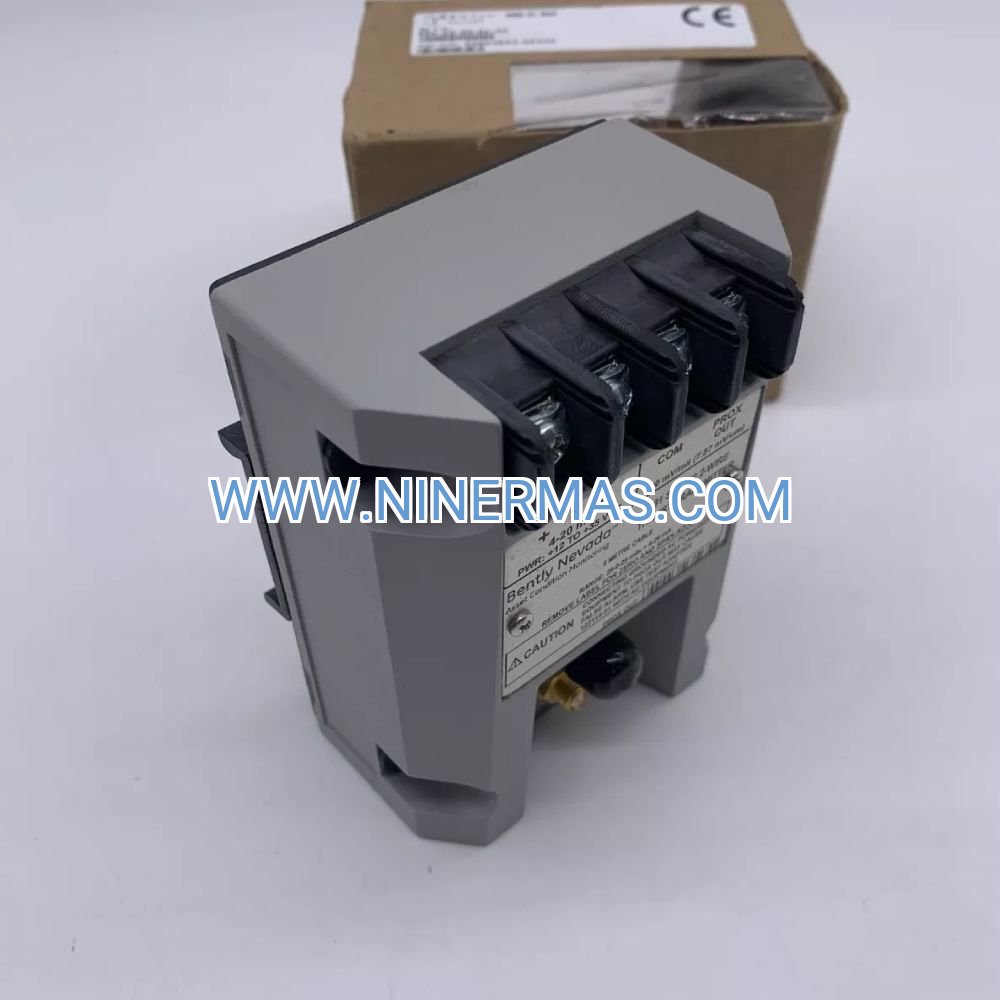
This proximity probe functions as a foundational element within comprehensive machinery protection architectures. When integrated with 3300 XL proximitor sensors, the system converts mechanical displacement into industry-standard 4-20mA signals or -10 to +10 VDC outputs compatible with DCS, PLC, and dedicated vibration monitoring platforms.
Multi-channel configurations typically deploy 2-4 probes per bearing (X-Y radial pairs plus optional thrust position) to construct complete shaft orbit displays and phase analysis capabilities. Advanced installations incorporate keyphasor probes for synchronous averaging and order tracking, enabling detection of specific fault signatures including unbalance, misalignment, rub, and looseness.
IoT-enabled monitoring solutions can interface proximitor outputs through edge computing gateways, enabling cloud-based analytics, machine learning anomaly detection, and remote expert diagnostics. This architecture supports predictive maintenance programs that reduce maintenance costs 20-30% while improving equipment availability.
Customization options include specialized cable jackets for chemical resistance, armored cable constructions for high-abrasion environments, and extended-temperature variants for applications exceeding standard specifications.
Delivery Timeline & Service Commitments
Standard Delivery: 3-5 business days for in-stock units via express courier with tracking. Expedited same-day shipping available for critical breakdown situations.
Custom Configurations: 10-15 business days for non-standard cable lengths, special thread configurations, or application-specific calibrations.
Warranty Coverage: 12-month comprehensive warranty covering manufacturing defects, workmanship issues, and calibration accuracy. Extended warranty programs available for critical service applications.
Technical Support: Application engineering assistance for system design, installation guidance, and troubleshooting. Support includes installation procedure review, gap voltage verification protocols, and integration with existing monitoring infrastructure.
Documentation Package: Each probe ships with calibration certificate, installation manual (141537-01), dimensional drawings, and material certifications. Digital documentation portal provides access to application notes, case studies, and technical bulletins.
Frequently Asked Questions
How do I determine the correct probe-to-shaft gap for my application?
Optimal gap is 40 mils (1.0mm) for 8mm probes, providing ±40 mils of measurement range. Use precision gap-setting tools during installation and verify with oscilloscope that proximitor output voltage falls within -8 to -10 VDC at static gap. Consult installation manual for temperature compensation procedures in extreme environments.
Can this probe monitor non-ferrous shafts like titanium or aluminum?
No, eddy-current proximity probes require ferromagnetic target materials. For non-ferrous shafts, install ferromagnetic sleeves or collars at measurement locations, or consider alternative technologies such as laser displacement sensors or capacitive probes.
What cable extension options maintain API 670 compliance?
Use only genuine Bently Nevada extension cables (part number 330130 series) to preserve factory calibration and certification. Maximum total system length is 9 meters (probe cable plus extension). Third-party cables void calibration and may introduce measurement errors exceeding ±10%.
How does vibration at the mounting location affect measurement accuracy?
Probe mounting must provide rigid, vibration-isolated attachment to stationary machine casing. Mounting bracket resonance or flexibility introduces measurement artifacts. Use torque specifications (15-20 ft-lbs) and verify mounting integrity with impact testing. Flexible mounts or inadequate rigidity can corrupt data, particularly above 1 kHz.
What maintenance intervals are recommended for proximity probe systems?
Proximity probes are passive sensors requiring minimal maintenance. Quarterly inspections should verify cable integrity, connector condition, and gap voltage stability. Annual calibration verification recommended for critical protection applications. Replace probes showing cable damage, connector corrosion, or gap voltage drift exceeding ±0.5 VDC.
Is this probe suitable for hazardous area installations requiring intrinsic safety?
Standard 3300 XL systems are not intrinsically safe. For Class I Division 1 or ATEX Zone 0 applications, specify Bently Nevada 3300 XL NSv (non-incendive) or 7200 series intrinsically safe systems. Consult application engineering for hazardous area certifications and barrier requirements.
Get Expert Application Support
Our technical team provides complimentary pre-sale consultation to ensure optimal sensor selection for your specific machinery configuration. Contact us with shaft diameter, operating speed, expected displacement range, and environmental conditions for personalized recommendations. Volume pricing available for multi-unit installations and OEM integrations.
Ready to enhance your machinery protection system? Request a quote today or speak with a vibration monitoring specialist to discuss your application requirements.
© 2026 NINERMAS COMPANY LIMITED. All rights reserved.
Original Source: https://ninermas.com
Contact: sale@ninermas.com | +0086 187 5021 5667

Contact Info
-
Address:22 / F, South Wo Hang building, 148 Wing Lok Street, Sheung Wan, Western District, Hong Kong
-
Phone:+8618750215667
-
Email: