Description
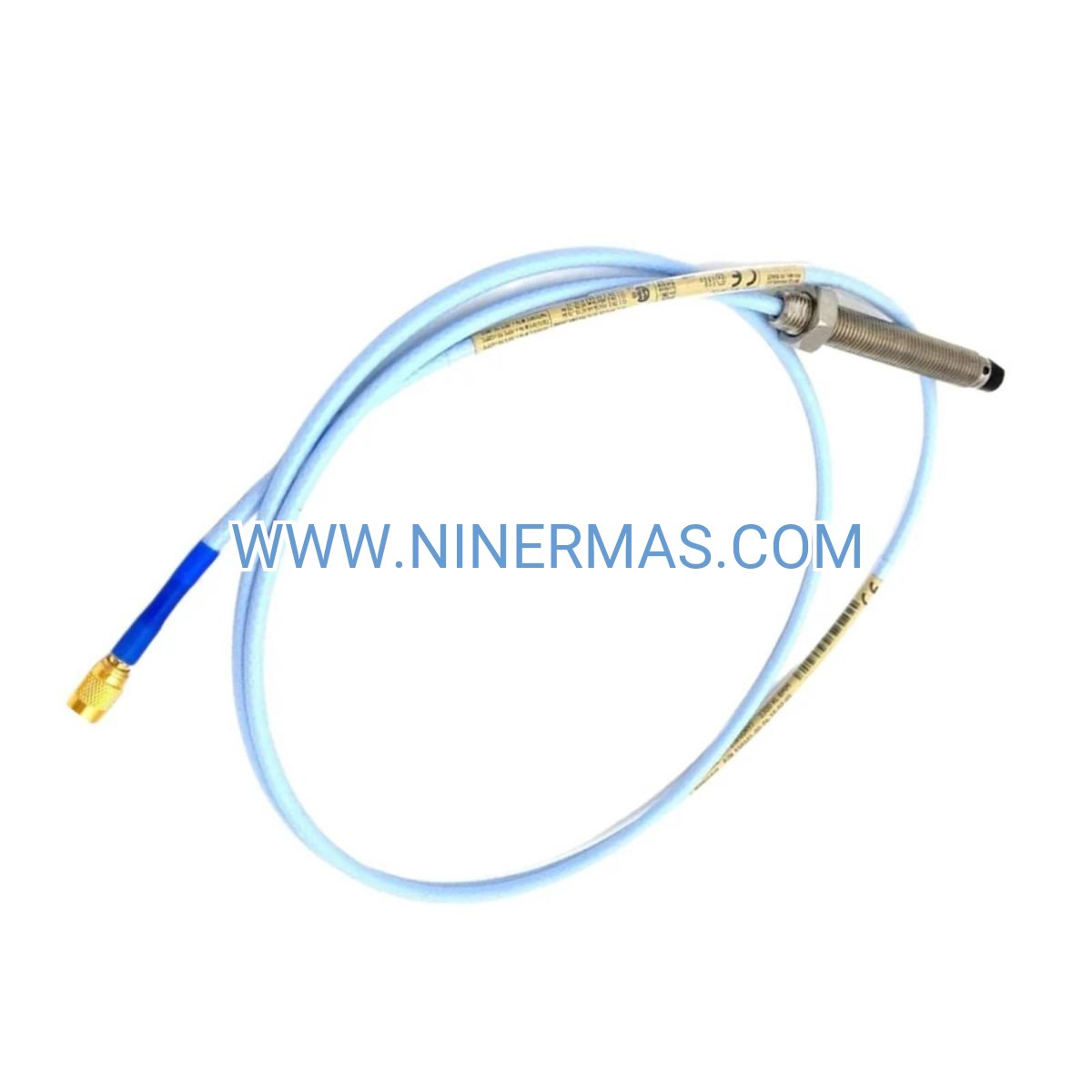
8mm Proximity Transducer Probe for Industrial Vibration Monitoring (Bently Nevada 3300 XL Series)
The Bently Nevada 330141-08-50-01-00-00 is an industrial-grade 8mm proximity transducer probe designed for non-contact displacement and vibration measurement in rotating machinery. Utilizing eddy current sensing technology with PLC-compatible signal output, this probe delivers real-time shaft position monitoring, radial vibration analysis, and bearing clearance measurement. Built for continuous operation in harsh industrial environments, it ensures reliable machinery protection and predictive maintenance across power generation, petrochemical, and heavy manufacturing sectors.
Engineered for critical turbomachinery applications including steam turbines, gas compressors, centrifugal pumps, and high-speed motors, this sensor addresses common challenges such as unexpected equipment failure, insufficient vibration data accuracy, costly unplanned downtime, and difficulty integrating legacy monitoring systems. The hermetically sealed stainless steel construction withstands extreme temperatures, corrosive atmospheres, and mechanical shock while maintaining ±1% measurement linearity.
Through standardized M12 threading and universal proximitor compatibility, the 330141-08-50-01-00-00 offers flexible installation options with customizable cable lengths. Key advantages include maintenance-free solid-state design, wide frequency response (0-10 kHz), IP67 environmental protection, and seamless integration with DCS/PLC/SCADA platforms. Ideal for design engineers, plant maintenance teams, system integrators, and OEM equipment manufacturers requiring proven vibration monitoring solutions. Contact our application engineers for system configuration assistance, technical drawings, and project-specific quotations.
Core Features & Technical Advantages
Non-Contact Eddy Current Measurement
Employs electromagnetic induction principle with 8mm sensing head to monitor ferrous target displacement without physical contact, eliminating wear and enabling continuous 24/7 operation. Provides 0-2.0mm (0-80 mils) sensing range with exceptional linearity across the full measurement span, ensuring accurate data for condition-based maintenance programs.
Industrial-Hardened Construction
Features 316L stainless steel housing with hermetic sealing rated to IP67 standards, protecting internal electronics from moisture ingress, dust contamination, and chemical exposure. Withstands operating temperatures from -40°C to +105°C without calibration drift, suitable for cryogenic LNG facilities to high-temperature steam turbine applications.
High-Frequency Response Capability
Delivers 0 to 10 kHz bandwidth (-3dB point) enabling detection of high-speed rotor dynamics, gear mesh frequencies, and bearing defect signatures that lower-frequency sensors miss. Critical for early fault detection in machinery operating above 3,600 RPM where traditional accelerometers may face mounting challenges.
Universal System Compatibility
Designed for direct integration with Bently Nevada 3300 XL proximitor signal conditioners (330180 series), producing industry-standard -10 to +10 VDC or 4-20mA outputs. Also compatible with third-party vibration monitors, PLCs (Siemens, Allen-Bradley, Schneider), and DCS platforms (Honeywell, Emerson, ABB) through standard analog interfaces.
Long-Term Reliability & Low Maintenance
Solid-state sensor design contains no moving parts, springs, or consumable elements, resulting in MTBF exceeding 100,000 hours in typical industrial service. Eliminates periodic recalibration requirements and reduces total cost of ownership compared to contact-type displacement sensors requiring regular replacement.
Flexible Installation Options
Standard M12 x 1.5 metric threading allows mounting in existing probe holders and machinery casings without custom adapters. Available with factory-terminated cables in 1m, 3m, 5m, or 9m lengths, or field-installable connectors for retrofit projects with space constraints or complex cable routing requirements.
Typical Application Scenarios
This proximity transducer probe serves industries and equipment types where continuous vibration monitoring and shaft position measurement are essential for operational safety, regulatory compliance, and asset protection:
Power Generation Turbomachinery
Monitors steam turbine shaft vibration, thrust bearing position, and rotor eccentricity in coal-fired, combined-cycle, and nuclear power plants. Provides critical protection against catastrophic failures in 50-500 MW turbine-generator sets where unplanned outages cost $500K-$2M per day. Integrates with turbine control systems for automatic trip logic and alarm management.
Oil & Gas Rotating Equipment
Tracks compressor shaft displacement, pump rotor runout, and expander bearing clearance in upstream production facilities, midstream pipeline stations, and downstream refineries. Essential for API 670 compliance in machinery protection systems (MPS) governing centrifugal compressors handling flammable hydrocarbons under high pressure and temperature conditions.
Petrochemical Process Machinery
Measures agitator shaft wobble, reactor circulation pump vibration, and distillation column overhead compressor dynamics in chemical manufacturing plants. Enables predictive maintenance strategies that reduce unscheduled shutdowns by 40-60% through early detection of bearing wear, shaft misalignment, and coupling degradation before catastrophic failure occurs.
Heavy Industry & Manufacturing
Supports condition monitoring programs for large motors (>500 HP), industrial fans, blowers, crushers, mills, and conveyor drive systems in steel production, mining operations, cement plants, and paper mills. Facilitates transition from reactive to predictive maintenance, extending equipment life by 20-30% while reducing maintenance labor costs.
Marine Propulsion & Auxiliary Systems
Provides shaft alignment verification and vibration surveillance for main propulsion turbines, diesel generator sets, and seawater cooling pumps aboard commercial vessels, naval ships, and offshore platforms. Operates reliably in high-humidity saltwater environments where conventional sensors experience accelerated corrosion and signal degradation.
Technical Parameters & Selection Guide
To facilitate engineering design and equipment specification, we provide comprehensive technical data for the 330141-08-50-01-00-00 proximity transducer probe. Custom configurations are available to meet project-specific requirements including non-standard cable lengths, special temperature ratings, and hazardous area certifications.
| Parameter | Specification |
|---|---|
| Model Number | 330141-08-50-01-00-00 |
| Product Series | Bently Nevada 3300 XL |
| Probe Diameter | 8 mm (0.315 inch) |
| Sensing Range | 0 to 2.0 mm (0 to 80 mils) |
| Optimal Operating Gap | 1.0 mm (40 mils) from target surface |
| Linearity | ±1% of full scale |
| Frequency Response | 0 to 10 kHz (-3 dB) |
| Operating Temperature | -40°C to +105°C (-40°F to +221°F) |
| Storage Temperature | -55°C to +125°C |
| Thread Type | M12 x 1.5 metric |
| Housing Material | 316L stainless steel |
| Cable Type | Low-noise coaxial, factory terminated |
| Standard Cable Length | 5 meters (1m, 3m, 9m available) |
| Environmental Protection | IP67 hermetically sealed |
| Target Material | Ferrous metals (steel, iron alloys) |
| Vibration Resistance | 20g peak, 10-2000 Hz |
| Shock Resistance | 100g, 11ms duration |
| Weight | Approximately 0.2 kg (with 5m cable) |
Selection Considerations
When specifying proximity transducers for your application, consider these critical factors: maximum shaft displacement during startup/shutdown transients, target surface material and finish quality (minimum 4130 steel, 32 RMS surface finish recommended), ambient temperature extremes and thermal cycling rates, available mounting space and probe insertion depth, cable routing path length and electromagnetic interference sources, and required output signal type for your monitoring system. Our application engineers can review your machinery drawings, operating parameters, and protection philosophy to recommend optimal probe quantity, positioning, and proximitor configuration. Provide equipment nameplate data, bearing arrangement drawings, and existing vibration monitoring system details for fastest response.
System Integration & Signal Conditioning
The 330141-08-50-01-00-00 proximity probe functions as the sensing element in a complete vibration monitoring system, requiring a proximitor signal conditioner to convert the probe's variable impedance into usable voltage or current signals. When paired with Bently Nevada 330180 series proximitors or equivalent third-party conditioners, the system delivers:
Standard Output Signals: -10 to +10 VDC buffered voltage (most common), 4-20 mA current loop (for long-distance transmission), or digital protocols (Modbus RTU, HART) depending on proximitor model selected.
Compatible Monitoring Platforms:
- Bently Nevada 3500 Machinery Protection Systems
- Emerson AMS Machinery Manager
- GE System 1 Condition Monitoring
- SKF IMx Multilog On-line Systems
- Siemens SIMATIC PCS 7 Process Control
- Rockwell Automation PlantPAx DCS
- Honeywell Experion PKS
- Yokogawa CENTUM VP Integrated Production Control
Installation Best Practices: Mount probe perpendicular to shaft surface with 1.0mm nominal gap verified using feeler gauges or gap voltage measurement. Secure cable with strain relief clamps every 300mm to prevent vibration-induced fatigue. Route cables away from VFD power lines, welding equipment, and radio transmitters to minimize EMI. Use shielded extension cables with proper grounding at proximitor end only (avoid ground loops). Verify target area is free from keyways, coupling bolts, and surface defects that cause runout errors.
Frequently Asked Questions (FAQ)
Q: How does the 8mm proximity transducer probe integrate with existing vibration monitoring systems?
A: The probe connects to a proximitor signal conditioner (such as Bently Nevada 330180 series) via its factory-terminated coaxial cable. The proximitor converts the probe's impedance changes into standard -10 to +10 VDC or 4-20mA signals compatible with PLCs, DCS systems, and standalone vibration monitors. Installation requires mounting the probe in a threaded hole with M12 x 1.5 threads, setting the gap to 1.0mm from the shaft surface, and routing the cable to the proximitor location. Complete installation drawings and wiring diagrams are provided with each order.
Q: What is the maximum number of probes that can be monitored on a single machine?
A: Typical turbomachinery installations use 2 probes per bearing (X-Y radial position) plus 1-2 thrust position probes, totaling 8-12 probes for a four-bearing machine. Each probe requires its own dedicated proximitor channel. The quantity depends on machine criticality, API standards compliance requirements, and protection system architecture. We can assist with probe layout optimization based on your machinery configuration and monitoring objectives.
Q: Can this proximity sensor measure vibration on non-ferrous shafts like aluminum or titanium?
A: No, eddy current proximity probes require ferrous (magnetic) target materials such as carbon steel, stainless steel 400 series, or iron alloys. For non-ferrous shafts, alternative solutions include installing a ferrous sleeve on the shaft measurement zone, using capacitive displacement sensors (limited to lower speeds), or employing shaft-mounted accelerometers with telemetry systems. Contact our applications team to discuss your specific shaft material and measurement requirements.
Q: What cable length options are available and how does length affect performance?
A: Standard factory-terminated cables are available in 1m, 3m, 5m (most common), and 9m lengths. The probe-to-proximitor cable length affects the system's electrical characteristics and must match the proximitor's calibration. Using incorrect cable lengths will cause measurement errors. For distances exceeding 9m, extension cables can be added between the proximitor and monitoring system without affecting accuracy since the signal is already conditioned. Custom cable lengths can be manufactured for special applications with 3-4 week lead times.
Q: How often does this sensor require calibration or replacement?
A: Proximity transducer probes are solid-state devices with no wearing components, typically providing 10-15 years of maintenance-free service in normal industrial environments. Calibration verification is recommended every 3-5 years or after any mechanical impact to the probe. Replacement is only necessary if the cable is damaged, the housing is corroded, or electrical continuity is lost. The proximitor signal conditioner should be calibrated annually or per your plant's instrumentation maintenance schedule. We offer calibration services and can provide certified test reports traceable to NIST standards.
Q: Is this probe suitable for hazardous area installations requiring ATEX or IECEx certification?
A: The standard 330141-08-50-01-00-00 model is designed for general industrial use and does not carry intrinsic safety certifications. For Class I Division 1/2 or Zone 0/1 hazardous locations, Bently Nevada offers IS-barrier protected systems or explosion-proof proximitor housings that allow use of standard probes in certified configurations. Consult our hazardous area specialists to configure a compliant monitoring system meeting your local electrical code requirements (NEC, ATEX, IECEx, or other regional standards).
Q: What technical support and documentation is provided with the proximity transducer?
A: Each probe ships with a calibration certificate showing sensitivity and linearity test data, installation instructions with dimensional drawings, and recommended gap setting procedures. We provide ongoing technical support including application engineering assistance, system troubleshooting guidance, and replacement part identification. Additional resources available upon request include AutoCAD mounting drawings, proximitor wiring diagrams, and integration guides for specific DCS/PLC platforms. Our support team responds to technical inquiries within 4 business hours.
Delivery, Warranty & Technical Services
Lead Time & Availability: Standard configuration units (5m cable, M12 threading) ship from stock within 2-3 business days. Custom cable lengths, special temperature ratings, or non-standard threading require 3-4 weeks manufacturing time. Expedited production available for critical outage situations with premium freight options including same-day shipping to major industrial regions.
Warranty Coverage: All proximity transducer probes include a comprehensive 18-month warranty from date of shipment, covering defects in materials and workmanship under normal industrial service conditions. Warranty includes free replacement of defective units and technical support for installation troubleshooting. Extended warranty programs available for critical machinery applications requiring guaranteed spare parts availability.
Technical Documentation Package: Complete product documentation provided with each order includes dimensional outline drawings (PDF and DWG formats), electrical specifications and wiring diagrams, installation and gap-setting procedures, proximitor compatibility matrix, and calibration test certificates with traceability data. Additional application notes available covering topics such as shaft runout compensation, temperature effect correction, and cable extension best practices.
Installation & Commissioning Support: Our field service engineers provide remote technical guidance via phone/email at no charge for standard installations. On-site commissioning assistance available for complex multi-probe systems, including gap verification, signal quality testing, baseline vibration surveys, and integration with plant DCS/SCADA systems. Training programs offered for maintenance personnel covering proximity probe theory, troubleshooting techniques, and predictive maintenance strategies.
Calibration & Repair Services: Factory-certified calibration services available with 5-7 day turnaround, providing NIST-traceable test reports suitable for ISO 9001 and regulatory compliance documentation. Probe repair services offered for cable damage, connector replacement, and housing refurbishment at 40-60% of new unit cost. Loaner probes available during repair periods to minimize production impact.
Request Technical Consultation & Quotation
To receive detailed system recommendations, application-specific configuration guidance, or project pricing, please provide our engineering team with the following information:
- Project Overview: Application type (turbine, compressor, pump, motor, etc.) and industry sector
- Machinery Details: Equipment manufacturer, model number, rated speed (RPM), bearing type and quantity
- Measurement Requirements: Radial vibration, axial position, or both; number of measurement points needed
- Environmental Conditions: Operating temperature range, presence of corrosive chemicals, humidity levels, hazardous area classification
- System Integration: Existing monitoring system brand/model, required output signal type (voltage/current/digital), cable routing distance
- Installation Constraints: Available mounting space, shaft material and diameter, accessibility for maintenance
- Timeline & Quantity: Project schedule, required delivery date, total probe quantity for budgetary pricing
Our application engineers will respond within 8 business hours with customized recommendations, system architecture diagrams, and detailed quotations including all required components (probes, proximitors, cables, mounting hardware). We support projects from single-probe replacements to complete plant-wide vibration monitoring system upgrades.
© 2026 NINERMAS COMPANY LIMITED. All rights reserved.
Original Source: https://ninermas.com
Contact: sale@ninermas.com | +0086 187 5021 5667

Contact Info
-
Address:22 / F, South Wo Hang building, 148 Wing Lok Street, Sheung Wan, Western District, Hong Kong
-
Phone:+8618750215667
-
Email: