Description
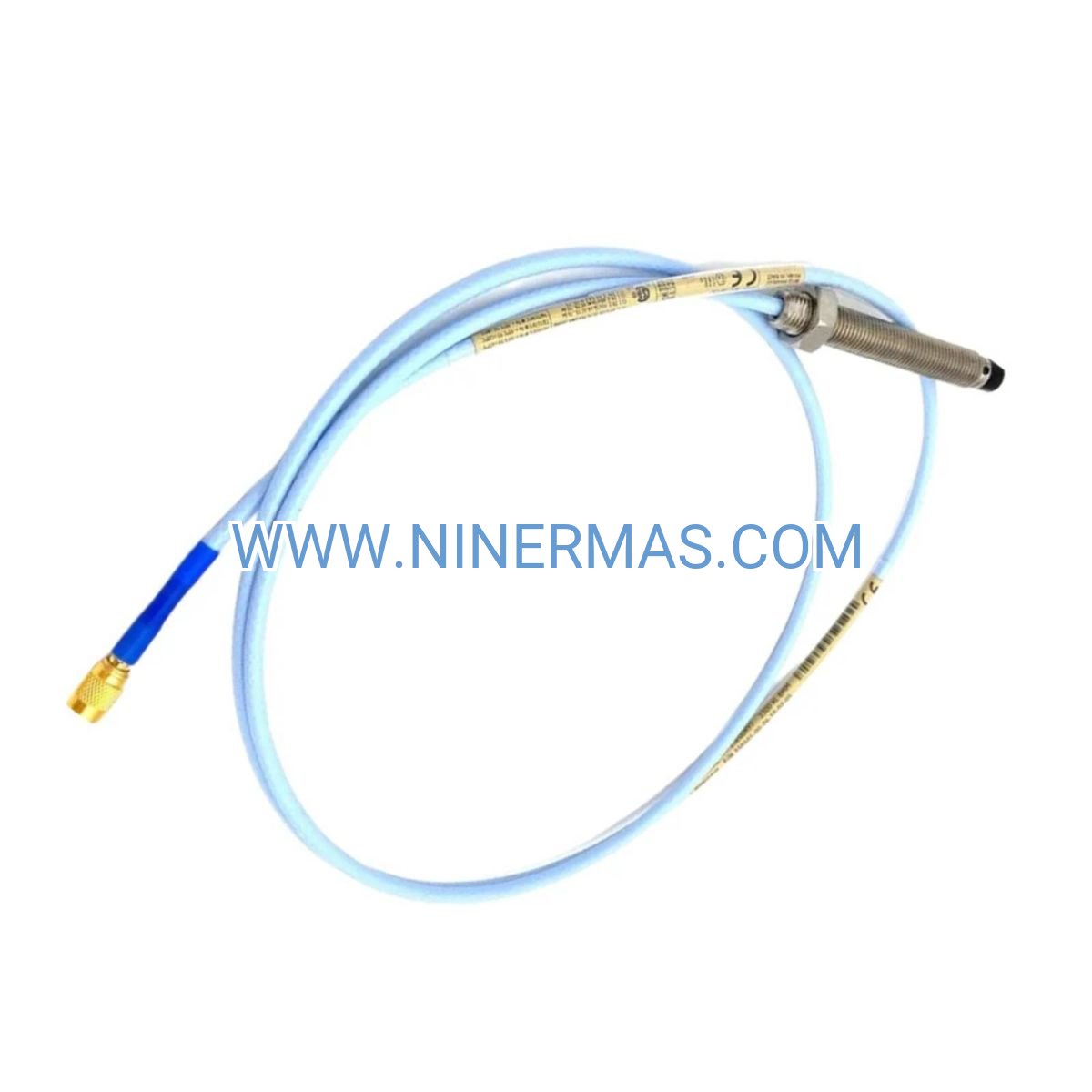
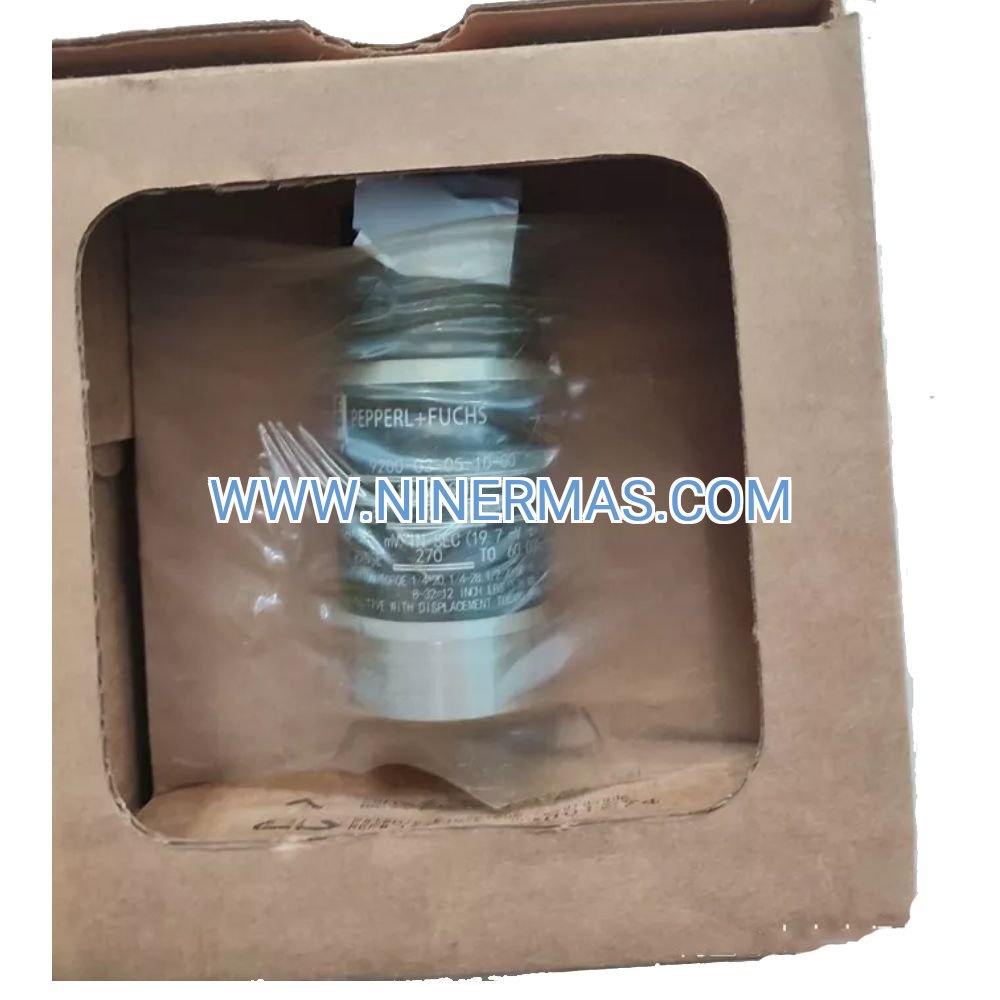
Bently Nevada 330141 8mm Proximity Probe (Industrial Vibration Monitoring System)
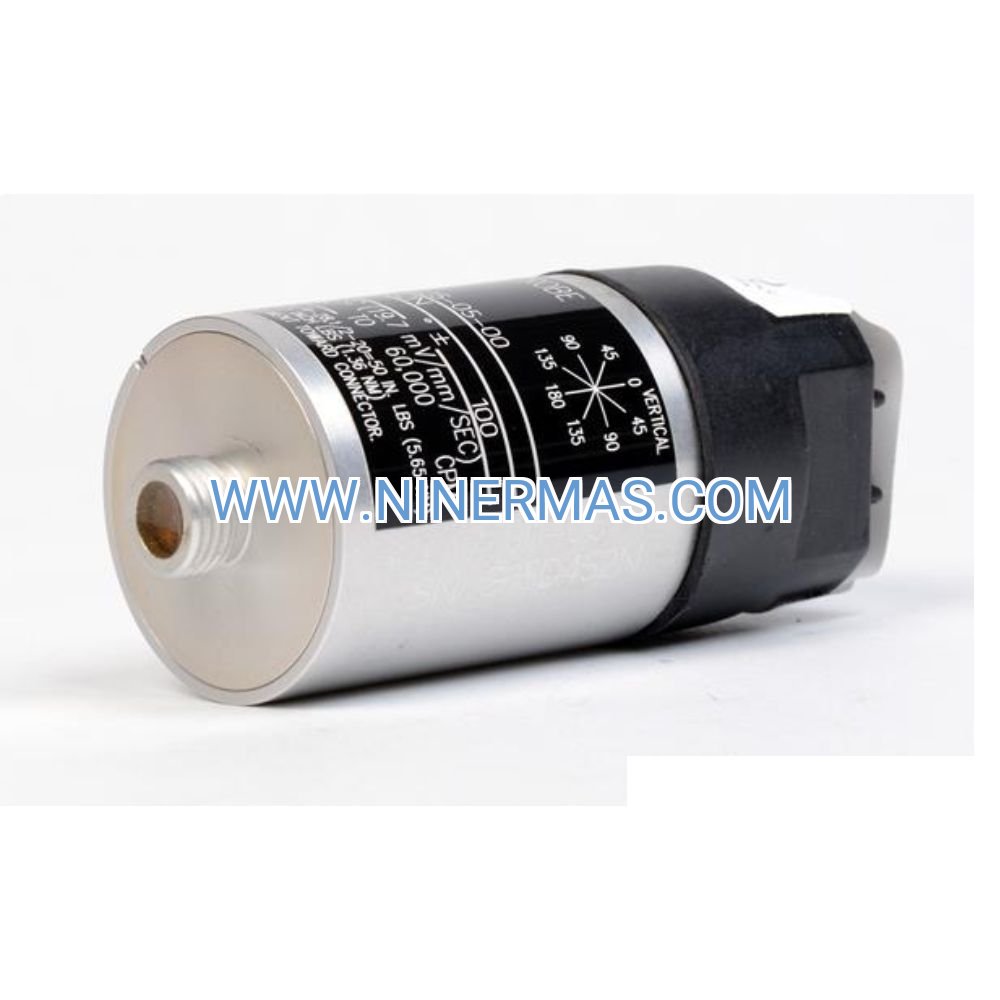
The Bently Nevada 330141-08-20-12-05-00 is an industrial-grade proximity probe engineered for critical turbomachinery vibration monitoring applications. Through advanced eddy current technology and non-contact measurement principles, this 8mm sensor delivers real-time shaft displacement tracking, radial vibration analysis, and axial position verification with exceptional accuracy and reliability.
Designed for high-stakes environments including power generation plants, petrochemical facilities, oil and gas processing stations, and heavy industrial manufacturing operations, this probe addresses critical challenges such as unexpected equipment failures, costly unplanned downtime, bearing degradation detection delays, and insufficient early-warning capabilities for rotating machinery anomalies.
Featuring standardized M18 x 1.5 metric threading with field-customizable installation options, the 330141 probe offers superior measurement linearity (±2% FSO), extended temperature tolerance (-40°C to +105°C), hermetic stainless steel construction, and seamless integration with 3300 XL proximitor modules. Ideal for design engineers, maintenance managers, instrumentation specialists, and OEM equipment integrators seeking API 670-compliant monitoring solutions. Contact our application engineers for customized selection guidance, system configuration recommendations, and competitive project quotations.
Core Features & Technical Advantages
- Extended Sensing Range Capability
8mm nominal measurement distance provides optimal coverage for applications requiring greater shaft runout accommodation, thermal expansion compensation, or challenging installation geometries while maintaining superior linearity across the full calibrated span. - Wide-Spectrum Frequency Response
DC to 10 kHz bandwidth (-3 dB point) captures both slow-roll baseline measurements and high-frequency bearing fault signatures, enabling comprehensive rotor dynamics analysis and multi-fault detection in a single transducer. - Extreme Environment Durability
Hermetically sealed stainless steel housing withstands corrosive atmospheres, temperature cycling from -40°C to +105°C, moisture ingress, and mechanical shock, ensuring reliable operation in offshore platforms, desert installations, and arctic conditions. - API 670 Standards Compliance
Factory calibration certificates, traceability documentation, and performance verification meet petroleum and natural gas industry machinery protection system requirements, streamlining regulatory approval and commissioning processes. - Precision Eddy Current Technology
Non-contact electromagnetic sensing eliminates mechanical wear, requires zero maintenance, and provides drift-free measurements over decades of continuous operation, reducing total cost of ownership compared to contact-type sensors. - Plug-and-Play System Integration
Standardized electrical interface ensures drop-in compatibility with existing 3300 XL proximitor modules, extension cables, and legacy 7200 series infrastructure, minimizing retrofit complexity and system reconfiguration time.
Typical Application Scenarios
This proximity probe is engineered for installations demanding continuous shaft surveillance, predictive maintenance capabilities, and automated machinery protection across diverse industrial sectors:
- Steam & Gas Turbine Generator Sets
Monitors journal bearing radial vibration, thrust bearing axial position, and rotor eccentricity in power generation units ranging from 50 MW to 1000+ MW capacity, preventing catastrophic blade rubs and bearing failures. - Centrifugal & Axial Compressor Trains
Tracks compressor rotor displacement for anti-surge control systems, detects seal clearance degradation, and verifies alignment during hot commissioning in natural gas processing, LNG liquefaction, and petrochemical synthesis applications. - High-Speed Rotating Equipment
Provides critical shaft position feedback for turbomolecular pumps, high-speed spindles, turbochargers, and precision grinding machines operating above 10,000 RPM where conventional accelerometers lack low-frequency response. - Large Industrial Motors & Generators
Enables continuous bearing clearance monitoring, rotor bow detection during thermal transients, and electromagnetic center verification in synchronous motors, induction motors, and wound-rotor generators exceeding 1000 HP. - Pump & Fan Critical Service Applications
Detects cavitation-induced shaft deflection, impeller imbalance progression, and coupling misalignment in boiler feed pumps, cooling tower fans, and process circulation pumps where failure consequences include production loss or safety incidents.
Technical Parameters & Selection Guide
To facilitate accurate system design and component selection, we provide comprehensive specifications for standard configurations with custom engineering support available for specialized requirements:
| Parameter | Specification | Notes |
|---|---|---|
| Part Number | 330141-08-20-12-05-00 | Factory configuration code |
| Sensing Range | 8mm (0.315 in) nominal | Typical usable range: 0-2.0mm gap |
| Thread Type | M18 x 1.5 metric | Standard ISO mounting interface |
| Operating Temperature | -40°C to +105°C | Continuous duty rating |
| Frequency Response | DC to 10 kHz | -3 dB bandwidth specification |
| Linearity | ±2% FSO | Over calibrated measurement span |
| Housing Material | Stainless Steel 316 | Corrosion-resistant construction |
| Cable Termination | Factory-sealed connector | Requires extension cable (sold separately) |
| Target Material | 4140 Steel (standard calibration) | Other materials require field calibration |
| Compliance Standards | API 670, ISO 20816 | Machinery protection system certified |
Selection Recommendations: When specifying proximity probes for your application, consider the following critical parameters: maximum anticipated shaft runout and thermal growth (determines required sensing range), shaft material composition and surface finish quality (affects calibration accuracy), ambient temperature extremes and chemical exposure (influences housing material selection), available mounting space and thread boss configuration (defines mechanical interface requirements), and integration with existing monitoring infrastructure (determines electrical compatibility needs). For technical assistance, please provide machinery type, shaft diameter, operating speed range, environmental conditions, and monitoring system architecture. Our application engineers will recommend optimal probe configuration and complete system bill of materials.
Advanced Integration Capabilities
When deployed as part of a comprehensive 3300 XL transducer system architecture, the 330141 proximity probe enables sophisticated machinery health management:
- Multi-Channel Synchronous Monitoring: Combine multiple probes at 90-degree orientations (X-Y configuration) for orbit analysis, shaft centerline tracking, and dynamic load vector calculation during startup, steady-state operation, and coastdown events.
- Automated Protection Logic: Interface with programmable safety systems through 4-20mA analog outputs or Modbus digital protocols to execute automatic turbine trips, load shedding sequences, or backup equipment activation when vibration thresholds are exceeded.
- Predictive Maintenance Analytics: Export time-waveform data and FFT spectral analysis to condition monitoring platforms for bearing defect frequency identification, rotor crack detection, coupling wear trending, and remaining useful life estimation.
- Commissioning & Diagnostic Tools: Utilize slow-roll compensation, Bode plot generation, polar plot visualization, and acceptance region verification during initial startup and periodic performance validation testing.
Installation Best Practices
Proper installation procedures are critical for achieving specified measurement accuracy and long-term system reliability. The probe installs into precision-machined M18 x 1.5 threaded bosses located in bearing housings, pedestals, or custom mounting brackets. Position the probe tip perpendicular to the shaft surface with initial gap setting between 1.0-2.0mm (measured with calibrated feeler gauges or dial indicator) to establish optimal operating point within the linear measurement range.
Ensure shaft surface finish meets 32 microinches RMS or better, with no scratches, tool marks, or coating defects in the measurement zone. Route extension cables away from high-voltage power conductors, variable frequency drives, and welding equipment to minimize electromagnetic interference. Torque probe body to 20-25 Nm using a wrench on the hex flats (never apply torque to the cable connector). After installation, verify proximitor output voltage reads -8 to -10 VDC at the initial gap setting, confirming proper electrical operation.
Compatible System Components
Build a complete vibration monitoring solution with these verified compatible products available from our industrial automation catalog:
| Component Type | Model Number | Function |
|---|---|---|
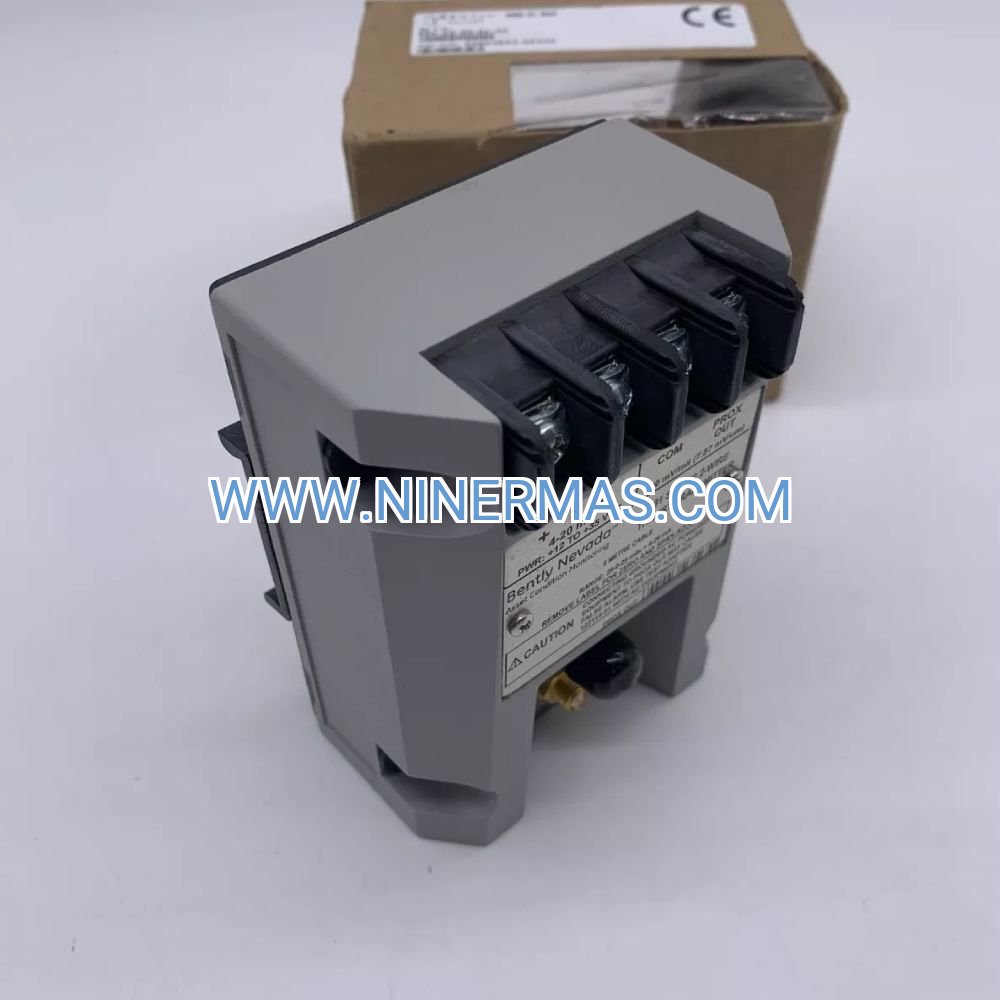
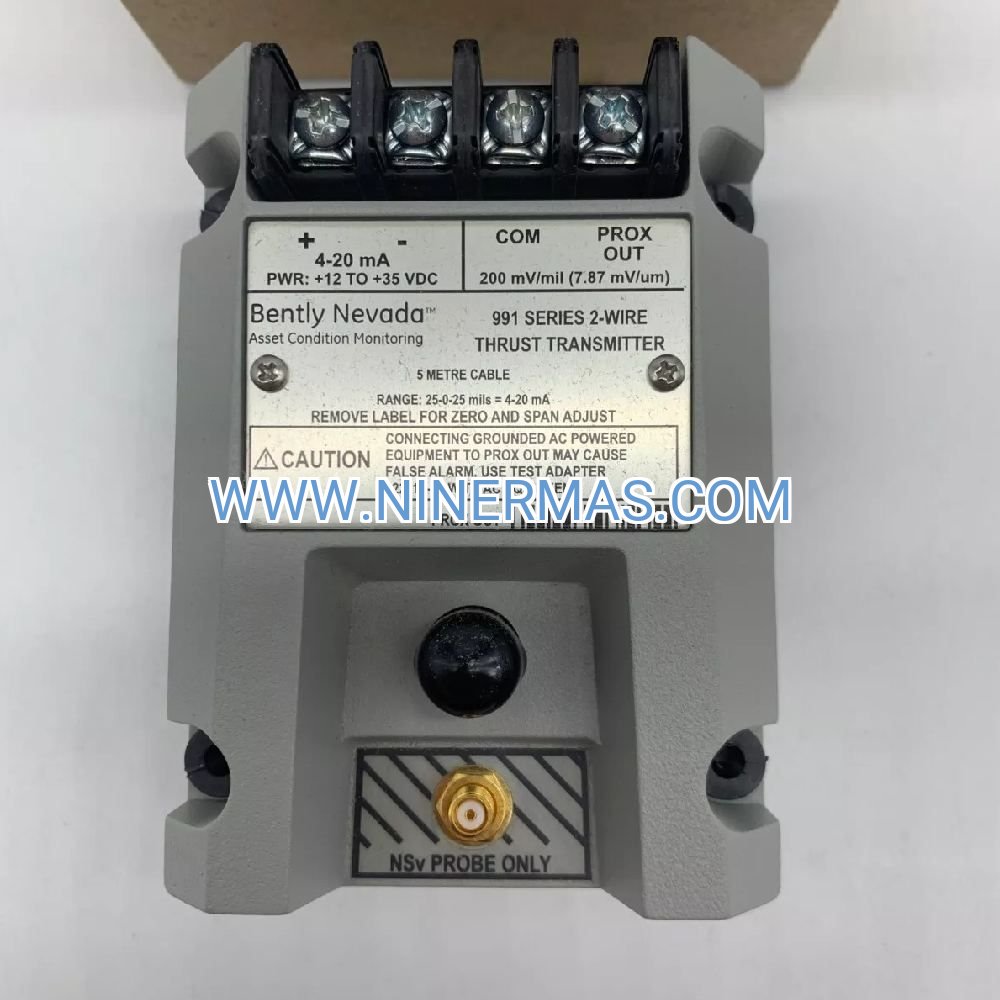
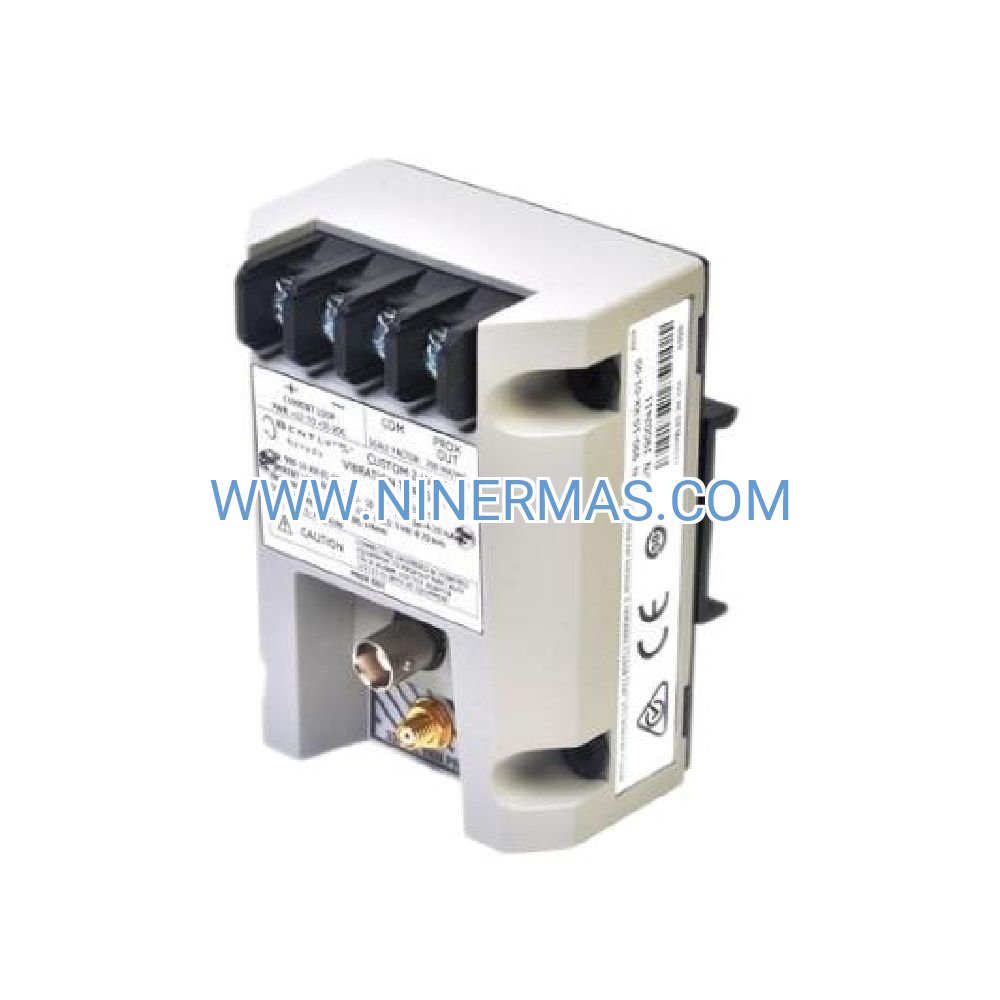
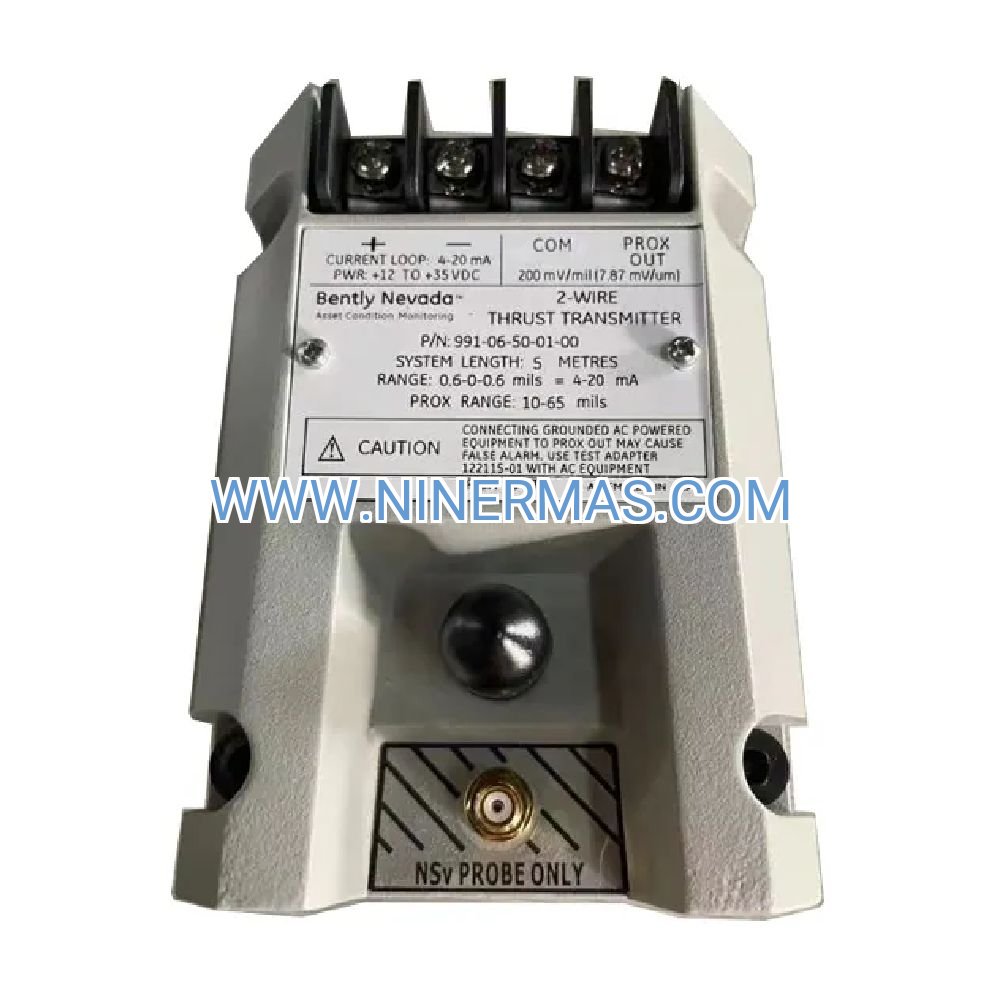
| Proximitor Module | Bently Nevada 3300 XL NSv | Signal conditioning and power supply |
| Extension Cable | Bently Nevada 330130 Series | Field-length cable assembly (1m to 9m) |
| Mounting Hardware | Custom Probe Bracket Kit | Adjustable positioning and locking mechanism |
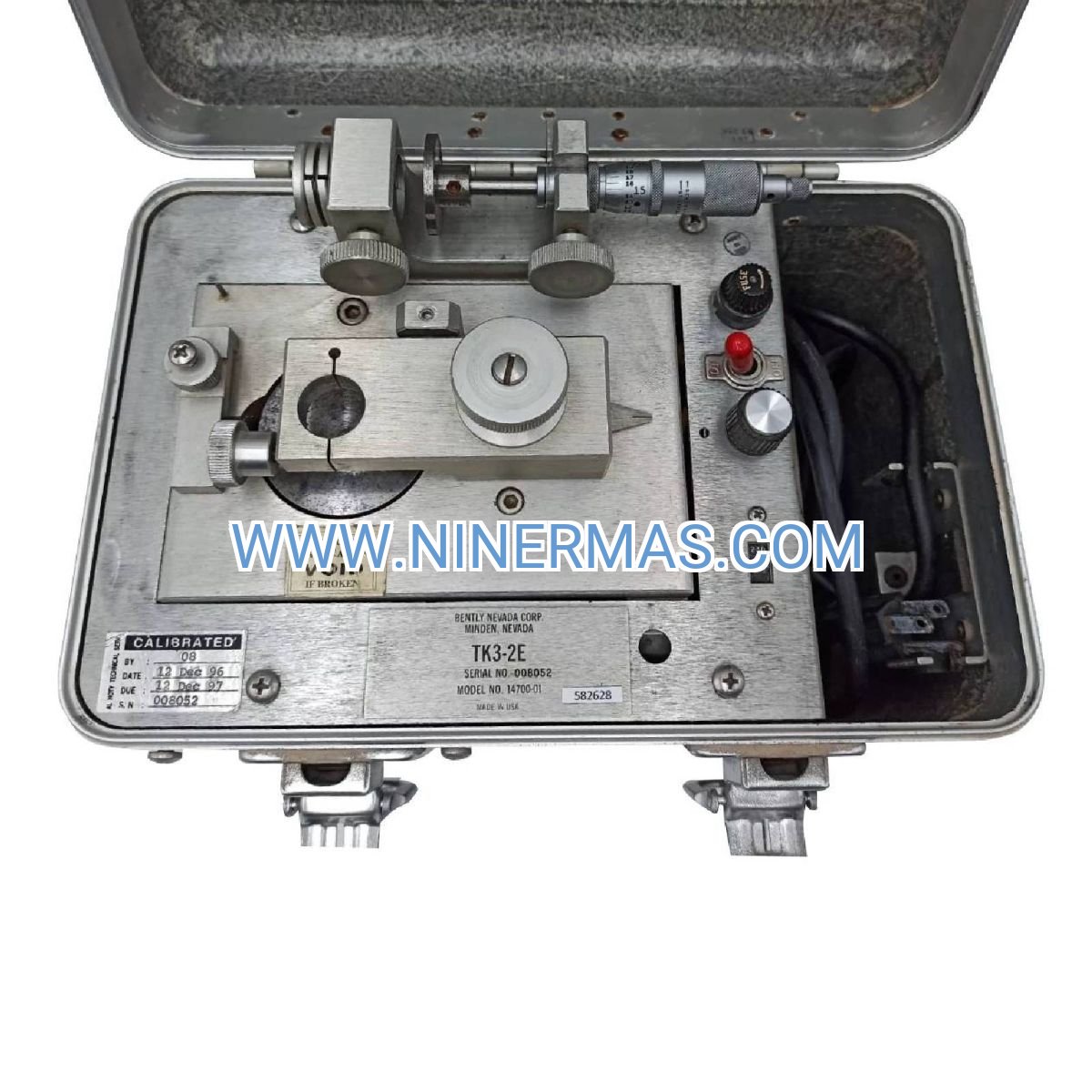
| Calibration Target | 4140 Steel Reference Shaft | Field calibration verification standard |
Frequently Asked Questions (FAQ)
Q: How does the 8mm proximity probe differ from 5mm models in measurement capability?
A: The 8mm probe provides approximately 60% greater sensing distance (0-2.0mm usable range versus 0-1.25mm for 5mm variants), making it ideal for applications with larger shaft runout, significant thermal growth, or installation constraints requiring extended measurement capability. However, 5mm probes offer slightly better resolution for small-displacement measurements in precision machinery applications.
Q: Can this Bently Nevada probe integrate with proximitor modules from other manufacturers?
A: While the probe operates on standard eddy current principles, optimal performance and calibration accuracy require pairing with Bently Nevada 3300 XL proximitor modules specifically designed for this transducer series. Third-party proximitors may introduce measurement errors due to impedance mismatches, different excitation frequencies, and incompatible calibration curves. We recommend complete system sourcing from a single manufacturer.
Q: What shaft materials and surface treatments are compatible with this proximity probe?
A: The probe is factory-calibrated for AISI 4140 carbon steel shafts with surface finish of 32 microinches RMS or smoother. Non-ferromagnetic materials (300-series stainless steel, aluminum alloys, titanium) require field recalibration and exhibit reduced sensitivity (typically 50-70% of ferrous material response). Chrome plating, nitriding, and induction hardening are acceptable with calibration verification. Avoid non-conductive coatings.
Q: How do I verify correct installation gap during system commissioning?
A: With machinery at rest, use precision feeler gauges or a dial indicator to establish 1.0-2.0mm gap between probe tip and shaft surface. Apply power to the proximitor module and measure DC output voltage—it should read approximately -8 to -10 VDC for proper electrical gap. If voltage is outside -6 to -12 VDC range, adjust probe position and re-verify. Document final gap setting and output voltage for future reference.
Q: What maintenance schedule is recommended for proximity probe systems?
A: Proximity probes are solid-state devices with no moving parts, requiring minimal preventive maintenance. Perform annual visual inspection for cable jacket damage, connector corrosion, and mounting hardware tightness. Verify output signal stability during routine machinery operation. Conduct full calibration verification every 3-5 years or following major machinery overhauls, bearing replacements, or shaft refinishing operations.
Q: Does this probe support remote monitoring and data acquisition systems?
A: Yes, when paired with compatible proximitor modules featuring 4-20mA analog outputs or digital communication protocols (Modbus RTU, Modbus TCP, OPC UA), the probe integrates seamlessly with DCS platforms, SCADA systems, PLCs, and cloud-based condition monitoring services. Real-time vibration data, alarm status, and historical trending are accessible for remote diagnostics and predictive maintenance analytics.
Delivery, Service & Quality Assurance
Lead Time: Standard catalog items ship within 3-5 business days from our regional distribution centers. Custom configurations and large-quantity orders typically require 2-3 weeks for factory fulfillment and quality verification testing.
Warranty Coverage: All Bently Nevada proximity probes include a comprehensive 12-month manufacturer warranty covering material defects and workmanship failures under normal operating conditions. Extended warranty programs and service contracts are available for critical applications.
Technical Support: Our experienced application engineering team provides complimentary installation guidance, calibration assistance, troubleshooting support, and system integration consultation throughout the product lifecycle. On-site commissioning services and training programs are available for complex multi-channel installations.
Documentation Package: Each probe ships with factory calibration certificate, dimensional drawings, electrical specifications, installation instructions, and material traceability documentation to support quality management systems and regulatory compliance requirements.
Request Custom Selection Support
To receive detailed application-specific recommendations, competitive project pricing, and technical specification verification, please provide the following information to our engineering team:
- Project name and application description (turbine type, compressor model, pump service, etc.)
- Machinery operating parameters (shaft diameter, rotational speed, bearing type)
- Environmental conditions (ambient temperature range, humidity, chemical exposure)
- Shaft material composition and surface finish specification
- Existing monitoring system infrastructure (proximitor model, cable lengths, DCS interface)
- Quantity requirements and delivery timeline expectations
Our application engineers will respond within 24 hours with customized system recommendations, complete bill of materials, and project-specific pricing.
© 2026 NINERMAS COMPANY LIMITED. All rights reserved.
Original Source: https://ninermas.com
Contact: sale@ninermas.com | +0086 187 5021 5667

Contact Info
-
Address:22 / F, South Wo Hang building, 148 Wing Lok Street, Sheung Wan, Western District, Hong Kong
-
Phone:+8618750215667
-
Email: