


Description
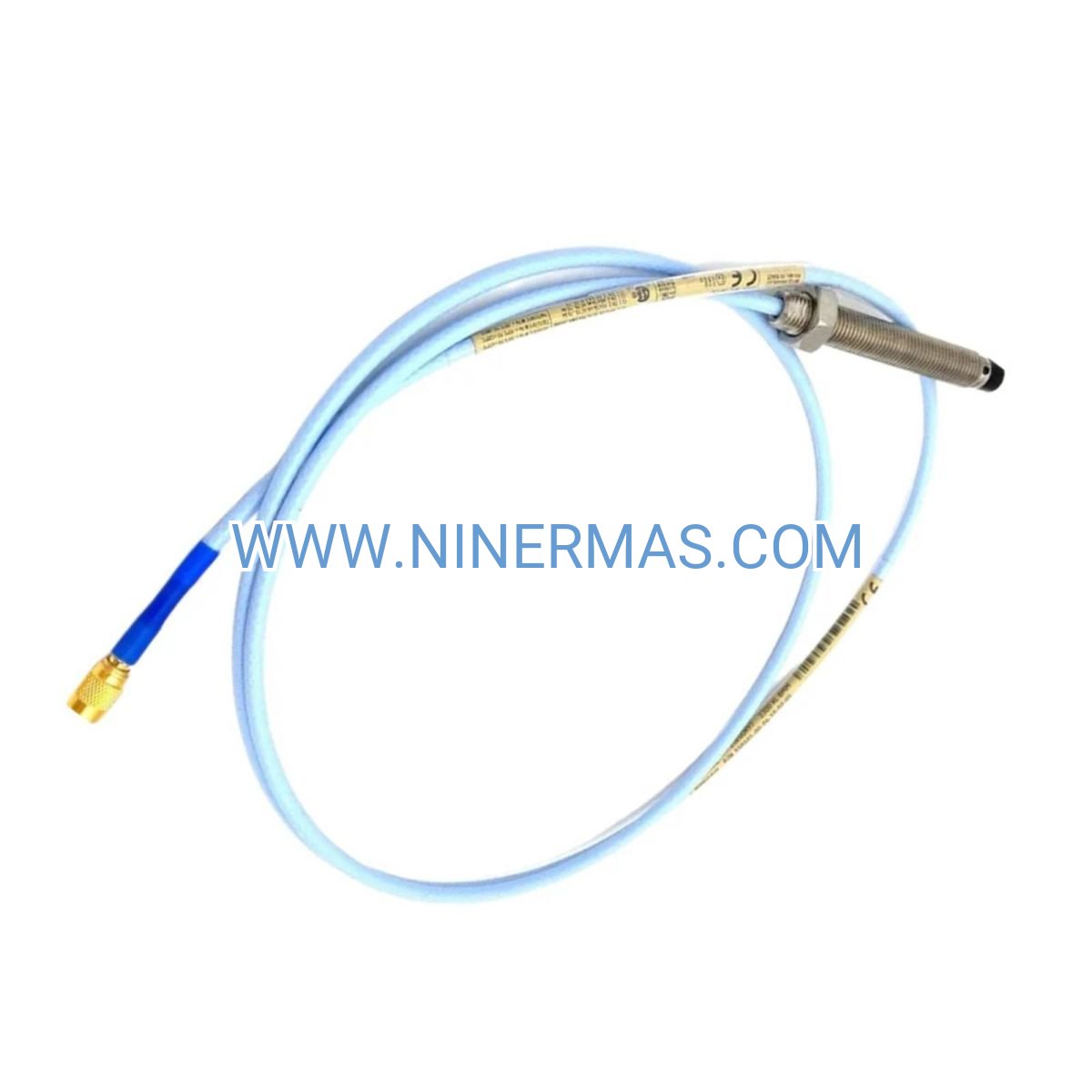
Bently Nevada 330141-08-15-12-00-00 Proximity Probe (Industrial-Grade Vibration Monitoring Solution)
The Bently Nevada 330141-08-15-12-00-00 is an industrial-grade 8mm proximity probe engineered for non-contact shaft displacement and vibration measurement in critical rotating machinery. Utilizing eddy current sensing technology, this probe delivers real-time monitoring of radial shaft position, axial thrust, and dynamic vibration across turbomachinery, pumps, compressors, and power generation equipment.
Designed for high-reliability applications in oil & gas, power generation, chemical processing, and heavy manufacturing, this probe addresses common challenges including bearing wear detection, rotor imbalance diagnosis, shaft misalignment identification, and early fault prediction. Its rugged stainless steel construction and wide temperature tolerance ensure continuous operation in harsh industrial environments where downtime prevention is critical.
Through standardized 8mm metric threading and compatibility with 3300 XL Proximitor sensors, the 330141-08-15-12-00-00 integrates seamlessly into new installations or retrofit projects. Suitable for design engineers, maintenance teams, OEM integrators, and plant reliability specialists seeking proven vibration monitoring technology with comprehensive technical support and global availability.
Core Features & Advantages
Non-Contact Eddy Current Sensing
Utilizes electromagnetic induction to measure shaft displacement without physical contact, eliminating mechanical wear and enabling continuous monitoring over multi-year service intervals. Ideal for high-speed rotating equipment where contact-based sensors would fail prematurely.
Wide Frequency Response (0-10 kHz)
Captures both slow-roll shaft position (0 Hz) and high-frequency vibration events up to 10,000 Hz, providing complete diagnostic coverage from sub-synchronous instabilities to gear mesh frequencies and bearing defect signatures.
Extended Temperature Range (-40°C to +105°C)
Operates reliably in extreme thermal environments including cryogenic gas processing, steam turbine casings, and desert climate installations. Maintains measurement accuracy across the full temperature spectrum without recalibration.
Rugged Stainless Steel Construction
Hermetically sealed housing resists moisture ingress, chemical exposure, and mechanical shock. Suitable for offshore platforms, corrosive process environments, and high-vibration mounting locations where sensor durability is paramount.
Standardized System Integration
Direct compatibility with Bently Nevada 3300 XL Proximitor sensors, extension cables, and monitoring systems. Follows industry-standard API 670 guidelines for machinery protection systems, simplifying procurement and reducing engineering time.
Long Service Life & Low Maintenance
Solid-state design with no moving parts or consumable elements. Typical service life exceeds 15 years in continuous operation, reducing total cost of ownership and minimizing maintenance-related production interruptions.
Typical Application Scenarios
This proximity probe is engineered for applications demanding high measurement accuracy, environmental resilience, and long-term reliability:
Steam & Gas Turbine Monitoring
Measures radial shaft vibration and axial position in power generation turbines operating at 3,000-3,600 RPM. Detects rotor rubs, thrust bearing degradation, and blade passing frequencies to prevent catastrophic failures in utility-scale and industrial cogeneration plants.
Centrifugal Compressor Protection
Monitors shaft displacement in multi-stage compressors handling natural gas, air, refrigerants, and process gases. Provides early warning of surge conditions, seal failures, and aerodynamic instabilities in oil & gas processing, petrochemical, and LNG facilities.
Large Motor & Generator Surveillance
Tracks rotor eccentricity and bearing clearances in motors above 500 HP and generators from 1 MW to 500+ MW. Supports predictive maintenance programs in steel mills, mining operations, water treatment plants, and renewable energy installations.
Critical Process Pumps
Ensures continuous operation of boiler feed pumps, pipeline transfer pumps, and reactor circulation pumps where unplanned shutdowns result in production losses exceeding $50,000 per hour. Enables condition-based maintenance scheduling rather than fixed-interval overhauls.
Paper Machine & Rolling Mill Equipment
Monitors dryer rolls, calender stacks, and mill drive trains in continuous manufacturing processes. Detects roll eccentricity, coupling misalignment, and gearbox wear patterns to maintain product quality and prevent web breaks.
Technical Parameters & Selection Guide
To facilitate system design and component selection, the following specifications define the operational characteristics and physical dimensions of the 330141-08-15-12-00-00 proximity probe:
| Parameter | Specification |
|---|---|
| Model Number | 330141-08-15-12-00-00 |
| Probe Diameter | 8mm (0.315 inches) |
| Thread Type | M8 x 1.0 metric |
| Sensing Range | 2.0mm (0.080 inches) typical linear range |
| Frequency Response | 0 to 10 kHz (-3dB point) |
| Operating Temperature | -40°C to +105°C (-40°F to +221°F) |
| Cable Length | 15 feet (4.57 meters) integral cable |
| Housing Material | 300 series stainless steel |
| Target Material | Ferromagnetic metals (carbon steel, 400-series stainless) |
| Recommended Gap | 1.0mm (40 mils) from probe tip to shaft surface |
| System Compatibility | Bently Nevada 3300 XL Proximitor sensors (330180 series) |
| Linearity | ±1% of full scale when properly calibrated |
| Approximate Weight | 0.2 kg (0.44 lbs) including cable |
Selection Considerations:
When specifying this proximity probe, consider the following application parameters: shaft diameter and surface finish (Ra < 1.6 μm recommended), maximum shaft runout and vibration amplitude, ambient temperature at probe mounting location, required cable routing distance to Proximitor sensor, and hazardous area classification requirements. For applications requiring longer cable runs, select appropriate extension cables (330130 series) to maintain signal integrity. Our application engineers can assist with probe quantity determination, mounting hardware selection, and system configuration based on your machinery specifications.
Complete Monitoring System Architecture
The 330141-08-15-12-00-00 proximity probe functions as the sensing element within a three-component measurement chain:
1. Proximity Probe (330141-08-15-12-00-00)
Generates a high-frequency oscillating electromagnetic field and detects changes in field strength caused by shaft proximity variations. Converts mechanical displacement into electrical signal variations.
2. Extension Cable (330130 Series)
Transmits the probe signal to the Proximitor sensor while maintaining electrical characteristics. Available in lengths from 1 meter to 9 meters to accommodate various machinery configurations.
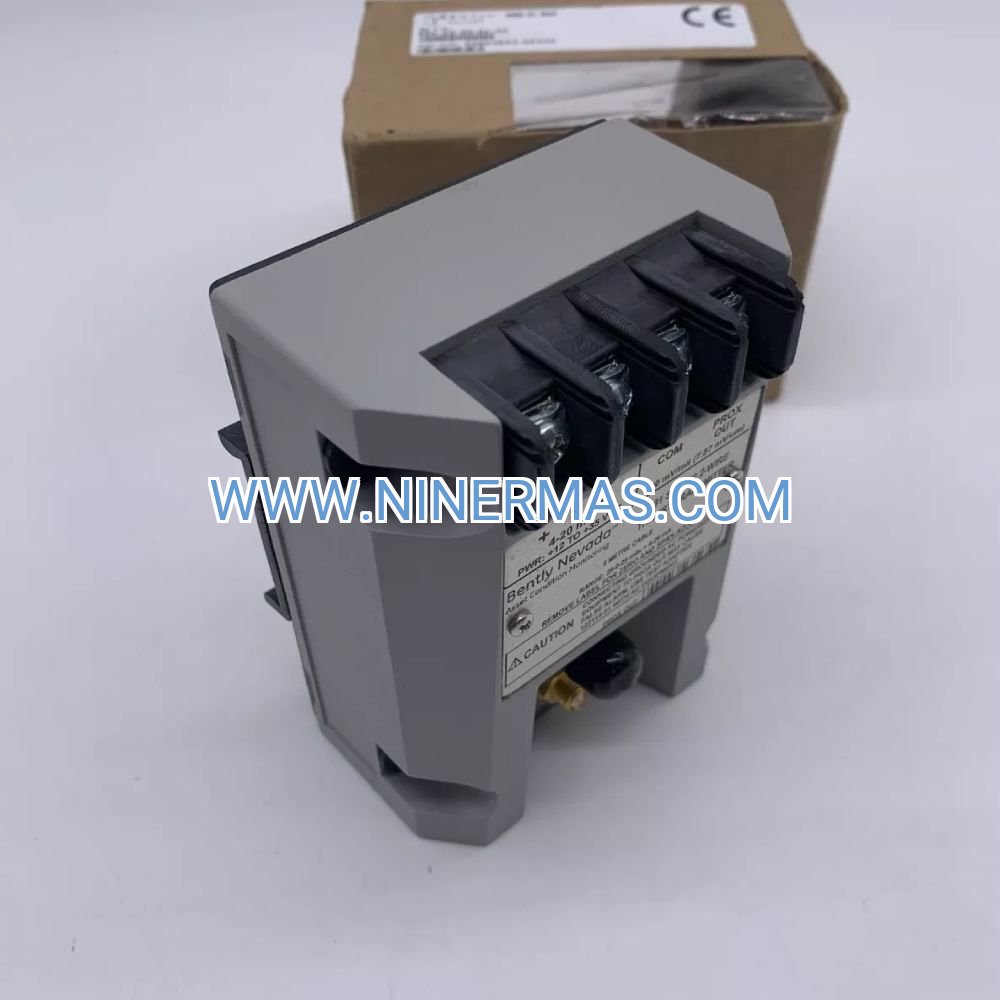
3. Proximitor Sensor (330180 Series)
Provides excitation voltage to the probe, demodulates the returned signal, and outputs a calibrated DC voltage proportional to shaft displacement (typically 200 mV/mil or 7.87 V/mm). Connects to monitoring systems, protection relays, or data acquisition equipment.
This modular architecture enables flexible installation geometries, simplified troubleshooting through component-level testing, and cost-effective spare parts inventory management.
Installation & Commissioning Guidelines
Proper installation is critical to achieving specified measurement accuracy and long-term reliability:
Mechanical Mounting: Install probe in a rigid mounting bracket or threaded boss machined perpendicular to the shaft surface. Ensure the probe tip is positioned at the recommended 1.0mm gap using feeler gauges or gap measurement tools. Tighten the probe lock nut to prevent vibration-induced movement while avoiding excessive torque that could damage threads.
Electrical Connection: Route the integral cable through conduit or cable tray to the extension cable junction point. Maintain minimum bend radius of 10x cable diameter. Connect to the appropriate extension cable length, then terminate at the Proximitor sensor following polarity markings.
System Calibration: Perform static calibration using the actual shaft material or a calibration target of identical composition. Verify the voltage output at multiple gap settings across the linear range. Document the calibration curve and compare against factory specifications (typically ±5% tolerance).
Functional Testing: Conduct a slow-roll test during machinery startup to verify probe output tracks shaft runout. Confirm frequency response by analyzing vibration signatures during normal operation. Set alarm and trip points in the monitoring system based on API 670 guidelines or OEM recommendations.
Delivery, Service & Quality Assurance
Lead Time & Availability:
Factory-sealed units typically ship within 3-5 business days from our regional distribution centers. Custom cable lengths or special configurations require 10-15 business days. Expedited shipping options available for critical outage support.
Warranty Coverage:
Each proximity probe includes a comprehensive 12-month manufacturer warranty covering defects in materials and workmanship under normal operating conditions. Warranty support includes free replacement, technical troubleshooting, and application engineering consultation.
Technical Documentation:
Every shipment includes: product datasheet with electrical specifications, installation drawing with dimensional tolerances, calibration certificate with traceability to NIST standards, and quick-start guide for system integration. Complete installation manuals and CAD models available for download.
Application Support:
Our technical specialists provide pre-sales consultation for system design, installation guidance via phone or video conference, post-installation troubleshooting, and ongoing maintenance recommendations. Field service available in major industrial regions for complex installations or commissioning assistance.
Frequently Asked Questions (FAQ)
Q: What shaft materials are compatible with the 330141-08-15-12-00-00 proximity probe?
A: This probe is optimized for ferromagnetic materials including carbon steel, 400-series stainless steel (410, 416, 420), and magnetic alloys. Non-magnetic materials like 300-series stainless steel, aluminum, or titanium require specialized probe configurations with different electrical characteristics. Contact our engineering team to specify the correct probe for non-standard shaft materials.
Q: Can this proximity probe be used in hazardous area installations?
A: Yes, when paired with intrinsically safe barriers and certified 3300 XL Proximitor sensors, the system can be configured for Class I Division 1, Class I Division 2, Zone 0, and Zone 1 hazardous locations. The probe itself is a passive device; the barrier limits energy to levels incapable of ignition. Consult the Proximitor sensor documentation for specific certifications (ATEX, IECEx, CSA, FM).
Q: What is the optimal installation gap, and how critical is gap tolerance?
A: The recommended operating gap is 1.0mm (40 mils) from the probe tip to the shaft surface. This gap provides maximum linear range (±0.5mm) and optimal sensitivity. Gap tolerance of ±0.2mm is acceptable, but deviations beyond this range will reduce linear range and may introduce measurement errors. Always verify gap during installation using precision feeler gauges.
Q: Is the 330141-08-15-12-00-00 compatible with older Bently Nevada 7200 series systems?
A: No, the 3300 XL series uses different oscillator frequencies and electrical characteristics compared to legacy 7200 series systems. Attempting to mix components will result in incorrect measurements or system malfunction. For 7200 series upgrades, a complete system replacement (probe, extension cable, and Proximitor) is required.
Q: How do I determine the required number of proximity probes for my machinery?
A: Standard practice follows API 670 guidelines: minimum two probes per radial bearing (X-Y orientation at 90°), one or two probes for axial position measurement, and additional probes for differential expansion or eccentricity monitoring. A typical steam turbine requires 8-12 probes; a centrifugal compressor may need 12-20 probes depending on bearing count and monitoring requirements. Our application engineers can provide detailed probe layouts based on your machinery drawings.
Q: What maintenance is required for proximity probes in continuous service?
A: Proximity probes are maintenance-free devices with no consumable parts. Recommended practices include: annual visual inspection for cable damage or mounting looseness, verification of gap settings during major overhauls, and periodic calibration checks (every 3-5 years or per plant procedures). Clean the probe tip if contamination buildup is observed, using non-abrasive solvents compatible with stainless steel.
Request Technical Consultation & Quotation
To receive a detailed system proposal, pricing quotation, or application engineering support, please provide the following information to our technical sales team:
- Project name and application description (equipment type, operating conditions)
- Machinery specifications (shaft diameter, operating speed, bearing locations)
- Monitoring objectives (vibration limits, protection requirements, data acquisition needs)
- Quantity requirements and delivery timeline
- Environmental conditions (temperature range, hazardous area classification, exposure to chemicals)
- Existing monitoring system details (if retrofit or expansion project)
Our engineers will respond within 24 hours with component recommendations, system architecture drawings, and budget pricing. For urgent outage support or emergency replacements, contact our 24/7 technical hotline for expedited processing.
© 2026 NINERMAS COMPANY LIMITED. All rights reserved.
Original Source: https://ninermas.com
Contact: sale@ninermas.com | +0086 187 5021 5667

Contact Info
-
Address:22 / F, South Wo Hang building, 148 Wing Lok Street, Sheung Wan, Western District, Hong Kong
-
Phone:+8618750215667
-
Email:
