Description
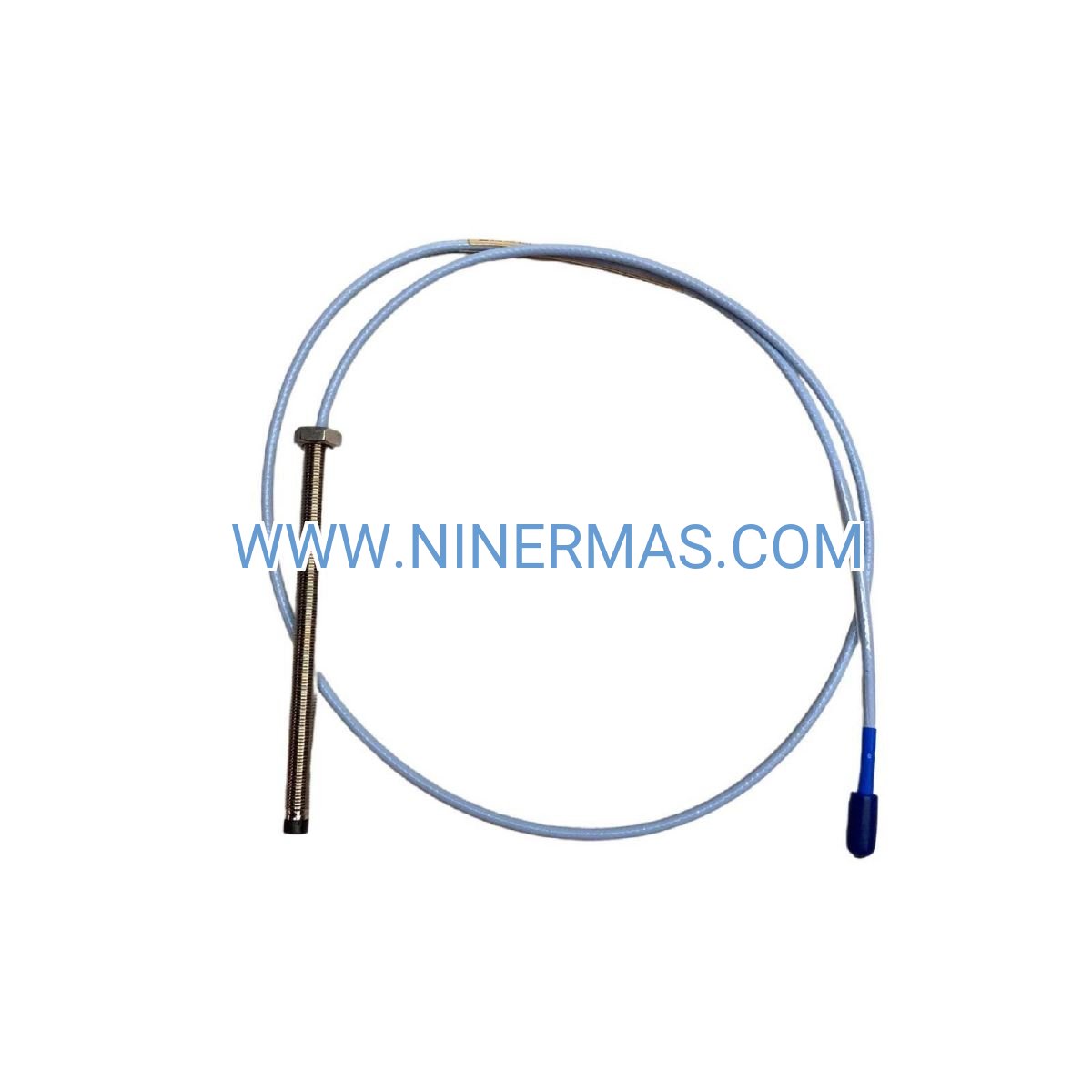
Bently Nevada 330141 8mm Proximity Probe – Industrial Vibration Monitoring Solution
The Bently Nevada 330141-08-10-02-05-00 is an industrial-grade 8mm proximity transducer probe engineered for continuous vibration and shaft position monitoring in critical rotating machinery. Utilizing advanced eddy current sensing technology, this probe delivers precise, non-contact measurement of radial displacement and dynamic motion in turbines, compressors, pumps, and other high-value assets.
Designed for demanding industrial environments including power generation, oil & gas, petrochemical, and heavy manufacturing facilities, the 330141 probe addresses common challenges such as unexpected machinery failures, bearing wear detection delays, shaft misalignment issues, and costly unplanned downtime. It provides real-time condition monitoring data that enables predictive maintenance strategies and protects critical equipment investments.
Through standardized design and field-proven reliability, this proximity probe offers exceptional temperature tolerance (-46°C to +218°C with ETR), hazardous area certifications (CSA, ATEX, IECEx), and API 670 compliance. Ideal for plant engineers, maintenance teams, OEM integrators, and condition monitoring specialists seeking dependable vibration sensing solutions. Contact our application engineers for system configuration guidance and technical specifications tailored to your machinery protection requirements.
Core Features & Technical Advantages
- Precision Eddy Current Sensing
Non-contact measurement technology with polyurethane-coated sensing element and TipLoc molding ensures accurate shaft displacement detection without mechanical wear, delivering consistent performance over extended service life in harsh industrial conditions. - Extended Temperature Capability
Operates reliably from -46°C to +218°C (-51°F to +425°F) with Extended Temperature Range option, significantly outperforming standard sensors limited to 177°C. Ideal for high-temperature turbine applications and extreme climate installations. - Hazardous Area Certified
CSA, ATEX, and IECEx approvals enable safe deployment in explosive atmospheres including Zone 0/1/2 and Division 1/2 classified areas, meeting stringent safety requirements for oil & gas, chemical processing, and mining operations. - API 670 Compliant Design
Fully conforms to API 670 machinery protection system standards, ensuring compatibility with critical equipment monitoring requirements in refineries, power plants, and process industries where regulatory compliance is mandatory. - Robust Armored Construction
Features armored cable protection (05 designation) with pressure rating up to 13.79 bar (200 psig) at probe tip, providing mechanical durability and environmental resistance in high-vibration, high-pressure installation environments. - ClickLoc Gold-Plated Connectors
3-wire configuration with gold-plated ClickLoc connectors ensures reliable electrical connections, minimizes signal degradation, and simplifies field installation and maintenance procedures while reducing connection-related failures.
Typical Application Scenarios
This proximity probe is specifically engineered for applications requiring high-reliability shaft vibration monitoring and precise position measurement, particularly in:
- Steam & Gas Turbine Monitoring
Critical for detecting bearing failures, rotor imbalance, and shaft misalignment in power generation turbines where unplanned outages cost thousands per hour. Enables condition-based maintenance and extends turbine service intervals. - Centrifugal Compressor Protection
Provides essential vibration data for surge detection, bearing condition assessment, and rotor dynamics analysis in oil & gas compression systems, petrochemical plants, and industrial gas facilities where compressor reliability directly impacts production capacity. - Large Pump & Motor Systems
Monitors shaft position and vibration in critical pumping applications including boiler feed pumps, cooling water systems, and process fluid transfer, helping prevent catastrophic failures in continuous-operation facilities. - Industrial Gearbox & Drive Trains
Detects gear mesh issues, bearing degradation, and shaft eccentricity in heavy-duty gearboxes serving steel mills, mining equipment, cement plants, and paper machines where early fault detection prevents production losses. - Rotating Equipment in Hazardous Zones
Certified for explosive atmosphere installations in refineries, offshore platforms, chemical processing units, and pharmaceutical manufacturing where intrinsically safe monitoring solutions are required by regulation.
Technical Specifications & Selection Guide
To facilitate engineering design and system integration, we provide comprehensive technical parameters for the 330141-08-10-02-05-00 configuration. Custom specifications available for unique application requirements.
| Specification | Value / Description |
|---|---|
| Part Number | 330141-08-10-02-05-00 |
| Probe Diameter | 8 mm (0.315 inch) |
| Overall Probe Length | 80 mm (3.15 inch) – Code: 08 |
| Tip-to-Sensor Clearance | 100 mm (3.94 inch) – Code: 10 |
| Cable Length | 20 mm (0.79 inch) – Code: 02 |
| Cable Type | Armored construction – Code: 05 |
| Operating Temperature | -46°C to +218°C (-51°F to +425°F) with ETR option Standard: up to 177°C (350°F) |
| Pressure Rating | Up to 13.79 bar (200 psig) at probe tip |
| Sensing Principle | Eddy current, non-contact measurement |
| Target Material | Calibrated for AISI 4140 steel (custom calibration available) |
| Electrical Configuration | 3-wire with ClickLoc gold-plated connectors |
| DC Resistance | 7.59 ± 0.50 Ω (for 1.0 m equivalent length) |
| Hazardous Area Approvals | CSA, ATEX, IECEx certified for explosive atmospheres |
| Standards Compliance | API 670 compliant for machinery protection systems |
| Mounting Orientation | Radial vibration monitoring (mounting hardware sold separately) |
| Weight | Approximately 0.2 kg (0.44 lb) |
Selection Considerations
When specifying proximity probes for your machinery monitoring system, consider these critical factors:
- Installation Environment: Ambient temperature range, presence of corrosive substances, vibration levels, and hazardous area classification
- Shaft Characteristics: Shaft diameter, surface finish, material composition, and maximum operating speed (RPM)
- Mounting Requirements: Available installation space, probe-to-shaft gap requirements, and mounting hardware compatibility
- System Integration: Proximitor sensor compatibility, extension cable requirements, and monitoring system interface specifications
- Regulatory Compliance: Industry-specific standards (API, ISO), safety certifications, and documentation requirements
For application-specific guidance, provide our engineering team with: machinery type and model, shaft diameter and material, operating temperature and pressure conditions, hazardous area classification (if applicable), and existing monitoring system details. We'll recommend the optimal probe configuration and compatible system components.
System Integration & Compatible Components
The 330141 proximity probe is designed as part of the comprehensive Bently Nevada 3300 XL 8mm Proximity Transducer System. For complete vibration monitoring functionality, the following components are typically required:
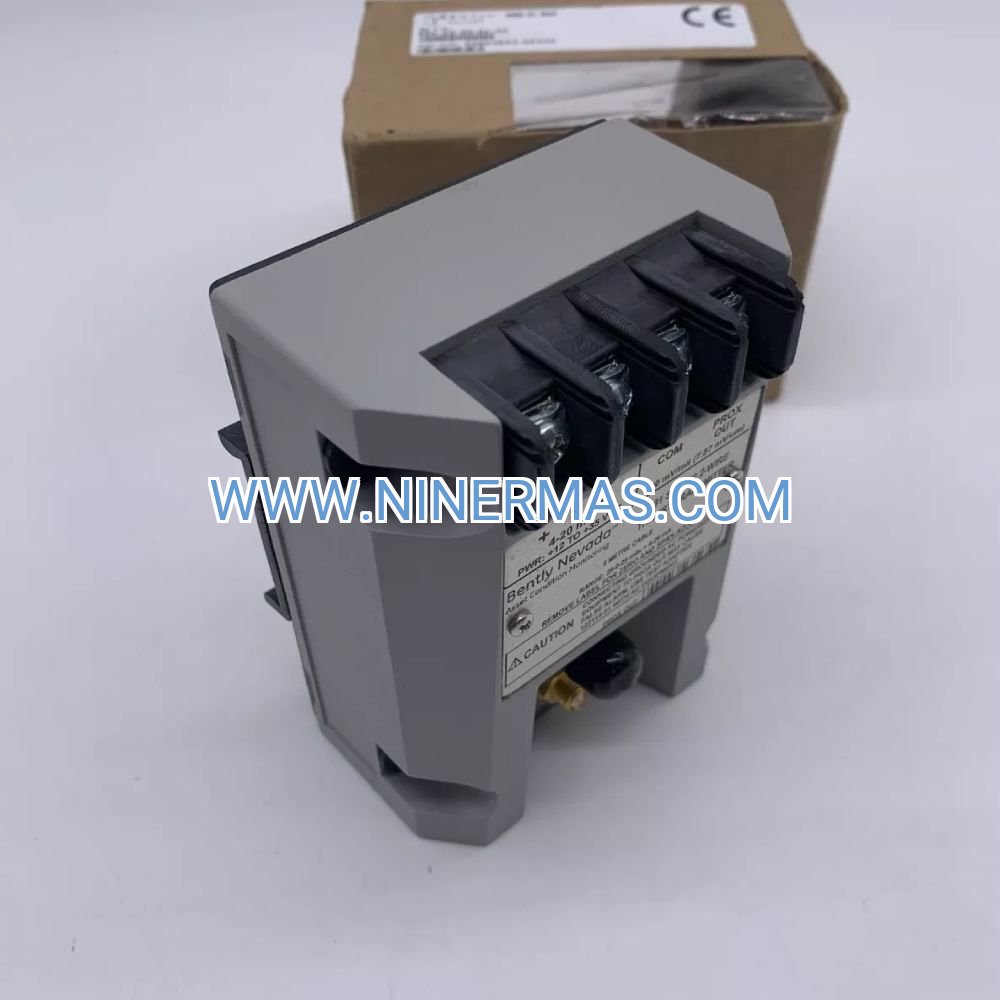
- Proximitor Sensor: Signal conditioning module that converts probe output to industry-standard 4-20mA or voltage signals compatible with DCS, PLC, or dedicated vibration monitoring systems
- Extension Cables: Field-configurable cables in various lengths to connect probe to proximitor sensor, maintaining system calibration and signal integrity
- Mounting Hardware: Precision mounting clamps and brackets designed for secure probe positioning and adjustment in rotating machinery applications
- Connector Protectors: Environmental sealing accessories recommended for harsh conditions to prevent moisture ingress and contamination
- FluidLoc Option: Specialized cable sealing technology to prevent oil and process fluids from migrating through cable assembly in submerged or high-pressure applications
All system components are engineered for seamless integration, ensuring measurement accuracy and long-term reliability. Consult our application engineers for complete system design and component selection assistance.
Delivery, Service & Quality Assurance
Lead Time: Standard configuration items typically ship within 3-5 business days from stock. Custom calibrations or special options may require 2-3 weeks for manufacturing and testing.
Warranty Coverage: All Bently Nevada proximity probes include manufacturer's warranty against defects in materials and workmanship. Extended warranty programs available for critical applications.
Technical Support: Comprehensive support services include pre-sale application engineering consultation, installation guidance, system commissioning assistance, and post-installation troubleshooting. Remote technical support available; on-site service can be arranged for major projects (availability varies by region).
Documentation Package: Each probe ships with complete technical documentation including calibration certificates, dimensional drawings, electrical connection diagrams, installation instructions, and maintenance guidelines. Digital documentation available upon request.
Quality Certifications: Manufactured under ISO 9001 quality management system with full traceability. Hazardous area certifications and API compliance documentation provided with each unit.
Frequently Asked Questions (FAQ)
Q: How do I integrate the Bently Nevada 330141 proximity probe with my existing vibration monitoring system?
A: The 330141 probe requires a compatible 3300 XL Proximitor Sensor for signal conditioning. The proximitor converts the probe's raw eddy current signal into industry-standard outputs (typically -10V to -2V or 4-20mA) that interface with DCS, PLC, or dedicated vibration monitors. You'll need to verify proximitor compatibility, select appropriate extension cable length, and ensure your monitoring system accepts the proximitor's output signal format. Our engineers can review your existing system architecture and recommend the complete integration package.
Q: What is the maximum number of proximity probes I can connect to a single monitoring channel?
A: Each proximity probe requires its own dedicated proximitor sensor and monitoring channel. For comprehensive machinery protection, typical installations use 2 probes per bearing (X-Y orientation) to measure radial vibration in two perpendicular planes. A standard turbine with 2 bearings would require 4 probe/proximitor pairs connected to 4 separate monitoring channels. Multi-channel monitoring systems can accommodate 8, 16, or more channels depending on system configuration.
Q: What measurement accuracy and reliability can I expect from this proximity probe?
A: When properly installed and calibrated with a compatible proximitor, the 3300 XL system typically achieves ±1% linearity over the calibrated range with excellent repeatability. The non-contact eddy current principle eliminates mechanical wear, providing stable long-term performance. In industrial environments, these probes routinely operate for 10+ years with minimal drift when protected from physical damage and extreme contamination. Regular system verification (annually or per plant procedures) ensures continued accuracy.
Q: What are the installation environment requirements and protection class specifications?
A: The probe itself is rated for -46°C to +218°C with ETR option and can withstand up to 200 psig pressure at the tip. The armored cable (05 designation) provides mechanical protection against abrasion and impact. However, the electrical connectors require additional protection in wet or corrosive environments—we strongly recommend connector protectors for outdoor installations or areas with washdown procedures. The probe meets IP requirements when properly installed with appropriate sealing accessories. For hazardous areas, the CSA/ATEX/IECEx certifications specify installation requirements including grounding, cable gland specifications, and zone-appropriate proximitor selection.
Q: Can this probe support remote monitoring and data acquisition for predictive maintenance programs?
A: Yes, when integrated with modern condition monitoring systems. The proximitor sensor output connects to data acquisition systems supporting Modbus, OPC, or other industrial protocols. Many plants integrate these signals into SCADA/DCS platforms for real-time monitoring, or use dedicated vibration monitoring systems with cloud connectivity for remote diagnostics and predictive analytics. The probe itself provides the raw measurement; the monitoring system architecture determines remote access capabilities. We can recommend compatible monitoring platforms that support Industry 4.0 connectivity requirements including wireless gateways, edge computing devices, and cloud-based condition monitoring services.
Q: What maintenance procedures are required to ensure long-term probe performance?
A: Proximity probes require minimal maintenance due to their non-contact design. Recommended practices include: (1) Visual inspection during scheduled machinery outages to check for physical damage, contamination buildup on probe tip, or cable wear; (2) Electrical verification of DC resistance and insulation resistance per manufacturer specifications; (3) Gap voltage verification to ensure proper probe-to-shaft spacing; (4) Connector inspection and cleaning to maintain signal integrity. Most facilities perform these checks during annual or biennial machinery overhauls. The probe tip should be cleaned if contaminated with oil residue or debris, using appropriate solvents that won't damage the polyurethane coating.
Request Technical Consultation & Quotation
To receive detailed application engineering support, system configuration recommendations, or project quotations, please provide the following information to our technical sales team:
- Project Overview: Facility type, machinery criticality classification, and monitoring objectives
- Equipment Details: Machinery type (turbine/compressor/pump), manufacturer and model, rated power/capacity
- Shaft Specifications: Shaft diameter, surface finish (Ra value), material composition, maximum operating speed (RPM)
- Environmental Conditions: Operating temperature range, ambient pressure, hazardous area classification (if applicable), exposure to moisture/chemicals
- System Requirements: Number of monitoring points, existing monitoring system (if any), preferred output signal type, integration requirements
- Installation Timeline: Project schedule, delivery requirements, commissioning support needs
Our application engineers will provide comprehensive recommendations including probe configuration verification, compatible proximitor sensor selection, extension cable specifications, mounting hardware requirements, and complete system pricing. For complex multi-machine installations, we offer system design services and commissioning support to ensure optimal performance.
© 2026 NINERMAS COMPANY LIMITED. All rights reserved.
Original Source: https://ninermas.com
Contact: sale@ninermas.com | +0086 187 5021 5667

Contact Info
-
Address:22 / F, South Wo Hang building, 148 Wing Lok Street, Sheung Wan, Western District, Hong Kong
-
Phone:+8618750215667
-
Email: