


Description
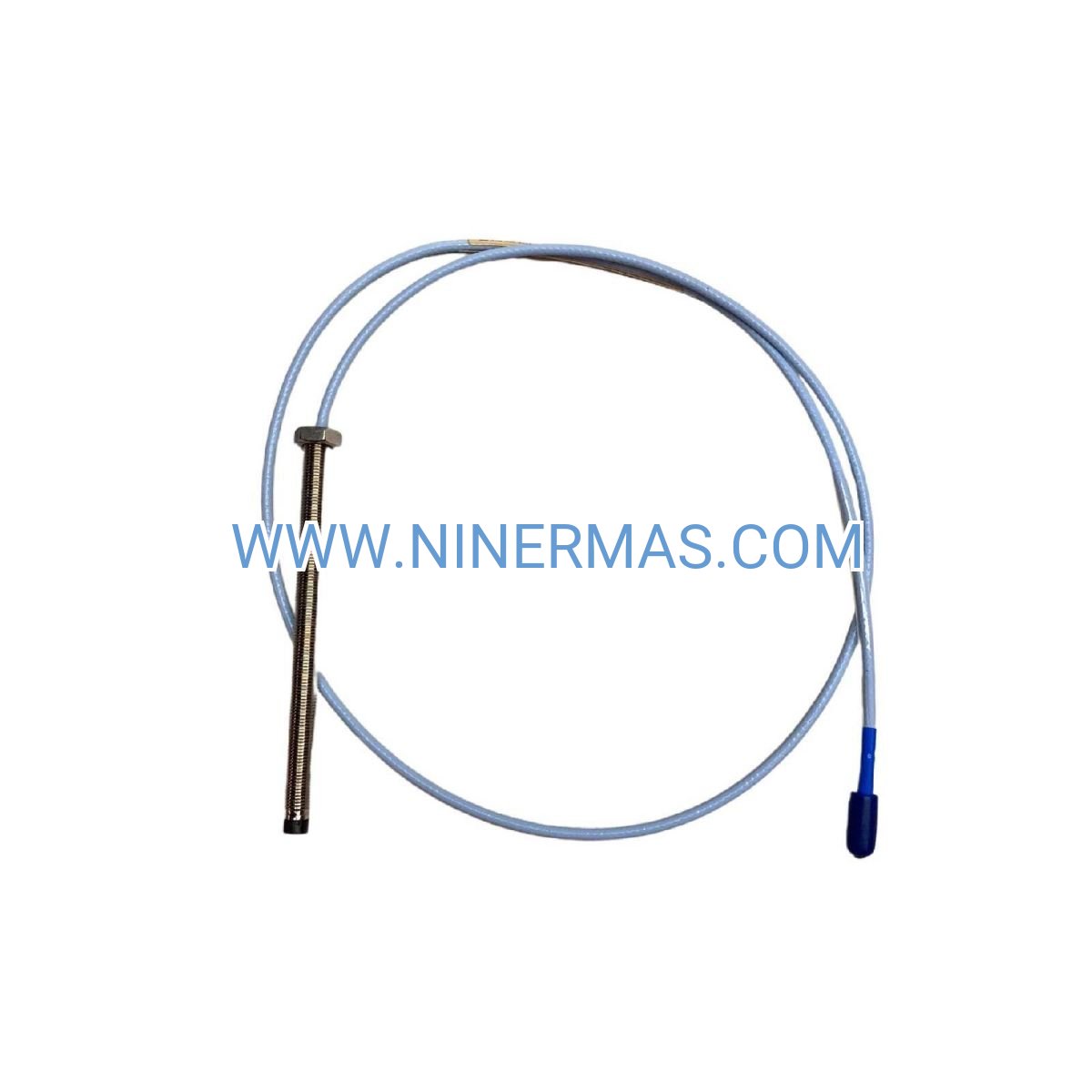
8mm Proximity Probe for Turbomachinery Vibration Monitoring (Industrial-Grade Eddy Current Sensor)
The 330141-08-10-01-00-00 is an industrial-grade proximity probe engineered for non-contact displacement measurement in high-speed rotating machinery. Utilizing eddy-current sensing technology, this 8mm probe delivers real-time shaft position and vibration data with micron-level precision, enabling predictive maintenance and catastrophic failure prevention in turbines, compressors, motors, and pumps.
Designed for continuous operation in harsh industrial environments, this sensor addresses critical challenges including bearing wear detection, rotor eccentricity monitoring, and axial thrust position tracking. It serves design engineers, maintenance teams, OEM integrators, and plant reliability managers who require dependable condition monitoring solutions for mission-critical rotating equipment.
Through field-proven construction and universal compatibility with 3300 XL proximitor systems, this probe offers exceptional measurement stability, electromagnetic interference immunity, and hot-swap serviceability. Contact our application engineers for customized installation guidance, calibration certificates, and system integration support tailored to your specific machinery configuration.
Core Capabilities & Performance Advantages
Micron-Level Displacement Accuracy
Eddy-current technology combined with precision-machined sensing tip achieves ±1% full-scale linearity across 0-2.0mm (0-80 mils) measurement range, detecting shaft movement as small as 5 microns for early fault identification.
Extreme Temperature Resilience
Stainless steel 316L housing and high-temperature cable insulation enable continuous operation from -40°C to +125°C (-40°F to +257°F), maintaining calibration accuracy in steam turbine casings, gas compressor environments, and cryogenic pump applications.
Electromagnetic Noise Rejection
Triple-layer shielded integral cable construction eliminates EMI/RFI interference from VFD drives, high-voltage switchgear, and welding equipment, ensuring clean signal transmission in electrically noisy industrial plants.
Corrosion-Resistant Construction
IP67-rated enclosure withstands prolonged exposure to oil mist, steam condensate, chemical vapors, and saltwater spray, extending operational life beyond 100,000 hours in offshore platforms, petrochemical facilities, and marine propulsion systems.
Field-Replaceable Design
Standardized M12 x 1.0 metric threading and quick-disconnect cable termination allow technicians to swap failed probes during scheduled outages without recalibrating the entire proximitor system, reducing mean-time-to-repair by 60%.
Backward Compatibility Assurance
Direct retrofit replacement for legacy 3300 series installations manufactured since 1985, preserving existing mounting brackets, cable routing, and DCS integration without costly system upgrades or re-engineering.
Typical Application Scenarios
This proximity probe is engineered for industries where rotating equipment reliability directly impacts production uptime, safety compliance, and operational profitability:
Steam & Gas Turbine Power Generation
Monitors radial shaft vibration and differential expansion in utility-scale turbines (50-500 MW), providing API 670 compliant protection against bearing failures, rotor bow, and blade rubs that could trigger emergency shutdowns costing $50,000+ per hour.
Centrifugal Compressor Trains (Oil & Gas)
Tracks rotor position in multi-stage compressors handling natural gas, ethylene, and refrigerants at speeds exceeding 15,000 RPM, detecting thrust bearing degradation and impeller imbalance before catastrophic mechanical failure occurs.
High-Speed Electric Motors & Generators
Verifies air gap clearance in 2-pole motors (3,600 RPM) and hydro generators, identifying soft foot conditions, foundation settling, and magnetic center shifts that cause excessive vibration and premature winding insulation breakdown.
Industrial Process Pumps
Measures shaft runout and seal clearance in boiler feed pumps, crude oil transfer pumps, and chemical injection systems, enabling condition-based maintenance strategies that reduce unplanned downtime by 40% compared to time-based schedules.
Paper Mill & Steel Rolling Equipment
Provides continuous monitoring of dryer rolls, calendar stacks, and rolling mill backup rolls where bearing failures result in web breaks, product quality defects, and multi-shift production losses.
Technical Parameters & Selection Guide
To ensure optimal performance and compatibility, review the following specifications against your machinery requirements. Our engineering team can assist with probe quantity determination, mounting orientation, and target material verification.
| Parameter | Specification |
|---|---|
| Probe Tip Diameter | 8 mm (0.315 in) |
| Measurement Range | 0 to 2.0 mm (0 to 80 mils) |
| Frequency Response | DC to 10 kHz (-3 dB point) |
| Linearity Error | ±1% of full-scale output |
| Operating Temperature | -40°C to +125°C (-40°F to +257°F) |
| Storage Temperature | -55°C to +150°C |
| Thread Specification | M12 x 1.0 metric external |
| Integral Cable Length | 1 meter (extension to 9m available) |
| Housing Material | 316L stainless steel |
| Ingress Protection | IP67 (dust-tight, water immersion) |
| Target Material | 4140 steel, 416 stainless (ferromagnetic) |
| Proximitor Compatibility | 3300 XL, 3300 NSv systems |
| Vibration Resistance | 20g peak, 10-2000 Hz |
| Shock Resistance | 100g, 11 ms duration |
Selection Considerations:
When specifying this probe, evaluate maximum shaft displacement during startup/shutdown transients, ambient temperature extremes including radiant heat from adjacent piping, available mounting depth (probe length + lock nut clearance), and target shaft material composition. For non-standard targets such as Inconel, titanium, or aluminum, request factory calibration data to maintain measurement accuracy. If your application requires cable lengths exceeding 1 meter, specify extension cables (330130 series) during ordering to preserve signal integrity and avoid field splicing.
System Integration & Mounting Options
Proximitor Interface Requirements
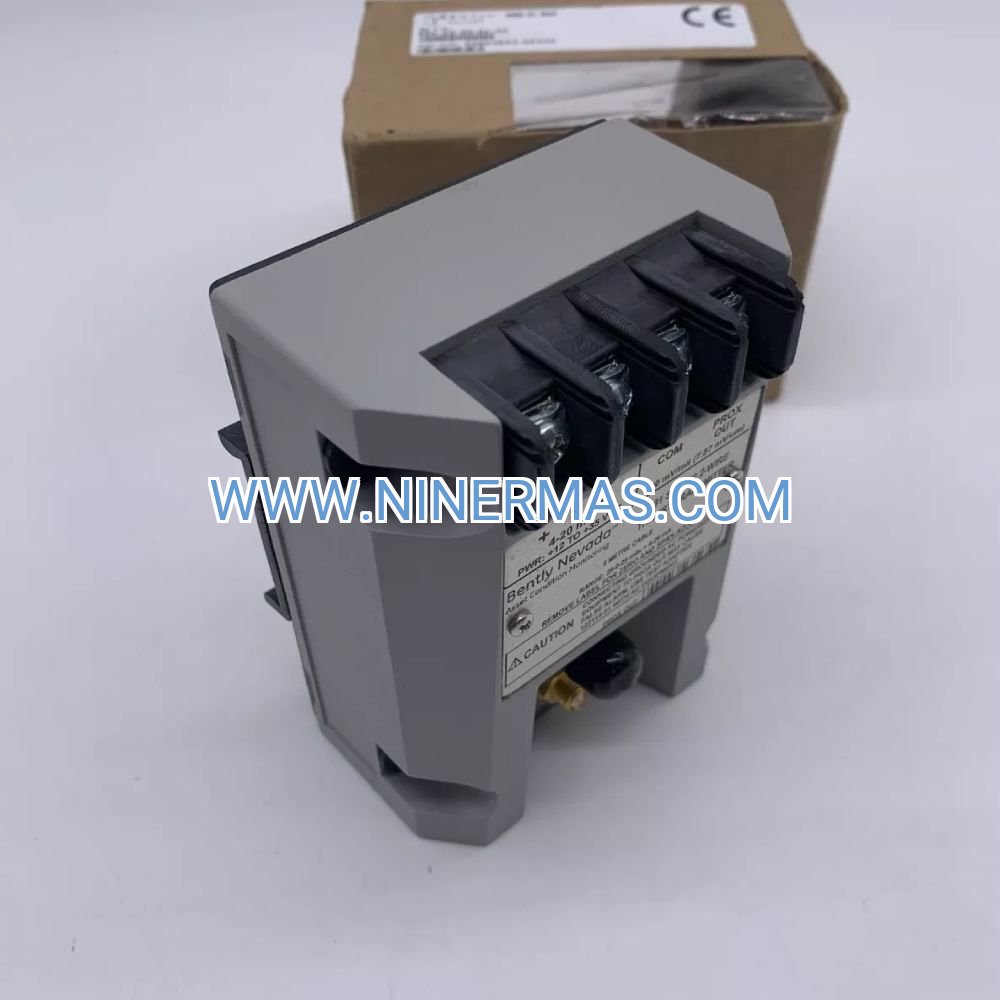
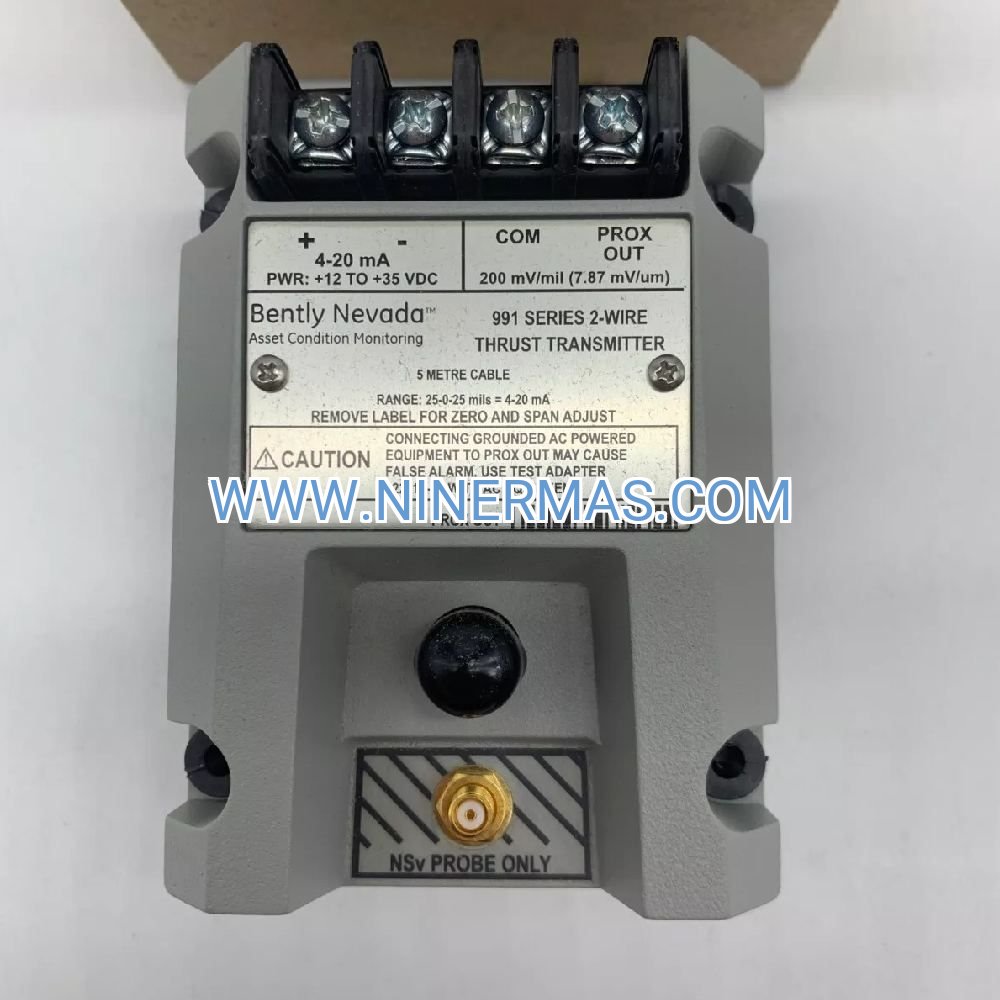
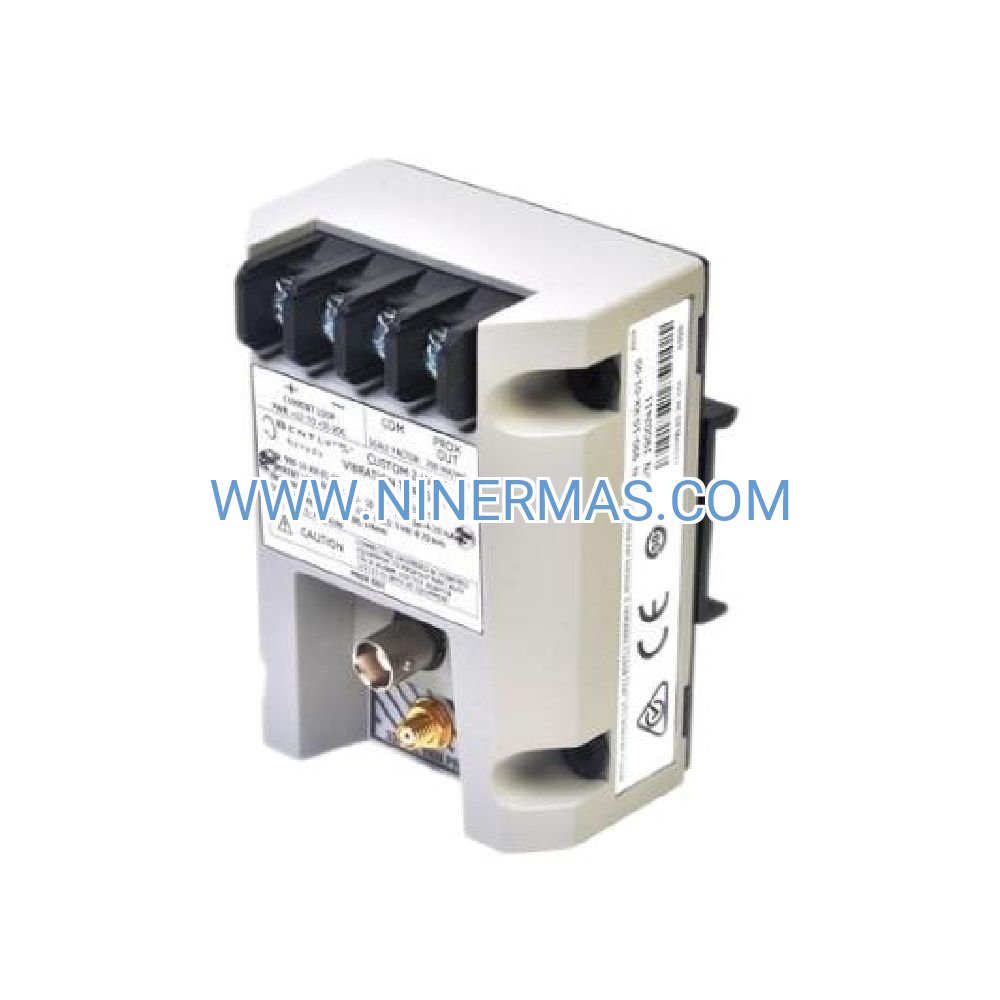
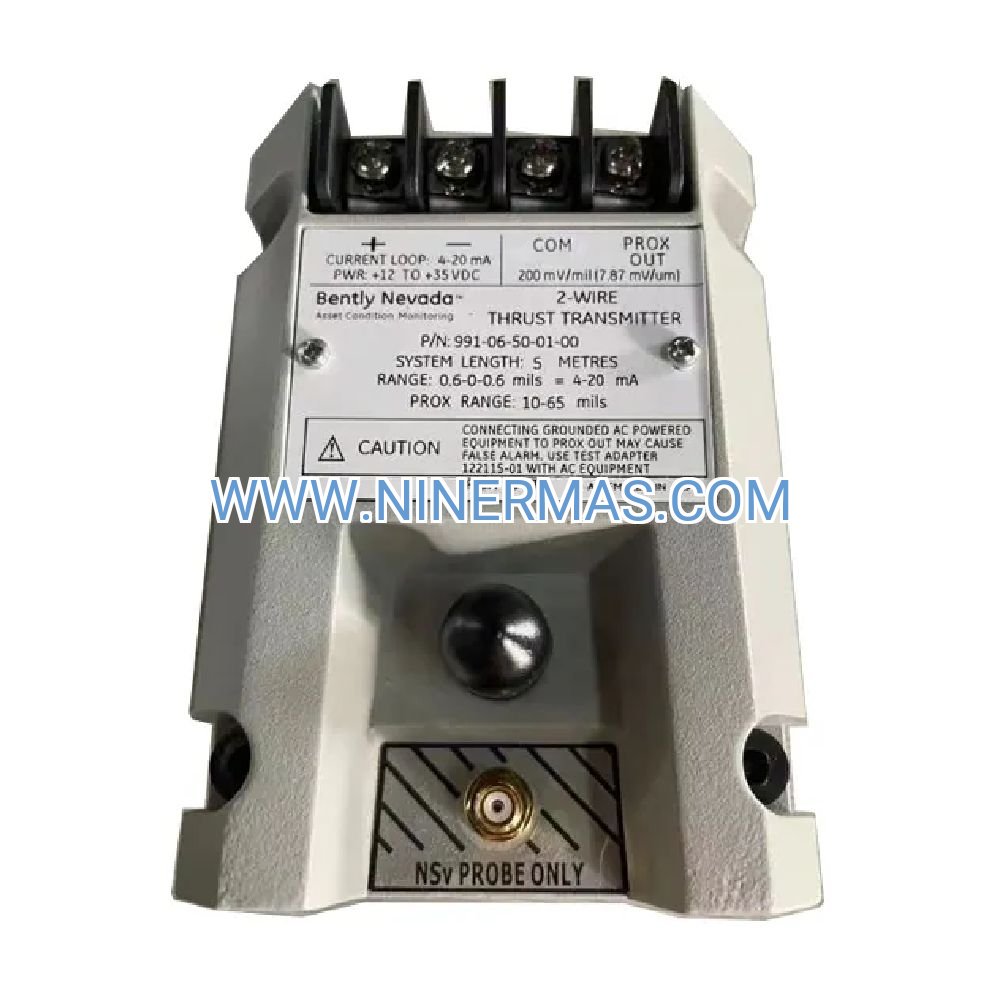
This probe requires a compatible proximitor signal conditioner (such as 125808-01C or 330180 series) that provides -24 VDC excitation and converts the probe's variable inductance into a calibrated 200 mV/mil or 7.87 V/mm output signal suitable for PLC, DCS, or vibration monitoring system input.
Mounting Hardware & Installation
Standard package includes lock nut and sealing washer. For applications requiring adjustable probe positioning, specify mounting brackets (330104 series) or XY positioners. Maintain 40mm minimum spacing between adjacent probes to prevent magnetic field cross-coupling. Ensure target surface finish is 32 microinches Ra or better for optimal linearity.
Cable Routing Best Practices
Route integral cable through grounded conduit or cable tray, maintaining 300mm separation from AC power cables exceeding 10 amperes. Avoid sharp bend radii below 50mm. Terminate at proximitor using strain relief connector to prevent cable fatigue from machinery vibration.
Delivery, Warranty & Technical Support
Lead Time & Packaging
Factory-sealed units ship within 3-5 business days for stock SKUs. Custom cable lengths or special calibrations require 10-15 business days. Each probe ships with individual serial number traceability, calibration curve data, and installation quick-start guide.
Warranty Coverage
Backed by a comprehensive 12-month manufacturer warranty covering material defects, workmanship failures, and calibration drift exceeding published specifications. Warranty includes free replacement unit shipment and technical root-cause analysis for field failures.
Technical Assistance
Our application engineering team provides complimentary pre-sale consultation including probe quantity calculations, mounting orientation recommendations, and system architecture review. Post-installation support includes remote troubleshooting, on-site commissioning services (regional availability), and vibration signature analysis training.
Documentation Package
Complete technical documentation includes dimensional drawings with mounting tolerances, electrical connection diagrams, calibration certificates traceable to NIST standards, material certifications (MTRs), and recommended spare parts lists for long-term maintenance planning.
Frequently Asked Questions
Q: Can this 8mm proximity probe measure vibration on non-ferrous shafts like stainless steel 304?
A: Standard calibration is optimized for ferromagnetic targets (4140 carbon steel, 416 stainless). For austenitic stainless (304/316) or non-magnetic materials, the probe will function but requires custom calibration curves and may exhibit reduced sensitivity. Contact our engineering team with your specific shaft material composition for feasibility assessment.
Q: What is the maximum shaft speed this proximity probe can accurately measure?
A: With a 10 kHz frequency response, this probe reliably tracks vibration harmonics up to 600,000 CPM (10,000 Hz). For typical turbomachinery operating at 3,600-15,000 RPM, it captures fundamental frequency plus 10-40 harmonics, sufficient for comprehensive rotor dynamics analysis and fault diagnosis.
Q: How many proximity probes are needed for a complete turbine monitoring system?
A: API 670 machinery protection standards recommend minimum two radial probes per bearing (X-Y orientation) plus one axial probe for thrust position. A typical single-bearing turbine requires 3 probes; multi-bearing machines may need 6-12 probes depending on shaft length and critical speed analysis requirements.
Q: Can I extend the 1-meter integral cable for remote proximitor mounting?
A: Yes, use factory-supplied extension cables (330130 series) to achieve total system lengths up to 9 meters while maintaining ±1% linearity. Field splicing or non-approved cables will introduce impedance mismatches that degrade accuracy. Always specify total required cable length during ordering for optimal performance.
Q: Is this probe compatible with third-party vibration monitoring systems like SKF or Emerson AMS?
A: While designed for Bently Nevada proximitors, this probe functions with any eddy-current system providing -24 VDC excitation and 200 mV/mil sensitivity. However, achieving published accuracy specifications requires system-specific calibration. We recommend using OEM-matched components for critical machinery protection applications.
Q: What environmental conditions could damage the probe or affect measurement accuracy?
A: Avoid direct steam jet impingement, submersion in conductive fluids (use dielectric grease on threads), and temperatures exceeding +125°C. Chemical exposure to strong acids (pH < 2) or caustics (pH > 12) may degrade cable jacket over time. For nuclear or ATEX hazardous area applications, specify certified models with appropriate agency approvals.
Request Custom Application Engineering Support
For project-specific guidance on probe selection, system architecture design, or integration with existing monitoring infrastructure, please provide our engineering team with the following details:
- Equipment type and nameplate specifications (turbine model, compressor stages, motor horsepower)
- Operating speed range (minimum, normal, maximum RPM)
- Shaft diameter and material composition at probe mounting location
- Ambient temperature range and environmental conditions (indoor/outdoor, chemical exposure)
- Existing monitoring system brand and model (if retrofit application)
- Quantity of measurement points and preferred cable lengths
- Project timeline and budget constraints
Our specialists will respond within 24 hours with tailored recommendations, budgetary pricing, and CAD drawings for mechanical integration review.
© 2026 NINERMAS COMPANY LIMITED. All rights reserved.
Original Source: https://ninermas.com
Contact: sale@ninermas.com | +0086 187 5021 5667

Contact Info
-
Address:22 / F, South Wo Hang building, 148 Wing Lok Street, Sheung Wan, Western District, Hong Kong
-
Phone:+8618750215667
-
Email:
