Description
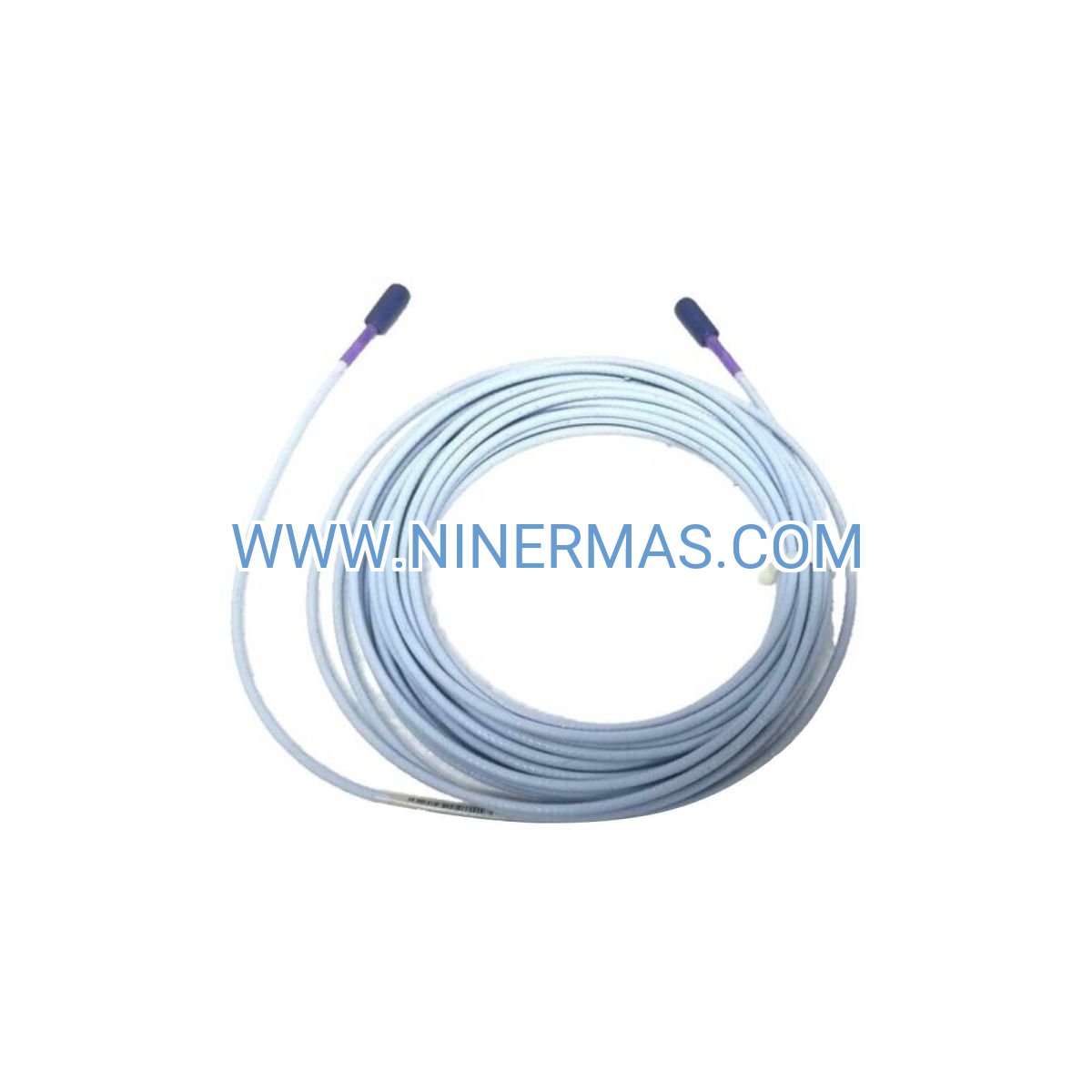
8mm Proximity Probe for Industrial Vibration Monitoring (3300 XL Series)
The 330140-08-90-11-05-00 is an industrial-grade 8mm eddy current proximity probe engineered for continuous vibration and displacement monitoring in critical rotating machinery. Through non-contact sensing technology combined with advanced signal conditioning, this probe delivers real-time shaft position data, enabling predictive maintenance strategies that reduce unplanned downtime and extend equipment lifespan.
Designed for steam turbines, gas compressors, centrifugal pumps, and high-speed generators, this probe addresses common challenges including bearing wear detection, rotor eccentricity measurement, and thrust position tracking. It eliminates the reliability issues associated with contact-based sensors while maintaining measurement accuracy across extreme temperature ranges and contaminated environments.
Built on the proven 3300 XL platform with standardized mounting dimensions and factory calibration, the 330140-08-90-11-05-00 integrates seamlessly into new installations or retrofit projects. Suitable for design engineers, maintenance teams, OEM integrators, and plant reliability managers seeking robust condition monitoring solutions. Contact our application engineers for system configuration guidance and technical specifications tailored to your machinery profile.
Core Capabilities & Technical Advantages
Non-Contact Eddy Current Technology
Utilizes electromagnetic induction to measure gap distance between probe tip and conductive target surface. Eliminates mechanical wear, friction-induced heat, and periodic replacement cycles common in contact sensors, reducing total cost of ownership by up to 40% over five-year operational periods.
Extended Frequency Response for Dual-Mode Monitoring
Captures both static displacement (DC to 2 Hz) and dynamic vibration signals (2 Hz to 10 kHz) within a single sensor channel. Enables simultaneous tracking of slow thermal growth and high-frequency bearing defects, consolidating multiple measurement points into unified monitoring architecture.
Industrial-Hardened Construction
Stainless steel housing with PEEK polymer insulation withstands continuous exposure to lubricating oils, process fluids, and corrosive atmospheres. Operates reliably from -30°C to +120°C without drift or recalibration, meeting the demands of petrochemical plants, power generation facilities, and heavy manufacturing environments.
Factory-Matched Calibration System
Each probe ships with serialized calibration data optimized for 3300 XL Proximitor sensors, ensuring linear output across the full 0-2mm measurement range. Plug-and-play installation reduces commissioning time by 60% compared to field-calibrated systems, minimizing engineering labor and startup delays.
Comprehensive Protection Features
Integral armored cable with strain relief prevents connector damage during installation. BNC termination provides secure signal transmission with <0.5% noise interference. Probe tip design resists impact from shaft runout events and maintains calibration integrity through 10⁶ thermal cycles.
Modular System Architecture
Compatible with standard 3300 XL extension cables (1m to 9m lengths) and rack-mount Proximitor modules, allowing flexible sensor placement up to 100 meters from control room panels. Supports both analog 4-20mA output and digital Modbus protocols for integration with DCS, PLC, and SCADA platforms.
Typical Application Scenarios
This proximity probe addresses critical measurement requirements across industries where rotating equipment reliability directly impacts production continuity and safety compliance:
Steam & Gas Turbine Generator Sets
Monitors axial shaft position to detect thrust bearing degradation before catastrophic failure. Tracks radial vibration at journal bearings to identify imbalance, misalignment, and rotor bow conditions. Commonly deployed in power plants (50-500 MW units), cogeneration facilities, and mechanical drive applications where turbine trip events cost $50K-$500K per incident.
Centrifugal & Reciprocating Compressors
Measures rotor eccentricity and bearing clearance in API 617/618 compressor trains serving natural gas processing, air separation, and refrigeration systems. Enables condition-based maintenance scheduling that extends overhaul intervals from 24 to 36 months, reducing maintenance costs by $80K-$200K per compressor annually.
High-Speed Pumps & Motor-Driven Equipment
Detects cavitation-induced vibration in boiler feed pumps, cooling water pumps, and process transfer pumps operating above 3,600 RPM. Provides early warning of seal leakage, impeller erosion, and coupling wear in chemical plants, refineries, and municipal water treatment facilities where pump failure triggers environmental compliance violations.
Industrial Fans, Blowers & Induced Draft Systems
Tracks shaft displacement in large-diameter fans (>2m impeller) used for cement kiln exhaust, steel mill ventilation, and power plant flue gas handling. Identifies foundation settling, structural resonance, and blade fouling patterns that reduce fan efficiency by 15-25%, increasing energy consumption and operating costs.
Technical Parameters & Selection Guide
To ensure optimal performance and compatibility with your machinery configuration, review the following specifications and selection criteria:
| Parameter | Specification | Notes |
|---|---|---|
| Model Number | 330140-08-90-11-05-00 | Factory designation |
| Probe Diameter | 8mm (0.315 in) | Requires ≥24mm target diameter |
| Active Sensing Length | 90mm | Threaded insertion depth |
| Thread Specification | 5/8-18 UNF-2A | Standard API mounting |
| Operating Voltage | -24 VDC nominal | Via Proximitor sensor |
| Frequency Response | 0 to 10 kHz (-3dB) | Covers 1X to 100X harmonics |
| Operating Temperature | -30°C to +120°C | Continuous duty rating |
| Linear Range | 0.5mm to 2.5mm gap | Optimal: 1.0-2.0mm |
| Cable Type | Integral armored, BNC connector | Standard 1.5m length |
| Housing Material | 316 stainless steel | PEEK insulation core |
| Target Material | Ferrous metals (steel, iron) | Non-magnetic metals require recalibration |
| Environmental Rating | IP65 (with proper installation) | Oil/water resistant |
Selection Considerations for Your Application
When specifying this proximity probe for your machinery monitoring system, evaluate the following parameters to ensure compatibility and optimal performance:
- Shaft Material & Surface Finish: Target surface must be ferrous metal (4140 steel, 410 stainless) with <3.2μm Ra finish for accurate calibration
- Mounting Location & Clearance: Verify adequate radial space for 8mm probe body plus 12mm wrench flats; axial depth must accommodate 90mm active length plus 25mm thread engagement
- Operating Speed Range: Suitable for 500-15,000 RPM applications; consult factory for higher speeds requiring dynamic compensation
- Expected Vibration Amplitude: Linear measurement range supports ±1.0mm peak-to-peak displacement; larger amplitudes require 11mm or 14mm probe diameters
- Ambient Conditions: Standard probe operates to +120°C; high-temperature variants available for +180°C steam turbine applications
- System Integration: Requires compatible 3300 XL Proximitor sensor (330180 series) and optional extension cable (330130 series) for complete installation
For assistance with probe selection, system configuration, or custom calibration requirements, provide our engineering team with: machinery type, shaft diameter, operating speed, expected vibration levels, mounting constraints, and environmental conditions. We will recommend the optimal sensor configuration and provide installation drawings within 24-48 hours.
System Integration & Accessories
Complete Monitoring Channel Components
A functional proximity measurement system requires three primary components working in coordination:
- Proximity Probe (this product): Mounts directly to machinery housing; generates raw eddy current signal proportional to gap distance
- Extension Cable (330130 series): Connects probe to Proximitor sensor; available in 1m, 3m, 5m, 7m, 9m lengths; maintains signal integrity over distance
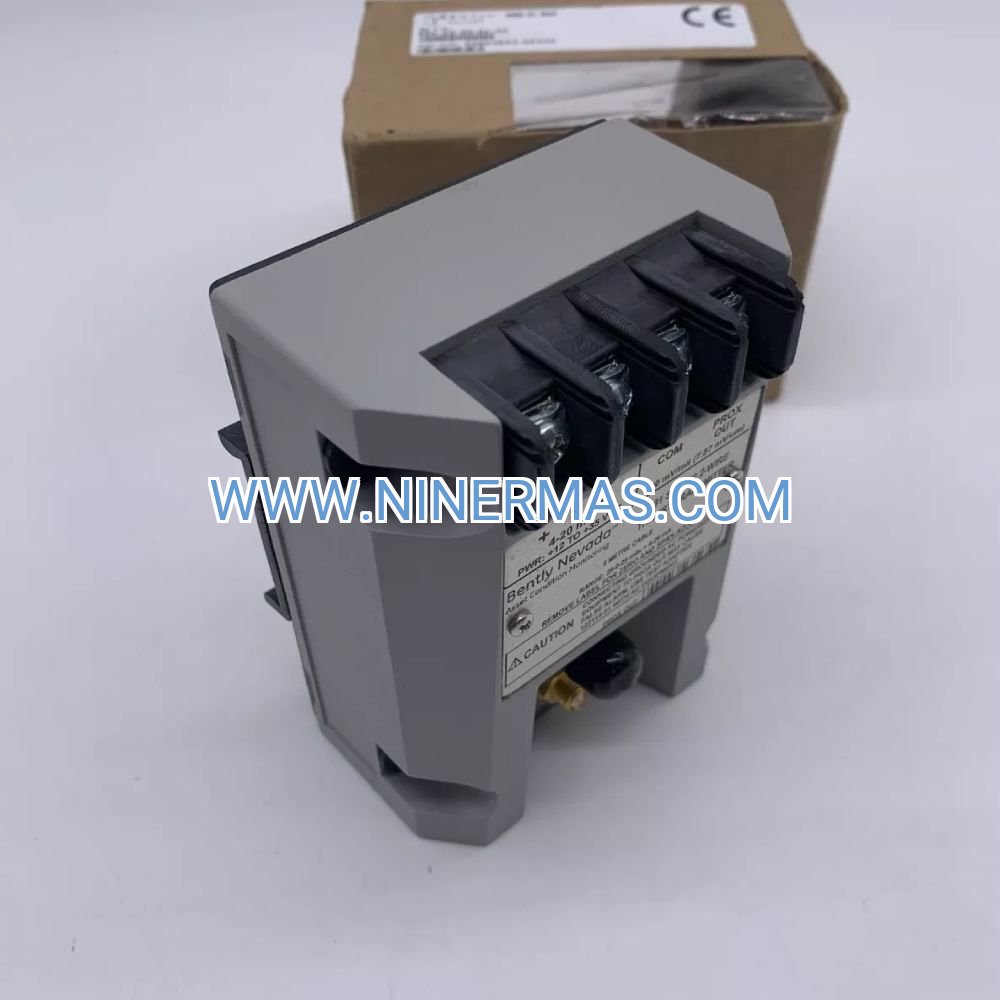
- Proximitor Sensor (330180 series): Provides -24 VDC excitation to probe; conditions raw signal into calibrated 0-10 VDC or 4-20 mA output; mounts in control panel or field junction box
Advanced Integration Options
- 3500 Rack Monitor System: Centralized vibration monitoring platform supporting 8-40 measurement channels with alarm logic, trending, and Modbus TCP communication
- ADAPT Software Suite: Windows-based configuration tool for sensor setup, calibration verification, and diagnostic testing
- Orbit Display Modules: Real-time shaft centerline position visualization for startup/shutdown analysis and rotor dynamic studies
- Hazardous Area Barriers: Intrinsic safety interfaces for Class I Division 1 installations in refineries and chemical plants
Delivery, Service & Quality Assurance
Lead Times & Availability
Standard catalog items ship from regional distribution centers within 3-5 business days for North America, 5-7 days for Europe/Asia. Custom configurations (non-standard cable lengths, special calibrations, high-temperature variants) require 2-3 weeks manufacturing lead time. Expedited processing available for critical outage support with 24-hour emergency response capability.
Warranty Coverage
All proximity probes include a comprehensive 18-month warranty from date of shipment, covering defects in materials, workmanship, and calibration accuracy. Warranty includes free replacement of failed units, return shipping labels, and technical root-cause analysis. Extended warranty programs available for critical service applications requiring 99.5%+ uptime guarantees.
Technical Support Services
- Pre-Sales Engineering: Application review, sensor selection guidance, system architecture design, and budgetary quotations
- Installation Assistance: Mounting dimension verification, cable routing recommendations, grounding best practices, and commissioning checklists
- Commissioning Support: Remote or on-site startup supervision, signal validation, baseline data collection, and alarm setpoint optimization
- Troubleshooting & Diagnostics: 24/7 technical hotline, remote signal analysis, replacement sensor dispatch, and field service coordination
Documentation Package
Each probe ships with complete technical documentation including: dimensional outline drawings (PDF/DWG formats), electrical wiring diagrams, calibration certificates with traceability to NIST standards, installation instructions, and recommended spare parts lists. Digital copies available via secure download portal for multi-site deployments.
Frequently Asked Questions
Q: What is the minimum shaft diameter required for accurate 8mm proximity probe measurements?
A: The target shaft diameter should be at least 3 times the probe diameter, which equals 24mm (0.94 inches) minimum for this 8mm probe. Smaller shaft diameters introduce edge effects that distort the electromagnetic field, reducing linearity and measurement accuracy. For shafts below 24mm, consider the 5mm probe variant (330105 series) which requires only 15mm minimum diameter.
Q: Can this proximity probe be used with non-ferrous target materials like aluminum or titanium?
A: While the probe will generate a signal from conductive non-ferrous metals, the factory calibration is optimized specifically for ferrous steel targets (4140, 1045, 410SS). Using aluminum or titanium targets reduces sensitivity by 40-60% and requires custom calibration curves. For non-ferrous applications, contact our engineering team to discuss recalibration services or alternative sensor technologies.
Q: How do I determine the correct installation gap between probe tip and shaft surface?
A: The recommended operating gap is 1.0mm to 2.0mm (40 to 80 mils) measured from probe tip to shaft surface at rest position. This range provides optimal linearity, signal-to-noise ratio, and dynamic range for typical ±0.5mm vibration amplitudes. During installation, use feeler gauges or the Proximitor sensor's DC voltage output (typically 5.0 VDC at 1.5mm gap) to verify proper positioning before final locknut tightening.
Q: Is this proximity probe suitable for hazardous area installations in refineries or chemical plants?
A: The probe itself is a passive sensor without internal electronics, making it inherently safe for hazardous locations. However, complete system certification for Class I Division 1 or ATEX Zone 1 applications requires installation of approved intrinsic safety barriers between the Proximitor sensor and the probe. We offer pre-engineered barrier packages (330780 series) with factory-issued certification documentation for global hazardous area standards.
Q: What is the expected service life of this proximity probe in continuous operation?
A: Under normal operating conditions (temperature <100°C, no chemical attack, proper installation), proximity probes typically achieve 10-15 years of maintenance-free service. The non-contact measurement principle eliminates wear mechanisms that limit contact sensor life. Primary failure modes are cable insulation degradation from thermal cycling or mechanical damage from improper handling during maintenance activities. Regular visual inspection during planned outages is recommended.
Q: Can I integrate this Bently Nevada probe with third-party vibration monitoring systems?
A: Physical integration is possible since the probe uses standard BNC connectors and operates on -24 VDC excitation common to many eddy current systems. However, measurement accuracy depends on precise impedance matching and calibration coefficients specific to the 3300 XL Proximitor sensor. Using third-party signal conditioners may introduce ±5-10% measurement errors unless you obtain custom calibration data from our laboratory and program those coefficients into your monitoring system.
Q: What maintenance or recalibration is required during the probe's operational life?
A: Proximity probes require zero routine maintenance due to their non-contact design and sealed construction. Periodic recalibration is not necessary unless the probe experiences physical damage (bent tip, cable crush), extreme thermal shock (>150°C excursion), or chemical exposure that degrades the PEEK insulation. We recommend functional verification every 2-3 years by comparing probe output against a calibrated reference standard or performing bump tests to confirm frequency response characteristics.
Request Technical Consultation
Our application engineering team is available to provide customized sensor selection guidance, system design review, and installation planning support for your specific machinery monitoring requirements.
To receive a detailed technical proposal, please provide the following information:
- Equipment type and manufacturer (e.g., "Siemens SGT-800 gas turbine" or "Sulzer BB5 boiler feed pump")
- Shaft diameter at measurement location (mm or inches)
- Operating speed range (RPM) and maximum vibration amplitude (mils or μm)
- Number of measurement points required (radial, axial, thrust position)
- Ambient temperature range and environmental conditions (oil mist, steam, corrosive atmosphere)
- Mounting constraints (available radial clearance, axial depth limitations)
- Integration requirements (standalone Proximitor, 3500 rack system, DCS interface protocol)
- Project timeline and budget parameters
Our engineers will respond within 24 business hours with sensor recommendations, system architecture diagrams, budgetary pricing, and delivery schedules. For urgent outage support or emergency replacement requirements, contact our 24/7 technical hotline for immediate assistance.
© 2026 NINERMAS COMPANY LIMITED. All rights reserved.
Original Source: https://ninermas.com
Contact: sale@ninermas.com | +0086 187 5021 5667

Contact Info
-
Address:22 / F, South Wo Hang building, 148 Wing Lok Street, Sheung Wan, Western District, Hong Kong
-
Phone:+8618750215667
-
Email: