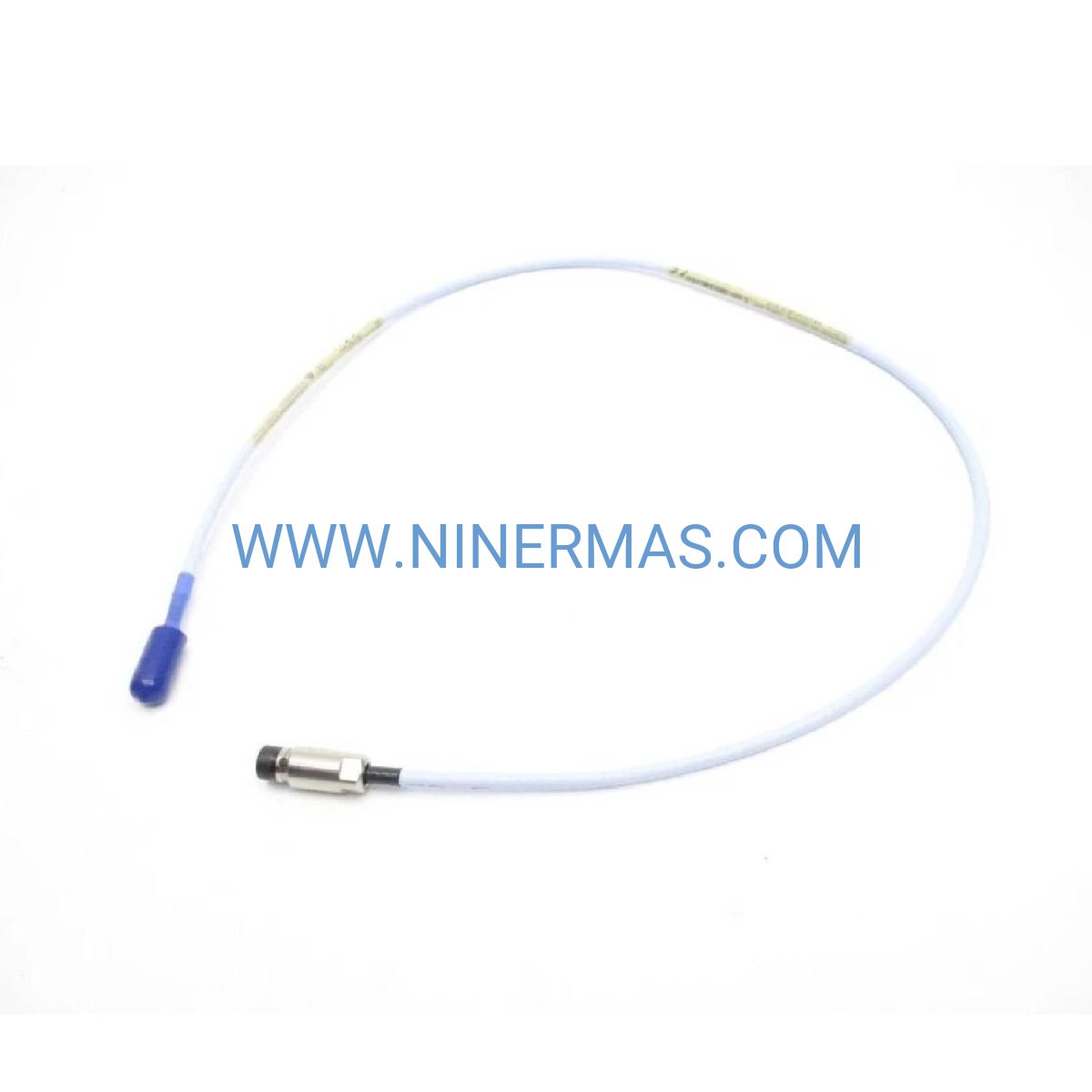
Description
Bently Nevada 330140-08-10-01-00-00 8mm Proximity Transducer Probe (Industrial Vibration Monitoring Solution)
The Bently Nevada 330140-08-10-01-00-00 is an industrial-grade proximity transducer probe designed for continuous non-contact vibration and displacement monitoring in critical rotating machinery. Utilizing eddy current sensing technology with an 8mm measurement range, this probe provides real-time shaft position data for turbines, compressors, pumps, and generators across power generation, petrochemical, and heavy manufacturing facilities.
Ideal for applications requiring high-reliability machinery protection systems—including steam turbines, centrifugal compressors, industrial gas turbines, and large motor assemblies—this probe addresses common operational challenges such as unexpected bearing failures, rotor eccentricity issues, thermal growth misalignment, and catastrophic shaft rubs. By delivering precise radial vibration and axial position measurements, it enables predictive maintenance strategies that reduce unplanned downtime and extend equipment service life.
Through field-proven design and seamless integration with the 3300 XL monitoring ecosystem, this proximity probe offers exceptional temperature stability (-40°C to +125°C), electromagnetic interference immunity, and long-term calibration retention. Suitable for plant engineers, instrumentation technicians, OEM machinery builders, and maintenance contractors seeking reliable condition monitoring solutions. Contact our application engineers for system configuration assistance, cable length customization, and installation support.
Core Features & Technical Advantages
- Precision Eddy Current Sensing Technology
Employs high-frequency oscillator circuit with temperature-compensated coil design, delivering ±1% linearity across the full 8mm sensing span. Provides stable gap voltage output (-8V to -12V DC) for accurate shaft displacement tracking in both static and dynamic conditions. - Extended Operating Temperature Range
Engineered with aerospace-grade materials and hermetic sealing, operates reliably from -40°C to +125°C (-40°F to +257°F) without recalibration. Ideal for applications involving steam turbine casings, hot gas paths, and cryogenic pump environments. - Rugged Industrial Construction
Features stainless steel housing with M8 x 1.0 metric thread, integral coaxial cable assembly, and IP67-rated environmental protection. Withstands continuous vibration exposure up to 10g RMS, chemical exposure, and electromagnetic fields common in industrial power plants. - Seamless 3300 XL System Integration
Direct compatibility with Bently Nevada 330180/330780 series proximitors and 3500 rack monitoring systems. Plug-and-play installation reduces commissioning time by 40% compared to legacy analog systems, with automatic sensor recognition and configuration. - Multi-Parameter Measurement Capability
Simultaneously monitors radial vibration amplitude, shaft centerline position, slow-roll compensation vectors, and dynamic eccentricity. Supports both radial and thrust position measurements when installed in axial configuration with appropriate mounting hardware. - Long-Term Stability & Reliability
MTBF exceeds 250,000 hours in typical industrial environments. Factory calibration remains stable for 5+ years under normal operating conditions, minimizing maintenance intervals and reducing total cost of ownership.
Typical Application Scenarios
This proximity transducer probe is engineered for demanding industrial environments where machinery availability and asset protection are paramount:
- Steam & Gas Turbine Monitoring Systems
Provides critical bearing clearance and rotor position data for turbines ranging from 5MW to 500MW+ capacity. Detects thermal growth during startup sequences, monitors thrust bearing wear, and triggers emergency shutdown systems when shaft displacement exceeds alarm thresholds. Widely deployed in combined-cycle power plants, cogeneration facilities, and district heating stations. - Centrifugal Compressor Protection Schemes
Monitors radial vibration and axial position in multi-stage compressors handling natural gas, process air, refrigerants, and corrosive gases. Enables early detection of impeller rubs, seal degradation, and magnetic bearing failures in API 617 and API 672 compliant installations across LNG terminals, chemical plants, and pipeline compression stations. - Large Motor & Generator Bearing Surveillance
Tracks shaft eccentricity and bearing clearance in synchronous motors (500HP+), induction motors, and turbine-generators. Identifies rotor bow conditions, coupling misalignment, and foundation settling issues before they escalate into catastrophic failures. Common in steel mills, mining operations, water treatment plants, and marine propulsion systems. - Industrial Pump Rotor Dynamics Analysis
Measures shaft deflection and vibration signatures in boiler feed pumps, cooling water pumps, crude oil transfer pumps, and slurry pumps. Supports condition-based maintenance programs by trending bearing wear patterns, detecting cavitation-induced vibration, and validating hydraulic balancing after impeller replacement. - Predictive Maintenance & Condition Monitoring Programs
Integrates with plant-wide asset management systems (OSIsoft PI, GE Predix, Siemens MindSphere) for continuous data logging, trend analysis, and machine learning-based anomaly detection. Enables transition from time-based to condition-based maintenance strategies, reducing maintenance costs by 25-35% while improving equipment availability.
Technical Parameters & Selection Guide
To ensure optimal performance and compatibility with your machinery protection system, please review the following specifications and selection criteria:
| Parameter | Specification | Notes |
|---|---|---|
| Model Number | 330140-08-10-01-00-00 | Factory configuration code |
| Sensing Range | 8mm (0.315 inches) | Linear measurement span |
| Probe Diameter | 8mm nominal | Standard industrial size |
| Thread Type | M8 x 1.0 metric | Right-hand thread |
| Operating Temperature | -40°C to +125°C | Continuous duty rating |
| Cable Type | Integral coaxial | Factory-terminated assembly |
| Output Signal | -8V to -12V DC (gap voltage) | Requires 3300 XL proximitor |
| Frequency Response | 0 to 10 kHz (-3dB) | Suitable for high-speed machinery |
| Linearity | ±1% of full scale | Across calibrated range |
| Environmental Rating | IP67 (when properly installed) | Dust-tight, water-resistant |
| Vibration Tolerance | 10g RMS continuous | Shock: 50g peak |
| Target Material | Ferrous metals (steel, iron) | Non-ferrous requires calibration |
Selection & Sizing Recommendations
When specifying proximity probes for your application, consider the following critical factors:
- Shaft Diameter & Speed: Ensure probe sensing range accommodates expected shaft runout plus thermal growth (typically 40-60% of total range). For shafts above 10,000 RPM, verify frequency response compatibility.
- Installation Environment: Confirm ambient temperature, vibration levels, and chemical exposure are within probe specifications. For temperatures exceeding +125°C, consider extension cables or remote mounting solutions.
- System Architecture: Verify compatibility with existing proximitor sensors (330180/330780 series) and monitoring systems (3500 rack, standalone displays). For new installations, consult system integration guidelines.
- Cable Length Requirements: Standard factory cable lengths available from 1m to 9m. Custom lengths and extension cables can be specified for unique installation geometries.
- Mounting Configuration: Radial installations require 8mm through-holes with ±0.1mm tolerance. Axial thrust measurements need specialized mounting brackets (consult application engineering).
For application-specific guidance, please provide: machinery type, shaft diameter, operating speed range, ambient temperature, desired measurement parameters, and existing monitoring infrastructure. Our engineers will recommend optimal probe configuration and system architecture.
System Integration & Compatibility
The 330140-08-10-01-00-00 proximity probe is designed as a complete sensing solution when paired with compatible Bently Nevada signal conditioning and monitoring equipment:
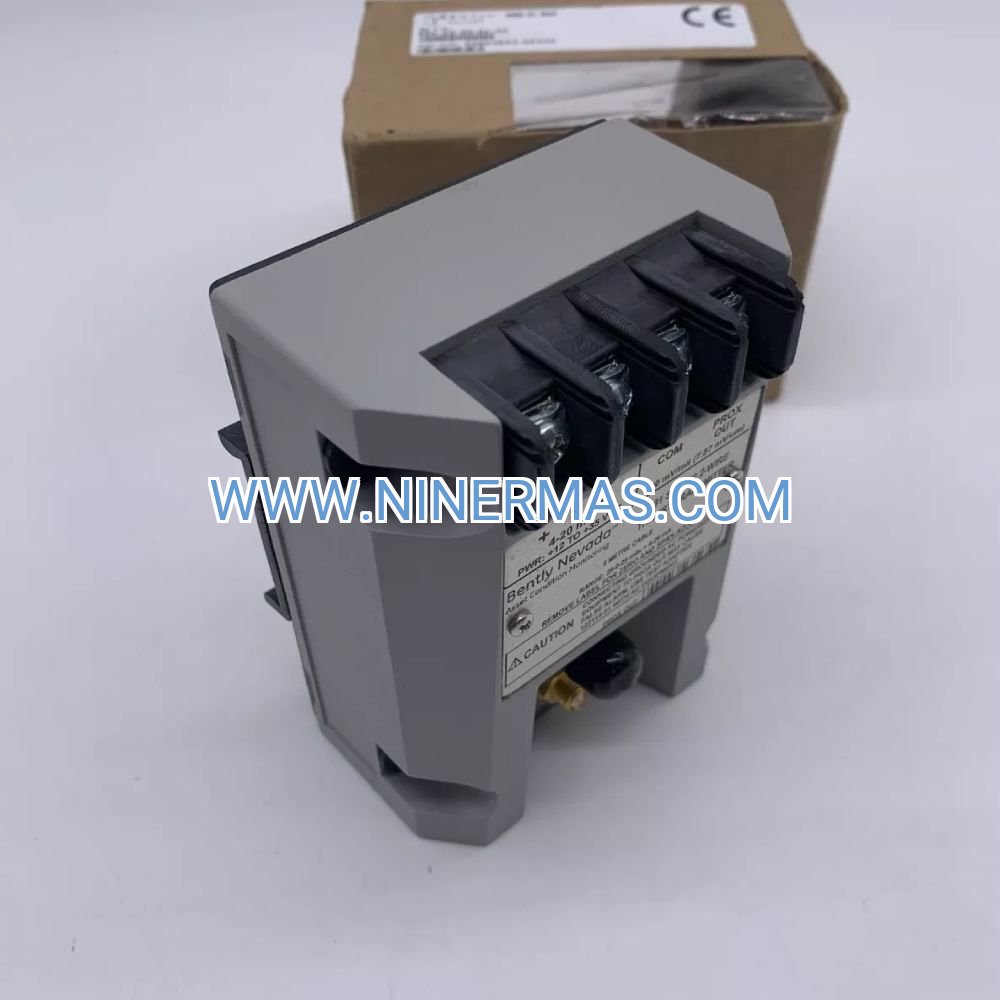
- Proximitor Sensors: 330180 series (standard), 330780 series (extended temperature), 330878 series (hazardous area)
- Monitoring Systems: 3500/42M vibration monitors, 3500/45 position monitors, 3500 rack systems with TDI communication
- Cable Assemblies: Extension cables (24583 series), junction boxes, and field-terminable connectors available for custom installations
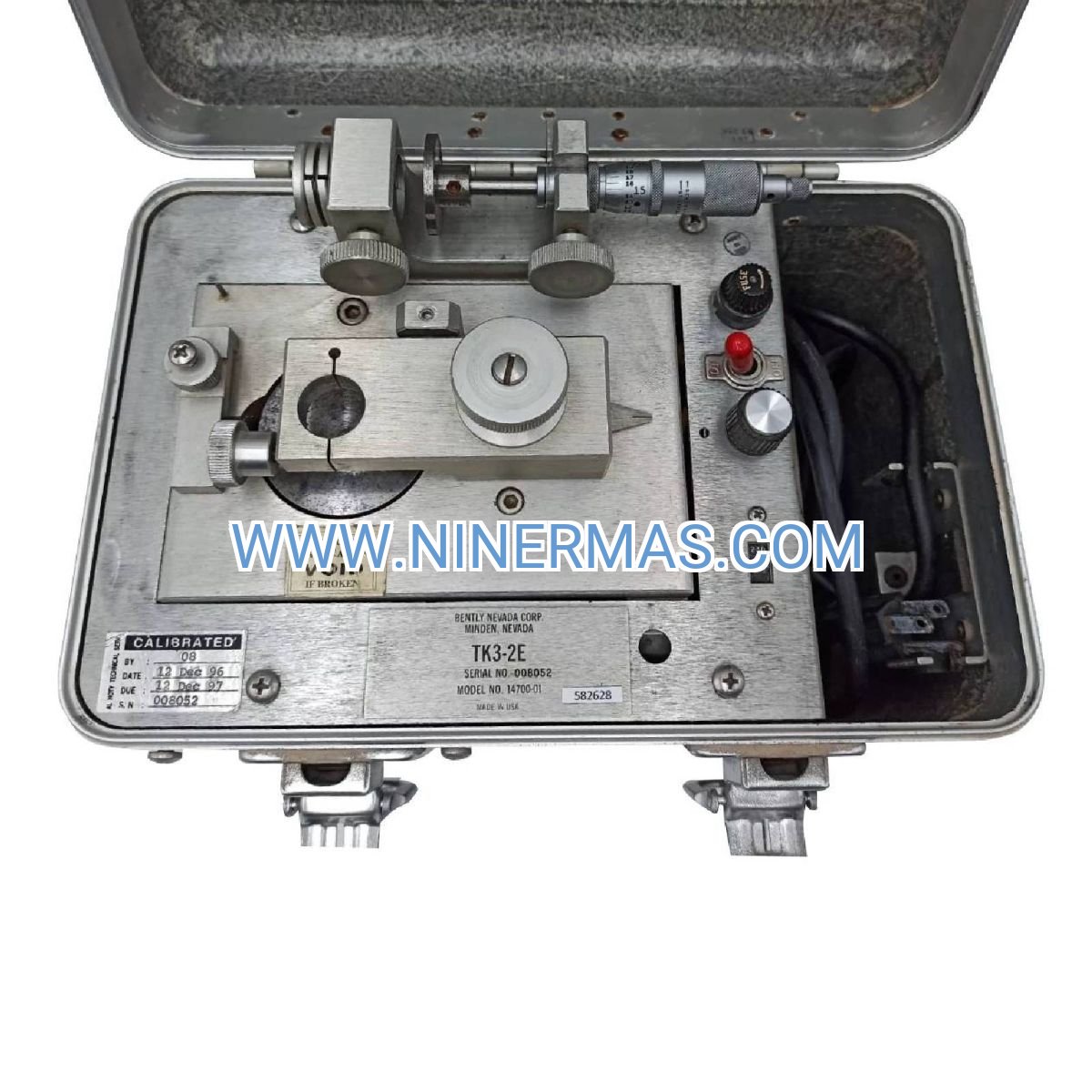
- Calibration Tools: Compatible with TK-3 calibration kit and automated test benches for field verification
- Software Platforms: System 1 condition monitoring software, 3500 rack configuration tools, and third-party SCADA/DCS integration via Modbus/OPC protocols
Installation, Commissioning & Service Support
Delivery & Lead Times
- Standard Configuration: Ships from authorized distributor stock within 3-5 business days for common cable lengths
- Custom Specifications: Factory-direct orders with non-standard cable lengths or special calibrations require 4-6 weeks lead time
- Expedited Service: Emergency replacement units available via air freight for critical machinery outages (contact for availability)
Warranty & Quality Assurance
- Manufacturer Warranty: 24-month coverage against defects in materials and workmanship from date of shipment
- Calibration Certificate: Factory calibration data and traceability documentation included with each probe
- Authenticity Guarantee: All units sourced through authorized Bently Nevada distribution channels with full OEM support eligibility
Technical Support Services
- Application Engineering: Pre-sales consultation for system design, probe selection, and installation planning
- Installation Assistance: Remote guidance for mounting, cable routing, and proximitor connection procedures
- Commissioning Support: Gap voltage verification, signal quality assessment, and baseline data collection protocols
- Troubleshooting: Diagnostic support for signal anomalies, cable faults, and system integration issues
- Training Resources: Access to installation manuals, wiring diagrams, and online training modules for maintenance personnel
Complete technical documentation package includes: installation drawing, electrical schematic, calibration curve, material certifications, and compliance declarations. Available in PDF format upon request.
Frequently Asked Questions (FAQ)
Q: Is the Bently Nevada 330140-08-10-01-00-00 proximity probe compatible with legacy 3300 series monitoring systems?
A: Yes, the 3300 XL series maintains backward compatibility with earlier 3300 proximitor models (330100/330105 series). However, to achieve full performance specifications—including extended temperature range and improved EMI immunity—pairing with 3300 XL proximitors (330180/330780 series) is recommended. Consult system integration guidelines for mixed-generation installations.
Q: What cable length options are available for this proximity transducer probe?
A: The 330140-08-10-01-00-00 model designation includes factory cable length specification in the suffix code. Standard lengths range from 1 meter to 9 meters in 1-meter increments. For installations requiring longer cable runs, extension cables (24583 series) can be field-installed up to a maximum system length of 18 meters. Custom cable lengths beyond standard offerings require factory special order with 4-6 week lead time.
Q: Can this 8mm proximity probe measure both radial vibration and axial shaft position simultaneously?
A: A single probe measures displacement in one axis only. For radial vibration monitoring, install the probe perpendicular to the shaft axis (typically two probes at 90° orientation for XY measurement). For axial thrust position, mount the probe facing the shaft end or thrust collar. Complete machinery monitoring systems typically employ 4-8 probes per bearing location to capture radial vibration, axial position, and phase reference data.
Q: What is the recommended gap voltage range when using this probe with 3300 XL proximitors?
A: Optimal static gap voltage should be maintained between -9.0V and -11.0V DC for maximum linearity and temperature stability. This corresponds to approximately 40-60% of the probe's 8mm sensing range (3.2mm to 4.8mm physical gap). During installation, adjust probe depth to achieve target gap voltage at normal operating temperature. Consult proximitor calibration curves for precise gap-to-voltage relationships.
Q: How often does the proximity probe require recalibration in typical industrial service?
A: Under normal operating conditions (temperature cycling within specifications, no physical damage, proper installation), factory calibration remains stable for 5+ years. Periodic verification is recommended during major machinery overhauls or if gap voltage drift exceeds ±0.5V from baseline readings. Field calibration using TK-3 calibration kit can be performed without removing the probe from service in most installations.
Q: What are the minimum clearance requirements for installing an 8mm proximity probe in machinery casings?
A: The probe requires an 8.0mm (+0.1/-0.0mm) diameter through-hole with minimum depth equal to the threaded length plus 5mm. Ensure adequate clearance around the probe body (minimum 15mm radius) to prevent electromagnetic interference from adjacent metal structures. For installations near high-current conductors or magnetic fields, consult EMI mitigation guidelines to maintain signal integrity.
Request Technical Consultation & Quotation
To receive detailed system design recommendations, application-specific probe selection, and project pricing, please provide the following information to our engineering team:
- Project Overview: Facility type, machinery criticality classification, and monitoring objectives
- Equipment Details: Machine type (turbine/compressor/motor/pump), manufacturer, model number, and nameplate ratings
- Operating Parameters: Shaft diameter, operating speed range (RPM), bearing type, and normal operating temperature
- Measurement Requirements: Desired parameters (radial vibration, axial position, eccentricity), number of measurement planes, and alarm/trip setpoints
- System Architecture: Existing monitoring infrastructure (if any), proximitor model numbers, and control system integration requirements
- Installation Constraints: Available mounting space, cable routing paths, ambient conditions, and hazardous area classifications
- Project Timeline: Required delivery date, installation schedule, and commissioning support needs
Our application engineers will respond within 24 hours with: Probe configuration recommendations, system architecture drawings, cable length specifications, proximitor compatibility verification, estimated pricing, and delivery timeline. For urgent machinery protection requirements, expedited engineering support and emergency stock allocation are available.
© 2026 NINERMAS COMPANY LIMITED. All rights reserved.
Original Source: https://ninermas.com
Contact: sale@ninermas.com | +0086 187 5021 5667

Contact Info
-
Address:22 / F, South Wo Hang building, 148 Wing Lok Street, Sheung Wan, Western District, Hong Kong
-
Phone:+8618750215667
-
Email: