


Description
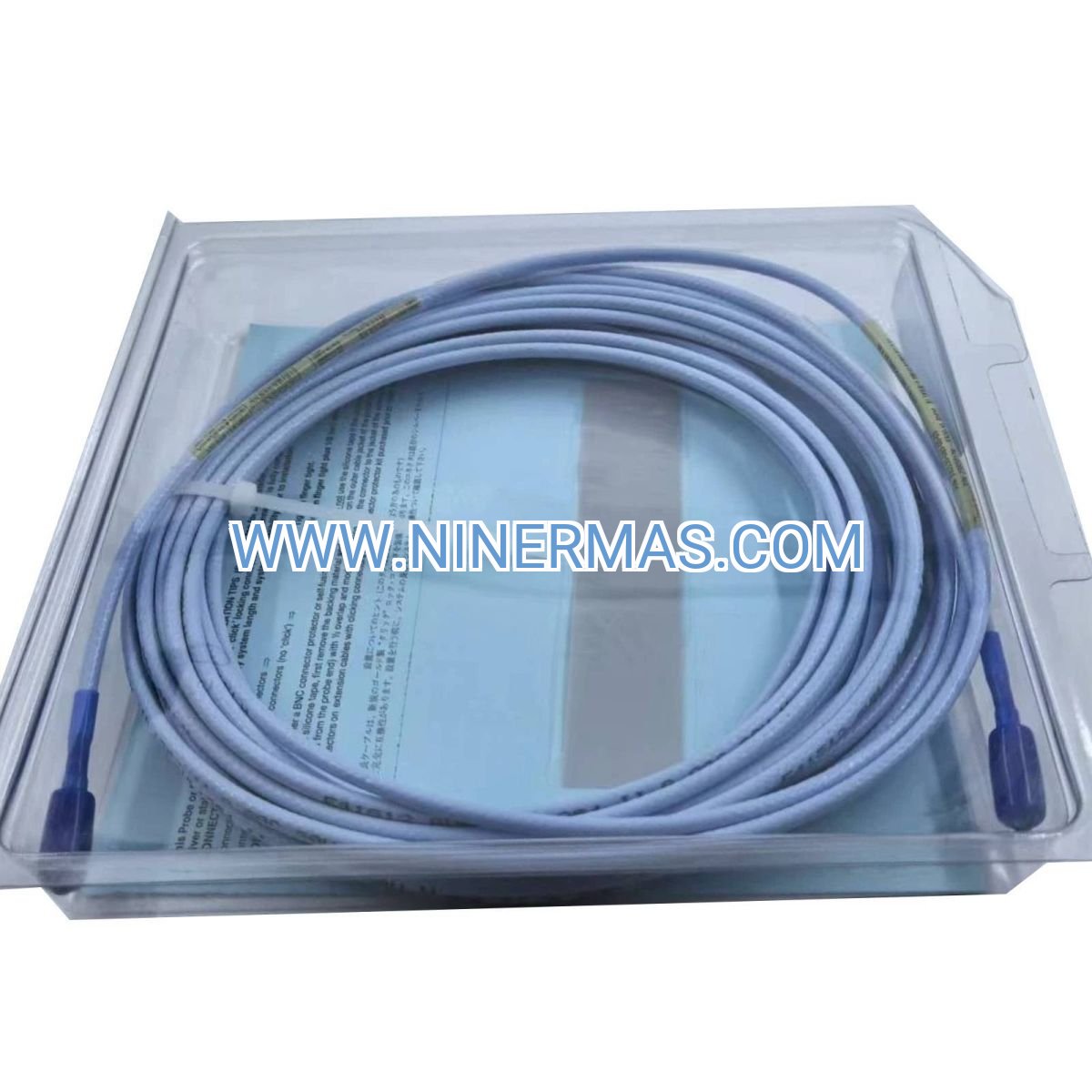
8mm Proximity Probe for Turbomachinery Vibration Monitoring (Industrial-Grade Eddy Current Sensor)
The Bently Nevada 330140-08-05-01-00-00 is an industrial-grade 8mm proximity probe designed for continuous shaft displacement and vibration monitoring in critical rotating equipment. Utilizing proven eddy current technology and seamless 3300 XL system integration, this sensor enables real-time condition assessment for turbines, compressors, pumps, and high-speed motors.
Ideal for power generation plants, petrochemical facilities, oil & gas processing units, and heavy manufacturing operations, this probe addresses common challenges including undetected bearing degradation, shaft misalignment, rotor rub events, and unplanned machinery failures. By providing early warning signals before catastrophic breakdowns occur, it helps maintenance teams transition from reactive repairs to predictive strategies.
Engineered with stainless steel construction and PTFE insulation for harsh industrial environments, the 330140-08-05-01-00-00 delivers stable performance across extreme temperature ranges (-40°C to +125°C) and high-vibration conditions. Compatible with standard 3300 XL Proximitor sensors and monitoring systems, it integrates seamlessly into existing machinery protection architectures. Contact our application engineers for customized cable lengths, mounting configurations, and system design consultation.
Core Features & Technical Advantages
High-Precision Eddy Current Measurement
Non-contact sensing technology measures shaft displacement with 0.4 to 2.0 mm linear range and 0-10 kHz frequency response, capturing both slow-roll position drift and high-frequency vibration events without physical wear or maintenance requirements.
Extreme Environment Durability
Stainless steel housing with PTFE insulation withstands continuous operation from -40°C to +125°C, resisting corrosive atmospheres, thermal cycling, electromagnetic interference, and mechanical shock common in turbomachinery installations.
Plug-and-Play 3300 XL Compatibility
Direct integration with Bently Nevada 3300 XL Proximitor sensors, extension cables, and monitoring modules eliminates custom interface development. Standard M8 x 1.0 threading simplifies installation into existing bearing housing provisions.
Long-Term Measurement Stability
Factory-calibrated sensor coils maintain accuracy over 5+ year operational lifecycles with minimal drift, reducing recalibration frequency and ensuring consistent baseline trending for condition-based maintenance programs.
Multi-Fault Detection Capability
Simultaneous monitoring of radial vibration, axial position, differential expansion, and eccentricity enables early identification of bearing wear, coupling misalignment, thermal growth anomalies, rotor rubs, and foundation issues before equipment damage occurs.
Flexible Configuration Options
Available with custom cable lengths (standard 5m, extendable to project requirements), multiple thread adapters, and application-specific calibration for diverse target materials including carbon steel, 400-series stainless, and turbine-grade alloys.
Typical Application Scenarios
This proximity probe serves as a critical sensing element in machinery protection systems where continuous shaft monitoring prevents costly failures and production interruptions:
Steam & Gas Turbine Vibration Monitoring
Installed at journal bearings and thrust positions to track rotor dynamic behavior during startup, steady-state operation, and shutdown sequences. Detects imbalance, misalignment, rub events, and bearing degradation in real-time, enabling condition-based maintenance scheduling for power generation units.
Centrifugal Compressor Radial Position Tracking
Mounts on compressor casings to measure shaft radial displacement and vibration amplitude in multi-stage machines. Identifies surge conditions, aerodynamic instabilities, seal rubs, and bearing clearance issues critical to petrochemical and natural gas processing reliability.
High-Speed Pump Thrust Bearing Monitoring
Provides axial position measurement for boiler feed pumps, pipeline pumps, and process pumps operating above 3,600 RPM. Early detection of thrust bearing wear, hydraulic imbalance, and cavitation damage prevents catastrophic seal failures and rotor-to-stator contact.
Electric Motor Rotor Eccentricity Measurement
Monitors air gap variation in large induction motors and synchronous generators, detecting rotor bow, foundation settling, soft foot conditions, and electromagnetic center shifts that lead to increased vibration and premature winding insulation failure.
Gearbox & Coupling Condition Monitoring Systems
Integrates into multi-channel vibration analysis platforms for wind turbine gearboxes, industrial gear drives, and flexible coupling assemblies. Tracks torsional oscillations, gear mesh anomalies, and coupling wear patterns for predictive maintenance optimization.
Technical Specifications & Selection Guide
To ensure optimal performance and compatibility with your machinery protection system, review the following technical parameters and selection criteria:
| Parameter | Specification |
|---|---|
| Probe Diameter | 8mm (0.315 inch) |
| Frequency Response | 0 to 10 kHz (-3dB typical) |
| Linear Measurement Range | 0.4 to 2.0 mm (with ferromagnetic targets) |
| Operating Temperature | -40°C to +125°C (-40°F to +257°F) |
| Cable Length | 5 meters standard (custom lengths available) |
| Thread Size | M8 x 1.0 metric thread |
| Housing Material | Stainless steel with PTFE insulation |
| Coil Resistance | 7-9 ohms (typical at 25°C) |
| System Compatibility | Bently Nevada 3300 XL Proximitor sensors & monitors |
| Target Material | Ferromagnetic (carbon steel, 400-series stainless) |
| Mounting Orientation | Radial or axial (application dependent) |
| Protection Rating | Suitable for industrial environments (consult for IP rating) |
Selection Considerations:
When specifying proximity probes for your application, consider the following factors to ensure optimal performance:
- Target Material Compatibility: Verify shaft or target surface is ferromagnetic. Non-magnetic materials (aluminum, titanium, austenitic stainless) require specialized probe types.
- Mounting Space Constraints: Confirm adequate clearance for 8mm probe diameter and M8 thread engagement depth in bearing housing or casing.
- Operating Temperature Range: Ensure ambient and radiated heat conditions remain within -40°C to +125°C limits. High-temperature variants available for extreme applications.
- Cable Routing Requirements: Specify total cable run length from probe tip to Proximitor sensor location, accounting for conduit paths and service loops.
- System Integration: Confirm compatibility with existing 3300 XL infrastructure or plan for complete monitoring system upgrade.
For application-specific guidance, provide our engineering team with machinery type, operating speed, bearing configuration, ambient conditions, and monitoring objectives. We will recommend optimal probe quantity, positioning, and system architecture.
Installation, Commissioning & Maintenance
Mechanical Installation
Probes mount directly into precision-machined holes on bearing housings, casings, or custom brackets using M8 x 1.0 threads. Proper gap setting (typically 1.0-1.5mm from target surface) ensures operation within the linear measurement range and maximizes sensitivity. Use thread sealant compatible with operating temperatures and avoid over-torquing to prevent coil damage.
Electrical Connection
Route probe cables through grounded conduit to Bently Nevada Proximitor sensors, maintaining separation from high-voltage power cables to minimize electromagnetic interference. Verify cable shield continuity and proper grounding at the Proximitor end only (single-point ground). Consult wiring diagrams for multi-probe installations and extension cable requirements.
System Calibration & Verification
Factory calibration provides standard voltage-to-displacement scaling for ferromagnetic targets. Field verification involves measuring probe output at known gap distances using precision feeler gauges or calibrated spacers. Record baseline readings during commissioning for future trending and diagnostic comparison.
Preventive Maintenance
Inspect probe tips annually (or per plant maintenance schedules) for physical damage, corrosion, coating wear, or debris accumulation. Verify coil resistance remains within 7-9 ohm specification using a precision multimeter. Clean probe faces with non-abrasive solvents and inspect cable jackets for cuts, abrasion, or thermal degradation.
Troubleshooting & Diagnostics
Common issues include gap setting drift (thermal expansion, foundation settling), cable damage (rodent activity, mechanical wear), and target surface contamination (oil residue, rust). Use oscilloscope analysis of probe output signals to identify electrical noise, intermittent connections, or Proximitor sensor faults.
Delivery, Warranty & Technical Support
Stock Availability & Lead Times
Standard 330140-08-05-01-00-00 probes with 5-meter cables typically ship within 3-5 business days from regional distribution centers. Custom cable lengths, special thread adapters, or high-temperature variants require 2-3 weeks for factory configuration. Expedited shipping available for emergency replacement needs and critical outage support.
Quality Assurance & Warranty
Every proximity probe undergoes factory electrical testing, dimensional inspection, and calibration verification before shipment. Products include a 12-month manufacturer warranty covering defects in materials and workmanship under normal operating conditions. Extended warranty programs available for long-term service agreements.
Technical Documentation Package
Shipments include installation instructions, dimensional drawings, electrical specifications, calibration certificates, and recommended gap setting procedures. Complete 3300 XL system integration manuals, wiring diagrams, and troubleshooting guides available for download or upon request.
Application Engineering Support
Our technical team provides pre-sale consultation for system design, probe quantity/positioning recommendations, and compatibility verification with existing monitoring infrastructure. Post-installation support includes commissioning assistance, baseline data interpretation, and ongoing diagnostic guidance.
Training & Certification Programs
Vibration analysis training, proximity probe installation workshops, and 3300 XL system operation courses available through authorized training partners. Contact our team for regional training schedules and certification pathways.
Frequently Asked Questions (FAQ)
Q: What target materials are compatible with the 330140-08-05-01-00-00 proximity probe?
A: This probe is calibrated for ferromagnetic materials including carbon steel, 400-series stainless steel, and most turbine shaft alloys (4140, 4340, 17-4PH). Non-magnetic materials such as aluminum, titanium, brass, and 300-series austenitic stainless steel require specialized proximity probes with different calibration factors. Consult our engineering team for non-standard target material applications.
Q: Can I integrate this Bently Nevada probe with third-party vibration monitoring systems?
A: While designed specifically for 3300 XL Proximitor sensors, the probe outputs a standard eddy current signal compatible with many industrial monitoring platforms. Verify that your system's input impedance (typically 7-9 ohms), voltage range, and frequency response match probe specifications. Custom interface modules may be required for non-Bently Nevada systems.
Q: How often should proximity probes be calibrated or replaced?
A: Factory calibration remains stable for 5+ years under normal operating conditions with minimal drift. Annual electrical verification (coil resistance check) and visual inspection are recommended. Recalibration or replacement is necessary if coil resistance deviates beyond specification, physical damage occurs, or measurement accuracy degrades. Critical safety systems may require more frequent verification per regulatory standards (API, ISO).
Q: What is the recommended gap setting for optimal measurement accuracy?
A: For the 330140-08-05-01-00-00 probe, set the initial gap between 1.0-1.5mm from the target surface to operate within the linear measurement range (0.4-2.0mm). This allows adequate clearance for shaft thermal growth and vibration amplitude while maintaining sensitivity. Use precision feeler gauges during installation and verify gap with a DC voltmeter connected to the Proximitor output.
Q: How do I identify probe wear, damage, or electrical faults?
A: Perform routine inspections for physical damage (tip erosion, housing cracks, cable jacket cuts), corrosion, or coating degradation. Electrical testing should confirm coil resistance within 7-9 ohms at 25°C. Deviations beyond ±10% indicate potential coil damage, moisture ingress, or cable faults. Oscilloscope analysis of output signals can reveal noise, intermittent connections, or Proximitor sensor issues.
Q: Can cable lengths be extended beyond the standard 5 meters?
A: Yes, custom cable lengths up to 9 meters are available as factory-configured options. For longer runs, use Bently Nevada extension cables (part of the 3300 XL system) to maintain signal integrity and calibration accuracy. Avoid field splicing or non-approved cable extensions, as these introduce impedance mismatches and measurement errors.
Q: What environmental conditions can affect probe performance?
A: Extreme temperatures beyond -40°C to +125°C, high electromagnetic interference (near VFDs, welding equipment), excessive vibration (beyond mounting structure limits), and corrosive atmospheres (acidic gases, saltwater spray) can degrade performance. Ensure proper cable shielding, grounding, and environmental protection (conduit, seals) during installation.
Request Technical Consultation & Quotation
To receive customized system design recommendations, application-specific probe configurations, or volume pricing for your machinery monitoring project, please provide the following information to our engineering team:
- Project Overview: Facility type, machinery inventory, monitoring objectives
- Equipment Details: Machine type (turbine, compressor, pump, motor), operating speed (RPM), bearing configuration
- Measurement Requirements: Radial vibration, axial position, differential expansion, or multi-parameter monitoring
- Environmental Conditions: Ambient temperature range, humidity, corrosive atmospheres, electromagnetic interference sources
- System Integration: Existing monitoring infrastructure (3300 XL, third-party DCS/SCADA), communication protocols
- Quantity & Timeline: Number of probes required, installation schedule, delivery urgency
Our application engineers will respond within 24 hours with tailored recommendations, system architecture diagrams, and competitive quotations. For immediate assistance with emergency replacements or critical outage support, contact our technical hotline.
© 2026 NINERMAS COMPANY LIMITED. All rights reserved.
Original Source: https://ninermas.com
Contact: sale@ninermas.com | +0086 187 5021 5667

Contact Info
-
Address:22 / F, South Wo Hang building, 148 Wing Lok Street, Sheung Wan, Western District, Hong Kong
-
Phone:+8618750215667
-
Email:
