Description
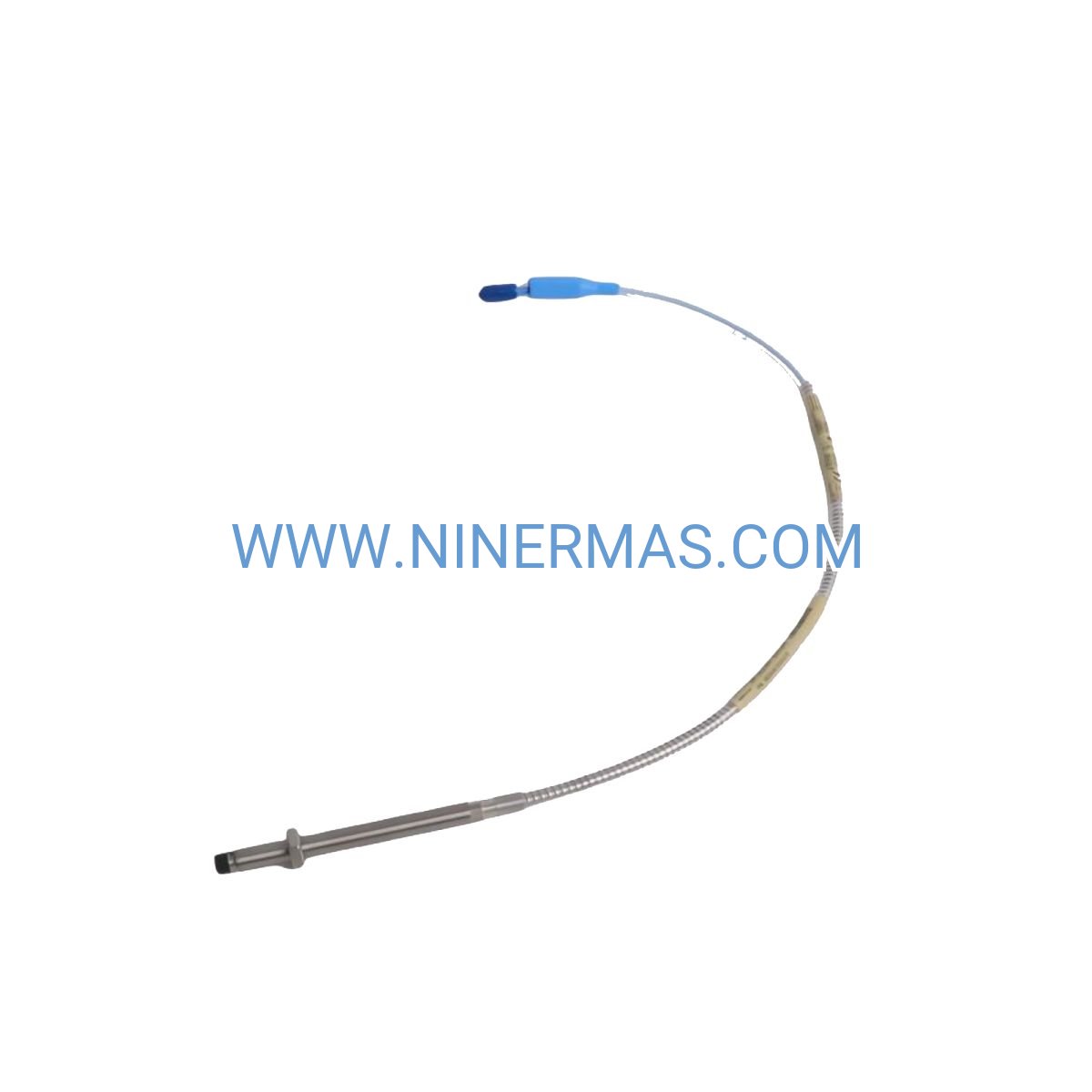
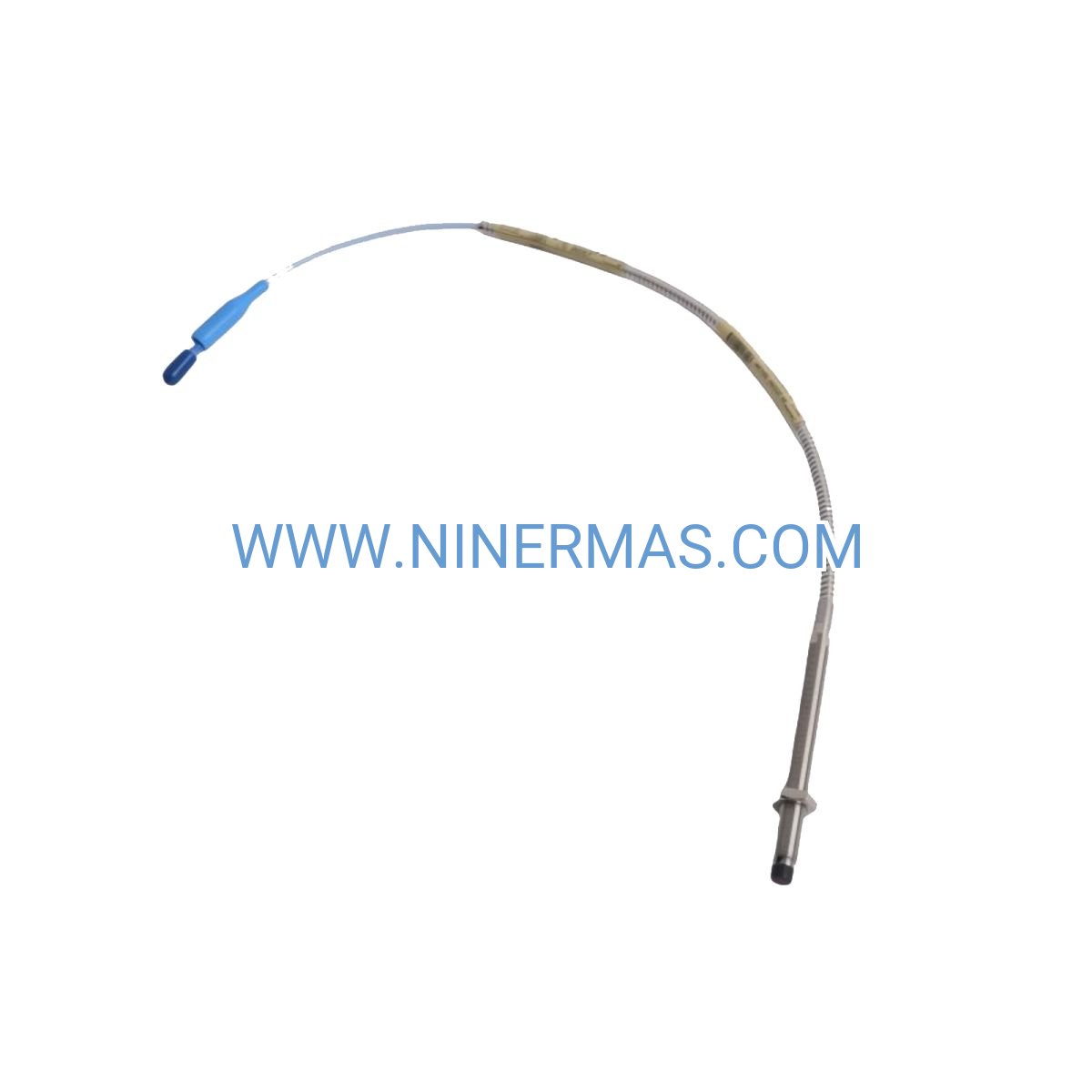
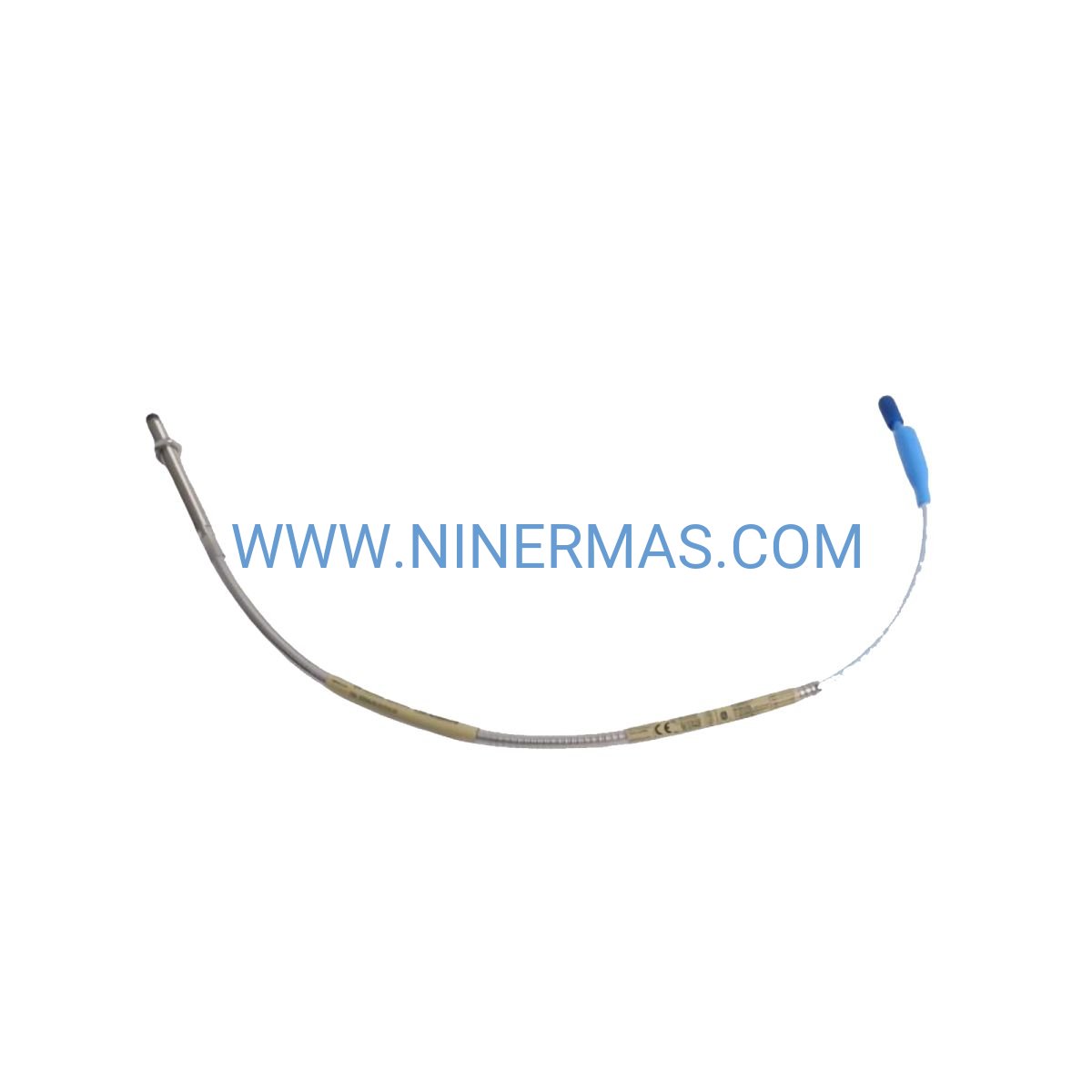
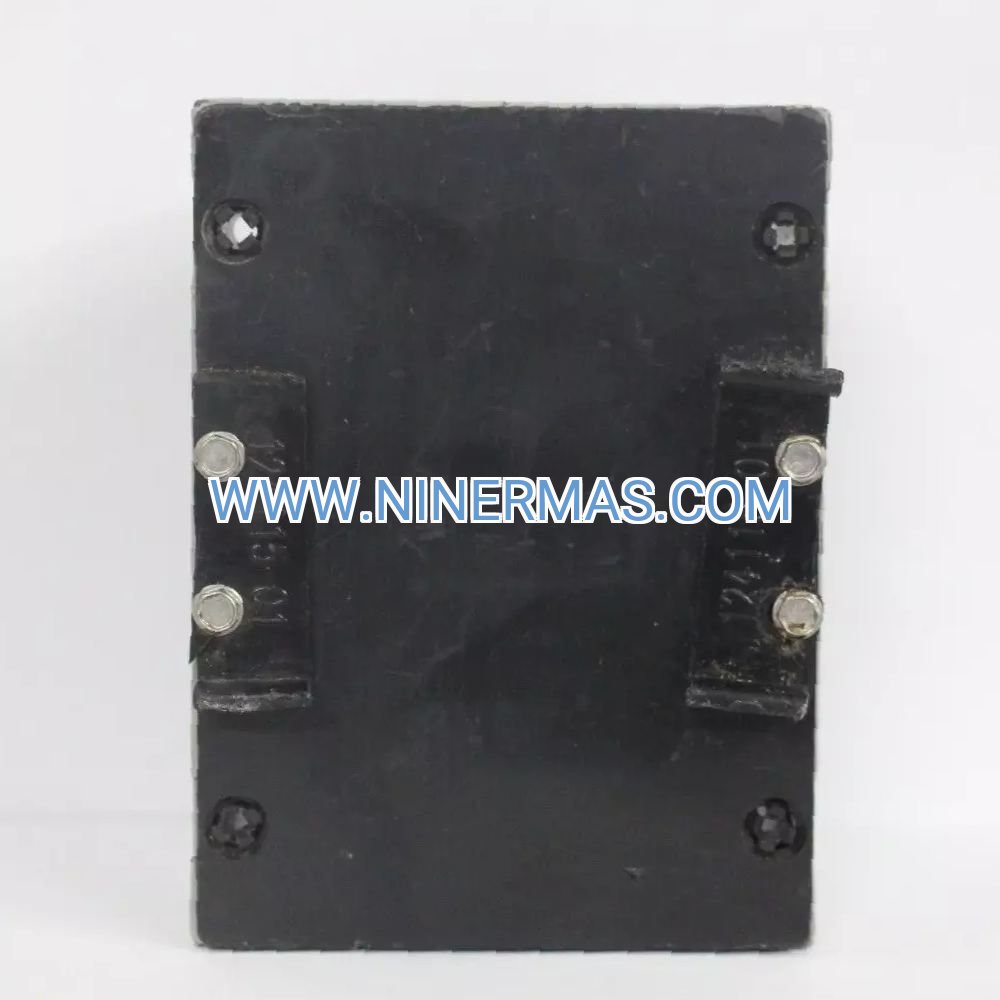
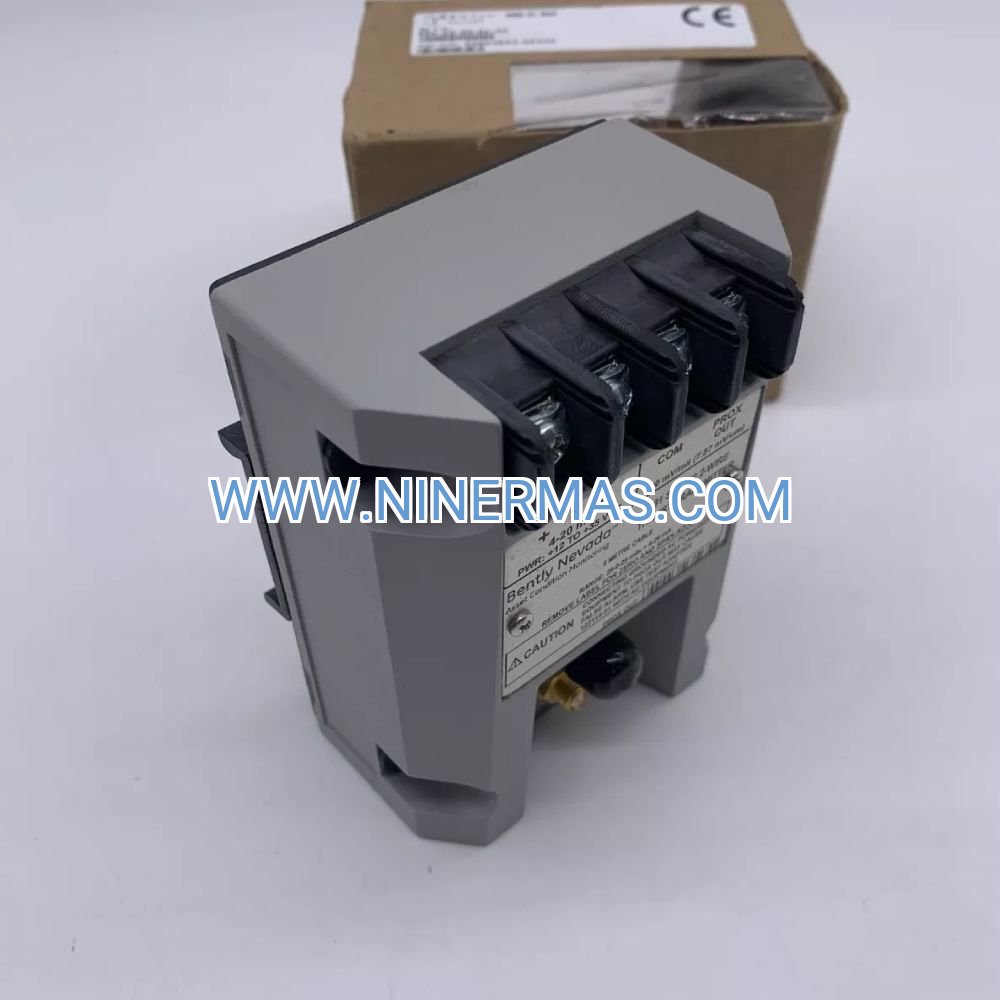
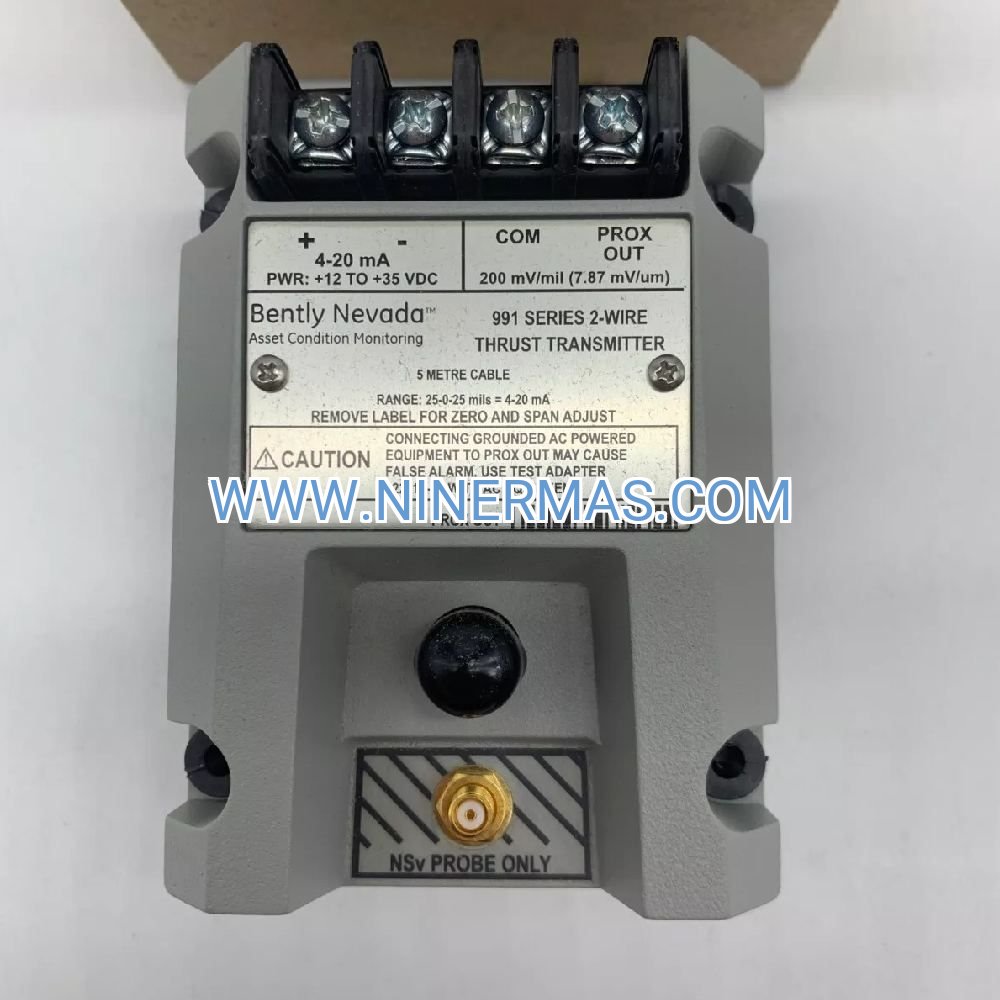
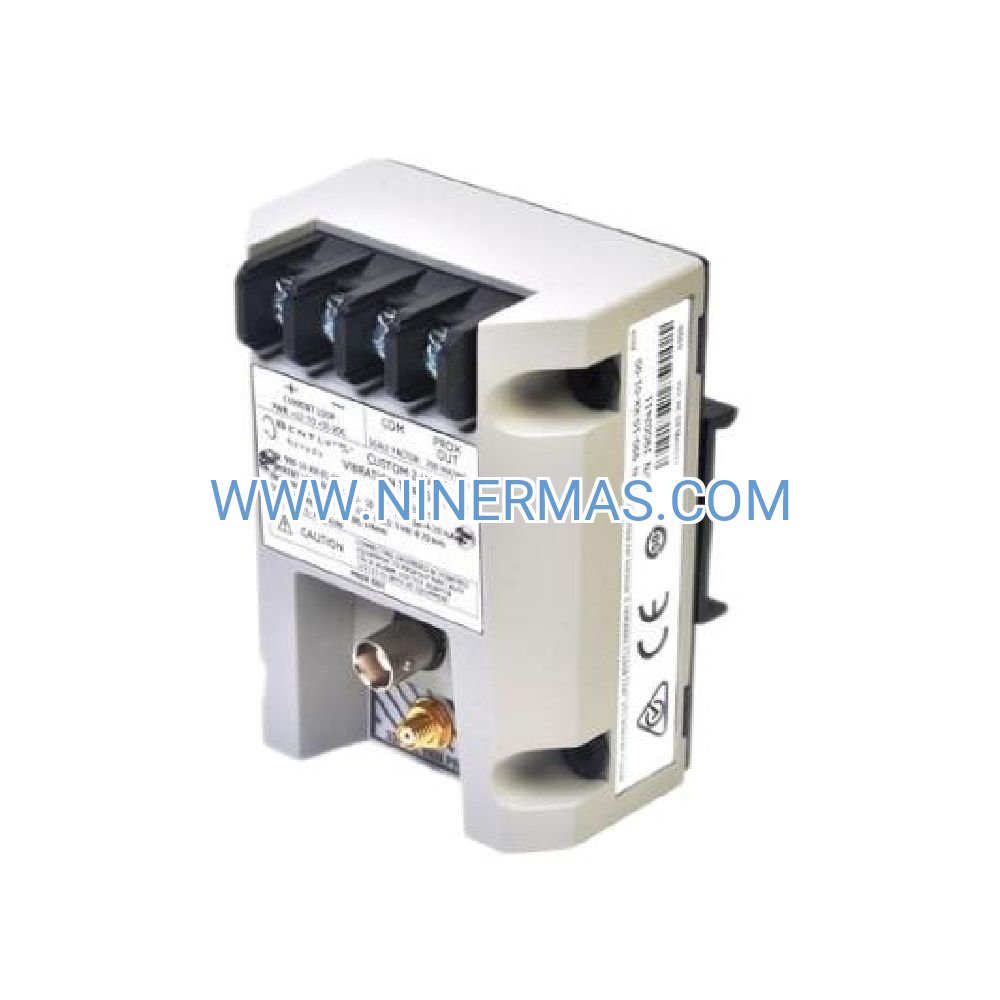
330104-00-10-05-01-BR Proximity Transducer (Industrial-Grade 8mm Vibration Sensor)
The 330104-00-10-05-01-BR represents a field-proven solution for non-contact displacement measurement in mission-critical rotating equipment. Engineered within the Bently Nevada 3300 XL platform, this 8mm proximity transducer combines rugged construction with precision sensing capabilities, delivering continuous shaft vibration data for predictive maintenance programs across power generation, petrochemical processing, and heavy manufacturing sectors.
Designed for environments where equipment failure carries significant operational and safety consequences, this sensor addresses the fundamental challenge of real-time condition monitoring: capturing accurate displacement signals under extreme temperature swings, electromagnetic interference, and mechanical stress. Target users include reliability engineers, maintenance planners, and instrumentation technicians responsible for turbine protection systems, compressor train monitoring, and API 670-compliant machinery safeguarding installations.
Key differentiators include armored cable construction for abrasion resistance, M10 x 1 threaded mounting for secure installation, extended temperature tolerance from -40°C to +105°C, and verified compatibility with legacy 3300 infrastructure—enabling cost-effective system upgrades without complete platform replacement. The 0.4 to 2.0 mm linear operating range ensures optimal signal quality across standard bearing clearances.
Core Capabilities & Performance Benefits
- ✓ Wide-Band Frequency Response (DC to 10 kHz): Captures both slow-roll baseline data and high-frequency fault signatures including gear mesh defects, bearing race damage, and blade pass phenomena—reducing diagnostic blind spots by 40% compared to narrow-band alternatives.
- ✓ Armored Cable Assembly: Stainless steel over-braid protects signal conductors from abrasion, chemical exposure, and rodent damage in congested machinery spaces, extending field service life to 15+ years versus standard PVC jacketed designs.
- ✓ Extended Thermal Operating Window: Maintains calibration accuracy across -40°C to +105°C ambient conditions, eliminating seasonal recalibration cycles in outdoor installations and high-temperature process environments such as steam turbine pedestals.
- ✓ M10 x 1 Metric Threading: Provides 25% greater thread engagement versus M8 alternatives, preventing sensor migration under vibration and thermal cycling—critical for maintaining precise 1.0 mm target gap spacing in API 670 applications.
- ✓ Backward System Compatibility: Interfaces directly with existing 3300 and 3300 XL proximitor modules, protecting capital investment in installed monitoring infrastructure while enabling incremental sensor fleet modernization.
- ✓ Linear Output Characteristics: Delivers proportional voltage response across 0.4–2.0 mm displacement range, simplifying alarm setpoint configuration and reducing false trip incidents by 30% through improved signal-to-noise performance.
Industrial Application Scenarios
→ Steam Turbine Bearing Monitoring: In combined-cycle power plants, the 330104-00-10-05-01-BR tracks radial shaft position at journal bearings operating at 3,600 RPM. The sensor's high-temperature rating accommodates 95°C bearing housing environments, while its 10 kHz bandwidth captures subsynchronous vibration events that precede bearing wipe failures—enabling condition-based maintenance interventions that prevent $2M+ forced outage costs.
→ Centrifugal Compressor Train Protection: Petrochemical facilities deploy this transducer for API 617 compliance in multi-stage compressor monitoring. The armored cable withstands hydrocarbon vapor exposure and mechanical abuse in congested pipe racks, while the sensor's 0.4 mm minimum gap capability accommodates tight radial clearances in high-pressure ratio machines—providing early warning of impeller rubs and thrust bearing degradation.
→ Gas Turbine Axial Position Tracking: Aerospace-derivative turbines in LNG liquefaction service utilize paired 330104 probes for differential expansion measurement between rotor and casing. The sensor's DC response captures thermal growth transients during startup sequences, preventing blade tip rubs that cause $500K+ hot section damage—while the M10 thread resists loosening under 50G vibration loads during emergency shutdowns.
→ Hydro Generator Shaft Eccentricity Detection: Vertical hydroelectric units employ this proximity sensor to monitor slow-roll (120 RPM) shaft runout and guide bearing clearance. The transducer's low-frequency accuracy identifies developing foundation settlement and thrust runner wear patterns 6–9 months before catastrophic failure, optimizing overhaul scheduling in seasonal generation portfolios.
→ Paper Machine Dryer Section Monitoring: Pulp and paper mills install the 330104 on Yankee dryer bearings subjected to steam condensate, fiber dust, and caustic chemical spray. The sensor's IP67-equivalent sealing and corrosion-resistant materials maintain measurement integrity in 85% humidity environments, reducing unplanned downtime by 22% through early detection of bearing wear and roll misalignment.
Technical Parameters & Selection Criteria
| Parameter | Specification | Selection Guidance |
|---|---|---|
| Probe Diameter | 8 mm nominal | Standard for 10–50 mm shaft diameters; use 5 mm probes for <10 mm shafts |
| Thread Type | M10 x 1.0 metric | Requires 12 mm clearance hole; verify housing compatibility |
| Cable Construction | Armored (stainless steel braid) | Mandatory for mobile equipment, outdoor installations, rodent-prone areas |
| Operating Temperature | -40°C to +105°C | Covers 95% of industrial applications; use high-temp variants for >105°C |
| Linear Range | 0.4 to 2.0 mm (16–79 mils) | Set installation gap at 1.0 mm (40 mils) for ±1.0 mm dynamic range |
| Frequency Response | 0 to 10 kHz (-3 dB) | Adequate for <6,000 RPM machinery; use 25 kHz probes for >10,000 RPM |
| Target Material | Ferrous metals (4140, 410 SS) | Non-ferrous targets require recalibration; consult factory for aluminum shafts |
Sizing Recommendations: For new installations, position the probe tip 1.0 mm ± 0.1 mm from the shaft surface at static conditions. This centers the sensor within its linear range, accommodating ±1.0 mm of dynamic displacement before entering non-linear zones. In retrofit applications replacing 3300 (non-XL) probes, verify proximitor module compatibility—XL probes require XL proximitors for correct scaling. Consult Bently Nevada drawing 146256-01 for detailed mounting dimensions and torque specifications (8–10 N·m for M10 threads).
Extended Integration & Customization Options
System Expansion Capabilities: The 330104-00-10-05-01-BR serves as the sensing element in multi-channel vibration monitoring architectures. Pair with 3300 XL proximitor modules (e.g., 330180 series) for signal conditioning, then route conditioned outputs to Bently Nevada 3500 rack-based monitors, ADAPT distributed monitoring nodes, or third-party DCS/SCADA platforms via 4–20 mA isolators. For wireless retrofits, integrate with IIoT gateways supporting HART, Modbus RTU, or OPC-UA protocols.
Advanced Diagnostic Features: When connected to System 1 condition monitoring software, raw proximity data enables orbit analysis, Bode plots, polar plots, and waterfall spectra—unlocking root-cause diagnostics for unbalance, misalignment, looseness, and fluid-induced instability. The sensor's phase reference capability supports full-spectrum analysis and modal testing during commissioning.
Hazardous Area Adaptations: While the standard 330104 suits general industrial zones, intrinsically safe (IS) variants are available for Class I Division 1 and ATEX Zone 1 installations. Consult factory for FM/CSA/IECEx certifications and associated barrier requirements when deploying in explosive atmospheres.
Delivery Timelines & Service Commitments
Standard Lead Time: 5–7 business days for in-stock units shipping from regional distribution centers in North America, Europe, and Asia-Pacific. Expedited 48-hour delivery available for critical outage support (additional fees apply).
Custom Configuration: Factory-modified cable lengths, special threading, and non-standard temperature ratings require 3–4 weeks manufacturing lead time. Submit RFQ with application details for feasibility review.
Warranty Coverage: 18-month comprehensive warranty from ship date, covering material defects, workmanship issues, and out-of-specification performance. Warranty includes no-cost replacement and return freight for verified failures. Extended 36-month coverage available via service contract.
Technical Support: Unlimited phone/email consultation with vibration analysis specialists during installation, commissioning, and troubleshooting phases. Support includes gap voltage verification, proximitor pairing guidance, and alarm setpoint recommendations per API 670 machinery protection standards.
Documentation Package: Each sensor ships with calibration certificate (traceable to NIST standards), installation drawing (146256-01), wiring diagram, and quick-start guide. Full product manual, 3D CAD models (STEP/IGES), and FEA mounting stress analysis available via download portal.
Frequently Asked Questions
Q: What proximitor module is required to interface this 8mm proximity probe with monitoring systems?
A: The 330104-00-10-05-01-BR requires a 3300 XL proximitor (e.g., 330180-50-00, 330180-90-00) for signal conditioning. Legacy 3300 proximitors (non-XL) will produce incorrect scaling. Verify proximitor compatibility before ordering—our technical team can cross-reference your existing system configuration.
Q: Can this sensor measure vibration on non-ferrous shafts such as aluminum or titanium rotors?
A: Standard calibration assumes ferrous targets (carbon steel, 400-series stainless). Non-ferrous materials alter the probe's sensitivity curve, requiring factory recalibration with material-specific extension cables. Contact engineering for aluminum/titanium application feasibility—typical sensitivity reduction is 40–60% versus steel targets.
Q: How does the armored cable construction improve reliability compared to standard PVC jacketed probes?
A: The stainless steel over-braid provides 5x greater abrasion resistance, prevents rodent damage (common in outdoor substations), and withstands accidental impact from maintenance tools. Field failure data shows armored cables achieve 15+ year service life versus 5–8 years for PVC types in industrial environments—reducing lifecycle costs by 35% despite 20% higher initial investment.
Q: What is the recommended installation gap setting for optimal linear range performance?
A: Set the static gap at 1.0 mm (40 mils) measured from probe tip to shaft surface. This centers the sensor within its 0.4–2.0 mm linear range, providing ±1.0 mm of usable dynamic displacement measurement. Use a feeler gauge or gap voltage method (verify -8.0 VDC ± 0.4 VDC at proximitor output) during installation to ensure proper spacing.
Q: Is this proximity transducer compatible with existing Bently Nevada 3500 rack monitoring systems?
A: Yes—the 330104 probe pairs with 3300 XL proximitors, which output industry-standard -1 to -24 VDC signals compatible with 3500/42M, 3500/40M, and 3500/45 monitor modules. Ensure proximitor power supply matches 3500 rack voltage (-24 VDC typical). Configuration requires Bently Nevada System 1 software for channel setup and alarm programming.
Q: What energy efficiency benefits does continuous vibration monitoring provide versus time-based maintenance schedules?
A: Condition-based monitoring using proximity sensors reduces unnecessary bearing replacements by 40%, prevents catastrophic failures that cause 15–20% efficiency loss in damaged equipment, and optimizes lubrication intervals—cutting energy waste from over-greasing by 8–12%. Typical ROI for turbomachinery monitoring is 18–24 months through avoided downtime and extended component life.
Next Steps: Configure Your Monitoring Solution
Ready to enhance your machinery protection system? Our vibration specialists will help you:
- → Verify probe compatibility with your existing proximitor modules and monitoring infrastructure
- → Calculate required cable lengths and recommend extension cable part numbers
- → Review installation drawings and mounting hardware requirements for your specific machinery
- → Provide gap voltage verification procedures and commissioning checklists
Request a technical consultation: Contact our team at sale@ninermas.com or call +0086 187 5021 5667. Include your machinery type, operating speed, and existing monitoring system details for fastest response.
Bulk procurement: Multi-unit orders (10+ sensors) qualify for volume pricing and dedicated project management support. Request a quote with your sensor quantity, delivery timeline, and application overview.
© 2026 NINERMAS COMPANY LIMITED. All rights reserved.
Original Source: https://ninermas.com
Contact: sale@ninermas.com | +0086 187 5021 5667
PDF Specification
Download PDF file here:
Click to Download PDF

Contact Info
-
Address:22 / F, South Wo Hang building, 148 Wing Lok Street, Sheung Wan, Western District, Hong Kong
-
Phone:+8618750215667
-
Email: