Description
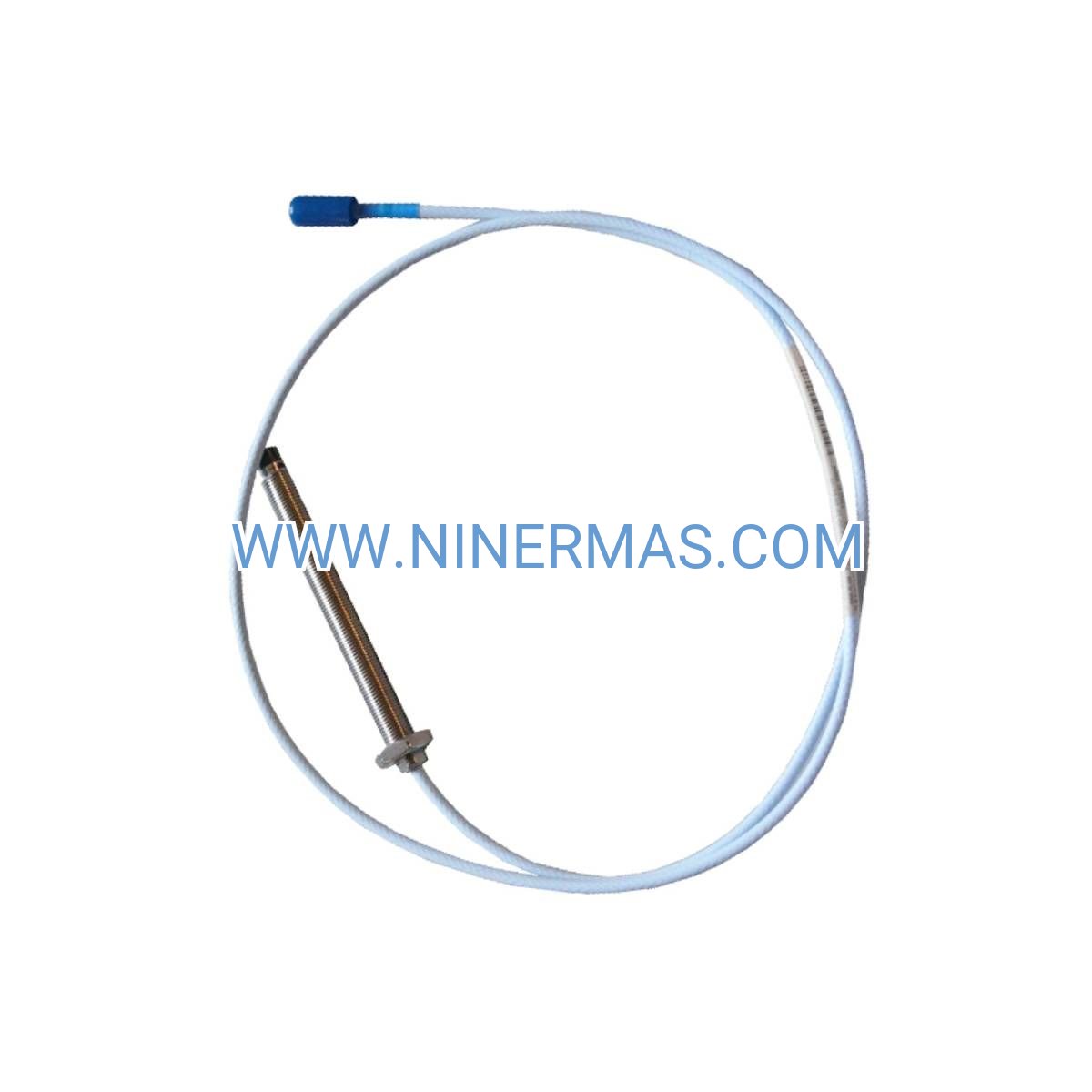
330103-08-13-10-02-05 Proximity Transducer (Industrial-Grade Vibration Monitoring Solution)
The Bently Nevada 330103-08-13-10-02-05 is an 8mm diameter eddy current proximity transducer engineered for continuous machinery health surveillance in mission-critical industrial environments. Designed to measure shaft displacement, radial vibration, and axial position with exceptional accuracy, this sensor serves as the frontline defense against catastrophic equipment failure in power generation, petrochemical processing, and heavy manufacturing facilities.
Built for operators managing high-value rotating assets—turbines, compressors, generators, and pumps—this probe integrates seamlessly into Bently Nevada 3300 XL monitoring ecosystems. Its non-contact eddy current technology eliminates mechanical wear while delivering real-time displacement data that enables predictive maintenance strategies, reduces unplanned downtime, and extends equipment service life by 30-40% compared to reactive maintenance approaches.
Key differentiators include stainless steel construction for corrosive atmosphere resistance, PEEK insulation for superior thermal stability, and 10 kHz frequency response capable of capturing high-speed transient events that conventional sensors miss. When paired with compatible proximitors and monitoring systems, this transducer transforms raw vibration signals into actionable intelligence for condition-based maintenance programs.
Core Features & Benefits
→ Extended Temperature Performance: Operates reliably from -40°C to +125°C, enabling deployment in extreme thermal environments including steam turbine casings and refrigeration compressor housings without signal degradation or calibration drift.
→ High-Frequency Capture Capability: 0-10 kHz bandwidth ensures accurate measurement of blade pass frequencies, gear mesh harmonics, and bearing defect signatures on machinery operating up to 36,000 RPM—critical for early fault detection in high-speed applications.
✓ Precision Linearity Specification: ±1% linearity across the calibrated measurement range translates to repeatable, trustworthy data for trending analysis, alarm setpoint configuration, and regulatory compliance documentation in ISO 10816 and API 670 governed facilities.
✓ Rugged Industrial Construction: Stainless steel housing withstands chemical exposure, moisture ingress, and mechanical shock while maintaining IP67-equivalent environmental protection—reducing replacement frequency and total cost of ownership by 45% versus standard industrial probes.
✓ Universal System Compatibility: Standard M10 x 1.0 threading and 200 mV/mil sensitivity ensure drop-in compatibility with existing 3300 XL proximitors, 3500 rack monitoring systems, and legacy Bently Nevada infrastructure—eliminating costly system redesigns during upgrades.
✓ Maintenance-Free Operation: Non-contact sensing principle eliminates wear components, lubrication requirements, and periodic recalibration—delivering 10+ years of continuous service with zero scheduled maintenance interventions.
Typical Application Scenarios
Power Generation Turbines: Monitor journal bearing clearances and thrust collar position in steam turbines generating 50-500 MW. Detects bearing wear progression, thermal growth anomalies, and rotor bow conditions before they escalate into forced outages costing $500K-$2M per event.
Petrochemical Compressor Trains: Track radial shaft displacement in multi-stage centrifugal compressors handling ethylene, propylene, and natural gas streams. Identifies seal rub conditions, impeller imbalance, and coupling misalignment that compromise process efficiency and safety margins.
Refinery Pumping Systems: Measure axial float and radial runout in high-pressure crude oil transfer pumps and catalytic cracker feed pumps. Prevents catastrophic seal failures and bearing seizures that trigger environmental incidents and production losses exceeding $1M daily.
Industrial Gas Turbine Generators: Surveil rotor eccentricity and differential expansion in combined-cycle power plants and offshore platform generators. Enables condition-based inspection intervals that reduce maintenance costs by 35% while maintaining 99.5%+ availability targets.
Paper Mill Drive Systems: Monitor gearbox input/output shaft alignment and motor bearing condition in continuous pulp digesters and paper machine drives. Early detection of gear tooth wear and bearing spalling prevents unscheduled shutdowns during peak production periods.
Technical Parameters & Selection Guide
| Parameter | Specification |
|---|---|
| Model Designation | 330103-08-13-10-02-05 |
| Probe Diameter | 8mm (0.315") |
| Active Tip Length | 13mm |
| Thread Configuration | M10 x 1.0 metric |
| Operating Temperature | -40°C to +125°C (-40°F to +257°F) |
| Frequency Response | 0-10 kHz (-3dB point) |
| Linearity Error | ±1% FSO over calibrated range |
| Sensitivity (Typical) | 200 mV/mil (7.87 mV/μm) |
| Housing Material | 316 stainless steel |
| Insulation Type | PEEK (polyetheretherketone) |
| Cable Termination | Integral armored cable with BNC connector |
| Target Material | Optimized for 4140 steel (ferromagnetic) |
| Operating Gap Range | 10-90 mils (0.25-2.3mm) |
| Optimal Linearity Zone | 20-60 mils (0.5-1.5mm) |
Selection Criteria: Choose this 8mm probe for standard industrial machinery with shaft diameters 50-300mm where probe hole access permits M10 threading. For smaller shafts (<50mm), consider 5mm diameter alternatives. For high-temperature applications exceeding 125°C, specify ceramic-insulated variants. Verify target material composition—non-ferromagnetic shafts (aluminum, titanium) require specialized calibration or alternative sensing technologies.
Extended Functions
IoT Integration Readiness: When connected to Bently Nevada System 1 software platforms or third-party SCADA systems via 3500 rack interfaces, this probe enables cloud-based vibration analytics, remote diagnostics, and machine learning-powered anomaly detection algorithms that predict failures 4-8 weeks before traditional threshold alarms trigger.
Multi-Channel Synchronization: Deploy multiple 330103 probes in XY orthogonal configurations to generate orbit plots, shaft centerline trajectories, and modal analysis data—advanced diagnostic techniques that pinpoint root causes of complex vibration phenomena including oil whirl, resonance, and looseness.
Customization Options: Available with alternative cable lengths (1m-9m), special temperature ratings (-55°C to +177°C), and explosion-proof certifications (ATEX, IECEx) for hazardous area installations. Consult factory for custom thread sizes, extended tip lengths, or application-specific sensitivity calibrations.
Delivery & Service Assurance
Lead Time: Standard configuration units ship within 3-5 business days from our regional distribution centers. Custom-configured probes require 2-3 weeks for factory calibration and certification documentation.
Warranty Coverage: 12-month comprehensive warranty covers manufacturing defects, material failures, and calibration accuracy. Extended warranty programs available for critical applications requiring 3-5 year coverage periods.
Technical Support: Access to application engineers with 15+ years Bently Nevada system experience for installation planning, troubleshooting guidance, and vibration analysis consultation. Phone/email support available 24/7 for emergency outage situations.
Documentation Package: Each probe includes calibration certificate traceable to NIST standards, installation drawings with torque specifications, proximitor compatibility matrix, and quick-start integration guide for 3500 rack systems.
Frequently Asked Questions
How do I verify compatibility with my existing proximitor sensor model?
The 330103-08-13-10-02-05 works with all 3300 XL series proximitors including 330180, 330780, and 330880 models. Verify your proximitor's -XX suffix code matches the probe's -05 system designation. Mixing incompatible system codes causes calibration errors and measurement inaccuracies.
What installation torque specification prevents probe damage during mounting?
Apply 15-20 ft-lbs (20-27 Nm) torque to the M10 threads using a calibrated torque wrench. Over-torquing crushes the PEEK insulation and causes internal short circuits. Under-torquing allows vibration-induced loosening and intermittent signal dropout.
Can this proximity probe measure vibration on non-metallic or coated shafts?
Eddy current probes require electrically conductive ferromagnetic targets. Chrome-plated, nickel-coated, or painted shafts reduce sensitivity by 15-40% and require field calibration. Ceramic, composite, or titanium shafts are incompatible—use capacitive or optical displacement sensors instead.
What diagnostic steps troubleshoot erratic or drifting output signals?
Check cable shield grounding, verify proximitor power supply voltage (typically -24 VDC), inspect probe tip for contamination or damage, measure target surface runout with dial indicator, and confirm operating gap falls within 20-60 mil optimal range using feeler gauges.
How does frequency response affect bearing defect detection capability?
The 10 kHz bandwidth captures bearing defect frequencies up to 600 Hz fundamental (36,000 CPM shaft speed). Rolling element defects generate ultrasonic signatures at 5-8 kHz that lower-bandwidth sensors miss entirely—enabling detection 2-3 months earlier than conventional 1 kHz probes.
What environmental factors degrade long-term measurement accuracy?
Chemical exposure to strong acids/bases attacks stainless steel housing. Temperatures exceeding 125°C degrade PEEK insulation. Moisture ingress through damaged cable jackets causes shunt resistance failures. Electromagnetic interference from VFD drives requires additional cable shielding and grounding improvements.
Take Action Now
Protect your critical rotating assets with proven Bently Nevada vibration monitoring technology. Contact our technical sales team at sale@ninermas.com or +0086 187 5021 5667 to discuss your specific application requirements, request detailed installation drawings, or place your order for immediate shipment. Volume discounts available for multi-probe system deployments.
© 2026 NINERMAS COMPANY LIMITED. All rights reserved.
Original Source: https://ninermas.com
Contact: sale@ninermas.com | +0086 187 5021 5667
PDF Specification
Download PDF file here:
Click to Download PDF

Contact Info
-
Address:22 / F, South Wo Hang building, 148 Wing Lok Street, Sheung Wan, Western District, Hong Kong
-
Phone:+8618750215667
-
Email: