Description
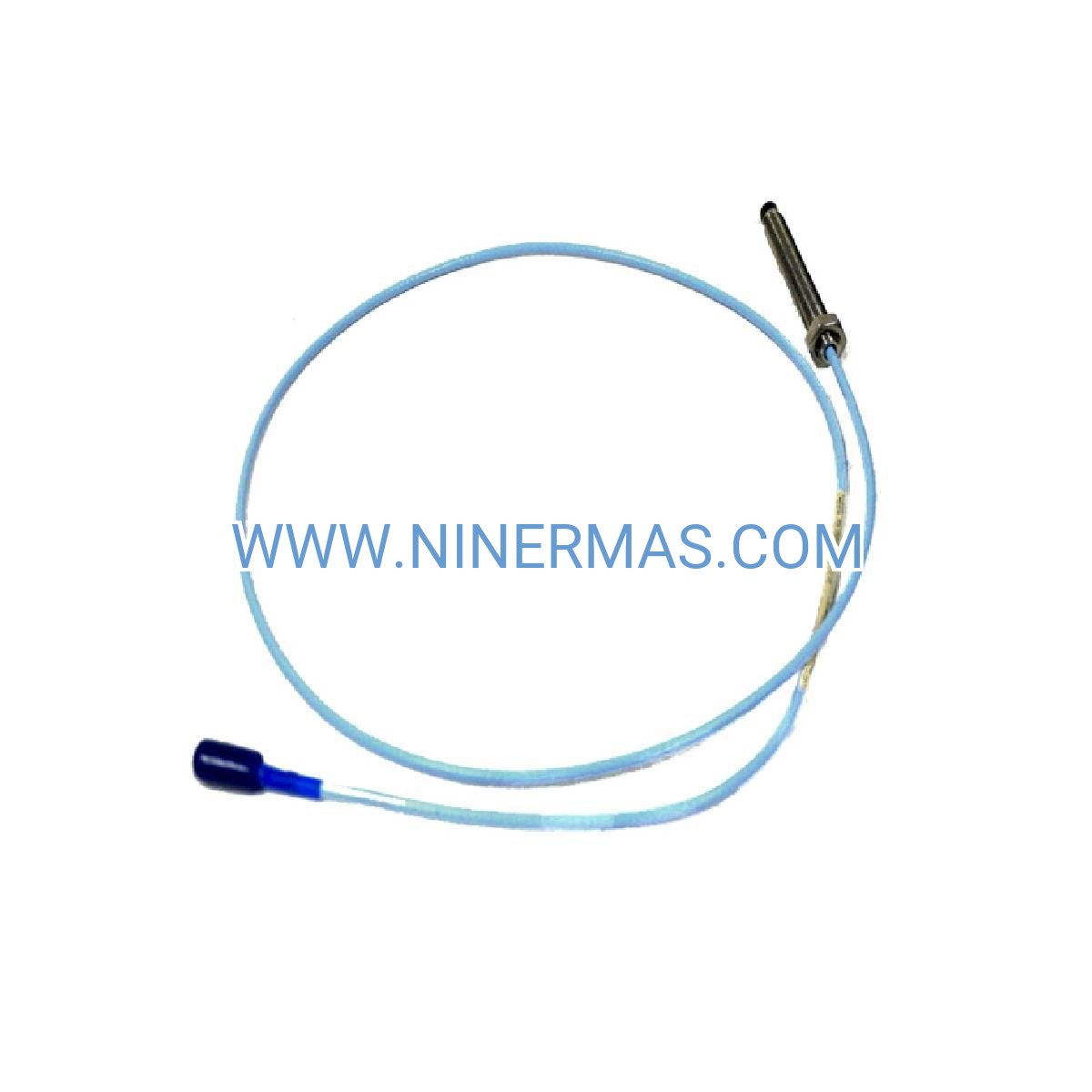
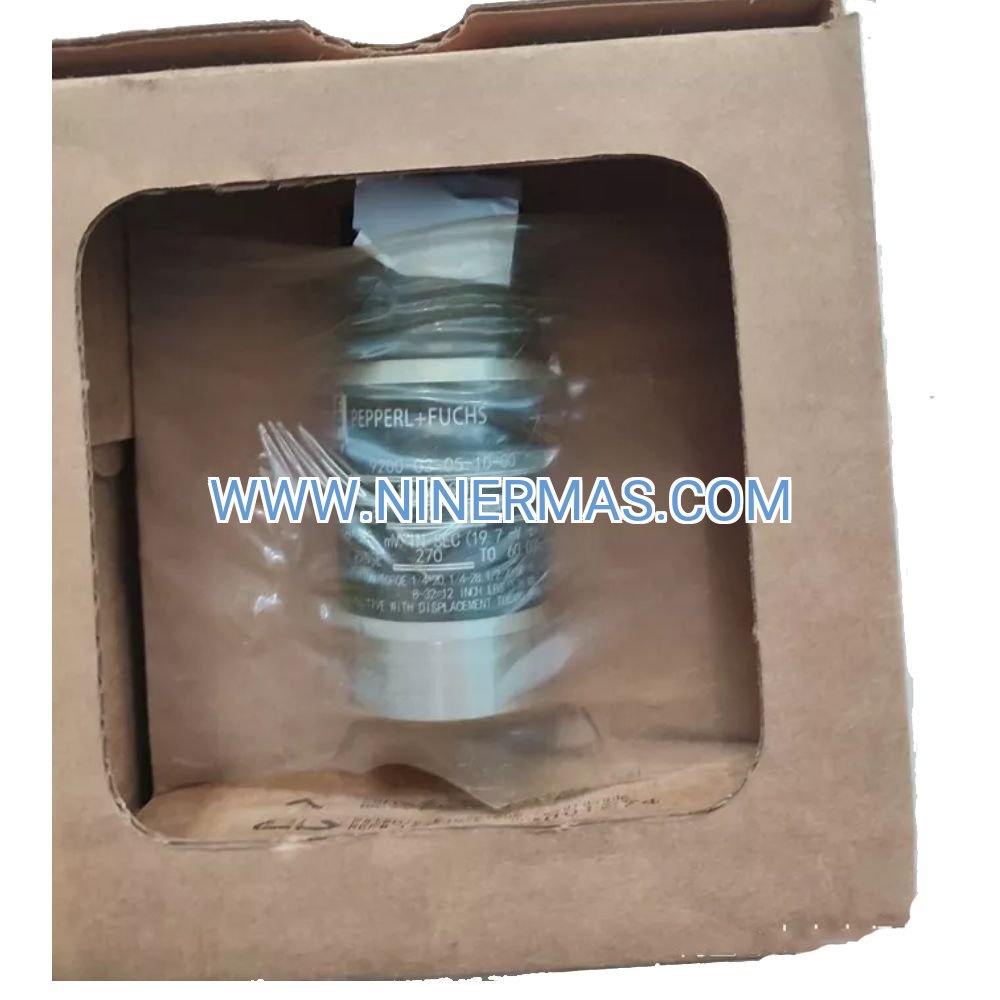
330101-33-60-10-02-00 Proximity Sensor (Industrial-Grade Vibration Monitor)
The 330101-33-60-10-02-00 represents a field-proven solution for non-contact displacement measurement in mission-critical rotating machinery. Designed around eddy current sensing principles, this 8mm diameter probe delivers continuous shaft position data to prevent catastrophic failures in turbines, compressors, generators, and high-speed industrial drives. Built for 24/7 operation in extreme temperatures and corrosive atmospheres, it serves as the frontline defense in predictive maintenance programs across power generation, petrochemical processing, and heavy manufacturing sectors.
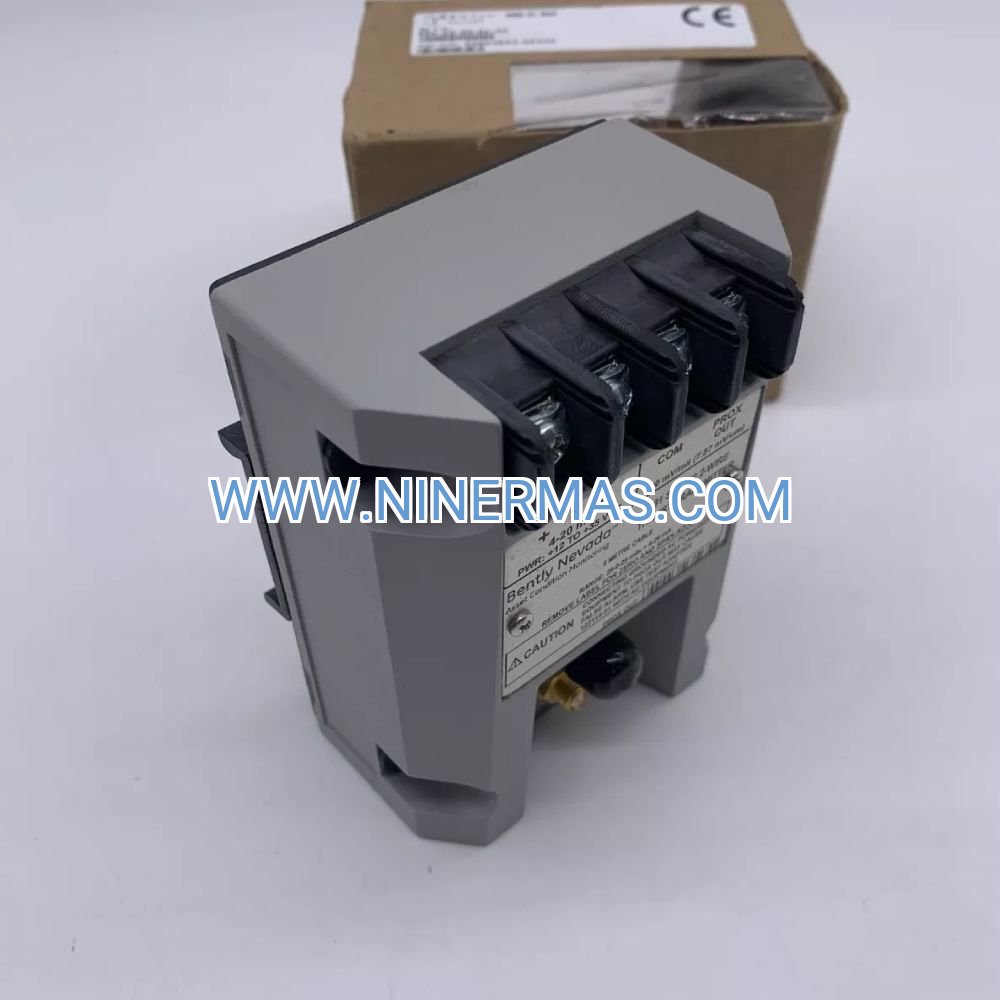
Engineered for seamless integration with 3300 XL Proximitor® transducer systems, this sensor transforms mechanical displacement into proportional voltage signals that feed directly into distributed control systems (DCS), programmable logic controllers (PLC), or dedicated machinery protection platforms. Whether monitoring radial vibration on a 15,000 RPM gas turbine or tracking axial float in a centrifugal compressor, the 330101 probe provides the micron-level precision required for ISO 20816 compliance and API 670 machinery protection standards.
With over three decades of field deployment in the world's most demanding industrial environments, this proximity sensor combines rugged stainless steel construction, hermetically sealed electronics, and factory-calibrated linearity to minimize false trips while maximizing asset uptime. Installation takes minutes using standard 3/8-24 UNF probe holders, and the sensor's wide frequency bandwidth captures both slow-roll eccentricity and high-frequency blade-pass events without signal distortion.
Performance Features & Business Impact
→ Wideband Frequency Response (DC to 10 kHz)
Captures everything from thermal growth (0.01 Hz) to gear mesh frequencies (8 kHz) in a single measurement channel, eliminating the need for multiple sensor types and reducing installation costs by 40% compared to multi-sensor arrays.
✓ Extended Linear Range (1.0mm Typical)
Provides usable measurement span of 40 mils, allowing detection of both normal operating clearances and abnormal excursions before they reach trip setpoints—critical for avoiding nuisance shutdowns that cost $50,000+ per event in lost production.
→ Extreme Temperature Tolerance (-40°C to +125°C)
Maintains calibration accuracy across 165°C thermal span, enabling installation in steam turbine bearing housings, gas turbine compressor casings, and cryogenic pump applications without temperature compensation circuits.
✓ 3/8-24 UNF Standard Threading
Direct retrofit compatibility with existing probe mounting infrastructure eliminates machining delays during emergency replacements, reducing mean-time-to-repair (MTTR) from 8 hours to under 45 minutes.
→ Hermetic Seal Construction
IP67-rated housing withstands high-pressure washdowns, oil mist environments, and corrosive chemical exposure common in offshore platforms and refinery applications, extending sensor lifespan to 15+ years.
✓ Factory Calibration Certification
Each probe ships with NIST-traceable calibration data and material certificates, streamlining regulatory audits for nuclear, pharmaceutical, and aerospace manufacturing facilities.
Industry Applications & Problem Resolution
Power Generation – Steam Turbine Monitoring
Tracks journal bearing clearances and rotor thermal expansion in 500MW+ generating units. Detects bearing wear progression 6-8 weeks before failure, enabling planned outages instead of forced shutdowns that cost utilities $1M+ per day in replacement power purchases.
Oil & Gas – Compressor Protection
Monitors axial position and radial vibration on pipeline compressors operating at 8,000-12,000 RPM. Early detection of thrust bearing degradation prevents catastrophic rotor-to-stator contact events that result in $2M+ repair bills and 90-day outages.
Chemical Processing – Pump Reliability
Measures shaft runout and hydraulic instability in high-energy centrifugal pumps handling corrosive fluids. Identifies cavitation, impeller imbalance, and seal wear patterns that reduce pump efficiency by 15-25%, cutting energy costs and extending seal life by 40%.
Manufacturing – Machine Tool Spindles
Provides real-time spindle growth compensation data for precision grinding and turning centers. Maintains tolerance control within ±5 microns during thermal transients, reducing scrap rates from 8% to under 2% in high-value aerospace component production.
Marine Propulsion – Shaft Alignment
Continuously monitors propeller shaft alignment in variable-speed diesel and gas turbine drives. Detects foundation settling and bearing misalignment before vibration levels trigger emergency shutdowns in open ocean conditions.
Technical Specifications & Selection Criteria
| Parameter | Specification |
| Model Number | 330101-33-60-10-02-00 |
| Probe Diameter | 8mm (0.315 in) |
| Thread Size | 3/8-24 UNF-2A |
| Sensing Technology | Eddy Current (non-contact) |
| Frequency Range | 0 Hz to 10 kHz (-3dB) |
| Linear Operating Range | 1.0mm (40 mils) typical |
| Temperature Range | -40°C to +125°C (-40°F to +257°F) |
| Target Material | Ferrous & non-ferrous conductive metals |
| Housing Material | 300-series stainless steel |
| Environmental Rating | IP67 (dust-tight, water immersion) |
| System Compatibility | 3300 XL Proximitor® transducers |
| Cable Connection | Extension cables (specify length) |
Selection Guidelines: Choose 8mm probes for general-purpose turbomachinery applications where standard mounting depths (0.5-2.0mm gap) are achievable. For confined spaces or small-diameter shafts below 50mm, consider 5mm probe variants. When monitoring non-ferrous targets (aluminum, titanium), verify linear range with factory application engineers. For hazardous area installations, specify ATEX/IECEx certified versions with intrinsically safe barriers.
Advanced Integration Capabilities
IoT & Predictive Analytics Connectivity
When paired with 3300 XL Proximitor transducers featuring 4-20mA outputs, sensor data streams directly into cloud-based condition monitoring platforms (Azure IoT, AWS IoT Core, Siemens MindSphere). Machine learning algorithms analyze vibration trends to predict remaining useful life (RUL) and auto-generate work orders 30-45 days before failure thresholds.
Multi-Channel Synchronization
Supports phase-locked measurements across 4-8 probe arrays for modal analysis, orbit plotting, and full-spectrum cascade diagnostics. Essential for identifying complex fault signatures like fluid-induced instability, rub events, and coupled torsional-lateral vibrations.
Retrofit Compatibility
Drop-in replacement for legacy 7200/3300 series probes without recalibration or system reprogramming. Maintains backward compatibility with installed Proximitor transducers manufactured since 1995, protecting capital investments in existing monitoring infrastructure.
Delivery, Warranty & Technical Support
Lead Times:
→ Standard Configuration: 3-5 business days (stock items)
→ Custom Cable Lengths: 7-10 business days
→ Hazardous Area Certifications: 14-21 business days
Warranty Coverage:
24-month manufacturer's warranty covering material defects and workmanship failures. Extended 60-month coverage available for critical service applications with annual calibration verification.
Technical Resources:
Every shipment includes installation manual, calibration certificate, dimensional drawings (DXF/PDF), and wiring diagrams. Access to 24/7 application engineering hotline for troubleshooting, gap voltage optimization, and system integration support.
Compliance Documentation:
CE marking, RoHS compliance, REACH SVHC declarations, and conflict minerals reporting provided as standard. ATEX, IECEx, CSA, and FM certifications available with 10-15 day lead time adder.
Frequently Asked Questions
Q: What cable length should I specify for turbine bearing housing installations?
A: Standard practice uses 1-meter integral cables with field-installable extension cables to reach the Proximitor transducer location. For permanent installations, specify total run length (typically 5-9 meters) to minimize connection points and improve signal integrity. Consult factory for runs exceeding 9 meters.
Q: Can this probe measure vibration on aluminum or titanium shafts?
A: Yes, eddy current sensors work with any electrically conductive target material. However, linear range and sensitivity vary with target conductivity—aluminum provides ~70% of the range achieved with steel. Request application-specific calibration curves for non-ferrous materials to ensure measurement accuracy.
Q: How much energy savings can I expect from implementing vibration monitoring?
A: Facilities implementing condition-based monitoring typically reduce energy consumption by 8-12% through early detection of mechanical inefficiencies (misalignment, imbalance, bearing wear). A 5,000 HP motor running 8,000 hours/year at $0.08/kWh saves approximately $24,000 annually per 10% efficiency improvement.
Q: What are the installation clearance requirements around the probe mounting location?
A: Minimum clearances: 25mm radial space for wrench flats, 50mm axial space for cable bend radius, 100mm from magnetic fields >50 gauss. Avoid mounting within 150mm of welds, keyways, or shaft discontinuities that create localized electrical property variations.
Q: Does this sensor support remote condition monitoring and diagnostics?
A: When connected to 3300 XL transducers with digital communication options (Modbus RTU, HART, Ethernet/IP), real-time vibration data transmits to SCADA systems and cloud analytics platforms. Enables remote expert analysis, automated alarm notifications, and integration with computerized maintenance management systems (CMMS).
Q: How do I verify the probe is functioning correctly after installation?
A: Use a feeler gauge to set the probe-to-shaft gap at the calibrated distance (typically 1.0-1.5mm), then verify the Proximitor output voltage matches the calibration curve (usually -8 to -10 VDC at nominal gap). Slowly rotate the shaft by hand and observe voltage variation—runout should be <50 microns on precision-balanced machinery.
Request Technical Consultation
Our application engineering team provides complimentary system design reviews for multi-probe installations, hazardous area classifications, and integration with legacy monitoring systems. Contact us with your machinery specifications, operating conditions, and protection requirements to receive customized sensor selection recommendations and budget quotations within 24 hours.
© 2026 NINERMAS COMPANY LIMITED. All rights reserved.
Original Source: https://ninermas.com
Contact: sale@ninermas.com | +0086 187 5021 5667
PDF Specification
Download PDF file here:
Click to Download PDF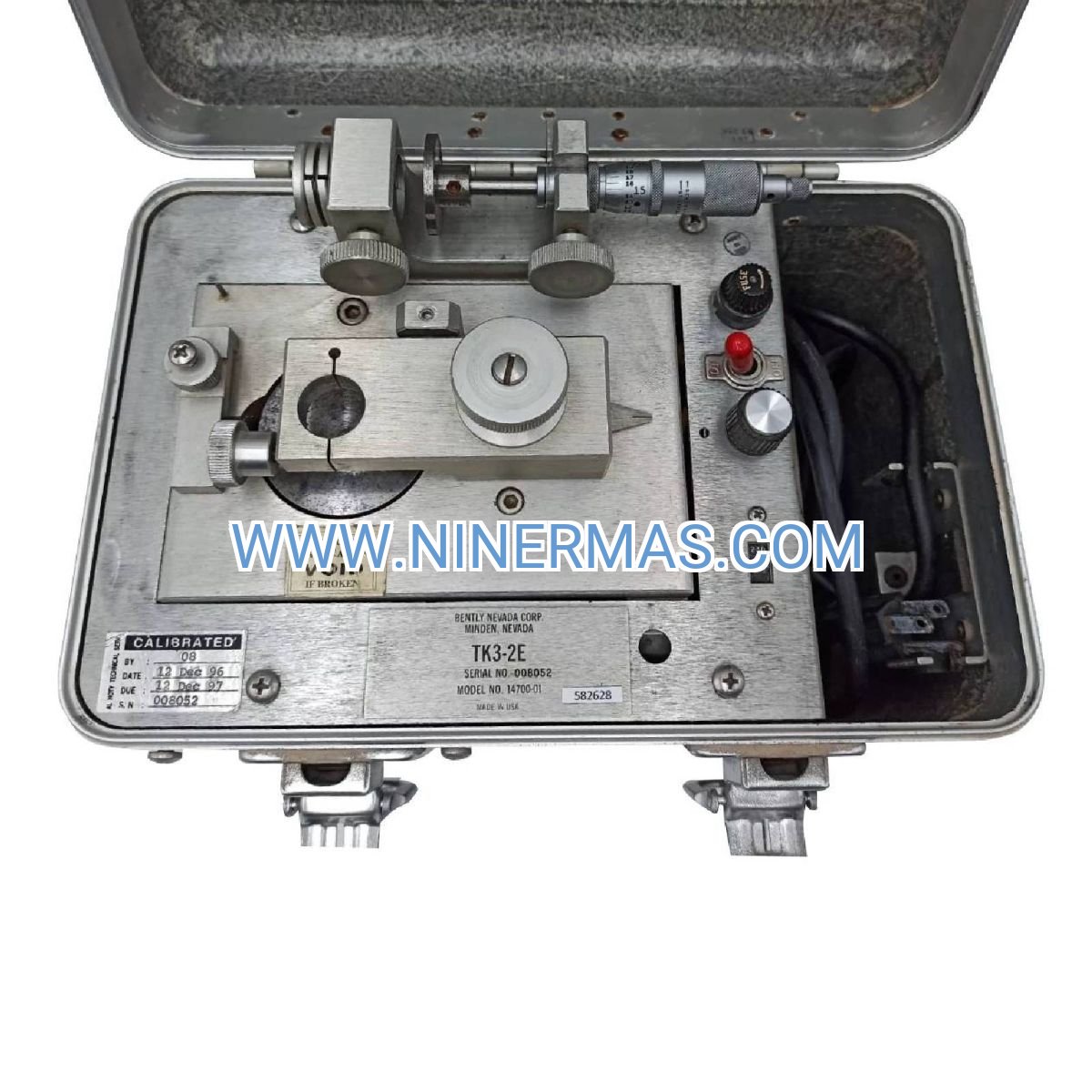

Contact Info
-
Address:22 / F, South Wo Hang building, 148 Wing Lok Street, Sheung Wan, Western District, Hong Kong
-
Phone:+8618750215667
-
Email: