


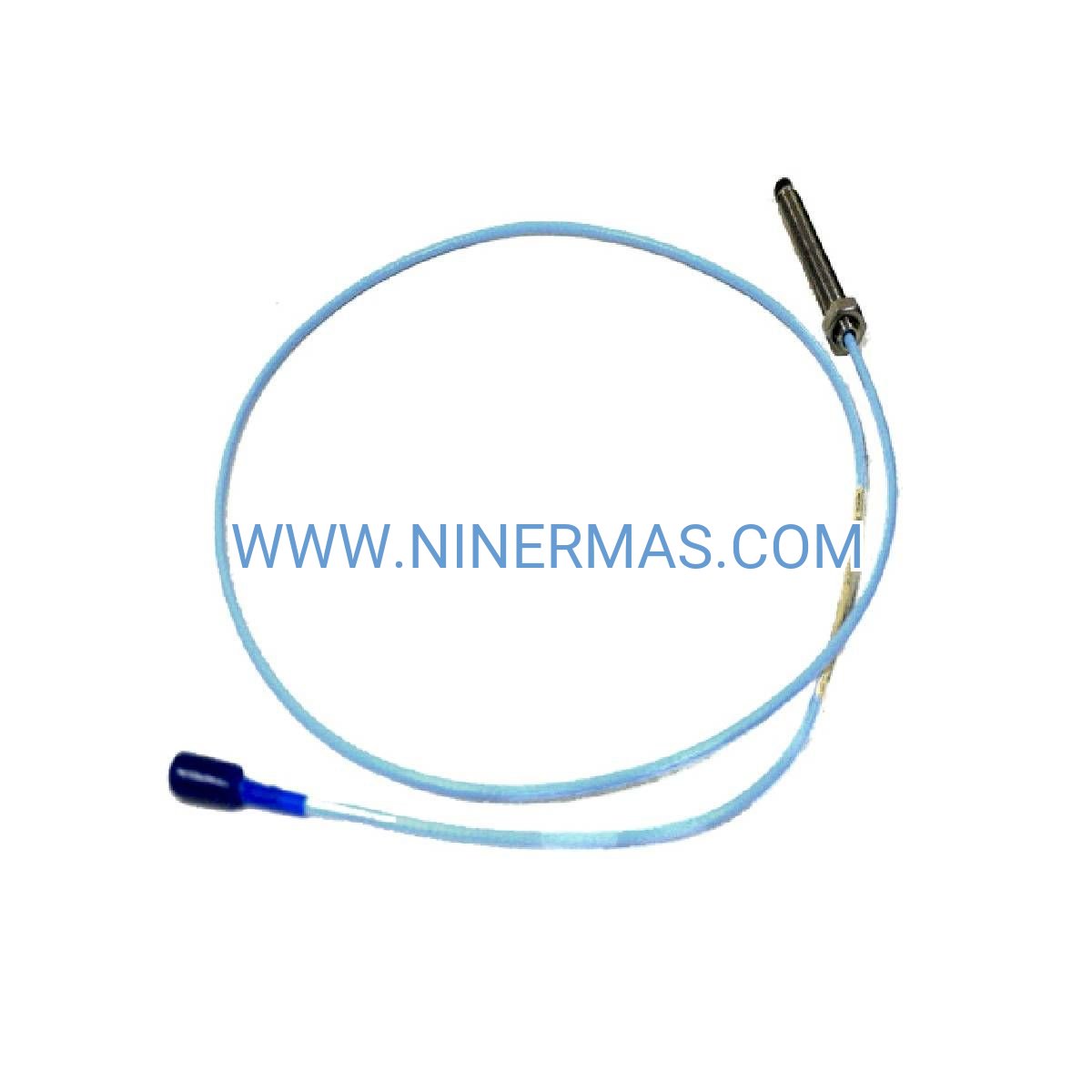
Description
Industrial-Grade Overspeed Monitor for Critical Turbomachinery
The Bently Nevada 3300/53-03-02-00-30-20-00-00-00 represents a mission-critical safety instrument engineered to prevent catastrophic overspeed failures in rotating equipment. Designed for power generation facilities, petrochemical plants, and heavy industrial operations, this dual-channel monitoring system delivers fail-safe protection through redundant measurement architecture and API 670-compliant trip logic.
Built for environments where equipment downtime translates to millions in lost revenue, this overspeed protection monitor combines precision speed measurement with instantaneous shutdown capability. Plant engineers and reliability managers trust the 3300/53 series to safeguard steam turbines, gas compressors, and high-speed rotating machinery against runaway conditions that could destroy bearings, shafts, and connected equipment within seconds.
With factory calibration traceable to NIST standards, SIL 2 safety integrity certification, and proven performance in thousands of installations worldwide, this system serves as the last line of defense when primary control systems fail. The modular design integrates seamlessly into existing Bently Nevada monitoring infrastructure while supporting standalone emergency shutdown applications.
Core Features & Benefits
→ Redundant Dual-Channel Architecture
Two independent measurement channels operate simultaneously with 1oo2 voting logic, ensuring protection remains active even if one channel fails. This redundancy eliminates single-point vulnerabilities while reducing false trips that disrupt production schedules and revenue streams.
→ Ultra-Fast 50-Millisecond Trip Response
From the moment rotational speed exceeds the configured setpoint, relay contacts actuate within 50ms to initiate emergency shutdown sequences. This rapid response prevents mechanical damage progression, protecting turbine blades, thrust bearings, and coupled equipment from destructive centrifugal forces.
→ Wide-Range Speed Measurement (100-100,000 RPM)
Field-configurable speed range accommodates diverse machinery types—from slow-speed reciprocating compressors to ultra-high-speed centrifugal equipment. Single hardware platform serves multiple applications, reducing spare parts inventory and maintenance training requirements.
→ API 670 Fifth Edition Compliance
Fully certified to meet petroleum and natural gas industry standards for machinery protection systems. Compliance documentation includes factory test reports, calibration certificates, and conformity declarations required for regulatory audits and insurance certifications.
✓ Field-Programmable Setpoints & Time Delays
Adjust trip thresholds, alarm levels, and time delays through front-panel controls without hardware modifications. Flexibility supports seasonal operating condition changes, fuel switching scenarios, and process optimization initiatives without system downtime.
✓ Environmental Hardening (-30°C to +65°C)
Operates reliably in extreme ambient conditions found in outdoor installations, desert climates, and arctic environments. Conformal-coated circuit boards resist moisture, salt spray, and chemical vapors common in offshore platforms and coastal facilities.
Typical Application Scenarios
Steam Turbine Overspeed Protection in Combined-Cycle Power Plants
During grid disturbances or sudden load rejection events, steam turbines can accelerate beyond design limits within 2-3 seconds. The 3300/53 provides independent backup protection when electronic governors fail, preventing turbine blade liberation and catastrophic equipment destruction. Installation reduces insurance premiums and satisfies NERC reliability standards.
Gas Compressor Train Monitoring in LNG Facilities
Multi-stage centrifugal compressors handling flammable refrigerants require fail-safe overspeed detection to prevent seal failures and gas releases. Dual-channel monitoring ensures continuous protection during maintenance activities, with one channel remaining active while the other undergoes calibration verification.
Emergency Generator Overspeed Shutdown
Diesel and gas engine-driven generators in hospitals, data centers, and critical infrastructure facilities need reliable overspeed protection to prevent engine destruction during automatic start sequences. The 3300/53 integrates with engine control systems to provide independent safety layer per IEC 61508 functional safety requirements.
Turboexpander Protection in Cryogenic Processing
High-speed turboexpanders operating at 15,000-40,000 RPM in natural gas processing and air separation plants face rapid acceleration risks during process upsets. Precision speed monitoring with configurable trip delays prevents nuisance shutdowns while ensuring protection against genuine overspeed conditions.
Pump Overspeed Detection in Pipeline Booster Stations
Centrifugal pumps in crude oil and refined product pipelines can experience dangerous speed increases during valve closure transients. The system monitors pump shaft speed continuously, initiating controlled shutdown sequences that prevent impeller damage and seal failures.
Technical Parameters & Selection Guide
| Parameter | Specification | Selection Notes |
|---|---|---|
| Model Code | 3300/53-03-02-00-30-20-00-00-00 | Factory-configured to order |
| Input Compatibility | Proximity probe, magnetic pickup, optical sensor | Specify sensor type during ordering |
| Speed Measurement Range | 100 to 100,000 RPM (configurable) | Set range to 2× normal operating speed |
| Accuracy | ±0.1% of full scale | Includes sensor and cable errors |
| Trip Output | Form C relay contacts, 5A @ 250VAC | Suitable for direct solenoid valve control |
| Alarm Output | 4-20mA analog, Modbus RTU/TCP | Integrates with DCS and SCADA systems |
| Power Requirements | 18-30 VDC or 100-240 VAC | Specify voltage during configuration |
| Safety Certification | IEC 61508 SIL 2, API 670 5th Ed | Meets global safety standards |
| Environmental Rating | IP65 enclosure, -30°C to +65°C | Suitable for outdoor installations |
| Mounting Options | DIN rail, panel mount, 19" rack | Choose based on installation location |
Selection Criteria: When specifying the 3300/53 overspeed monitor, consider maximum expected speed during transient conditions (typically 110-120% of rated speed), required trip response time based on machinery inertia, and integration requirements with existing control systems. For applications requiring SIL 3 certification, configure two 3300/53 units in redundant architecture with independent sensors and trip logic.
Extended Functions
Remote Diagnostics & Predictive Maintenance
Optional communication modules enable real-time data streaming to condition monitoring platforms. Trend analysis identifies sensor degradation, wiring issues, and calibration drift before they compromise protection system integrity. Integration with Bently Nevada System 1 software provides fleet-wide visibility across multiple facilities.
Multi-Speed Setpoint Programming
Advanced models support up to four independent speed setpoints with individual time delays and hysteresis bands. This capability accommodates machinery with multiple operating modes—startup, normal operation, and emergency run-back conditions—without manual reconfiguration.
Customization for Specialized Applications
Factory engineering services available for non-standard sensor interfaces, exotic environmental conditions, and integration with legacy control systems. Custom firmware modifications support unique voting logic requirements and specialized alarm sequencing for complex machinery trains.
Delivery & Service Assurance
Standard Lead Time: 3-5 business days for stock configurations; 4-6 weeks for factory-customized units with special sensor interfaces or communication protocols.
Warranty Coverage: Comprehensive 12-month manufacturer warranty covering materials, workmanship, and calibration accuracy. Extended warranty programs available for critical applications requiring guaranteed uptime.
Technical Support: Lifetime access to application engineering team for configuration assistance, troubleshooting guidance, and system optimization recommendations. Phone and email support available during business hours; emergency support for critical failures.
Documentation Package: Each system ships with calibration certificate, test reports, wiring diagrams, configuration worksheets, and quick-start guide. Comprehensive operation and maintenance manual available in PDF format with searchable troubleshooting index.
Frequently Asked Questions
How does the dual-channel architecture prevent false trips during sensor maintenance?
The 1oo2 voting logic requires both channels to detect overspeed before initiating a trip. During planned sensor replacement or calibration, one channel can be bypassed while the other maintains full protection capability, eliminating forced outages for routine maintenance activities.
What sensor types are compatible with the 3300/53 overspeed monitor?
The system accepts inputs from Bently Nevada proximity probes (3300 XL and 3500 series), passive magnetic pickups, and active Hall-effect sensors. Sensor selection depends on shaft material, available mounting locations, and required measurement accuracy. Consult factory for sensor compatibility verification.
Can this monitor integrate with existing PLC-based safety systems?
Yes, the 3300/53 provides both hardwired relay outputs for direct trip logic and analog/digital communication for PLC integration. The system can function as a standalone safety device or as an input to higher-level safety instrumented systems (SIS) compliant with IEC 61511 standards.
What is the typical calibration interval for maintaining API 670 compliance?
API 670 recommends annual functional testing and calibration verification. However, actual intervals depend on operating environment severity and regulatory requirements. The 3300/53 includes self-diagnostic features that continuously monitor measurement accuracy and alert operators to calibration drift.
Does the system support remote setpoint adjustment for seasonal operating changes?
Standard models require local access for setpoint changes to maintain safety integrity. Optional secure communication modules enable remote adjustment with password protection and audit logging, suitable for facilities with centralized control rooms and documented change management procedures.
How does this compare to newer digital overspeed protection systems?
While digital systems offer enhanced diagnostics and communication, the 3300/53 analog architecture provides proven reliability with 30+ years of field experience. Many operators prefer analog systems for critical safety applications due to simpler failure mode analysis and independence from software vulnerabilities.
Take the Next Step
Protect your critical rotating equipment with proven overspeed monitoring technology trusted by thousands of facilities worldwide. Contact our application engineering team to discuss your specific machinery protection requirements, receive detailed technical specifications, and obtain project pricing for single-unit or fleet-wide installations.
Request a quote today: Our team will respond within 4 business hours with availability confirmation, lead time estimates, and application-specific configuration recommendations.
© 2026 NINERMAS COMPANY LIMITED. All rights reserved.
Original Source: https://ninermas.com
Contact: sale@ninermas.com | +0086 187 5021 5667

Contact Info
-
Address:22 / F, South Wo Hang building, 148 Wing Lok Street, Sheung Wan, Western District, Hong Kong
-
Phone:+8618750215667
-
Email:
