


Description
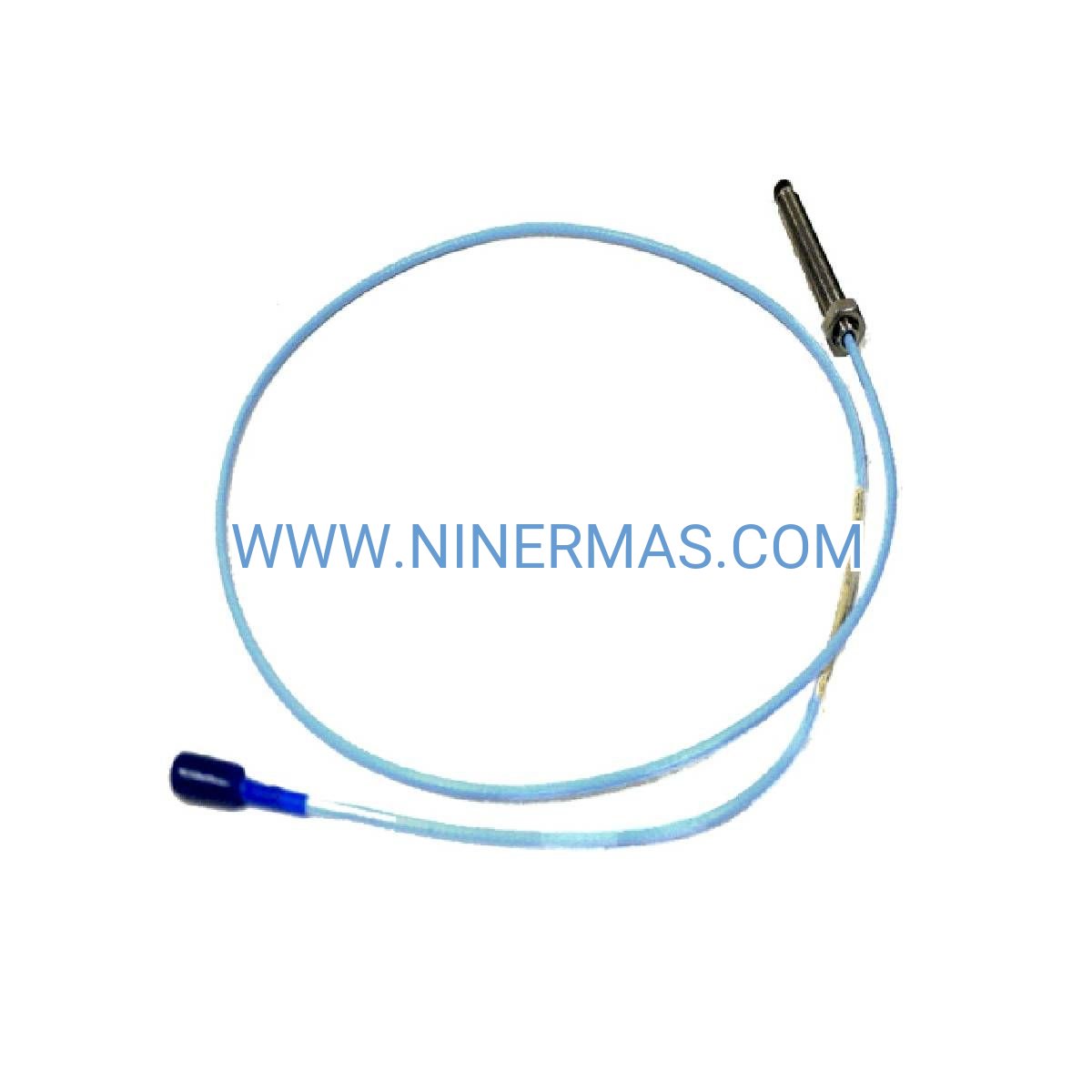
Industrial RTD Temperature Monitor (Model 3300/35-03-01-00-00)
The Bently Nevada 3300/35-03-01-00-00 represents a professional-grade thermal surveillance solution engineered for mission-critical rotating equipment. This six-channel RTD monitoring system delivers real-time temperature intelligence across bearing assemblies, process fluids, and mechanical components—enabling predictive maintenance strategies that prevent unplanned downtime in turbines, compressors, and high-value industrial machinery.
Designed for facilities where thermal anomalies signal impending failures, this monitor serves process engineers, reliability teams, and plant operators managing assets in power generation, oil & gas processing, chemical manufacturing, and heavy industry. By detecting temperature deviations before they escalate into catastrophic events, the 3300/35 protects capital equipment investments while maintaining operational continuity.
Core advantages include universal RTD compatibility (2/3/4-wire configurations), independent channel processing to eliminate cross-contamination, dual-threshold alarming for staged response protocols, and seamless integration with existing 3300 Series infrastructure—all backed by NIST-traceable calibration and comprehensive technical documentation.
Performance Features & Technical Value
→ Six Independent RTD Channels
Simultaneous monitoring of multiple measurement points with isolated signal processing prevents interference between channels, ensuring accurate readings even when one sensor experiences fault conditions.
→ Universal Sensor Compatibility
Accepts Pt100 and Pt1000 RTDs in 2-wire, 3-wire, or 4-wire configurations, eliminating the need for multiple monitor types and simplifying spare parts inventory across diverse machinery installations.
→ Wide Temperature Measurement Range
Covers -200°C to +850°C (-328°F to +1562°F) with ±0.5°C accuracy, accommodating everything from cryogenic processes to high-temperature turbine applications within a single monitoring platform.
→ Rapid Thermal Response
Achieves 90% of step change within 2 seconds, providing early warning of thermal transients caused by lubrication loss, misalignment, or cooling system failures before damage propagates.
✓ Dual-Setpoint Alarm Architecture
Each channel features independent Alert and Danger relay outputs, enabling graduated shutdown sequences that comply with API 670 machinery protection standards and minimize production disruption.
✓ Integrated Fault Diagnostics
Automatic detection of open circuits, short circuits, and out-of-range conditions with dedicated fault signaling ensures maintenance teams address sensor issues before they compromise protection integrity.
Application Scenarios Across Industries
Power Generation Turbines
In steam and gas turbine installations, the monitor tracks journal bearing temperatures, thrust bearing metal temperatures, and seal housing conditions. When bearing temperatures exceed normal operating bands, the system triggers alarms that prevent bearing wipeout—a failure mode that can destroy rotors valued at millions of dollars. The dual-alarm structure allows operators to reduce load at the Alert threshold while initiating emergency shutdown only at the Danger level.
Petrochemical Compressor Trains
Centrifugal and reciprocating compressors in refinery and gas processing applications benefit from continuous monitoring of interstage temperatures, discharge gas temperatures, and bearing housing conditions. Early detection of temperature rise indicates seal degradation, fouling, or lubrication issues—conditions that, if unaddressed, lead to unplanned shutdowns costing $500K+ per day in lost production.
Critical Pump Systems
Boiler feed pumps, pipeline transfer pumps, and process circulation pumps operating in continuous-duty cycles require thermal surveillance to detect cavitation, seal leakage, and bearing wear. The 3300/35 identifies these conditions through temperature trend analysis, enabling condition-based maintenance that extends mean time between failures (MTBF) by 40-60%.
Large Motor & Generator Protection
Electric motors and generators exceeding 500HP generate significant heat in stator windings and bearing assemblies. The monitor's six channels simultaneously track winding temperatures (via embedded RTDs), bearing housing temperatures, and cooling system fluid temperatures—providing comprehensive thermal protection that prevents insulation breakdown and bearing seizure.
Industrial Gearbox Monitoring
High-speed gearboxes in mining, cement, and steel production environments experience thermal stress from heavy loads and continuous operation. Monitoring oil sump temperatures, bearing temperatures, and gear mesh temperatures allows maintenance teams to optimize lubrication schedules and detect gear tooth wear before catastrophic failure occurs.
Technical Specifications & Selection Criteria
| Model Number | 3300/35-03-01-00-00 |
| Input Channels | 6 independent RTD inputs |
| RTD Types Supported | Pt100, Pt1000 (2-wire, 3-wire, 4-wire) |
| Measurement Range | -200°C to +850°C (-328°F to +1562°F) |
| Accuracy | ±0.5°C at 25°C ambient temperature |
| Response Time | <2 seconds to 90% of step change |
| Alarm Outputs | Dual relay contacts per channel (Alert/Danger) |
| Relay Rating | 5A @ 250VAC resistive load |
| Analog Outputs | 6 isolated 4-20mA current loops (one per channel) |
| Communication Protocol | Modbus RTU (RS-485) |
| Power Supply | 24VDC ±10%, 8W typical consumption |
| Operating Temperature | -30°C to +65°C ambient |
| Mounting | 3300 Series standard rack (requires backplane) |
| Cable Length (max) | 300 meters shielded twisted pair |
| Compliance Standards | API 670, CE, UL/cUL |
Selection Guidance: Choose this 6-channel model when monitoring 3-6 measurement points on a single machine or multiple machines in close proximity. For installations requiring more than 6 channels, consider the 3300/75 (32-channel) or deploy multiple 3300/35 modules in the same rack. Ensure your RTD sensors match the monitor's input specifications—3-wire or 4-wire RTDs are recommended for applications requiring ±0.5°C accuracy over cable runs exceeding 50 meters.
Advanced Integration Capabilities
The 3300/35 module integrates seamlessly into modern industrial control architectures through multiple communication pathways. Each channel provides an isolated 4-20mA output that scales linearly across the configured temperature range, enabling direct connection to DCS analog input cards, PLC modules, or chart recorders without signal conditioning.
For digital integration, the onboard Modbus RTU interface transmits real-time temperature values, alarm status, and diagnostic codes to SCADA systems at update rates up to 10Hz. This enables centralized monitoring dashboards, historical trending databases, and automated reporting systems that support ISO 55000 asset management programs.
The module's dual-relay alarm outputs support both local annunciation (via panel-mounted alarm horns and beacons) and remote shutdown logic through safety PLC interfaces. Relay contacts are electrically isolated from measurement circuits, preventing ground loops and electrical noise injection that could compromise measurement accuracy.
When installed in 3300 racks equipped with redundant power modules, the monitor automatically switches to backup power during primary supply failures—maintaining continuous protection without operator intervention. This redundancy architecture meets SIL-2 availability requirements for critical machinery protection systems.
Delivery Timeline & Support Services
Standard Delivery: 3-5 business days for in-stock units via express courier with tracking
Custom Configuration: 7-10 business days for units requiring specific alarm setpoint programming or non-standard calibration ranges
Warranty Coverage: 12 months from delivery date, covering manufacturing defects and component failures under normal operating conditions
Technical Support: Lifetime access to application engineers for wiring assistance, configuration guidance, and troubleshooting support via email and phone
Documentation Package: Includes installation manual, wiring diagrams, calibration certificate (NIST-traceable), API 670 compliance statement, and Modbus register map
Frequently Asked Questions
How do I connect 3-wire RTD sensors to this temperature monitor?
Connect the two lead wires from one side of the RTD to terminals 1 and 2 (sense and excitation), and the single lead wire to terminal 3 (compensation). The monitor automatically compensates for lead resistance when configured for 3-wire mode via DIP switch settings detailed in Section 4.2 of the installation manual.
What is the maximum cable distance between RTD sensors and the monitor?
Up to 300 meters using shielded twisted-pair cable (18-22 AWG) without signal degradation. For runs exceeding 200 meters, use 4-wire RTD connections to eliminate lead resistance errors. Ensure cable shields are grounded at the monitor end only to prevent ground loops.
Can this monitor interface with Allen-Bradley or Siemens PLCs?
Yes, through two methods: (1) Connect the 4-20mA outputs directly to analog input modules on your PLC, or (2) Use the Modbus RTU interface with appropriate protocol converters (Modbus-to-EtherNet/IP for Allen-Bradley, Modbus-to-Profibus for Siemens). Wiring examples for both methods are provided in Appendix C of the user manual.
Does the unit require periodic recalibration for accuracy maintenance?
Factory calibration remains stable for 24-36 months under normal operating conditions. Annual verification is recommended for critical applications—this can be performed in-situ using a precision RTD simulator (±0.1°C accuracy) without removing the module from the rack. Full recalibration services are available through authorized service centers.
What happens during power interruptions—do alarm setpoints reset?
No, all configuration parameters (alarm setpoints, RTD type selection, scaling ranges) are stored in non-volatile memory and persist through power cycles. Upon power restoration, the monitor resumes operation with previous settings intact. However, alarm relays de-energize during power loss, so design your shutdown logic accordingly (fail-safe vs. fail-operational).
Is this monitor suitable for hazardous area installations?
The standard 3300/35 model is designed for general industrial environments (non-hazardous). For Class I Division 2 or ATEX Zone 2 applications, specify the intrinsically-safe barrier kit (sold separately) that allows installation of the monitor in safe areas while connecting to RTD sensors located in hazardous zones.
Ready to Enhance Your Thermal Protection Strategy?
Protect your critical rotating equipment with proven temperature monitoring technology trusted by Fortune 500 industrial operators worldwide. Our technical team is available to discuss your specific application requirements, recommend optimal sensor placement, and provide integration support for your existing control systems.
Contact our industrial automation specialists today:
→ Request a detailed quotation with delivery timeline
→ Schedule a technical consultation for multi-machine installations
→ Inquire about volume pricing for plant-wide deployments
© 2026 NINERMAS COMPANY LIMITED. All rights reserved.
Original Source: https://ninermas.com
Contact: sale@ninermas.com | +0086 187 5021 5667

Contact Info
-
Address:22 / F, South Wo Hang building, 148 Wing Lok Street, Sheung Wan, Western District, Hong Kong
-
Phone:+8618750215667
-
Email:
