Bently Nevada 3300/61-04 Dual Vector Monitor | XY Shaft Vibration Analysis | API 670 Certified
Description
Bently Nevada 3300/61-04 Dual Vector Monitor (Industrial-Grade XY Vibration Analysis System)
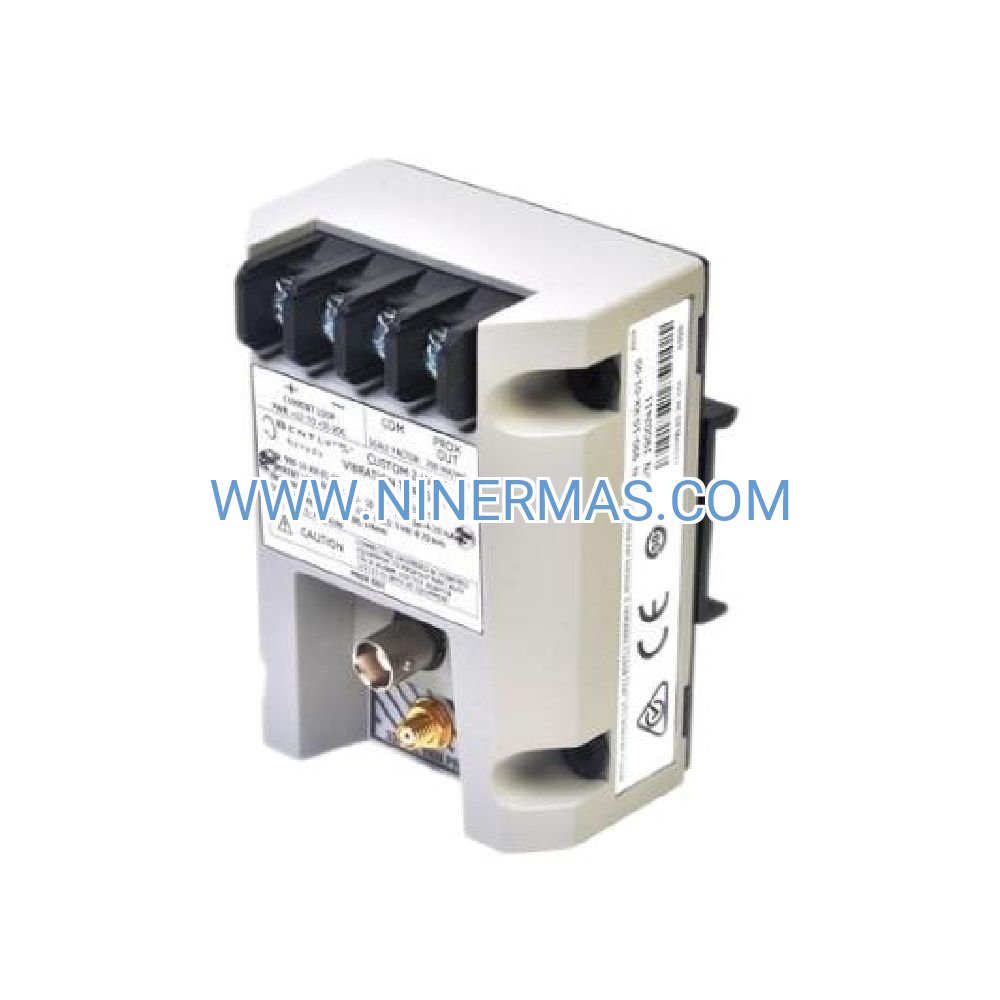
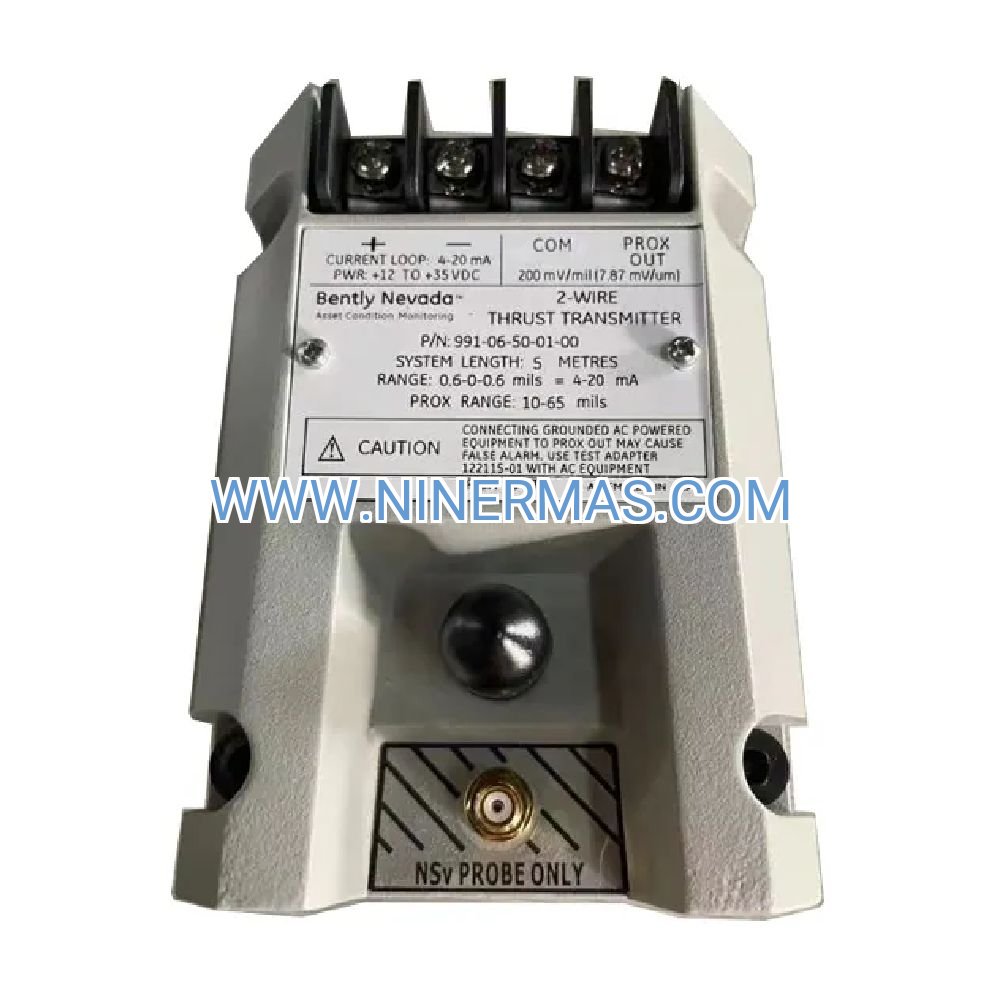
The Bently Nevada 3300/61-04 Dual Vector Monitor is a precision industrial vibration monitoring device designed for real-time shaft orbit analysis and XY vibration tracking in rotating machinery. Through advanced dual-channel vector processing and API 670 certified protection algorithms, it delivers continuous shaft position monitoring, dynamic orbit visualization, and early fault detection for critical turbomachinery assets.
Engineered for power generation plants, oil & gas compressor stations, petrochemical facilities, and heavy industrial rotating equipment, this monitor addresses challenges including shaft misalignment, bearing wear, rotor imbalance, rub detection, and inadequate vibration alarm response. It provides operators with real-time orbit patterns, phase-resolved vibration data, and configurable alarm setpoints to prevent catastrophic failures.
Built on proven 3300 series architecture with field-tested reliability, the 3300/61-04 offers API 670 compliance, 0-10kHz bandwidth coverage, dual-channel synchronous processing, and seamless integration with DCS/SCADA systems. Ideal for design engineers, maintenance teams, OEM integrators, and plant reliability managers requiring certified machinery protection. Contact our application engineers for system configuration, wiring diagrams, and project-specific recommendations.
Core Features & Technical Advantages
- Dual-Channel Vector Processing
Simultaneous X-Y axis vibration measurement with phase-coherent signal processing enables real-time shaft orbit reconstruction, providing visual insight into rotor dynamic behavior and fault progression patterns. - API 670 Certified Protection
Meets stringent API Standard 670 requirements for machinery protection systems, ensuring voting logic, fault tolerance, and alarm integrity for critical turbomachinery applications in hazardous environments. - Wide Bandwidth Coverage (0-10kHz)
Captures low-frequency rotor dynamics through high-frequency bearing defects, supporting comprehensive condition monitoring from sub-synchronous instabilities to gear mesh frequencies and rolling element bearing diagnostics. - Real-Time Orbit Display & Trending
Generates live Lissajous orbit patterns and historical trend data, allowing operators to identify shaft centerline position changes, precession direction, and vibration amplitude growth before damage occurs. - Configurable Alarm & Shutdown Logic
Programmable alert and danger setpoints with adjustable time delays, hysteresis bands, and voting schemes reduce nuisance trips while maintaining fast response to genuine machinery faults. - 3300 Rack System Integration
Hot-swappable module design fits standard Bently Nevada 3300 series racks, simplifying installation, maintenance, and spare parts management across multi-unit facilities with existing 3300 infrastructure. - Comprehensive Fault Diagnostics
Built-in self-test, transducer open/short detection, and module health monitoring with relay outputs and Modbus/4-20mA interfaces ensure high system availability and rapid troubleshooting.
Typical Application Scenarios
This dual vector monitor is engineered for environments demanding continuous shaft vibration surveillance, orbit analysis, and API-compliant machinery protection:
- Steam & Gas Turbine Generator Sets
Monitors journal bearing vibration and shaft orbit in power plant turbines, detecting rotor bow, thermal growth, and bearing wear to prevent unplanned outages and extend overhaul intervals. - Centrifugal & Axial Compressors (Oil & Gas)
Provides real-time orbit tracking for high-speed compressors in LNG, refinery, and pipeline applications, identifying surge, aerodynamic instability, and seal rub conditions before catastrophic failure. - Large Industrial Pumps & Blowers
Ensures stable operation of boiler feed pumps, cooling water pumps, and induced draft fans in chemical plants, steel mills, and paper mills by monitoring shaft position and detecting cavitation or impeller imbalance. - Rotating Equipment in Petrochemical Facilities
Supports API 670 compliance for critical machinery trains including expanders, gearboxes, and motor-driven compressors, integrating with plant DCS for centralized condition monitoring and predictive maintenance programs.
Technical Parameters & Selection Guide
To facilitate engineering design and system integration, we provide standardized electrical, mechanical, and performance specifications. Custom configurations are available to match project-specific requirements.
| Parameter | Specification |
|---|---|
| Model Number | 3300/61-04-01-03-00-00-00 |
| Input Channels | Dual (X-Y axis) |
| Frequency Range | 0 Hz to 10 kHz (-3dB) |
| Transducer Compatibility | Proximity probes (7200/3300 series), 8mm/-200mV/mV systems |
| Output Signals | 4-20mA buffered, relay contacts (alarm/danger), Modbus RTU |
| Power Supply | 24 VDC ±10% (via 3300 rack backplane) |
| Operating Temperature | -30°C to +65°C (-22°F to +149°F) |
| Compliance Standards | API 670 5th Edition, CE, UL/cUL, ATEX/IECEx (optional) |
| Enclosure Rating | IP20 (rack-mounted), IP54/IP65 available for field enclosures |
| Module Dimensions | Single-width 3300 rack slot (25.4mm width) |
Selection Recommendations: When specifying this monitor, consider maximum shaft displacement range, required alarm setpoints, transducer cable lengths (affects -24V power budget), integration with existing DCS/PLC systems, and environmental conditions (temperature, humidity, vibration). For assistance, provide machinery type, operating speed range, bearing configuration, and control system interface requirements. Our application engineers will recommend optimal module configuration and accessories.
Advanced Integration Capabilities
- DCS/SCADA Connectivity: Modbus RTU/TCP, 4-20mA analog outputs, and relay contacts enable seamless integration with Honeywell, Emerson DeltaV, Siemens PCS7, and other plant control systems for centralized monitoring.
- Orbit Display Software: Compatible with Bently Nevada System 1 and third-party vibration analysis platforms for advanced orbit plotting, waterfall diagrams, and predictive maintenance analytics.
- Redundant Configuration: Supports 2oo3 (two-out-of-three) voting logic when deployed with additional monitors, meeting SIL-2/SIL-3 requirements for safety-instrumented systems in critical applications.
- Remote Diagnostics: Ethernet-enabled rack options allow secure remote access for troubleshooting, configuration updates, and historical data retrieval, reducing site visit costs and downtime.
Delivery, Service & Quality Assurance
Lead Time: Standard catalog items ship within 3-5 business days; custom-configured systems require 2-3 weeks for factory programming and testing.
Warranty: 24-month manufacturer warranty covering defects in materials and workmanship; extended service agreements available for critical applications.
Technical Support: Comprehensive installation manuals, wiring diagrams, configuration software, and 24/7 technical hotline access included. On-site commissioning and training services available (region-dependent).
Documentation Package: Each unit ships with calibration certificate, API 670 compliance declaration, electrical schematics, terminal block layouts, and quick-start guide to streamline installation and regulatory approval.
Certifications: Factory-tested to API 670 standards; optional ATEX/IECEx hazardous area certifications for Zone 1/2 installations; traceable calibration to NIST/ISO 17025 standards.
Frequently Asked Questions (FAQ)
Q: How does the 3300/61-04 dual vector monitor integrate with existing proximity probe systems?
A: The monitor accepts standard -24VDC proximity probe inputs (Bently Nevada 3300/7200 series or equivalent 8mm systems). Verify probe sensitivity (200mV/mil or 8V/mm), cable length (affects capacitance loading), and gap voltage range. Consult wiring diagrams for proper shield grounding and twisted-pair routing to minimize EMI.
Q: What is the maximum number of monitoring points one 3300 rack can support?
A: A standard 3300 rack accommodates up to 16 single-width modules. Each 3300/61-04 occupies one slot and monitors one XY measurement plane (two probes). For a four-bearing machine with two radial probes per bearing, you would need four 3300/61-04 modules plus power supply and communication modules.
Q: What energy savings or efficiency improvements can be expected?
A: While the monitor itself does not directly reduce energy consumption, early fault detection prevents catastrophic failures that cause extended downtime, emergency repairs, and production losses. Customers report 15-30% reduction in unplanned maintenance costs and 20-40% improvement in machinery availability through predictive maintenance enabled by continuous orbit monitoring.
Q: What are the environmental and installation requirements?
A: The module operates from -30°C to +65°C and is rated IP20 for rack mounting (IP54/IP65 enclosures available for harsh environments). Ensure rack location has <80% non-condensing humidity, minimal airborne contaminants, and vibration isolation. Maintain 50mm clearance above/below rack for convection cooling.
Q: Does the system support remote monitoring and data export for predictive analytics?
A: Yes. The 3300/61-04 outputs 4-20mA analog signals and Modbus RTU data that can be logged by DCS, SCADA, or dedicated vibration monitoring software (e.g., Bently Nevada System 1, OSIsoft PI). Ethernet-enabled racks support OPC UA and Modbus TCP for cloud-based condition monitoring platforms and machine learning applications.
Q: Can I retrofit this monitor into an older Bently Nevada 3300 rack system?
A: Yes, the 3300/61-04 is backward-compatible with legacy 3300 racks (verify backplane revision and power supply capacity). Hot-swap capability allows module replacement without shutting down adjacent channels. Confirm firmware compatibility if integrating with older communication gateways.
Request Technical Support & Custom Solutions
For detailed application engineering, system configuration, quotations, or technical clarification, please provide the following information: project name, machinery type (turbine/compressor/pump), operating speed range, number of measurement points, probe specifications, control system interface requirements, environmental conditions, and delivery timeline. Our certified vibration specialists will deliver tailored recommendations, wiring schematics, and integration support within 24 hours.
© 2026 NINERMAS COMPANY LIMITED. All rights reserved. Original Source: https://ninermas.com | Contact: sale@ninermas.com | +0086 187 5021 5667

Contact Info
-
Address:22 / F, South Wo Hang building, 148 Wing Lok Street, Sheung Wan, Western District, Hong Kong
-
Phone:+8618750215667
-
Email: