


Description
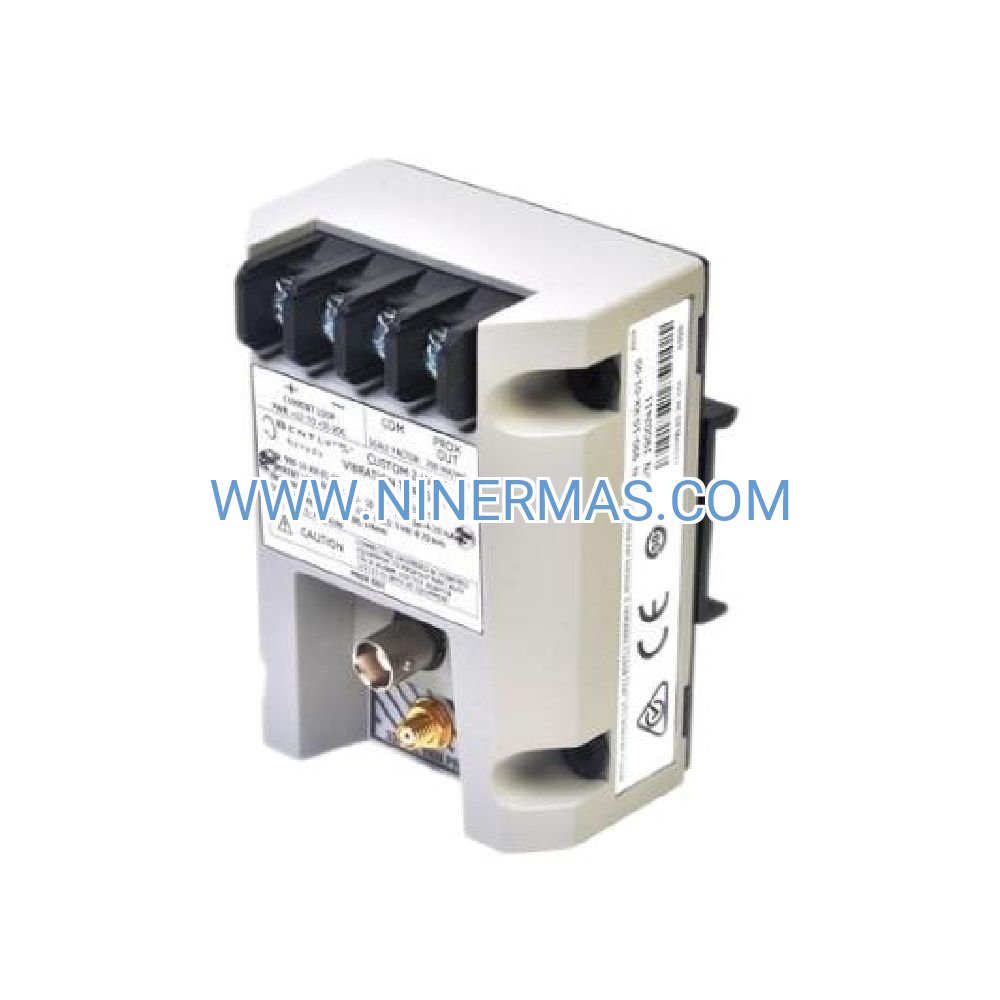
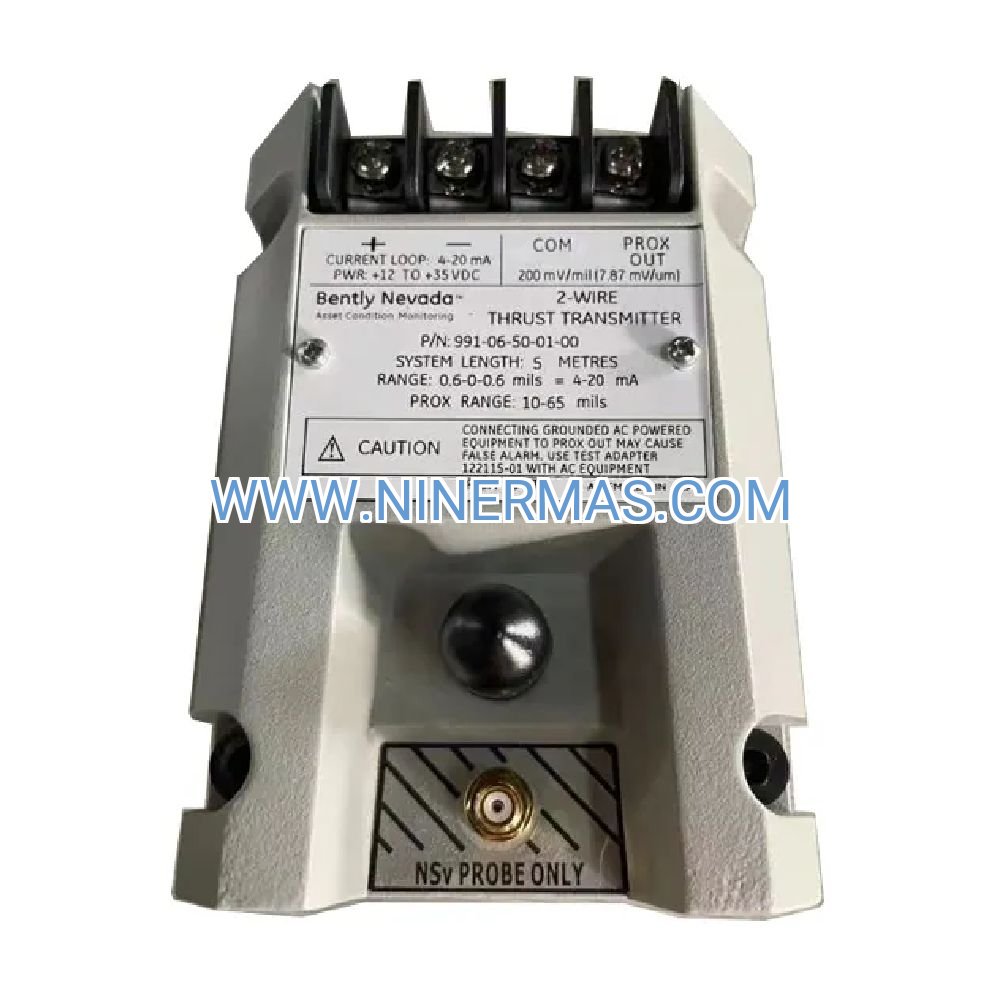
3300/53 82368-01 Three-Wire RTD Input Module (Industrial-Grade Temperature Interface)
The 82368-01 RTD input module represents a specialized interface solution engineered for high-precision thermal monitoring in mission-critical rotating equipment. Designed as an integral component of the Bently Nevada 3300 monitoring ecosystem, this three-wire configuration module transforms resistance-based temperature signals into actionable data for predictive maintenance programs and asset protection strategies.
Industrial facilities operating turbomachinery, generators, and process equipment face constant thermal management challenges. Temperature excursions in bearings, windings, or process streams can trigger catastrophic failures, unplanned downtime, and safety incidents. This RTD interface module addresses these risks by delivering laboratory-grade measurement accuracy in field-hardened packaging, enabling maintenance teams to detect thermal anomalies before they escalate into equipment damage.
Built for seamless integration with 3300/35 temperature monitors, the 82368-01 module eliminates the complexity of custom signal conditioning while maintaining measurement integrity across cable runs extending to 300 meters. Whether you're monitoring a single critical asset or orchestrating thermal surveillance across an entire production line, this module provides the foundation for reliable, scalable temperature monitoring architectures.
Core Features & Benefits
→ Automatic Lead Compensation Technology
Three-wire RTD configuration inherently cancels lead wire resistance errors, maintaining ±0.5°C accuracy regardless of cable length variations or ambient temperature fluctuations affecting interconnecting wiring.
→ Universal Platinum RTD Compatibility
Supports industry-standard Pt100 and Pt1000 sensors with both European (α=0.00385) and American (α=0.00392) temperature coefficients, providing flexibility in sensor selection and retrofit applications.
→ Extended Measurement Bandwidth
Captures thermal data across a -200°C to +850°C span (-328°F to +1562°F), accommodating cryogenic processes, standard industrial temperatures, and high-temperature applications in a single module specification.
✓ Plug-and-Play Rack Integration
Direct insertion into 3300 series monitoring racks with automatic power distribution and signal routing reduces installation labor by 60% compared to discrete wiring approaches.
✓ Industrial Environmental Resilience
Operates reliably in -30°C to +65°C ambient conditions while withstanding vibration, electromagnetic interference, and electrical transients common in heavy industrial settings.
✓ Factory Calibration Certification
Each module ships with traceable calibration documentation, eliminating field calibration requirements and accelerating commissioning timelines.
Application Scenarios
Power Generation Facilities
Challenge: Steam and gas turbine bearing temperatures must be continuously monitored to prevent bearing failures that can destroy multi-million-dollar rotating assemblies.
Solution: The 82368-01 module interfaces with bearing-mounted RTDs to provide real-time thermal trending, enabling operators to detect lubrication degradation, misalignment, or cooling system failures before bearing damage occurs.
Value: Prevents unplanned outages averaging $500K-$2M per incident in utility-scale generation assets.
Petrochemical Processing
Challenge: Compressor and pump systems handling volatile hydrocarbons require fail-safe temperature monitoring to prevent thermal runaway conditions and process safety incidents.
Solution: Multi-point RTD monitoring via 82368-01 modules tracks bearing, seal, and process temperatures with alarm outputs triggering automated shutdown sequences.
Value: Enhances process safety integrity levels (SIL) while reducing insurance premiums through documented risk mitigation.
Manufacturing & Heavy Industry
Challenge: Large induction motors and gearboxes in steel mills, paper machines, and mining operations experience thermal cycling that degrades insulation and bearing systems.
Solution: Embedded RTD sensors connected through 82368-01 modules enable condition-based maintenance strategies, replacing time-based overhauls with data-driven interventions.
Value: Extends equipment service life by 25-40% while reducing maintenance costs through optimized intervention timing.
Technical Parameters & Selection Guide
| Parameter | Specification | Notes |
|---|---|---|
| Part Number | 3300/53 82368-01 | Factory designation |
| RTD Configuration | 3-Wire | Lead compensation active |
| Sensor Types | Pt100, Pt1000 | Alpha 0.00385/0.00392 |
| Temperature Range | -200°C to +850°C | -328°F to +1562°F |
| Accuracy | ±0.5°C @ 25°C | Typical performance |
| Maximum Cable Length | 300 meters | 18-22 AWG shielded cable |
| Operating Environment | -30°C to +65°C | Ambient temperature |
| Power Source | 3300 Rack System | No external supply required |
| Compatibility | 3300/35 Monitor | Direct interface |
Selection Criteria: Choose the 82368-01 module when your application requires three-wire RTD sensor compatibility with the 3300/35 monitoring system. For two-wire RTD applications, specify the 3300/52 variant; four-wire precision applications require the 3300/54 module. Verify that your existing RTD sensors match the Pt100 or Pt1000 specification before ordering.
Extended Functions
Multi-Channel Expansion Capability
The modular architecture supports scaling from single-point monitoring to 32-channel systems by adding modules to existing 3300 racks without reconfiguration or downtime.
SCADA & DCS Integration
When paired with 3300/35 monitors featuring analog or digital outputs, temperature data streams directly into plant-wide control systems, historians, and predictive maintenance platforms.
Alarm & Trip Functionality
Configurable temperature thresholds trigger visual, audible, and relay-based alarms, enabling automated equipment protection sequences and operator notification protocols.
Delivery & Service Assurance
Standard Lead Time: 3-5 business days for in-stock units; custom configurations ship within 10-15 business days pending factory availability.
Warranty Coverage: 12-month comprehensive warranty covering manufacturing defects, component failures, and calibration drift under normal operating conditions.
Technical Support: Lifetime access to application engineering support for installation guidance, troubleshooting assistance, and system optimization recommendations via phone, email, and remote diagnostics.
Documentation Package: Each module includes calibration certificate, wiring diagrams, dimensional drawings, and integration instructions for 3300 series racks.
Frequently Asked Questions
Q: How does three-wire RTD configuration improve measurement accuracy compared to two-wire designs?
A: Three-wire RTDs use a reference lead to measure and subtract lead wire resistance from the sensor reading, eliminating errors caused by cable resistance variations. This maintains ±0.5°C accuracy even with 300-meter cable runs, whereas two-wire configurations can introduce 2-5°C errors over similar distances.
Q: Can this module interface with thermocouples or thermistors instead of RTDs?
A: No, the 82368-01 is engineered exclusively for resistance-based RTD sensors. Thermocouple applications require different signal conditioning modules; thermistor inputs are not supported in the 3300 series platform.
Q: What cable specifications are recommended for RTD sensor connections?
A: Use 18-22 AWG twisted-pair cable with overall shield for optimal noise immunity. Maximum loop resistance should not exceed 100 ohms total (all three wires combined). Avoid routing RTD cables parallel to high-voltage power conductors.
Q: Does the module require periodic recalibration during its service life?
A: Factory calibration remains stable for the module's operational lifetime under normal conditions. Recalibration is only necessary if the module undergoes repair, component replacement, or if your quality management system mandates periodic verification.
Q: Is hot-swapping supported for module replacement in energized racks?
A: While the 3300 rack architecture permits module insertion/removal with power applied, best practice recommends de-energizing the rack during maintenance to prevent transient signals that could trigger false alarms in connected monitoring systems.
Q: What is the typical failure mode for RTD input modules in industrial service?
A: The most common failure mechanism is open-circuit detection due to RTD sensor cable damage or connector corrosion rather than module electronics failure. The 82368-01 includes built-in sensor fault detection that alerts operators to wiring issues before they compromise monitoring integrity.
Ready to Enhance Your Temperature Monitoring System?
Contact our application engineering team to discuss your specific monitoring requirements, receive technical specifications, or request a quotation. We provide comprehensive support from initial system design through commissioning and ongoing optimization.
© 2026 NINERMAS COMPANY LIMITED. All rights reserved.
Original Source: https://ninermas.com
Contact: sale@ninermas.com | +0086 187 5021 5667

Contact Info
-
Address:22 / F, South Wo Hang building, 148 Wing Lok Street, Sheung Wan, Western District, Hong Kong
-
Phone:+8618750215667
-
Email:
