Bently Nevada 3300/40 Proximity Probe System | 5/8mm Factory-Matched | API 670 Certified
Description
Bently Nevada 3300/40 Proximity Probe System (Industrial-Grade Vibration Monitoring Solution)
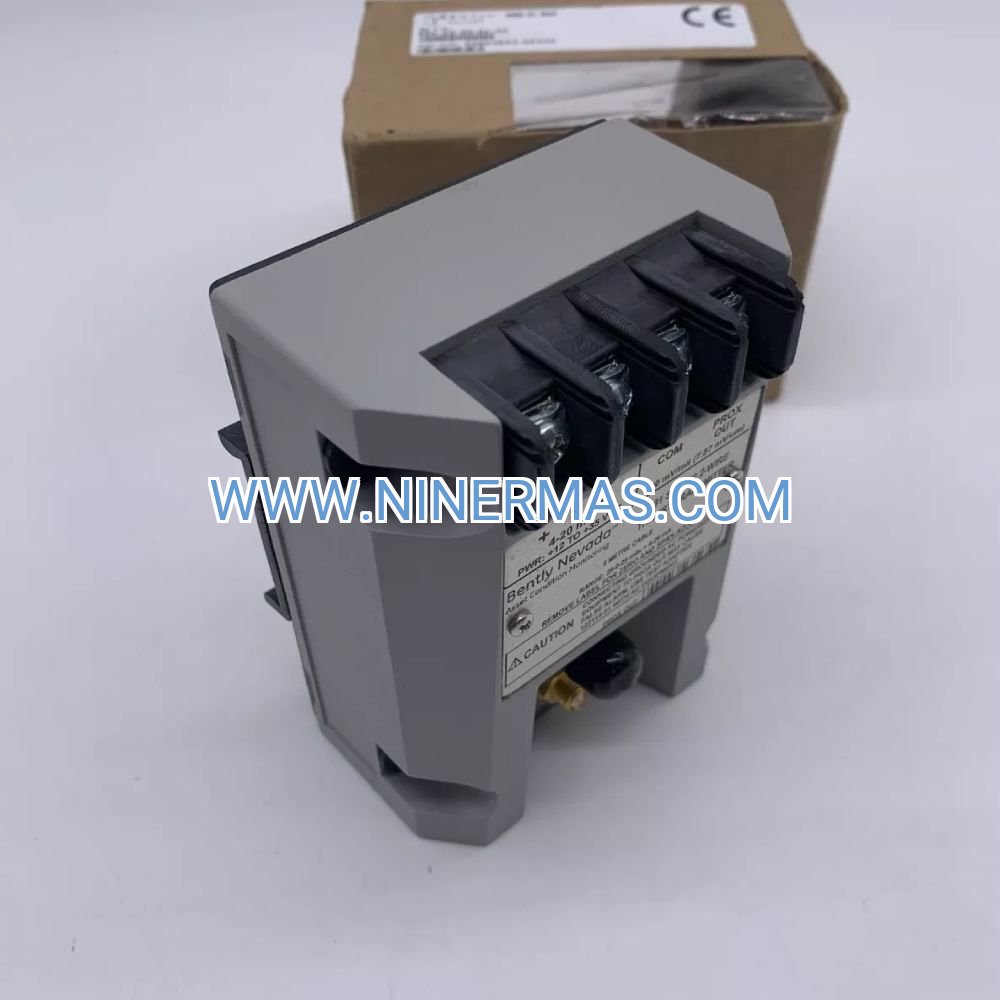
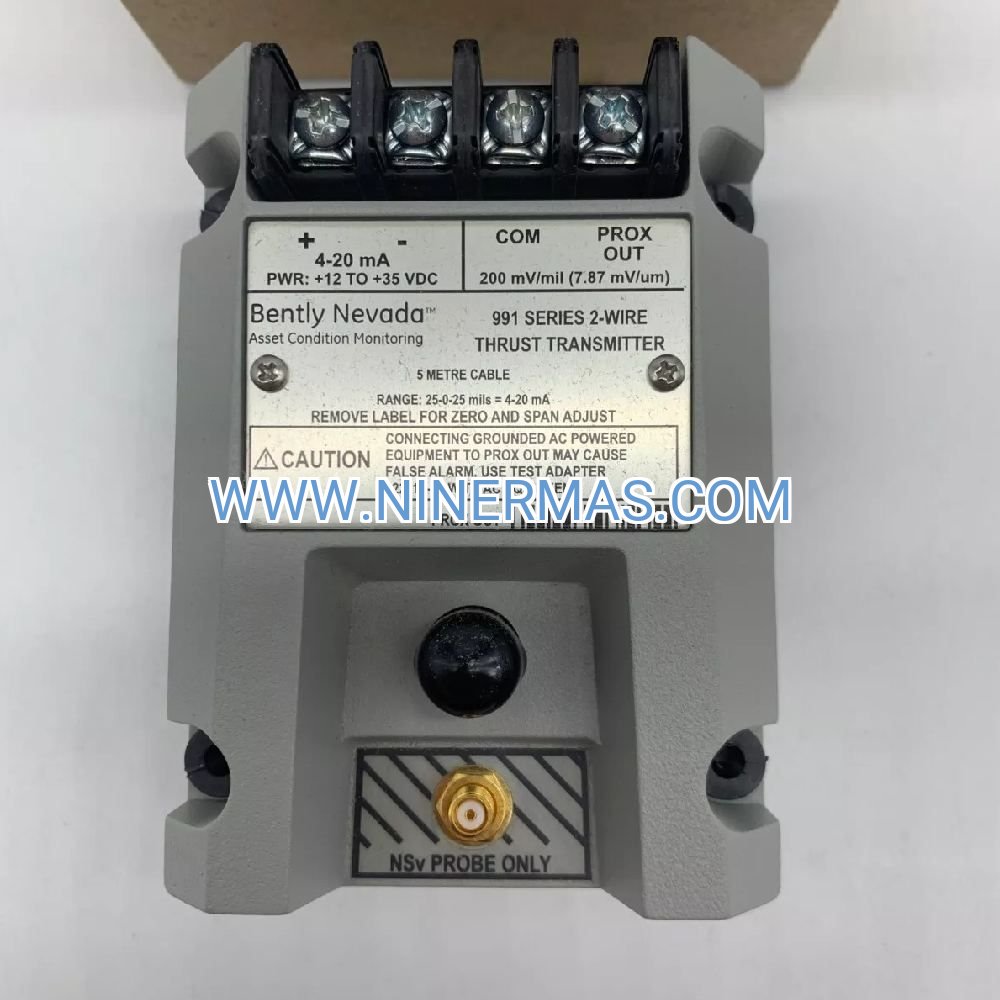
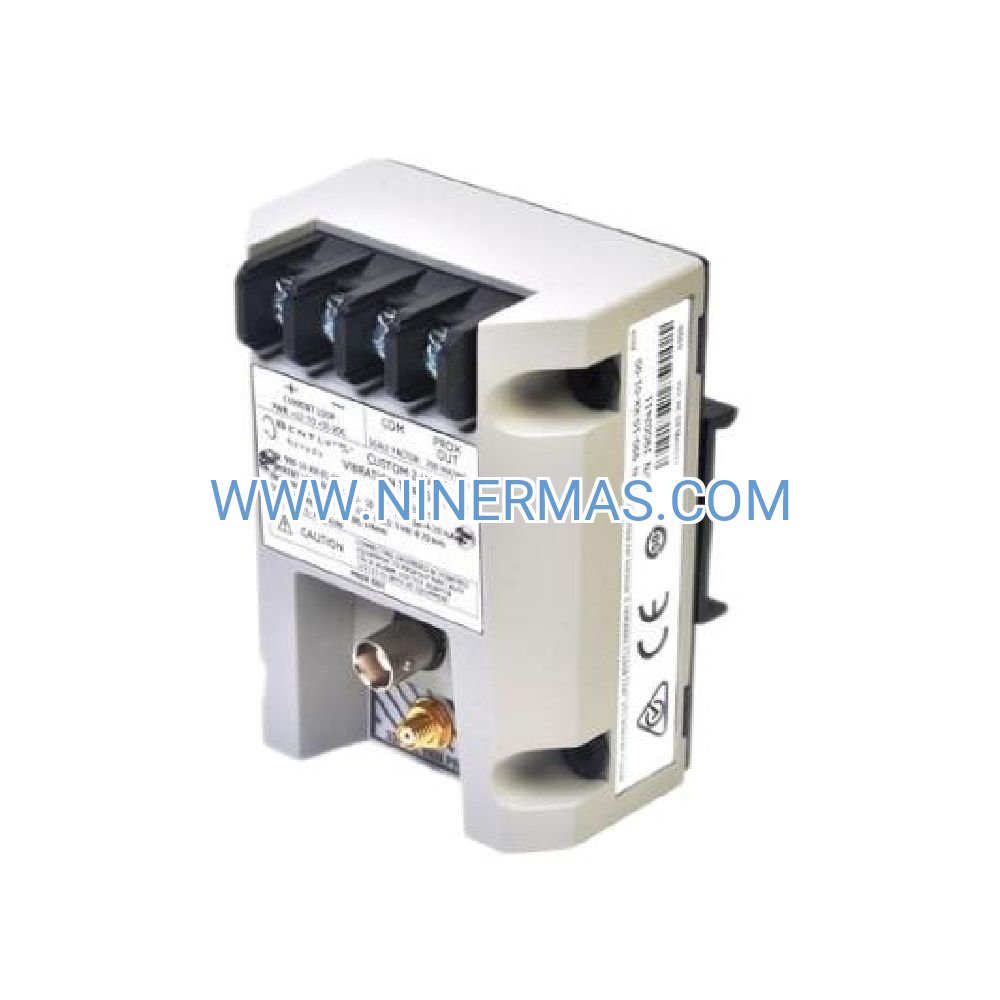
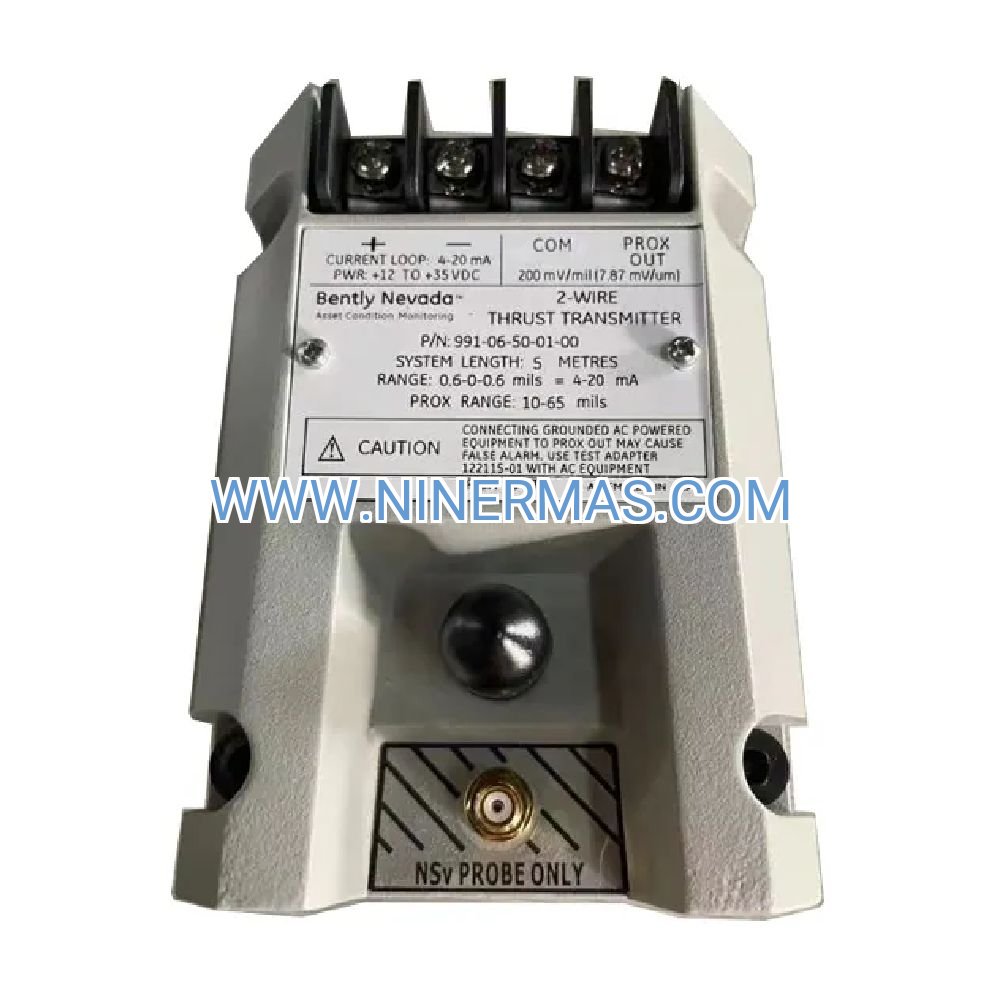
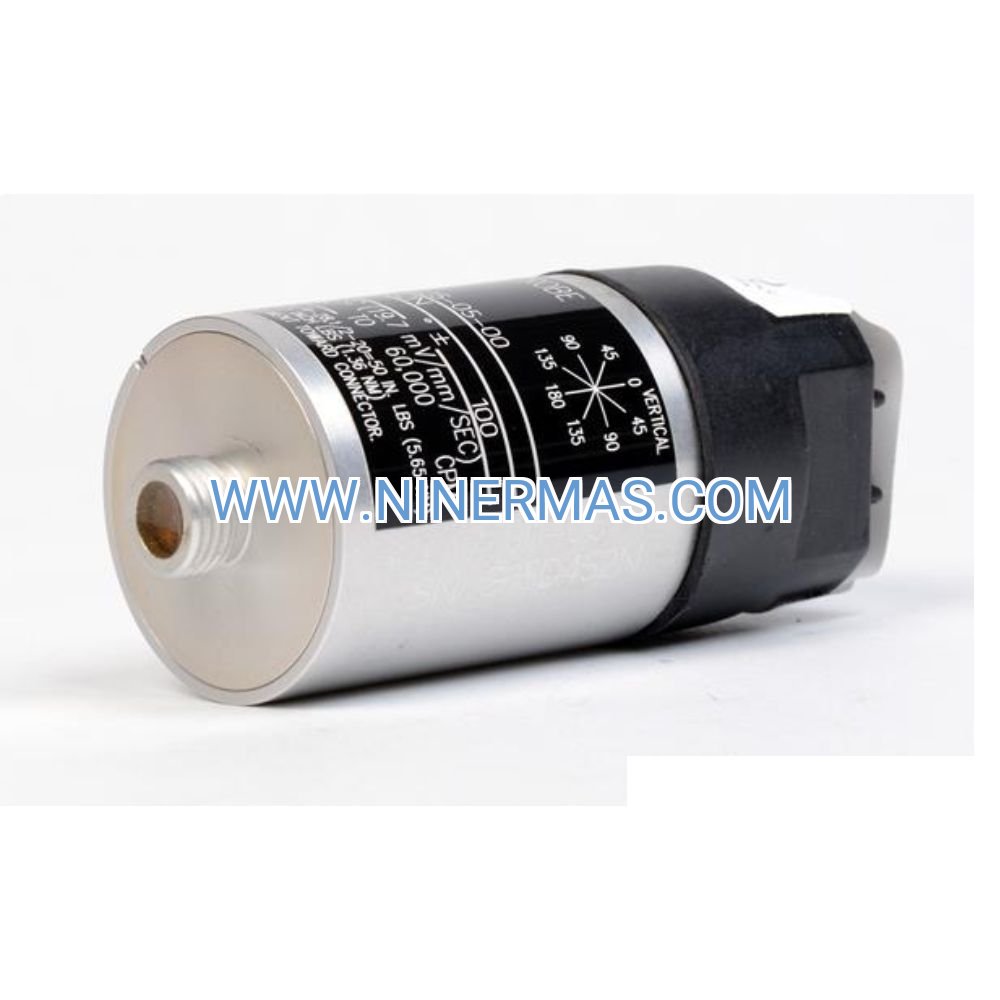
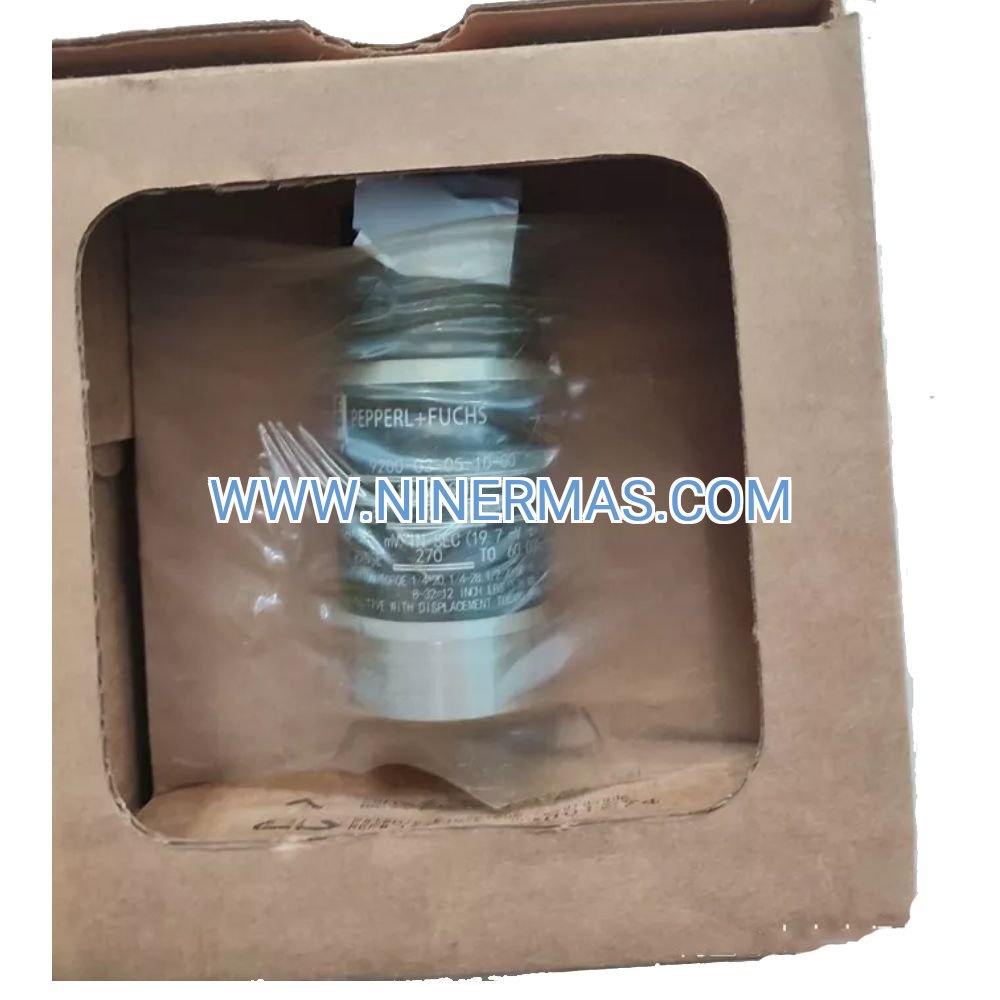
The Bently Nevada 3300/40-03-01-01-00-00 is a complete proximity probe system engineered for critical turbomachinery vibration monitoring. Through factory-matched eddy current sensing technology and integrated signal conditioning, this system delivers precise shaft displacement measurement, enabling early fault detection and continuous machinery protection in demanding industrial environments.
Designed for power generation plants, oil & gas facilities, petrochemical refineries, steel mills, and rotating equipment OEMs, this system addresses challenges including bearing wear detection, rotor dynamic analysis, thrust position monitoring, and compliance with API 670 machinery protection standards. It eliminates calibration uncertainty, reduces installation time, and minimizes false trip risks in critical rotating assets.
With API 670 certification, factory calibration documentation, and turnkey installation capability, the 3300/40 system offers reliable performance, simplified commissioning, seamless DCS integration, and comprehensive technical support. Ideal for instrumentation engineers, maintenance teams, project contractors, and plant reliability managers seeking proven vibration monitoring solutions with complete traceability and vendor support.
Core Features & Technical Advantages
- Factory-Matched System Integrity
Each probe, extension cable, and proximitor are calibrated as a matched set at the factory, ensuring linear scale factor (200 mV/mil or 7.87 mV/μm) and eliminating field calibration errors that compromise measurement accuracy in critical machinery protection applications. - API 670 Compliance & Certification
Meets API Standard 670 requirements for machinery protection systems, including response time, linearity, and environmental qualification. Certification documentation supports regulatory audits, insurance requirements, and OEM warranty conditions for turbomachinery installations. - Proven Eddy Current Technology
Non-contact eddy current sensing provides continuous shaft displacement monitoring without wear or friction, suitable for long-term operation in high-temperature (up to 177°C probe tip), high-vibration, and corrosive environments common in power and process industries. - Turnkey Installation & Commissioning
Pre-calibrated system arrives ready for installation with mounting hardware compatibility (18mm or 19mm threaded), standard cable lengths (5m or 9m extension options), and proximitor DIN-rail or panel mounting, reducing commissioning time by 60-70% compared to field-calibrated systems. - Wide Compatibility & Integration
Standard -24 VDC power supply and 4-20 mA output (or ±10 VDC buffered output) enable direct connection to DCS, PLC, SCADA, and Bently Nevada 3500 monitoring racks. Compatible with ferrous target materials (4140 steel, 1018 steel) and operates across 0.25mm to 2.5mm gap range. - Comprehensive Protection & Diagnostics
Built-in OK/Alert LED status indication, transducer electronic datasheet (TEDS) support on select models, and self-diagnostic capabilities detect cable faults, probe damage, and power supply issues before they cause unplanned shutdowns or safety incidents.
Typical Application Scenarios
This proximity probe system is engineered for environments demanding high reliability, continuous monitoring, and regulatory compliance, including:
- Steam & Gas Turbine Monitoring
Measures radial vibration and axial thrust position in power generation turbines (50-500 MW), providing early warning of bearing degradation, rotor unbalance, and thrust bearing failure to prevent catastrophic damage and extend overhaul intervals. - Centrifugal Compressor Protection
Monitors shaft displacement in API 617 compressors used in natural gas processing, LNG plants, and refinery hydrogen service, detecting surge conditions, seal rubs, and coupling misalignment that lead to unplanned shutdowns and production losses. - Large Motor & Generator Bearing Monitoring
Tracks bearing clearance and rotor eccentricity in motors above 500 HP and generators in combined-cycle plants, enabling condition-based maintenance and reducing bearing replacement costs by 30-40% through predictive intervention. - Pump & Fan Critical Service Applications
Provides continuous vibration monitoring for boiler feed pumps, cooling water pumps, induced draft fans, and forced draft fans in power plants and heavy industry, where equipment failure directly impacts production uptime and safety. - OEM Machinery Integration
Supplied as standard or optional monitoring equipment by turbomachinery OEMs (GE, Siemens, MAN, Solar Turbines) for new equipment packages, ensuring compliance with end-user specifications and long-term parts availability.
Technical Parameters & Selection Guide
To ensure optimal performance and compatibility, the 3300/40 system is available in multiple configurations. Key specifications include:
| Parameter | Specification |
|---|---|
| Probe Diameter | 5mm or 8mm (this model: 5/8mm dual-size compatible) |
| Probe Thread | M18 x 1.0 or 3/4-16 UNC |
| Probe Length | Standard 50mm, 75mm, 100mm active tip lengths |
| Extension Cable | 5 meters or 9 meters (field-selectable) |
| Operating Gap Range | 0.25 mm to 2.5 mm (10 to 100 mils) |
| Scale Factor | 200 mV/mil (7.87 mV/μm) typical |
| Frequency Response | 0 to 10 kHz (-3 dB) |
| Operating Temperature | Probe: -40°C to +177°C; Proximitor: -30°C to +65°C |
| Power Supply | -24 VDC ±10% (18-26 VDC) |
| Output Signal | -2 to -20 VDC (proportional to gap) |
| Certification | API 670, CE, ATEX/IECEx (zone 2) available |
| Environmental Rating | IP65 (probe), IP20 (proximitor standard) |
Selection Recommendations: When specifying a proximity probe system, consider the following factors: shaft material and surface finish (4140 steel preferred, Rz < 3.2 μm), installation space and mounting accessibility, required cable length and routing path, DCS/PLC input compatibility (voltage vs. current output), and environmental conditions (temperature, humidity, vibration, EMI). For assistance with system selection, provide machinery type, shaft diameter, operating speed (RPM), and monitoring objectives (radial vibration, axial position, or both). Our application engineers will recommend the optimal probe size, mounting configuration, and proximitor model.
System Configuration & Customization Options
Beyond the standard 3300/40 package, the following options and accessories are available to meet specific project requirements:
- Hazardous Area Certification: ATEX Zone 1, IECEx, FM/CSA Class I Div 1 approved proximitors for installation in explosive atmospheres (oil & gas, chemical processing)
- Extended Temperature Proximitors: -40°C to +85°C rated electronics for outdoor installations and extreme climates
- Armored Extension Cables: Stainless steel braided or conduit-protected cables for high-vibration, abrasion, or rodent-prone environments
- Dual Output Proximitors: Simultaneous buffered output and 4-20 mA output for parallel monitoring systems (DCS + portable analyzer)
- Mounting Hardware Kits: Probe clamps, lock nuts, target area preparation tools, and installation fixtures for common machinery types
- Calibration & Test Equipment: Precision gap simulators, cable testers, and calibration fixtures for field verification and commissioning support
Custom cable lengths (up to 15 meters), special probe materials (Inconel, Hastelloy for corrosive service), and application-specific calibration (non-standard target materials) are available upon request with extended lead times.
Delivery, Service & Quality Assurance
Lead Time: Standard configurations ship within 3-5 business days from stock. Custom or certified configurations require 4-6 weeks manufacturing lead time, depending on certification authority and factory workload.
Warranty: All Bently Nevada 3300 series products include a minimum 24-month manufacturer warranty covering defects in materials and workmanship. Extended warranty and advance replacement programs are available for critical applications.
Technical Support: Comprehensive installation support includes detailed mounting drawings, wiring diagrams, gap setting procedures, and commissioning checklists. Remote technical assistance and on-site startup services are available in major industrial regions (subject to location and service agreement).
Documentation Package: Each system ships with factory calibration certificate (traceable to NIST/PTB standards), installation manual, electrical schematics, dimensional drawings, and material certifications (MTRs available upon request). Digital documentation access via Bently Nevada Asset Condition Monitoring portal.
Quality Standards: Manufactured under ISO 9001:2015 quality management system with full traceability of components, calibration records, and test data. Complies with RoHS, REACH, and conflict minerals regulations for global project compliance.
Frequently Asked Questions (FAQ)
Q: How does the Bently Nevada 3300/40 proximity probe system integrate with existing DCS or PLC systems?
A: The 3300 XL proximitor provides a standard -2 to -20 VDC output (proportional to gap) that connects directly to analog input modules on most DCS/PLC platforms (Honeywell, Emerson DeltaV, Siemens PCS7, Allen-Bradley). For systems requiring 4-20 mA input, specify the 3300 XL 8mm or 3300 NSv proximitor with current output option. Wiring is straightforward: +24V common, signal output, and chassis ground. Scaling is linear at 200 mV/mil, simplifying configuration in control logic.
Q: What is the maximum number of proximity probes that can be monitored on a single turbine or compressor?
A: Typical installations use 2 probes per bearing (X-Y radial vibration) plus 1-2 axial (thrust) probes, totaling 8-12 probes for a single-shaft turbine and 16-24 probes for multi-shaft compressor trains. Each probe requires a dedicated proximitor and cable. For centralized monitoring, probes connect to Bently Nevada 3500 rack systems (up to 40+ channels) or distributed I/O in DCS architectures.
Q: What energy savings or efficiency improvements can be expected from implementing vibration monitoring with proximity probes?
A: While proximity probes themselves do not directly reduce energy consumption, they enable condition-based maintenance that prevents efficiency-degrading faults: bearing wear increases friction and power draw by 5-15%, rotor unbalance raises vibration and bearing loads (reducing efficiency by 3-8%), and seal rubs in compressors cause internal recirculation losses (up to 10% capacity loss). Early detection and correction of these issues maintain design efficiency and avoid forced outages that require startup fuel consumption and production losses.
Q: What are the installation environment requirements and protection ratings for the 3300/40 system?
A: The proximity probe is rated IP65 (dust-tight, water jet protected) and operates from -40°C to +177°C at the probe tip, suitable for outdoor and high-temperature machinery environments. The proximitor (signal conditioner) is typically IP20 (finger-safe) for panel or DIN-rail mounting in controlled environments (control rooms, marshalling cabinets) with -30°C to +65°C ambient rating. For harsh environments, specify IP65-rated proximitor housings or install in NEMA 4X enclosures. Hazardous area installations require ATEX/IECEx certified proximitors (Zone 1 or Division 1 rated).
Q: Can the system support remote monitoring, data logging, and predictive analytics integration?
A: Yes. The proximitor output connects to local DCS/SCADA for real-time monitoring and alarming. For advanced analytics, integrate with Bently Nevada System 1 software (vibration analysis and diagnostics), OSIsoft PI historian (trending and reporting), or third-party condition monitoring platforms via OPC-UA or Modbus gateways. Many plants also use portable data collectors (CSI 2140, Emerson AMS) to periodically download waveform data from proximitor buffered outputs for detailed spectral analysis and bearing fault diagnosis.
Q: What protocols and communication standards does the system support for Industry 4.0 and IIoT applications?
A: The 3300 XL proximitor provides analog output (voltage/current) for traditional control systems. For digital communication, pair with Bently Nevada 3500 rack systems that support Modbus TCP/RTU, OPC-DA/UA, and Ethernet/IP protocols, enabling integration with cloud-based analytics platforms (AWS IoT, Azure IoT, GE Predix). TEDS (Transducer Electronic Data Sheet) capability on select models allows automatic sensor identification and configuration in smart transmitter networks.
Contact & Technical Consultation
For detailed system selection, custom configurations, or project-specific technical support, please provide the following information: project name and location, machinery type and manufacturer (turbine, compressor, motor, etc.), shaft diameter and material, operating speed range (RPM), number of monitoring points required, environmental conditions (temperature, hazardous area classification), and DCS/PLC platform for integration. Our application engineering team will provide tailored recommendations, budgetary pricing, and delivery timelines within 24-48 hours.
© 2026 NINERMAS COMPANY LIMITED. All rights reserved.
Original Source: https://ninermas.com
Contact: sale@ninermas.com | +0086 187 5021 5667

Contact Info
-
Address:22 / F, South Wo Hang building, 148 Wing Lok Street, Sheung Wan, Western District, Hong Kong
-
Phone:+8618750215667
-
Email: