Bently Nevada 3300/35 Proximity Probe System | 5mm/8mm Integrated Sensor for Vibration Monitoring
Description
Bently Nevada 3300/35 Proximity Probe System (Industrial Vibration Monitoring Solution)
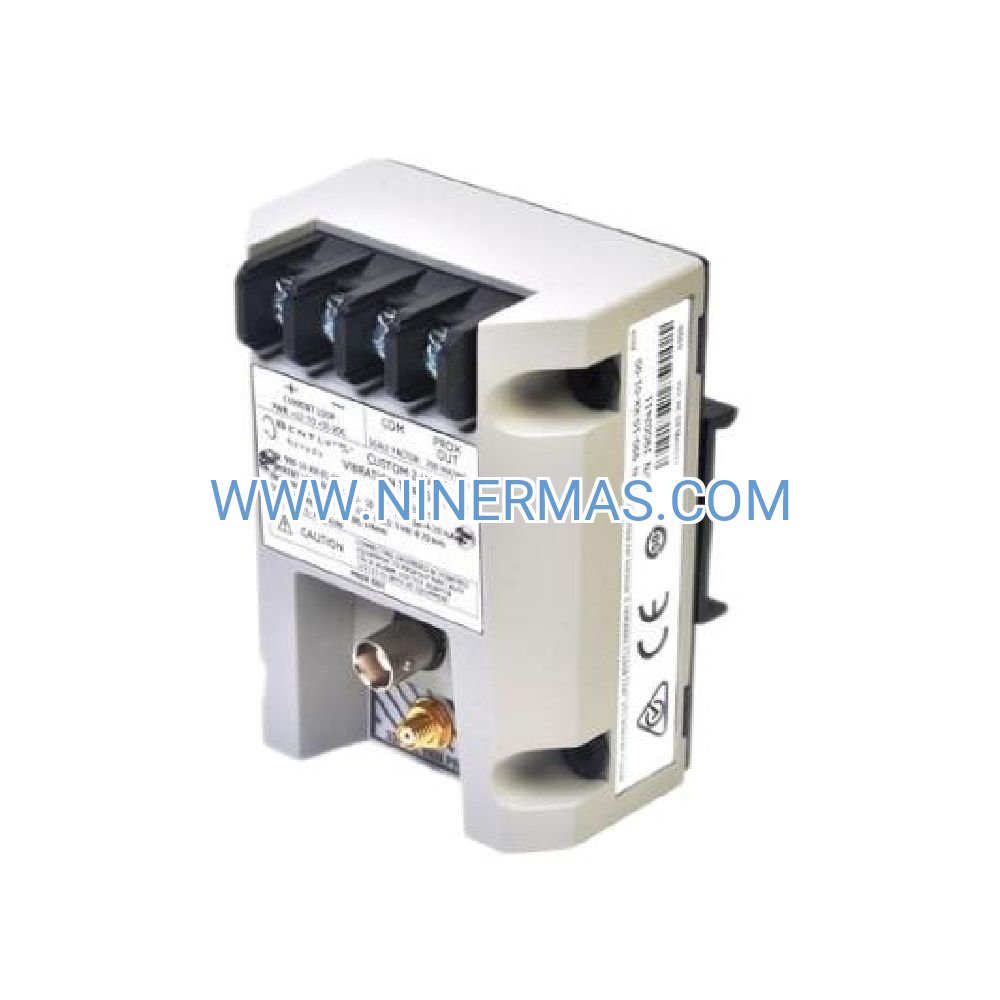
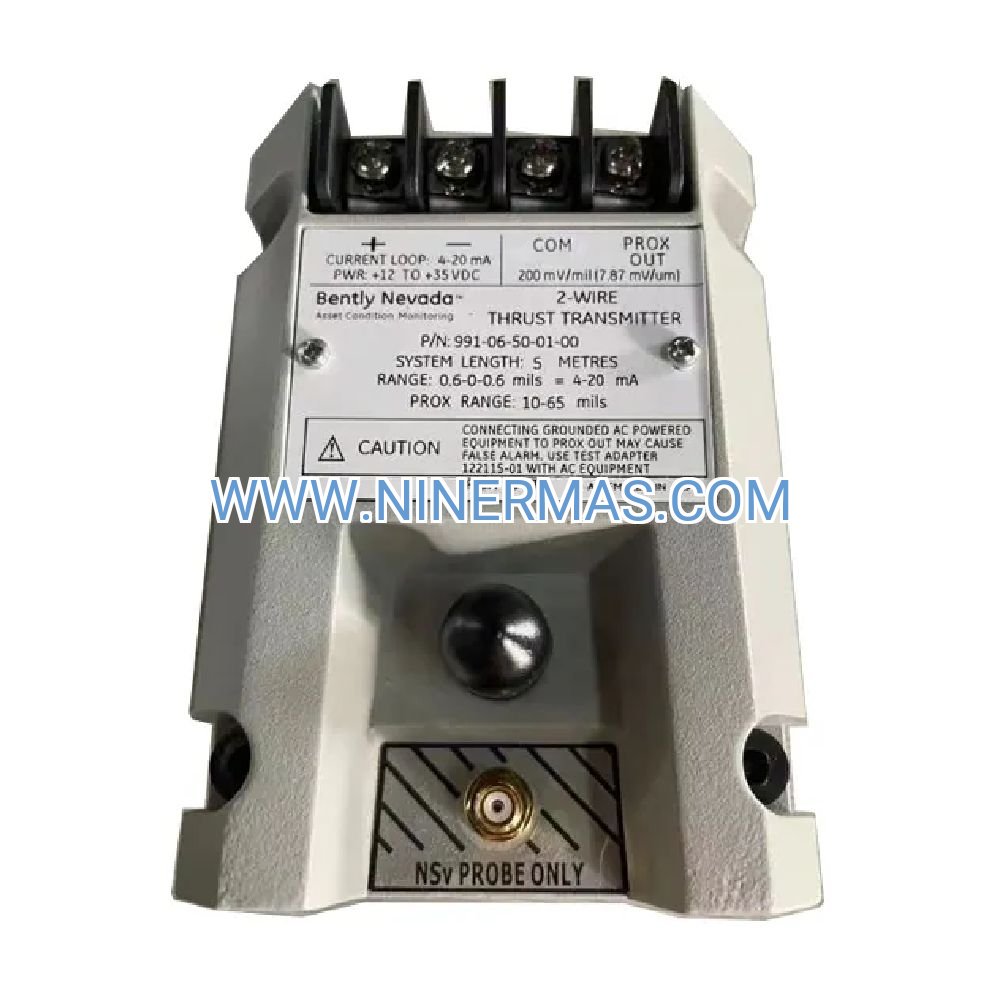
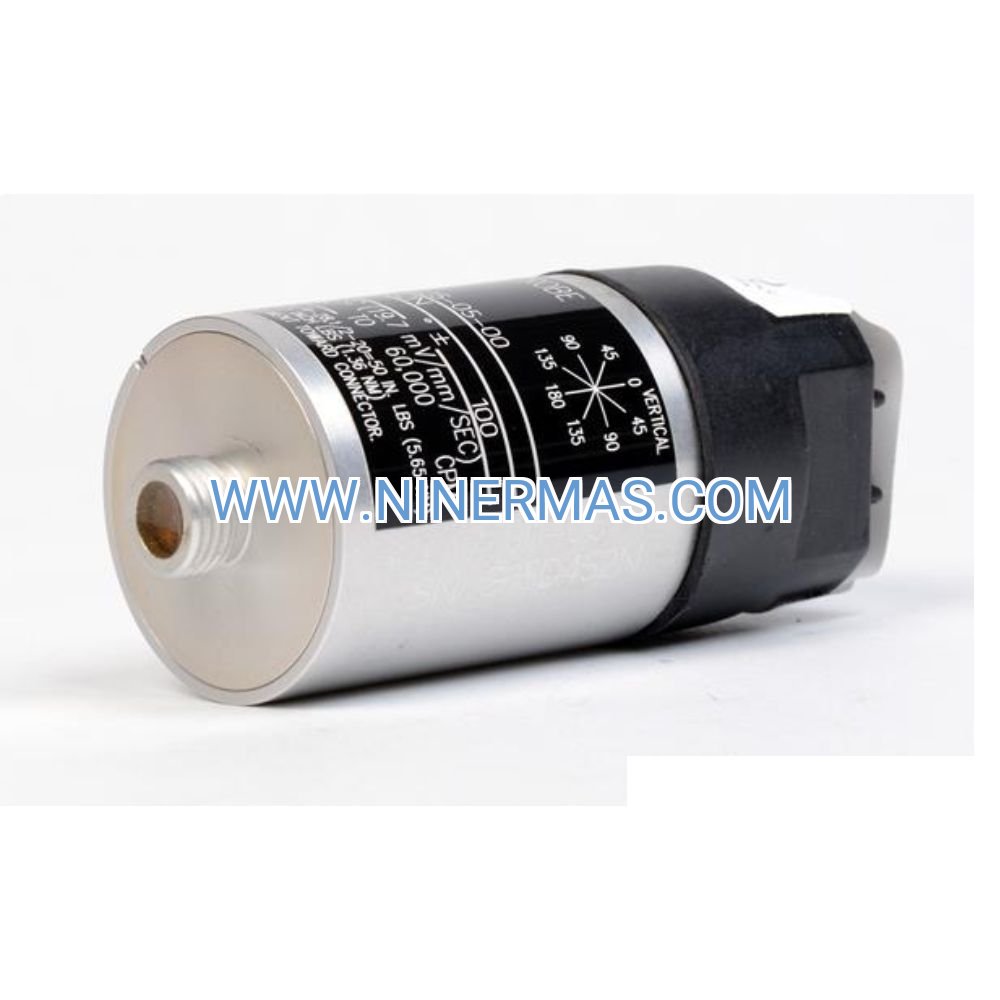
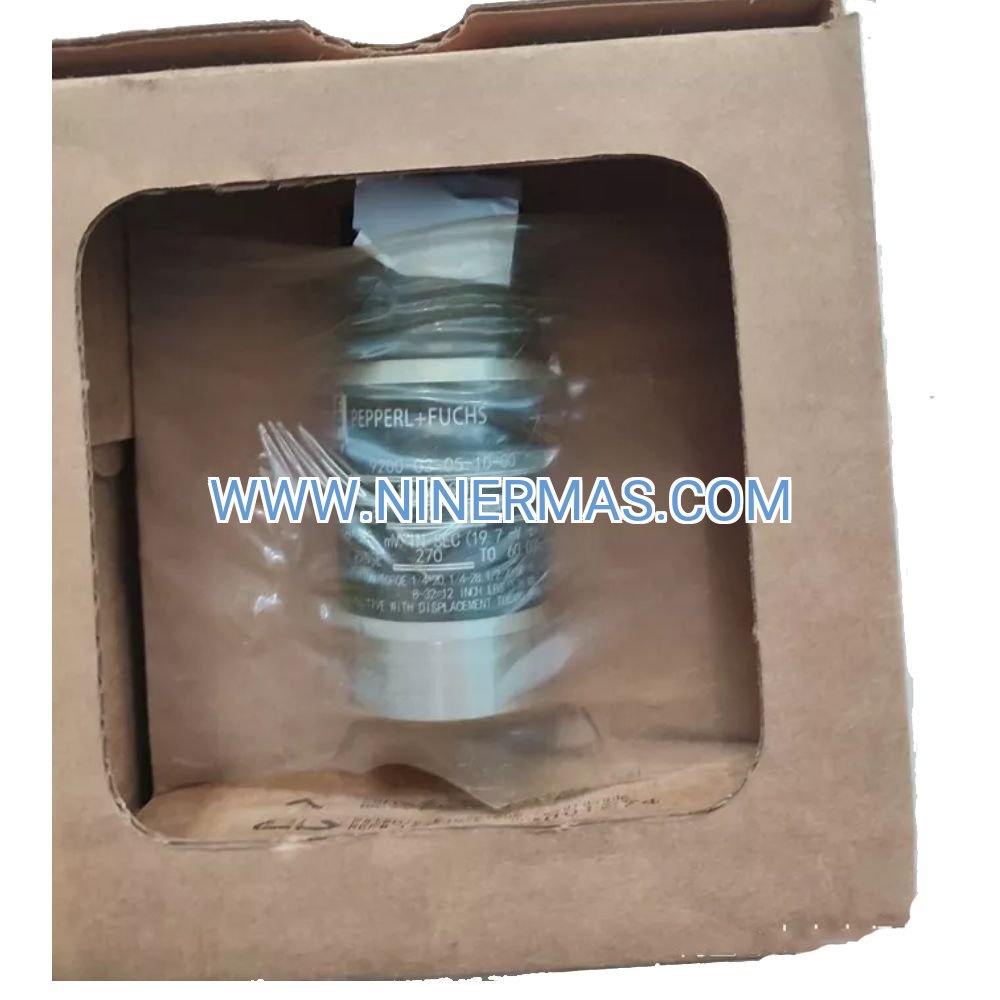
The Bently Nevada 3300/35 Proximity Probe System is a precision industrial sensor designed for real-time vibration and displacement monitoring in rotating machinery. Through advanced eddy current sensing technology and integrated probe-extension cable architecture, it delivers accurate shaft position measurement, vibration amplitude detection, and rotational speed monitoring in a single compact assembly.
Ideal for turbomachinery applications including steam turbines, gas turbines, compressors, pumps, and high-speed motors, this system addresses critical challenges such as limited installation space, complex wiring requirements, high electromagnetic interference environments, and the need for API 670 compliance in safety-critical applications.
With standardized design and flexible configuration options, the 3300/35 system offers exceptional reliability, simplified installation, superior noise immunity, and broad compatibility with existing Bently Nevada monitoring infrastructure. Suitable for OEMs, system integrators, plant maintenance teams, and engineering consultants. Contact our application engineers for customized configuration guidance and technical quotations.
Core Features & Advantages
- Integrated Probe-Cable Design
Factory-assembled probe and extension cable eliminate field termination errors, reduce installation time by up to 40%, and ensure consistent signal quality across all measurement points. - Dual Probe Compatibility (5mm & 8mm)
Supports both 5mm and 8mm probe diameters within the same system architecture, providing flexibility for retrofits and new installations without changing monitoring hardware. - API 670 Compliance
Meets API Standard 670 requirements for vibration, axial position, and speed monitoring in petroleum, chemical, and power generation industries, ensuring regulatory acceptance and insurance compliance. - Space-Saving Configuration
Compact probe housing (typically 30-50% smaller than traditional systems) enables installation in tight radial clearances and crowded machinery compartments common in modern turbomachinery. - Enhanced EMI/RFI Immunity
Proprietary shielding and signal conditioning technology maintain measurement accuracy in high-noise electrical environments, including VFD-driven systems and high-voltage switchgear proximity. - Extended Operating Temperature Range
Rated for continuous operation from -40°C to +120°C (-40°F to +248°F), suitable for outdoor installations, arctic environments, and high-temperature process equipment monitoring. - Simplified System Integration
Direct compatibility with Bently Nevada 3300 rack monitors, 3500 monitoring systems, and System 1 software platforms enables seamless upgrades and system expansions without protocol conversion.
Typical Application Scenarios
This proximity probe system is engineered for applications demanding high reliability, continuous operation, and precise vibration diagnostics, including:
- Steam & Gas Turbine Monitoring
Measures radial vibration, thrust position, and differential expansion in power generation turbines, providing early warning of bearing wear, rotor imbalance, and thermal growth anomalies. - Centrifugal & Axial Compressor Protection
Monitors shaft vibration and axial position in oil & gas compression trains, preventing catastrophic failures from surge conditions, seal rubs, and bearing degradation. - High-Speed Motor & Generator Surveillance
Tracks rotor eccentricity and vibration in motors above 3,600 RPM, supporting predictive maintenance programs in paper mills, steel plants, and mining operations. - Pump & Blower Condition Monitoring
Detects cavitation, impeller imbalance, and misalignment in critical process pumps and induced draft fans, reducing unplanned downtime and maintenance costs. - Gearbox & Coupling Diagnostics
Provides non-contact measurement of shaft motion in gearboxes and flexible couplings, identifying wear patterns and lubrication issues before failure occurs.
Technical Specifications & Selection Guide
To ensure optimal performance and compatibility, the 3300/35 system is available in multiple configurations based on probe diameter, cable length, and target material. Key specifications include:
| Parameter | Specification |
|---|---|
| Probe Diameter Options | 5mm, 8mm |
| Standard Cable Lengths | 1m, 3m, 5m, 9m (custom lengths available) |
| Frequency Response | 0 to 10 kHz (-3dB) |
| Operating Temperature | -40°C to +120°C (-40°F to +248°F) |
| Target Material | 4140 steel or equivalent (conductivity ≥ 2.3 MS/m) |
| Linear Range | 0.5mm to 2.0mm (5mm probe), 1.0mm to 4.0mm (8mm probe) |
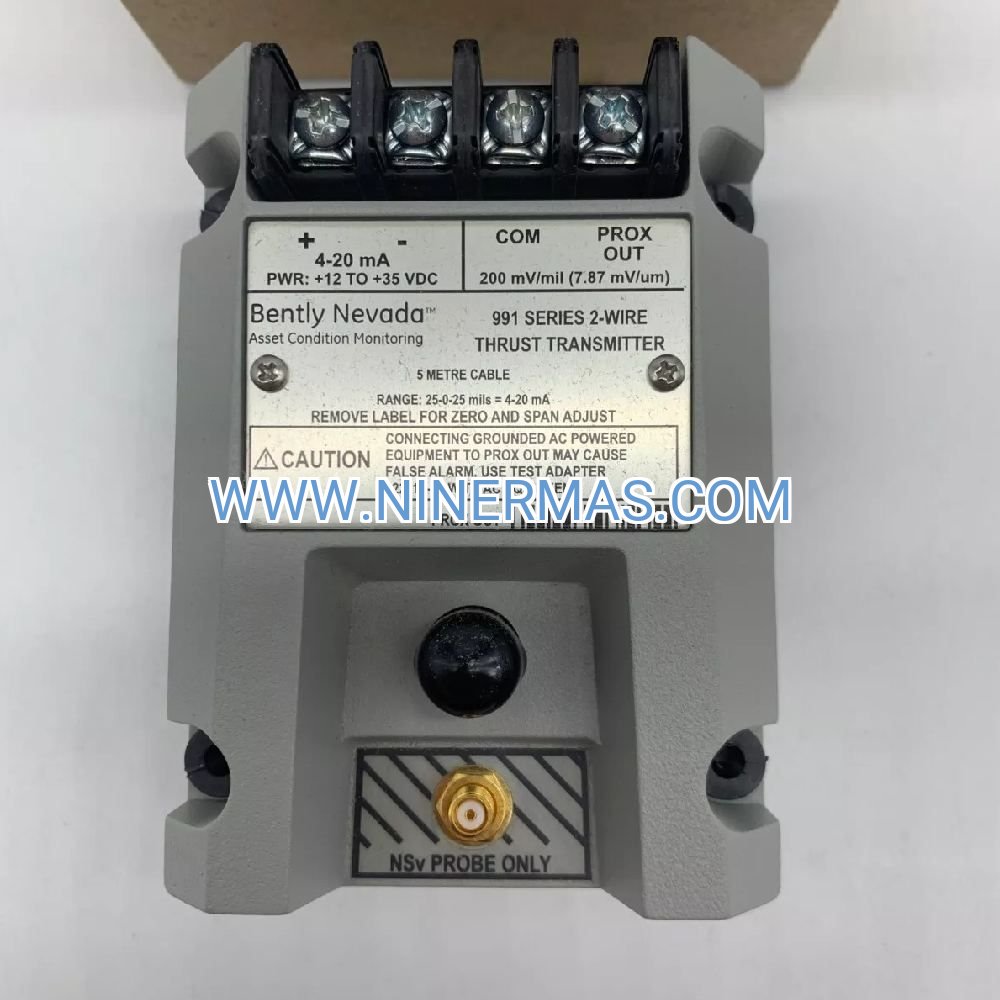
| System Sensitivity | 200 mV/mil (7.87 mV/μm) typical |
| Housing Material | Stainless steel 316 |
| Thread Size | M12×1.0 (5mm), M18×1.0 (8mm) |
| Protection Rating | IP67 (probe), IP65 (connector) |
| Compliance Standards | API 670, ISO 7919, ISO 10816 |
Selection Recommendations: When specifying a system, consider: (1) available radial clearance at mounting location, (2) shaft material and surface finish (Ra ≤ 1.6 μm recommended), (3) distance from probe to monitoring rack, (4) ambient temperature and exposure to chemicals/moisture, and (5) required measurement range and resolution. For assistance with system sizing or custom configurations, please provide machinery type, shaft diameter, operating speed, and installation environment details to our engineering team.
Advanced Capabilities
- Dual-Channel Monitoring: Pair with XY vibration monitors for orbit analysis and phase measurement
- Keyphasor Integration: Compatible with Bently Nevada keyphasor systems for once-per-turn reference and phase lag calculation
- Remote Diagnostics: Supports integration with System 1 and Orbit 60 software for cloud-based condition monitoring and predictive analytics
- Hazardous Area Certification: Available with ATEX, IECEx, and CSA approvals for Zone 1/Division 1 installations (consult factory for certified models)
Delivery, Service & Quality Assurance
Standard catalog configurations ship within 3-5 business days; custom cable lengths and special materials require 10-15 business days lead time. All systems include a minimum 24-month warranty covering materials and workmanship. Technical support includes remote installation guidance, calibration verification procedures, and troubleshooting assistance (on-site commissioning available in select regions).
Each system ships with: (1) factory calibration certificate traceable to NIST standards, (2) installation drawing with dimensional tolerances, (3) wiring diagram for monitor interface, (4) operation and maintenance manual, and (5) recommended spare parts list. Documentation is provided in English with optional translations available.
Frequently Asked Questions (FAQ)
Q: How does the Bently Nevada 3300/35 proximity probe system interface with existing monitoring equipment?
A: The system uses industry-standard -24 VDC proximitor power and outputs a buffered voltage signal (typically -2 to -18 VDC) proportional to gap distance. It connects directly to Bently Nevada 3300 rack monitors, 3500 system monitors, or any vibration analyzer accepting proximity probe inputs. Wiring requires a simple 2-conductor shielded cable from the probe connector to the monitor input terminals.
Q: What is the maximum number of probes that can be installed on a single machine?
A: There is no theoretical limit; typical installations use 2 probes per bearing (XY configuration) plus 1-2 axial position probes and 1 keyphasor probe, totaling 6-10 probes for a single-shaft machine. Multi-shaft machines (e.g., gearbox with input and output shafts) may require 12-20 probes. System capacity is determined by available monitor channels, not probe quantity.
Q: What energy savings or efficiency improvements can be expected from vibration monitoring?
A: While the probe itself does not directly save energy, condition-based maintenance enabled by continuous monitoring typically reduces unplanned downtime by 30-50%, extends bearing life by 20-40%, and prevents catastrophic failures that can result in weeks of lost production. In rotating equipment, early detection of imbalance or misalignment can also reduce parasitic power losses by 2-5%.
Q: What are the environmental requirements for installation? What is the protection rating?
A: The probe housing is rated IP67 (submersion-resistant), suitable for outdoor installations, washdown environments, and exposure to oil mist or coolant spray. The cable connector is IP65 (splash-proof). Operating temperature range is -40°C to +120°C. For corrosive atmospheres (e.g., offshore platforms, chemical plants), specify stainless steel hardware and fluoropolymer cable jackets. Avoid direct steam impingement or continuous submersion beyond IP67 rating.
Q: Can the system support remote monitoring and data acquisition via industrial protocols?
A: Yes, when paired with Bently Nevada 3500 system monitors or System 1 software, the probe data can be transmitted via Modbus TCP/IP, OPC UA, or proprietary Bently Nevada protocols to SCADA systems, historians, and cloud analytics platforms. The probe itself is an analog sensor; digital connectivity is provided by the monitoring hardware. Supported protocols include Modbus RTU/TCP, Ethernet/IP, and FOUNDATION Fieldbus (via compatible monitors).
Q: Is factory calibration required, or can the system be calibrated in the field?
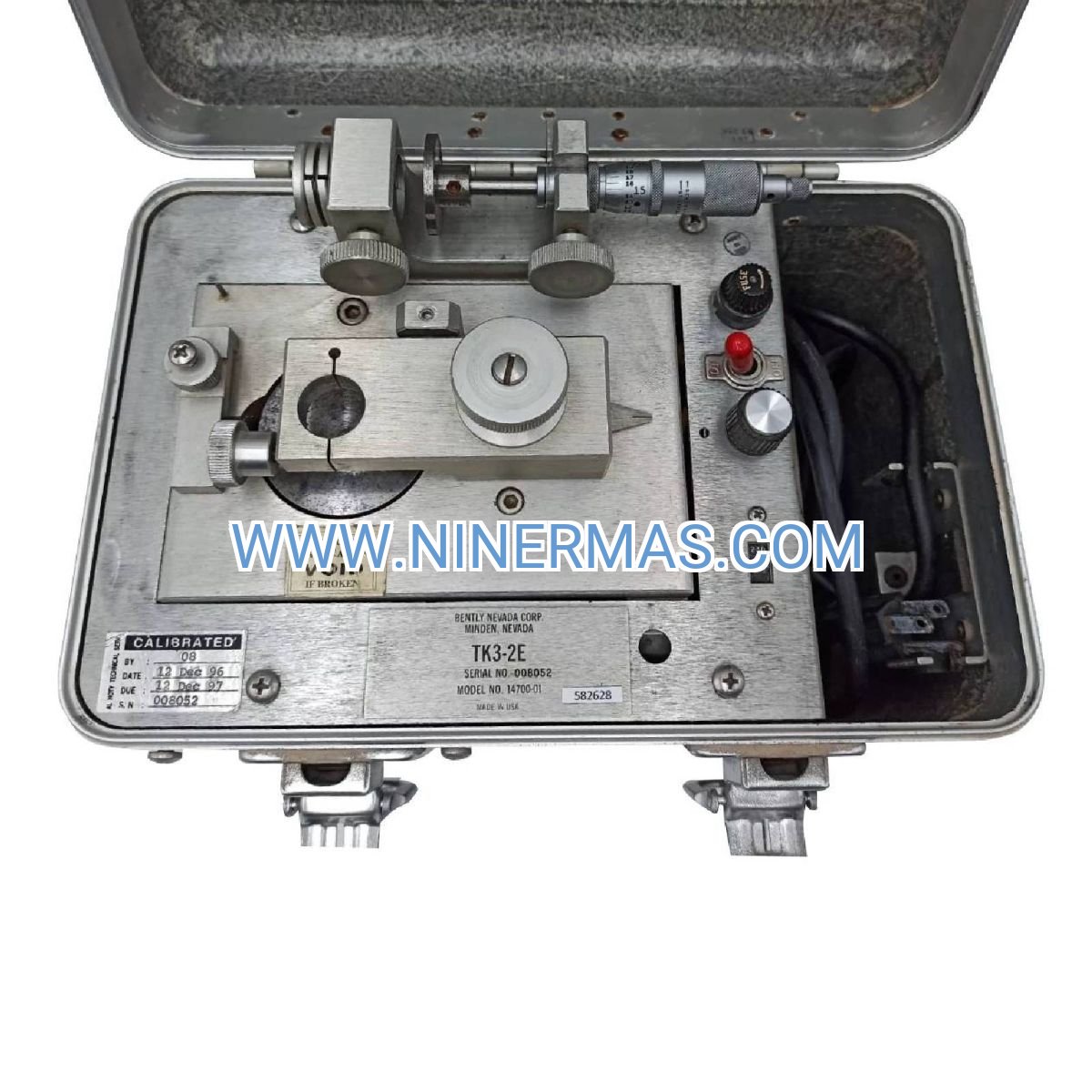
A: Each system is factory-calibrated and ships with a calibration certificate. Field calibration is possible using a micrometer stand and calibrated gap targets, but factory calibration is recommended for API 670 compliance and warranty coverage. Recalibration intervals are typically 24-36 months or after cable replacement. Calibration procedures are detailed in the operation manual.
Request a Custom Solution
To receive a detailed selection guide, technical quotation, or application-specific recommendations, please provide the following information: (1) machinery type and model, (2) shaft diameter and material, (3) operating speed range (RPM), (4) number of measurement points required, (5) distance from probe locations to control room, (6) ambient temperature and environmental conditions, and (7) required certifications (API 670, ATEX, etc.). Our application engineers will respond within 24 hours with a tailored proposal and system layout drawings.
© 2026 NINERMAS COMPANY LIMITED. All rights reserved.
Original Source: https://ninermas.com
Contact: sale@ninermas.com | +0086 187 5021 5667

Contact Info
-
Address:22 / F, South Wo Hang building, 148 Wing Lok Street, Sheung Wan, Western District, Hong Kong
-
Phone:+8618750215667
-
Email: