Bently Nevada 3300/20 Interface Module | DCS/PLC Integration Solution | Industrial Monitoring
Description
Bently Nevada 3300/20 Interface Module – Industrial DCS/PLC Integration Solution
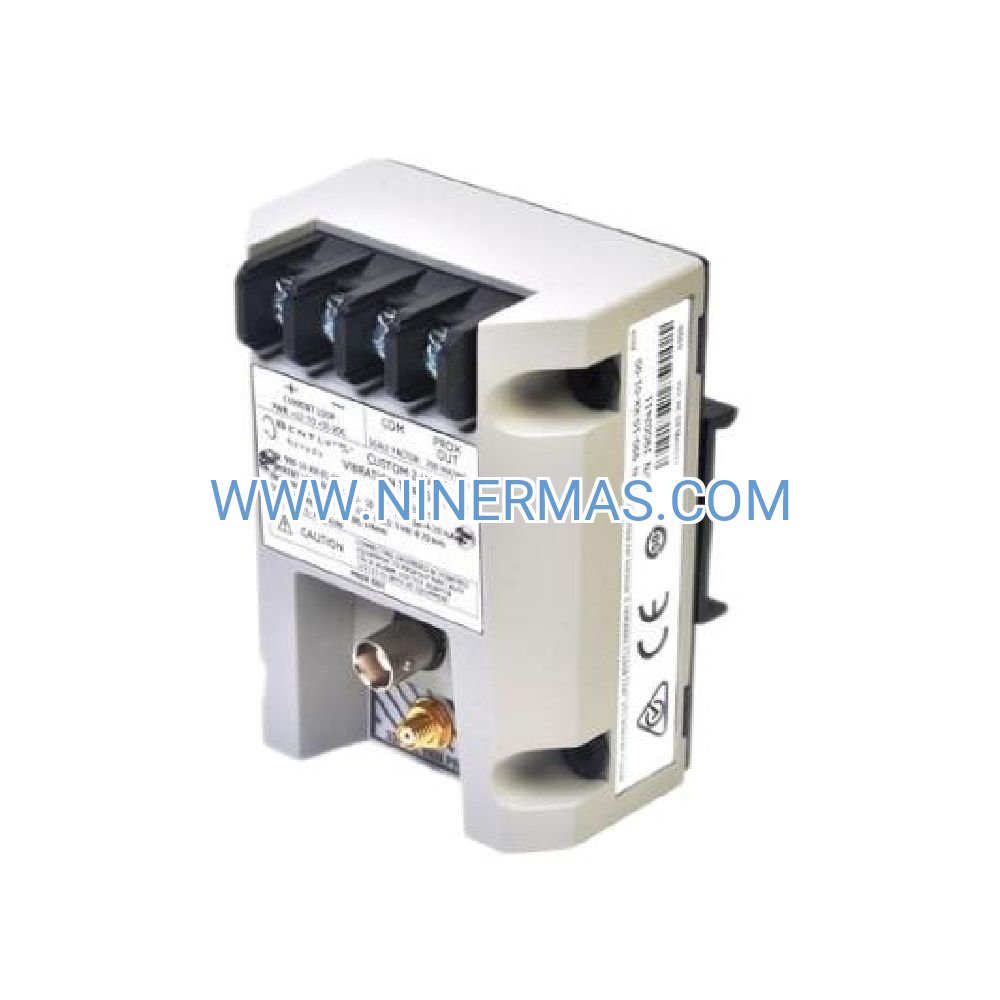
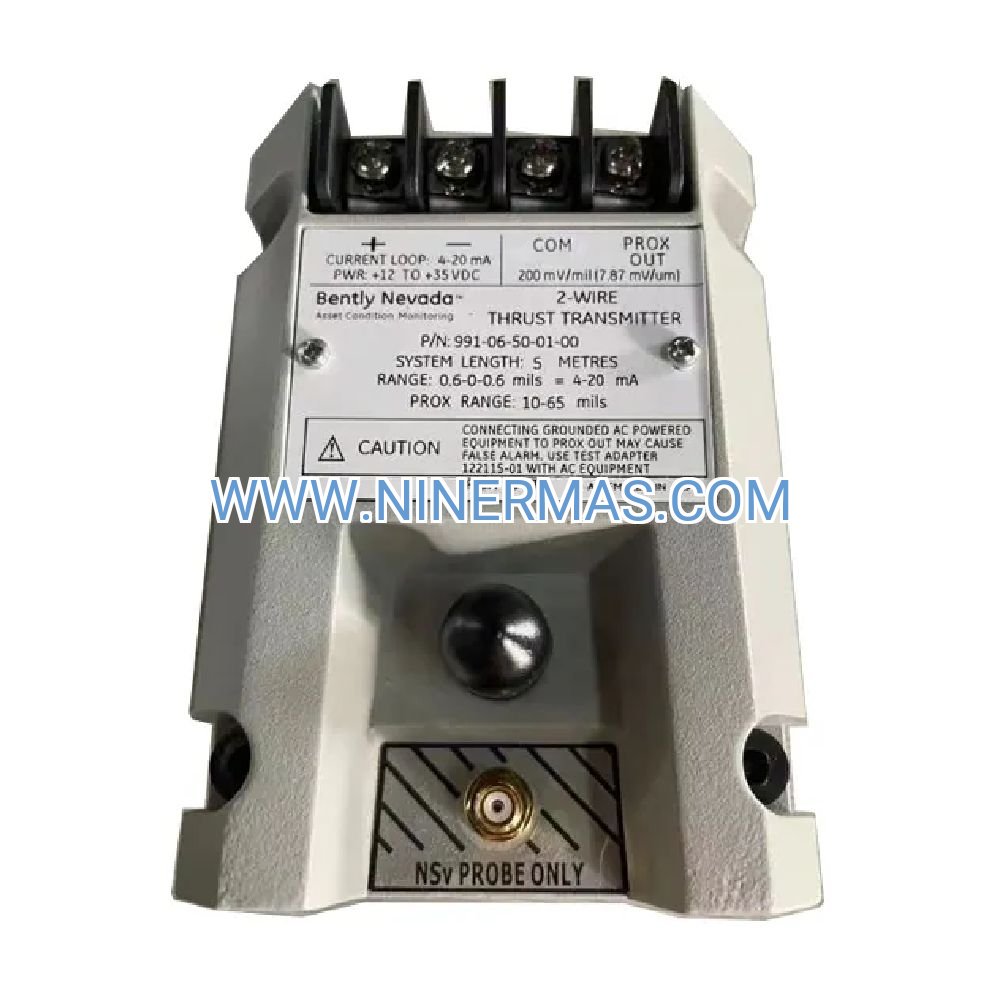
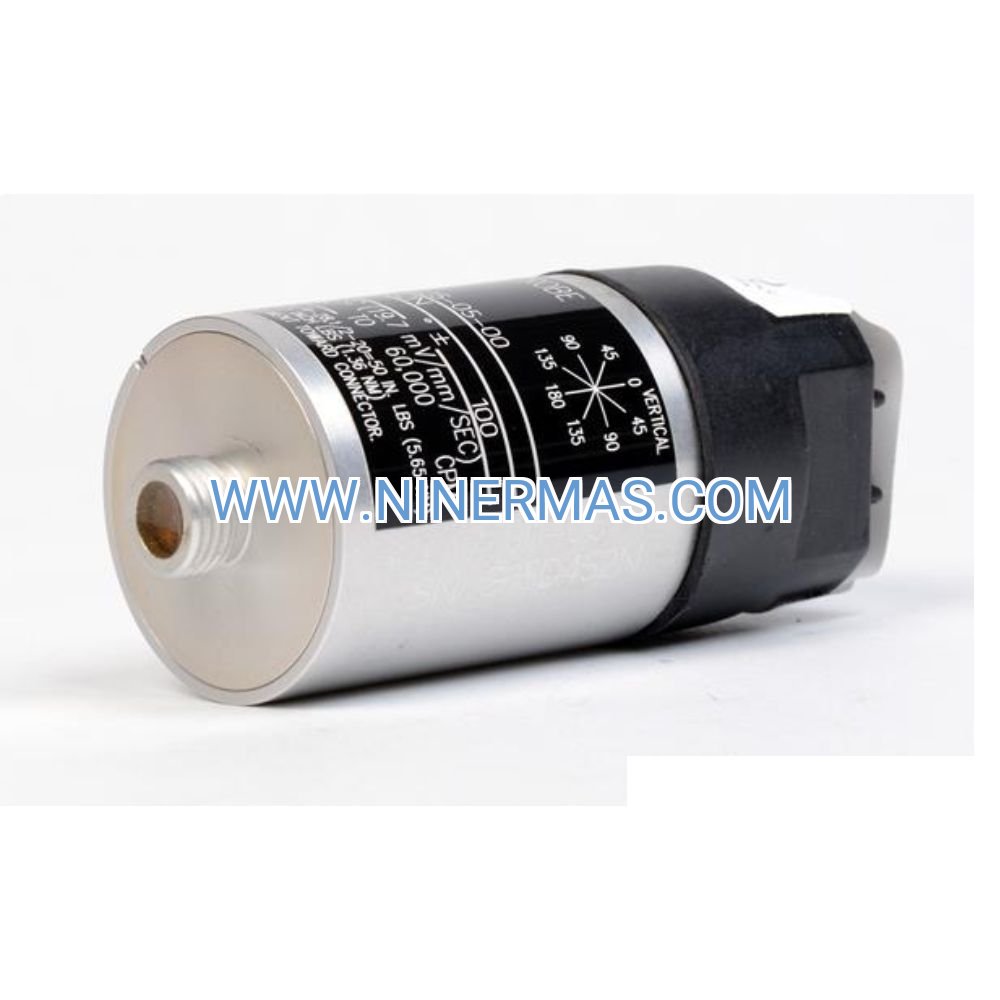
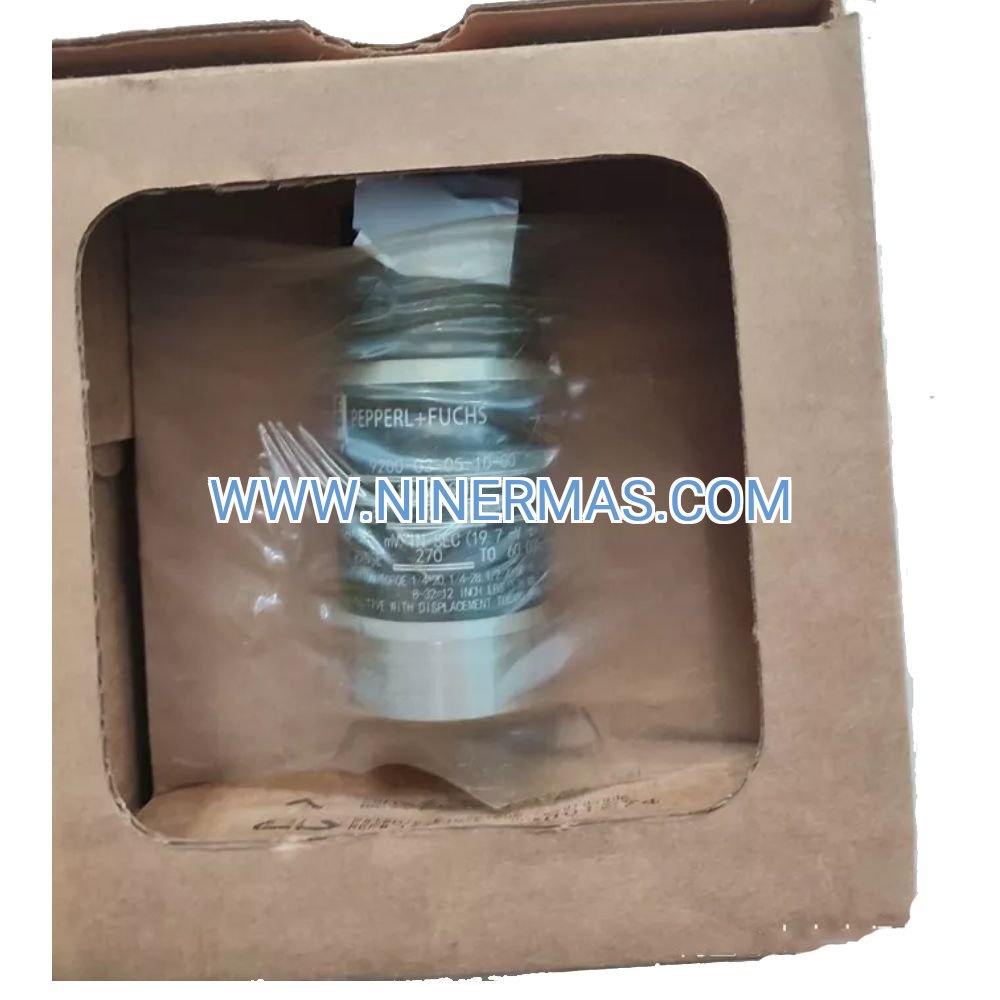
The Bently Nevada 3300/20-03-01-00-00-00 Interface Module is a professional-grade signal conditioning device designed for seamless integration between vibration monitoring systems and distributed control systems (DCS) or programmable logic controllers (PLC). Through advanced signal conversion technology and galvanic isolation design, it enables real-time transmission of critical machinery health data to plant automation networks, supporting predictive maintenance strategies and reducing unplanned downtime.
Widely deployed in power generation, oil & gas, petrochemical, and heavy manufacturing facilities, this interface module addresses common challenges including incompatible signal formats between monitoring and control systems, electrical noise interference, ground loop issues, and the need for multi-protocol communication. It serves as the critical bridge connecting condition monitoring instrumentation to enterprise-level SCADA and asset management platforms.
Featuring standardized design with extensive customization options, the 3300/20 module delivers reliable performance, simplified installation, comprehensive diagnostics, and broad compatibility with legacy and modern control architectures. Ideal for plant engineers, instrumentation specialists, maintenance teams, and system integrators seeking robust machinery protection integration. Contact our application engineers for system configuration assistance and technical consultation.
Core Features & Technical Advantages
Multi-Protocol Signal Conversion
Converts vibration monitor outputs to industry-standard 4-20mA analog signals, Modbus RTU digital communication, and configurable relay contacts, ensuring compatibility with virtually any DCS/PLC platform including Honeywell, Emerson DeltaV, Siemens PCS7, and Allen-Bradley systems.
Galvanic Isolation Protection
Built-in 1500V DC isolation between input and output circuits eliminates ground loops, reduces electrical noise coupling, and protects sensitive monitoring equipment from voltage transients and surges in industrial power systems.
API 670 Compliance & Safety Integrity
Fully compliant with API Standard 670 for machinery protection systems in petroleum and natural gas industries, supporting SIL-capable safety instrumented functions when integrated with certified monitoring chains.
Flexible Configuration Options
Field-configurable alarm setpoints, output scaling, time delays, and voting logic through DIP switches or software interface, allowing adaptation to specific application requirements without hardware modifications.
Comprehensive Self-Diagnostics
Continuous internal health monitoring with LED status indicators and diagnostic relay outputs for power supply faults, sensor failures, and communication errors, enabling proactive maintenance and rapid troubleshooting.
Industrial-Grade Reliability
Designed for continuous operation in harsh environments with wide operating temperature range (-30°C to +65°C), conformal coating protection, and MTBF exceeding 200,000 hours under typical industrial conditions.
Typical Application Scenarios
The 3300/20 Interface Module is engineered for demanding industrial environments requiring high-reliability machinery condition data integration:
Power Generation Facilities
Integrates turbine vibration, bearing temperature, and shaft position monitoring into plant DCS for real-time performance tracking, automated trip logic, and regulatory compliance reporting in steam, gas, and hydro power stations.
Oil & Gas Production & Refining
Connects critical rotating equipment monitoring (compressors, pumps, turbines) to SCADA systems for continuous surveillance, alarm management, and integration with asset performance management (APM) platforms in upstream and downstream operations.
Petrochemical & Chemical Processing
Enables centralized monitoring of process pumps, agitators, centrifuges, and blowers through existing control infrastructure, supporting condition-based maintenance programs and reducing safety risks from equipment failures.
Pulp & Paper Manufacturing
Provides real-time machinery health data from paper machines, refiners, and dryers to mill control systems, minimizing unplanned outages and optimizing production efficiency through predictive maintenance scheduling.
Steel & Metal Production
Interfaces vibration and temperature monitoring from rolling mills, furnace fans, and material handling systems to plant automation networks, supporting reliability-centered maintenance in continuous production environments.
Technical Specifications & Selection Guide
To facilitate engineering design and product selection, we provide comprehensive technical parameters for the 3300/20 Interface Module series. Custom configurations are available to meet specific project requirements.
Key Technical Parameters:
- Input Signal Types: Buffered monitor outputs from 3300 series monitors (voltage or current)
- Analog Output: 4-20mA isolated, loop-powered or externally powered, 500Ω max load
- Digital Communication: Modbus RTU (RS-485), configurable baud rate 9600-115200
- Relay Outputs: 2 SPDT relays, 5A @ 250VAC/30VDC resistive load, configurable for alarms/status
- Isolation Voltage: 1500V DC continuous between input/output/power circuits
- Power Supply: 18-30V DC or 85-264V AC (model dependent), <8W typical consumption
- Operating Temperature: -30°C to +65°C (-22°F to +149°F)
- Enclosure Rating: IP20 (standard rack mount), IP65 available for standalone installations
- Mounting: Standard 19" rack (3U height) or DIN rail options
- Compliance: CE, UL/cUL, ATEX/IECEx (Zone 2) certifications available
Selection Considerations:
When specifying the 3300/20 Interface Module, consider the following application parameters: number and type of monitoring channels to be interfaced, DCS/PLC input requirements (analog vs. digital), required isolation levels, environmental conditions (temperature, humidity, vibration), available power supply voltage, mounting space constraints, and applicable safety/hazard area classifications. For complex integrations or multi-channel systems, consult with our application engineers who can recommend optimal configurations and provide system architecture drawings.
Advanced Integration Capabilities
SCADA & Historian Integration
Seamless data flow to OSIsoft PI, Honeywell PHD, GE Proficy, and other plant historians for long-term trending, performance analysis, and regulatory compliance documentation.
Asset Performance Management (APM) Connectivity
Direct integration with enterprise APM platforms including GE Digital APM, Bentley AssetWise, and SAP Predictive Maintenance, enabling advanced analytics and machine learning-based failure prediction.
Redundancy & High Availability
Supports redundant communication paths and dual-channel configurations for critical machinery protection applications requiring SIL 2/3 safety integrity levels.
Remote Monitoring & Diagnostics
Compatible with secure remote access solutions for off-site condition monitoring, expert diagnostics, and predictive maintenance services through encrypted VPN connections.
Delivery, Service & Quality Assurance
Lead Time: Standard catalog models ship within 3-5 business days from stock. Custom-configured units typically deliver in 2-3 weeks depending on specification complexity.
Warranty Coverage: Comprehensive 24-month warranty covering materials and workmanship defects. Extended warranty programs available for critical applications.
Technical Support: Complimentary pre-sales application engineering assistance, post-installation commissioning support (remote or on-site depending on location), and lifetime technical hotline access for troubleshooting and configuration guidance.
Documentation Package: Each module ships with complete technical documentation including dimensional drawings, electrical schematics, terminal wiring diagrams, configuration software (where applicable), calibration certificates, and comprehensive operation & maintenance manuals in English.
Quality Certifications: Manufactured under ISO 9001:2015 quality management system. Products undergo 100% factory testing including burn-in, calibration verification, and isolation integrity testing prior to shipment.
Frequently Asked Questions (FAQ)
Q: How does the Bently Nevada 3300/20 Interface Module connect to existing DCS or PLC systems?
A: The module provides multiple output options including industry-standard 4-20mA analog signals that connect directly to DCS/PLC analog input cards, Modbus RTU digital communication via RS-485 for direct network integration, and configurable relay contacts for discrete alarm inputs. Connection requires only standard instrumentation wiring; detailed terminal assignments and wiring diagrams are provided in the installation manual.
Q: What is the maximum number of monitoring channels one interface module can handle?
A: The standard 3300/20-03 model handles one monitoring channel (single input to multiple outputs). For multi-channel applications, multiple modules can be rack-mounted together, or you may consider the 3300/20-05 variant which supports up to 4 channels in a single unit. Our engineers can help determine the optimal configuration based on your system architecture.
Q: What level of energy savings or efficiency improvement can be expected?
A: While the interface module itself is not an energy-saving device, it enables condition-based maintenance strategies that typically reduce unplanned downtime by 30-50% and extend equipment life by 20-40% according to industry studies. By providing early warning of developing machinery faults, it prevents catastrophic failures that often result in extended outages, emergency repairs, and production losses far exceeding the cost of planned maintenance.
Q: What are the environmental requirements for installation? What is the protection rating?
A: Standard rack-mount modules are rated IP20 and designed for installation in climate-controlled equipment rooms or control cabinets with ambient temperature range of -30°C to +65°C and relative humidity up to 95% non-condensing. For harsh environments or outdoor installations, IP65-rated enclosures are available. The module should be protected from direct water spray, corrosive atmospheres, and excessive vibration (>0.5g continuous).
Q: Does the module support remote monitoring and data acquisition? What communication protocols are available?
A: Yes, the 3300/20 supports remote monitoring through its Modbus RTU interface (RS-485), which is compatible with most SCADA systems and can be bridged to Ethernet networks using standard Modbus gateways. The module supports standard Modbus function codes for reading real-time values, alarm status, and diagnostic information. For advanced applications, integration with OPC servers enables connectivity to enterprise-level monitoring platforms and cloud-based analytics services.
Q: Is the module suitable for hazardous area installations in oil & gas facilities?
A: Standard models are certified for Zone 2 / Division 2 hazardous locations when properly installed according to applicable codes. For Zone 1 / Division 1 applications, intrinsically safe barrier modules or purged enclosure solutions are required. Consult our application engineers with your specific hazardous area classification and we can recommend the appropriate configuration and certifications.
Request Technical Consultation & Quotation
To receive detailed system configuration recommendations, application-specific technical specifications, or commercial quotation, please provide the following project information to our engineering team:
- Project name and application overview (industry, equipment type, monitoring objectives)
- Number and type of monitoring channels to be interfaced (vibration, temperature, position, etc.)
- Existing DCS/PLC platform and input card specifications (analog/digital, voltage/current)
- Required output signals and communication protocols
- Environmental conditions (temperature range, hazardous area classification, mounting location)
- Power supply availability (voltage, AC/DC)
- Project timeline and delivery requirements
Our application engineers will respond within one business day with personalized recommendations, system architecture guidance, and competitive pricing.
© 2026 NINERMAS COMPANY LIMITED. All rights reserved.
Original Source: https://ninermas.com
Contact: sale@ninermas.com | +0086 187 5021 5667

Contact Info
-
Address:22 / F, South Wo Hang building, 148 Wing Lok Street, Sheung Wan, Western District, Hong Kong
-
Phone:+8618750215667
-
Email: