Bently Nevada 3300/16 I/O Module | 16-Channel 4-20mA Output for DCS Integration | API 670 Compliant
Description
Bently Nevada 3300/16 I/O Module (Industrial-Grade 16-Channel 4-20mA Output Interface)
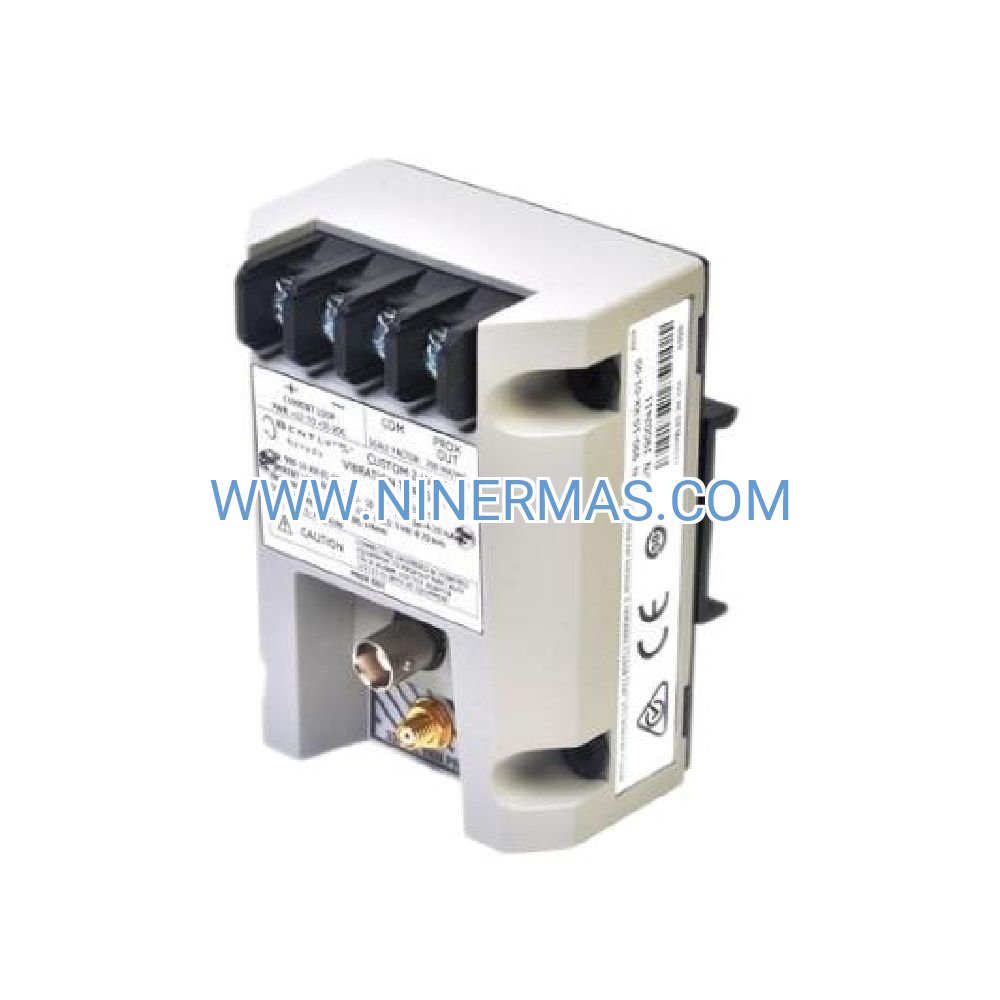
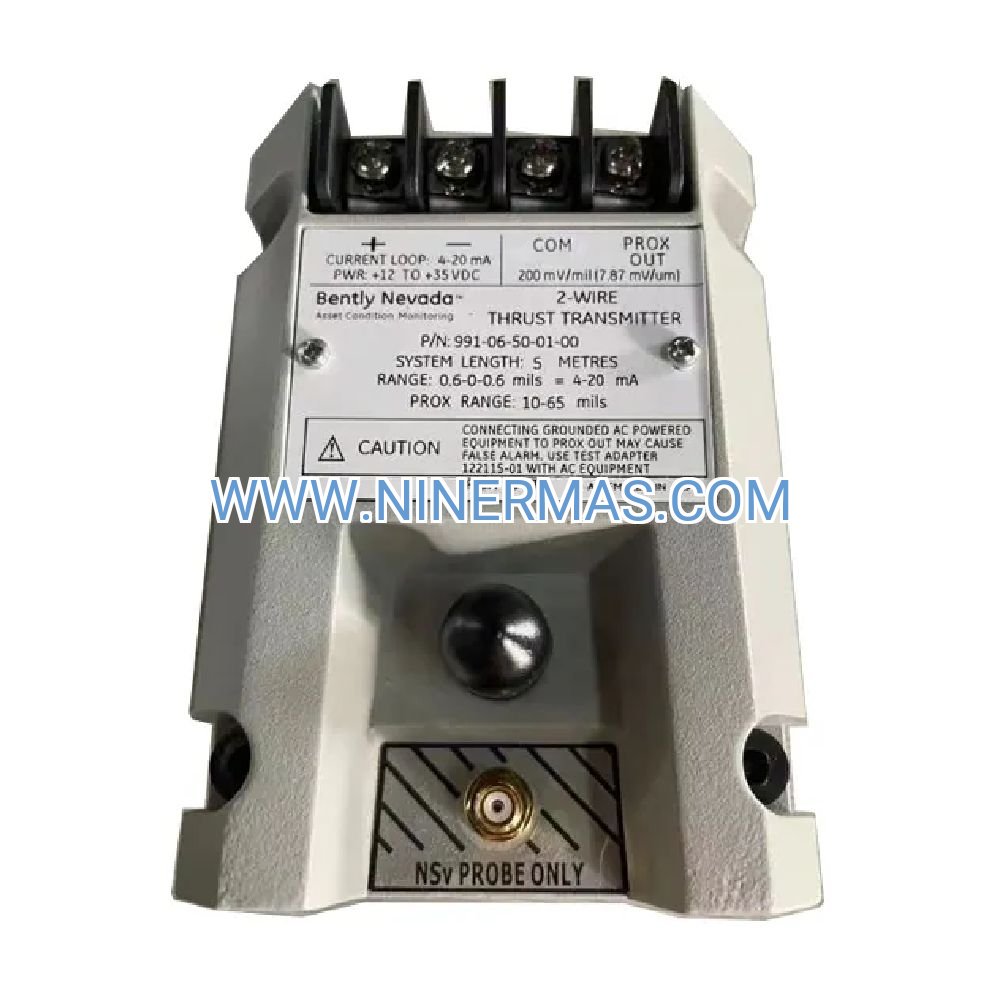
The Bently Nevada 3300/16 I/O Module is a high-reliability industrial interface device designed for seamless integration between vibration monitoring systems and distributed control systems (DCS) or programmable logic controllers (PLC). Through its 16-channel 4-20mA analog output capability, it converts real-time machinery condition data into standardized signals, enabling centralized monitoring, automated alarming, and predictive maintenance workflows.
Ideal for power generation plants, petrochemical facilities, oil & gas refineries, and heavy manufacturing environments, this module addresses critical challenges such as isolated monitoring islands, delayed fault response, incompatible signal formats, and manual data logging inefficiencies.
Featuring API 670 compliance, robust EMI/RFI immunity, and field-proven durability, the 3300/16 module is trusted by design engineers, instrumentation specialists, system integrators, and plant maintenance teams worldwide. Contact our application engineers for customized integration solutions and technical documentation.
Core Features & Advantages
16-Channel Simultaneous Output
Supports up to 16 independent 4-20mA current loops, allowing parallel transmission of multiple vibration parameters (displacement, velocity, acceleration, temperature) to DCS/PLC systems without signal interference or crosstalk.
API 670 Compliance & Industry Standards
Fully compliant with API 670 machinery protection system standards, ensuring compatibility with critical rotating equipment monitoring in oil & gas, power generation, and process industries. Meets IEC 61508 functional safety requirements for SIL-rated applications.
Universal DCS/PLC Compatibility
Configurable 4-20mA output range matches industry-standard analog input modules from major vendors (Honeywell, Emerson DeltaV, Siemens PCS7, ABB 800xA, Yokogawa Centum), eliminating custom signal conditioning requirements.
Galvanic Isolation & Noise Immunity
Each output channel features 1500V DC isolation to prevent ground loops and protect sensitive DCS inputs. Enhanced shielding design ensures reliable operation in high-EMI environments (VFD rooms, switchgear areas, motor control centers).
Hot-Swappable Design & Diagnostic LEDs
Field-replaceable module with keyed connectors and status indicators for each channel. Built-in diagnostics include open-circuit detection, short-circuit protection, and power supply monitoring, reducing troubleshooting time by up to 60%.
Extended Temperature & Vibration Rating
Operates reliably in -30°C to +65°C ambient conditions with conformal-coated PCBs. Withstands 5G vibration and shock per IEC 60068-2-6, suitable for installation near rotating machinery or offshore platforms.
Typical Application Scenarios
This module is engineered for environments demanding continuous machinery health monitoring with centralized control system integration:
Power Generation & Turbine Monitoring
Integrates steam turbine, gas turbine, and generator vibration data into plant DCS for real-time performance tracking. Enables automated trip logic and historical trending for regulatory compliance (NERC, FERC).
Petrochemical & Refinery Critical Equipment
Monitors compressors, pumps, blowers, and gearboxes in hazardous areas (Class I Div 2). Provides early warning of bearing failures, unbalance, misalignment, and resonance conditions to prevent unplanned shutdowns.
Oil & Gas Upstream & Midstream Facilities
Supports offshore platforms, FPSO vessels, pipeline compressor stations, and LNG terminals. Interfaces with safety instrumented systems (SIS) for emergency shutdown (ESD) integration per IEC 61511.
Manufacturing & Process Industries
Connects paper mill dryers, steel rolling mills, cement kiln fans, and mining conveyors to SCADA systems. Facilitates condition-based maintenance scheduling and OEE (Overall Equipment Effectiveness) optimization.
Technical Parameters & Selection Guide
To ensure optimal system design and compatibility, the following specifications are provided for engineering reference:
Key Specifications:
- Number of Channels: 16 independent isolated outputs
- Output Signal Type: 4-20mA current loop (2-wire or 4-wire configurable)
- Output Accuracy: ±0.25% of span (±10μA typical)
- Loop Compliance Voltage: 10-30V DC (external power required)
- Isolation Voltage: 1500V DC channel-to-channel and channel-to-ground
- Update Rate: 10ms per channel (100Hz bandwidth)
- Power Supply: 24V DC ±10% (redundant input optional), 15W typical consumption
- Operating Temperature: -30°C to +65°C (-22°F to +149°F)
- Humidity Range: 5% to 95% RH non-condensing
- Enclosure Rating: IP20 (rack-mount), IP54 available for field-mount version
- Dimensions: Standard 19-inch rack-mount (3U height), 220mm depth
- Compliance: API 670, IEC 61508 (SIL 2), CE, UL/cUL, ATEX (optional)
Selection Considerations:
When specifying the 3300/16 module, engineers should evaluate: (1) total number of monitored parameters requiring DCS integration, (2) DCS analog input card specifications (voltage compliance, input impedance), (3) cable run distances (voltage drop calculations for 4-20mA loops), (4) hazardous area classification (intrinsically safe barriers if required), and (5) redundancy requirements for critical machinery protection. Our application engineers provide complimentary loop drawings, wiring diagrams, and configuration worksheets upon request.
Advanced Integration Capabilities
Modbus RTU/TCP Communication (Optional)
Select models include digital communication for remote configuration, diagnostics retrieval, and simultaneous analog + digital data transmission to SCADA/historian systems.
Configurable Alarm Setpoints
Programmable high-high, high, low alarm thresholds with adjustable hysteresis and time delays. Alarm relay outputs available for hardwired trip circuits independent of DCS.
Scalable Multi-Rack Architecture
Supports daisy-chain expansion up to 8 modules (128 channels) on a single monitoring rack. Centralized power distribution and common grounding simplify installation in large turbine-generator sets.
Delivery, Service & Quality Assurance
Lead Time: Standard configuration ships within 3-5 business days from stock. Custom configurations (special output ranges, hazardous area certifications) require 2-3 weeks for factory testing and documentation.
Warranty: 24-month comprehensive warranty covering materials, workmanship, and factory calibration. Extended warranty and spare module programs available for critical applications.
Technical Support: Complimentary pre-sales application engineering, post-installation commissioning assistance (remote or on-site depending on location), and lifetime access to firmware updates and technical bulletins.
Documentation Package: Each module ships with detailed installation manual, terminal wiring diagrams, AutoCAD dimensional drawings, calibration certificates, and sample DCS configuration files (Honeywell, Emerson, Siemens formats).
Frequently Asked Questions (FAQ)
Q: How does the Bently Nevada 3300/16 I/O module interface with existing vibration monitoring systems?
A: The module accepts buffered monitor outputs (typically ±10V or 4-20mA) from Bently Nevada 3300 series monitors, 3500 rack systems, or third-party vibration transmitters. It scales and isolates these signals into standardized 4-20mA outputs compatible with any DCS analog input card. Connection is via screw terminals or optional plug-in terminal blocks for quick replacement.
Q: What is the maximum number of channels I can integrate into a single DCS system?
A: A single 3300/16 module provides 16 channels. For larger installations (e.g., multi-unit power plants or refinery-wide monitoring), multiple modules can be rack-mounted and connected to the same DCS network. Systems with 500+ channels are common in large facilities. Our engineers assist with I/O count optimization and DCS loading calculations.
Q: What energy savings or efficiency improvements can be expected?
A: While the I/O module itself is a signal interface (not a control device), integrating machinery vibration data into DCS enables predictive maintenance strategies that reduce unplanned downtime by 30-50% and extend equipment life by 15-25%. Early fault detection prevents catastrophic failures, avoiding emergency repairs and production losses often exceeding $100K per incident.
Q: What are the environmental and installation requirements?
A: The module is rated IP20 for control room rack installation. It requires a clean, climate-controlled environment (standard DCS cabinet conditions). For field-mount applications near machinery, IP54 or NEMA 4X enclosures are recommended. Ensure adequate ventilation (convection cooling) and avoid direct exposure to corrosive gases or condensation. Mounting orientation is flexible (horizontal or vertical).
Q: Does the module support remote monitoring and data logging via industrial protocols?
A: Standard models provide analog-only output. Enhanced versions include Modbus RTU (RS-485) or Modbus TCP (Ethernet) for digital communication, enabling remote configuration, diagnostic data retrieval, and simultaneous transmission to both DCS (analog) and historian/SCADA systems (digital). OPC UA and HART protocol options are available for specific applications.
Q: Can the module be used in hazardous area (explosive atmosphere) installations?
A: The standard module is suitable for safe-area (non-hazardous) control rooms. For Zone 1/Div 1 installations, it must be housed in an approved explosion-proof or purged enclosure, or used with intrinsically safe (IS) barriers on all I/O connections. ATEX/IECEx certified versions and pre-engineered IS barrier panels are available upon request.
Request a Custom Integration Solution
To receive a tailored configuration recommendation, detailed quotation, or application-specific technical support, please provide the following information: Project name and industry sector, machinery types and quantity to be monitored, DCS/PLC brand and model, total channel count required, hazardous area classification (if applicable), preferred delivery timeline. Our application engineers will respond within 24 hours with a comprehensive proposal including wiring schematics, bill of materials, and integration guidelines.
© 2026 NINERMAS COMPANY LIMITED. All rights reserved.
Original Source: https://ninermas.com
Contact: sale@ninermas.com | +0086 187 5021 5667

Contact Info
-
Address:22 / F, South Wo Hang building, 148 Wing Lok Street, Sheung Wan, Western District, Hong Kong
-
Phone:+8618750215667
-
Email: