Description
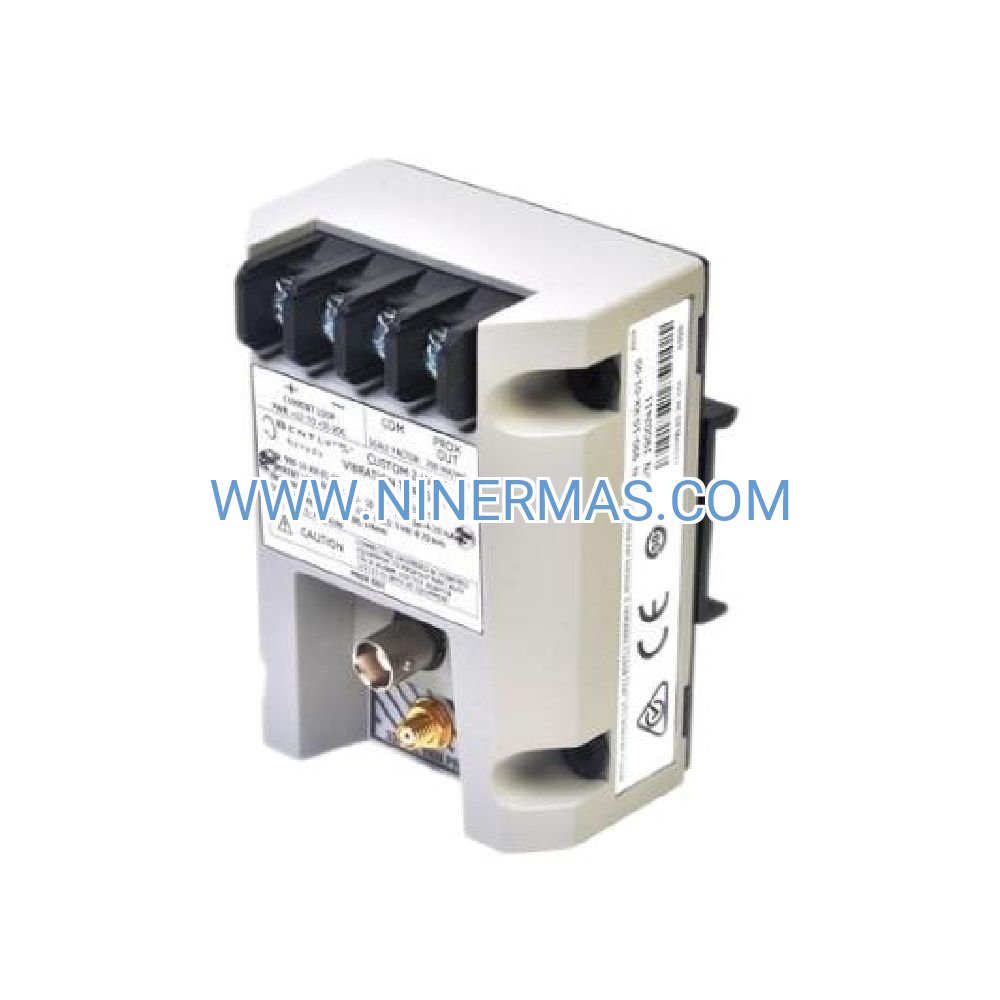
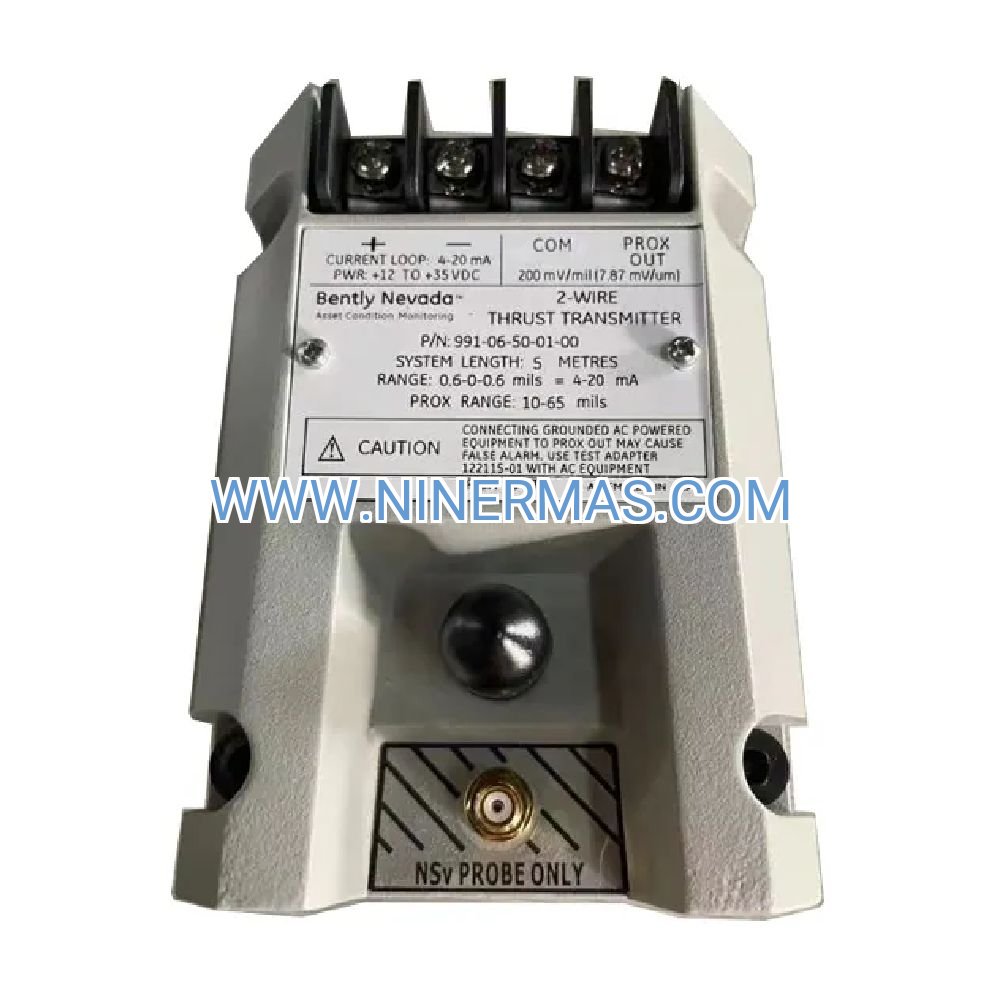
1900/65A General Purpose Equipment Monitor (Industrial-Grade Condition Surveillance)
Engineered for continuous machinery health assessment, the Bently Nevada 1900/65A-01-00-01-00-00 represents a cost-optimized approach to vibration monitoring across industrial rotating assets. This dual-channel standalone monitor transforms raw sensor data into actionable protection decisions, preventing unplanned shutdowns through early fault detection. Unlike complex rack-mounted systems requiring extensive infrastructure, the 1900/65A delivers enterprise-grade monitoring in a compact panel-mount format—ideal for facilities prioritizing reliability without operational complexity.
Designed for maintenance teams managing pumps, fans, compressors, and motor-driven equipment, this monitor bridges the gap between basic vibration switches and sophisticated online monitoring platforms. Its field-proven architecture supports diverse sensor technologies while maintaining intuitive local operation, making advanced condition monitoring accessible to facilities of any scale.
With over two decades of deployment across power generation, water treatment, manufacturing, and process industries, the 1900/65A combines Bently Nevada's measurement precision with practical industrial design. Dual-stage alarm logic, sensor fault diagnostics, and non-volatile configuration storage ensure consistent protection performance in demanding 24/7 operations.
Technical Specifications & Performance Parameters
| Parameter | Specification | Application Impact |
|---|---|---|
| Input Channels | 2 universal configurable | Monitor bearing vibration + motor temperature simultaneously |
| Sensor Types | Proximity, accelerometer, velocity, 4-20mA | Adapt to existing instrumentation without sensor replacement |
| Vibration Range | 0-500 mils (proximity) / 0-50g (acceleration) | Cover low-speed to high-speed machinery in single platform |
| Alarm Outputs | 4 relay contacts (Alert/Danger per channel) | Integrate with PLC/DCS for automated shutdown sequences |
| Analog Outputs | 2× 4-20mA buffered proportional | Enable SCADA trending and historical data logging |
| Display | Backlit LCD with live values | Field technicians assess equipment status without tools |
| Power Options | 100-240VAC universal / 24VDC | Deploy in AC or DC control environments globally |
| Operating Range | -30°C to +65°C ambient | Reliable operation in outdoor enclosures and harsh climates |
| Mounting | 96×96mm panel / DIN rail | Retrofit into existing control panels without modifications |
Selection Guidance: Choose the 1900/65A when monitoring 1-2 critical parameters per machine, where standalone operation reduces system cost by 60% compared to networked platforms. For facilities managing 10+ machines, consider centralized monitoring with Modbus integration capability.
Operational Benefits & Business Value
→ Prevent Catastrophic Failures: Dual-threshold alarming detects bearing degradation 4-6 weeks before seizure, enabling planned maintenance during scheduled outages rather than emergency repairs costing 3-5× more.
→ Reduce Nuisance Trips: Adjustable time delays (0.1-999 seconds) filter transient vibration spikes during startups, eliminating false alarms that erode operator confidence and waste maintenance resources.
→ Simplify Commissioning: Front-panel programming completes sensor configuration in 10 minutes versus 45+ minutes for PC-based systems, reducing installation labor costs and accelerating project timelines.
→ Maximize Uptime: Sensor fault detection identifies open circuits and transducer failures within 2 seconds, preventing "silent failures" where equipment runs unprotected due to instrumentation faults.
→ Enable Predictive Strategies: 4-20mA outputs feed vibration trends into plant historians, building baseline profiles that reveal gradual degradation patterns invisible to threshold-only protection.
→ Lower Total Cost: Standalone architecture eliminates rack chassis, power supplies, and communication modules—reducing installed cost to $1,200-1,800 per monitoring point versus $3,500+ for modular systems.
Industry Application Scenarios
✓ Water & Wastewater Treatment:
Challenge: Municipal pump stations operate unattended 24/7, where bearing failures cause sewage overflows and regulatory violations.
Solution: 1900/65A monitors lift pump vibration with Alert alarms triggering standby pumps and Danger alarms initiating emergency shutdown, preventing environmental incidents.
Outcome: Reduce emergency callouts by 70% and extend bearing life from 18 to 36 months through early intervention.
✓ HVAC & Building Systems:
Challenge: Chiller and cooling tower fan failures during peak demand create tenant comfort issues and revenue loss in commercial properties.
Solution: Monitor fan bearing vibration and motor winding temperature, with alarms integrated to building management systems for automated load shedding.
Outcome: Prevent mid-summer failures that cost $15,000-25,000 in emergency repairs plus tenant compensation.
✓ Food & Beverage Processing:
Challenge: Conveyor and mixer failures contaminate production batches, requiring costly disposal and line sanitation.
Solution: Track gearbox vibration and process temperature, scheduling maintenance during planned CIP cycles rather than mid-production.
Outcome: Eliminate 90% of unplanned downtime events that average $8,000/hour in lost production.
✓ Chemical & Petrochemical:
Challenge: Pump seal failures in corrosive service release hazardous materials, triggering safety incidents and environmental reporting.
Solution: Monitor pump casing vibration indicating seal wear, with early warnings enabling seal replacement during turnarounds.
Outcome: Achieve 99.2% seal reliability and reduce fugitive emissions by 85%.
✓ Power Generation:
Challenge: Auxiliary equipment failures (feedwater pumps, condensate pumps, ID/FD fans) force unit derates or trips, costing $50,000-150,000 per event.
Solution: Implement vibration monitoring on balance-of-plant equipment with alarm integration to distributed control systems.
Outcome: Increase auxiliary equipment availability from 94% to 98.5%, preventing 12-15 forced outages annually.
Advanced Monitoring Features
1. Multi-Sensor Compatibility
Universal inputs auto-detect proximity probes (requiring -24VDC excitation), IEPE accelerometers (4mA constant current), velocity pickups (high-impedance), and loop-powered transmitters—eliminating dedicated signal conditioners and reducing panel space by 40%.
2. Intelligent Alarm Management
Independent Alert and Danger setpoints per channel enable graduated response: Alert triggers maintenance work orders while Danger initiates automated shutdown, balancing asset protection with operational continuity.
3. Peak Capture Functionality
Records maximum vibration levels since last reset, preserving evidence of transient events (startup imbalance, resonance, impact) that occur between operator rounds—critical for root cause analysis.
4. Configurable Relay Logic
Select latching (requires manual reset) or non-latching (auto-reset) behavior per alarm, with normally-energized or normally-de-energized contact operation matching existing safety system architectures.
5. Diagnostic Self-Testing
Continuous sensor loop integrity checks detect open circuits (broken cables), short circuits (insulation failure), and out-of-range signals (transducer damage), with dedicated fault relays isolating instrumentation issues from process alarms.
Extended Capabilities & Integration
IoT Connectivity (Optional Modbus RTU): RS-485 serial interface enables integration with SCADA platforms, mobile monitoring apps, and cloud-based asset management systems—transforming standalone monitors into networked condition monitoring nodes.
Custom Scaling & Engineering Units: Configure displays in mils, mm/s, g, inches/sec, or process units (PSI, °F, GPM) matching operator familiarity and reducing training requirements for multi-craft maintenance teams.
Password Protection: Prevent unauthorized setpoint changes in critical service applications where alarm threshold modifications could compromise safety—essential for facilities under regulatory oversight (FDA, EPA, OSHA PSM).
Delivery Timeline & Service Commitment
Standard Lead Time: 3-5 business days for stock configurations; monitors ship from regional distribution centers in North America, Europe, and Asia-Pacific with same-day processing for orders placed before 2 PM local time.
Custom Configurations: 7-10 business days for non-standard power supplies, relay ratings, or factory calibration certificates—ideal for projects requiring specific compliance documentation.
Warranty Coverage: 24-month manufacturer warranty covering materials and workmanship, with optional extended protection plans (36/60 months) including advance replacement and priority technical support.
Technical Support: Application engineering consultation for sensor selection, alarm setpoint calculation, and system integration—available via phone, email, and remote screen-sharing sessions during commissioning.
Documentation Package: Complete installation manual, quick-start guide, sensor compatibility matrix, wiring diagrams, Modbus register map, and CE/UL compliance certificates included with every shipment.
Frequently Asked Questions
Q: Can the 1900/65A monitor both radial and axial vibration on the same machine?
A: Yes—configure Channel 1 for radial bearing vibration (horizontal or vertical) and Channel 2 for axial thrust position using proximity probes. Independent alarm setpoints accommodate different acceptance criteria per measurement axis.
Q: What's the maximum cable length between sensors and the monitor?
A: Proximity probes: 300 feet (90m) with standard extension cables; Accelerometers (IEPE): 500 feet (150m) using low-capacitance coaxial cable; 4-20mA transmitters: 3,000 feet (900m) with twisted-pair shielded wire. Longer distances require signal conditioners or loop isolators.
Q: How does the monitor handle startup transients without false alarms?
A: Adjustable time delays (0.1-999 seconds) require vibration to exceed setpoints for the programmed duration before alarm activation. Set 5-10 second delays to ignore brief startup spikes while maintaining fast response to sustained faults.
Q: Can I retrofit the 1900/65A into panels with existing vibration switches?
A: Absolutely—the 96×96mm cutout matches standard DIN panel meters and many legacy vibration switches. Relay outputs wire directly into existing PLC inputs or shutdown circuits, enabling drop-in upgrades without control system modifications.
Q: Does the monitor require calibration, and how often?
A: Factory calibration is traceable to NIST standards and remains stable for 3-5 years in typical industrial environments. Annual verification using portable vibration calibrators (10 mV/g or 200 mV/mil reference) confirms measurement accuracy without returning units to the factory.
Q: What happens to alarm states during power interruptions?
A: Configuration parameters (setpoints, sensor types, relay logic) store in non-volatile memory and survive power loss indefinitely. Active alarms reset upon power restoration—select latching relay mode if alarm state preservation is critical for safety applications.
Take Action: Protect Your Critical Assets Today
Don't wait for catastrophic failures to justify condition monitoring investments. The 1900/65A delivers enterprise-grade machinery protection at a fraction of traditional system costs—paying for itself after preventing a single unplanned outage.
Ready to deploy? Contact our application engineers to discuss sensor selection, alarm setpoint recommendations, and integration with your existing control architecture. Volume pricing available for multi-unit projects and annual maintenance contracts.
Request a quote: Provide equipment details (machine type, operating speed, existing sensors) for customized monitoring solutions including sensors, cabling, and commissioning support.
© 2026 NINERMAS COMPANY LIMITED. All rights reserved.
Original Source: https://ninermas.com
Contact: sale@ninermas.com | +0086 187 5021 5667
PDF Specification
Download PDF file here:
Click to Download PDF

Contact Info
-
Address:22 / F, South Wo Hang building, 148 Wing Lok Street, Sheung Wan, Western District, Hong Kong
-
Phone:+8618750215667
-
Email: